Introduction to Photo Dog Tags
Custom photo dog tags are more than just decorative accessories—they combine identification and personalization with the unique addition of a photograph. These tags are popular for pets, equipment, and personal keepsakes, offering a memorable way to combine function with sentiment. Engineers and procurement professionals recognize that the practicality of a tag with a picture depends greatly on the tag’s durability and readability.
Deciding on custom photo dog tags should always involve considering the tag’s core application, the environments it will face, and how the image may affect visibility and longevity. It is important to weigh factors like material selection, manufacturing capability, outdoor performance, and mass production consistency. For instance, a tag designed for heavy outdoor use must resist corrosion and preserve image clarity—that means careful consideration of both the photo inclusion and the tag’s material/process.
The addition of a photo can sometimes shift a tag’s purpose, making it ideal for memorials or gifts, rather than strict identification. Knowing precise manufacturing techniques, from laser engraving to UV printing, helps determine if the image will last and remain readable. Ultimately, the correct custom photo dog tags will strike a balance between aesthetic value and practical endurance.
When to Choose a Photo Dog Tag: Identification, Gifts, or Memorials
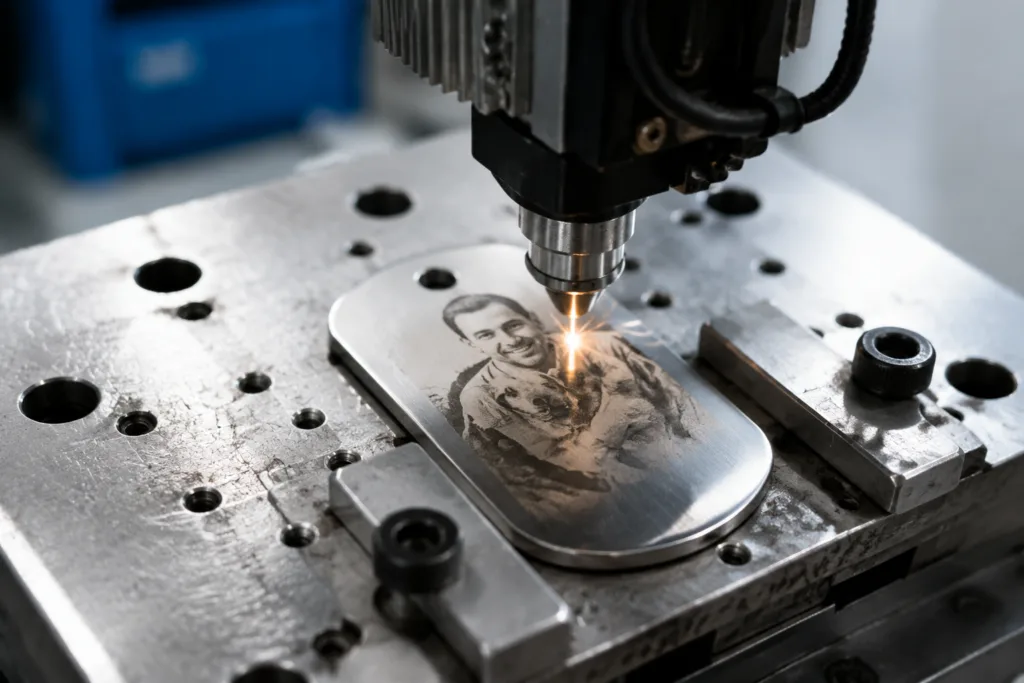
Selecting a dog tag with picture hinges on understanding the core goal: identification, gifting, or honoring memories. For identification, these tags are used for pets, equipment, or personnel, giving visual recognition along with code or text details. The photo boosts assurance in busy environments, such as kennels, pet shows, or warehouses, by instantly confirming identity alongside serial numbers and barcodes.
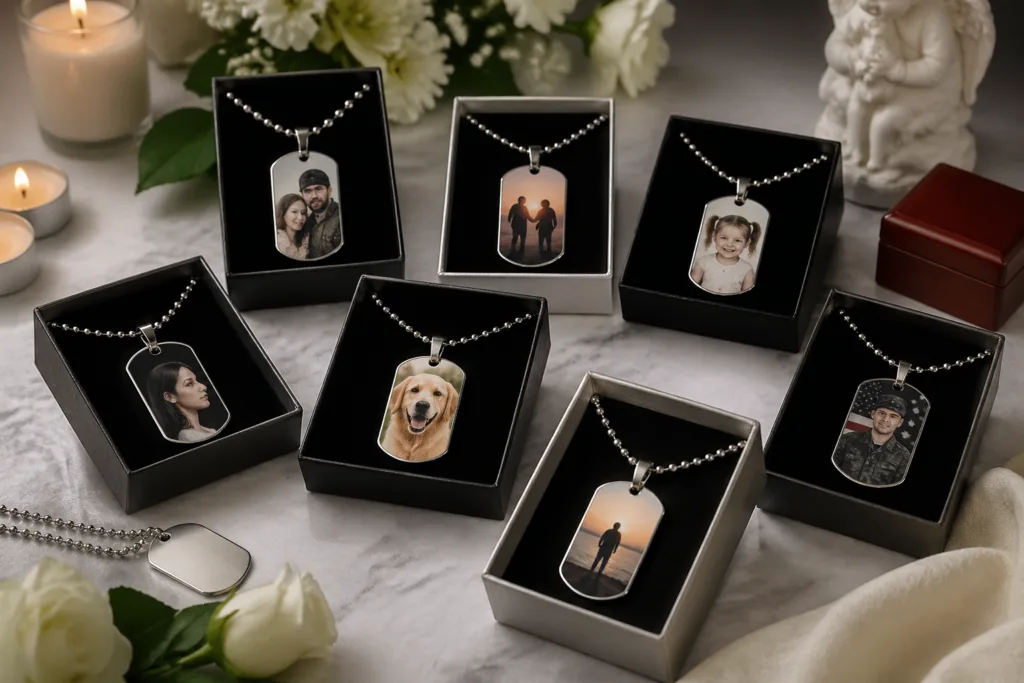
When used as a gift or keepsake, a dog tag with picture can become a cherished memento. Personalizing a tag with a loved one’s photo or a memorable image makes it suited for holidays, celebrations, or anniversaries. In this scenario, the focus transitions from strict readability and environmental durability to emotional impact. Still, the tag must withstand handling and moderate conditions, so design decisions must reflect the expected use—such as necklaces versus keychains.
For memorial applications, tags help preserve memories after loss. A well-chosen picture can honor pets or people, with the tag serving as a lasting tribute. Here, resilience is important to ensure the image outlives environmental exposure—from sun and rain to abrasion.
- Tags for identification should be chosen for clarity, ruggedness, and environmental resistance.
- Gift and keepsake tags prioritize sentimentality but must be durable enough to withstand frequent touch.
- Memorial tags must remain readable and intact over time, making image permanence and corrosion resistance essential.
In all cases, practical trade-offs include the photo’s longevity, tag material, and the method of attaching or displaying the tag. Carefully consider the intended lifespan, whether the tag will be exposed outdoors, and whether the image is central to its purpose. Tag solutions may differ for each use-case, so consult engineering guides or supplier recommendations when making your final choice.
Materials Comparison for Photo Dog Tags
Choosing the right material for custom photo dog tags is crucial for balancing durability, weight, cost, and image retention. Aluminum, stainless steel, and brass are the standard options, each offering distinctly different benefits depending on the application environment and branding needs.
| Material | Durability | Photo Retention | Corrosion Resistance | Weight | Visual Appeal | Cost |
|---|---|---|---|---|---|---|
| Aluminum | Moderate | Excellent with anodization/UV printing | High (especially anodized) | Light | Custom colors, modern look | Low-Medium |
| Stainless Steel | High | Excellent with laser engraving, good with printing | Very High | Medium-Heavy | Polished, classic, industrial | Medium |
| Brass | High | Good with deep etching or engraving, moderate with printing | Medium (can tarnish) | Medium-Heavy | Vintage, premium | Medium-High |
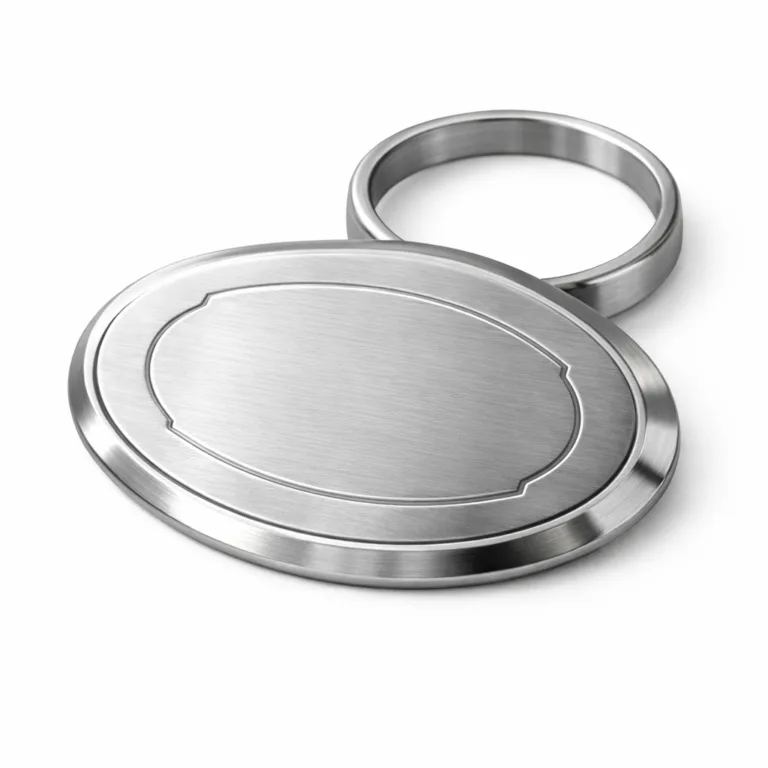
Aluminum is favored for its lightweight nature and excellent corrosion resistance, especially when anodized. UV printing and anodization processes lock the photo onto the surface, making it ideal for outdoor applications. However, aluminum scratches more easily than stainless steel.
Stainless steel delivers top-tier durability and unbeatable resistance against corrosion and abrasion. Laser engraving ensures permanent photographic detail, while printing offers more color but slightly less durability. Stainless steel fits well with applications that need ruggedness, such as industrial asset tags or heavy-duty pet tags. UC Tag often recommends stainless steel when utmost endurance is required.
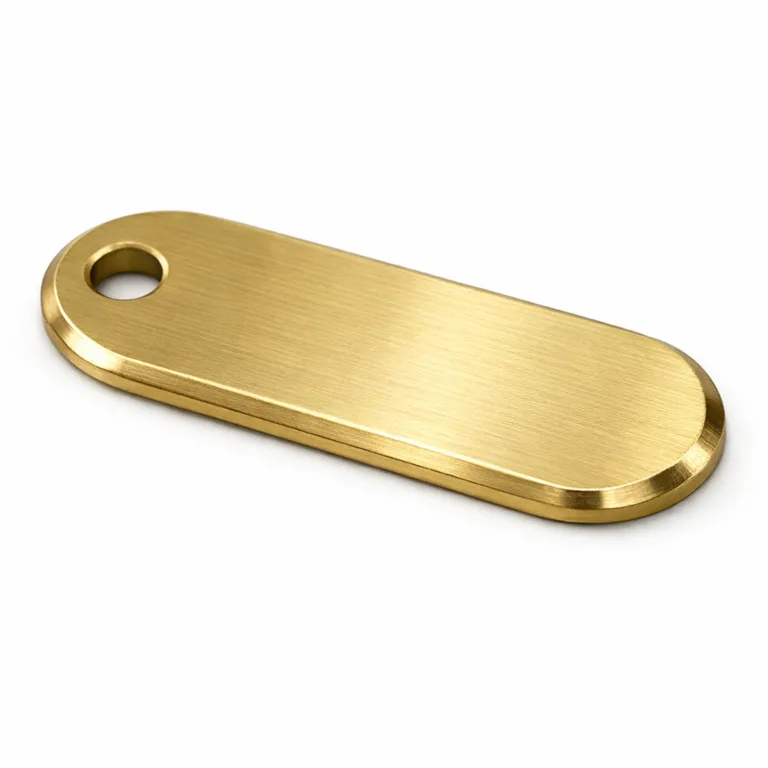
Brass brings a classic look and premium feel, often chosen for commemorative or memorial tags. Deep chemical etching and engraving work well, but printed images can fade or tarnish unless protected by coatings. For applications involving frequent handling or exposure to water, brass may require routine cleaning or protective finishes.
Cost and weight are important: aluminum is budget-friendly and light, stainless steel offers a mid-range cost and solid heft, while brass is more expensive and provides a substantial, vintage appearance.
Manufacturing Methods for Photo Dog Tags
Producing a dog tag necklace with picture requires precise manufacturing techniques to ensure image quality and durability. The main methods are engraving, stamping, etching, and printing, each with advantages and limitations for recreating detailed photographs.
Laser engraving creates permanent images by vaporizing the tag’s surface with a focused beam. This method works exceptionally well with stainless steel and anodized aluminum, allowing for fine grayscale reproduction that lasts decades. Deep stamping is rarely used for photos, since it’s best for bold logos or numbers.
Chemical etching offers excellent contrast and detail, suitable for monochrome photographic images, especially on brass and stainless steel. This technique is highly durable, but colors are limited to the metal finish.
UV printing and dye-sublimation deliver full-color photo reproduction onto metal tags, particularly aluminum. While these methods achieve vibrant images, they require protective coatings to defend against abrasion and weather. Technology limitations mean ultra-fine details or high-resolution colors may degrade over time, especially in environments with heavy sunlight or chemical exposure. Photo engraved dog tag options should be selected based on both image and environmental requirements.
- Laser engraving: Permanent, high-detail, excellent for identification.
- Chemical etching: Durable, strong contrast, limited color.
- UV printing: Full color, ideal for gifts and keepsakes, moderate durability.
- Dye-sublimation: Best for vivid photos, requires topcoat for outdoor use.
For rugged applications or tags exposed to chemicals and heavy handling, engraving and etching are preferred. Printing is best suited for gifts or indoor keepsakes. UC Tag’s shop-floor experience highlights that correct process selection determines whether a dog tag necklace with picture retains its function and appeal long-term.
Design & Specification Checklist for Photo Dog Tags
Creating custom photo dog tags demands precise design and specification choices to ensure the tag fulfills its intended function. Size, thickness, and shape directly impact readability and durability, while finishes and attachment features determine usability and endurance in the field.
- Choose tag size that fits the environment and allows clear display of both photo and text.
- Opt for thickness that resists bending (often 1.2–2.0mm for robust tags).
- Select shape to accommodate both photographic area and any required code/text.
- Pick finish—anodized, polished, sandblasted—for optimized photo retention and readability.
- Add holes or slots for attaching onto collars, chains, or equipment; adhesive backing (like custom metal tag solutions) can be used for non-permanent applications.
Environmental factors matter: outdoor tags should utilize UV-resistant finishes and corrosion-resistant materials. Indoor tags may prioritize visual appeal. Specify tolerances (±0.05 mm for high-quality production) and adhere to standards like ISO 9001 for reliable mass production.
| Specification | Typical Range/Option | Why It Matters |
|---|---|---|
| Size | 30–50mm (length) | Ensures readability and space for image/text |
| Thickness | 1.2–2.0mm | Resists bending, improves lifespan |
| Finish | Anodized, polished, sandblasted | Affects photo adhesion and clarity |
| Attachment | Hole, slot, adhesive | Facilitates mounting |
| Environmental | UV resistant, corrosion proof | Prevents photo/image fading |
| Tolerance | ±0.05mm | Ensures consistent quality |
| Standard | ISO 9001 | Quality management |
Tag makers should review the full design checklist and confirm dimensions with proofs or samples before mass production, especially if tags will be deployed in demanding environments. Rain Chen recommends perfection in sample review as a shield against costly mistakes.
Durability & Testing of Photo Dog Tags
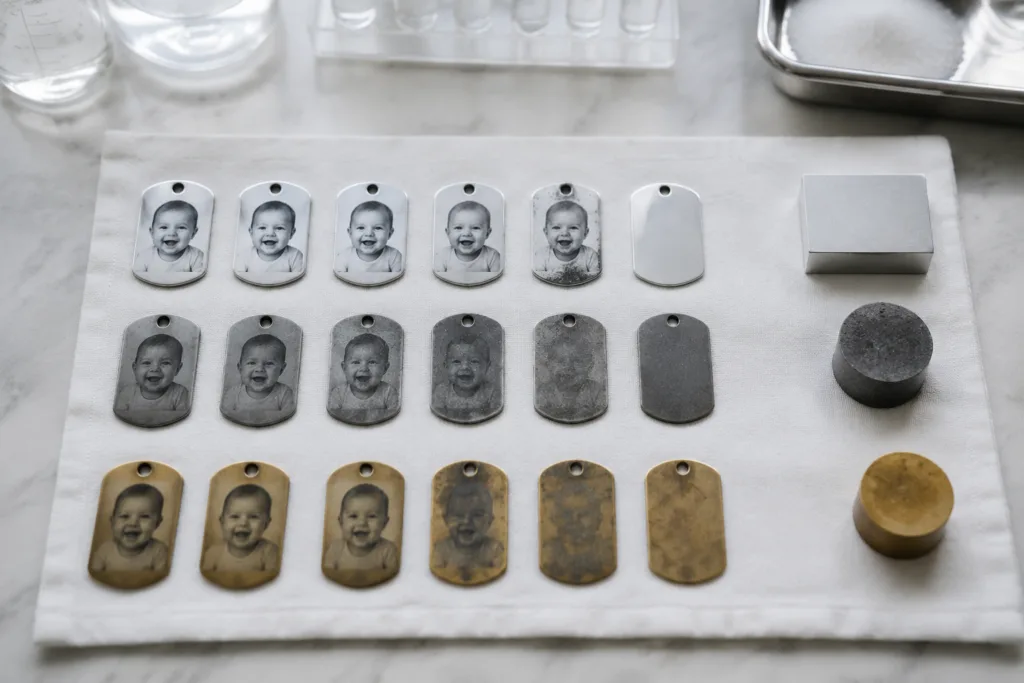
Durability is a central concern for photo dog tags, with rigorous testing required to guarantee longevity in real-world settings. Performance tests assess resistance to corrosion, abrasion, and UV exposure. For example, salt spray tests simulate aggressive corrosion environments, while abrasion tests ensure the photo remains readable despite constant rubbing or impact.
Outdoor tags must withstand rain, sun, and temperature extremes, while industrial tags may face oils, chemicals, or harsh handling. A case study from a warehouse environment showed tags failing due to poor image adhesion—printed tags exposed to frequent abrasion faded within months, confirming the necessity of proper production methods and finishing.
To ensure long-lasting performance, select manufacturing techniques that permanently bond the image to the metal, such as deep engraving or anodized printing. Look for certifications like ISO 9001 for production quality standards and request performance data or sample testing before confirming a large order. Guidance from dog tag manufacturer experts can help anticipate challenges in harsh environments.
By testing tags under expected conditions, buyers can eliminate designs prone to premature failure and reliably achieve high-volume durability.
Industry/Application Fit for Photo Dog Tags
Dog tag necklace with picture finds application across various industries, each requiring a tailored approach for durability, identification, and emotional impact. In pet identification, tags with a photo offer immediate visual confirmation, helping in lost-and-found scenarios, pet shows, or kennel management.
Industrial settings see photo dog tags used for asset tracking, employee badges, or equipment labeling—especially where visual confirmation is needed along with coded data. Customized solutions for retailers tap into branding, offering logo/photo tags as promotional or limited-edition items.
Memorial services utilize photo dog tags as keepsakes that honor pets or people, providing a lasting tribute. Niche markets include travel accessories, medical alert tags, or sporting events, where a dog tag necklace with picture delivers functional value and identification.
Retailers often seek differentiation with tags that combine branding and photographic personalization. Specific keychain tag manufacturer support allows for mass production of consistent, durable tags that withstand repeated daily use. The versatility of photo dog tags means industry fit relies on balancing image quality and functionality for each scenario.
Common Mistakes and Troubleshooting for Photo Tags
Many buyers encounter pitfalls when choosing a dog tag with picture, especially with readability and image retention. Unreadable text or image loss is often caused by picking the wrong manufacturing method for the environment—printed tags may fade outdoors, while poor laser engraving becomes indistinct on low-grade metal.
Incorrect adhesive choices can result in peeling or detachment, particularly for tags requiring quick or versatile mounting. Low contrast between image and background leads to photos fading or becoming invisible in sunlight; always specify high-contrast image production and review samples carefully.
Skipping proof and sample review before bulk ordering is a costly mistake. Rain Chen has seen projects fail due to mass-produced tags with blurred images or wrong tolerances—careful pre-production checks save time and money. To ensure optimal durability, use correct production method matched to the environment and demand thorough testing.
Consulting a custom metal tag samples resource and sample ordering avoids issues that may only appear after full deployment.
Ordering Guide for Custom Photo Dog Tags
The ordering process for custom photo dog tags involves several stages: setting minimum order quantities (typically 100+ units for B2B), reviewing pricing per material and process, and establishing lead times (4–8 weeks depending on complexity). Procurement teams must account for artwork requirements—high-resolution images, vector files, and proofs are standard prerequisites.
Sampling prior to mass production is highly recommended to verify photo clarity and tag durability. Most suppliers, including standard samples offerings, will provide physical or digital samples for approval. Packaging choices (bulk, retail packs, individual pouches) further influence logistics and shipping needs.
Shipping schedules depend on order size and geography; expedited options may be available, but proper proofing and sampling avoid costly errors and delays. Always specify environmental requirements, image placement, and attachment features at ordering. Bulk buyers should clarify standards like ISO 9001 and request full test data for quality assurance. Rain Chen notes that confirming artwork specs early—and reviewing at least two rounds of proofs—protects against miscommunication and ensures the tag meets all practical and aesthetic criteria.
FAQ for Custom Photo Dog Tags
Frequently Asked Questions
What material is best for photo dog tags used outdoors?
Stainless steel or anodized aluminum are ideal for outdoor photo dog tags due to their excellent corrosion resistance and strong image retention, especially with engraving or UV printing.
Can I order custom photo dog tags in small batches?
B2B suppliers often require minimum order quantities of 100 or more, but sample production is available to verify image quality and durability before mass manufacturing.
How do photos get transferred onto metal tags?
Photos are applied using laser engraving for permanent detail, UV printing for color images, or chemical etching for contrast; each process is chosen based on material and intended use.
Will my dog tag with picture fade over time?
Properly produced tags using durable processes and finishes (like anodized aluminum or stainless steel engraving) will resist fading, but printed images may degrade if exposed to UV or abrasion.
Can I request a sample before placing a full order?
Yes, reputable suppliers offer samples or proofs to validate the design, material, and photo quality before mass production, minimizing risk and ensuring satisfaction.
Are custom photo dog tags suitable for industrial identification?
Yes, photo dog tags are widely used for asset tracking and ID in industrial settings when manufactured with durable materials and processes that withstand harsh environments.
Related Reading
- How to Choose Durable Dog Tags That Survive Rugged Outdoor Use
- Creative Dog Tag Designs That Mix Style, Function, and Personalization
- Engraved vs Printed Dog Tags: Which Method Lasts Longer Outdoors?
- Getting Dog Tag Dimensions Right for Every Application
- Collar Tags vs Hanging Tags: Comfort, Security, and Branding Comparison
- Stainless Steel Dog Tags: Material Advantages and Personalization Options