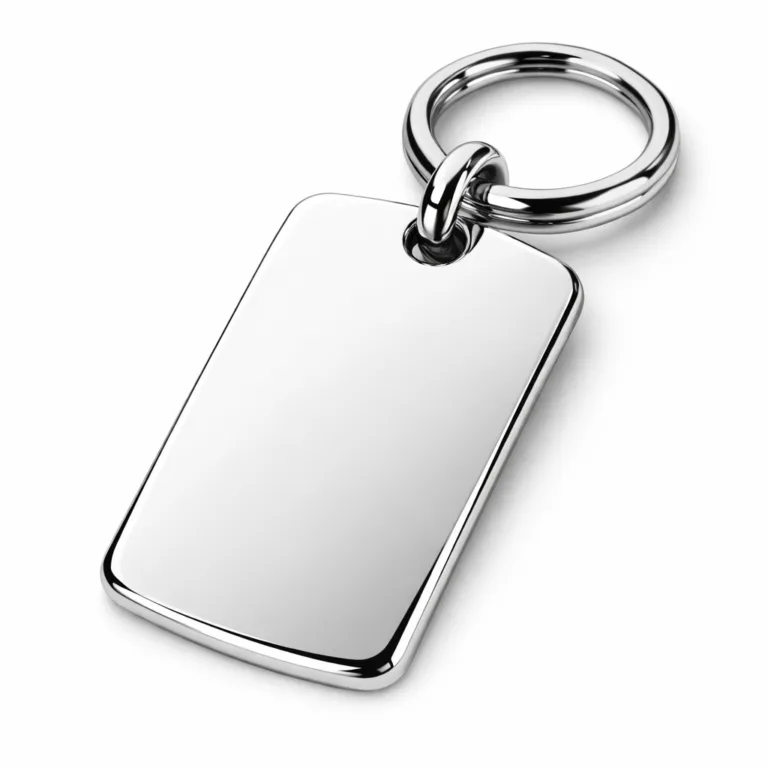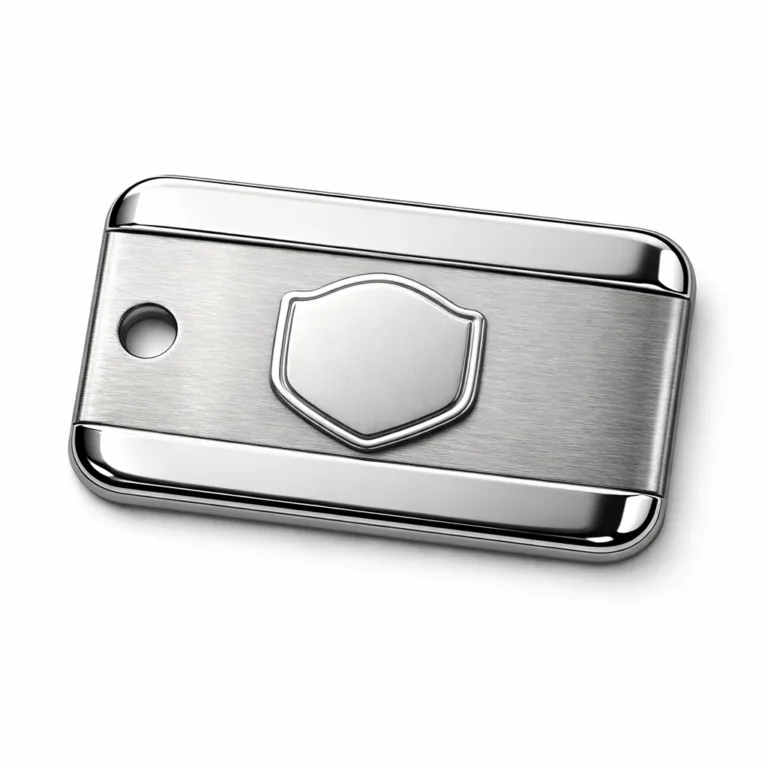
Understanding Stainless Steel Dog Tags
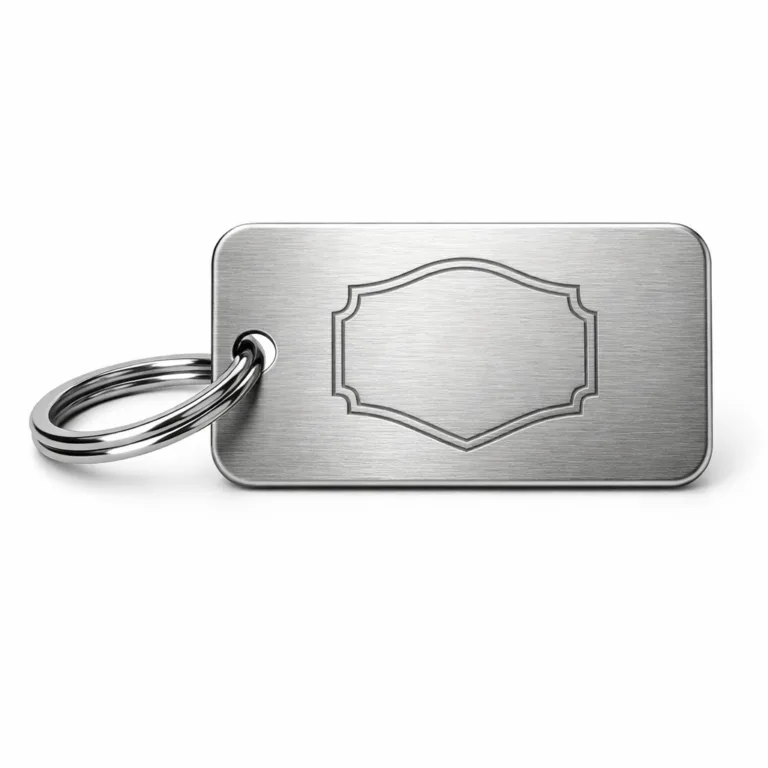
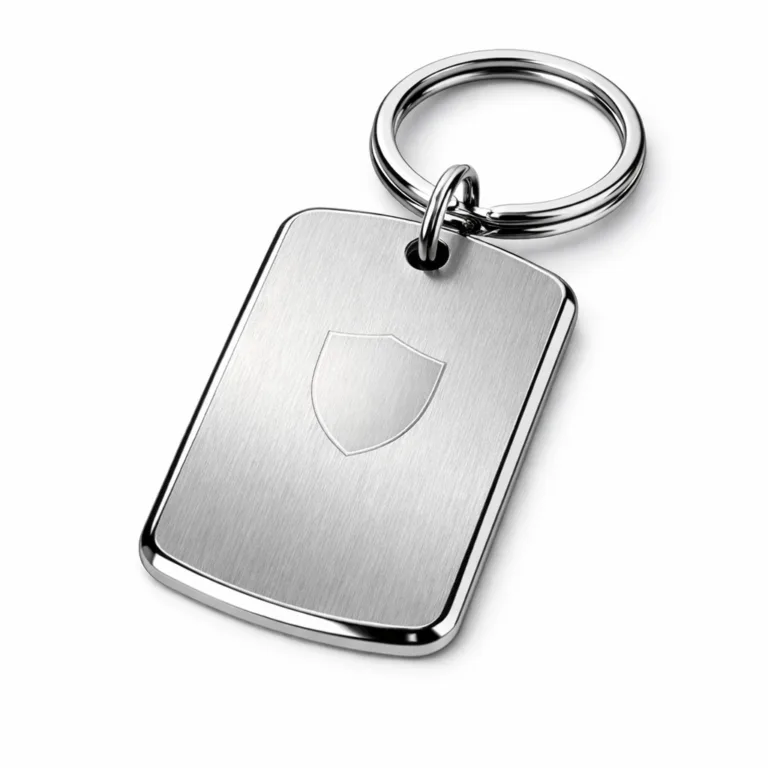
Stainless steel dog tags are robust identification solutions, primarily designed for pets but also used in industrial, medical, and military applications. Today’s market encompasses a broad variety, including classic military-style tags, bone-shaped tags for pets, and custom logo plates for branding efforts. Stainless steel pet tags have gained significant popularity among B2B buyers and end users who value consistent performance and durability compared to other materials.
Personalized stainless steel dog tags are available in several grades, the most common being 304 and 316 stainless steel. Grade 304 is standard for most applications, while 316 is chosen for harsh environments due to its enhanced corrosion resistance. The principal reasons buyers and brands select stainless steel pet tags are:
- Exceptional strength and scratch resistance
- Superior corrosion resistance in wet, humid, or coastal conditions
- Ability to retain crisp engraving or stamping, even after years of wear
- A premium, professional feel and metallic finish
- Stable appearance and readability over time—even in the outdoors
With growing demand for personalized identification, especially for companion animals, durability and reliability are non-negotiable. Stainless steel offers peace of mind that essential information stays legible, whether for a family’s cherished pet or for professional animal handlers managing large inventories.
Material Comparisons: Stainless Steel vs. Alternatives
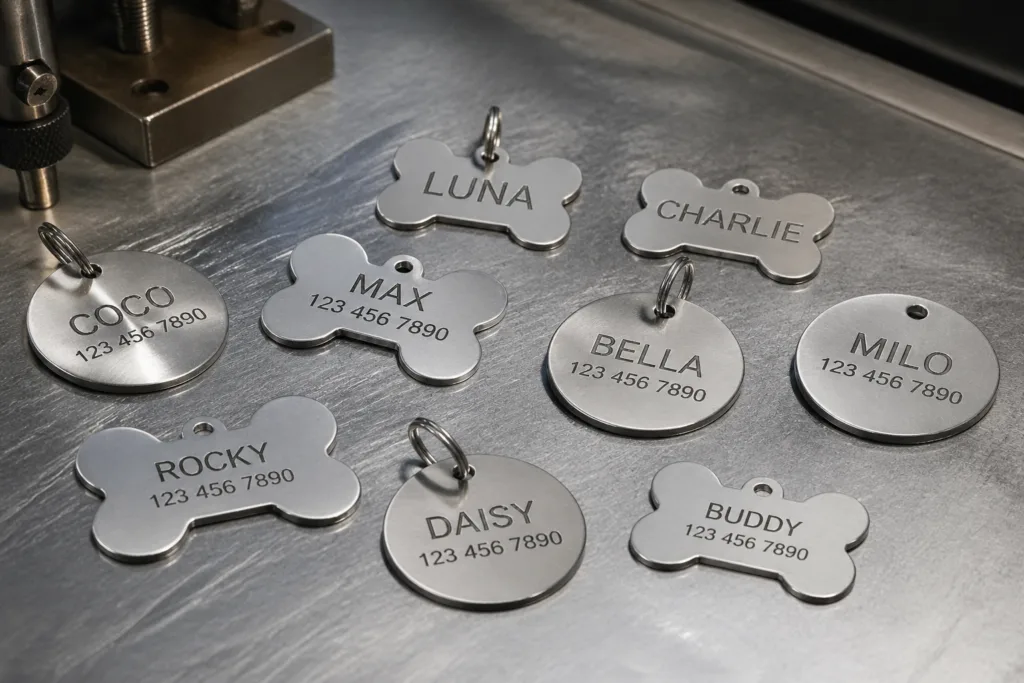
For organizations weighing custom stainless steel dog tags against alternatives like aluminum or brass, a side-by-side comparison is essential. Let’s break down the physical and functional differences:
| Property | Stainless Steel | Aluminum | Brass |
|---|---|---|---|
| Durability | Extremely durable; resists bending, scratching, denting | Lightweight, softer; more prone to dings/scratches | Durable but can deform with force |
| Corrosion Resistance | Excellent—best for humid, marine, or chemical-prone settings | Good, but pitting possible outdoors | Moderate—will tarnish and patina over time |
| Weight | Heavier; feels premium | Lightest option | Medium; comfortably solid |
| Engraving Retention | Engraving is crisp, deeply cut, and doesn’t wear off easily | May blur/fade as surface wears down | Holds engraving, but can become less legible as surface oxidizes |
| Aesthetics | Shiny, modern, high-end appearance | Matte or colored, less luxurious | Warm, classic, but with aging patina |
Custom stainless steel dog tags win on longevity and premium appearance, though aluminum wins for cost and weight. Brass, on the other hand, is valued for its distinct color and vintage aesthetic but is less practical for extreme environments.
Some buyers prefer aluminum for lightweight tags on smaller breeds or as a budget solution for promotional campaigns. If engraving permanence and outdoor reliability are top requirements, stainless steel is often the default for higher quality custom dog tags. For more insight, see our detailed guide comparing stainless steel and aluminum dog tags.
Manufacturing Methods for Custom Dog Tags
How your stainless steel dog tags are produced directly impacts durability, appearance, and ordering lead times. Common production methods include:
- Engraving (laser, rotary, or CNC): Cuts deep, permanent information into the tag surface. Ideal for longevity and legibility—especially for stainless steel dog tags personalized with names, numbers, or QR codes.
- Stamping: Presses letters or numbers into the metal, creating tactile relief. Highly resistant to wear, excellent for large production runs.
- Etching (chemical/lazer): Removes surface layers to mark detailed info or designs. Deeper etching enhances durability.
- Printing (UV, sublimation, or enamel fill): Adds color and graphics; may wear more quickly over years of abrasion.
Engraving and deep stamping generally provide the highest resilience—text remains clear for years, even under rough handling. Printing may be best where vibrant colors or logos are required, but expect some fade with heavy outdoor use.
Each method affects cost and turnaround: stamping and laser engraving often scale well for bulk orders, keeping unit cost down. However, highly custom, intricate etching or color runs can increase price and lead time. Single-unit, personalized stainless steel dog tags may run higher per tag than mass production orders but allow unmatched customization. According to UC Tag production expert Rain Chen, confirming artwork and process fit—before sign-off—avoids costly rework and ensures specs are aligned with use environment. For practical engraving comparisons, explore the engraved vs. printed dog tags durability guide.
Design & Specification Checklist for Stainless Steel Dog Tags
Before ordering stainless steel pet id tags for dogs, use this practical checklist to solidify your order details and prevent expensive missteps:
| Specification | Options | Considerations |
|---|---|---|
| Size & Shape | Military, bone, heart, circle, custom die-cut | Fit for animal size & visibility needs |
| Thickness | Typically 1.0–2.0 mm | Thicker = more durable, heavier feel |
| Finish | Polished, brushed, bead-blasted, or anodized | Polished for luxury; brushed hides scratches |
| Attachment | Rivet holes, split ring, ball chain, adhesive | Durable/fail-safe for active animals |
| Font & Contrast | Simple fonts, deep engraving, dark infill/paint | Ensures info is easy to read at a glance |
Other smart moves include asking for proof or sample tags before final production, especially for complex logos or unique shape requirements. Not sure what shape or font works best for your breed? See this guide to popular pet tag shapes that sell for inspiration.
Durability Testing Standards for Dog Tags
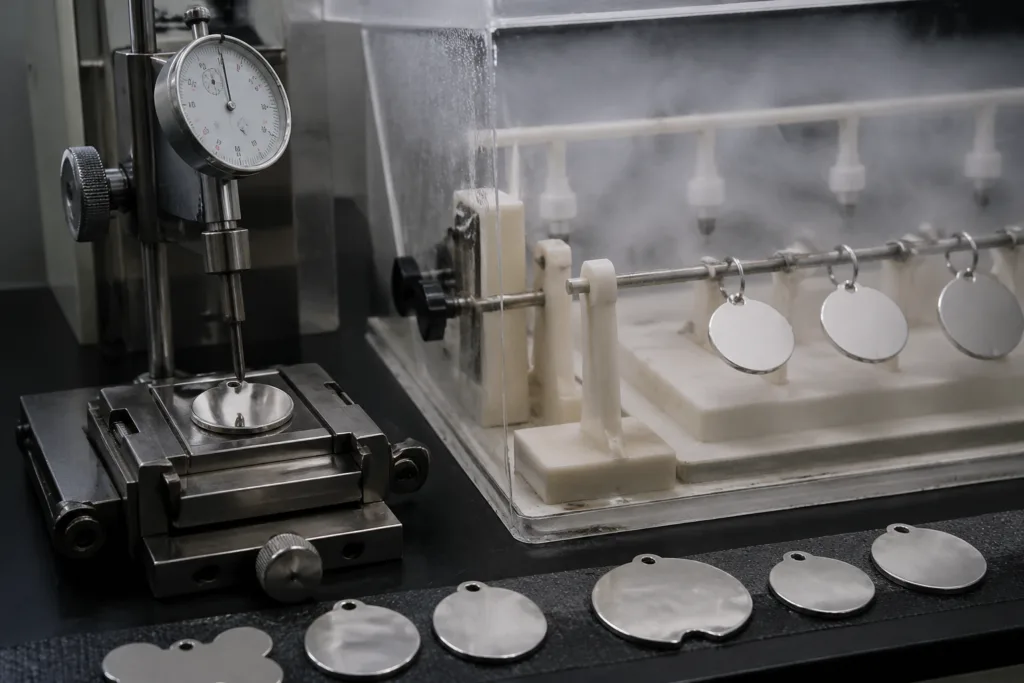
Stainless steel pet tags are trusted for their durability, but only when they’re engineered for true, real-world conditions. Rigorous testing standards help B2B buyers evaluate which tags are built to last:
- Corrosion Resistance: Stainless steel (especially 316 grade) resists rust, even after lengthy exposure to chemicals, water, or dog saliva. Salt spray testing helps predict marine or coastal field performance.
- Abrasion Resistance: Tags are tumbled, scratched, and flexed to see how well engraving or surface finishes withstand impacts and daily wear—critical for working dogs or outdoor pets.
- UV Exposure: For tags exposed to sunlight, accelerated UV testing checks for discoloration or weakening of finishes and infills.
- Salt Spray Testing: Simulates years of saltwater exposure; stainless steel consistently outperforms plated or bare aluminum and most brass formulations.
Lifespan expectations for stainless steel pet tags range from 5 to 15+ years, depending on use. For industrial applications or harsh climates, always confirm the grade (304 vs. 316) and request test data to ensure the tags will maintain readability, finish integrity, and attachment security. For a deep-dive into optimizing tag readability and endurance, see this expert guide to designing dog tags that remain readable and durable.
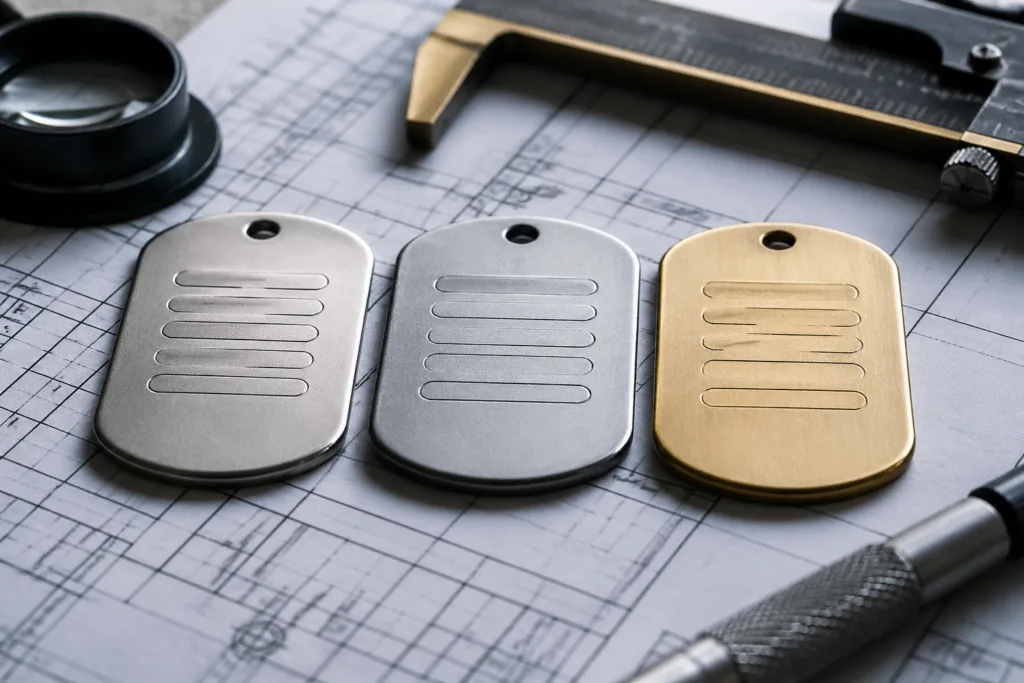
Industry Applications for Stainless Steel Dog Tags
Custom stainless steel dog tags are used far beyond household pet identification. In veterinarian clinics and animal shelters, these tags form the backbone of animal inventory systems, linking animals to medical records.
Industrial buyers leverage stainless steel for tracking service animals, therapy dogs, and even for staff asset identification in field environments. Outdoor event organizers and dog trainers value resilience during hikes, sporting events, or camping. For pet brands, logo-branded custom stainless steel dog tags elevate product lines with luxury cues and provide marketing visibility.
For compliance-heavy areas—such as service animal registration and working dog documentation—stainless steel ensures essential ID remains readable, even after years of active use. Strict manufacturing audits, like those followed by UC Tag, are often required. For branding tips, learn how heavy metal tags can upgrade your perceived value.
Common Mistakes to Avoid When Ordering Metal Tags
Ordering stainless steel dog tags personalized for bulk or special use? Avoid these common pitfalls to ensure the tags meet your durability, aesthetic, and identification goals:
- Neglecting to review artwork proofs for layout, contrast, or font clarity before production
- Selecting text or fill colors that blend into the surface, making tags hard to read from a distance
- Choosing the wrong stainless steel grade for wet, salty, or chemical-prone environments—resulting in premature corrosion
- Opting for weak adhesives or improper mounting methods, especially for large, active animals
- Failing to ask about warranty or durability guarantees from the tag manufacturer
For technical projects, consider feedback from experienced suppliers—like UC Tag—to fine-tune design, material, and finish choices. This prevents last-minute setbacks during quality inspections or deployment.
Ordering Guide for Stainless Steel Dog Tags
Planning to order stainless steel pet id tags for dogs? Start with these foundational steps for a smoother procurement experience:
- MOQ & Lead Times: Check minimum order quantities; custom industrial-grade tags may require a higher MOQ than retail tags. Allow extra lead time for complex engraving or special finishes.
- Artwork Submission: Provide clean, vector art or template files. Request a digital proof, and approve before mass production.
- Samples: For large orders, ask for pre-production samples, especially if you need to inspect finish, weight, or readability across several tag variations.
- Packing & Shipping: Clarify if individual or bulk packaging is preferred. For international orders, account for customs or inspection delays.
- Quoting: Collect detailed written quotes covering all specs and additional setup fees before finalizing the contract. Bulk discounts often apply for higher volumes.
For more practical insights on minimum order quantities, see this guide to custom metal tag MOQs. Always target clarity and transparency at each order stage to minimize surprises.
Frequently Asked Questions
What is the biggest advantage of stainless steel over other dog tag materials?
Stainless steel stands apart for its unmatched durability and corrosion resistance, making it ideal for environments where tags are exposed to water, abrasion, or chemicals, and where long-term readability is essential.
How long does engraving last on a stainless steel dog tag?
Deep engraving on stainless steel pet tags can remain legible for 10 years or more, withstanding daily wear, washing, and rough handling—much longer than printing or light etching methods on softer metals.
Are there special maintenance steps for stainless steel pet tags?
Routine cleaning with mild soap and water preserves the shine and clarity; avoid harsh abrasives, and inspect engraving occasionally to ensure maximum legibility for identification or branding.
Can stainless steel dog tags be fully customized?
Yes, stainless steel dog tags personalized with custom shapes, logos, QR codes, batch serials, and finishing options are available, especially when working with manufacturers experienced in industrial engraving and stamping.
What’s a realistic price range for custom stainless steel dog tags in bulk?
Price per tag varies by complexity and order volume; expect higher unit costs for small, one-off runs, with pricing dropping dramatically for bulk orders once setup and manufacturing are optimized.
Can you get short production lead times for urgent or rush orders?
Many professional tag manufacturers offer expedited services for stainless steel pet id tags for dogs, as long as artwork and specifications are approved quickly and raw materials are in stock.
Related Reading
- Material Showdown: Choosing Between Stainless Steel and Aluminum Dog Tags
- Ensure Dog Tag Readability and Lifespan: Pro Design Tips That Work
- Engraved or Printed? Find Out Which Dog Tag Lasts Longer
- Boost Your Product’s Image with Heavy Metal Tags
- Minimum Orders Explained: Get the Right Quantity for Your Tag Project
- Bone, Heart, or Circle? Discover Which Tag Shapes Work Best for Pets