Introduction to Dog Tag Design
Clear identification is crucial for all pet dog tags, whether in private homes, animal shelters, or commercial settings. Choosing dog tag ideas that deliver high readability ensures safety and enhances operational efficiency for B2B buyers and engineers—making sure the tag is visible and the information lasts.
The best custom engraved tags go beyond visual appeal: they combine robust materials, effective font choices, practical finishes, and thoughtful layout. Each of these factors impacts how well a tag withstands environmental conditions and repeated handling.
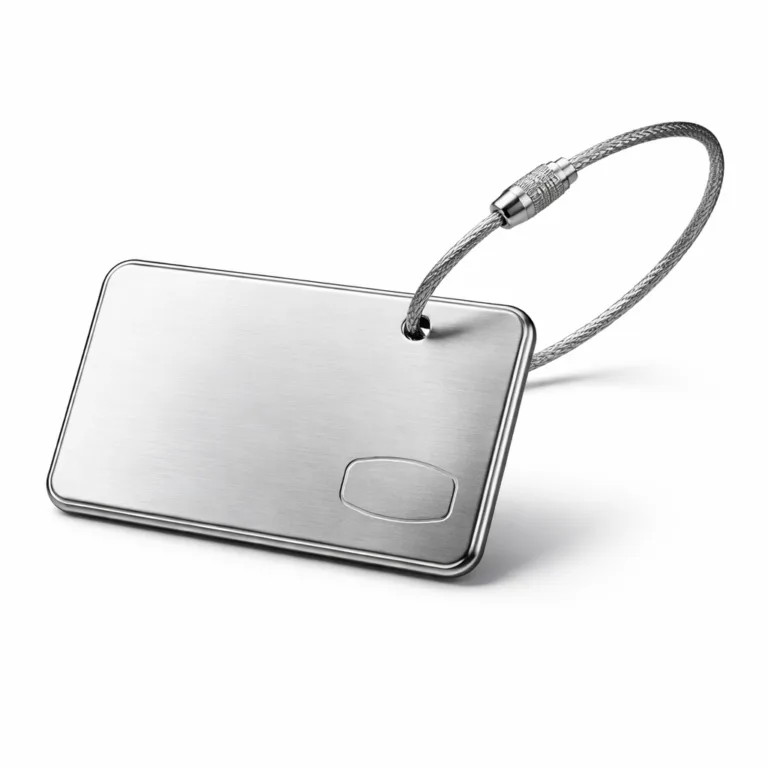
With a range of branded options—from metal nameplates and logo plates to asset tags and personalized pet tags—you can tailor your dog tag sample to fit specific needs. Custom solutions offer not just readability but also differentiation and brand consistency. Practical decisions in tag design help you deliver durable, functional products that make identification effortless in real-world environments.
Key Design Factors for Readable Dog Tags
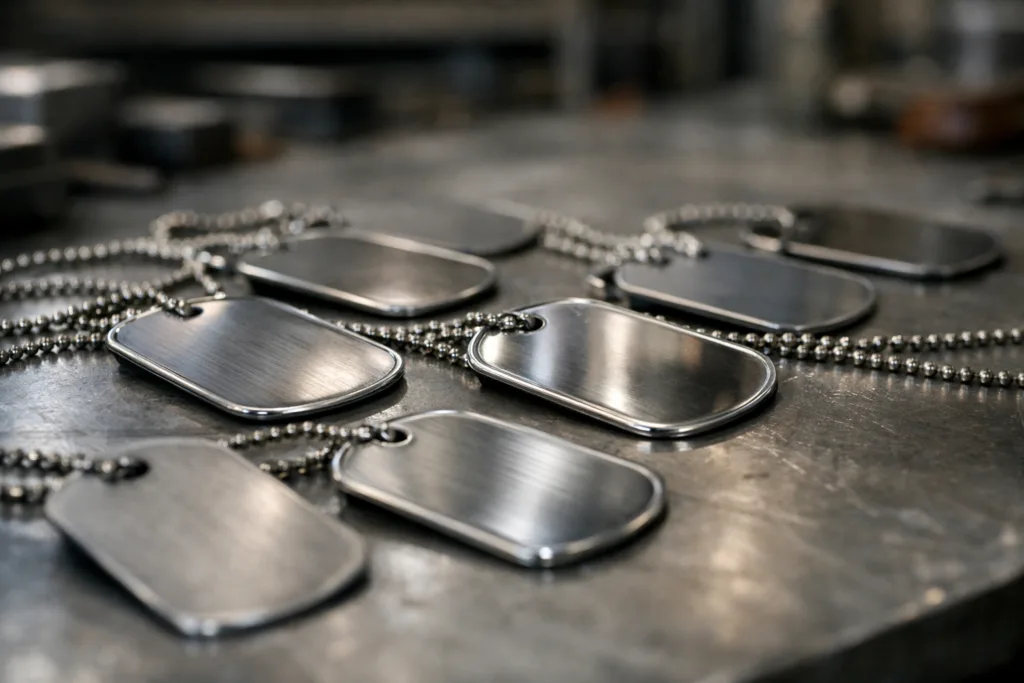
Dog tag examples prove that visibility starts with font size. Aim for a minimum text height of 2mm for engraved metal tags; larger is often better in outdoor or low-light scenarios. For line count, stick to two to four lines: enough space for key information without over-cluttering.
Proper line spacing is essential. Maintain at least 40% of text height as vertical spacing between lines. Crowding reduces legibility—even with quality engraving methods.
Contrast between text and background is a top priority for clarity. Opt for dark text on bright tags, or inverse; brushed finishes and black-filled engraving boost legibility. Refer to our Expert Font Size Guide for minimum legible text standards, especially in mass production.
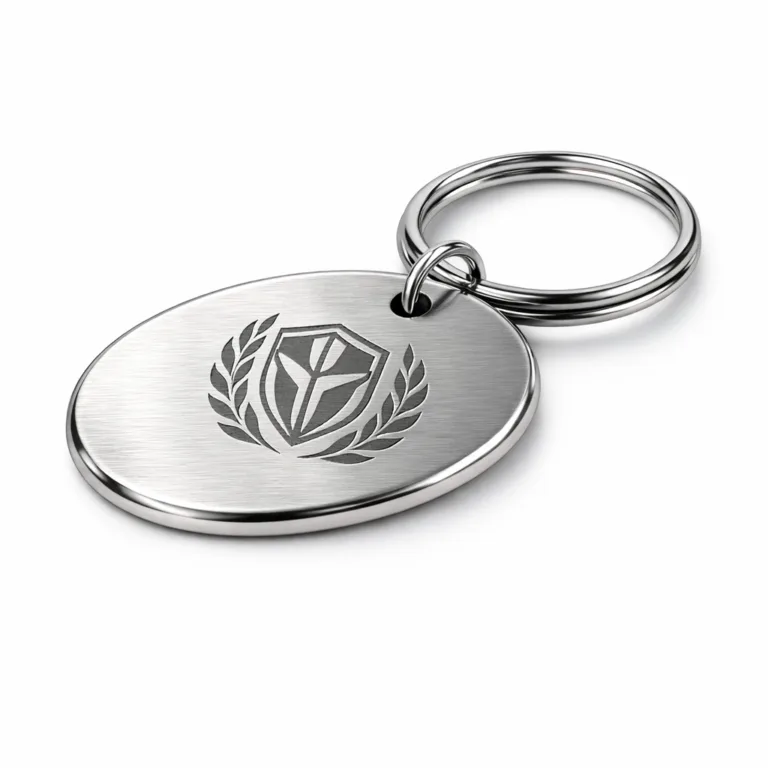
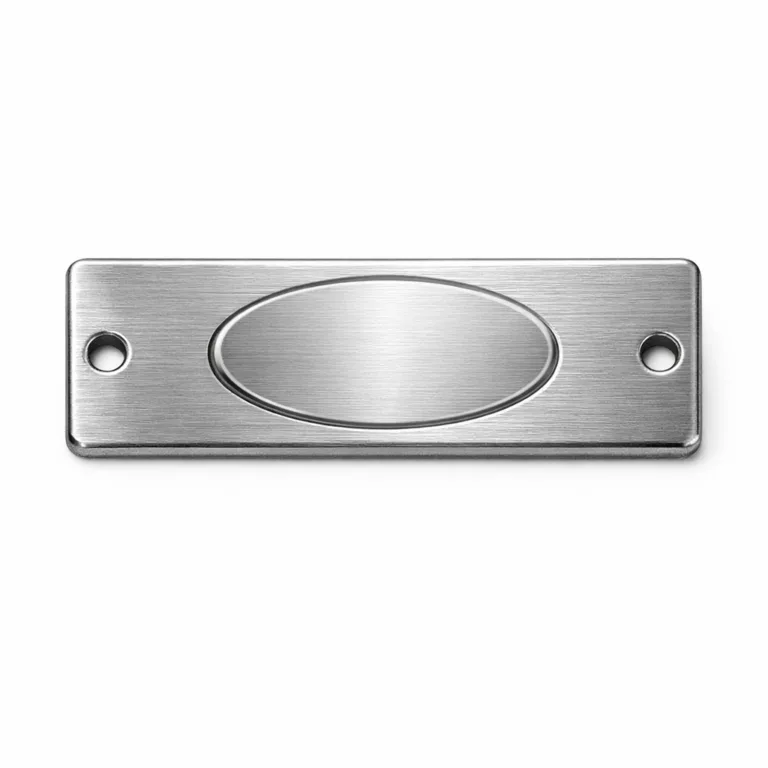
Shape choices impact both aesthetics and functionality. Simple shapes—rectangular, circle, bone, heart—offer broad canvas and easy attachment. Unique custom shapes should be tested for balance and space. Our Guide to Pet Product Shapes explores what sells and fits.
Durable engraving is vital. Deep laser cuts, chemical etching, and mechanical stamping create readable marks that resist fade—even in harsh environments. The method must match tag material for optimal performance.
- Use minimum font size of 2mm.
- Limit line count to 2–4.
- Maintain generous spacing.
- Choose shapes for visibility and easy attachment.
- Match engraving method to material for lasting readability.
Materials Comparison for Dog Tags
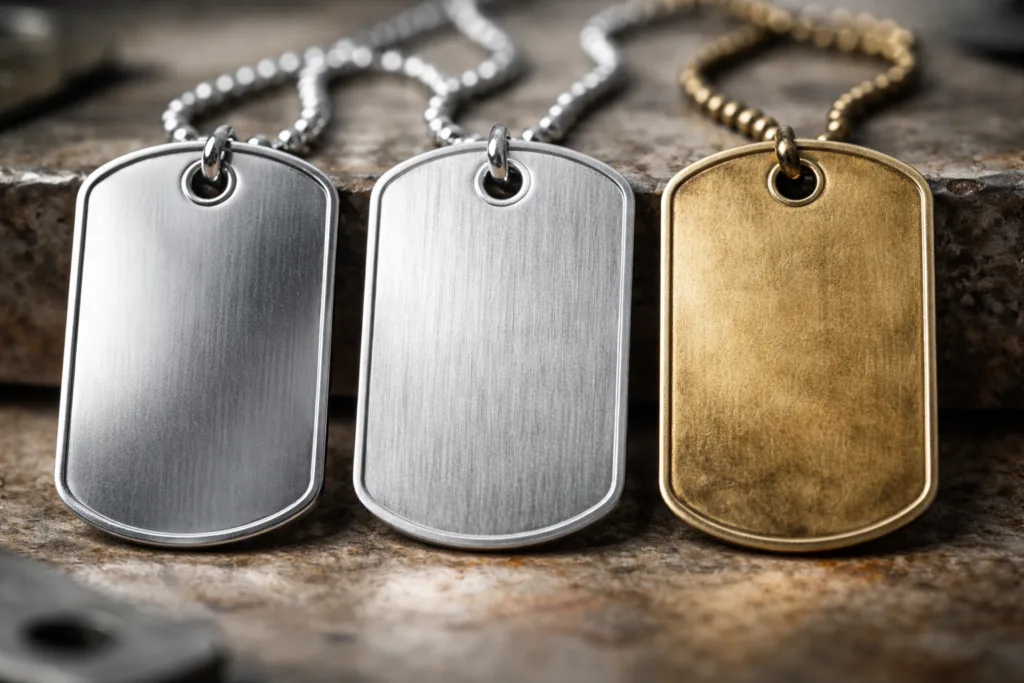
Material selection shapes both the appearance and durability of dog tag examples. Each alloy has unique trade-offs for custom engraved tags and engraved metal tags.
| Material | Weight | Durability | Engraving Quality | Ideal Uses |
|---|---|---|---|---|
| Aluminum | Light | Modest | High contrast, but shallow cuts | Indoor, promotional pet tags |
| Stainless Steel | Medium | Excellent | Deep, crisp engraving | Outdoor, high abrasion environments |
| Brass | Medium | Good (patinas outdoors) | Classic look, moderate depth | Luxury, indoor/outdoor |
Aluminum is lightweight and affordable, but surface scratches and oxidation may affect readability over time. Stainless steel delivers unmatched corrosion resistance and stands up to repeated wear—making it the best option for engraved metal tags used outside. Brass tags provide a classic aesthetic, developing a patina with exposure, though readability may fade more quickly in extreme conditions.
Rain Chen at UC Tag notes that deep laser engraving on stainless steel produces crisp, highly visible text that stands up to salt spray and abrasion, ideal for demanding applications where tag performance matters most.
Manufacturing Methods: Engraving vs. Other Techniques
Different manufacturing approaches affect both the longevity and clarity of dog tag sample designs. The main options include engraving, stamping, etching, and printing, each with their own practical strengths and weaknesses.
Engraving (mechanical or laser) carves text into the metal for permanent, high-contrast visibility. It works well for engraved metal tags and is compatible across most materials.
Stamping creates embossed or debossed patterns using pressure, yielding tactile, rugged tags that tolerate extensive handling. Chemical etching uses acid to remove metal and enables fine detail—but shallow etches can wear out faster. Printing (UV or sublimation) allows vivid colors and graphics but is susceptible to fading, breaking down under UV and abrasion.
When choosing a method, consider maintenance and readability demands. For B2B buyers with outdoor deployments, opt for deep laser engraving or mechanical stamping. Asset management tags or pet IDs exposed to rough use require these resilient marks.
Each method enables different color and detail levels. Stampings excel at bold shapes; engravings adapt to microtext and QR codes; etching is ideal for logo plates and artistic finishes (custom metal tag solutions provide transition options). Case studies show that printed tags are best reserved for indoor promo pieces—where color matters more than permanent identification.
Design & Spec Checklist for Dog Tags
Practical dog tag ideas start with clear specifications. Use the following checklist and comparative table to streamline your design process:
- Set tag size (30–50mm width for pets, up to 60mm for industrial or logistics tags).
- Choose thickness: 0.8–2mm for durability, thicker tags feel more premium.
- Select finish: brushed for readability, polished for luxury, anodized for color.
- Specify holes or adhesive: S-hook holes for pets, adhesive pads for logistics.
- Establish minimum text height and contrast level tolerances from artwork proofs.
| Spec | Recommended Range | Key Benefit |
|---|---|---|
| Width | 30–60mm | Fits collars, harnesses, crates |
| Thickness | 0.8–2mm | Improves durability, tactile feel |
| Finish | Brushed/Polished/Anodized | Boosts contrast, resists wear |
| Attachment | S-hook, adhesive, rivet | Secures tag, reduces loss |
| Font Size | ≥2mm | Enhances legibility |
| Contrast | Dark/Light combos | Maximizes readability |
When requesting custom engraved tags, review artwork proofs for correct font size and spacing. Rain Chen at UC Tag stresses the importance of confirming final tolerances—especially if tags are mass-produced for industrial use. This avoids costly misprints and ensures tags meet operational demands.
Ensuring Durability and Testing for Dog Tags
Engraved metal tags must withstand real-world challenges such as corrosion, abrasion, and UV exposure. Corrosion resistance is essential for tags deployed in wet, salty, or chemically harsh environments—stainless steel and anodized aluminum excel here.
Abrasion tests simulate years of collar rubbing, crate banging, and other wear. Deep engraving and robust finishes preserve information even after heavy use. UV exposure testing helps predict fading for both colored and printed tags.
Salt spray testing is standard in vet clinics and logistics settings, revealing how tags hold up to marine air and pet saliva. For tags subjected to such stresses, aim for a recommended lifespan of up to five years, with periodic checks for damage.
Effective maintenance includes regular cleaning and ensuring the tag’s fastener remains secure. Refer to our clarity maximization guide for tips on maintaining dual-sided tags and preserving all information.
Industry/Application Fit: Use Cases for Custom Dog Tags
Dog tag examples are vital across a range of industries. In pet care—vet clinics, shelters, breeders—custom engraved tags make dogs instantly identifiable and reduce misplacement risk. Logistics firms use readable tags for tracking pets in transit, aiding fast identification and compliance with regulations.
In livestock management, dog tag ideas extend to farm animals, supporting efficient herd sorting and health management. Promotional applications are also common: pet brands and retailers use tags for giveaways, loyalty incentives, and awareness campaigns.
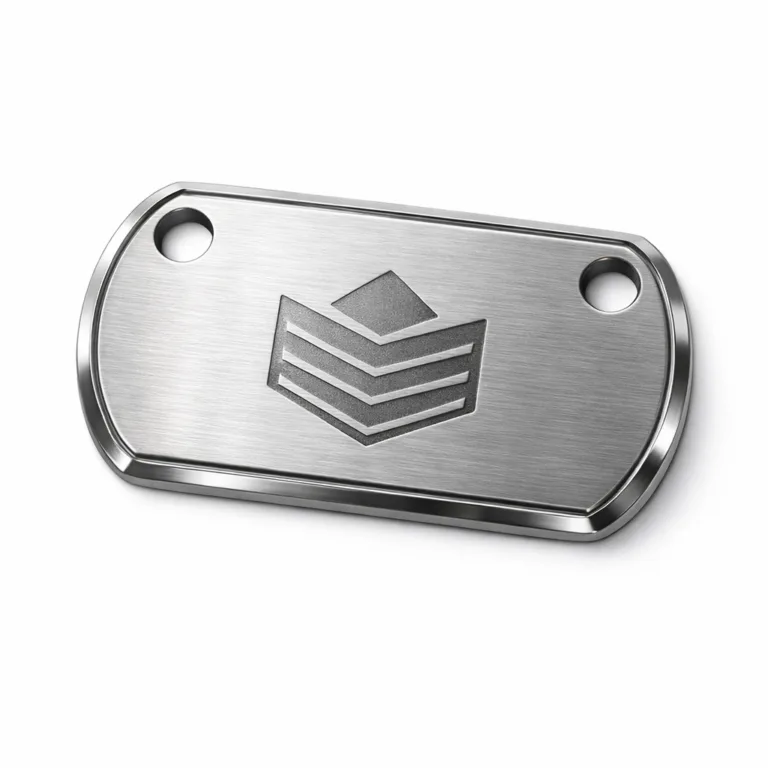
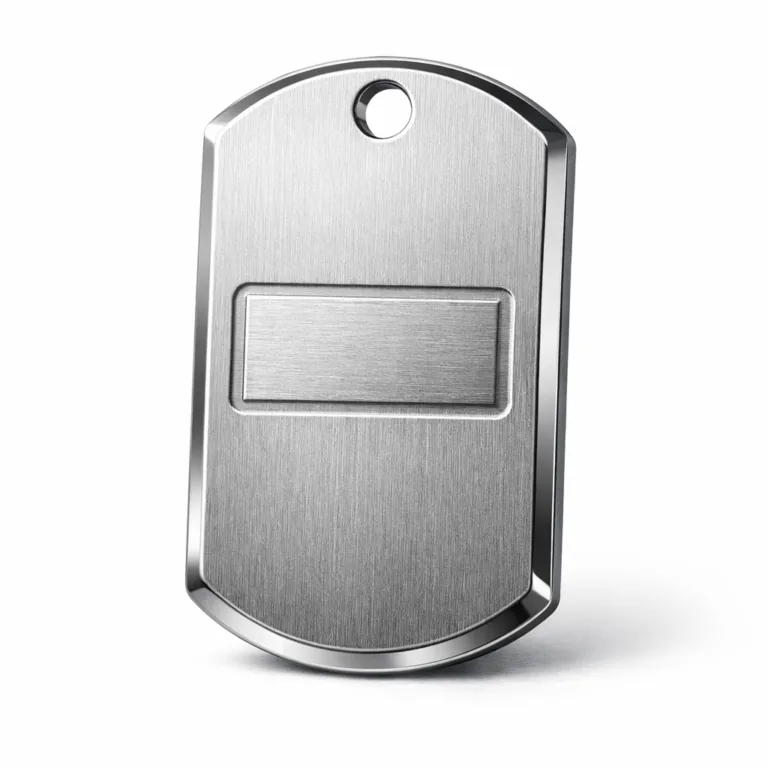
Refer to classic military dog tags for examples of long-lasting, highly visible IDs. Custom shapes and engraved metal tags help brands stand out while maintaining practical utility—see our custom crest dog tags for how branding and durability align.
Common Mistakes in Dog Tag Design and Troubleshooting
One of the most frequent errors is using an unreadable font or text below minimum size. Always review dog tag sample proofs against artwork guides; even a small change can affect clarity. Ignoring correct adhesives leads to peeling tags and potential loss.
Poor contrast between text and background makes information difficult to read, especially under harsh lighting or after long wear. Overlooking environmental impacts such as corrosion, UV, or abrasion results in tags that fade or break prematurely.
Before final production, review every proof carefully. Rain Chen from UC Tag emphasizes that even experienced engineers should never skip this step—it catches errors early and saves costs. Refer to our mistakes guide for more troubleshooting tips.
Ordering Guide for Custom Dog Tags

Ordering a custom dog tag sample requires careful planning. Most manufacturers set minimum order quantities—common ranges are 100–500 units depending on material and shape complexity. Bulk orders secure lower pricing per tag.
Lead times depend on volume and engraving detail; expect 2–6 weeks for standard engraved metal tags, longer for intricate shapes. Provide detailed artwork (preferably vector files, not JPEG) and clear specifications for size, finish, and font.
Proofing is vital: request digital or physical proofs to approve design and readability before mass production. Sampling options are common—refer to custom metal tag samples for realistic expectations and comparison.
By taking these steps, you ensure your tags meet operational needs while avoiding costly missteps.
Frequently Asked Questions
How can I choose the best material for outdoor use?
Stainless steel is typically best for outdoor dog tags due to its superior corrosion resistance, durability, and ability to hold deep, clear engraving.
What is the best font size for legibility?
A minimum font height of 2mm is ideal for clear readability; larger text further improves visibility, particularly for tags exposed to harsh environments.
How long does the engraving last in outdoor conditions?
If using deep laser engraving or mechanical stamping on stainless steel or anodized aluminum, readability should last for at least three to five years outdoors.
Can I get a sample before placing a bulk order?
Yes, most manufacturers provide a dog tag sample for proofing and quality checks, allowing you to assess text visibility and overall build before full production.
What finishes are best for a specific environment?
Brushed finish offers superior scratch resistance and readability for most conditions; anodized for color and corrosion protection; mirror polished for luxury indoor tags.
What are my options for attaching the tag?
S-hook holes are standard for pet collars; adhesives, rivets, or sewn-on options suit logistics and industrial applications, ensuring secure and lasting attachment.
Related Reading
- Maximize Dog Tag Information: Expert Insights on Essential Details
- Choose the Right Font Size: Practical Guide for Legible Metal Tag Engraving
- Optimize Shape Choices for Pet Tags: Increase Comfort and Readability
- Unlock Custom Metal Tag Solutions for Tough Industrial Environments
- Avoid Costly Tag Design Mistakes: Troubleshooting and Practical Fixes