Introduction to Dog Tag Options
Dog tags play a crucial role in asset identification, equipment labelling, and personal ID—across industries from manufacturing and logistics to pet care. Industrial buyers and consumer brands alike rely on these small, but vital, tags to provide critical information that remains legible throughout a tag’s operational lifespan.
Durability is the top concern when selecting identification solutions. While there are many customizable technologies on the market, two main processes dominate the discussion: engraved dog tags and printed dog tags. Which method delivers the longevity and outdoor resistance required for demanding environments? Understanding the differences will help you make informed decisions for your application.
Understanding Engraving
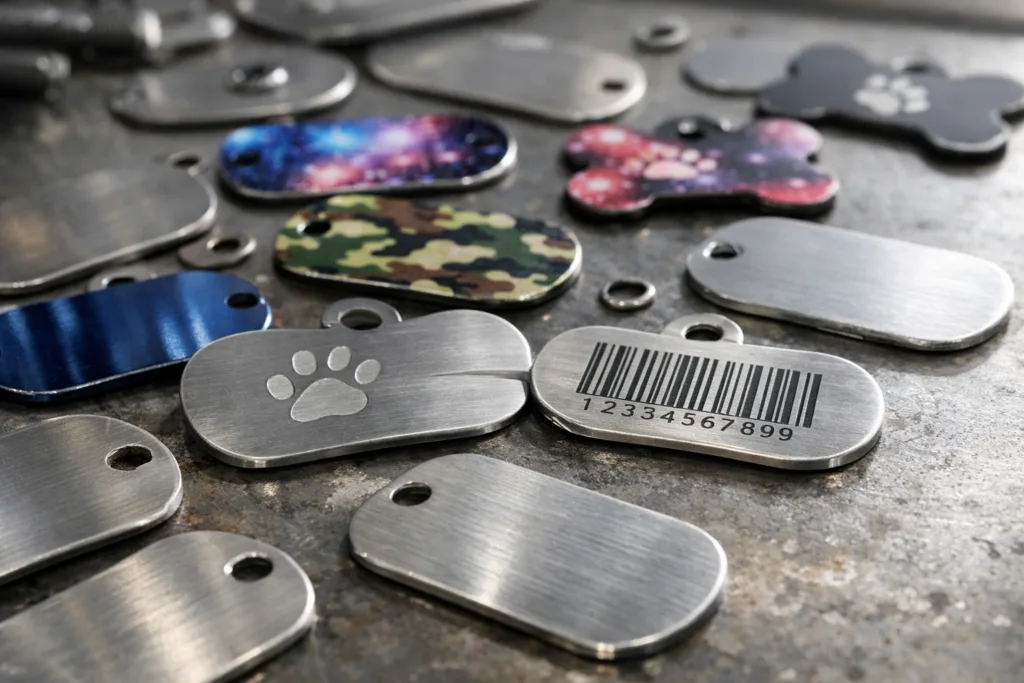
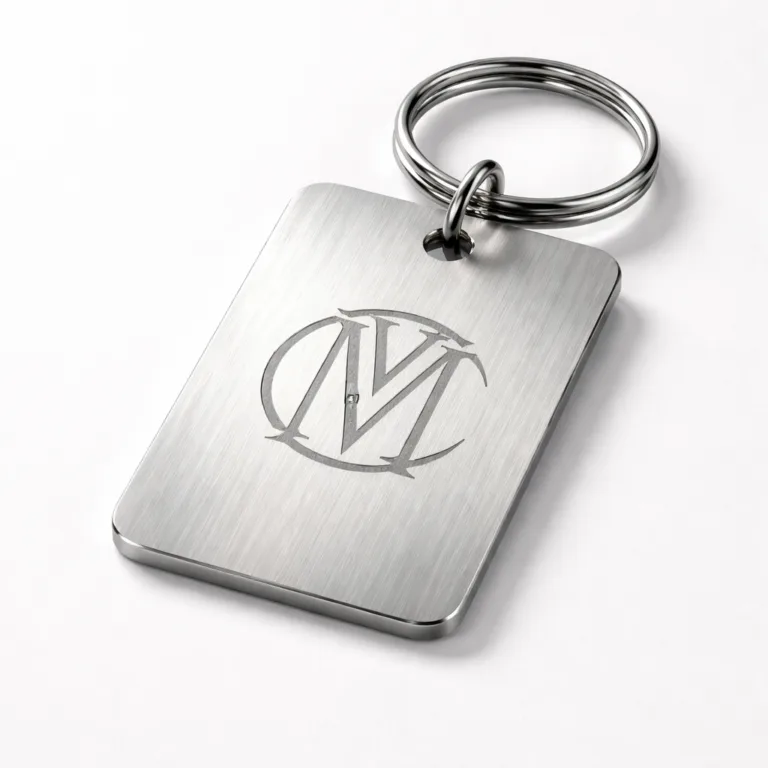
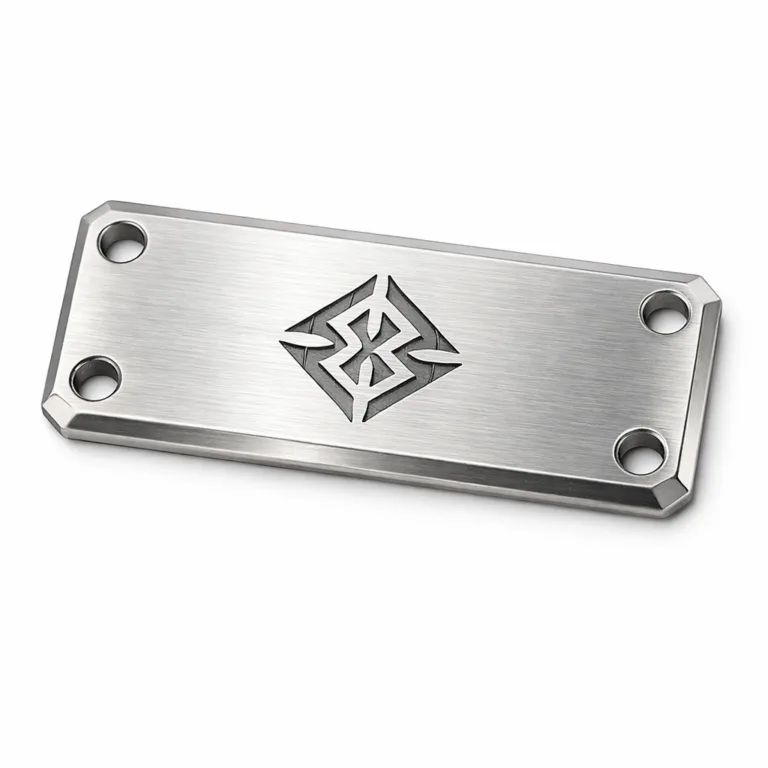
Engraving is a mechanical or laser-based process where material is physically removed or ablated from the surface to create text, codes, or logos that are cut into the metal itself. The most common techniques are CNC engraving and laser engraving—both providing highly controlled, precision results.
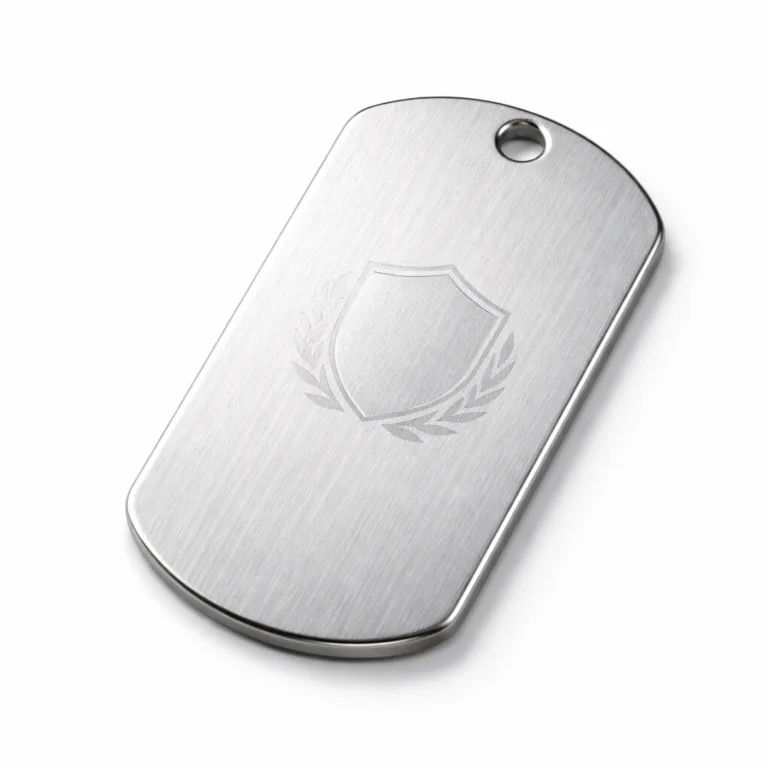
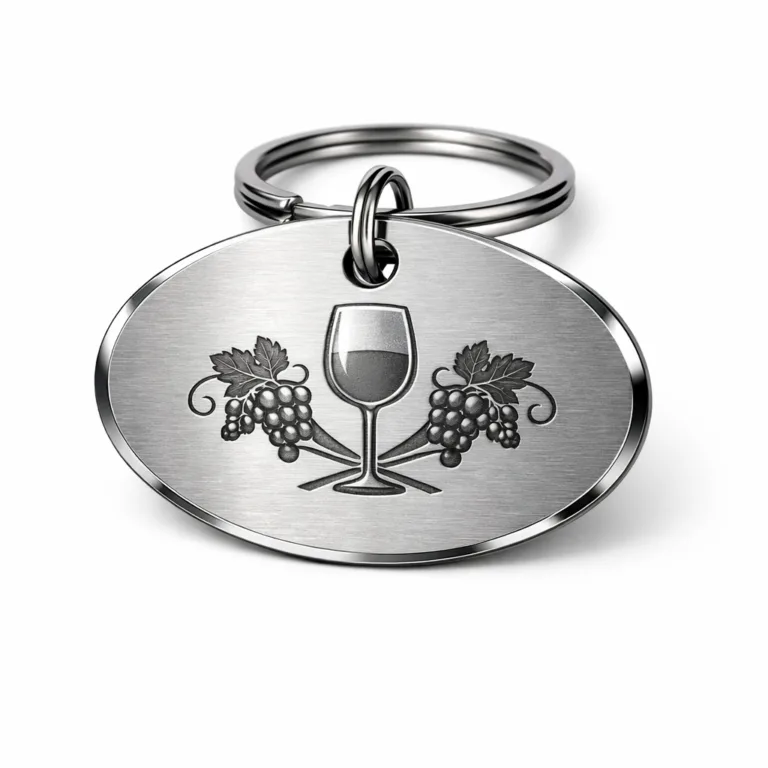
Laser engraved dog tags use focused beams to vaporize the surface, resulting in extremely crisp and durable markings. Whether deep or shallow, the information can’t peel or fade, because it’s inside the tag’s structure. Engraved pet tags offer the security and wear resistance needed for long-term outdoor use, machine environments, or field-deployed assets.
- Laser engraving – non-contact, excellent readability, ideal for serial numbers and tiny fonts.
- CNC/mechanical engraving – robust marks, can handle thicker tags and custom depths.
- Chemical etching – for fine detail and batch marking, especially for logos or complex artwork.
Engraving works best on metals like stainless steel, brass, and aluminum. In heavy industry, asset tracking, and high-wear environments, engraved dog tags outlast printed approaches by years—sometimes decades. UC Tag’s Rain Chen, a veteran craftsman, has observed that properly specified laser etched tags can survive thousands of cleaning or abrasion cycles, where prints would quickly fail.
Understanding Printing
Printing methods, such as UV printing or silkscreen, apply ink or pigmented resin to the surface of the tag. These printed pet tags can offer high color vibrance, support for multi-color logos, and quick turnaround—often at lower initial costs.
The primary drawback of printing is wear. Because ink sits on top of the substrate, friction, cleaning with chemicals, scratching, or prolonged UV exposure can degrade the information. Print clarity typically fades far sooner than with mechanical or laser methods, especially in outdoor or abrasive conditions.
Despite this, printing is beneficial in scenarios where cost-effectiveness and short-term identification matter most—for example, trade show giveaways, temporary event passes, or promotional tags. Designs with ultra-high color requirements or elaborate gradients may be better suited for printing, as deep engraving can’t always capture full-spectrum artwork. However, for long-term visibility or in environments exposed to sun or moisture, the trade-off becomes clear.
Material Comparison for Dog Tags
The choice of material directly impacts the durability and suitability of both engraving and printing methods. Common dog tag materials include aluminum, stainless steel, and brass. Each material offers a different balance of corrosion resistance, strength, and compatibility with manufacturing techniques.
For engraved dog id tags and laser etched dog tags, stainless steel provides top-tier toughness and rust immunity, making it a go-to for outdoor industrial or marine settings. Aluminum—especially anodized—offers outstanding corrosion protection and light weight, handling both laser etching and printing well (with the caveat that printing inks may degrade more quickly on high-friction surfaces). Brass provides a premium aesthetic but requires thoughtful alloy selection and finishing to withstand weathering.
In side-by-side tests, engraving techniques penetrate the protective layer, creating markings that last as long as the material itself. In contrast, printing remains a surface treatment, vulnerable to the elements and cleaning protocols.
| Material | Ideal for Engraving? | Ideal for Printing? | Corrosion Resistance | Outdoor Suitability |
|---|---|---|---|---|
| Stainless Steel | Yes | Sometimes | Excellent | Excellent |
| Aluminum (anodized) | Yes | Yes | Very Good | Very Good |
| Brass | Yes | Occasionally | Good (with finish) | Good |
For indoor tags or temporary signage, printing on coated aluminum may suffice. For high-value assets or pets, engraved dog id tags in stainless steel or anodized aluminum are a smarter investment to maintain traceability over time. For more on matching materials to need, see our guide to choosing the right engraving materials.
Manufacturing Methods and Their Impact on Longevity
The technical differences between engraving and printing define how each dog tag endures over time. Laser engraving and chemical etching both physically remove (or alter) the metal’s surface—but with subtle differences. Laser engraved dog tags are ablated by focused beams, creating permanent color changes or deep channels that resist abrasion or solvent attack. Chemical etching uses acids or other chemicals to eat away fine details, especially in complex graphics or batch serial numbering.
Printed dog tags, by contrast, use ink—either sprayed, cured, or transferred onto the surface. UV-cured prints are tougher than solvent-based inks, but both are susceptible to scratching, especially around hanging holes or contact points. Vinyl overlays add some abrasion resistance, but can delaminate or peel, particularly in harsh weather or with repeated flexing.
Consistent, high-precision production is another angle. Engraving equipment, once set up, repeats deep marks with minimal variance across thousands of tags, making large-volume asset projects efficient. Printed tags may see variance due to ink viscosity, color matching, or curing issues, impacting readability.
Design & Spec Checklist for Dog Tags
To ensure lasting performance, it’s essential to specify dog tags with key design and manufacturing parameters in mind. Here’s a checklist to guide B2B buyers toward optimal durability for engraved dog tags:
- Size: Standard dog tag is 50×29mm, but custom shapes and sizes are common.
- Thickness: 0.8–2mm is typical for outdoor durability.
- Material Finish: Brushed or matte for fewer visible scratches; polished for premium looks.
- Hole Placement: Standard corners vs. custom positions for unique attachments.
- Adhesive Backing: 3M-backed tags for smooth surfaces, but not ideal for rough/exposed gear.
- Readability: High contrast between mark and base metal is crucial.
- Design Limits: Engraving supports smaller fonts; printing offers more color but less small-text clarity.
- Custom Shapes: Deep internal corners or tiny holes may not suit all manufacturing methods.
| Specification | Engraving | Printing | Recommended Use |
|---|---|---|---|
| Font size | ≥1.0mm | ≥1.5mm | ID, assets, pet |
| Minimum thickness | 0.8mm | 0.5mm | Outdoor/long-term |
| Visual contrast | Very high | High (indoors) | Readability |
| Colors | Monochrome, infill | Full color | Branding/Promo |
If you’re unsure about limits or how a design will look in real life, sampling is recommended. For inspiration on shapes and branding, see our curated list of custom dog tag approaches that sell.
Durability & Testing Standards
Independent durability testing is crucial for evaluating long-term performance. Common tests for metal tags include salt spray (for corrosion), abrasion resistance, and UV exposure. Laser etched dog tags and engraved pet tags consistently outperform printed options in these settings, often surpassing minimum requirements for readability after 1,000+ hours of exposure.

Abrasion (scratch) tests simulate repeated contact with keys, industrial washing, or collar wear. Engraved data typically remains fully legible, while printed details may disappear after only a few hundred cycles. UV fade tests further demonstrate this gap; inks and dyes often suffer fading or discoloration, especially if not formulated for outdoor use.
For buyers needing to meet specific industry standards—such as MIL-STD-130, ASTM B117, or REACH/Prop 65—manufacturers must certify both marking permanence and material safety. Environmental challenges including moisture, sand, detergents, and temperature swings make specification even more important.
UC Tag regularly tests sample runs using customer hardware, recreating worst-case usage scenarios. This shop-floor approach uncovers subtle failure points before mass production, giving buyers practical confidence in their spec decisions.
Industry Applications and Use Cases
Engraved dog id tags are a staple across sectors with high durability demands, such as military identification, industrial machine labeling, food production, and pet tracking. These environments expose tags to weather, solvents, physical knocks, and constant handling—making engraved tags the only sensible option for persistent identification.
Printed tags find their place in more cost-sensitive or short-duration roles. Promotional pet tags, event access passes, and temporary labeling often leverage color-intensive or fast-turnaround prints, accepting their shorter lifespan.
Application-specific needs matter. For example, pet tags worn daily must use materials and marks that don’t fade or corrode, while a trade show swag tag may only need to last the duration of the event. Environmental factors like sunlight, water exposure, or industrial cleaning should shape your tag choice. For tips on balancing size and comfort in pet products, see our practical guide to dog tag shapes that fit.
Common Mistakes and Troubleshooting
Several avoidable mistakes can undermine dog tag performance. Peeling, fading, or illegible tags usually result from improper manufacturing, poor adhesive selection, or mismatched materials. Printed dog tags are notorious for ink rubbing off around holes or where tags contact metal surfaces—sometimes failing within weeks if exposed to rain, sweat, or cleaning fluids.
For engraved dog tags, mistakes often relate to specifying shallow or too-fine engraving, or choosing the wrong alloy/finish for outdoor settings. Corrosion due to base metal exposure after deep etching can also occur if protective coatings are missing. Buyers should ask manufacturers about test results and previous use-case performance for similar tags before placing their orders.
Before ordering, always clarify:
- Is my application short- or long-term?
- What environmental factors (UV, abrasion, chemicals) will tags face?
- Are the chosen adhesives or fasteners rated for my environment?
- Can the supplier guarantee spec compliance and provide real samples?
When in doubt, requesting a sample is often the smartest step toward avoiding expensive errors.
Ordering Guide and Process
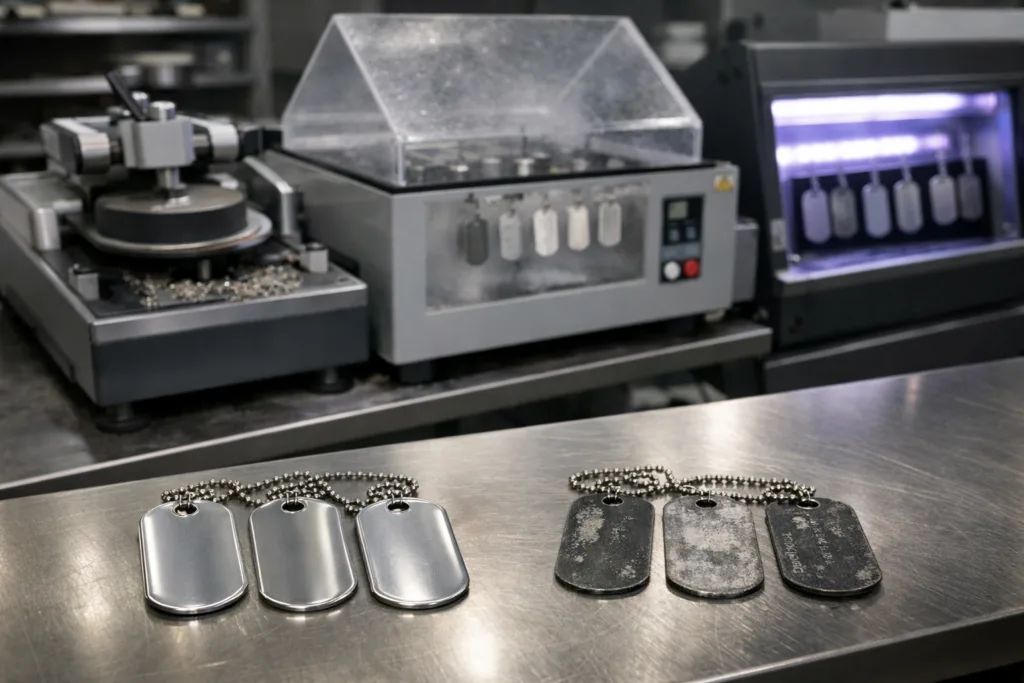
Ordering engraved dog id tags is straightforward but does require clarity about specs and expectations. Most manufacturers set minimum order quantities (usually 100-500 for custom tags), with lead times from 2–4 weeks depending on complexity and volume. For urgent, smaller orders, checking for in-stock standard models is wise.
Artwork submission should use vector files (AI, EPS, SVG) for consistent reproduction. After proofing and client signoff, sampling is strongly encouraged, especially for new shapes or finishes. Packaging (bulk, sorted, private label) and shipment method (air, freight, express) affect both costs and timelines—factoring in customs and local regulations when necessary.
Proactive communication with your supplier—sharing all project needs and deadlines—prevents bottlenecks. For deeper insights on logistics and expectations, see our guide to metal tag prototypes and mass production.
Frequently Asked Questions
Are engraved dog tags more durable than printed dog tags?
Yes, engraved dog tags and laser etched dog tags are significantly more durable because their markings are cut or ablated into the metal, resisting fading, abrasion, and outdoor exposure far better than surface-applied prints.
What is the cost difference between engraved and printed dog tags?
Printed tags are often cheaper for bulk short-term use, but the longer lifespan of engraved pet tags makes them more economical in the long run for everyday identification or harsh environments.
Can I customize both engraving and printing in terms of design?
Both methods offer good customization—engraving excels with precise text, QR codes, and logos, while printing is better for full-color artwork or gradients, though it may sacrifice long-term readability.
What’s the best maintenance method for keeping tags legible?
Engraved dog id tags require only occasional cleaning with mild soap and water, while printed tags should be kept away from solvents and abrasive scrubbing to avoid damaging the ink surface.
Are there warranties for engraved or printed tags?
Many manufacturers, including UC Tag, offer quality guarantees on laser etched dog tags and engraved pet tags regarding legibility and finish, but printed tags usually have shorter warranty coverage due to wear-prone ink.
How long does it take to receive a bulk order of dog tags?
Production and shipping time varies, but most engraved tags take 2–4 weeks for standard orders after artwork approval, while printed runs may be slightly faster for simple designs and larger batches.
Related Reading
- Design Dog Tags That Stay Legible in Any Environment: Tips & Examples
- Maximize Your Dog Tag’s Clarity: Front vs Back Placement Strategies
- Ensure Readable Dog Tags: Expert Font Size and Engraving Guidelines
- Choosing Dog Tag Sizes and Materials for Military and Industrial Needs
- Efficiently Engrave Unique Names on Bulk Metal Dog Tags: Production Tricks