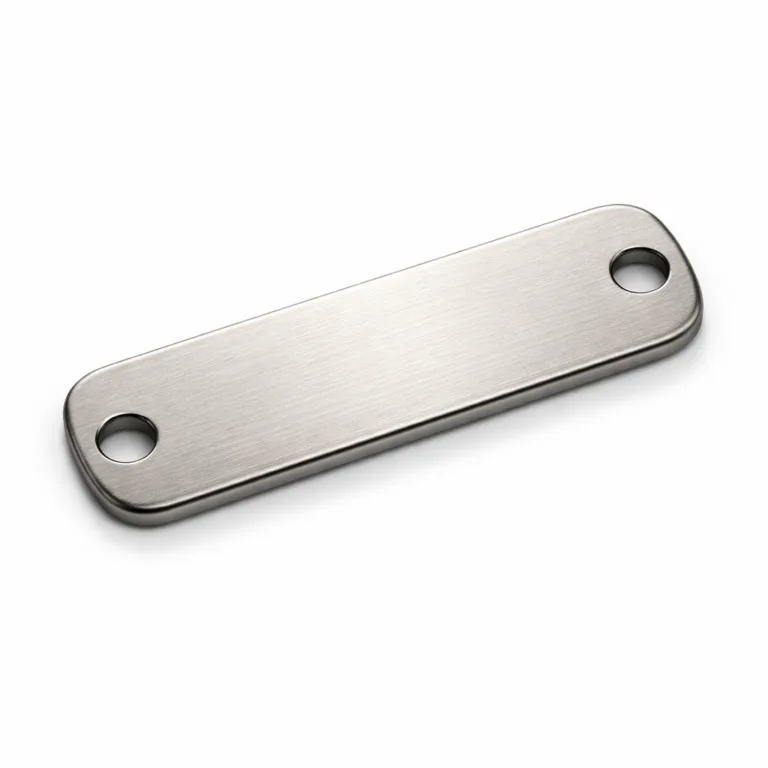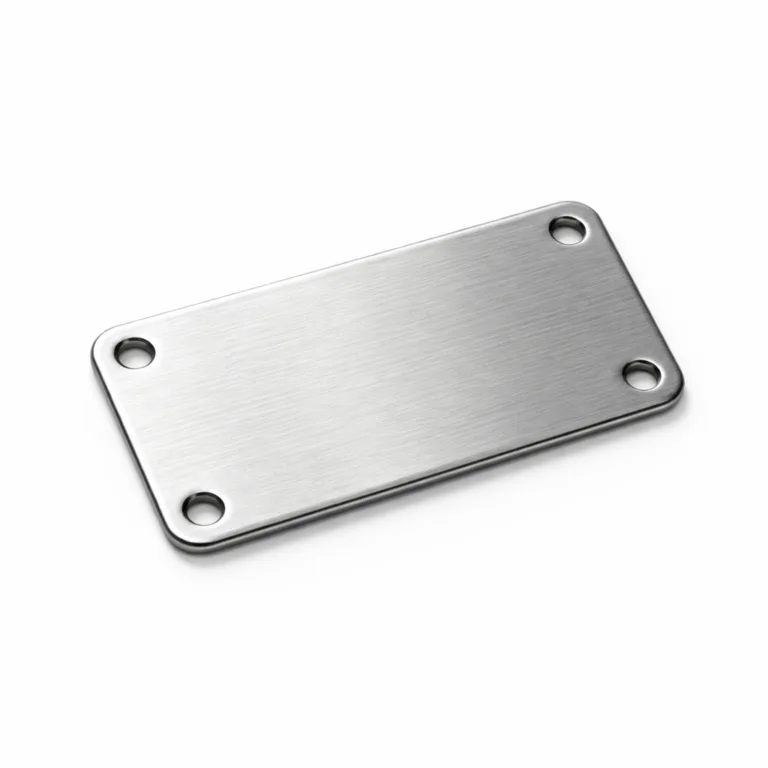
Introduction to Dog Tags
When it comes to choosing the right dog collar tags, selecting between collar-mounted tags and hanging dog tags is a critical decision for both pet accessory brands and engineers. Each option impacts the pet’s comfort, safety, and identification clarity. Dog collar tags are permanent or removable nameplates attached to a dog’s collar, while hanging dog tags dangle from a ring or loop.
Identification—whether as a dog id tag with detailed contact info or a simple “name/address” badge—plays a vital role in pets’ safe return if lost. Both types of tags are widely used in homes, vet clinics, shelters, and by manufacturers supplying custom solutions. The choice of tag format should fit the specific scenario and activity level of the dog.
Comfort Considerations
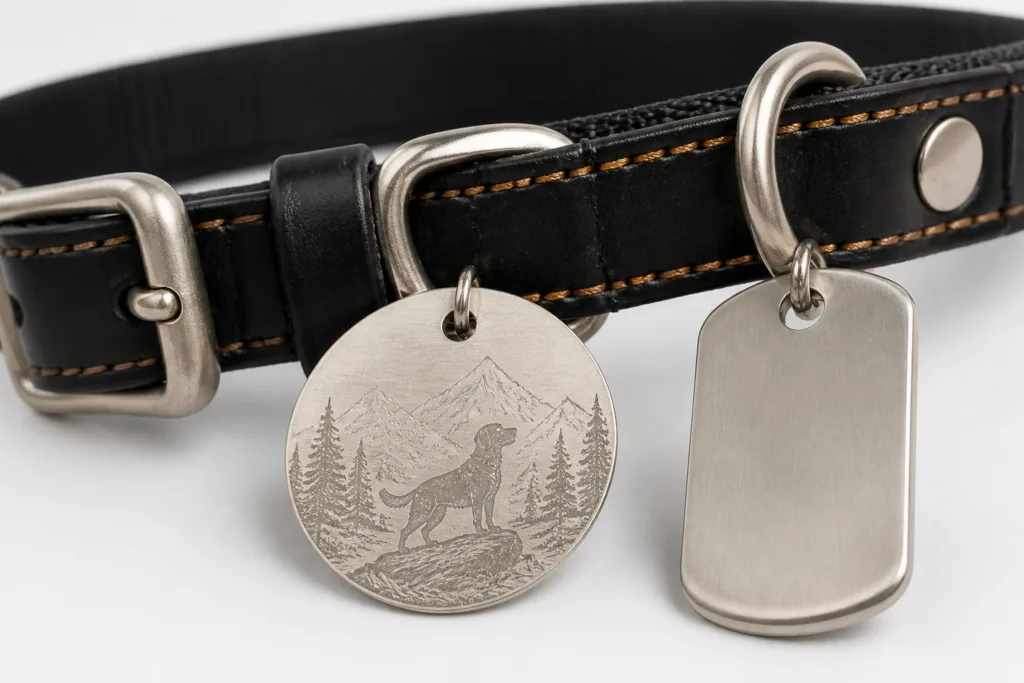
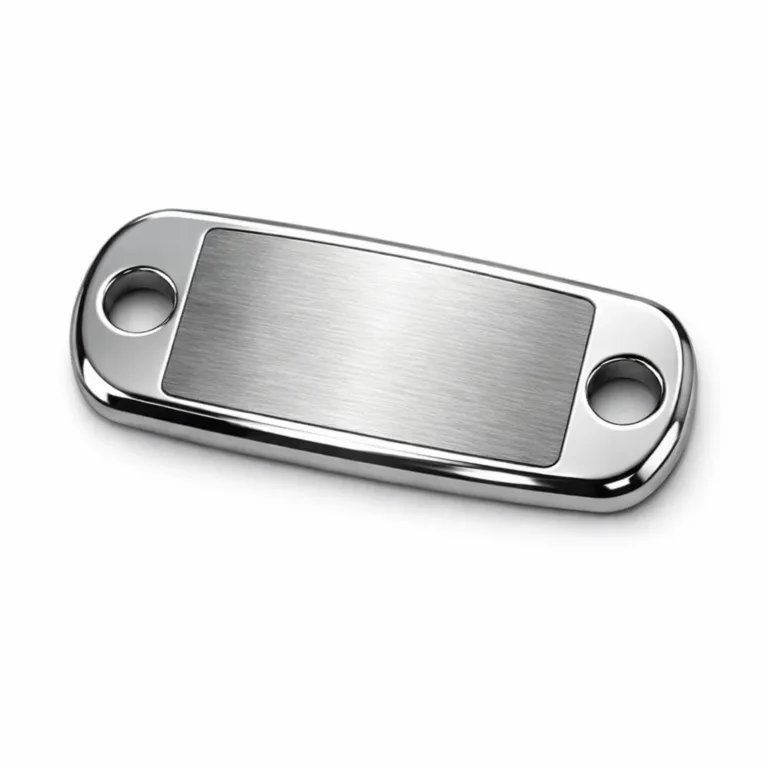
Comfort matters as much as durability. Most flat dog collar tag designs are engineered to stay flush with the collar, reducing points of irritation—especially important for breeds with short fur or sensitive skin. These flat dog tags for collars evenly distribute their weight, minimizing chafing or discomfort while the dog moves or rests.
Hanging tags can tap on bowls, bounce during play, and jingle, often causing distraction or annoyance for active or sound-sensitive dogs. Some pets may find the repetitive tags’ movement unsettling. This is particularly evident for small breeds, where the mass of even a lightweight tag can become significant.
Another factor is fur tangling: hanging tags are more prone to twisting within thick or long coats, leading to matting or discomfort. By contrast, a flat dog collar tag remains stationary and largely avoids this pitfall. Ultimately, for high-energy or small dogs, a collar tag’s ergonomic profile can enhance daily comfort.
- Flat tags minimize noise for indoor environments.
- Stationary tags help prevent skin and fur irritation.
- Lightweight alloys further reduce bulk on small collars.
Security and Identification Efficiency
Ensuring a lost dog is rapidly identified and returned relies on the clarity and security of its identification. A dog collar with name tag—where the tag is permanently mounted—offers consistent visibility. These fixed tags are less likely to be snagged or accidentally torn off during play, rough grooming, or while moving through brushy terrain.
Hanging tags, on the other hand, may detach if their split ring deforms or fails, leading to a lost tag and missed retrieval opportunity. Even when attached, hanging tags can swing against the dog’s chest or flank, potentially obscuring text. Quick identification depends on information being visible and legible at first glance.
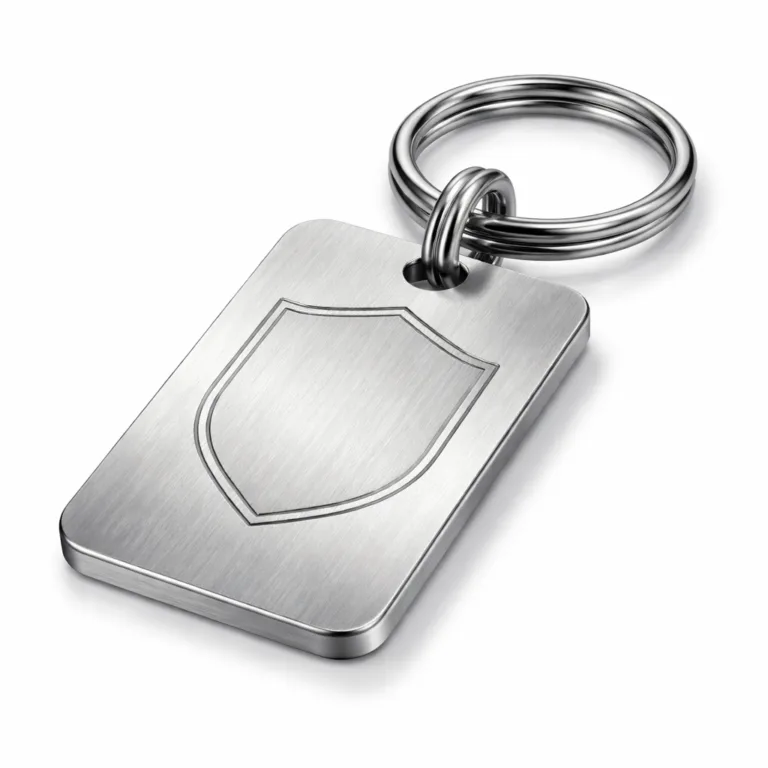
Engraving methods shine here: a dog id tag with deep, high-contrast engraving resists abrasion and remains readable longer than printed tags, which can fade. On high-mobility collars, etched or stamped tags are resistant to wear and image loss—maximizing the odds of identification in an emergency.
Usability in Various Activities
The usability of dog collar tags isn’t confined to walking. Walks, games of fetch, swimming, and off-leash romps all subject tags to different mechanical stresses. Flat dog collar tag types, which stay fixed and don’t move independently of the collar, are preferable for dogs involved in vigorous activities. Their slim and flush profiles mean they’re less likely to snag, bounce, or distract during movement.
By contrast, hanging tags can create sharp noises when hitting metal bowls or fences—sometimes startling dogs and family members alike. This kind of unexpected sound is also an issue for service or working dogs where stealth and comfort are non-negotiable. Additionally, the swinging of a tag can create more significant interruptions during running and swimming compared to flat designs.
For these reasons, when a dog collar tag is part of a flat, integrated identification system, usability and comfort are notably increased for energetic or outdoor-loving pets. Noise concerns can also be mitigated by considering tag thickness and edge treatment—many brands now offer “silent” options to reduce jingling. For more on reducing noise and distraction, check out Silent vs Metal Dog Tags: Noise-Free or Durable? The Practical Guide for B2B Buyers.
Material Comparison
Material selection determines both the longevity and performance of a dog id tag—especially in harsh or varied environments. Aluminum tags are lightweight, non-corrosive, and often selected for cost-effective mass orders. They are ideal for everyday use in moderate settings but may scratch more easily under heavy abrasion.
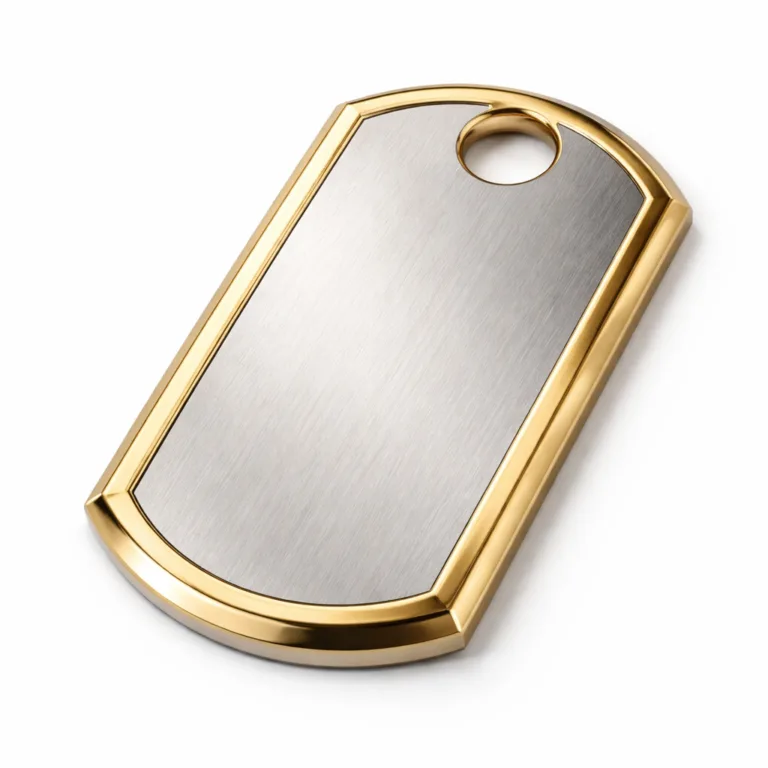
Stainless steel stands out for maximum durability and excellent resistance to both corrosion and impact. Many working-dog organizations and shelters opt for this material for its long product life and minimal fading, even with daily exposure to mud, water, and weather. For clients whose dogs spend considerable time outdoors or near the coast, stainless options excel.
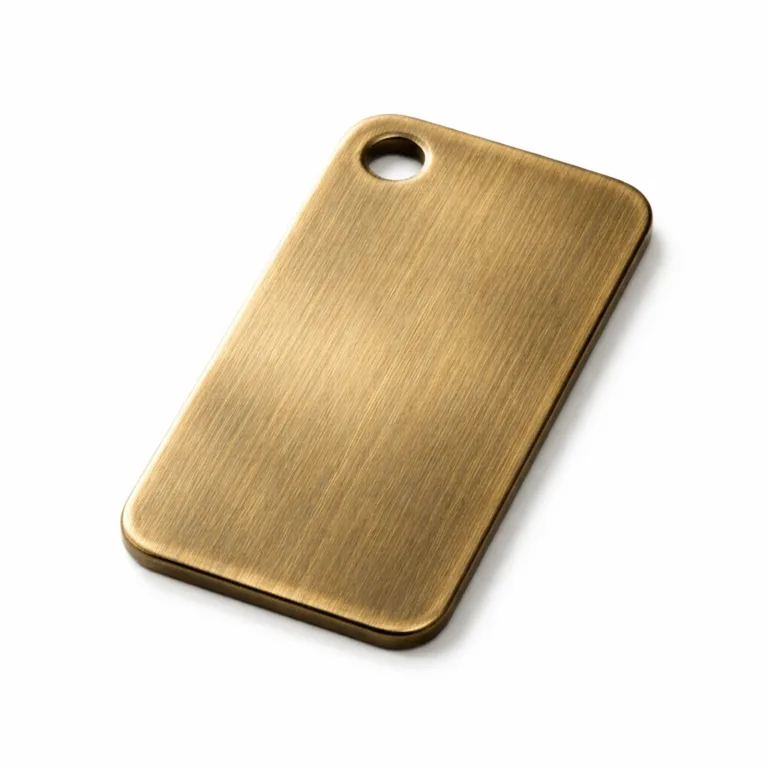
Brass, while attractive and eye-catching, is more common for decorative uses or for low-activity dogs—its golden sheen can tarnish and require polishing. Though corrosion is rarely catastrophic, the patina reduces text visibility and can complicate scanning if the tag carries a QR code or micro text.
When weighing choices, the environment, branding goals, tag lifespan, and expected level of wear all matter. As a practical example, Rain Chen (UC Tag production veteran) notes that brass tags are a favorite for commemorative or luxury projects, but for high-volume, high-impact work, steel remains the most reliable foundation.
Manufacturing Methods
The durability and clarity of flat dog tags for collars depend significantly on manufacturing approaches. Engraving—whether by laser or CNC—offers crisp, permanent text and graphics. This ensures the data stays visible even after years of wear and washing. It’s the preferred choice for medical alert and high-security tags.
Stamping is optimal for large production runs where cost control is a priority. It embeds information physically into the metal, providing resilience against abrasion at a lower price point. Stamped tags can sometimes lose fine detail with repeated impacts, but they rarely lose their essential marking entirely.
Chemical etching produces intricate, high-definition artwork and is used for premium designs and detailed logo branding. These tags command a higher price due to the additional processes involved. For rapid prototyping or color branding, UV or pad printing can apply vivid, precise graphics onto pre-finished blanks. However, printed tags are more susceptible to surface scratching—making them better suited for lower-contact or indoor use.
| Method | Pros | Cons | Best Use Case |
|---|---|---|---|
| Engraving | Highly durable, tamper-resistant | Higher initial cost | Flat dog tags for collars, medical tags |
| Stamping | Cost-effective, bulk-friendly | Lower detail for logos or tiny text | Standard ID and asset tags |
| Chemical Etching | Intricate designs, logo flexibility | More expensive, longer lead times | Premium branding, custom shapes |
| Printing | Vibrant color, fast turnaround | Less abrasion resistance | Decorative or secondary tags |
Design & Spec Checklist
Ordering the correct dog collar tags or flat dog tags for collars shouldn’t be guesswork. A precise specification eliminates costly rework and ensures that the finished product performs as intended. Consider these key parameters for any order:
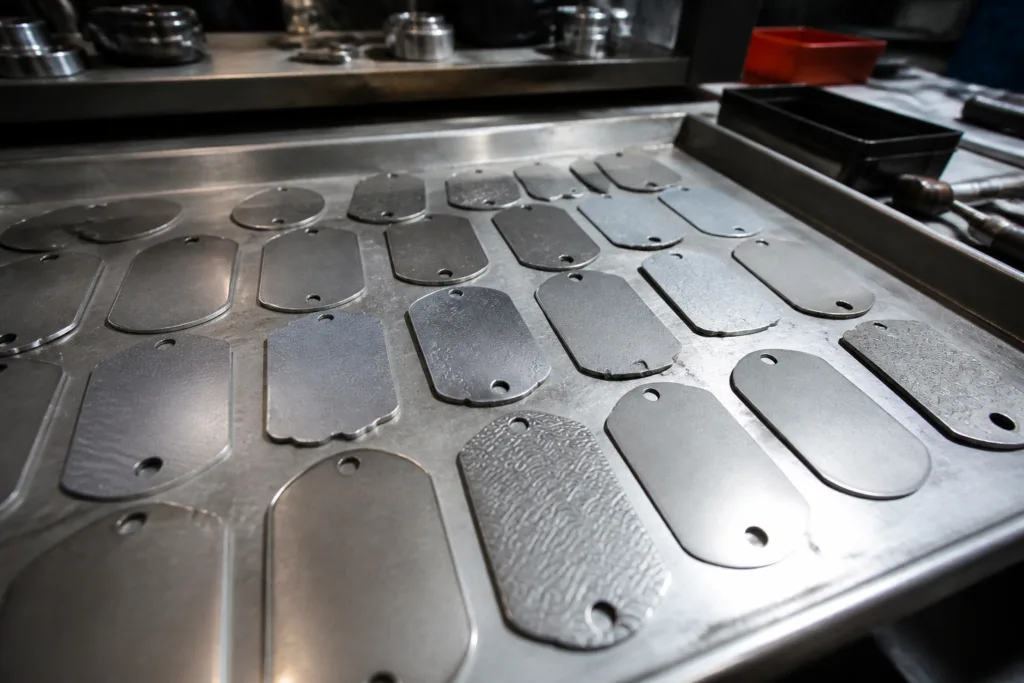
- Tag size—Balance visibility with comfort; 20–30mm is typical for small to medium dogs.
- Thickness—Avoid tags thinner than 0.8mm to reduce bending or breaking.
- Finish—Anodized aluminum improves corrosion resistance and offers color choices; stainless steel may be mirror-polished or matte for added visibility.
- Attachment—Pre-drilled holes, adhesive backing, or custom snaps for secure fitting.
- Engraving/contrast—Deep, black-filled engraving is most legible. Avoid complex or script fonts that can become illegible at pet scale.
| Parameter | Recommendation | Why It Matters |
|---|---|---|
| Size | 20-30mm diameter, adjust for dog size | Easy reading, avoids excess bulk |
| Thickness | ≥0.8mm | Improved toughness/durability |
| Finish | Anodizing or matte polish | Resists corrosion, enhances visibility |
| Attachment | Holes, dedicated slots, strong adhesive | Prevents accidental loss |
| Text Contrast | Laser-engraved, black infill | Keeps info legible over time |
For further dimension and shape tips, see How to Choose the Perfect Dog Tag Dimensions, Shapes & Specs for Every Application.
Durability & Testing Standards
Quality testing ensures every dog id tag meets its intended lifecycle and holds up in daily conditions. Corrosion resistance—especially for pets living in coastal or damp regions—can be verified using salt spray testing, simulating years of exposure in mere days. UV exposure testing guards against fading and brittleness if tags are colored or infilled, a common issue for anodized or painted surfaces.
Abrasion resistance is especially critical for energetic dogs or tags used in rugged industrial settings. Metal tags must withstand repeated impacts against concrete, stone, or fencing, and remain clear after contact with leashes and harnesses. Field testing, including real-world trials by sample users across different breeds and activities, is also recommended before large-scale orders are finalized.
UC Tag, in its experience, notes that frequent real-world batch tests reveal weak points—such as surface coating failures or adhesive issues—that lab simulations may not uncover. B2B buyers benefit from requesting detailed test results or even stress-testing a sample batch before committing to a production run.
Industry/Application Fit
Dog collar with name tag products are not just for pet parents. Veterinary clinics, animal shelters, and pet adoption centers require tags that enable fast, reliable identification at a glance. Industrial applications—such as asset management or batch control—also benefit from robust, data-dense tags, especially in environments where barcodes or serial numbers are required.
Pet accessory brands may prioritize custom shapes, colors, or logo placement for greater shelf pop or co-branding initiatives. Durable tags also support companies looking for a low-cost, high-impact product addition. Many successful brands have differentiated themselves by offering easy-to-read, rugged dog tags as part of their kit, enhancing perceived professionalism and customer trust.
For example, local governments mandating registration often specify material and attachment method to ensure tag persistence. To boost your brand identity and product line, explore custom solutions like logo tag manufacturer services from expert suppliers with deep industry experience.
Common Mistakes & Troubleshooting
While selecting flat dog tags for collars is mostly straightforward, some common mistakes can lead to frustration. The most frequent issue is insufficient contrast or poor font choice, resulting in unreadable information—especially under low-light conditions. Stick to bold, simple, sans-serif fonts and specify dark color infill for maximum readability.
Adhesive failures can occur if tags are subjected to moisture or rough treatment. In humid or wet environments, rivet or slot attachments are generally preferred. Corrosion risks also arise when inappropriate metals are selected for saltwater or high-rainfall regions.
Finally, failing to confirm hole placement and attachment method can lead to tags twisting or dropping from the collar unexpectedly. Review vendor samples and test assembly with your actual collar design before mass production. For a deeper dive into improving tag legibility, check out The Practical Guide to Designing Dog Tags That Remain Readable and Durable.
Ordering Guide
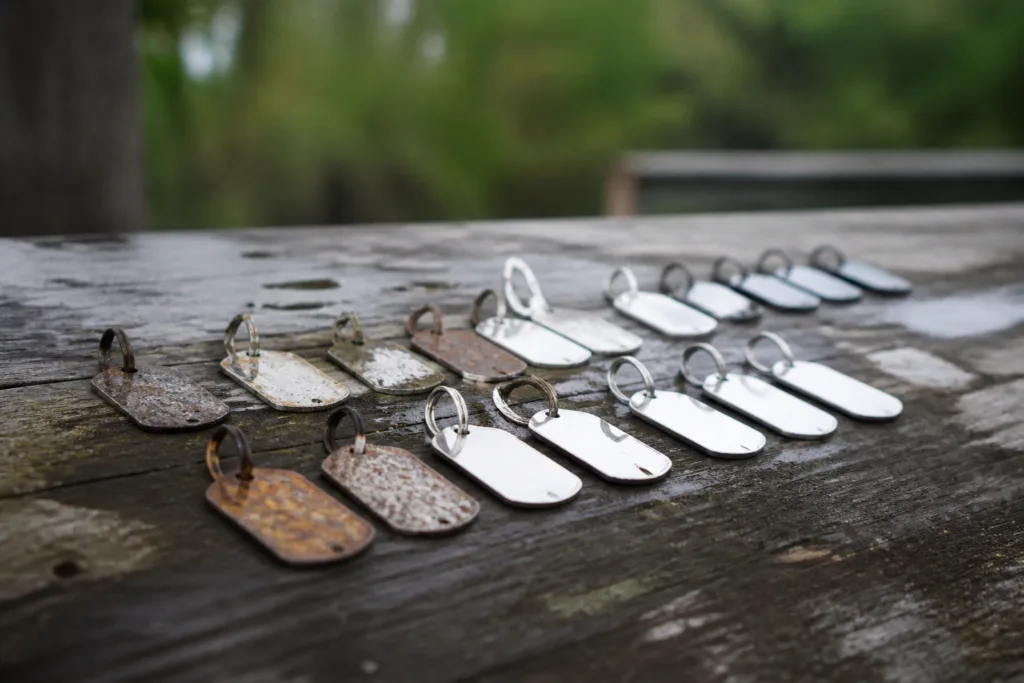
Ordering custom dog collar tags or dog id tag designs requires a clear communication process. Begin by confirming your minimum order quantity (MOQ)—many factories start at 100 or 500 pieces for custom jobs. Lead times typically range from two to six weeks depending on the complexity of engraving, finishing, and packaging required.
Prepare artwork files in vector format (such as .ai or .dxf), and work closely with your supplier to approve a proof or sample before committing. This step prevents issues with sizing, font, or logo clarity. Specify packaging—bulk-packed, individually bagged, or on card—for your logistics and retail needs.
For clients prioritizing secure and consistent results, working with experienced partners for repeatable quality standards is recommended. To see available sample options and learn more about proofing, visit standard samples.
Frequently Asked Questions
What is the main difference between collar-mounted and hanging dog collar tags?
Collar-mounted tags are fixed securely to the collar and remain in place, reducing irritation, noise, and the risk of losing the tag; hanging tags attach via a ring and may jingle, swing, or fall off more easily.
Which material is best for a dog id tag used outdoors year-round?
Stainless steel is the best choice for harsh outdoor conditions because it resists rust, fading, and scratching much better than aluminum or brass and retains legible information for years.
Can dog collar tags be customized with logos or special shapes?
Yes, both collar-mounted and hanging tags can be custom-cut with logos, icons, or unique shapes using methods such as chemical etching or CNC engraving for branding needs.
How do I make sure my dog tag stays readable over time?
Choose deep laser or mechanical engraving with a high-contrast infill and avoid overly complex or script fonts to maintain clarity even after years of rough use or cleaning.
What should I do if a tag comes loose or falls off the collar?
Check and tighten all hardware or replace worn rings, consider switching to a collar-mounted tag for more security, and always keep backup tags on hand in case of loss.
Are there minimum order quantities and proofing services for customized tags?
Most manufacturers set MOQs, especially for custom shapes or finishes; submitting vector artwork and approving a physical sample proof help avoid production mistakes and guarantee satisfaction.
Related Reading
- Discover If Stainless Steel Dog Tags Are the Ultimate Outdoor Solution
- Master Dog Tag Dimensions and Find the Ideal Fit for Any Size
- Eliminate Jingle: Guide to Quiet vs Metal Dog Tags for Noise-Sensitive Dogs
- Get Inspired by Durable, Visually Clear Dog Tag Design Examples
- Explore Custom Logo Tag Options for Powerful Brand Recognition