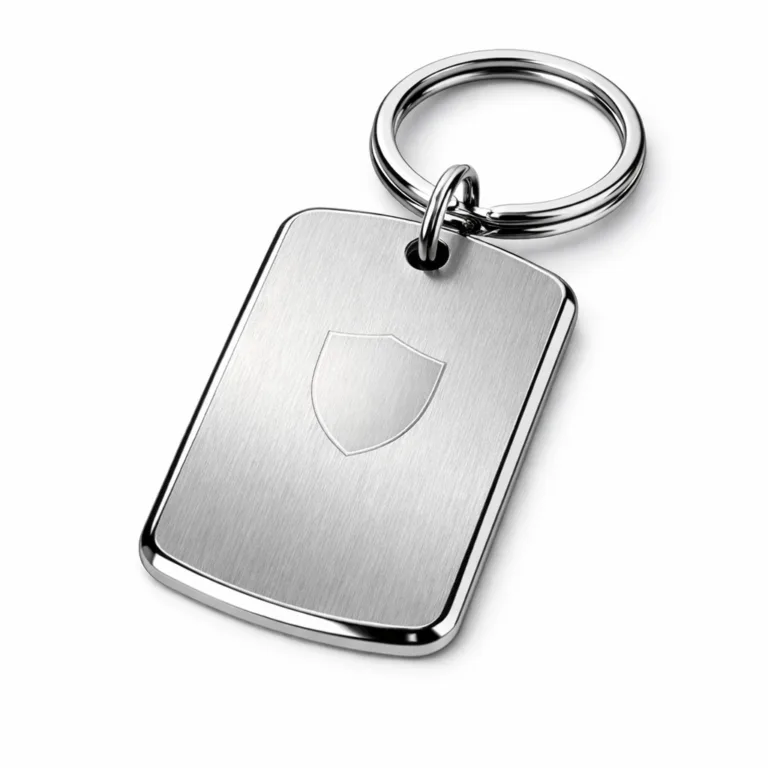
Introduction to Dog Tags
Dog tags have long played a vital role in pet identification, helping owners and industry professionals ensure animals are always traceable, whether for safety, medical, or compliance reasons. When choosing the best ID solution, buyers often weigh the choice between silent dog tags and metal dog tags. Each type offers distinct features that impact noise levels, durability, and overall pet comfort.
Choosing the right dog tag can directly affect your product’s performance, longevity, and how end-users perceive your brand’s quality. This comparison guide of silent dog tags and metal dog tags is designed for B2B buyers and engineers who demand practical, reliable identification solutions. Our goal is to help you make an informed decision that suits your specific needs and applications, using the prompt silent dog tags, silicone dog tag, rubber dog tags, quiet dog tags, metal dog tags throughout this guide.
Understanding Silent Dog Tags
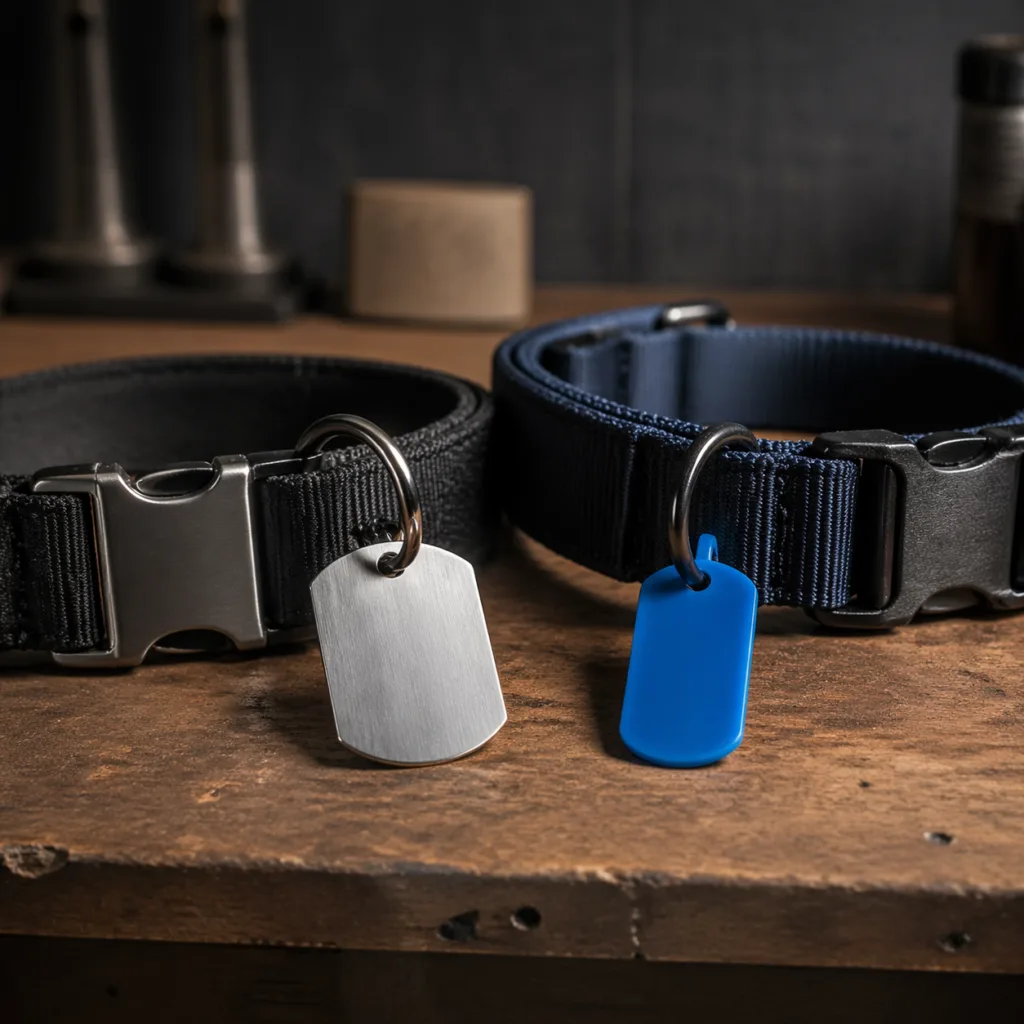
Silent dog tags, often called quiet dog tags, are made from non-metallic materials such as silicone or rubber. The primary feature of these tags is their noise-free profile—when a pet moves or shakes, silent dog tags don’t jingle or clatter the way metal ones do.
These tags are notably lightweight, adding almost no mass to the collar, and their soft texture adds a comfort factor, particularly for pets sensitive to heavy or hard items. The pliability of a silicone dog tag or rubber dog tags also means these tags are less likely to snag fur or cause irritation. For design-conscious buyers and private label brands, silent tags boast a wide range of color options, shapes, and pre-molded motifs. You can often find bright neons, playful patterns, and even glow-in-the-dark variants.
Quiet dog tags have grown in demand within certain pet lifestyles. For example, dogs participating in agility training or working as service animals often require silent dog tags to avoid distracting sounds during high-focus activities. Typical materials include high-grade, food-safe silicone and dense, durable rubber to resist wear and tear from daily use.
Overview of Metal Dog Tags
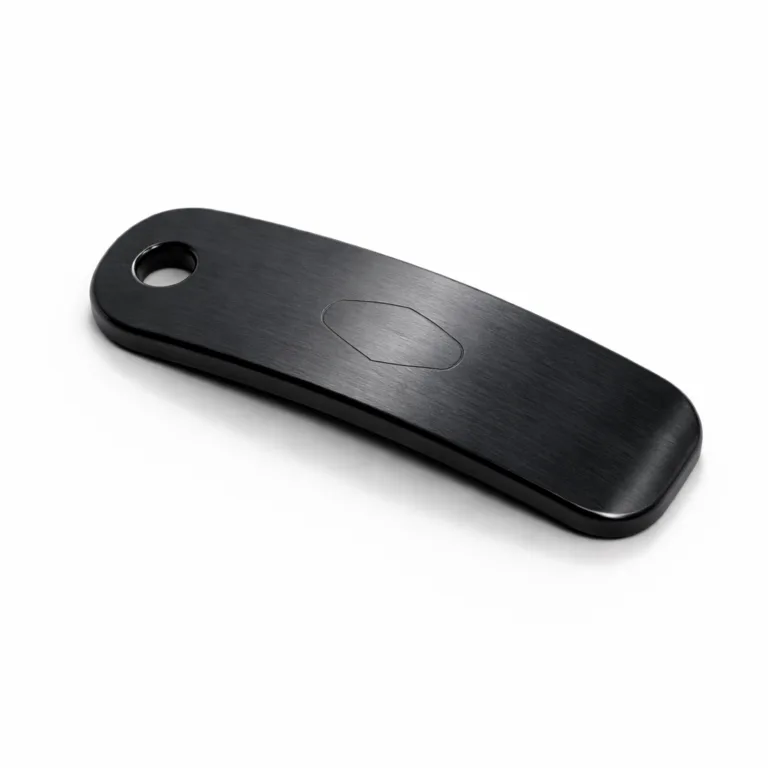
Metal dog tags are the longstanding standard for pet and equipment identification. Common choices include brass, aluminum, and stainless steel, each offering recognizable durability and proven outdoor performance.
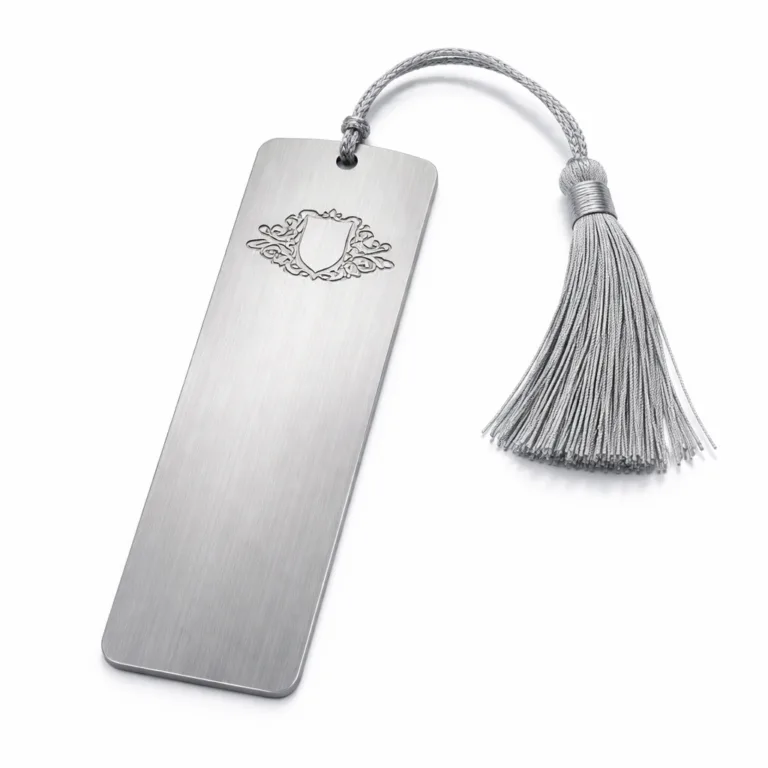
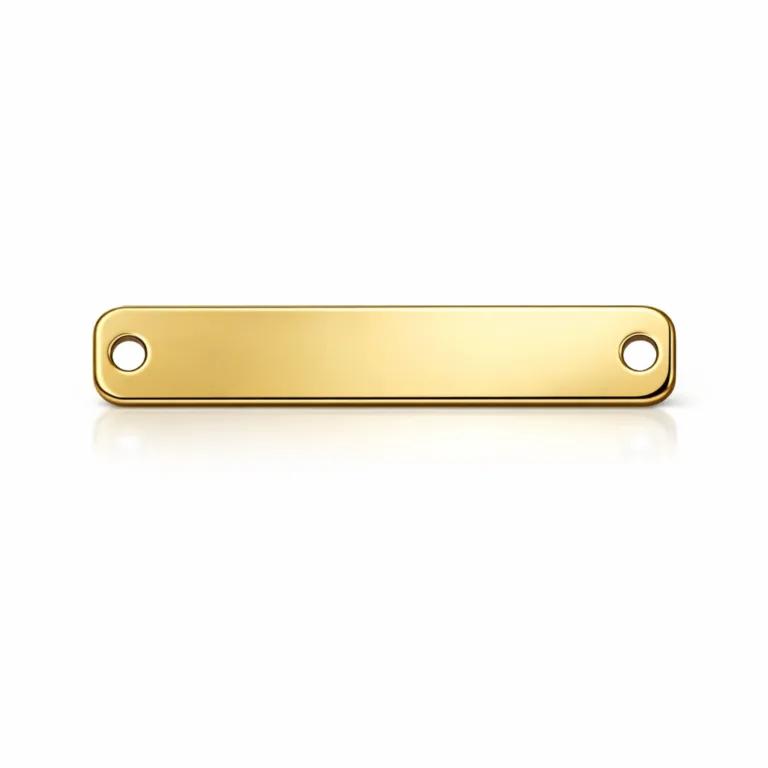
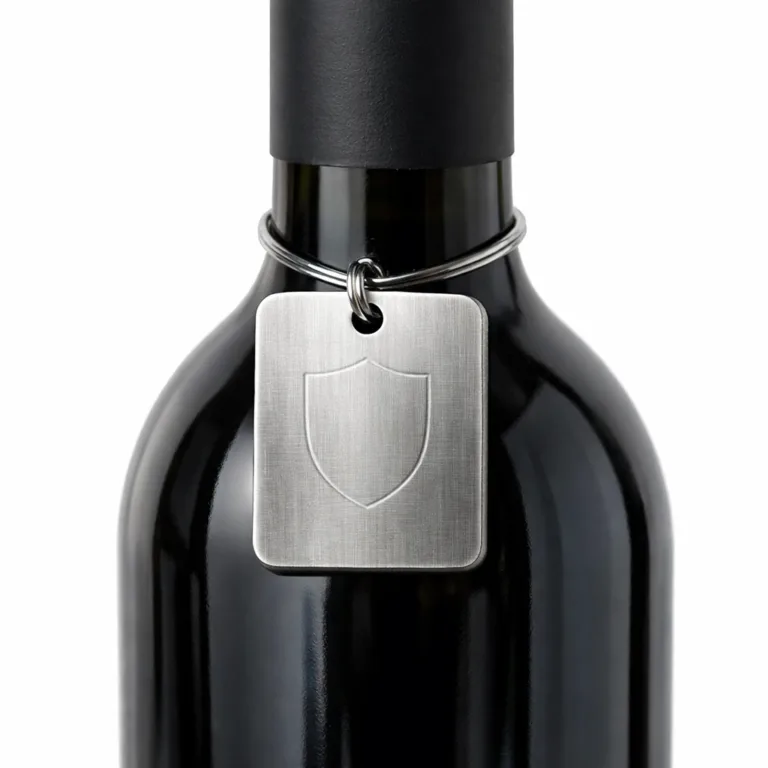
These tags stand out for their unmatched readability, especially when engraving, stamping, or etching is used for the text and graphics. They maintain clarity despite years of exposure to weather, active pets, or cleaning. The wide assortment of finishes—mirror-polished, anodized, brushed, or antique—gives metal dog tags ample scope for branding and visual differentiation.
In industrial and retail contexts, metal tags are still favored for high-volume production, compliance with certain safety standards, and their track record for resisting corrosion. Their longevity can rival or exceed the typical pet’s lifespan, making them a premium, reliable option for discerning buyers. Stainless steel and anodized aluminum, in particular, have earned reputations for not only withstanding harsh treatment but also offering aesthetic flexibility across many use cases.
Materials Comparison: Silent vs Metal
When comparing the materials between a silicone dog tag, rubber dog tags, and metal dog tags, several factors come into play. Aluminum, stainless steel, and brass have each proven themselves in both cost-effectiveness and long-term resilience.
Metal dog tags—while marginally heavier—strike a balance between weight and feel. Aluminum is light but still robust, stainless steel adds heft and maximum corrosion resistance, while brass offers a classic look with added density. By contrast, silicone and rubber guarantee ultra-light weight and flexible feel, which some pets find more comfortable, though they are more vulnerable to chewing damage or sharp environmental hazards.
- Impact Resistance: Metal tags excel against crushing or snapping. Silicone/rubber tags bend, so they won’t shatter, but deep cuts can shorten their lifespan.
- Corrosion Resistance: Stainless steel and anodized aluminum provide exceptional protection, even in saltwater or humid conditions. Silicone and rubber, though non-corrosive, may degrade from prolonged sun exposure or harsh cleaning agents over time.
- Environmental Footprint: Metal tags can often be recycled. Some silicones are recyclable, but more often end up in landfill unless carefully processed.
- Cost: Silicone dog tags and rubber dog tags can be produced at lower cost for basic designs or large runs, but intricate, multi-colored or molded tags may require higher up-front mold investment. Metal tags vary by finish and material—brass tends to be pricier; aluminum is economical at scale.
For outdoor pets exposed to environmental extremes, stainless steel or anodized aluminum metal dog tags offer superior longevity. Indoors or for decorative tags, silicone or rubber can offer enough durability at a lower cost.
Manufacturing Methods: What to Consider
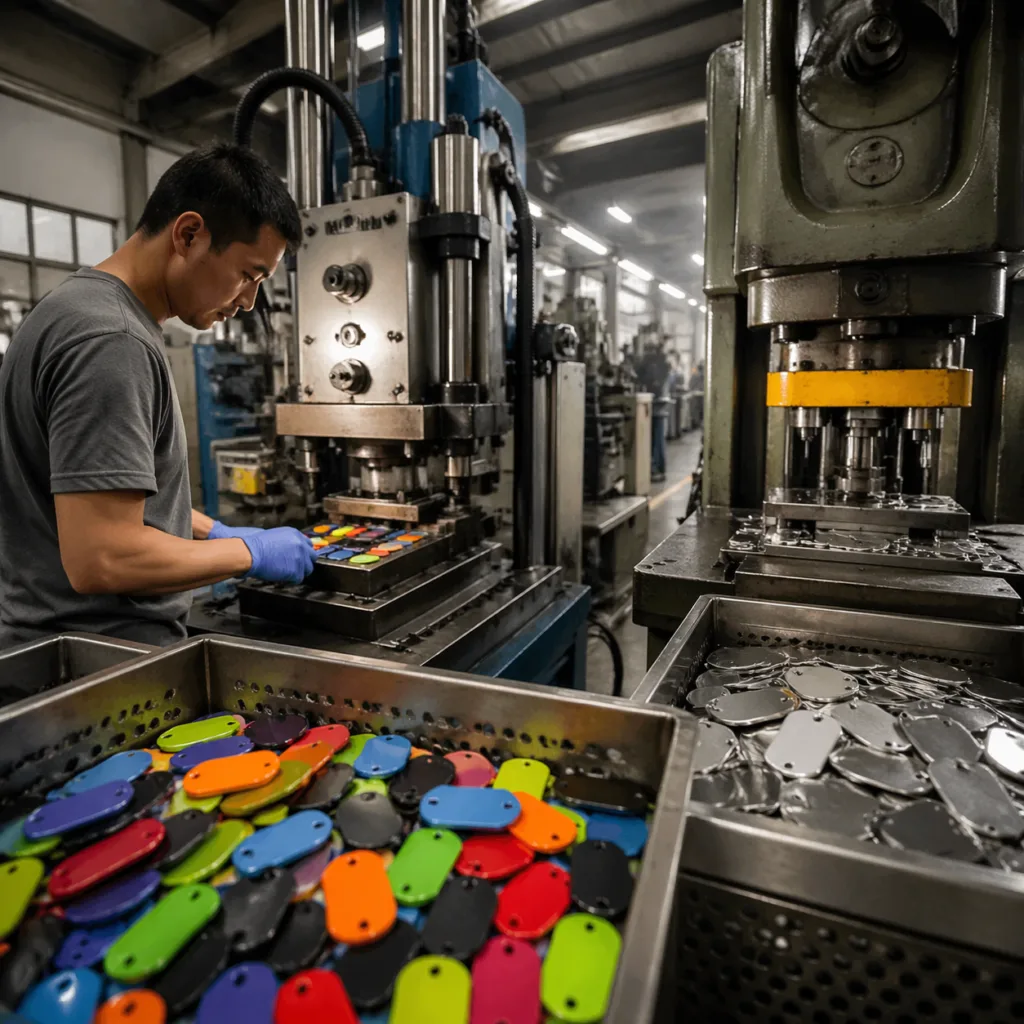
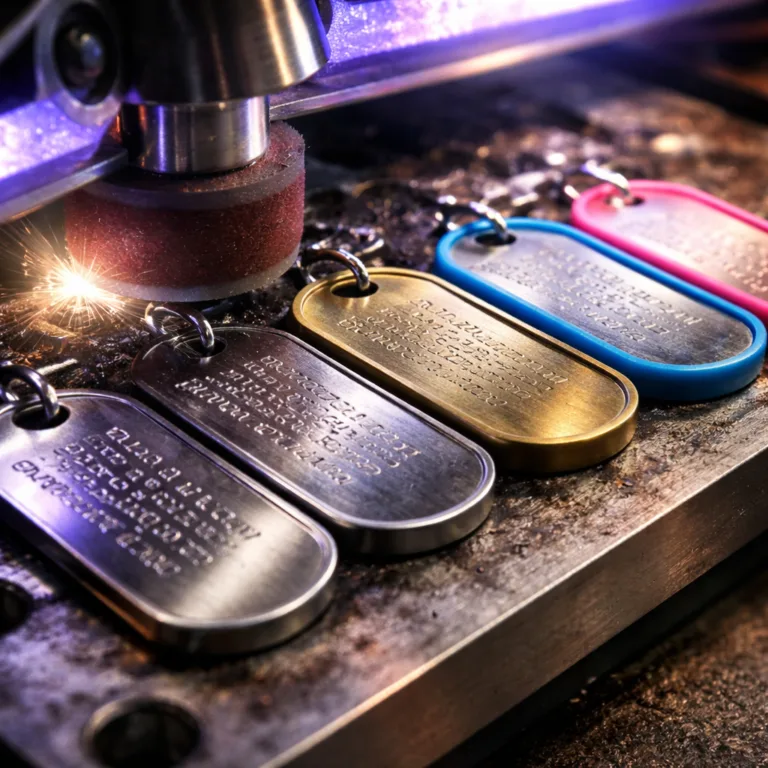
Metal dog tags are manufactured using processes such as stamping, laser engraving, chemical etching, and UV or enamel printing. Each technique affects the depth, clarity, and longevity of the information on a tag. Deep stamping and laser engraving, for example, result in markings that can last longer than surface printing, even after years in challenging conditions.
On the flip side, silent dog tags made from silicone or rubber are usually produced through precision molding. This method allows for colorful, three-dimensional shapes and complex, integrated designs, including raised text or custom graphics. However, intricate logos or fine serial numbers are sometimes less crisp on molded tags compared to high-detail laser engraving on metal dog tags.
Production turnaround time also varies. Metal tags can often be produced more rapidly in moderate quantities via stamping or engraving, whereas custom-shaped silicone or rubber tags may require additional time for mold creation—an important consideration for urgent releases. For buyers demanding unique branding or cut-out shapes, UC Tag’s engineers note the balance between detail tolerance and material: metals excel at minute engraving, while molded silicone can create playful, bold relief graphics ideal for retail or gift applications.
Key Design & Specification Checklist
Before placing a tag order, reviewing core design criteria can prevent costly rework and ensure the tags meet all pet and business requirements. The table below offers a practical reference for both silent dog tags and metal dog tags when specifying your order.
| Specification | Silent Dog Tags (Silicone/Rubber) | Metal Dog Tags |
|---|---|---|
| Typical Size | 25mm–40mm diameter or length | 25mm–50mm standard, custom shapes possible |
| Thickness | 2–4mm (flexibly thick) | 0.5–2mm (rigid strength) |
| Weight | Ultra-light, typically <5g | Lightweight to moderate, 5–20g |
| Finish | Matte, smooth, or textured | Polished, brushed, anodized, antique, matte, plated |
| Attachment | Molded hole, slot, or loop; some adhesive options | Drilled hole, slot, adhesive backing, custom hardware options |
| Readability | Raised/molded, can limit fine detail | Deep engraving, stamping, or printing; supports fine text & graphics |
Also consider font size (at least 2mm height for readability), high-contrast colors for information, and secured attachment for active or large pets. Choose adhesive backing carefully—strong but removable for smooth removal, permanent for rugged applications. Custom shapes can boost shelf appeal in retail settings.
Evaluating Durability & Testing
Durability is a core requirement in professional and retail pet products. Both silent dog tags and metal dog tags should undergo a series of tests to verify their performance and lifetime in actual usage conditions. Standard durability tests include corrosion testing (for metal dog tags, especially if exposed to moisture or salt), abrasion testing (to simulate contact with rough surfaces), and UV exposure (relevant for tags used outdoors or in bright settings).
Industry standards often demand clear and lasting identification. For example, tags used in veterinary or service environments may need to withstand frequent chemical sanitization, while outdoor pets’ tags must resist fading and impacts. In practice, stainless steel and anodized aluminum tags excel at resisting both environmental wear and long-term corrosion. Silicone and rubber tags, meanwhile, do not rust or corrode but may become brittle if subjected to heavy sun exposure, freezing, or extreme flexing. It is essential to test tag samples early in the design process for the intended conditions, as material and finish can greatly influence performance.
For instance, a UC Tag test engineer found that dogs needing quiet operation for agility competitions benefited from quiet dog tags, yet the tags’ raised text had to be upsized for long-term legibility after repeated washing. This kind of scenario reinforces why durability testing—before mass production—protects your investment and reputation.
Industry Applications and Use Cases
Certain environments and applications favor either silent dog tags or metal dog tags. Service dogs, for example, may be required to wear identification that does not distract or hinder alertness—an ideal fit for silent dog tags in silicone or rubber. In consumer retail, colorful or whimsical silent tags cater to pet owners who want bold personalization. For outdoor pets, however, the durability and weather resistance of metal dog tags become more important, especially when tags are exposed to mud, water, scratching, or UV rays.
Veterinarians and clinics demand tags that are easily sterilized and stay readable after repeated contact with disinfectants—here, laser-engraved stainless steel tags are often preferred. Silent tags are increasingly chosen for fitness and pet sports, where reduced noise and impact on agility equipment are essential. This choice aligns well with needs for quiet dog tags in athletic or training-focused environments. For traceability during group activities or kennel management, clear text and reliable attachment remain top priorities.
Common Mistakes and Troubleshooting
Choosing the wrong tag type—or overlooking application-specific needs—can lead to preventable failures. One frequent issue is using too-small fonts or poor contrast, resulting in unreadable tags after a little wear. For silent dog tags, using light ink on pale silicone can cause rapid fading; for metal dog tags, reflective finishes may create glare, hiding the text.
Another pitfall arises with adhesive attachment. Selecting non-UV-resistant adhesives on rubber dog tags can cause them to peel in sunlight, while picking hardware ill-suited to a pet’s collar size or strength may result in lost tags. Material selection also plays a vital role—low-grade metals are prone to corrosion or pitting, whereas some colored silicone dyes may bleed and stain if not stabilized. Prioritize durability, compliant finishes, and field-relevant attachment methods to avoid costly rework.
Keen buyers will verify vendor samples and request technical drawings before scaling up orders. Reviewing dog tag manufacturer capabilities at the start helps avoid common design and production missteps.
Ordering Guide for Your Tags
When you’re ready to order silent dog tags or metal dog tags, several practical factors will streamline your purchasing process. Minimum Order Quantity (MOQ) often depends on the selected material and complexity of the design—custom-shaped silicone dog tags, for example, may have higher MOQs due to molding costs, while engraved metal tags can be produced in smaller batches.
Lead times vary as well: metal tags usually have shorter turnaround for simple laser or stamped designs, while molded or multi-color silicone tags may take longer due to mold setup and cure times. For best outcomes, submit artwork files in vector format (AI, EPS, or SVG), and carefully review proofs for accuracy prior to production. Many buyers choose to request a custom metal tag sample before placing a full order, to confirm fit, finish, and readability.
Packing and shipping considerations are key for B2B orders—confirm how tags are bundled, labeled, and protected for bulk transit. Working with a supplier like UC Tag who provides clear packaging standards and batch traceability helps ensure a smooth delivery experience.
Frequently Asked Questions
What are the benefits of silent dog tags over metal options?
Silent dog tags eliminate jingling noise, making them ideal for sensitive, anxious, or highly focused dogs and indoor or quiet environments.
How do I ensure the text on my tag stays readable?
Use a large, high-contrast font and choose engraving, deep stamping, or bold molded lettering for maximum clarity and long-term readability.
Which environments are ideal for silicone vs. metal tags?
Silicone tags work well indoors or for pet sports, where noise needs to be reduced, while metal tags are suited for outdoor and high-wear applications.
Can silent dog tags be customized with barcodes or QR codes?
Some silicone silent dog tags can include molded or printed QR codes, but fine barcoding is typically clearer and more lasting on metal dog tags.
Are silent tags cheaper than metal dog tags?
For simple designs, silent tags are often less expensive, especially in bulk, but elaborate molds or multiple colors can make them similar in cost to metal tags.
What should I do if my dog tag shows damage or wear?
Replace the tag promptly to maintain legibility, and consider upgrading material or finish for better resilience in your intended use environment.
Related Reading
- Compare Stainless Steel vs Aluminum Dog Tags: Which Suits Your Project?
- Design Dog Tags That Stay Readable and Durable: Practical Expert Guide
- Engraved vs Printed Dog Tags: Durability and Selection That Lasts
- Personalize Your Dog Tags: Customization Tips for Every Need
- Should You Choose Brass Dog Tags? Durability, Design, and Secrets
- Essential Info for Dog Tags: What B2B Buyers Should Include