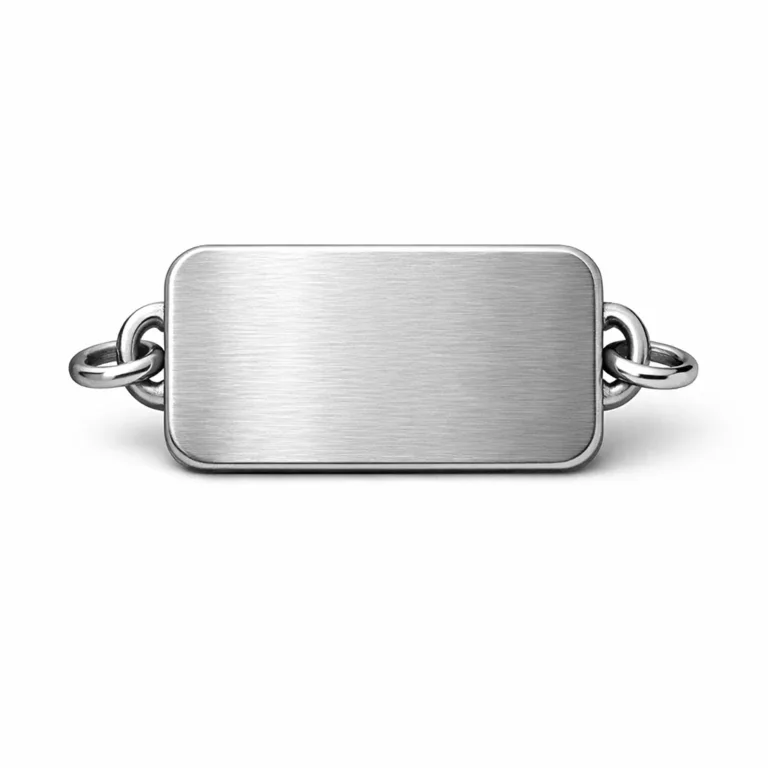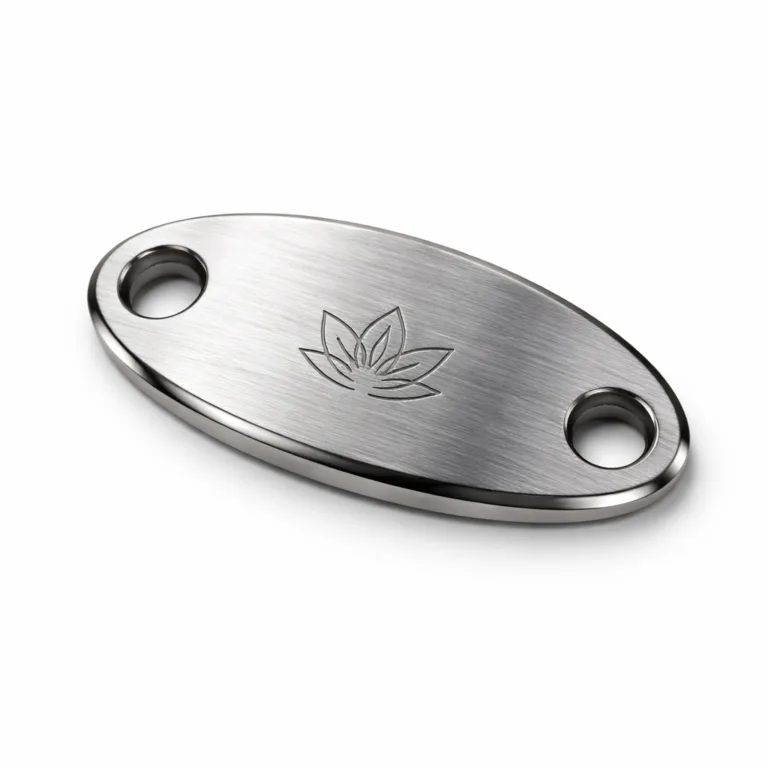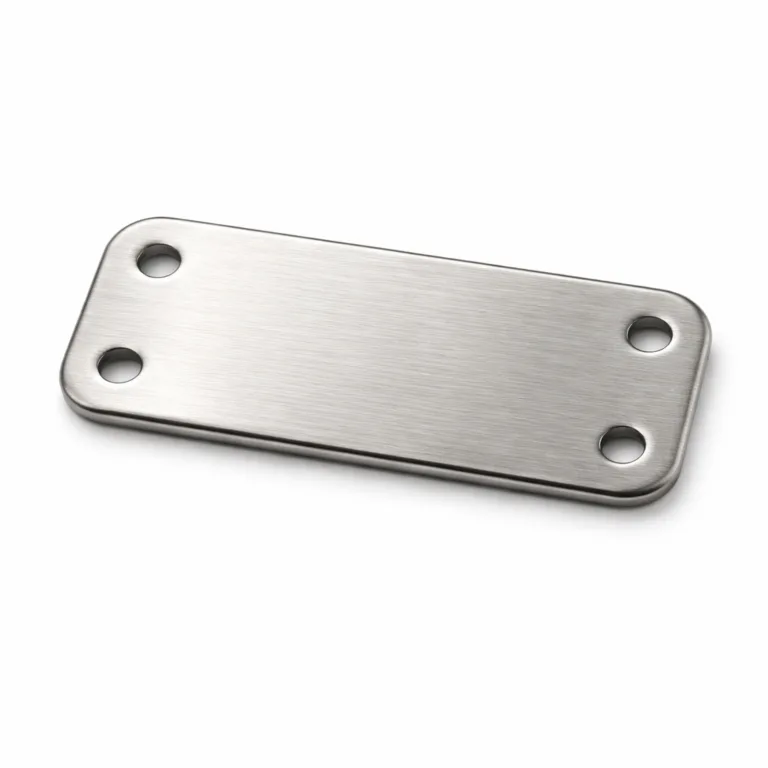
Barcoded metal plates are a practical choice when equipment tracking has to keep working in real industrial conditions. For many buyers, the issue is not whether a barcode can be printed. The real issue is whether that barcode will still scan after abrasion, weather, oil, cleaning chemicals, handling, and years of service. That is where metal asset tags become more useful than ordinary labels. They combine machine-readable data with a more durable base material, which helps asset managers, OEM buyers, and procurement teams keep identification readable for longer.
If you are comparing specifications, our industrial metal tag selection guide is a useful starting point because equipment tracking projects usually depend on more than barcode format alone. Material choice, marking method, thickness, hole placement, attachment style, custom numbering, sample approval, and packaging all affect whether the final tag works well in bulk production. We support these projects from a manufacturing perspective, including material selection, barcode layout review, serial data handling, attachment planning, and production consistency checks before mass output.
What barcoded metal plates are and how they work
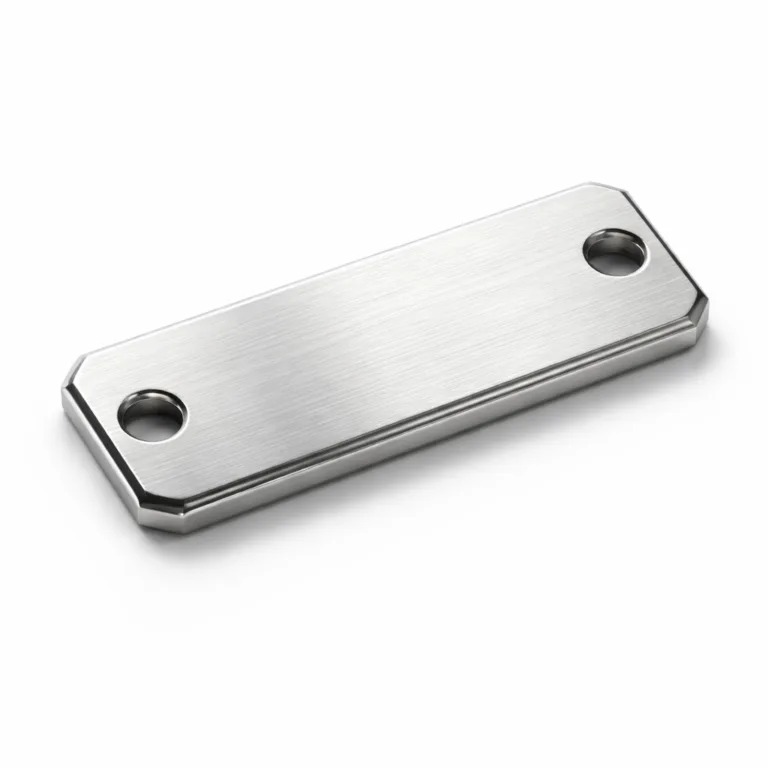
Barcoded metal plates are durable identification tags made from metal sheets or plates that carry machine-readable barcode data and, in many cases, human-readable information such as serial numbers, model details, asset names, or company identifiers. They are commonly used on machinery, tools, electrical cabinets, outdoor assets, utility equipment, production fixtures, rental fleets, and maintenance-sensitive equipment.
In simple terms, the plate does two jobs at the same time. First, it gives the user a physical tag that stays attached to the asset. Second, it gives the tracking system a scannable code that links the asset to a database, maintenance record, inventory file, or ownership record. This is why barcoded metal plates are often selected for equipment tracking programs that need both durability and data accuracy.
The barcode itself can be a 1D code for straightforward asset numbering or a 2D code when more data density is needed. The tag may also include text, logos, sequential numbering, department codes, or location references. In many projects, the barcode is only one part of the identification structure. Buyers also need clear text fallback so the asset can still be identified manually if the scanner is unavailable.
Why equipment tracking needs more durable identification than plastic labels
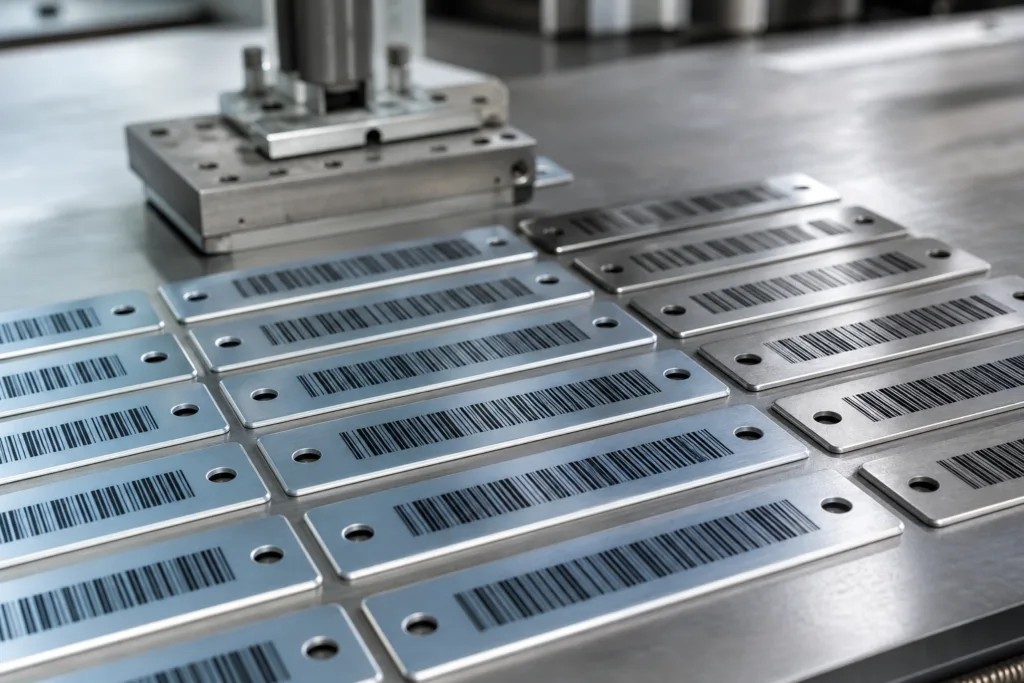
Plastic labels work in some environments, especially where the surface is clean, indoor conditions are controlled, and the service life is short. But equipment tracking often happens in less forgiving conditions. Tags may be exposed to impact, dirt, UV, solvents, pressure washing, abrasion from gloves or tools, or repeated maintenance cycles. In those cases, a label that looks acceptable on day one may not remain readable later.
This is why buyers often shift from temporary labeling to permanent tagging after facing replacement problems. A missing or unreadable asset tag creates extra labor, delayed audits, weak maintenance records, and confusion in inventory systems. That cost rarely appears in the initial unit price comparison, but it shows up later in rework and tracking gaps.
When buyers compare metal durability versus plastic labels, the main issue is not only lifespan in general terms. It is whether the identification method still performs after real use. For indoor office assets, plastic may be enough. For machinery, outdoor equipment, shared tools, electrical systems, or industrial storage assets, metal usually gives a more dependable result.
Key benefits of metal asset tags for long-term use
Wear resistance
Metal tags handle mechanical contact better than many label materials. Scraping, rubbing, and repeated cleaning can gradually damage printed surfaces, especially when the marking is only on top of the material. With the right marking method, a metal tag can protect the legibility of the barcode and text more effectively over time.
Corrosion resistance
Not all metals perform the same way, but aluminum, anodized aluminum, and stainless steel can each be selected for different exposure conditions. The key is matching the tag material to the environment instead of choosing only by price. This detail may look small, but it can create failures later if it is not confirmed early.
Outdoor durability
For equipment stored or operated outside, weather exposure changes the specification requirements. Sunlight, temperature swings, rain, and contamination can affect both the base material and the barcode contrast. Outdoor tags usually need a stronger combination of material, finish, and attachment than indoor-only assets.
Long service life
Metal asset tags are often chosen because buyers want to reduce replacement frequency. In our production work, long service life usually depends on the full tag structure, not just the metal name. A thin tag with a weak adhesive or poorly protected print may still fail early. A properly matched tag with correct thickness, readable code sizing, and secure mounting usually performs much better.
How barcode technology improves asset visibility
Barcode-based identification makes equipment tracking faster and more consistent because it reduces manual entry. Instead of reading a long serial string and typing it into a system, the operator scans the code and pulls up the correct record. That helps reduce keying errors, improves audit speed, and makes maintenance history easier to access.
For buyers building tighter control over maintenance tools, field equipment, or factory assets, barcode tagging helps in a few practical ways:
- faster inventory checks
- more consistent asset registration
- clearer custody records for shared equipment
- better maintenance and inspection workflow
- lower risk of duplicate or incorrect asset numbers
- improved loss prevention through easier identification
When the project requires more than a simple asset number, serialized structures also matter. Our work on serialized metal tag traceability reflects a common buyer need: the barcode, visible number, and back-end data all need to match exactly. For equipment tracking, that means the manufacturer should be able to handle sequential data cleanly and verify that printed or engraved output matches the supplied file.
Barcoded metal plates vs. plastic labels
For buyers, the key is not only the product name or price, but whether the material, marking method, and application requirements match the real use case. A plastic label may cost less up front. A metal plate may cost more per piece. But total cost of ownership often changes when replacement labor, downtime, failed audits, and unreadable codes are considered.
| Factor | Barcoded Metal Plates | Plastic Labels |
|---|---|---|
| Base durability | Higher resistance to impact and abrasion | More vulnerable to tearing, edge lift, and wear |
| Outdoor use | Better suited when material and marking are matched properly | Often limited by UV, adhesive aging, or surface wear |
| Attachment flexibility | Can use holes, rivets, screws, wire, or adhesive | Usually adhesive only |
| Barcode longevity | Stronger when engraved, etched, or protected well | Can degrade faster if printed surface is damaged |
| Replacement frequency | Usually lower in industrial settings | Often higher in hard-use environments |
| Total project stability | Better for long-term asset control | Better for short-term or light-duty identification |
This does not mean plastic is always wrong. It means buyers should be honest about how the asset is used, where it is installed, how often it is touched, and how long the tag must last.
Best materials for equipment tracking tags
Aluminum
Aluminum is widely used because it offers a good balance of weight, workability, and cost. It is suitable for many indoor and moderate outdoor projects. It can be formed into different sizes easily and works well for many industrial nameplate and asset tag applications.
Anodized aluminum
Anodized aluminum is often selected when buyers need better surface performance and cleaner visual contrast. It is a practical choice for many asset tags because it can support durable marking and a professional finish while keeping weight low. For many equipment tracking projects, anodized aluminum gives a strong cost-performance balance.
Stainless steel
Stainless steel is commonly selected for harsher environments where higher corrosion resistance, stronger mechanical performance, or a more rigid plate is needed. It is a better fit when the asset faces moisture, chemicals, marine air, or rough handling. The trade-off is usually higher material and processing cost, along with a heavier tag.
When buyers need help narrowing the options, we usually begin with the environment, the target service life, the marking method, and the attachment plan. From our manufacturing side, that is more useful than selecting material by habit alone. Our metal tag solution options for industrial tracking often start from that same logic because the right tag is really a matched specification, not just a material name.
Choosing the right marking method
The marking method affects durability, readability, appearance, and cost. In many projects, the problem is not that the buyer chose the wrong category. The problem is that some production details were not clarified before sampling or bulk production.
| Method | How It Works | Where It Fits | Main Consideration |
|---|---|---|---|
| Laser engraving | Uses a laser to mark text, numbers, and codes | Durable identification, variable data, serial numbers | Contrast and scan clarity must be checked on the chosen finish |
| Chemical etching | Creates recessed or defined marked areas | Long-life industrial tags and detailed layouts | Good for durable detail but needs correct artwork preparation |
| Stamping | Forms characters by mechanical pressure | Simple permanent numbering and rugged ID | Not ideal for dense barcode graphics |
| Screen printing | Applies ink through a screen | High-contrast graphics and larger runs | Surface wear matters in hard-use conditions |
| UV printing | Prints cured graphics on the surface | Colorful or detailed visual layouts | Best where abrasion is limited or protection is adequate |
For barcode tags, laser marking and etching are often preferred where long-term readability matters. Stamping is excellent for simple permanent characters, but less suitable for scannable barcode structures. Printed methods can still work well, especially for indoor asset control, but buyers should confirm the wear environment before choosing them.
Barcode and data design considerations
Barcode performance depends on design as much as material. A durable plate is not useful if the code is too small, too dense, too low in contrast, or crowded by surrounding graphics. This is one of the most common reasons samples need revision.
Here are the main points we ask buyers to confirm early:
- Code type: 1D for simple scans and shorter data strings, 2D when more data density is needed.
- Code size: small tags may limit barcode width, cell size, and human-readable text.
- Contrast: the scanner needs clear visual separation between background and mark.
- Quiet zone: codes need clear blank space around them to scan reliably.
- Serialization: the visible number and barcode data must match the source file exactly.
- Scanner reality: the barcode should match the device type and scanning distance used in the field.
Some projects also use mixed layouts that combine a barcode with text and a QR-style option for broader compatibility. In those cases, layout discipline matters even more. Our experience with barcode and QR-style identification tags shows that readable data structure is often a layout problem before it becomes a manufacturing problem.
Selecting the right attachment method
Attachment is one of the easiest details to overlook. A barcode can be perfect, but if the plate detaches in service, the tracking system still fails. The right mounting method depends on the equipment surface, installation process, vibration level, and whether the asset is used indoors or outdoors.
Holes for rivets or screws
This is often the most secure option for machinery, outdoor assets, and hard-use equipment. Buyers should confirm hole diameter, hole position, edge margin, and whether the equipment surface allows easy installation.
Adhesive backing
Adhesive-backed tags are useful when drilling is not possible or when the surface needs a cleaner look. However, adhesive performance depends heavily on surface energy, cleanliness, temperature, and environmental exposure. Adhesive should be chosen based on the real installation surface, not assumed from a general description.
Wire or chain mounting
This works well for valves, cables, movable items, or places where a fixed plate is difficult to install directly. The buyer should still confirm movement, rubbing, and orientation because scanner access can be affected by how the tag hangs.
Matching tag specifications to equipment type and environment
Not all equipment tracking projects need the same structure. A good specification should reflect the asset category and the environment where the tag will actually live.
| Equipment Type | Typical Need | Suggested Direction |
|---|---|---|
| Indoor machinery | Readable ID with moderate wear | Aluminum or anodized aluminum with durable barcode marking |
| Outdoor assets | Weather resistance and strong fixing | Anodized aluminum or stainless steel with rivet or screw holes |
| Electrical equipment | Compact layout and clear numbering | Thin but rigid tag with accurate barcode sizing and strong contrast |
| Harsh industrial settings | Chemical, abrasion, or heavy handling exposure | Stainless steel or robustly specified metal tag with secure mechanical attachment |
At UC Tag, we usually advise buyers to describe the asset surface, installation method, exposure conditions, code format, and expected lifetime in one request. That gives a much better starting point for specification review than asking for a generic barcode plate price.
Artwork, numbering, and data file preparation for bulk production
Bulk equipment tracking projects often depend on data accuracy more than artwork complexity. A simple plate with bad numbering creates more trouble than a complex plate with a clean data file. For that reason, we treat data preparation as a production issue, not just a design issue.
Before sampling or mass production, buyers should confirm:
- tag size and thickness
- material and finish
- barcode type and placement
- human-readable text content
- logo artwork format
- sequential or variable numbering rules
- duplicate prevention in the data file
- hole position or adhesive requirement
- packaging sequence if installation order matters
For variable data, spreadsheet control is important. The manufacturer should know whether each line represents one unique asset, whether prefixes are fixed, and whether missing numbers are allowed. If the project includes multiple departments or installation sites, packaging by sequence can save time later.
Sampling, QC, and production checks that matter
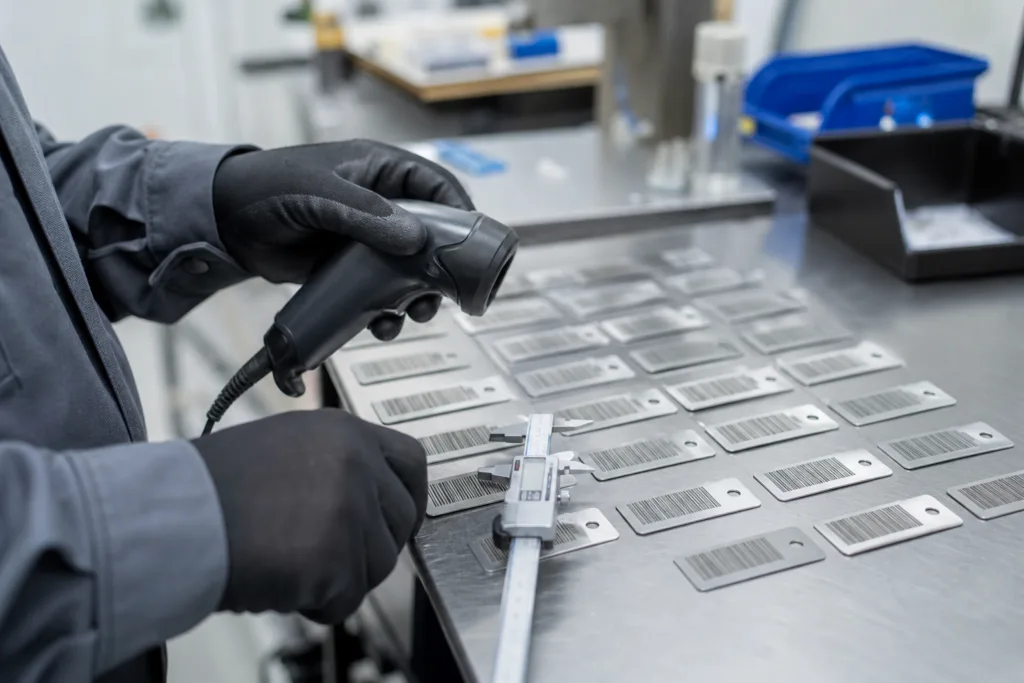
Sample approval is where many problems can be prevented. A buyer may look mainly at appearance, but the sample should also be checked for scan performance, data accuracy, hole location, attachment practicality, and edge quality. For barcoded metal plates, readability under actual scanner conditions matters more than visual approval alone.
In our custom metal tag production work, key QC checkpoints typically include barcode legibility, visible text accuracy, material consistency, thickness tolerance, finish appearance, attachment feature accuracy, and lot-to-lot consistency for variable data. For serial projects, we also review whether the numbering sequence starts correctly, progresses correctly, and matches the approved source data.
This is especially important in larger runs. A minor alignment issue in a short sample may become a significant operational problem across thousands of tags. That is why pre-production confirmation should include both design approval and process approval.
Common mistakes buyers make when ordering metal asset tags
- Choosing material by habit instead of by environment.
- Making the barcode too small for the real scanner and scan distance.
- Ignoring quiet zones or crowding the code with too much text.
- Selecting adhesive without confirming the actual mounting surface.
- Approving samples visually without testing scan reliability.
- Sending variable data files with duplicate, missing, or unclear sequences.
- Forgetting packaging logic for field installation order.
- Comparing price without comparing expected replacement cost.
Most of these mistakes are avoidable when the buyer and manufacturer clarify the use case early. A short project brief often prevents much more rework than a late-stage correction.
How businesses use barcoded metal plates in practice
We see several common use patterns across equipment tracking projects. An OEM may apply permanent asset tags to machines before shipment so the end user can register equipment immediately. A factory may use metal barcode plates on shared tools and fixtures to improve internal issue-and-return control. A utility or field service team may tag outdoor equipment so inspection history can be retrieved quickly during maintenance rounds.
In each case, the value comes from the same principle: the tag has to stay attached, stay readable, and stay linked to the correct record. If one of those three points fails, the tracking system becomes harder to trust.
How to evaluate a metal tag manufacturer for equipment tracking projects
Buyers comparing suppliers should look beyond catalog images. For equipment tracking, the useful questions are practical ones:
- Can the manufacturer recommend material based on the real environment?
- Can they produce barcode tags with variable serial data accurately?
- Can they support holes, adhesive, wire mounting, or mixed attachment needs?
- Can they provide samples before bulk production?
- Do they check scan readability as part of production control?
- Can they package tags in sequence for easier installation?
- Can they handle OEM or private label requirements when needed?
A capable manufacturer should be able to talk through the trade-offs clearly. If the answers stay vague around data handling, scan reliability, attachment details, or sample control, that usually signals risk later.
Conclusion
Barcoded metal plates are a strong option when equipment tracking needs to hold up under real use instead of ideal conditions. The right result comes from matching material, marking method, barcode layout, attachment, and data control to the equipment and environment. For buyers, the most important step is not finding the cheapest tag format. It is confirming the specification details that protect readability, attachment security, and production consistency over time.
Frequently Asked Questions
Are barcoded metal plates better than plastic labels for equipment tracking?
They are usually better when the equipment faces abrasion, weather, chemicals, repeated cleaning, or long service periods. Plastic labels can still work for short-term or light-duty indoor use, but metal plates are generally the safer choice when you need longer-lasting identification and fewer replacements.
Which material is most practical for barcoded metal asset tags?
The most practical choice depends on the environment. Aluminum works well for many standard indoor applications, anodized aluminum is a strong option when buyers want a good balance of durability and cost, and stainless steel is often selected for harsher outdoor, chemical, or heavy-wear conditions.
What marking method is best for barcode readability and durability?
For many industrial projects, laser engraving or chemical etching are preferred because they support durable identification and variable data. The final decision should still depend on the tag material, required contrast, scan conditions, and how much abrasion the surface will face in service.
Can barcoded metal plates include serial numbers and custom variable data?
Yes, and that is common in equipment tracking projects. The important part is that the barcode data, visible number, and source file all match exactly. Buyers should confirm numbering rules, prefixes, sequence logic, and duplicate control before sample approval and mass production.
What attachment method should be used for metal asset tags?
Rivets or screws are usually the most secure for machinery and outdoor equipment, while adhesive backing can work well on clean, compatible surfaces where drilling is not practical. Wire or chain mounting is useful for valves, cables, or hanging applications. The right choice depends on the asset surface, vibration, exposure, and installation method.
What should buyers check before approving a production sample?
Buyers should check scan performance, barcode size and contrast, text accuracy, material and thickness, hole location, edge finish, attachment method, and whether the serial data matches the approved file. Visual appearance matters, but sample approval should also confirm that the tag will function properly in the real tracking workflow.