Introduction to Chlorine-Resistant Metal Tags
Swimwear branding isn’t just about colors and cuts. Many leading swimwear brands now understand the vital importance of incorporating chlorine-resistant tags into their designs. These tags must survive relentless exposure to pool chemicals while communicating durability and quality to both the brand and the customer.
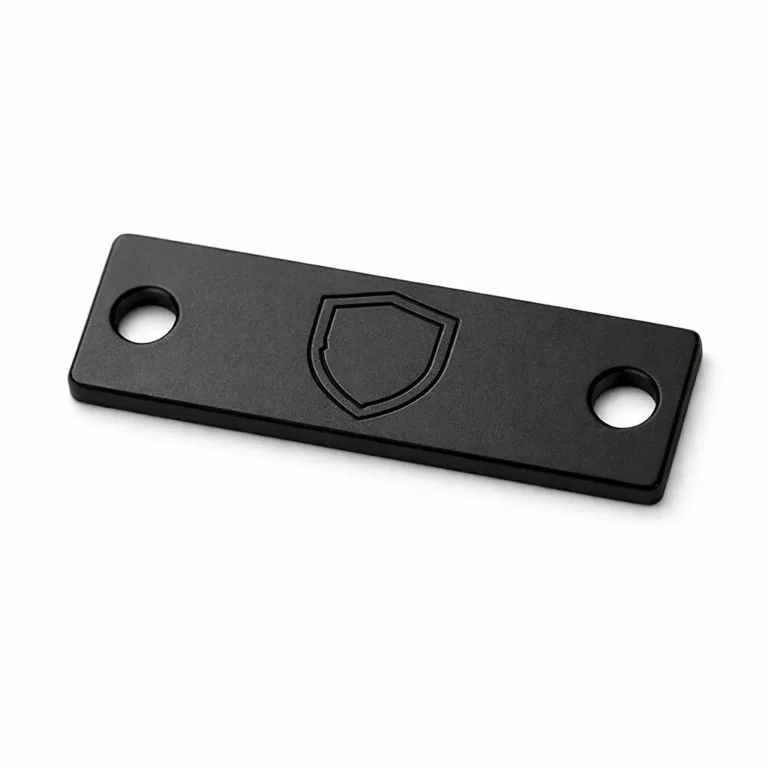
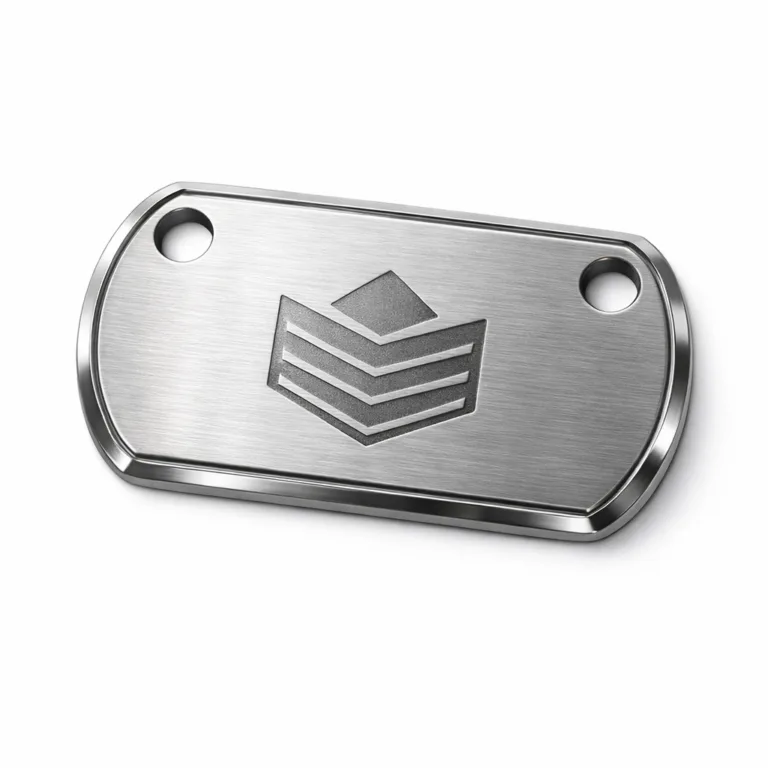
Chlorine-resistant tags are specially crafted metal markers made to withstand harsh chlorinated environments without corroding, fading, or losing readability. Their presence on swimwear conveys a premium, thoughtful approach to product quality. Customers expect these tags to maintain their appearance and function after dozens—or hundreds—of swims, reflecting directly on brand reputation and perceived value.
Today’s customers are more discerning than ever, and swimwear designers are looking for every advantage to stand out. A well-executed branding solution with chlorine-resistant tags signals a commitment to excellence and reliability. This practice aligns with swimwear market trends, where lasting materials and unique design cues differentiate brands in a crowded field.
- Chlorine-resistant tags offer a tactile detail customers can feel and trust.
- They help brands ensure quality is visible at the point of purchase or unboxing.
- Enhanced tag durability is now a key element in premium swimwear marketing.
Understanding Material Options

Material matters. Choosing the right metal for chlorine-resistant tags can make or break the longevity and aesthetics of swimwear branding. Each metal brings unique advantages and limitations to different aquatic applications.
Aluminum Tags are a popular option due to their lightweight nature and basic corrosion resistance. They perform well for short-term, promotional, or fashion-forward applications. However, prolonged exposure to highly chlorinated water may cause gradual wear, especially on thinner tags or low-grade alloys.
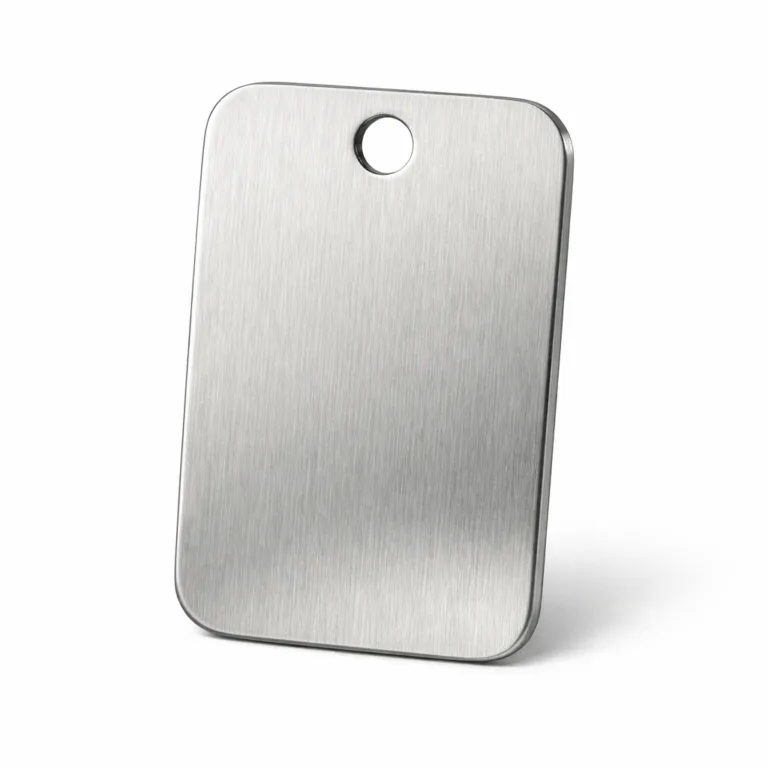
Stainless Steel Tags stand out as the gold standard for pool and spa environments. Their natural corrosion resistance and strength ensure they keep their shine and legibility even after hundreds of swim sessions. Grades such as 304 and 316 stainless are commonly chosen by brands who want a nearly maintenance-free solution.
Brass Tags are known for their attractive, rich color and ease of customization. They offer strong initial appeal in branding, but brass tends to tarnish in chlorinated water, potentially dulling logos or serial numbers.
| Material | Durability | Corrosion Resistance | Weight | Cost | Recommended Use Case |
|---|---|---|---|---|---|
| Aluminum | Medium | Good | Light | Low | Fashion tags, promo items |
| Stainless Steel | High | Excellent | Medium | Moderate | Performance swimwear, team kit |
| Brass | Medium-Low | Fair | Medium | Moderate | Luxury detail, limited pool use |
When choosing the ideal material for chlorine-resistant tags, think about the weight of your garments, the expected lifespan of the product, and your branding budget. For collections designed for serious swimmers or outdoor exposure, stainless steel might edge out the alternatives. For fun fashion lines or short campaigns, aluminum or brass could provide more creative freedom with cost savings.
Rain Chen from UC Tag explains that stainless steel is favored for projects where “there’s no room for maintenance or aging, just consistent, clean branding season after season.” This insight reinforces the importance of aligning your tag material with the real-world needs of your swimwear.
Manufacturing Method Comparisons
Material is just the start—how your chlorine-resistant tags are manufactured will impact their looks, cost, and wear-resistance. Several methods are standard in the swimwear industry, each with distinct benefits.
Engraving (mechanical or laser) creates deep, precise markings that are packed with detail and can remain legible for years. Engraved tags resist scratching and fading—ideal if your brand needs to showcase serial numbers or intricate icons on pool-ready gear.
Stamping is an efficient, cost-effective option for large-volume orders. It applies basic shapes, raised or recessed logos, and simple typefaces. However, it’s less suited for fine details, and extremely thin tags may warp if pressed too hard.
Etching uses acids or lasers to create high-contrast designs with intricate lines. Etched tags enable fine artwork and subtle shading—perfect for premium branding where aesthetics matter as much as durability. However, depth can be shallower than engraving, impacting resistance on tags exposed to constant abrasion.
Printing (UV or enamel filling) allows full-color logos and gradients. While offering the most creativity, these finishes may eventually show wear, depending on the pigments, coatings, and base metals used. They remain excellent for standout branding when combined with a protective topcoat.
- Engraving: Choose for legibility and permanent detail in chlorine-resistant tags.
- Stamping: Economical for basic, sturdy logos at high volumes.
- Etching: Select for design-driven brands needing complex artwork in pool environments.
- Printing: Go for creative freedom—best for limited runs or less hostile pool settings.
Rain Chen of UC Tag emphasizes the trade-off: “For a logo that must outlast the garment itself, deep engraving on stainless steel is unmatched. But for budget projects, stamping on aluminum wins on speed and cost.” Match your swimwear branding vision with the right process for consistency and reliability.
Key Design & Specification Checklist
Fine-tuning your swimwear branding tag means balancing design intent with real-world functionality. Here’s a practical checklist of specifications that procurement teams and designers should consider:
- Size: Tag dimensions should fit the swimwear label space—compact for strings and straps, larger for bags or outerwear.
- Thickness: 0.5–1.0 mm is typical for swimwear tags, ensuring durability while minimizing added weight or bulk.
- Finish Options: Mirror polish, brushed, matte, or PVD colors can elevate brand aesthetics while adding another layer of corrosion defense.
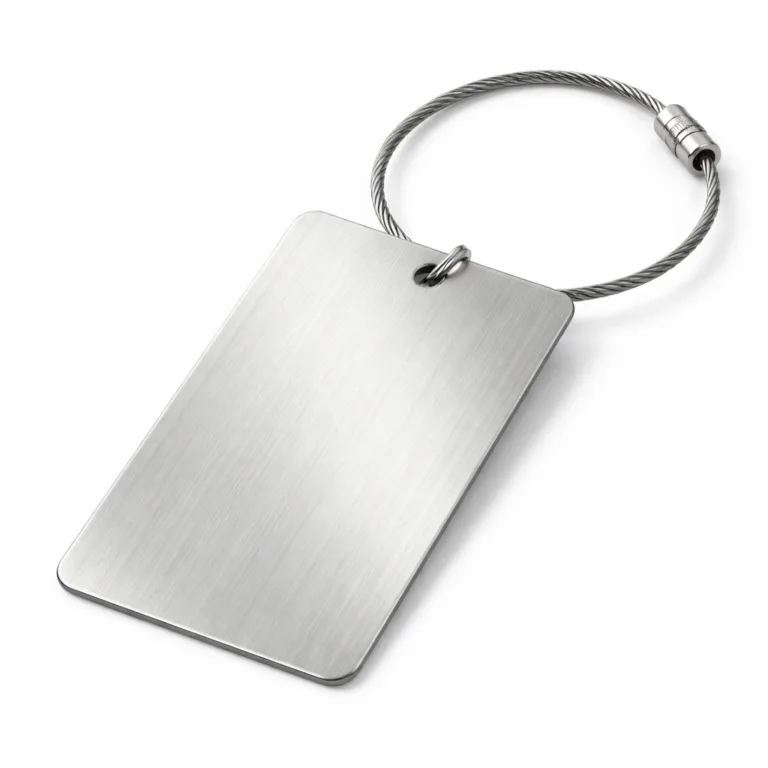
- Attachment: Consider sewn-in holes, rivets, or 3M adhesive backings for secure placement depending on garment construction.
- Readability: Use clear, bold fonts and high-contrast between tag and background to guarantee logos stay visible after repeated use.
- Mass Production: Specify tolerances for size, hole placement, and finish to ensure every tag meets branding standards at scale.
| Spec | Typical Range | Best Practice for Swimwear Branding |
|---|---|---|
| Dimensions | 10–40 mm | Keep tags proportional; small for suits, larger for accessories |
| Thickness | 0.5–1.2 mm | Balance durability and flexibility |
| Finish | Polished, Brushed, PVD | Choose for visual impact and protection |
| Attachment | Holes, Adhesive | Secure for intended product usage |
| Font Contrast | High | Maximize legibility under all lighting |
| Production Tolerance | ±0.10 mm | Ensure consistent fit and appearance |
Careful attention to these points ensures your tags not only look great, but also perform reliably in real-world swim conditions. For in-depth advice on garment placement options, check our Hem vs. Neck Tags: Unlock the Best Metal Logo Placement for Maximum Brand Impact guide.
Durability Testing Methods
Before releasing a new swimwear line, it’s critical to subject your chlorine-resistant tags to rigorous durability tests. This process ensures branding elements meet wear expectations even under challenging pool or outdoor conditions.
Corrosion resistance tests place tags in simulated chlorinated water environments for extended periods. Looking for no pitting, tarnishing, or color shifts after days or weeks of immersion signals real-world reliability.
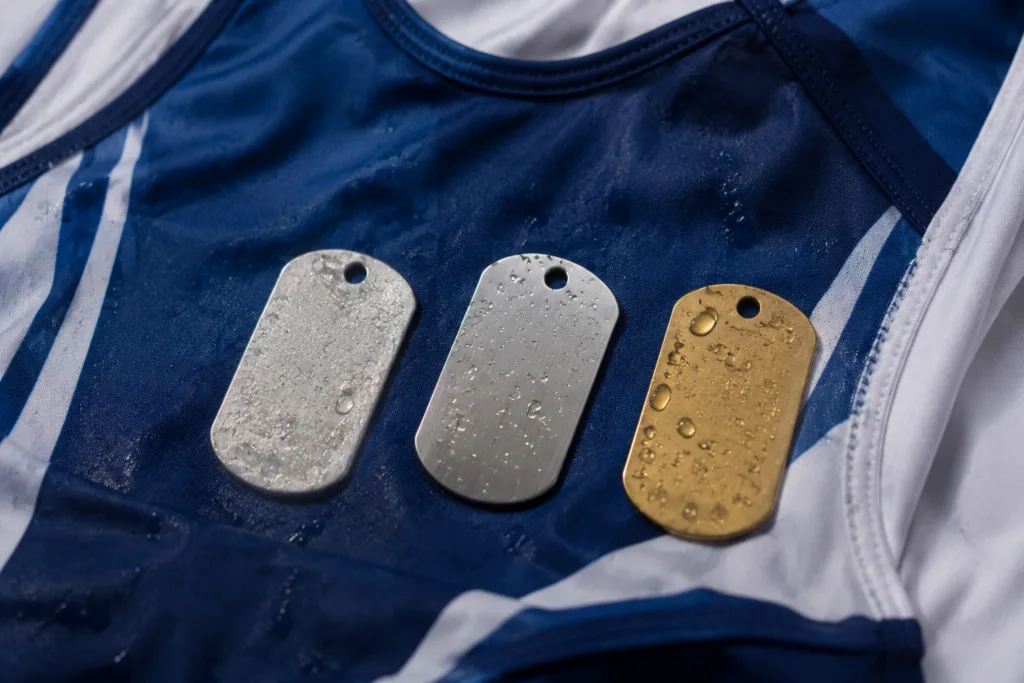
Abrasion testing mimics the effects of washing, friction with body and garment, and handling by repeatedly rubbing tags against fabrics. Superior tags retain their finish and legibility without developing excessive scratches or flaking.
UV exposure tests are essential for outdoor swimwear to confirm that logos and colors won’t fade under sun or UV lamp exposure. Colorfastness is especially critical when using printed or enamel-filled tags.
Salt spray testing goes beyond pool use, simulating saltwater conditions for coastal or multi-environment swimwear lines. This test uncovers corrosion weaknesses not apparent in basic chlorinated water testing.
Tags are generally benchmarked against industry standards (ASTM B117 for salt spray, ISO 9227 for corrosion, and AATCC standards for colorfastness) to verify their resilience across common use cases.
Industry and Application Fit
The applications for premium swimwear branding using custom metal tags go far beyond a standard logo plate on a bikini. Swim brands, distributors, and retailers are innovating to leverage tags for authenticity, traceability, and pure style across diverse product lines.
One major application is with swim teams and schools, where ID tags attached to uniforms provide both branding and a trackable serial number for equipment accountability. These tags must be highly durable and readable even after dozens of pool cycles.
Promotional lines and high-end retail swimwear often use custom tags to enhance perceived value and deter counterfeiting. QR code and serial-numbered tags, such as those offered on QR code tags, allow brands and customers to verify authenticity and play up exclusivity.
Retail tags attached to new stock can assist in inventory tracking and warranty management, especially when paired with barcode or batch number features. Brands focused on pets or family swimwear can incorporate smaller tags for dog life jackets, children’s swimsuits, or even swim bags, boosting both function and brand recall.
Don’t overlook the accessories market: swim goggles, caps, and travel pouches can also benefit from robust, branded tags that reinforce a cohesive identity across all gear. For creative applications and the latest trends in tag aesthetics, you can get further inspiration in our article The Rising Appeal of Metal Sew-On Labels: Why Fashion Brands Are Making the Switch.
Common Mistakes in Tag Selection
The difference between standout and substandard chlorine-resistant tags is often in the details. Here are avoidable pitfalls:
- Unreadable text due to overly small, thin, or ornate fonts that disappear after a few washes.
- Improper adhesive or hole options—using adhesives that fail in wet environments or choosing hole placements that don’t match garment seams.
- Selecting attractive yet unsuitable materials, such as brass, for poolside use, leading to tarnish and brand image damage.
- Overcomplicating logos or intricate shapes that can’t be reproduced consistently in mass manufacturing, risking defects and rejects.
- Skipping critical durability tests, only to see color loss, corrosion, or detachment issues after the product hits shelves.
As Rain Chen at UC Tag advises, “A readable, simple logo on proven stainless steel outperforms a fancy but unreadable design every time—especially in high-chlorine environments.” Focus on function first, with creative design built atop proven specs and processes.
Ordering Guide for Swimwear Tags

Efficient procurement of swimwear branding tags avoids delays and ensures quality. Here’s how to smooth out the process:
- Determine the minimum order quantity (MOQ) required for your custom specification—most manufacturers offer tiered pricing with set MOQs.
- Ask about lead times for your chosen manufacturing method; engraving and etching may take longer, while stamping and printing are typically faster at scale.
- Provide clear, accurate vector artwork for prototypes and proofs. Confirm designs thoroughly to catch errors early and save costs on rework.
- Request samples early in the development phase (sometimes using custom metal tag samples services) to check real-world performance before launching into full production.
- Discuss packaging options that protect tags during shipping, such as bulk bagging versus individual box packing, to prevent scuffs or loss in transit.
Coordinating these details from the start ensures your swimwear tags arrive on time, on budget, and on spec—ready for seamless integration into your branded products.
Frequently Asked Questions
What materials are best for chlorine-resistant tags?
Stainless steel is the most reliable material for chlorine-resistant tags due to its high corrosion resistance, followed by certain grades of aluminum for cost-effective lightweight options.
How long will chlorine-resistant tags last in chlorinated water?
High-quality stainless steel tags typically maintain their appearance and readability throughout the garment’s lifespan, while aluminum and brass may show wear after extended use.
Can custom designs be accommodated?
Yes, manufacturing methods like engraving, etching, and UV printing can produce custom logos, shapes, and even QR codes to match your swimwear branding needs.
What are typical lead times for orders?
Lead times vary by method and volume—engraved or etched tags can take 2–4 weeks, while stamped or printed orders may be fulfilled faster, especially for repeat designs.
How do I ensure readability on my tags?
Choose high-contrast font and background combinations, avoid intricate fonts, and specify minimum accepted text size for optimal readability after repeated use.
What is the best attachment method for swimwear?
Secure sew-in holes or waterproof adhesive backings are most effective for swimwear tags, depending on garment construction and tag placement requirements.
Related Reading
- How Tag Placement Impacts Your Swimwear Brand Recognition
- Why Leading Fashion Brands Are Switching to Durable Metal Labels
- Boost Perceived Quality with Branded Zipper Pulls on Swimwear
- The Complete Rebranding Checklist for Standout Logo Tags
- Affordable Metal Tags: Elevate Your Swimwear’s Premium Feel
- Order Custom Metal Tag Samples for Rapid Swimwear Prototyping