Introduction to Military Dog Tags
Military dog tags have served as a vital identification method for service members since the late 19th century. The concept originated in the Civil War, but it became official in the U.S. military during World War I, evolving into a device for personal identification in the field. Today, military dog tags are more than just metal plates—they are lifelines that provide critical information in high-risk situations.
The primary function of military dog tags is to ensure accurate identification and traceability, especially in emergencies or adverse scenarios. These identification tags help medics, commanders, and even historians accurately document and assist personnel. Strict government regulations dictate the design, material, size, and engraving of these tags, preserving uniformity and readability across all branches.
For active service members and veterans, dog tags are practical tools with profound psychological and operational value. They promote a sense of belonging, recognition, and security both in and out of combat zones. These identification tags symbolize commitment and are recognized globally for their importance.
Official Government Specifications for Military Dog Tags
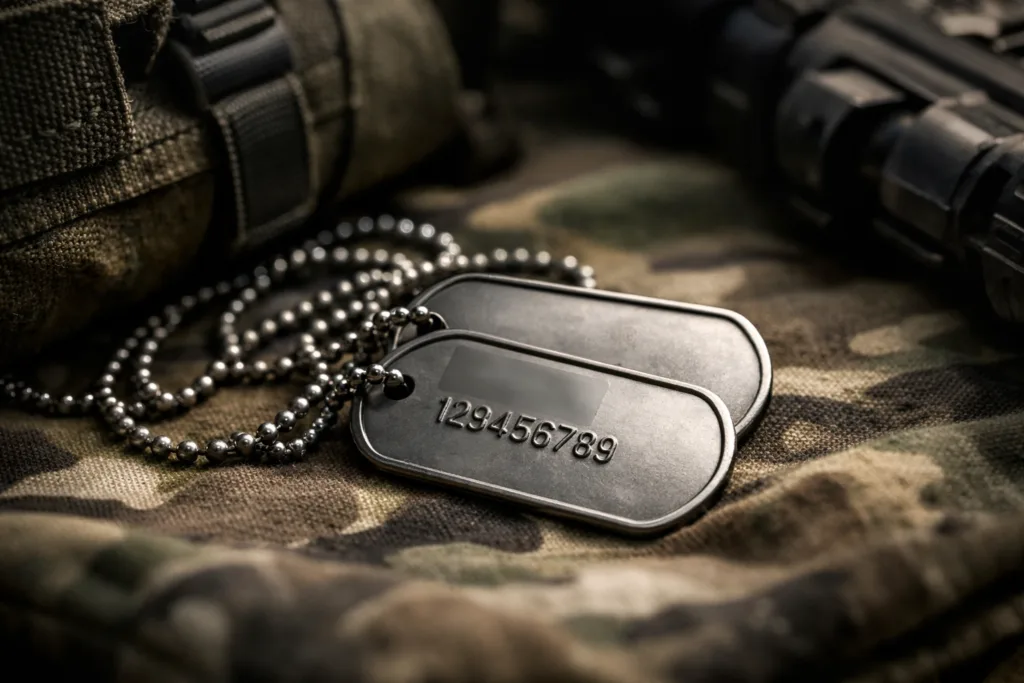
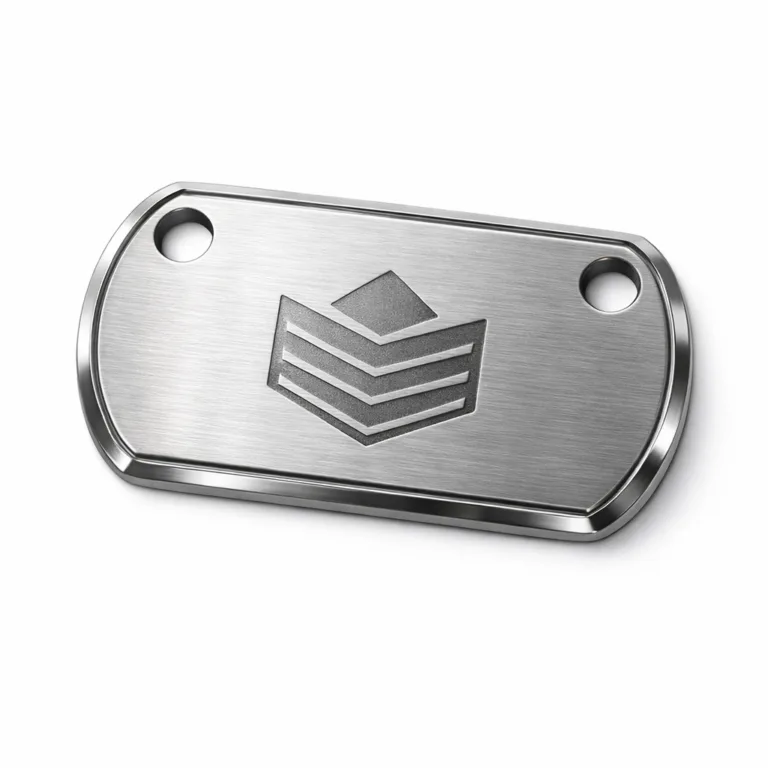
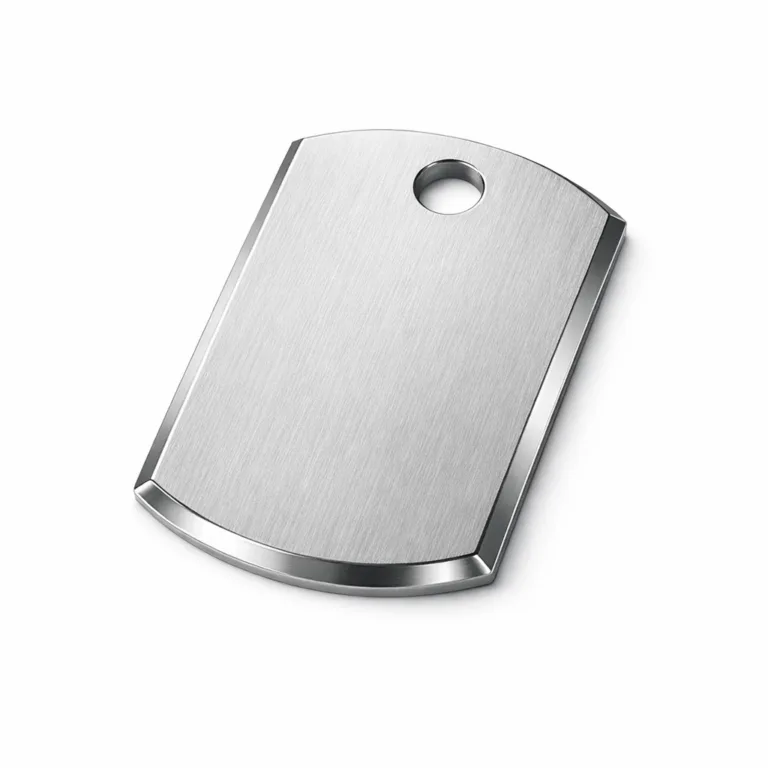
Government standards around military dog tags are precise. The U.S. Department of Defense mandates specific dimensions: tags are generally 50mm x 28mm (2″ x 1.125″), with a thickness between 0.5mm and 1.0mm. Weight is controlled to ensure comfort and accustomment during extended wear.
Materials must meet requirements for durability and non-reactivity. Stainless steel is typically chosen for its corrosion resistance, though aluminum and brass are alternatives for some branches or commemorative applications. Approved color schemes avoid reflective finishes to reduce visibility risks.
Engraving must be clear, permanent, and legible. Most tags require capital block fonts between 2–3mm in height. Required information includes the service member’s name, service number (or SSN in legacy tags), blood type, and religious preference. Some branches, such as the Marines and Air Force, include additional codes or unit details, but the core identification remains consistent.
Military dog tags must strictly follow the mandated spec, but branches may differ in format and information placement. Rain Chen, UC Tag’s senior craftsman, notes that Navy tags sometimes have more space for extended information, while Army tags prioritize compact, efficient lettering for readability.
Material Comparisons for Durability and Compliance
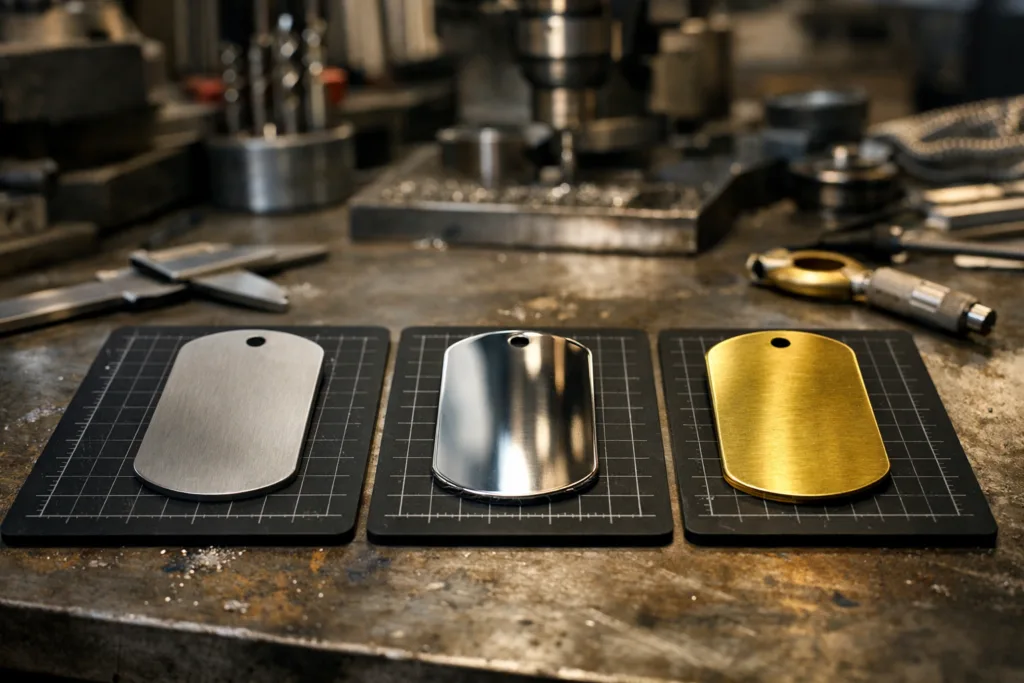
Choosing the right material for identification tags is crucial for both compliance and survival in challenging environments. The military typically specifies stainless steel, aluminum, or brass.
- Stainless Steel: Highly resistant to moisture, corrosion, and most chemicals. Slightly heavier but optimal for field durability.
- Aluminum: Lightweight, easy to stamp and engrave, but less robust against wear and salt exposure.
- Brass: Offers a classic look and good corrosion resistance but can tarnish and is less common in modern deployments.
Each material affects tag weight, lifespan, and legibility. Stainless steel is ideal for humid and marine environments, while aluminum tags are suitable for training, temporary IDs, or lighter gear applications. Brass is often reserved for commemorative or veteran tags.
Surface finishes, such as matte, sandblasted, or anodized coatings, further enhance durability. Finishes must comply with readability and anti-glare standards set by the military—for example, a matte nickel-plated dog tag prevents reflection and maintains clarity.
| Material | Weight | Corrosion Resistance | Readability | Typical Use |
|---|---|---|---|---|
| Stainless Steel | Heavy | Excellent | High | Active Duty |
| Aluminum | Light | Moderate | Moderate | Training/Veteran |
| Brass | Medium | Good | High | Commemorative |
When compliance is a top priority, identification tags must be carefully matched with environmental demands. UC Tag’s production team often guides clients on material selection based on end-use scenarios.
Manufacturing Methods for Military Dog Tags
The manufacturing process directly impacts the performance and certification of military dog tags. Three main methods dominate:
- Engraving: Laser and CNC engraving create deep, precise lettering. Great for detail and longevity, but slower for high-volume runs.
- Stamping: Mechanical presses imprint information using force, producing rugged, readable marks. Efficient for mass production.
- Etching: Chemical or laser etching dissolves or vaporizes metal, allowing more complex information or QR codes, though shallow marks may wear over time.
Precision and durability requirements often dictate the method. Engraving offers unparalleled clarity; stamping yields consistency in large batches. Etching is valuable for customization but demands accurate controls to avoid illegibility.
Rain Chen at UC Tag emphasizes that manufacturing choice should also consider batch size. If customization or unique data (such as serial numbers or micro-text) is needed, engraving or etching can handle variable info. However, for standardized mass production, stamping is generally fastest and aligns well with government compliance checks.
Manufacturing must also comply with military dog tag standards. For example, engraved tags must withstand abrasion and corrosion tests; stamped tags must maintain text integrity across thousands of units. Custom options like embossed crests or QR code tags must never compromise core specification readability.
Design and Specification Checklist for Dog Tags
Ensuring identification tags meet official specs requires careful review of a design and manufacturing checklist:
- Dimensions: 50mm x 28mm, thickness 0.5–1.0mm
- Finish: Matte or semi-matte (anti-glare)
- Material: Stainless steel, aluminum, or approved brass
- Font: Capital block, minimum size 2mm; high-contrast
- Attachment: 2–3mm diameter hole for chain; optional adhesive for special applications
- Tolerance: ±0.1mm for size; ±0.05mm for engraving depth
- Content: Name, service number, blood type, religion
- Quality: Consistency across batch, no edge burrs
| Design Element | Spec Requirement | Compliance Note |
|---|---|---|
| Size | 50 x 28mm | Standard issue |
| Thickness | 0.5–1.0mm | Durable, not bulky |
| Material | Steel/Aluminum/Brass | Corrosion resistance |
| Finish | Matte | Anti-glare readability |
| Attachment | Hole/Chain | Secure, interchangeable |
| Font | Capital block (2mm+) | Legibility priority |
| Engraving | Permanent | Durability |
| Information | Mandatory | Gov’t regulated |
Consistency is the backbone of production. The identification tags must pass visual and measurement checks before leaving the factory. Readers can learn more about maximizing legibility by reviewing UC Tag’s Expert Font Size Guide.
Ensuring Durability: Testing Standards for Military Dog Tags
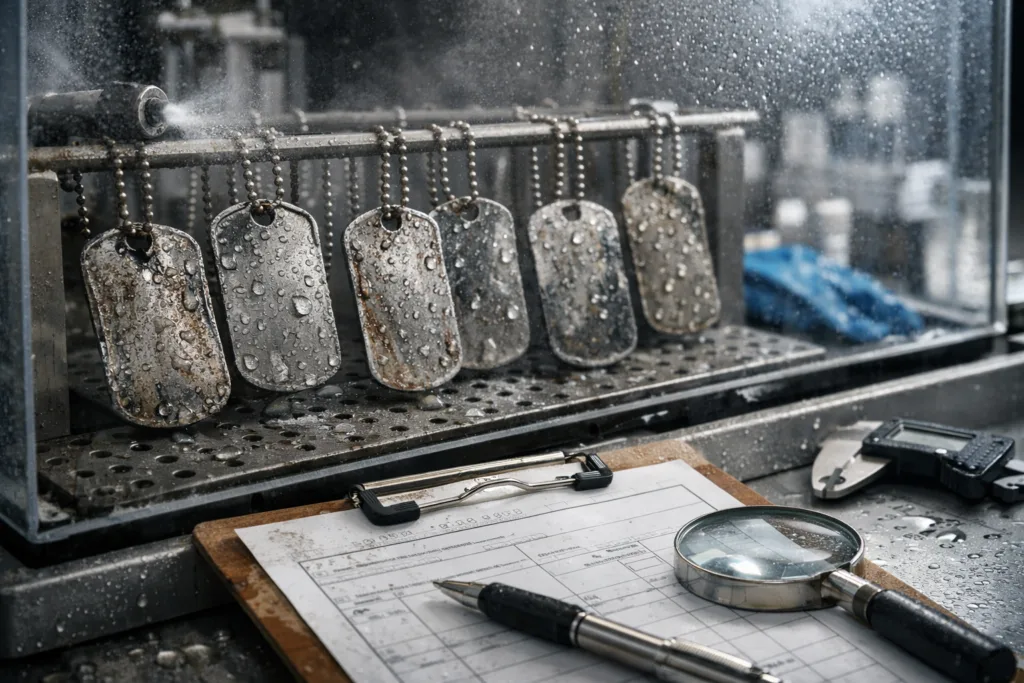
Military dog tags demand rigorous testing to ensure they withstand harsh environments. Major durability tests include corrosion (salt spray), abrasion (scratching), UV exposure (fading), and temperature cycling. These are performed under controlled conditions to simulate battlefield or extreme weather scenarios.
Corrosion resistance is tested by exposing tags to saline mist for hours or days. Abrasion tests involve repeated scraping to verify text remains readable. UV exposure reveals how finishes and engraving stand up to sunlight and heat. Comparing outcomes, stainless steel tags usually pass highest, while aluminum tags may require protective anodizing.
Meeting government standards isn’t just a checkbox—it ensures dog tags perform in real-world scenarios, such as water rescue, jungle deployment, or arctic training. A tag that fails can become illegible or break, risking a loss of identity for the wearer.
Service members’ safety is on the line, and tags must exceed expectations. Rain Chen at UC Tag shares that periodic batch testing—sampling tags from each run—is critical for quality assurance.
Industry Applications of Military Dog Tags
Identification tags are used across every branch of the military: Army, Navy, Air Force, and Marines. Each branch adapts tag formats subtly, but the core purpose remains—accurate, durable identification.
Tags are vital in training and defense operations, helping instructors account for personnel and ensuring medical readiness. They are also used in emergency scenarios for rapid identification in disasters, rescue missions, or mass casualty events.
For veterans, identification tags serve commemorative purposes—preserving service history and honoring achievements. Industrial uses inspired by military dog tag standards include asset tracking, inventory management, and equipment marking. Companies often adopt similar specs for critical applications, taking cues from military durability and readability benchmarks.
UC Tag has developed asset tags and QR/barcode tags for industrial clients, leveraging military-grade features in commercial projects. To explore these options, visit the custom metal tag solutions page.
Common Mistakes and Troubleshooting in Dog Tag Production
Producing military dog tags to official specs is not without pitfalls. Common errors include poor engraving depth, insufficient font size, or errors in information layout—issues that compromise legibility.
Material selection is another frequent problem. Choosing the wrong alloy can result in corrosion, tarnishing, or peeling finishes. Misaligning with government specifications can mean failed inspection or costly recalls.
Attachment mistakes, like poorly sized holes or unreliable adhesive backing, may cause tags to detach during high activity. Maintenance oversights—such as omitting edge deburring or not cleaning final tags—also impact durability.
Rain Chen’s advice for troubleshooting is simple: always verify sample tags against spec checklists, run periodic durability tests, and reevaluate attachment mechanisms for each deployment context. For best practices on tag information, see UC Tag’s Expert Guide to Effective Dog Tag Information.
Ordering Guide for Military Dog Tags
Buyers need a straightforward checklist to secure compliant identification tags. Key steps include specifying minimum order quantity (MOQ), confirming artwork and information layout, and requesting proofs for review.
Sampling is crucial to test final product quality—lead times vary, but typical production runs may take 2–4 weeks. Packaging options should protect tags from scratches or moisture; bulk orders may require custom cartons or sealed pouches.
Clear communication about customization, finish, and font is essential. Before final approval, buyers should review proofs, check sample tags for compliance, and confirm design elements such as attachment holes or chain compatibility.
- Define quantity and specs
- Request proofing/sample
- Confirm packaging needs
- Approve artwork/design
- Verify compliance checklist
For help refining specs, UC Tag offers classic military dog tag samples and consultation for custom requests. Reviewing steps beforehand and using the checklist reduces errors and ensures batch quality.
Frequently Asked Questions
What are the official size standards for military dog tags?
Military dog tags are typically 50mm x 28mm (2″ x 1.125″) with a thickness between 0.5 and 1.0mm, as mandated by U.S. government regulations.
Which materials are accepted under military specifications?
Stainless steel is the primary material used for compliance, with aluminum and brass acceptable for certain applications or commemorative tags.
How does the engraving process impact the readability of military dog tags?
Engraving depth and font size are crucial; precise laser or mechanical engraving ensures legible, durable identification tags that resist wear and corrosion.
What durability tests must military dog tags pass?
Dog tags undergo corrosion (salt spray), abrasion, UV exposure, and temperature cycling tests to verify performance in extreme environments.
What information is required on a military dog tag?
Tags must include the service member’s name, service number, blood type, and religious preference, with branch-specific additions as needed.
How can you maintain the condition of metal identification tags?
Regular cleaning with gentle solutions, inspecting for wear, and storing in protective packaging helps prolong the life and readability of identification tags.
Related Reading
- Choose the Right Font Size: Cut Legibility Failures on Metal Tags
- Optimize Your Dog Tag Info: Smart Data Choices That Save Lives
- Military vs. Pet Tag Sizes: Precision Guide for Accurate ID Solutions
- Boost Comfort and durability: Why Curved Metal Tags Are Essential
- Explore Custom Metal Tag Solutions for Rugged Industrial Identification
- Discover Classic Military Dog Tag Samples for Spec Compliance