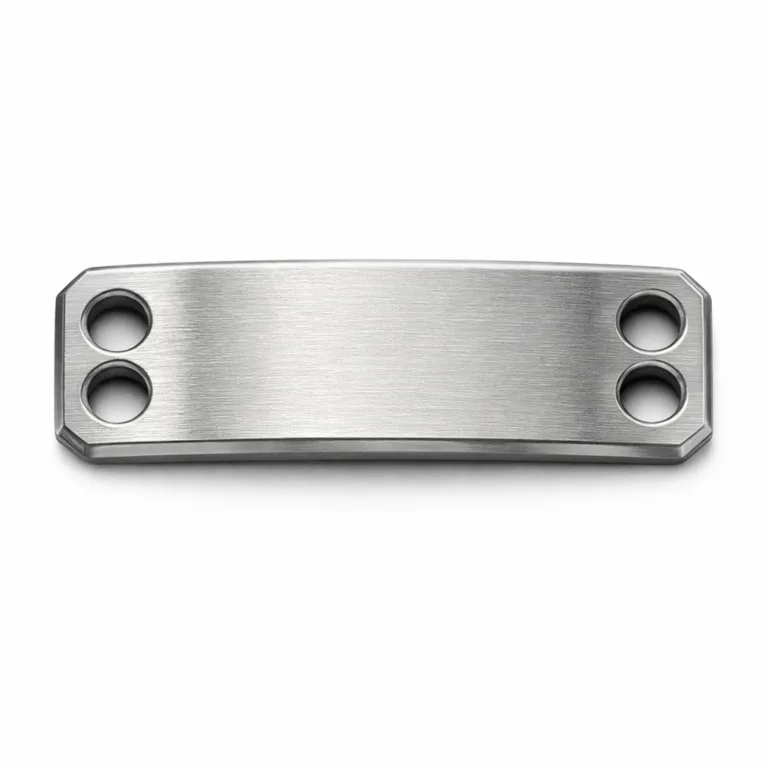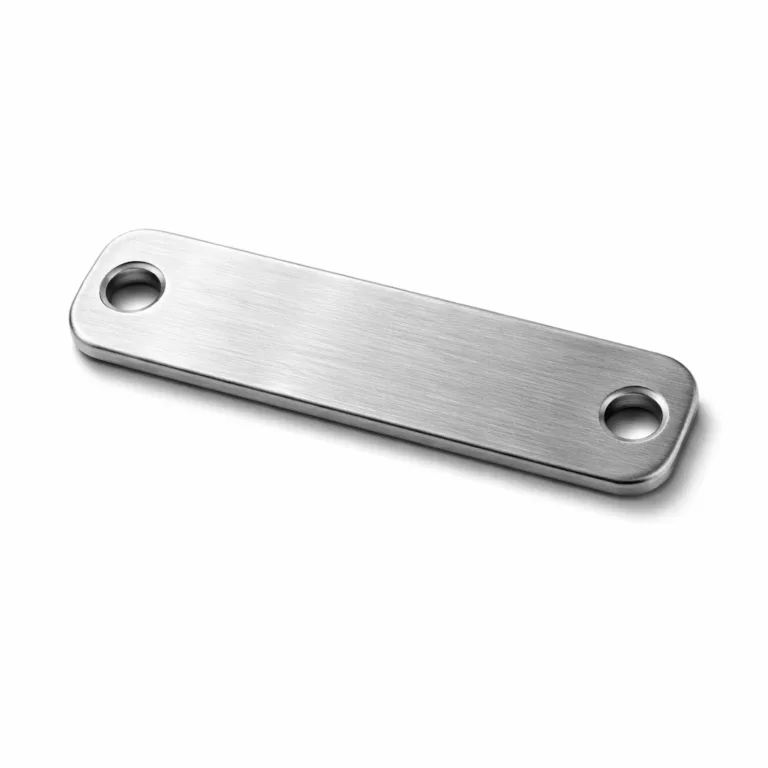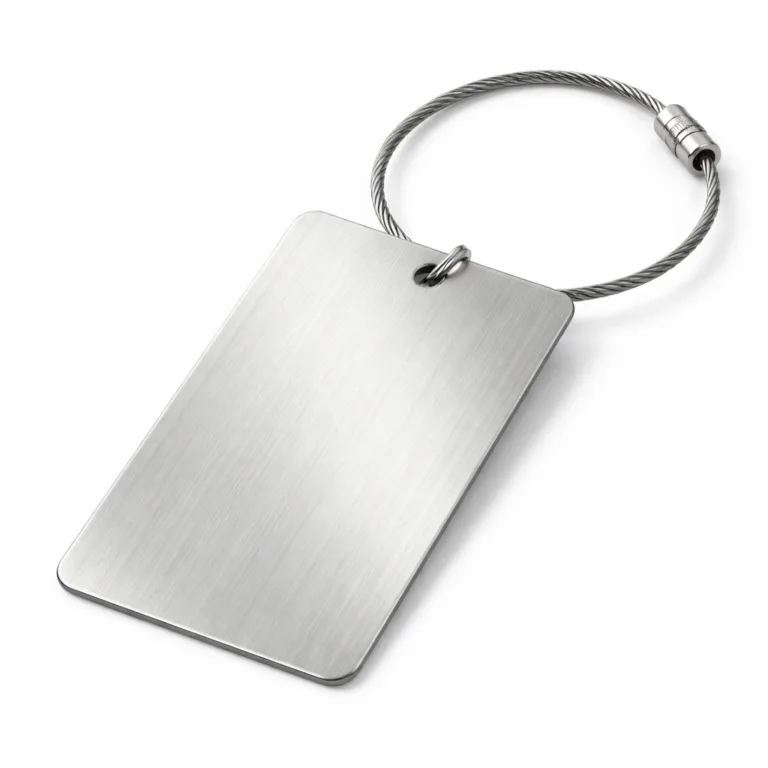
Introduction to Dog Tag Necklaces
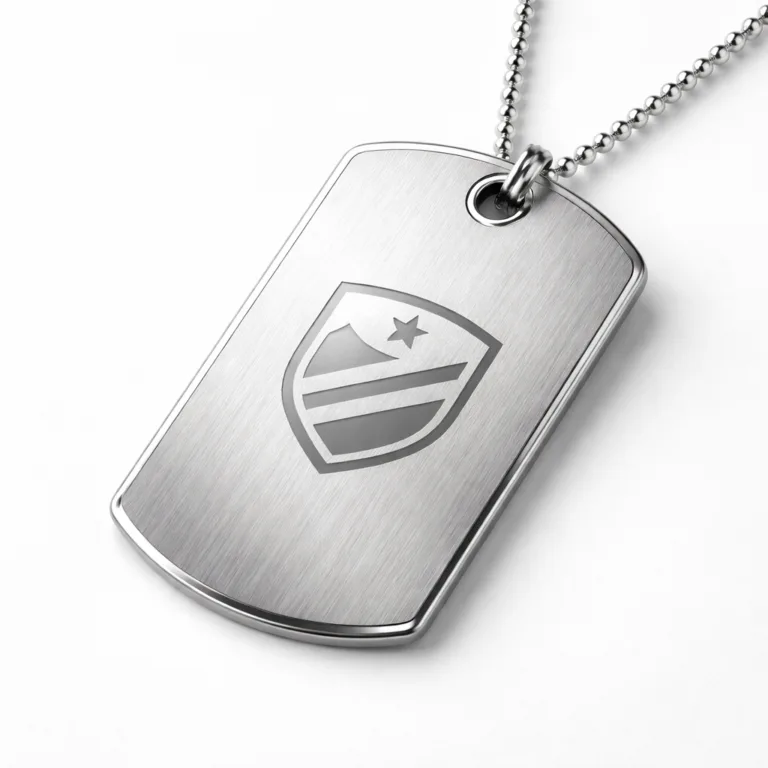
The dog tag necklace has evolved from its utilitarian military roots into one of the most versatile and sought-after accessories for businesses, brands, and individuals alike. Today, organizations and buyers are turning to custom dog tag necklace options not just for identification and tracking but to make bold statements in branding, gifting, and everyday wear.
Customizing a dog tag necklace opens doors to almost endless design possibilities. From logo placement and personalized engraving to selecting the perfect chain style and finish, these necklaces are about equal parts identity and expression. They perform just as well for pet identification as they do for promotional merchandise, employee recognition, or stylish personal branding.
The increasing demand for both rugged outdoor tags and visually unique gift pieces has led to more choices than ever—including a wide range of metals, vibrant anodized coatings, and high-precision finishes. Modern trends lean toward not only durability and clear readability but also memorable aesthetics: think rose gold, matte black, and even dual-tone finishes. Durability remains at the core, ensuring that each dog tag necklace can withstand heavy handling, weather, or exposure to elements without losing its essential identifying information or visual appeal.
Whether you’re sourcing ID tags for a fleet of canine companions, planning a personalized company giveaway, or equipping a team for field operations, understanding your options in dog tag necklace manufacturing is essential for long-term value.
Key Definitions and Basics
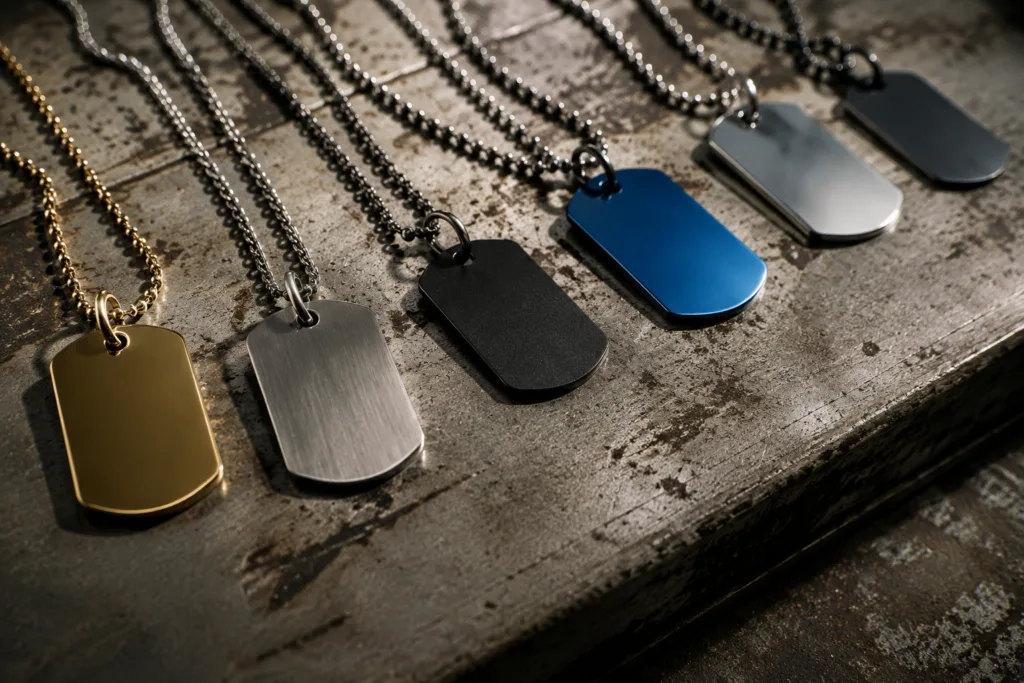
A dog tag necklace is a wearable identification plate, typically suspended from a chain or cord, that displays custom information through engraving or stamping. While personalized dog tag necklace products for pets and people may look similar, their features often differ depending on functional needs.
Pet tags often prioritize quick readability, emergency contact details, and comfort for all-day wear. Human-worn dog tag necklaces, whether for military, medical, or fashion use, tend to focus more on style, branding, and sometimes legal specifications.
Common features of any engraved dog tag necklace include:
- Custom text or logo engraving
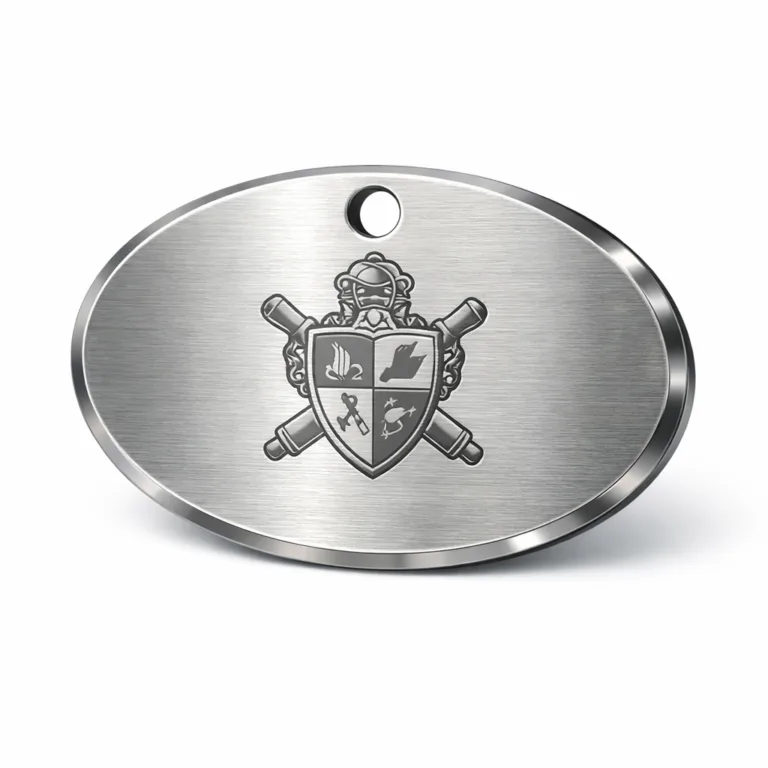
- Choice of size and shape (rectangular, oval, custom shapes)
- Finish options like matte, mirrored, brushed, or colored anodize
- Rugged attachment holes for chains or rings
Identification and personalization drive the adoption of dog tag necklaces in many fields. From pet collars to industrial asset tracking and style-forward gifting, these tags typically carry names, serial numbers, key medical information, or brand messaging. Additional creative options include QR codes and micro-text. The selection of information to engrave depends on context—be it regulation compliance for industrial use or a heartfelt message for a personal gift.
Materials Comparison for Dog Tag Necklaces
Material choice is paramount when specifying a custom dog tag necklace. The selection affects not just durability and look, but also comfort, cost, and performance in challenging environments. Below is a comprehensive comparison of the three leading dog tag necklace materials: aluminum, stainless steel, and brass.
| Material | Durability | Corrosion Resistance | Weight | Aesthetic | Pros | Cons |
|---|---|---|---|---|---|---|
| Aluminum | Medium | High (esp. anodized) | Lightweight | Matte, Colorful, Anodized | Low cost, color variety, comfortable for all-day wear | Less premium feel, may scratch with impact |
| Stainless Steel | High | Very High | Moderate | Shiny, Brushed, Matte | Maximum durability, anti-corrosive, professional finish | Heavier, typically more expensive than aluminum |
| Brass | High | Medium (oxidizes) | Heavier | Antique, Gold Tones | Tactile warmth, classic look, naturally antimicrobial | Patinas over time, can tarnish without coating |
Weight and thickness also impact comfort—lighter, thinner tags like anodized aluminum are great for pet tags and situations where neck comfort is key. Stainless steel offers the best balance for those prioritizing toughness and outdoor longevity, especially in harsh weather or industrial environments. Brass excels in luxury, gift, and vintage-inspired applications, bringing unique color and tactile warmth, but needs proper treatment for corrosion-prone settings.
Anodizing, plating, and other finishes can further improve corrosion resistance and enable a spectrum of colors and textures. However, the specific application always dictates the right choice: for example, electrolytic anodized aluminum is excellent for marine settings, while stainless steel is a proven performer for both corporate gifting and rugged outdoor work.
If you need help matching your project needs to the best metal, finish, or gauge, UC Tag’s production team can offer material samples and technical advice informed by years of manufacturing for diverse industries.
Manufacturing Methods for Dog Tag Necklaces
How a dog tag is produced is just as important as the material itself. There are four main processes that define the final aesthetic, durability, and price of an engraved dog tag necklace: engraving, stamping, etching, and printing.
Engraving (rotary or laser) is the most common for dog tag necklaces. It cuts into the surface, producing crisp, permanent text or graphics that resist wear and are easy to read—even after heavy use. Deep engraving can increase cost, but it offers maximal longevity.
Stamping pushes designs into the metal, offering raised or recessed text and tactile finishes. Stamped tags are known for their rapid production and high repeatability, but the method is less flexible for ultra-fine or complex graphics compared to engraving.
Chemical etching enables highly detailed designs, including micro text and intricate logos, through a controlled chemical reaction. It’s ideal for high-volume runs and can create subtle textures not possible with other methods, though sometimes it delivers a less deep impression than mechanical engraving.
UV or digital printing is used mainly for full color or photographic effects. While print options open creative doors, their durability outdoors is generally less than that of cut, stamped, or etched marks, making them best for gift or display applications.
- Engraving: Best for permanent, high-contrast details. Works on all metals.
- Stamping: Economical for simple graphics and high-volume runs.
- Etching: Ideal for micro text or detailed logos. May need post-process for tactile depth.
- Printing: Suited to color/fine art, but lower resistance to scratching and sun exposure.
Choosing the right manufacturing technique ensures a balance between design freedom, tactile feel, and utility. Each process comes with its own cost and lead time profile—engraving and stamping have higher tooling or production costs for deeper, longer-lasting results, whereas printing and etching can be faster for large batches with complex imagery.
Chain Types and Attachment Options
No dog tag necklace is complete without the right dog tag chains. Chains are as critical to user satisfaction as the tag itself, affecting comfort, durability, and overall look.
The most common chain types include:
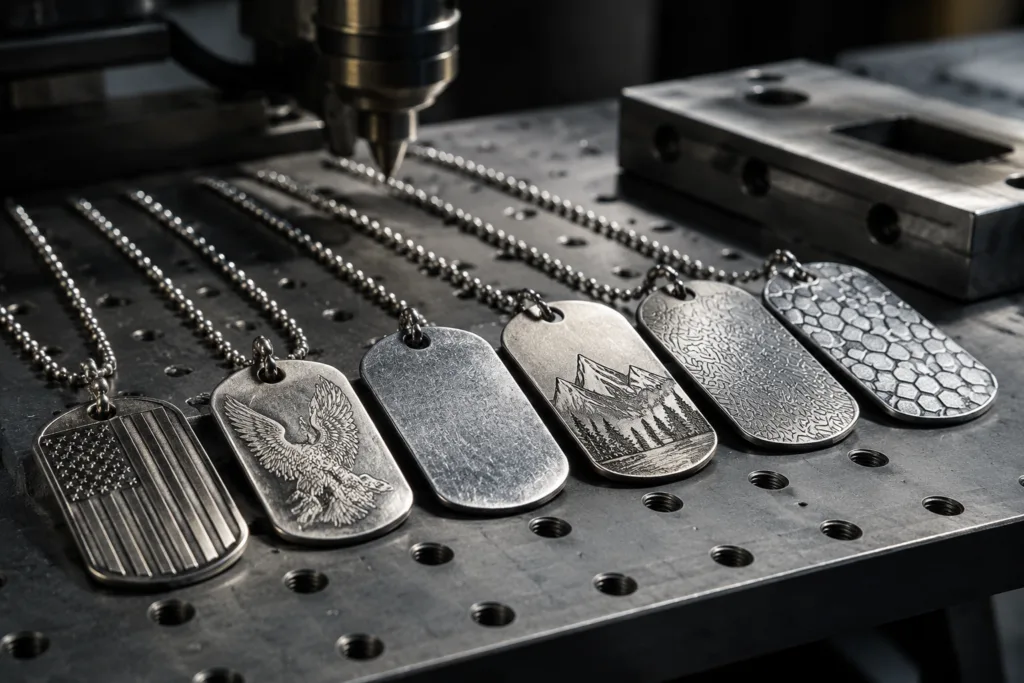
- Ball chains — Classic, military-style, and popular for bulk orders. Come in various bead sizes (1.5mm to 2.4mm standard).
- Link chains — Offer an upscale aesthetic and greater strength, often seen in fashion and high-value applications.
- Cable chains — Sleek and flexible, best for lighter tags or jewelry-style uses.
Chain lengths generally range from 18 to 30 inches, with thickness selected based on comfort, wear style, and the weight of the tag. For children or pets, shorter lengths and lighter chains are ideal. For tactical or industrial users, a heavier gauge may be specified for resistance to breakage.
Attachment options also matter—split rings, spring rings, lobster clasps, or snap closures offer different levels of security and ease of use. Material compatibility is often overlooked but important: pairing a stainless tag with a nickel-plated steel chain may lead to accelerated wear at contact points if used in marine or corrosive environments.
If you have a special-shaped dog tag, UC Tag can manufacture matching custom chains or cutouts to ensure a flawless fit and professional finish.
Design & Specification Checklist
A careful design checklist helps avoid common pitfalls when ordering a custom dog tag necklace:
- Size & Thickness: Standard dog tags are around 50 x 28 mm; thicknesses from 0.7 mm to 2 mm. Adjust based on durability vs. weight needs.
- Finish: Brushed, mirrored, matte, anodized, and color options affect look and resistance to fingerprints or scratches.
- Engraving Contrast: High-contrast fonts, black-filled engraving, or sandblasted backgrounds improve legibility—especially in low light.
- Manufacturing Tolerances: Specify dimensional tolerances to prevent mismatch with chains or holders (e.g., ±0.1 mm for holes).
- Attachment Features: Decide if you need pre-drilled holes, adhesive backing, or rivet options for your planned use.
- Font & Layout: Sans-serif fonts generally increase readability; avoid script fonts for small or safety-critical text.
| Specification | Typical Option | Consideration |
|---|---|---|
| Tag Shape | Classic rectangle, oval, custom | Branding vs. functionality, cost impact for custom |
| Text Area | Single or double-sided | More info = larger/minimum font size, contrast method |
| Surface Finish | Brushed, mirror polish, matte, color anodized | Visual match, smudge resistance, outdoor exposure |
| Attachment | Chain hole, split ring, adhesive | Durability and end-use requirements |
| Font Style | Sans-serif, serif, bold, outline | Legibility, branding, visibility at small scale |
Check visual proofs for clarity before production begins. Request pre-production samples to verify finish, readability, and dimensional accuracy, especially for high-volume corporate orders or specialized industrial needs.
Durability Testing and Environmental Considerations
Putting an engraved dog tag necklace through harsh conditions is the real test of quality. Not all tags are equal—thorough durability testing can mean the difference between flawless performance and premature failure. The most common durability checks for dog tag necklaces include:
- Corrosion resistance (salt spray test): Ensures the tag and chain withstand exposure to sweat, rain, and marine air without rusting or pitting.
- Abrasion testing: Measures how engraving and finish hold up to friction from skin, clothing, or rubbing against equipment.
- UV exposure tests: Important for outdoor or all-weather tags. Assesses resistance to fading, yellowing, or surface degradation in sunlight.
Outdoor impact is substantial—direct sun, humidity, and contact with chemicals (like chlorine or solvents) can degrade certain metals and finishes much faster than indoor use. For industrial or outdoor requirements, always confirm the tag meets relevant corrosion and readability standards. When in doubt, order test samples and conduct your own on-site trial in the intended operational environment.
For example, a stainless steel tag with deep engraving will perform better on a construction site than a thin, color-printed aluminum tag. Conversely, businesses seeking branded event gifts might prioritize a visually striking finish over extreme durability. In one UC Tag case, automotive engineers tested anodized aluminum dog tags in a salt fog chamber simulating years of outdoor exposure—only tags with the highest anodizing grade consistently maintained both appearance and readable text.
Industry Applications and Use Cases
Applications for the personalized dog tag necklace are as varied as the industries themselves:
- In the pet sector, personalized dog tags remain the gold standard for rapid identification, providing essential contact details and medical info.
- Military, first responders, and security professionals use standardized dog tag necklaces for legal and practical identification requiring high-durability, legible markings.
- Brand marketing teams utilize custom dog tag necklaces for promotional merchandise, campaign giveaways, and staff rewards—balancing brand visibility and everyday function.
- Corporate gifting strategies leverage engraved dog tag necklaces as memorable, functional tokens that recipients are likely to keep and use.
- Industrial asset tracking applications employ serialized or QR-coded tags for machine parts, tools, or equipment, supporting modern traceability and compliance.
Whether intended for stylish pet accessories, business operations, or brand activation, dog tag necklaces flex to serve both practical and emotional needs. You can learn more about choosing the right dimensions or how custom dog tags for humans impact modern style in UC Tag’s in-depth resources.
Common Mistakes and Troubleshooting
Even veteran buyers of custom dog tag necklace products occasionally run into preventable issues:
- Unreadable text: Choosing a font or finish with low contrast means engravings disappear quickly, especially in low light or with aging eyes.
- Improper finish: Glossy/mirrored finishes show fingerprints or scratch easily, while matte finishes hide wear but might look dull if not specified properly.
- Wrong material selection: Using plated steel for water-exposed applications leads to corrosion; always match metal with the environment.
- Skipped proofing: Not reviewing final proofs risks misspelled names, misaligned logos, or inconsistent layouts—issues that are hard to fix post-production.
- Attachment mistakes: Picking weak split rings or cheap adhesives can result in lost tags if they’re not suited to the duty cycle or exposure.
For quality results, always specify dimensions, tolerances, and finishing details. Use pre-production samples to check fit, performance, and aesthetics under real-world handling, and refer to practical guides to size and specs from experts in the field.
Ordering Guide for Custom Dog Tag Necklaces
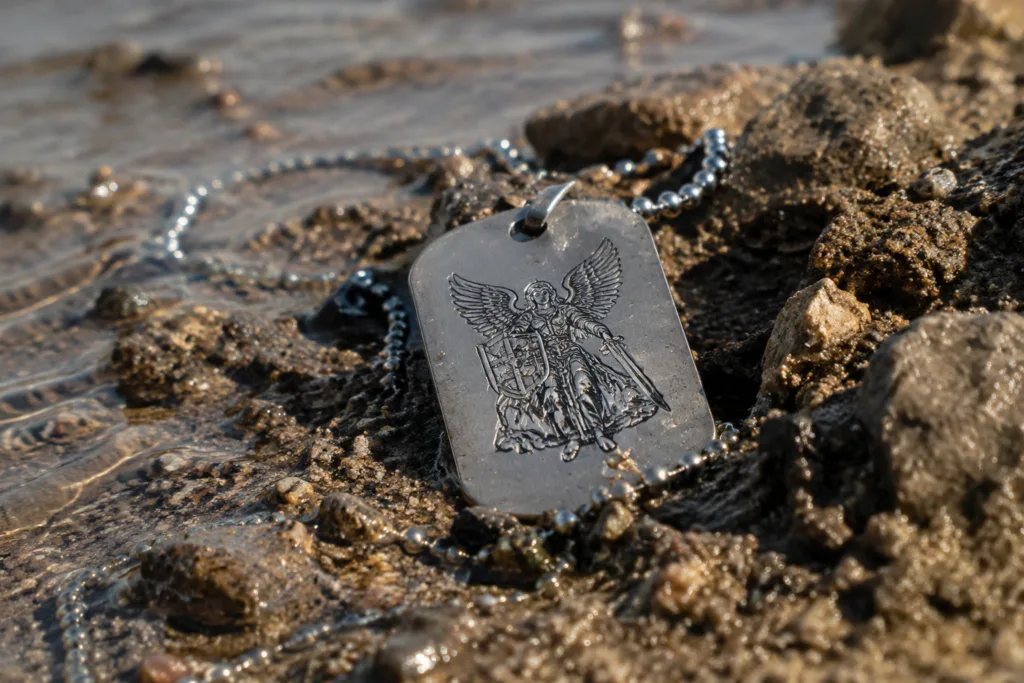
Placing an order for a dog tag necklace is straightforward with an organized checklist. Here’s what to expect in the process:
- MOQ (Minimum Order Quantity): Many manufacturers require a minimum batch size, which impacts pricing and production planning. Specify your real needs up front to avoid surprises.
- Lead Times: Depending on customization, lead times may vary—from 7 days for simple engraved tags to several weeks for detailed etching or color-finished tags.
- Artwork Submission: Precise vector files (AI, SVG, or PDF) help ensure accurate reproduction. Most suppliers will provide a digital proof for approval before manufacturing.
- Sampling: Request physical or photo samples for complex, gift, or serialized designs to confirm color, finish, and engraving.
- Packing & Shipping: Specify bulk versus individual packaging, eco-friendly options, and delivery preferences to align with your distribution plan.
Many buyers find value in working directly with manufacturers who can support design, spec review, and packaging—a reason why UC Tag’s team often handles large-scale custom dog tag necklace projects from concept to fulfillment.
Frequently Asked Questions
What’s the best material for a dog tag necklace used outdoors?
Stainless steel is typically the best choice for outdoor use due to its high corrosion resistance, durability, and ease of maintenance compared to aluminum or brass.
Can I customize a dog tag necklace for corporate gifting?
Yes, you can personalize dog tag necklaces with company logos, employee names, or event details using various engraving or color options to match your branding requirements.
Will the engraving wear off with heavy use?
Deep engraved or stamped markings generally withstand heavy wear for years, while printed text or surface-filled engravings may fade under frequent contact or outdoor exposure.
Are dog tag chains adjustable in length?
Most dog tag chains are available in multiple standard lengths and can be cut to size for the wearer; some offer adjustable clasps for further flexibility.
What information should I include on a personalized dog tag necklace?
Common information includes names, phone numbers, medical data, company branding, asset IDs, or QR codes—tailored to the intended use of the necklace.
How do I check my design before placing a bulk order?
Suppliers typically provide digital proofs for buyer approval; for large or critical orders, request a physical sample to verify finish, readability, and attachment fit prior to production.
Related Reading
- Should You Upgrade to Stainless Steel Dog Tags? Durability and Value Explained
- The Ultimate Sizing Guide for Custom Dog Tag Necklaces
- Engraved vs. Printed Dog Tag Necklaces: Which Lasts Longer?
- Beyond Pets: How Custom Dog Tags Are Becoming Must-Have Personal Accessories
- Designing Meaningful Memorial Dog Tags: Material, Engraving, and Personalization Strategy