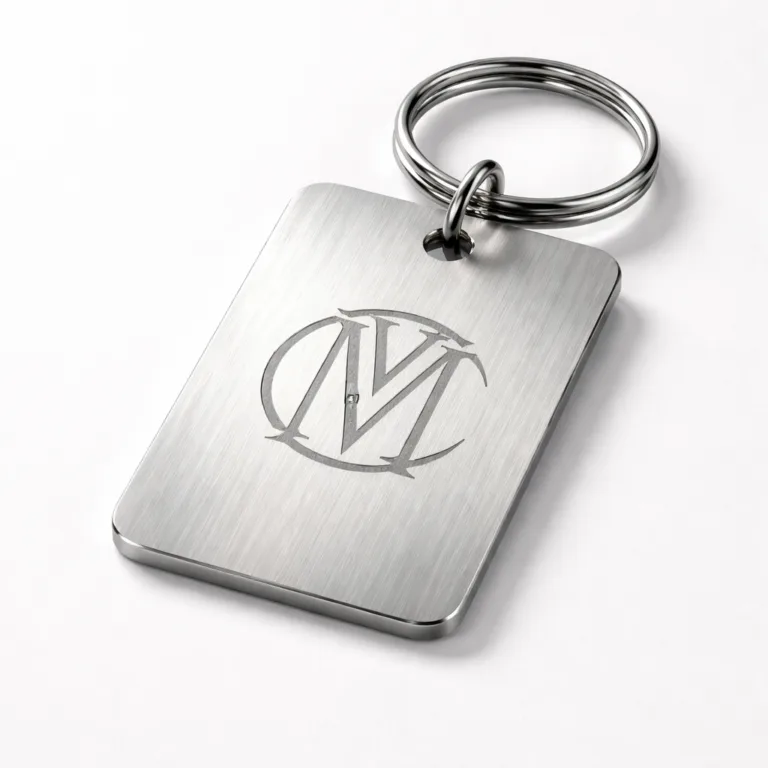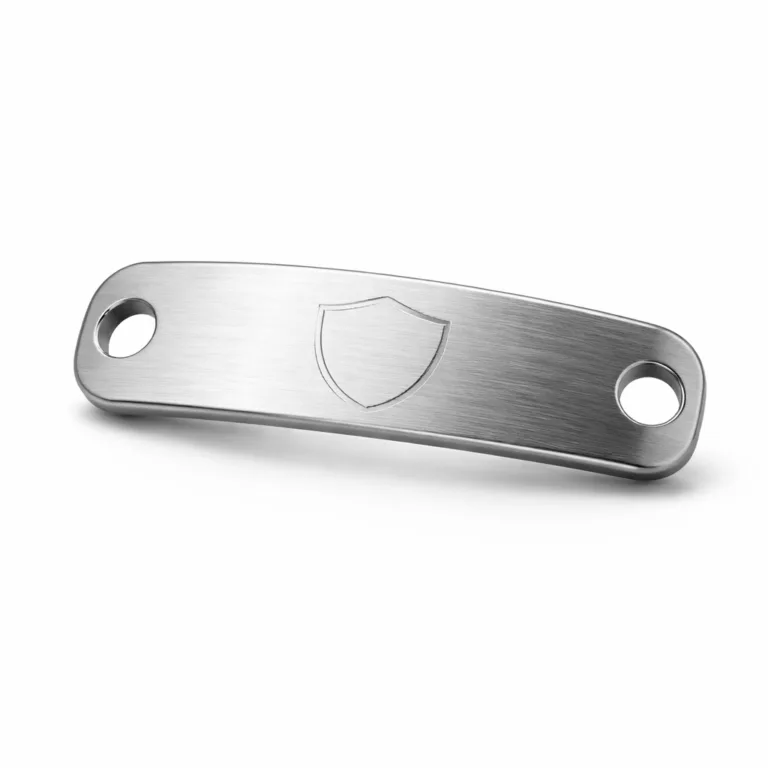
Understanding Custom Dog Tags for Humans
Custom dog tags for humans have stepped beyond their original use as simple identification tools. Today, these tags offer a unique way to blend personal expression, functional design, and robust durability into everyday wear. While dog tags were first popularized by military use as a means of identifying soldiers, their easily readable format and distinctive metallic look fueled an unexpected crossover into fashion and personalized accessories.
Modern custom dog tags for humans typically feature a range of personalized details, including names, medical information, inspirational quotes, or even QR codes for quick access to digital profiles. The role of these tags goes far beyond mere decoration—they are often worn for safety, sentimental value, and branding. Common features include custom text, logos, graphics, and a variety of finishes to suit different personalities.
Durability and style both play core roles in tag selection. Many choose tags for their ability to withstand rough daily use while remaining legible and attractive. Whether you’re procuring for event management, corporate branding, or a consumer jewelry line, the versatility of custom dog tags for humans provides an impactful canvas for personalization that stands the test of time.
Materials Comparison for Custom Dog Tags
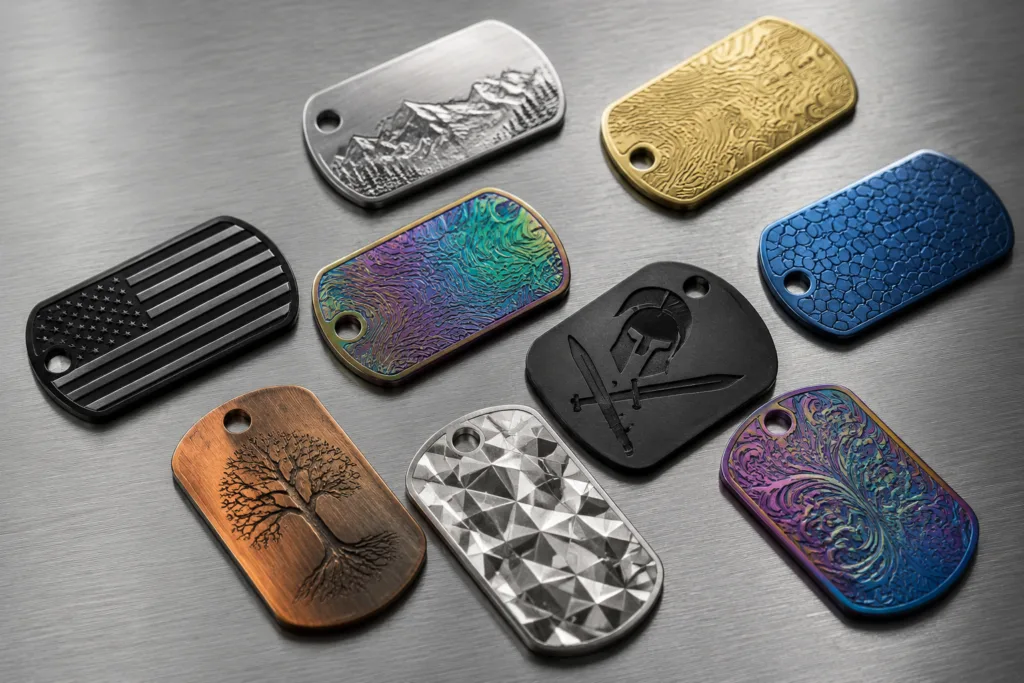
Choosing the right material is crucial when sourcing human dog tags personalized for fashion, branding, or identification. The most common materials include aluminum, stainless steel, and brass. Each brings unique qualities for different environments and applications.
Aluminum is lightweight, cost-effective, and available in a variety of anodized colors. Its resistance to corrosion makes it ideal for outdoor or active use—though it may scratch a bit more easily than harder metals. See our deep comparison of stainless steel and aluminum options for more details.
Stainless steel is favored for maximum durability, corrosion resistance, and a classic, polished aesthetic. These tags remain readable for years even under tough handling or exposure to weather. Stainless steel’s higher density makes it feel substantial, which is often desirable in luxury human dog tags personalized for high-end applications.
Brass offers a warm, gold-toned sheen and is valued in jewelry for its weight and unique aging. Over time, brass develops a patina that many find appealing, especially for retro, vintage, or antique-styled tag projects. However, it is more costly and slightly less corrosion-resistant compared to stainless steel or aluminum.
Environmental impact is another consideration: aluminum is widely recycled, while stainless steel has a long service life and is also recyclable. Brass recycling depends on alloy content. For eco-friendly sourcing, ask suppliers about ethical sourcing and recycling options. Bulk order pricing varies, with aluminum being most economical, followed by stainless steel, then brass.
| Material | Durability | Corrosion Resistance | Weight | Cost (Bulk) | Recyclability |
|---|---|---|---|---|---|
| Aluminum | Good | Excellent | Light | $ | High |
| Stainless Steel | Excellent | Excellent | Medium/Heavy | $$ | High |
| Brass | Very Good | Good | Heavy | $$$ | Variable |
Manufacturing Methods for Dog Tags
How your dog tag is made defines its appearance, feel, and durability. Among the methods used for dog tag necklace custom engraving, engraving, stamping, and etching are the most popular.
Engraving carves or ablates the design directly into the tag’s surface—either by CNC tools (for deep grooves) or lasers (for precise, high-contrast details). Laser engraving delivers sharp, permanent marks ideal for small text or logos. It is the top pick for dog tag necklace custom engraving projects needing intricate designs or QR codes.
Stamping mechanically presses designs into metal, giving a bold raised (embossed) or recessed (debossed) effect, great for logos or batch serial numbers. Stamped tags are highly consistent in bulk runs and well suited for mass production.
Chemical etching uses acid or similar agents to remove select surface layers, creating precise, low-relief designs—even on complex shapes or thin tags where mechanical force would deform the piece. Compared to laser engraving, etching gives a softer texture without heat discoloration. UV printing, meanwhile, adds full-color graphics with careful alignment but is slightly less durable under heavy abrasion.
Custom finishes like mirror polish, matte, or brushed textures further let you tune the visual impact. When evaluating production methods, consider lead times—stamping and etching may take longer for custom dies, but scale well for large orders; laser engraving offers shorter turnarounds for smaller, unique runs. Always consult with your manufacturer when scaling designs.
- Laser engraving: Most detailed for dog tag necklace custom engraving
- Stamping: Best for high-volume, bold designs
- Chemical etching: Ideal for thin/complex tags
- UV printing: For colorful, branded looks
Design and Specification Checklist
Creating memorable dog tag jewelry personalized for your needs starts with careful design choices. Here’s a practical checklist to ensure your tags deliver both visual impact and everyday utility.
| Criteria | Fashion Use | Industrial/Utility Use |
|---|---|---|
| Size | 30x50mm, thinner | Standard (28x50mm), thicker |
| Thickness | 0.5–1.0mm | 0.9–2.0mm |
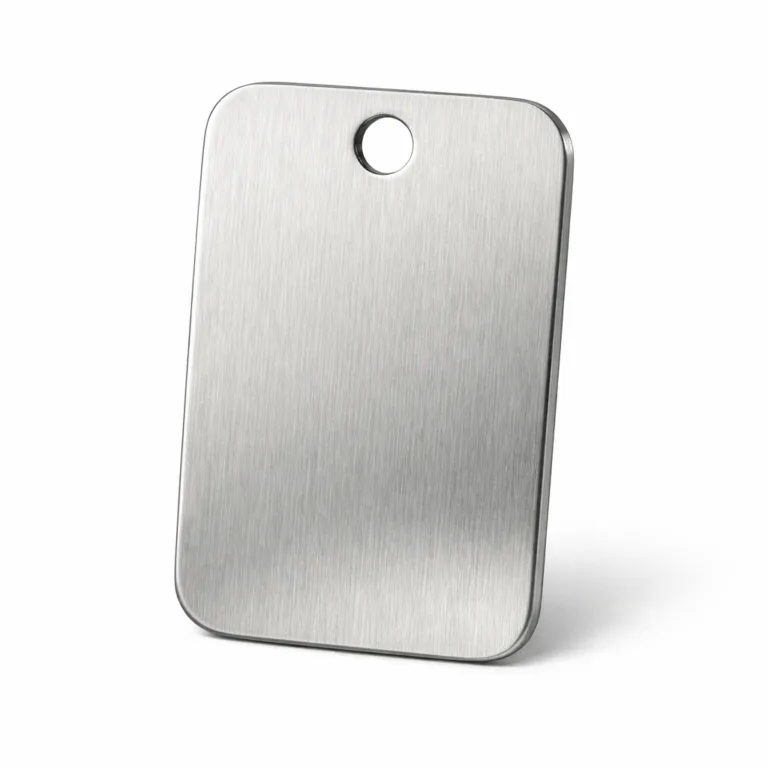
| Finishes | Polished, matte, colored, gold-plated | Anodized, brushed, etched |
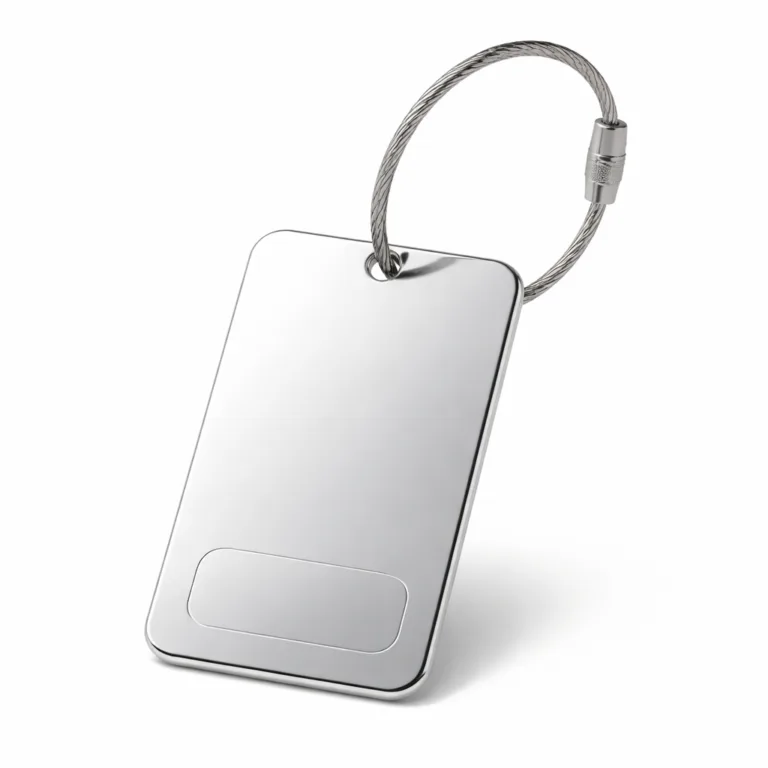
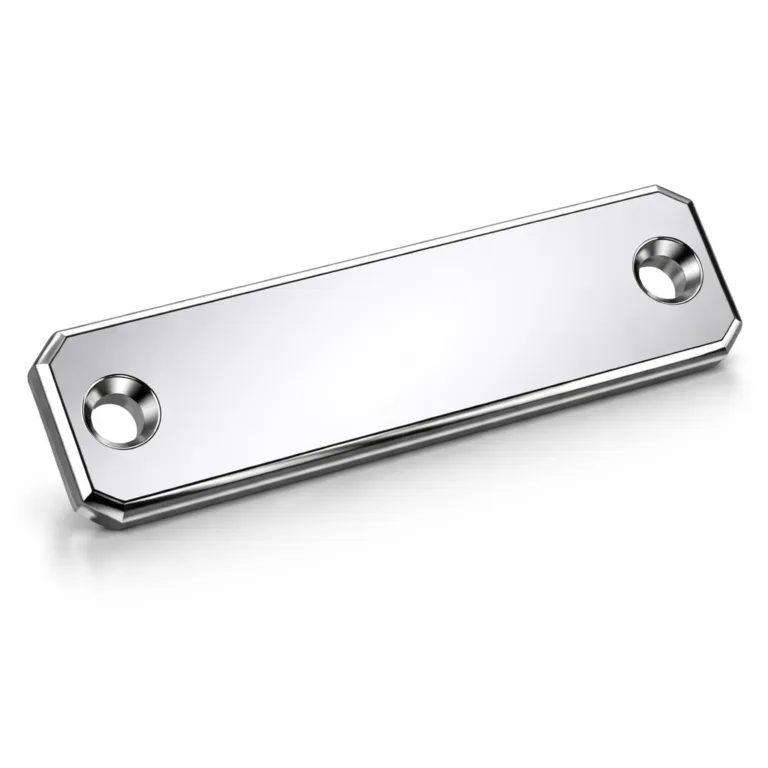
| Attachment | Chains, keyrings, bracelets | Rivets, adhesive, split rings |
| Readability | Decorative fonts, clear layout | Bold industrial fonts, large text |
| Tolerance | ±0.3mm | ±0.15mm |
Popular finishes include anodized colors for lightweight aluminum tags, mirror or brushed steel for a classic look, and gold or antique plating for deluxe appeal. Explore rose gold dog tags and brass options to match brand or personal preferences.
Attachment methods range from simple bead chains to custom-cut holes, self-adhesive backing (for permanent mounting), or pre-applied split rings. For legibility, avoid complex script fonts—especially on industrial-use tags. Always review proofs closely and specify tolerances if tight fits or machine compatibility are required. Custom die-cut shapes are available but may add lead time and setup cost.
Durability and Testing Standards
For many B2B buyers, the durability of custom dog tags for humans is non-negotiable. Tags must survive moisture, friction, and UV exposure while staying readable for years. Corrosion resistance is typically verified with salt spray or humidity chamber testing—especially for steel and aluminum tags intended for outdoor or marine use.
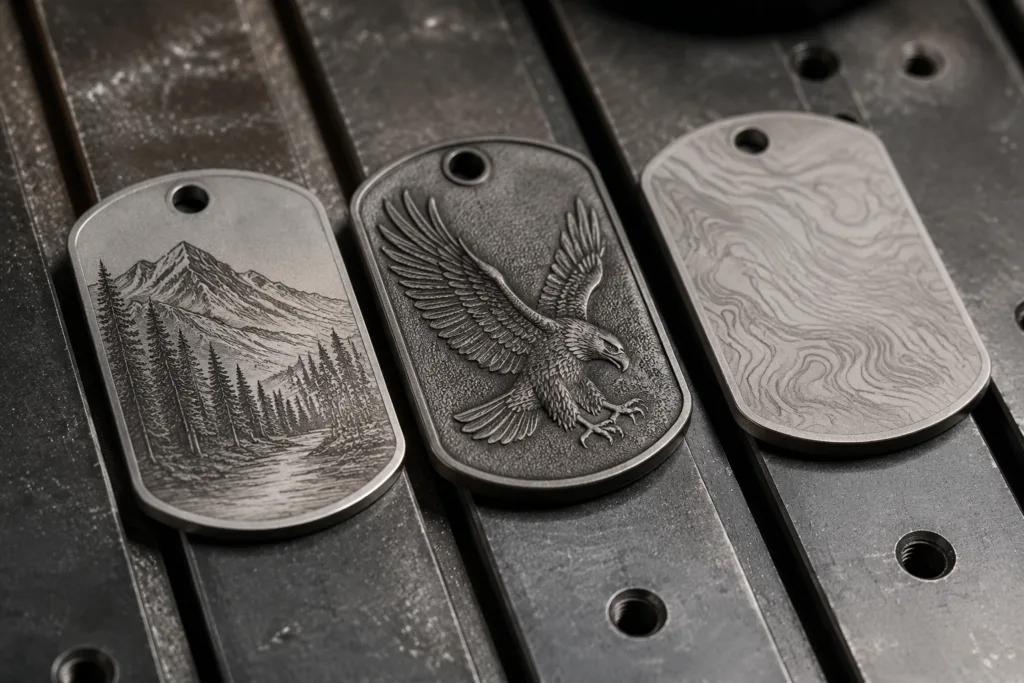
Abrasion resistance is also critical. Surface coatings, engravings, or filled etchings should not wear off during reasonable use. Leading manufacturers may perform rub tests and outdoor simulation exposure before shipping mass orders. Adhering to recognized standards, such as ISO 9001 for production quality and ASTM B117 for corrosion testing, helps ensure that each tag meets performance benchmarks for its application.
For hands-on buyers, request laboratory test reports or inquire about in-house testing methods. In his decades on the shop floor, Rain Chen at UC Tag points out that over 90% of durability failures in custom dog tags for humans come from improper material selection or overly thin designs—both of which can be prevented by communicating the intended environment and stressors up front.
Examples include dog tags in beachside resorts (high salt/humidity) that require marine-grade stainless steel, or branded event tags that need UV-stable, abrasion-resistant print layers for outdoor festivals. Testing is the bridge between impressive specs and long-lasting, readable tags in real-world deployment.
Industry Applications of Custom Dog Tags
Human dog tags personalized for specific industries serve a wide range of needs. Their roots in military identification are well established, but their practical use now extends far beyond.
- Military & Emergency Services: Essential for quick personal identification during emergencies or large-scale operations.
- Corporate Branding & Promotions: Many brands use human dog tags personalized with logos or QR codes in promotional merchandise, swag bags, or limited-edition gifts.
- Fashion & Jewelry: Dog tag jewelry personalized for style-conscious consumers is a popular segment—mixing custom engraving with premium finishes and unique shapes.
- Event Management: Dog tags efficiently identify event staff, VIP attendees, or security teams at concerts and trade shows thanks to their clear, robust format.
- Personalized Gifts & Memorials: Individuals and organizations alike value custom tags as memorial keepsakes, especially with photo-engraving or message personalization.
With a single, durable canvas, dog tags meet branding, security, and personal connection needs simultaneously. Their versatility makes them a smart asset for distributors, event agencies, and jewelry designers alike.
Common Mistakes and Troubleshooting
While dog tag jewelry personalized for business or fashion promises high impact, common pitfalls can disrupt both form and function. A frequent issue is text that’s difficult to read—usually caused by overly decorative typefaces, undersized lettering, or lack of contrast with the tag’s finish.
- Avoid fine script fonts or small text sizes where clear identification is critical.
- When choosing adhesive-backed tags, match the adhesive type to the intended surface. For instance, a 3M VHB adhesive works well on metal and plastics, but weak options may peel in wet or rough-use applications.
- Prevent corrosion and surface wear by selecting appropriate materials and finishes. Brass tags may patina, while non-anodized aluminum is more prone to scratches.
Always request digital or physical proofs before large-scale production. This check helps catch spelling or layout errors and verify geometric accuracy—especially on custom shapes or double-sided tags. While dog tag jewelry personalized for style invites creative shapes, keep tolerances reasonable to avoid fitting errors on industrial or branded product runs.
Ordering Guide for Custom Dog Tags
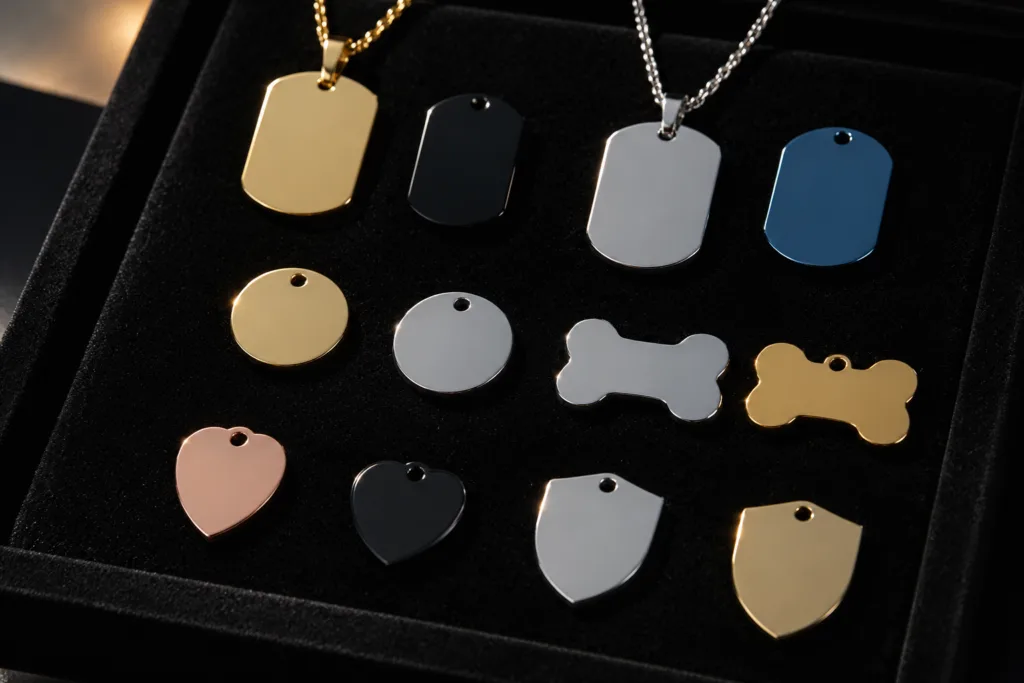
When planning your project with dog tag necklace custom engraving, follow a proven order workflow for smooth results. Start by confirming minimum order quantities (MOQs)—which can range from a single tag for a prototype up to 500+ units for wholesale branding. Pricing tiers often reward higher volume orders.
Lead times depend on your chosen manufacturing method. Laser engraving usually offers the fastest turnaround for smaller, unique runs. Stamped or custom-shaped tags require setup for dies and may need extra calendar time for production and finishing steps.
Provide vector artwork whenever possible—this ensures crisp, scalable engraving and accurate logo details. Always review proofs to minimize errors before production begins. If you need branded packaging or secure shipping (such as bagged batches or custom-labeled boxes), specify your requirements in advance.
Sampling is highly recommended for large or critical projects. By ordering a small pre-production batch from an experienced supplier (see our standard samples page), you can check both quality and fit before committing to a full run. Reliable suppliers provide clear timelines, artwork proofs, and technical support at every stage.
Frequently Asked Questions
What materials are best for outdoor use?
Stainless steel and anodized aluminum are top choices for outdoor human dog tags personalized for durability; both resist corrosion, fading, and weathering in most environments.
How long will custom dog tags last in harsh conditions?
With proper material selection and finishing, custom dog tags for humans can remain readable and rust-free for many years, even under heavy outdoor or industrial strain.
Can I order a single tag for personal use?
Many manufacturers accept single-tag or small-batch orders, though pricing is higher per unit; most producers offer volume discounts as quantity rises.
What are the limitations on engraving detail?
Laser engraving allows very fine details, including small text or QR codes, but extremely small or complex graphics may lose clarity on very small dog tags.
Are there environmentally friendly options available?
Yes, aluminum and stainless steel are both highly recyclable choices for human dog tags personalized for sustainability, and many suppliers offer eco-conscious material sourcing.
How do I ensure my design is feasible?
It’s important to provide clear artwork, review proofs, and discuss specific features or constraints with your manufacturer before full production begins.
Related Reading
- Stainless Steel vs Aluminum: Picking the Best Dog Tag for Longevity and Style
- How Brass Dog Tags Elevate Both Durability and Design
- Engraved vs Printed Tags: Which Is Ideal for Long-Lasting Custom Jewelry?
- Personalized Photo Dog Tags: Expert Guide for Design and Durability
- Test Multiple Materials with Our Standard Samples Program
- Create a Statement with Custom Rose Gold Dog Tags for Humans