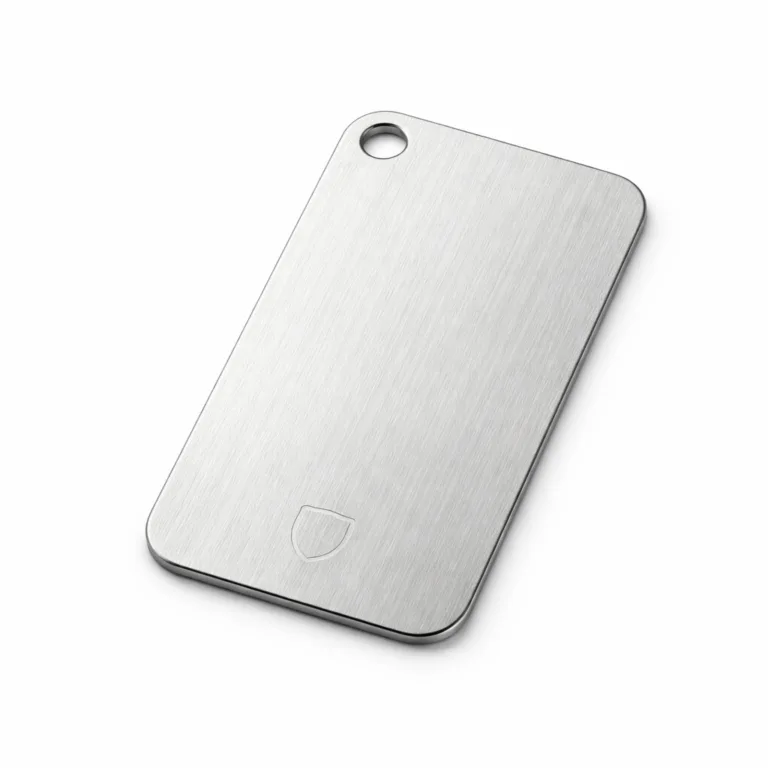
Introduction to Color-Coded Tags in Wine Cellars
Managing a wine cellar requires careful attention to detail, particularly when collections span many vintages, varietals, and regions. Color-coded tags offer a straightforward yet highly effective way to organize and identify bottles, making the process of wine organization much more efficient for collectors, sommeliers, and industry professionals.
Color-coded tags in wine cellars serve as visual indicators that categorize bottles based on key attributes such as vintage, varietal, or region. By assigning specific colors to different categories, cellar managers and wine enthusiasts can quickly locate and assess their inventory without unnecessary handling or searching.
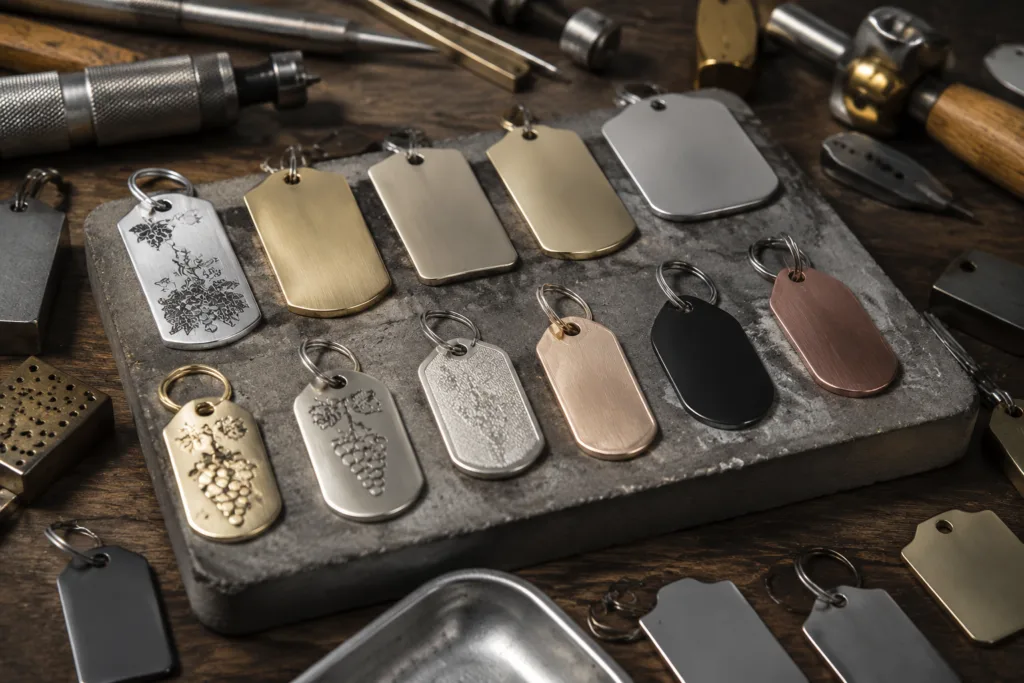
Organization is paramount when selecting the right wine for formal events, menu pairings, or private tastings. The main benefits of using color-coded tags include increased visibility, faster bottle identification, and seamless categorization. These tags are often manufactured using premium materials like anodized aluminum, stainless steel, or brass, each selected for their durability and resistance to wine cellar conditions.
For high-traffic and high-value cellars, the quality and longevity of tags matter. Methods such as laser engraving, stamping, and UV printing ensure that color-coded tags remain readable and attractive over years of use. In the wine industry, choosing tags that stand up to constant handling, humidity, and potential spills is just as important as the system itself. Ultimately, robust color-coded tags form the backbone of efficient wine organization and vintage distinction.
Advantages of Using Color-Coded Tags
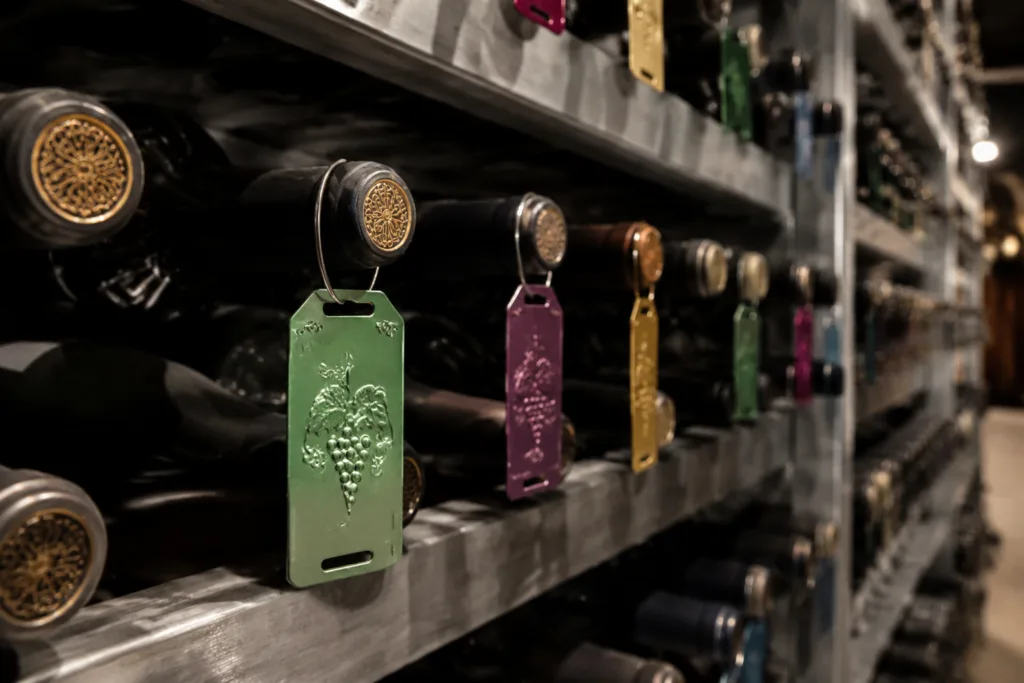
Implementing a strategic wine organization system with color-coded tags yields immediate and long-term benefits. Perhaps most importantly, these tags allow collectors and staff to instantly identify vintages by color alone, reducing the need to read fine print on bottle labels in a dim cellar environment.
Color-coded tags make wine selection intuitive. For example, wines intended for aging can be marked with one color, younger bottles another, and special vintages yet another. When preparing for an event or dinner, a sommelier can quickly find suitable bottles by noting the tag color, streamlining the matching of wines to occasions or menu pairings.
A secondary benefit is inventory management. With vibrant colors designating categories or years, cellars can be checked and inventoried at a glance. Misplaced bottles are easier to spot, and mix-ups in the collection become far less likely.
Visually, wine storage becomes more appealing when organized with color-coded tags. The combination of gleaming metal tags and vivid enamel or anodized finishes adds a sense of polish to racks, bins, or display cabinets. This professional look can even enhance the guest experience in restaurants or tasting rooms.
- Quick vintage identification enhances selection speed
- Effortless wine pairing for specific occasions
- Simplified inventory management and tracking
- Visually appealing, professional wine storage
- Reduced error rates and less bottle handling
Overall, using color-coded tags improves workflow, presentation, and accuracy, bringing peace of mind to anyone responsible for a valuable wine inventory.
Best Practices for Implementing a Color-Coding System
For color-coded tags to deliver their full benefit in wine organization, a deliberate implementation plan is essential. Begin with a clear color-coding scheme tailored to your collection’s needs. This could mean color assignments by vintage (e.g., red for 2010s, blue for 2020s), varietal (cabernet, chardonnay, etc.), or region (Bordeaux, Napa, etc.). Document this system for easy onboarding and reference.
Tag placement is critical. Attach tags so they remain visible whether bottles are stored horizontally or vertically. Consistency in placement—such as on the neck, bin front, or rack—ensures the color is always in the same line of sight, even for large teams or rotating staff.
Regularly inspect and update tags to maintain readability and integrity, especially if exposed to humidity or fluctuating temperatures. Opt for legible fonts and font sizes that stay clear and sharp even after many years of use. When sharing your cellar with partners or team members, collaborate on the color-coding system to ensure uniform understanding and prevent confusion.
Veteran craftsman Rain Chen of UC Tag notes, “The success of any wine organization system depends on the clarity and durability of the tag—choose finishes and engraving methods that offer lasting legibility even after repeated handling in humid environments.”
Materials Comparison for Wine Tags
The material chosen for color-coded tags will directly impact their performance and visual appeal in a wine cellar. Three main options dominate the market: aluminum, stainless steel, and brass.
Aluminum tags are lightweight and cost-effective, making them ideal for cellars with large volumes or frequent tag changes. With anodized finishes, they offer excellent color options and solid corrosion resistance, suitable for high-humidity cellars.
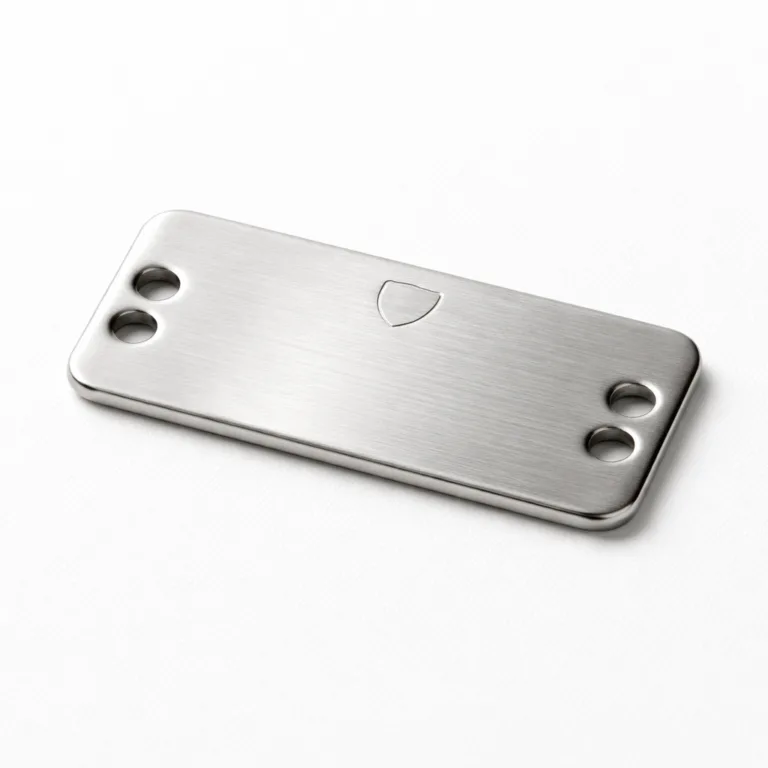
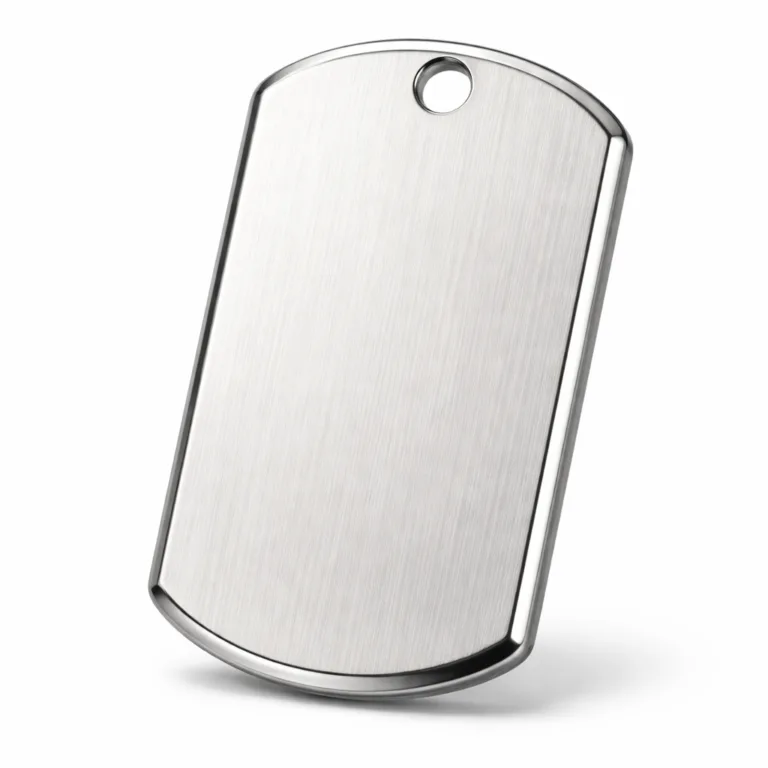
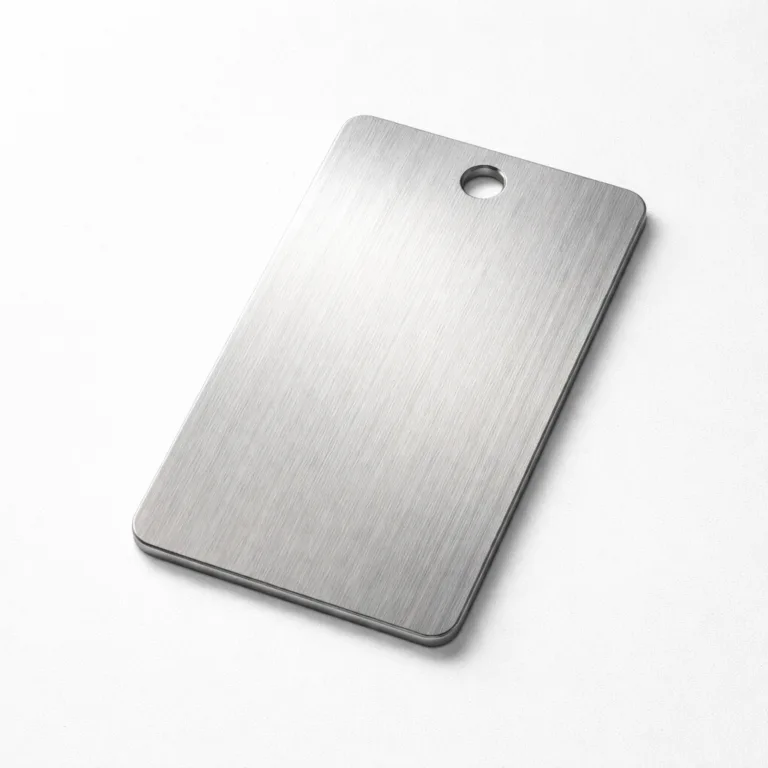
Stainless steel tags are known for their unmatched durability and resistance to tarnishing, even in damp environments. They provide a sleek, modern look and withstand constant handling, but may offer fewer color choices unless specialist coatings or enamels are applied.
Brass tags evoke a traditional, upscale aesthetic. They are durable, though they can develop a natural patina over time. Platinum and gold-plated options exist, but these are reserved for limited editions or display collections.
Weight is also a consideration. Heavy tags may not suit all racking systems, while thin metal tags balance strength and ease of handling. Anodized finishes are key for vibrant, lasting color on aluminum tags, while electroplated or enamel-filled elements provide color on steel and brass. Readability, durability, and visual fit should be your guiding factors.
| Material | Corrosion Resistance | Color Options | Weight | Longevity |
|---|---|---|---|---|
| Aluminum (Anodized) | Excellent | Wide range, vibrant | Light | 10+ years |
| Stainless Steel | Outstanding | Medium (with coatings) | Medium | 20+ years |
| Brass | Very good | Classic (mostly gold tones) | Medium-Heavy | 15+ years, develops patina |
For cellars requiring top durability, stainless steel is often the go-to, while anodized aluminum excels in vibrant color selection for color-coded tags. Always assess conditions such as humidity and handling frequency before making a final material choice.
Manufacturing Methods for Custom Tags
The process behind manufacturing color-coded tags affects both aesthetics and resilience. Common methods include engraving, stamping, chemical etching, and UV printing, each providing unique benefits for wine organization.
Engraving (laser or CNC) produces precise, permanent markings. On metal tags, it ensures critical details remain readable after years of cellar storage. Engraving can be paired with color infill for high contrast, especially effective on stainless steel and anodized aluminum.
Stamping creates debossed or embossed features; this method is tough, but the depth of color is limited unless combined with enamel. Stamped tags often have a classic collar look suited for both display and daily-use bottles.
Chemical etching allows for intricate designs, with color application typically via enamel fill. While it creates sharp details, etching is best used with thicker metals and premium cellars.
UV printing brings maximum freedom in color and design, crucial for detailed color-coded systems or logos. However, its durability must be verified for cellar conditions; UV-printed tags should be finished with a protective topcoat if exposed to moisture or abrasion.
When selecting a method, consider both the tag material and the environment. Thicker tags tolerate deeper stamping or etching, while lightweight aluminum suits laser engraving and anodization. UC Tag has observed that high-traffic commercial cellars often prefer deeply engraved tags with color infill, balancing resilience with clear color presentation.
Design & Specification Checklist
Choosing the right tag for wine organization means balancing function and form. Here’s a practical checklist to guide your specifications:
- Size: Large enough for visibility but small enough for neck or rack fit (typically 40–60 mm wide)
- Thickness: 0.5–2 mm; heavier tags for permanence, lighter for bulk storage
- Color contrast: Ensure tag color and text are clearly distinguishable
- Font: Use sans-serif, minimum 2.5 mm height for best legibility
- Attachment: Options include punched holes (for ties/chains) or 3M adhesive for flat surfaces
- Finish: Anodized or enamel for color durability; brushed or polished for visual effect
- Tolerance: Slight curve/flex for bottle necks or flat for bin/rack labels
| Feature | Recommended Spec | Notes |
|---|---|---|
| Tag Size | 40–60 mm wide | Fits most bottle necks/racks |
| Thickness | 0.5–2 mm | Balance between strength and weight |
| Font Size | ≥2.5 mm | Ensures visibility |
| Color Contrast | High | Quick identification, avoids confusion |
| Attachment | Hole/Adhesive | Depends on storage style |
| Finish | Anodized/Enamel | Durable color, resistance to cellar conditions |
Careful specification ensures your tags remain visible, secure, and effective, supporting every aspect of accurate wine organization.
Durability Testing for Wine Tags
There’s no substitute for durability in wine tag selection—conditions in wine cellars are often humid and dark, which can quickly deteriorate subpar identification solutions. Color-coded tags designed for wine organization must pass several longevity tests to guarantee reliability.
First, corrosion resistance is essential. Metal tags, particularly those made of stainless steel or anodized aluminum, are tested in moist and acidic environments to prevent rust and tarnishing. Abrasion testing assesses how tags withstand handling, shuffling, and cleaning. UV resistance may seem less critical in cellars, but is important if tags will be used in sunlit display rooms or outdoor events.
Salt spray testing is the gold standard for simulating years of exposure in a compressed timeframe, revealing long-term vulnerabilities. Tags that pass salt spray and abrasion tests consistently stay legible and intact throughout their service life—even during transport off-site or during major events.
Ultimately, durable tags simplify maintenance and future inventory, reducing costs and labor in the long run. Industry best practices strongly advise investing in tags proven through rigorous testing, especially where long-term wine organization and asset tracking are of high value.
Industry Applications and Use Cases
The utility of color-coded tags is widely recognized across the wine industry, from mass distributors to boutique private cellars. High-volume distributors rely on color-coded tags for rapid turnover, making stock checks almost instantaneous and keeping errors to a minimum during shipment or export preparations.
Restaurants and hotel wine cellars use the same principle to organize for themed events, wine dinners, or sommelier selections. This helps staff quickly locate needed bottles, minimizing handling and preserving label integrity. For private collectors, color-coded tags offer personal peace of mind and a visually pleasing display—important for those who host tastings or tours in their home cellars.
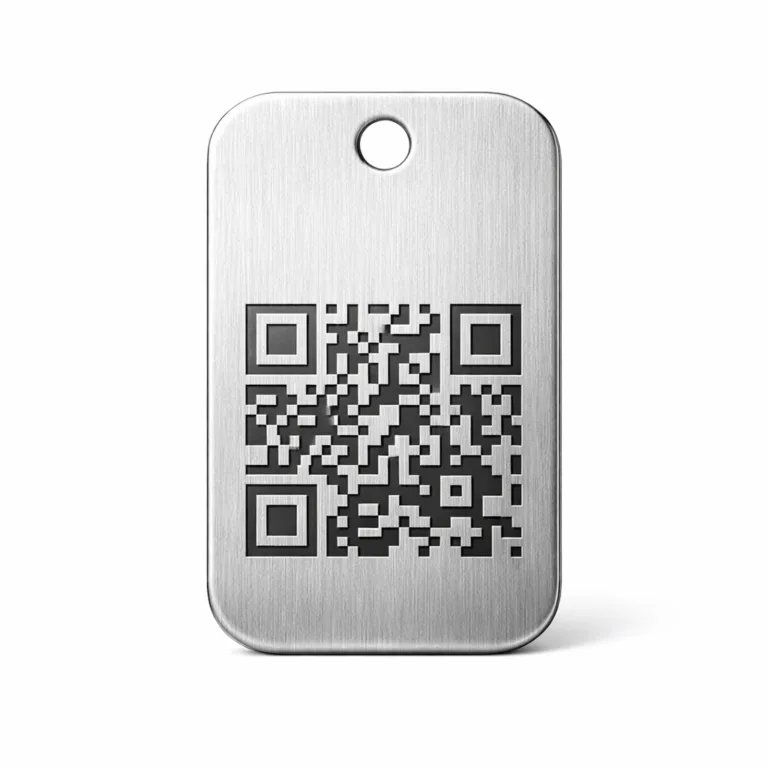
Modern innovations are building on this foundation. Tech-forward cellars and wineries are integrating QR or barcode tags alongside color-coded tags, merging physical organization with digital tracking. This enables instant access to bottle details and provenance, streamlining both in-person and remote inventory checks.
For enterprises engaged in export, scalable tagging systems simplify international shipments by keeping inventories organized across multiple sites. Thanks to the versatility of color-coded tags, wine organization solutions can be tailored from the smallest niche producers to major global players.
Those interested in more industry applications may find the wine tag manufacturer and wine club member tag links useful for real-world examples and solutions.
Common Mistakes to Avoid with Color-Coding
While color-coded tags can revolutionize wine organization, some common errors can undermine their effectiveness. A typical pitfall is selecting a tag material or font size that makes information unreadable after just a few months of cellar use. Always prioritize clarity and durability over decorative features.
The wrong adhesive can also lead to tag failure. Choose an adhesive rated for both the intended surface and wine cellar environment; otherwise, tags may peel or fall off. Materials lacking corrosion resistance will succumb to rust, tarnish, or discoloration, especially in damp cellars. Avoid finishes or coatings that easily flake or degrade in humid conditions.
Another frequent issue is low color contrast—if text and tag colors are too similar, misidentification becomes likely. Maintain high contrast for visibility. Periodically review your system for confusion or overlap in color meanings, updating coding as needed to prevent errors as collections grow or change.
For more information on material and finish selection, the custom metal tag solutions at UC Tag provide insights into how industry professionals troubleshoot and refine tag choices for demanding environments.
Ordering Guide: From Concept to Implementation
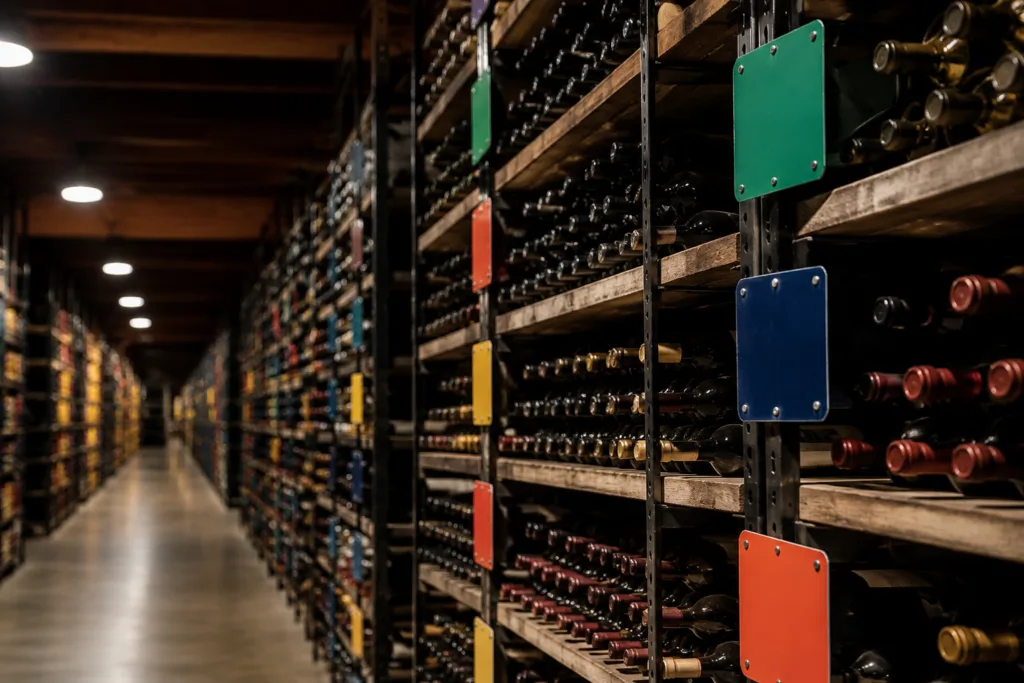
The path from concept to fully implemented color-coded tag system for wine organization is straightforward with proper planning. Begin by determining your minimum order quantities (MOQ) based on collection size and future needs.
The design process usually involves submitting artwork or specifications for each tag design and color scheme. Manufacturers, such as those listed in the tag solutions portfolio, provide digital proofs and revisions to ensure accuracy before moving to production. Many also offer sampling options to verify material choice, color clarity, and finish quality before green-lighting the bulk order.
Packaging should be considered, especially for large or multi-site orders. Secure, protective packing prevents damage during transit and storage. Shipping logistics vary by region and order size, impacting lead times. Allow for design, production, and transit times when scheduling your cellar organization project.
Material and method choices impact cost, so discuss trade-offs between durability, color range, and price before finalizing your order. Keeping communication clear and documentation thorough pays off with a seamless implementation and robust color-coded tags for years to come.
Frequently Asked Questions
What materials are best for wine tags?
Materials like anodized aluminum, stainless steel, and brass are best for wine tags due to their corrosion resistance and long-lasting durability in cellar conditions.
How long do color-coded tags last in a wine cellar environment?
High-quality metal color-coded tags can last 10–20 years or more, retaining both color and readability if properly specified and maintained.
Can tags be customized with logos?
Yes, most manufacturers offer logo customization via engraving, UV printing, or etching, allowing you to brand your wine tags according to your cellar or winery identity.
What is the lead time for custom tag orders?
Lead times vary but typically range from two to six weeks, depending on the material, finish, complexity, and the current production queue.
How do I select the best finish for my tags?
Choose finishes like anodized or enamel coatings for vibrant color and durability, and match them to your cellar’s environmental conditions and desired visual style.
Can color-coding be applied to other inventory items?
Absolutely. Color-coded schemes are versatile and can be extended to assets like spirits, equipment, or even non-wine inventory to enhance organization throughout your facility.
Related Reading
- Upgrade Your Wine Cellar’s Look and Efficiency with Metal Bottle Neck Tags
- Discover How Reusable Metal Tags Support Sustainable Beverage Packaging
- Achieve Premium Wine Branding with Affordable Customized Metal Tags
- Drive Collector Demand with Numbered Metal Tags for Limited Edition Wines
- Ensure Food-Grade Safety: Metal Tag Regulations in Wine & Spirits