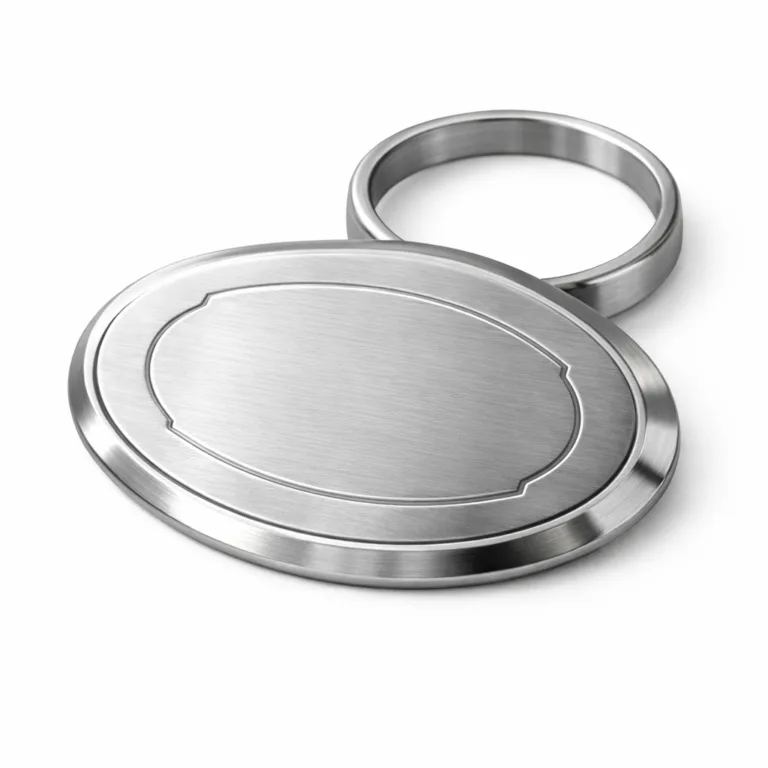
In the world of children’s jewelry, prioritizing Lead-Free, CPSIA Standards, Children’s Jewelry, Compliance, Safety isn’t just about good practice—it’s a regulatory and ethical imperative. With increasing scrutiny from consumers and authorities, manufacturers must fully understand what genuine compliance means for both product safety and business viability.
Understanding CPSIA Standards
The Consumer Product Safety Improvement Act (CPSIA) stands as a cornerstone for child safety in the United States. Enacted in 2008, CPSIA established strict standards for products intended for children, notably those under 12 years old, including all forms of children’s jewelry.
A defining feature of the CPSIA Standards is the firm cap on allowable lead content. Jewelry components must not contain more than 100 parts per million (ppm) of total lead. For surface coatings, such as paints or platings, the limit is even lower, typically 90 ppm. These levels are set based on extensive research into what is considered safe for children with developing bodies who are more vulnerable to heavy metal exposure.
Non-compliance with these Lead-Free requirements can result in severe consequences. Companies may face large fines, mandatory recalls, and even legal actions. Beyond the financial risk, there’s the very real danger to brand reputation and future sales—especially as news of safety violations spreads quickly online. Ultimately, children’s safety remains at the heart of these standards: when manufacturers and retailers align with CPSIA, they help ensure every product is trustworthy and safe enough for a child.
- Total lead content must not exceed 100 ppm for any children’s jewelry component.
- Lead in surface coatings (e.g., paint, plating) must not exceed 90 ppm.
- Compliance protects both end users and business reputation.
- Failure can result in recalls, fines, and legal action.
The Dangers of Lead in Jewelry
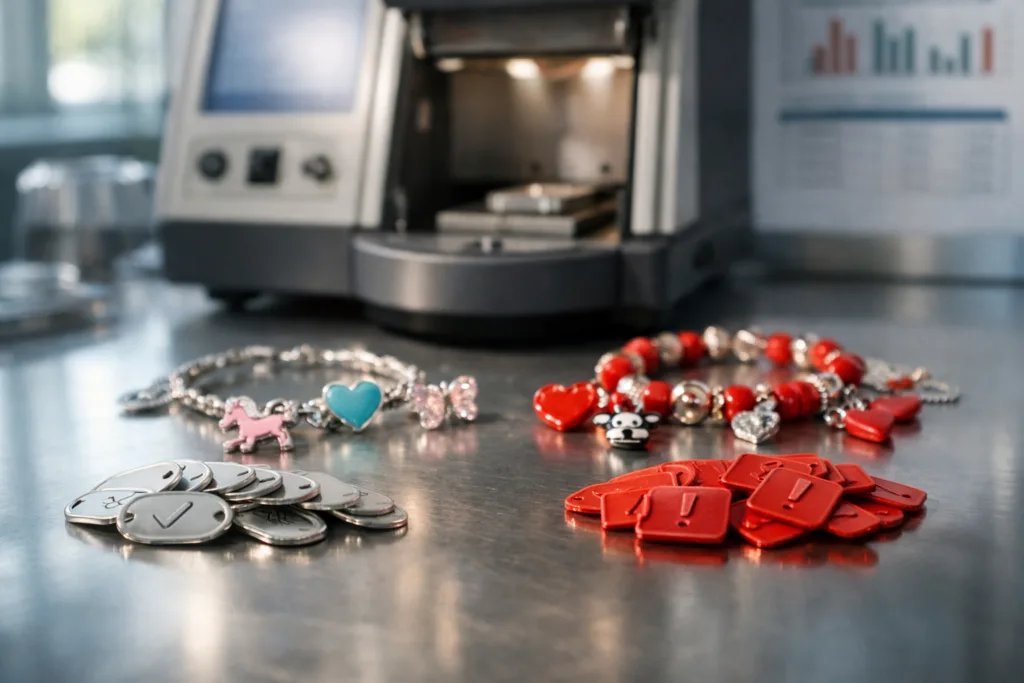
Lead is a highly toxic metal, particularly dangerous for children whose bodies are still developing. When even small amounts of lead are ingested, inhaled, or absorbed through the skin, the risks multiply due to children’s lower thresholds for exposure.
Lead poisoning disrupts the nervous system, brain function, and organs. Symptoms can be subtle at first—learning or behavioral problems, delayed development, irritability or fatigue—but the long-term risks are dire: permanent cognitive impairment, kidney damage, and, at very high levels, even death. These risks highlight why Lead-Free, CPSIA Standards, Children’s Jewelry, Compliance, Safety are non-negotiable elements for jewelry that comes into contact with children.
Statistics reveal that lead exposure from contaminated jewelry—especially inexpensive imports or illicit online marketplaces—remains a relevant concern. According to the U.S. Centers for Disease Control and Prevention, thousands of children are still diagnosed with lead poisoning annually, some cases traced to jewelry. For example, in 2006, over 150,000 toy jewelry items were recalled in the U.S. due to lead content, triggering nationwide awareness and ushering in today’s strict standards.
Education also plays a vital role; when parents, schools, and retailers are informed of the dangers, the demand for compliant, safe jewelry rises, helping to protect children across all market segments.
Compliance Steps for Jewelry Manufacturers
Meeting Lead-Free, CPSIA Standards, Children’s Jewelry, Compliance, Safety starts on the production line. Manufacturers should implement strict protocols at every stage:
- Thoroughly test all incoming raw materials for lead content before production begins.
- Only work with suppliers who can provide up-to-date, verifiable certifications proving lead-free compliance.
- Develop and maintain a robust internal quality assurance protocol—this includes routine sampling during and after production.
- Collaborate with third-party laboratories accredited to test to CPSIA standards; these labs offer unbiased verification that products meet regulatory thresholds.
- Continuously monitor for changes or updates in relevant CPSIA regulations and adjust procedures to remain compliant.
At UC Tag, Rain Chen emphasizes, “Certification from your supplier is only the first checkpoint. Random batch testing is what gives true confidence before shipping goods.” This means durable internal controls paired with external verification create the strongest defense against non-compliance and help guarantee each item meets CPSIA’s definition of Lead-Free.
Sourcing Lead-Free Materials
Selecting the right materials lays the foundation for compliant, long-lasting children’s jewelry. Not all metals—or suppliers—are equal when it comes to lead levels and traceability:
| Material | Lead-Free Certification | Durability | Common Use |
|---|---|---|---|
| Aluminum | Widely available, check for certifications | High (anodized/treated) | Tags, charms, pendants |
| Stainless Steel | Very high, check for 304/316 grades | Exceptional | Chains, main plates, findings |
| Brass (Lead-Free alloys) | Look for “lead-free” grade; varies by supplier | Good to High | Charms, bracelet plates |
| Synthetics (Resin, Silicone) | Typically no lead, but check documentation | Variable | Beads, accents |
Traceability and certification from reputable sources are crucial for verifying Lead-Free status. When working with a custom metal tag supplier, always request batch test reports and material trace-back documentation. Synthetic materials, such as food-grade silicone or resin, can supplement metals for color, feel, or safety-driven designs, but these too should be certified as free of lead and other harmful contaminants.
Aesthetics and durability cannot be overlooked. Metals like stainless steel and anodized aluminum are robust, corrosion-resistant, and take finishes well, aligning form with function in children’s jewelry. However, the right balance between appearance, safety, and compliance is achieved by integrating quality sourcing audit procedures at every procurement stage.
Manufacturing Methods for Compliance
Not only material selection but manufacturing methods shape product safety and CPSIA compliance. Engraving, stamping, etching, and various printing techniques can all play a role:
- Engraving: Produces detailed, Lead-Free marks directly on the metal. No chemical residues.
- Stamping: Cold-forms shapes or lettering; relies entirely on the purity of feedstock material.
- Etching: Chemical processes require careful control. Only use verified, lead-free etchants and thorough post-cleaning.
- UV/Color Printing: Surface finishes must be checked for lead content—practice diligent supplier control.
Coating options—like powder-coated or anodized finishes—are effective for color and durability, but each layer must also be lead-free and certified. The pros of techniques like laser engraving or CNC processes include precision, depth control, and full traceability. Potential cons, such as introducing unvetted coatings or adhesives, must be avoided by specifying only pre-certified inputs.
Quality control is non-negotiable. Automated systems can track every step, but experienced manual checks—such as those at UC Tag—catch details automation might miss. The manufacturing method chosen has a direct impact on lead content, lifetime durability, and, of course, legal compliance.
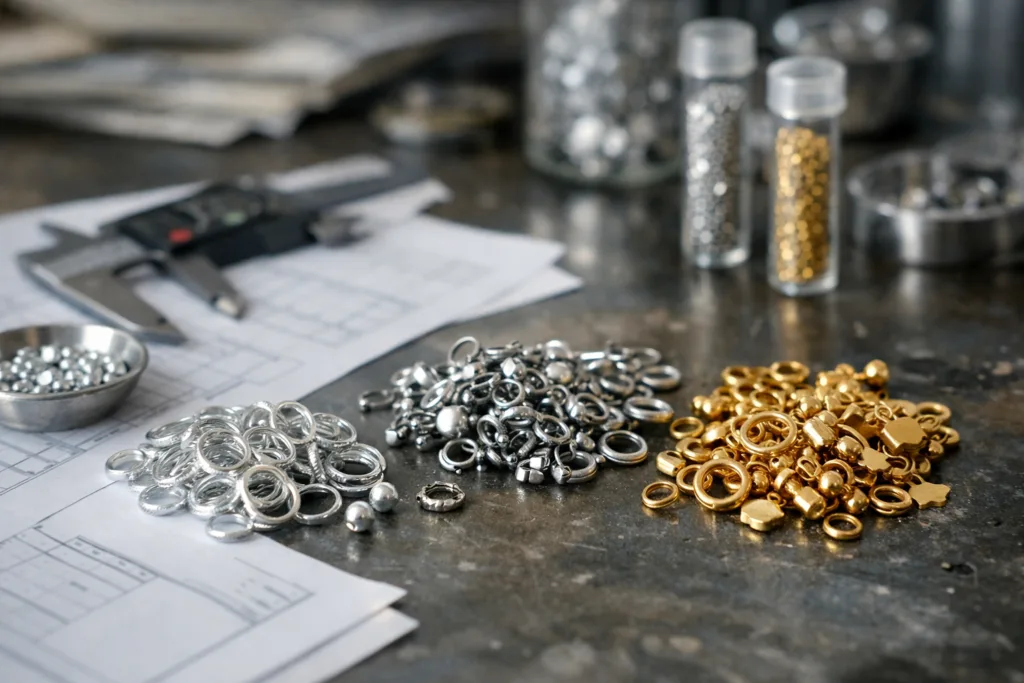
Design Specifications Checklist
Before production, ensure children’s jewelry designs meet all compliance expectations—not just visually, but also structurally and informationally. Here is a quick checklist that every engineering and procurement team should follow for each project:
| Specification | Recommendation |
|---|---|
| Size | Avoid small parts that may detach or become choking hazards |
| Thickness | At least 0.7mm for most tags; adjust for material strength |
| Finish | Smooth, burr-free, non-toxic coatings only |
| Font & Colors | High readability, free from heavy metals |
| Attachments | Secure clasps, jump rings, chains; no sharp edges |
| Labeling | Include compliance declarations, batch codes |
During the design phase, create a physical or digital checklist for each element. Ensure all labels are clear about Lead-Free claims, and make batch codes or certification IDs visible for audits. Attachment options, like lobster clasps and split rings, must meet both strength and child-safety guidelines. Durability, readability, and clear compliance labeling make a product trustworthy from the first glance.
Durability and Testing for Lead-Free Products
Durability testing is as essential as chemical composition testing when it comes to children’s jewelry safety. Rigorous assessments ensure that products withstand real-world use without breaking, corroding, or leaching hazardous substances.
Common tests performed pre-market include:
- Corrosion Resistance Test: Verifies item’s ability to resist rust or degradation upon exposure to sweat or moisture.
- Abrasion Test: Checks that surface coatings or finishes do not wear off prematurely.
- UV Exposure: Ensures colorants and coatings will not deteriorate under sunlight.
- Salt Spray: Simulates environmental exposure to see how well the product holds up in challenging conditions.
Industry standards typically call for jewelry products to pass a battery of these durability tests before reaching market. Items should be tested from every batch—pre-release and at scheduled intervals—to confirm ongoing compliance.
Strong durability directly influences long-term safety and consumer trust. History is filled with product recalls resulting from insufficient testing: tags that corrode quickly may release lead-contaminated surfaces, turning a compliant product into a hazard. This risk underscores why thorough, repeat testing is crucial for Safety and Compliance in children’s jewelry.
Industry Applications for Lead-Free Jewelry
Lead-Free, CPSIA Standards, Children’s Jewelry, Compliance, Safety have applications that reach far beyond retailers. Several sectors require strictly compliant children’s jewelry and accessories:
- Toy and gift manufacturers add compliant tags or charms to products to satisfy both regulatory and marketing demands.
- Schools use customized lead-free charms for events, awards, or safety campaigns.
- Event organizers choose certified safe items as promotional giveaways at community or corporate functions.
- Educational institutions often co-design jewelry with manufacturers, leveraging expertise to ensure product safety for children.
Case studies reveal that collaboration between brands, schools, and suppliers yields successful outcomes; for example, events that provide personalized, compliant tags have reported higher parental approval and lower incident rates. Promotional manufacturers who deliver full documentation and transparent supply-chain traceability stand out, especially in competitive bids that require CPSIA Standards.
Common Mistakes to Avoid in Compliance
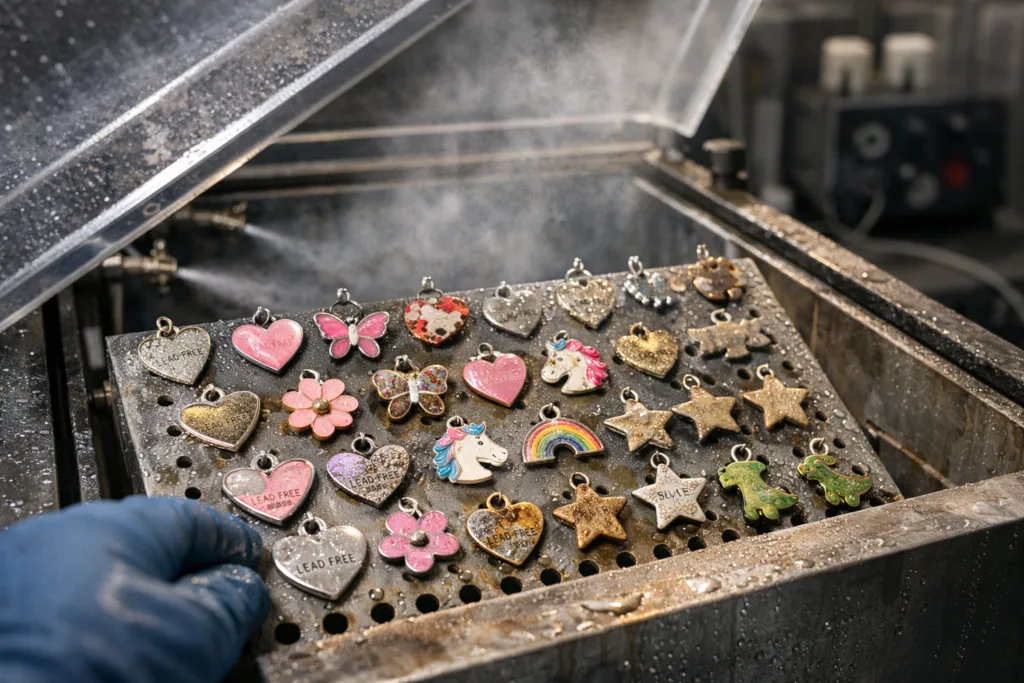
Even well-intentioned manufacturers can slip up on the road to full compliance. Some of the most frequent and costly mistakes include:
- Misunderstanding the CPSIA Standards—for example, believing only the base metal, not the coatings, must be lead-free.
- Failing to document certifications, which can stall shipments or void insurance claims.
- Skipping batch testing before production, resulting in possible lot-wide recalls.
- Designing products with unvetted, non-compliant materials, including low-cost imported components.
- Poor communication about product safety and compliance details to consumers or clients.
Each of these errors is avoidable through rigorous process control, ongoing training, and an ingrained culture of Safety and Compliance among staff. Remember: proper documentation is as crucial as actual testing.
FAQ on Lead-Free Compliance and CPSIA
Which materials are considered compliant under CPSIA for children’s jewelry?
Materials such as 304/316 stainless steel, anodized aluminum, and certified lead-free brass alloys are compliant if tested and documented to meet CPSIA’s 100 ppm total lead and 90 ppm coating limits. Always verify with up-to-date supplier certifications.
What certifications should manufacturers require from suppliers?
Manufacturers should obtain third-party lab reports verifying lead content, certificates of compliance referencing relevant CPSIA standards, and batch-specific test data from material suppliers prior to use.
What should a manufacturer do if a product fails post-market testing?
If lead is detected above regulatory limits, halt all sales of affected batches, notify distributors and customers, coordinate recalls if needed, and conduct a root-cause review of sourcing and production to prevent recurrence.
How can a jewelry manufacturer label a product as Lead-Free to assure buyers?
Manufacturers can indicate ‘Lead-Free’ on product packaging and tags, referencing batch or certification numbers, and should provide CPSIA-compliance documentation on request to support claims.
What are typical consumer concerns about lead in jewelry?
Consumers worry about potential toxicity, long-term health effects, and risks from accidental swallowing or skin exposure, making transparency, traceability, and visible labeling essential to building trust.
How long does compliance testing take and what does it cost?
Lead compliance testing by qualified labs generally takes 3–10 business days per batch; costs vary but typically range from $100–$400 per sample, depending on complexity and material type.
Related Reading
- Discover the benefits of hand stamping for unique, compliant jewelry tags
- Learn how to choose readable fonts for safe children’s jewelry labels
- Your guide to sourcing the right blank tags for retail and industrial jewelry
- See custom metal tag solutions designed for compliance and durability
- Unlock design comfort and branding with curved metal tag options