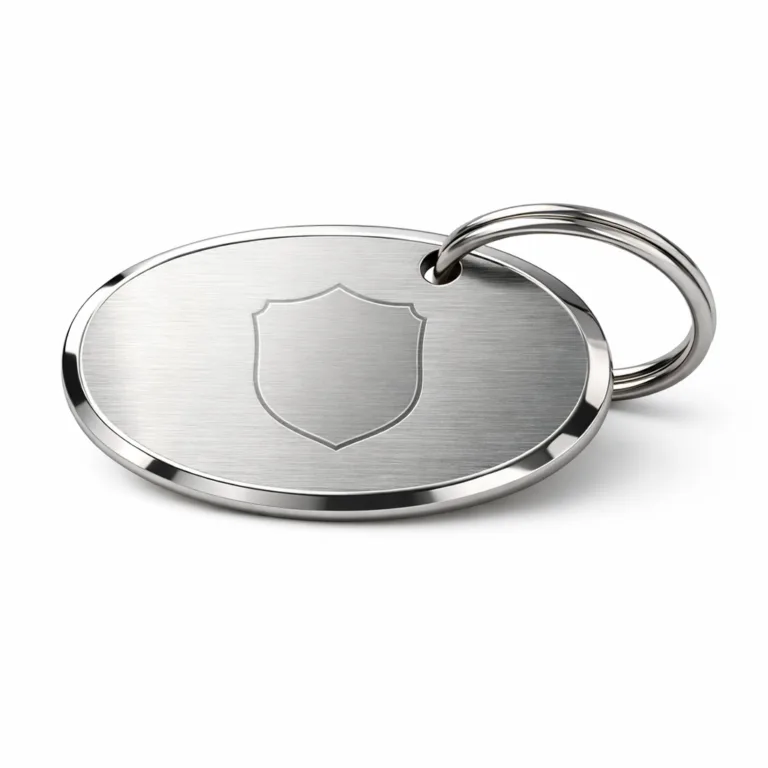
Introduction to HS Codes
For companies exporting metal tags and keychains, understanding HS Codes is vital for streamlined cross-border shipping, accurate tariffs, and customs clearance. The main keyword—HS Codes, Metal Tags, Keychains—is central to procurement and logistics across industries.
HS Codes, short for Harmonized System Codes, are internationally standardized numerical references administered by the World Customs Organization. These codes classify traded products and are used by customs and regulatory agencies worldwide to ensure clear, consistent identification of goods.
When exporting metal tags and keychains, the assigned HS Code determines how your shipment is classified, the duties you pay, and the regulations you must follow. These codes are integral to complying with trade rules, negotiating contracts, and avoiding unexpected delays or penalties at borders.
Many metal identification and branding products are subject to classification under the HS system. Even slight differences in product type, material, or intended use can alter the applicable HS Code and thus impact your compliance obligations. That’s why accuracy in classification is essential for every shipment.
Types of Metal Tags and Keychains
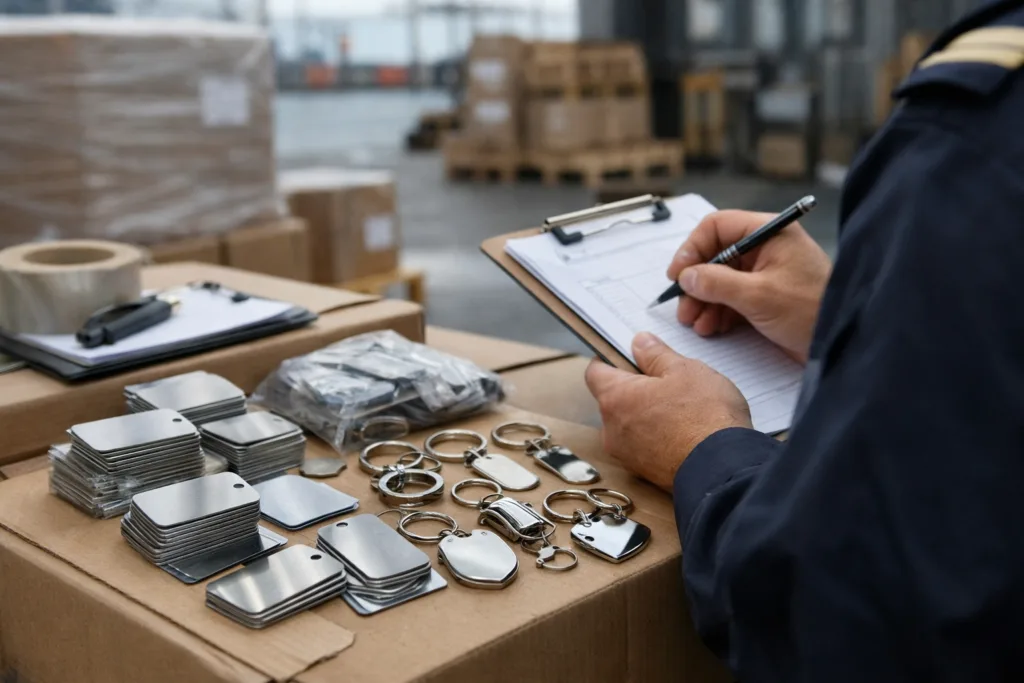
Metal tags and keychains come in a wide range of types, each serving distinct functions in their markets. Understanding product differences helps with both specification and proper HS Code assignment.
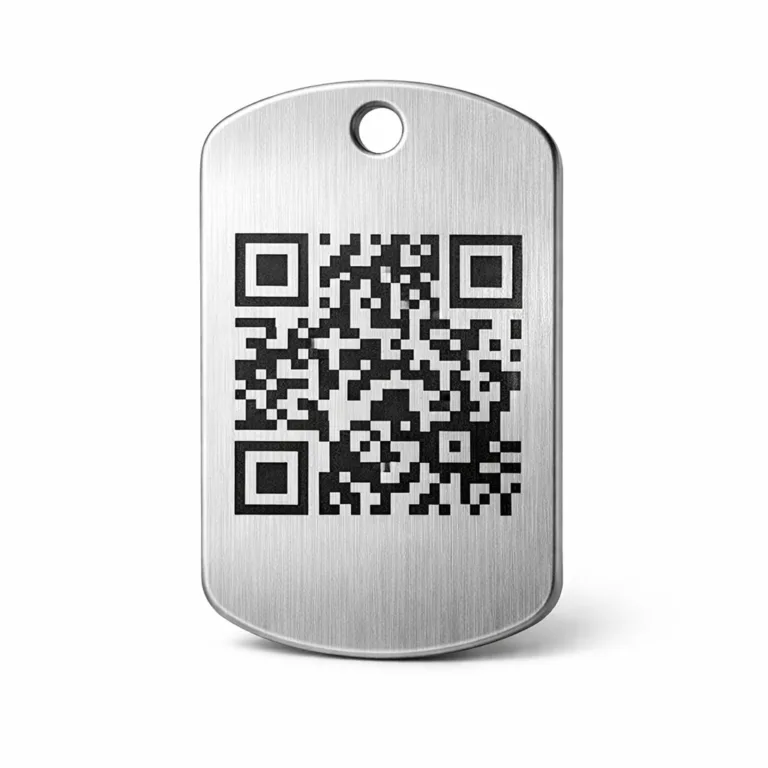
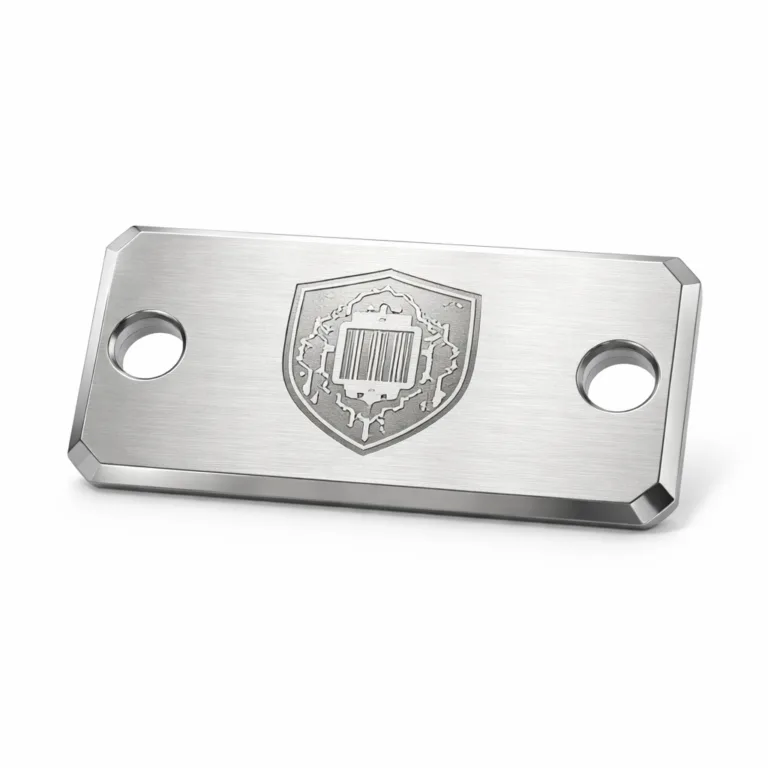
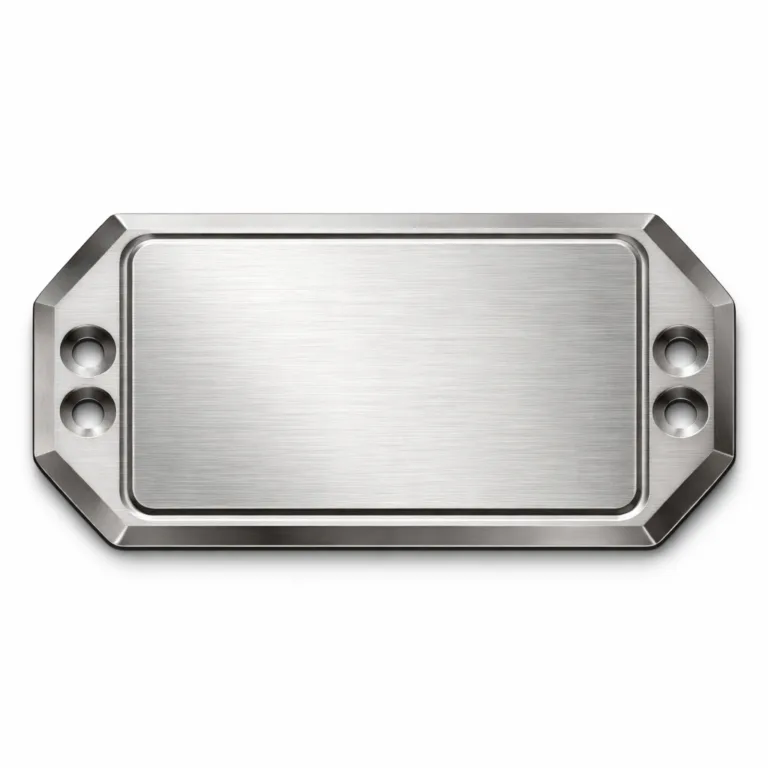
Common metal tag types include nameplates used on machinery, asset tags for inventory tracking, pet tags for animal identification, luggage tags, and more specialized logo plates or barcode/QR code tags for scanning. Each type serves a unique identification or branding need across industries.
The variety also extends to material options—aluminum, stainless steel, brass, and zinc alloy are some of the most common. Aluminum tags offer lightweight durability; stainless steel provides high corrosion resistance; brass tags give an attractive appearance for upscale branding or specific historical looks.
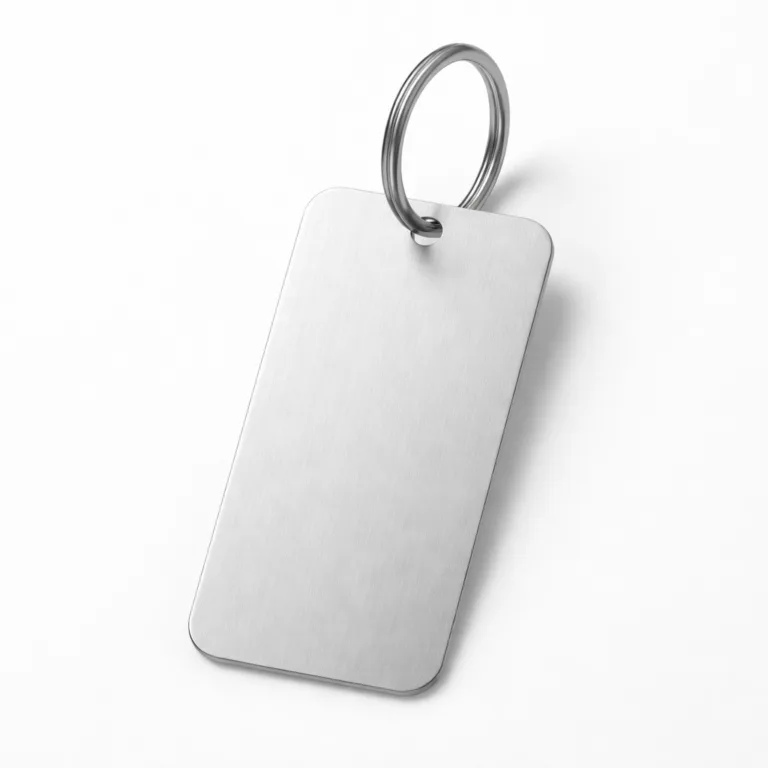
Keychains are not just organizational tools but also play a role in branding and gifting. Many businesses choose custom metal keychains for promotions, logo presentation, or to accompany products as value-added items. Keychains can be stamped, engraved, or die-cast for various aesthetics and durability requirements.
- Nameplate tags for equipment identification in factories
- Pet ID tags for veterinary clinics and animal control
- Luggage tags for airline, tourism, and hospitality industries
- Asset tags for inventory management in logistics and warehousing
- Logo keychains for branded merchandise, retail and automotive giveaways
Selecting the right type involves considering durability, compliance, style, readability and the intended end-use. For instance, heavy-duty asset tags might require stainless steel with deep engraving, while promotional keychains may use lightweight aluminum or zinc alloy for cost efficiency.
As industry applications grow, so do the range and complexity of available products—highlighting why accurate, detailed description and classification under the correct HS Code is necessary for smooth global trade.
Materials Comparison
Choosing the right material for metal tags drives both performance and compliance outcomes. The main contenders are aluminum, stainless steel, and brass, each with strengths and weaknesses matched to their roles.
| Material | Corrosion Resistance | Weight | Appearance | Best For | Trade-Offs |
|---|---|---|---|---|---|
| Aluminum | Good (especially anodized) | Lightweight | Matte to glossy; accepts color | Outdoor tags, low-weight needs | Less hard; can deform under stress |
| Stainless Steel | Excellent | Heavier | Shiny; industrial look | Harsh environments, marine | Higher cost; harder to process |
| Brass | Moderate (can tarnish) | Heavy | Warm gold finish | Luxury, vintage style, gifts | Tarnish needs maintenance |
Aluminum tags excel in weight-sensitive applications like aviation, wearable pet ID tags, or where vibrant finishes are desirable. Stainless steel tags withstand corrosive and high-wear environments, including marine or industrial use. Brass finds its niche in upscale retail, wine labeling, or designs requiring a vintage touch.
Environmental exposure greatly dictates material selection. Outdoor tags subject to UV, weather, and salt must resist fading and rust; chemical exposure requires alloys tested for resistance. UC Tag often advises clients: “Match your material to the real-world conditions and the finish you want—for outdoor and harsh industry, stainless steel almost always wins.” Consider all trade-offs, including pricing, processability, and aesthetics.
Manufacturing Methods Comparison
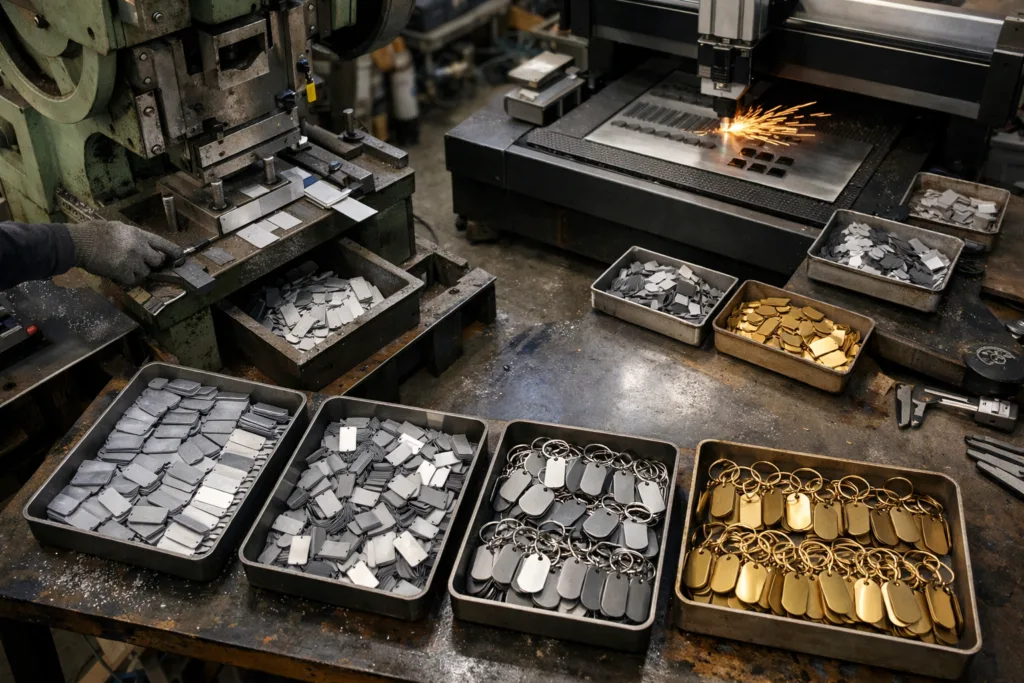
The method used to manufacture metal tags and keychains greatly influences durability, detail, cost, and production timelines. Core processes include stamping, engraving, chemical etching, anodizing, electroplating, and UV printing.
Stamping is a fast, scalable method ideal for large batch, simple text/logo designs with deep, tactile marks. Laser engraving allows precise, clean text and graphics—even on complex shapes or variable-data tags, like asset or QR code tags. Chemical etching creates intricate patterns with fine detail, often paired with color fill. UV printing supports full-color imaging, but the print layer is less durable than engraving or etching in rugged settings.
Production methods are chosen based on order volume, design complexity, lead times, and budget. Stamping and die-casting offer cost efficiency for scale, while laser and CNC engraving work best for lower volumes or high-customization needs. Fast turnarounds are possible with direct engraving and digital processes; batch methods like deep stamping may require mold preparation and extended lead times.
While high-detail etched or printed tags can showcase branding beautifully, they may not survive industrial abrasion as well as a deeply engraved metal tag. Balance aesthetic goals with longevity—especially when specifying tags for regulatory or industrial environments. For detailed advice on selection and manufacturing, referencing the custom metal tag solutions guide is useful.
Design and Specifications Checklist
Accurate design documentation ensures every ordered batch of metal tags and keychains meets its functional requirements. Before placing an order, review the following specification checklist:
| Specification | Recommendation | Why |
|---|---|---|
| Size | Precisely state width, height, shape | Avoid fitting, attachment errors |
| Thickness | Match to stress, environment | Thicker metals resist bending |
| Finish | Specify anodizing, plating, polish | Impacts appearance & durability |
| Attachment | Rivet holes, adhesive, keyrings | Defines installation method |
| Readability | High-contrast, >1mm font (min.) | Ensures scanning/visibility |
| Tolerance | ±0.1–0.2mm typical | Critical for fit, especially with automation |
Alongside these, define color, artwork positioning, any sequential numbering, and backside features needed. Use templates or vector files (see UC Tag’s tip: why vector files matter for metal molds) to avoid miscommunication.
- Double-check text fields, serial ranges, and logo placement.
- Specify attachment aids (S-hooks, adhesives, rivet holes) for your exact installation environment.
- Include instructions for packaging or grouping if relevant—for example, sets sorted by serial number.
Clarity at this stage prevents costly production errors and delays later, especially for regulated, serialized metal tags.
Durability and Testing
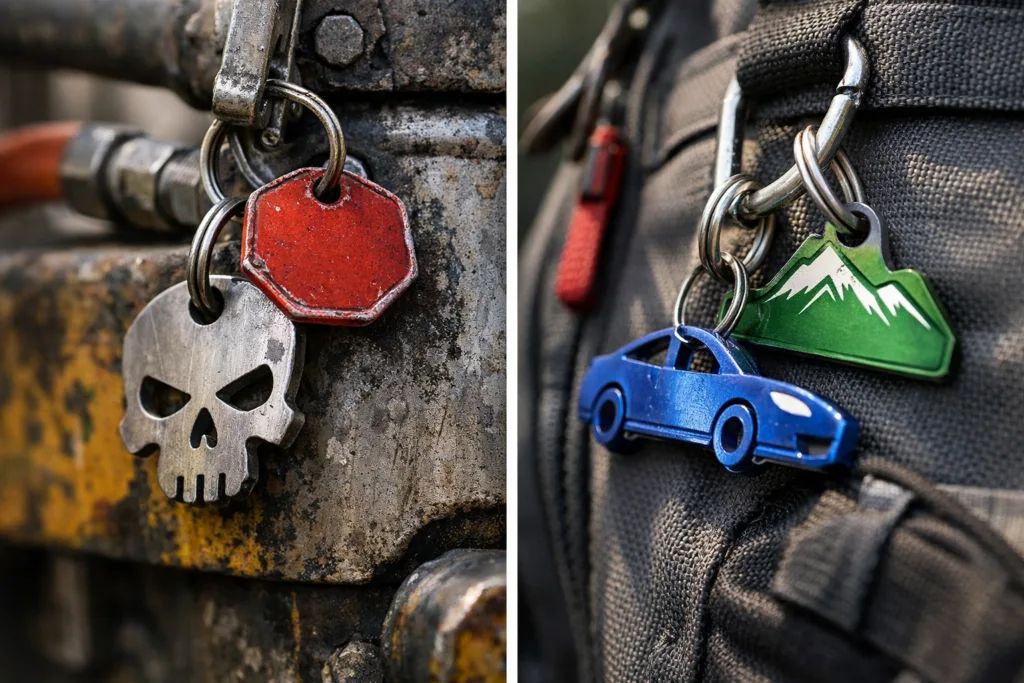
Durability is a core requirement for metal tags used in demanding settings. Reliable tags must resist corrosion, abrasion, UV and chemical attack throughout their service life. Testing standards exist to evaluate real-world performance and support accurate specification for your application.
For outdoor and marine use, salt spray testing (typically per ASTM B117) measures corrosion resistance, revealing how various metals and finishes withstand extended salt exposure. UV resistance and accelerated weather tests are critical for tags subject to constant sunlight—unprotected colors can fade, and some adhesives or coatings may yellow or break down.
Abrasion resistance is tested by subjecting tags to repeated rubbing, scratching, or impact cycles, simulating daily wear in industrial settings. Finish durability should always be considered for color-anodized, painted, or printed tags—these layers may wear away faster than raw or deeply engraved metal under harsh use.
Lifespan is mostly influenced by the material (stainless steel outlasts most), type of finish (anodized and electroplated tags perform well outdoors), and the environment (humidity, salt, chemicals). When in doubt, request test reports or sample tags, as highlighted in the asset tracking best practices guide.
Industry and Application Fit
Metal tags and keychains are used across diverse fields where traceability, compliance, and durability are essential. In manufacturing, metal nameplates or data plates identify equipment and aid in maintenance and compliance. Logistics leans on asset tags and serialized keychains to simplify inventory, streamline asset tracking, and support audits.
Pet industry buyers rely on robust ID tags for effective owner tracking, while retail and aerospace sectors require branding elements and secure identification compliant with strict specifications. Regulatory frameworks such as EU nickel restrictions (see Nickel-Free Certification) or US Prop 65 can affect metal composition and finish choices.
Correct HS Codes impact not just customs clearance but also procurement, as codes dictate applicable duties, taxes, and compliance reports in each destination country. For example, a branded keychain shipped as promotional merchandise may have a different HS Code, tariff, or import condition compared to an industrial serial tag.
Well-matched tags ensure legal compliance, safe operations, and brand longevity, and minimize the risk of port delays or costly retrofits due to errors in classification or material choice.
Common Mistakes and Troubleshooting
Despite decades of best practices, several common mistakes persist when specifying or ordering metal tags. Unreadable text—due to poor size, low contrast, or intricate fonts—renders tags useless for tracking or regulatory audits. Choosing the wrong attachment method often results in lost tags; adhesive may fail on rough, oily surfaces, while rivet holes require compatible mounting locations.
Material selection can also cause problems; aluminum tags may corrode if used near saltwater, while brass can tarnish rapidly outdoors. Peeling coatings, fading inks, or mismatched sequenced numbering are additional issues reported by B2B buyers. Before committing to mass production, always test samples in the actual use environment, as explained in the pre-production sample strategies article.
If issues occur—peeling, rapid corrosion, incorrect details—review your original specifications for clarity and consult your tag manufacturer about improved processes, finishes, or better-suited materials. An experienced supplier will help troubleshoot and recommend alternatives for future batches without bias, as noted by Rain Chen of UC Tag.
Ordering Guide
Placing orders for keychains and other metal tags requires attention to detail for smooth procurement and reliable deliveries. Most manufacturers have minimum order quantities (MOQ) depending on the manufacturing method—a simple die-cast logo keychain may require a higher MOQ than an engraved one.
Lead times can vary from 7–21 days for smaller, direct-engraved orders to 4–6 weeks for custom-molded or color-filled tags. Ensuring accurate artwork (ideally in vector format), clear finish and attachment instructions, and confirmed specifications from the beginning will prevent costly misunderstandings (for more, see the guide on quantity thresholds and discounts).
Proofing processes usually involve providing physical or digital samples for approval. Take time to review these proofs meticulously for text accuracy, color, attachment strength, and serialization before mass production begins. Specify required packaging—bulk bag, single wraps, sets by serial—and clarify shipping preferences (air, sea, tracked courier) with your supplier.
For special requirements or high-value branded keychains, always request pre-production or standard sample tags before placing a large order. This practice saves time and ensures your tags meet expectations the first time.
Frequently Asked Questions
What are HS codes and why are they important?
HS codes are international numbers used to classify traded goods, ensuring tariffs, regulations, and documentation are handled correctly for global shipments of items like metal tags and keychains.
How can I find the correct HS code for my metal tags?
Check your product’s precise use, material, and features; compare with your country’s customs database or consult your manufacturer for recommended classifications that match your metal tags.
What materials are best for outdoor tags?
Stainless steel and anodized aluminum are top choices for outdoor tags due to their high resistance to corrosion, UV fade, and physical abrasion in challenging environments.
How do manufacturing methods affect HS Code classification?
The main impact is from the tag’s primary material and use, but complex features—like embedded electronics or coatings—may alter the HS Code, so manufacturing method details matter for compliance checks.
Can different finishes impact durability?
Yes, finishes such as anodizing and electroplating improve resilience to weather and wear, while painted or printed finishes may be less durable and require careful selection for harsh environments.
What common industry regulations should I be aware of?
Industry regulators may require lead-free, nickel-free, or Prop 65-compliant tags, and specific HS Codes may trigger special inspections or certifications, especially for tags in food, medical, or children’s products.