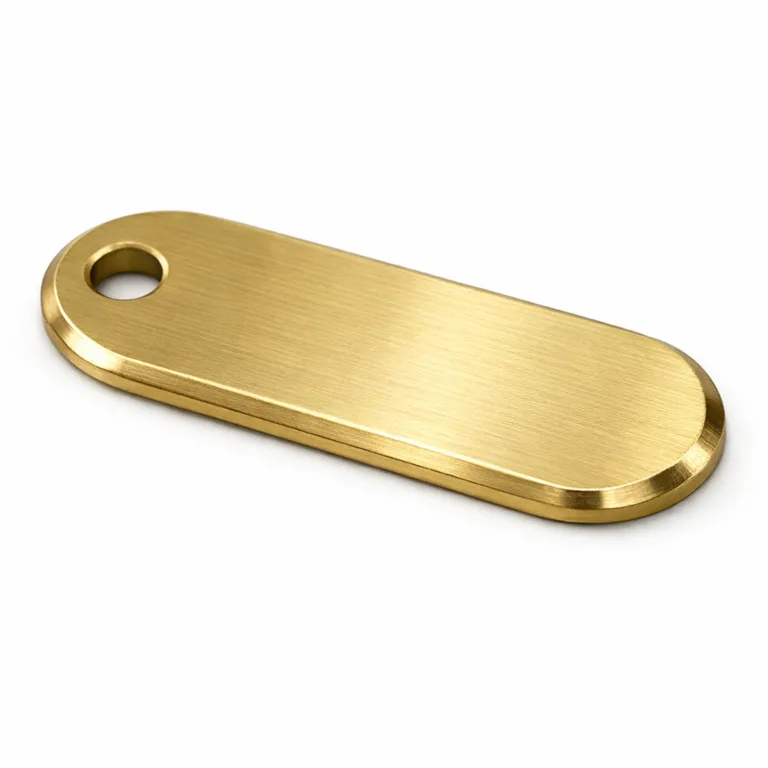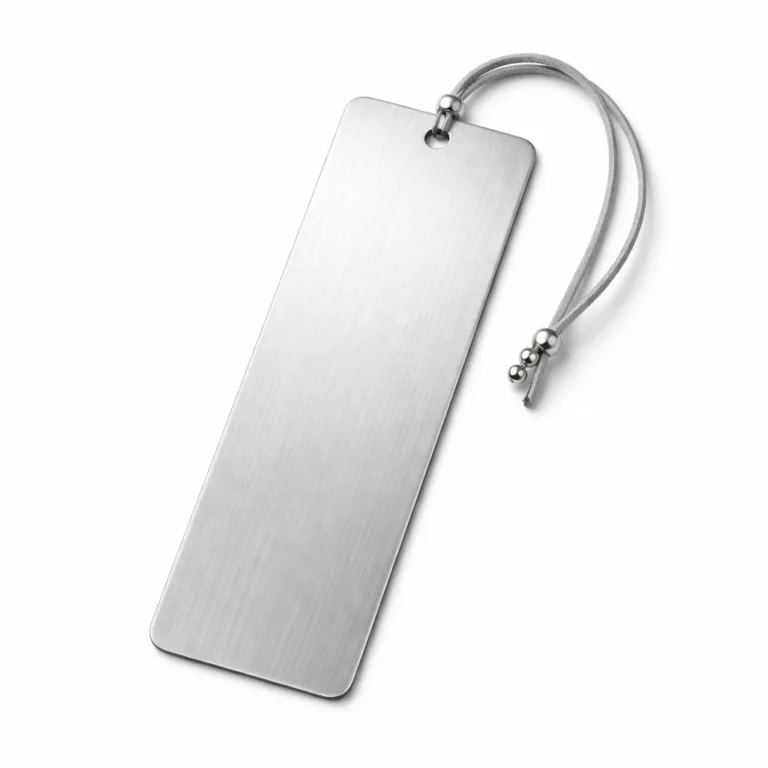
For dealerships, small branded items often do more work than expected. Key Fobs for Car Dealerships are a good example. They are handled at delivery, used daily after the sale, and seen by drivers, family members, service teams, and sometimes future buyers. That means the key fob is not just an accessory. It becomes part of the dealership’s brand presentation, customer experience, and long-term recall. The real question is not simply whether to add a logo. It is whether the material, finish, weight, and customization details match the type of dealership experience you want customers to remember.
If your project is centered on ownership presentation, lot organization, customer handoff, or a more polished delivery package, our custom car dealer key tag solutions support practical customization from the manufacturing side. We help buyers compare leather and metal structures, confirm logo treatment, choose engraving or embossing, review attachment options, and plan samples before bulk production so the final key fob works both as a usable item and as a consistent dealership branding tool.
Why branded key fobs matter in dealership marketing
In many dealership projects, branding discussions focus on signage, digital ads, uniforms, and showroom design. Those are important, but customers also judge a business through smaller touchpoints. A key fob is one of those details that stays with the customer long after the paperwork is done.
When the key handoff feels considered, the dealership often appears more organized, more premium, and more trustworthy. When it feels generic, thin, or poorly finished, that can weaken the impression created by the vehicle presentation itself. This detail may look small, but it can create a mismatch later if the dealership wants to position itself as high-service or premium.
From our manufacturing perspective, the value of a branded key fob comes from three things working together: material quality, brand visibility, and daily usability. If one of those is weak, the item may still exist, but it will not support the brand well. A heavy metal fob with clean engraving can communicate permanence and confidence. A well-made leather fob can feel warm, refined, and more personal. The wrong combination can feel cheap, uncomfortable, or too decorative for daily use.
Leather vs. metal key fobs for car dealerships
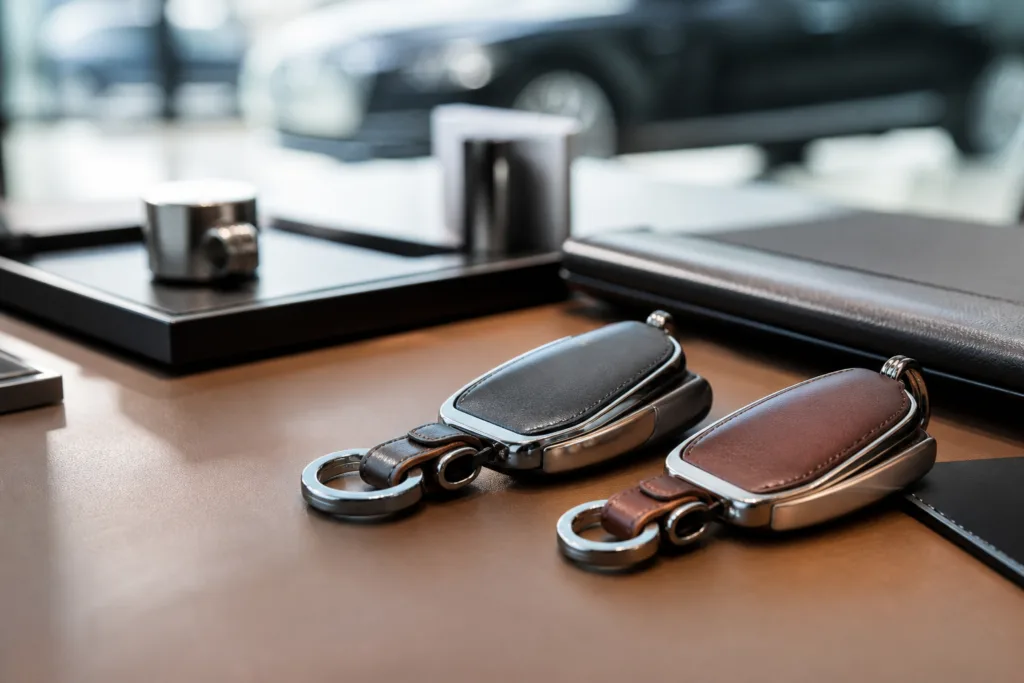
For buyers, the key is not only the product name or price, but whether the material matches the dealership’s brand position and customer expectations. Leather and metal do not communicate the same message.
What leather communicates
Leather key fobs usually feel softer, warmer, and more lifestyle-oriented. They can fit premium dealerships, boutique automotive groups, classic car sellers, luxury used vehicle specialists, and customer-focused brands that want a more personal presentation. Leather also works well when the goal is to make the handoff feel gift-like rather than purely functional.
That said, not all leather presentations age in the same way. Surface treatment, edge finishing, stitching quality, and logo application all affect how the product looks after months of pocket use. As noted in NPS guidance on leather material behavior and preservation, leather is a natural processed material whose appearance changes over time, so hide selection and finishing matter if the dealership wants the item to keep a premium look rather than showing uneven wear too quickly.
What metal communicates
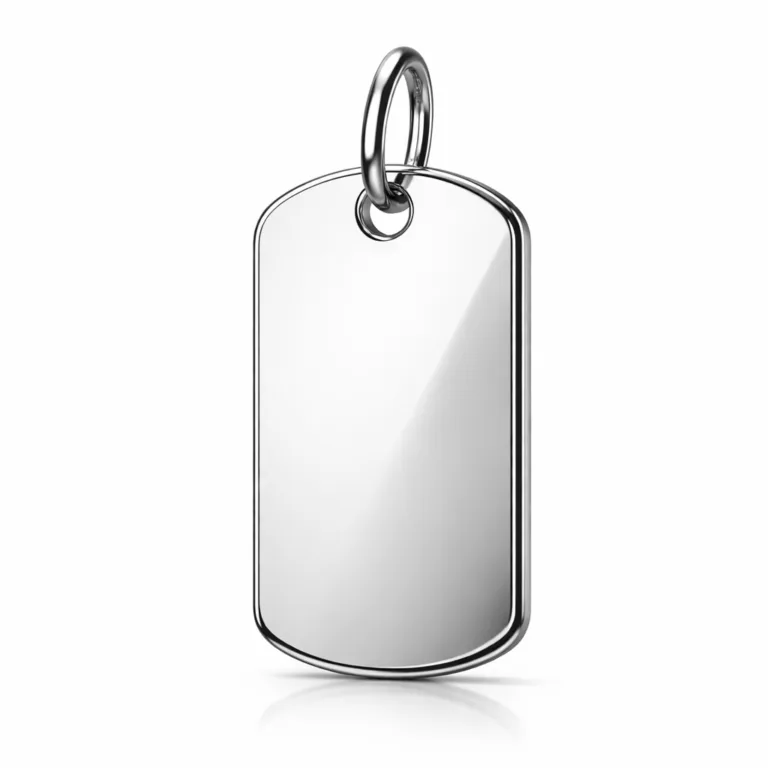
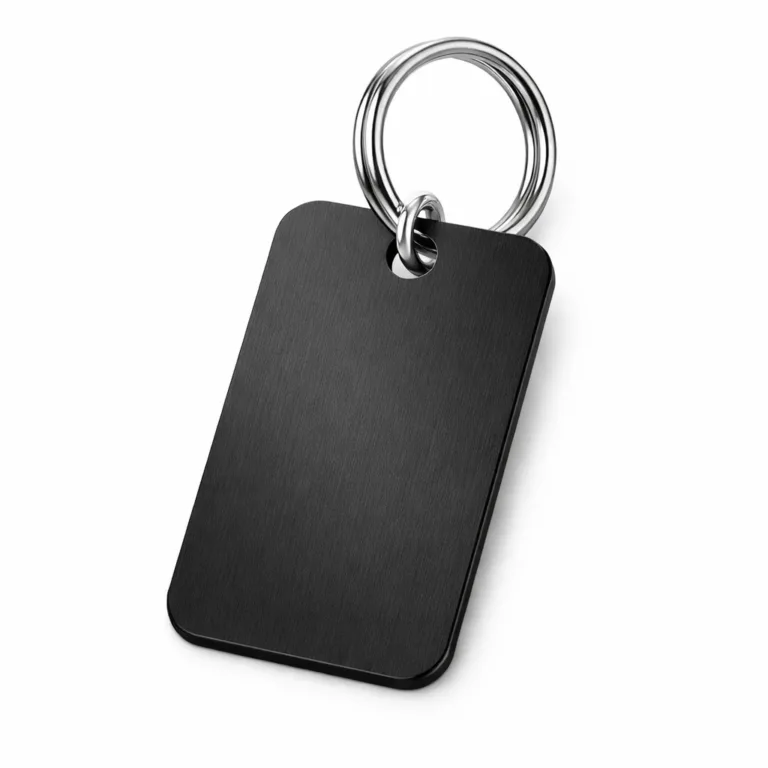
Metal key fobs usually communicate precision, structure, and durability. They are a strong fit for dealerships selling new vehicles, commercial fleets, performance cars, or brands that want a cleaner and more technical image. They also work well when logo clarity matters, especially for laser engraving, etched branding, or plated finishes.
In day-to-day use, metal is often easier to keep visually consistent across large volumes. If a dealership needs repeat ordering with stable dimensions, consistent color, and uniform logo placement, durable metal keychain tags usually provide better control over batch consistency than softer material formats.
When a hybrid design works better
Many dealerships do not need to choose only one material language. A leather strap with a metal badge or a metal frame with a leather insert can balance comfort and premium appearance. Hybrid designs are useful when buyers want the soft feel of leather but still need a crisp logo area, serial personalization, or a plated metal accent that strengthens showroom presentation.
| Material Option | Brand Signal | Best Use Cases | Watchouts |
|---|---|---|---|
| Leather | Warm, premium, personal | Luxury, boutique, heritage, gift-style delivery | Finish quality and wear pattern matter |
| Metal | Precise, durable, professional | New cars, commercial fleets, modern dealership image | Weight and scratch visibility should be checked |
| Leather + Metal | Balanced, upscale, branded | Premium mainstream dealerships, delivery packages | Assembly quality and attachment strength matter |
How custom key fobs support luxury perception, trust, and brand recall
Customers often remember the overall delivery feeling more than individual talking points from the sales process. A key fob cannot replace service quality, but it can reinforce it. Clean finishing, a well-centered logo, and a material that feels appropriate for the vehicle category can support the sense that the dealership pays attention to details.
This matters because customers read physical signals quickly. A polished, consistent accessory suggests consistency elsewhere. An uneven one can quietly suggest shortcuts. That is one reason we advise buyers to treat the key fob as part of the delivery system, not as leftover merchandise.
There is also a broader retail logic behind this. Tangible touchpoints still shape perception in physical buying environments, and MIT Sloan on how physical retail can elevate customer experience aligns with the idea that thoughtful in-person details help a brand feel more relevant and memorable. In dealership terms, a branded key fob is one of those physical details that continues working after the customer leaves the showroom.
Design elements that make a dealership key fob memorable
In many projects, the problem is not that the buyer chose the wrong category. The problem is that some production details were not clarified before sampling or bulk production. A memorable key fob usually depends on a few practical design decisions.
Logo treatment
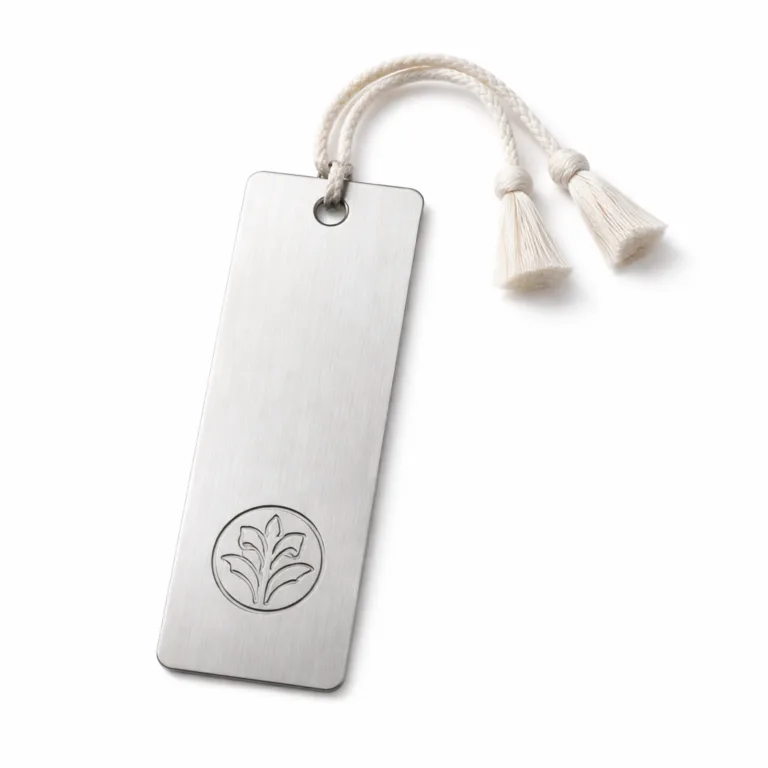
A large logo is not always a better logo. On smaller items, readability depends on line thickness, spacing, and contrast. Deep engraving can give a permanent look. Embossing can work well on leather when the brand identity suits a quieter finish. Printed color logos may look strong at first, but buyers should think about edge wear and long-term handling.
For projects that prioritize permanence over surface decoration, engraved keychain branding is often the safer direction because it reduces the risk of the mark looking worn after repeated contact with keys, pockets, and vehicle consoles.
Shape and silhouette
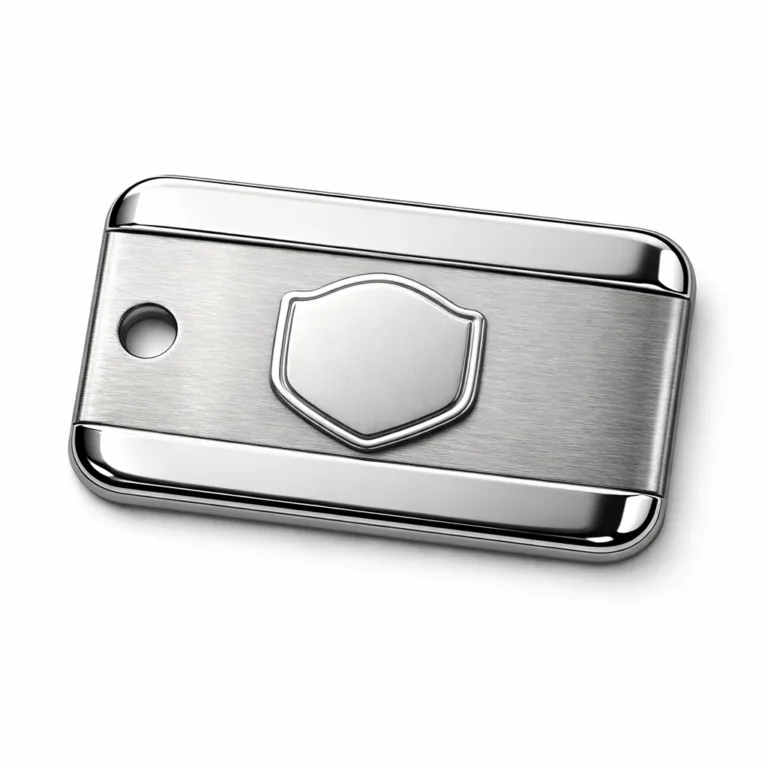
Round, rectangular, shield, tab, and custom contour shapes all communicate different things. Rounded forms tend to feel friendlier and more lifestyle-oriented. Rectangular or architectural shapes usually feel more modern and structured. Custom contours can be effective, but they should not compromise handling comfort or make hole placement too tight.
Color and finish
Finish choice affects both appearance and maintenance. Satin and matte surfaces usually hide fingerprints and minor scratches better than high-polish surfaces. Brushed metal can look professional without being overly reflective. Leather color should align with the dealership palette, but very light colors may show wear faster in daily use.
Weight and thickness
Customers often interpret heavier key fobs as more substantial, but too much weight becomes annoying in daily use. The right balance depends on whether the item is intended as a premium brand piece, a practical service tag, or a delivery gift accessory. This is why sample review should include not just visual approval, but pocket feel and hand feel.
Customization options that actually affect the result
Customization is where many buyers either create a strong branded item or accidentally add complexity without improving value. Let’s look at what actually affects the result.
Logos, colors, finishes, and shapes
Logo size should be tested against the actual product dimensions, not approved from artwork alone. Color matching should be discussed early if the dealership has strict brand guidelines. Finish options such as brushed, matte, polished, antique, plated, or coated surfaces should be evaluated based on use, not only showroom appearance.
Engraving, embossing, and plating
Engraving is practical when buyers want clean detail and stable brand visibility. Embossing suits leather when the goal is a more understated premium feel. Plating can create a stronger luxury signal, especially for special delivery packages, membership programs, or executive vehicle lines. For example, gold-plated keychain tags can work well for premium positioning, but only if the dealership brand language already supports a more formal or upscale presentation.
Attachment hardware
Split rings are common, but buyers should also review clasp style, ring gauge, and connection strength. A weak ring or poorly selected joint can cause failure even when the main body looks excellent. In hybrid leather-metal designs, the hardware connection area is one of the most important QC checkpoints.
Packaging and presentation
If the key fob is used at delivery, packaging matters more than many teams expect. A simple sleeve, backing card, or gift box can make the item feel intentional. If the key fob is primarily a service retention or loyalty item, simpler packaging may be enough. The right choice depends on how the dealership plans to use the product in the customer journey.
Practical considerations for daily use
Daily use should guide design more than concept sketches do. A dealership key fob has to work in pockets, bags, service counters, and vehicle interiors. Practical problems usually show up in four areas.
Durability
The product should withstand friction, occasional drops, and repeated handling. Leather edges should be sealed or finished properly. Metal edges should be smooth. Rings and joints should not feel loose after limited use. If the item is aimed at long retention, the logo method should be chosen with abrasion in mind.
Comfort
Sharp corners, excessive thickness, and awkward proportions reduce the chance that customers will keep using the item. A premium key fob should feel deliberate, not bulky.
Wear resistance
High-polish metal can look excellent at delivery but may show scratches quickly. Soft leather can feel luxurious but may mark easily. The right answer depends on whether the dealership wants a pristine formal look or a material that develops character over time.
Production consistency
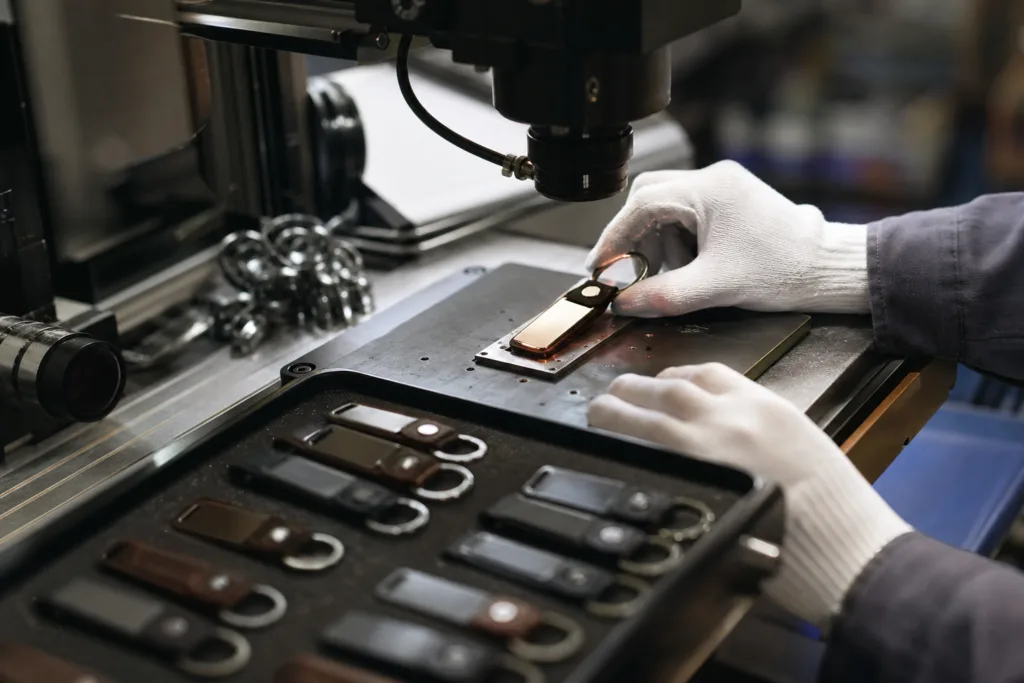
For multi-location groups or repeat campaigns, consistency matters. That includes logo alignment, hole position, plating tone, stitching color, and hardware matching. At UC Tag, this is why we push buyers to confirm drawings, finishes, and approval samples carefully before large production, especially when multiple variants are involved.
How key fobs influence customer experience at delivery and beyond
The handoff moment is emotional. Customers are receiving access, ownership, and the final symbol of the purchase. If the dealership presents the keys in a clean, branded, durable format, the experience usually feels more complete.
That impact does not end on delivery day. The key fob continues to appear during service visits, valet use, home storage, and everyday driving. Each time, it can reinforce the dealership’s identity. This is especially useful for dealerships trying to strengthen retention without relying only on email or SMS campaigns.
Well-designed key fobs also help create internal consistency. Sales, service, and aftersales teams all interact with the same branded object. That helps the dealership feel more coordinated to the customer. When branding is consistent across touchpoints, trust usually becomes easier to maintain.
Using branded key fobs to support retention and repeat sales
Retention is often built through repeated reminders that the dealership experience was worth returning to. A useful branded key fob becomes one of those reminders. It stays visible without demanding attention.
For repeat sales and referrals, this matters because the product often outlasts brochures, paper folders, and temporary promotional materials. If the item looks good after months of use, it keeps the dealership present in the customer’s routine. If it wears poorly, the opposite can happen.
Some dealerships also use variant styles for customer tiers, loyalty gifts, service anniversaries, or premium delivery programs. In those cases, the product should be planned like a small branded system rather than a one-off order. Materials, color hierarchy, and logo method should all remain coherent across tiers.
How to choose the right key fob style for your dealership brand positioning
Start with the kind of impression you want to create. Then work backward into materials and manufacturing details.
| Dealership Positioning | Recommended Style Direction | Why It Fits |
|---|---|---|
| Luxury or premium | Leather with engraved metal badge or plated metal | Balances warmth, prestige, and strong logo presentation |
| Modern mainstream | Brushed metal or clean hybrid style | Feels professional, durable, and broadly appealing |
| Commercial or fleet | Simple metal design with clear branding | Prioritizes durability, consistency, and practicality |
| Boutique or heritage | Embossed leather with restrained metal accent | Supports a more personal and lifestyle-led identity |
If you are managing a custom program across locations or vehicle categories, early communication with the factory helps avoid avoidable redesigns. Buyers who need tailored structures, packaging, logo methods, and repeatable specifications usually benefit from discussing OEM keychain tag production before finalizing artwork, because structure decisions often affect cost, lead time, and consistency more than expected.
Ordering checklist: artwork, quantities, lead times, and quality control
Before approving samples or placing bulk orders, confirm the following points:
- Final logo files in usable vector format
- Correct dimensions and thickness
- Material specification for leather, metal, or hybrid construction
- Finish choice, plating tone, or color matching expectations
- Engraving, embossing, printing, or combination marking method
- Attachment hardware type and ring size
- Packaging requirements for delivery or retail presentation
- MOQ expectations for each design variant
- Lead time for sample approval and bulk production
- QC checkpoints for logo position, surface finish, hardware strength, and edge quality
This detail may look small, but it can create problems later if it is not confirmed early. For example, a logo that looks balanced on screen may become too fine for embossing. A plating finish approved under one light source may appear warmer or cooler in production. A leather color may shift slightly if material lots are not clarified. These are normal manufacturing issues, but they are easier to manage before bulk production than after it.
Common mistakes to avoid when customizing dealership key fobs
One common mistake is choosing a style based only on appearance photos. Buyers should request a real sample whenever the tactile impression matters, especially for leather texture, metal weight, and finish quality.
Another mistake is overcomplicating the design. Too many color zones, very small logo details, or overly intricate shapes can reduce readability and increase production risk without improving brand impact.
A third issue is forgetting the daily-use environment. A high-polish surface may look impressive in a presentation box but scratch too easily for the intended customer base. A soft leather finish may not be the right choice for a high-volume mainstream dealership where practical durability matters more than subtle texture.
Finally, some buyers treat the key fob as a generic giveaway instead of a branded ownership touchpoint. That usually leads to weaker material decisions and less consistent branding. If the dealership wants the item to support conversion, delivery experience, and retention, it should be specified with the same care given to other brand assets.
Conclusion
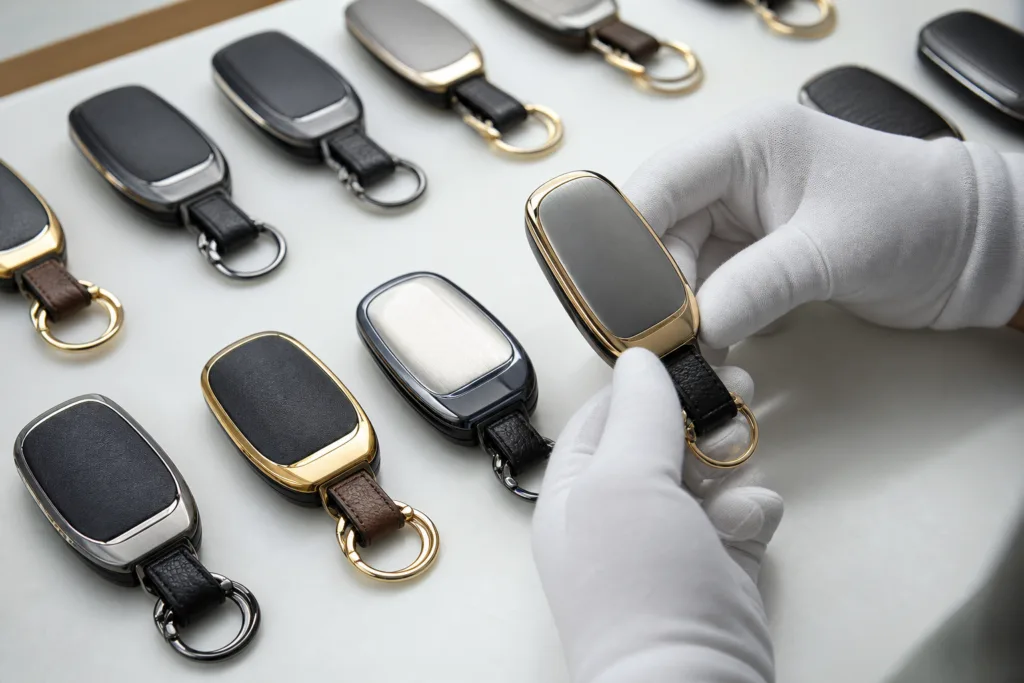
Key Fobs for Car Dealerships work best when design, material, and brand position are aligned. Leather can create warmth and premium character. Metal can create structure, clarity, and durability. Hybrid formats can balance both. What matters most is choosing a format that fits the dealership’s customer experience, vehicle category, and long-term brand image rather than choosing only by initial cost or appearance. When the details are confirmed early and the product is built for real use, a branded key fob becomes more than an accessory. It becomes a durable reminder of the dealership behind the keys.
Frequently Asked Questions About Car Dealership Key Fobs
What material is better for dealership key fobs, leather or metal?
The better material depends on your brand position and how the key fob will be used. Leather usually feels warmer and more premium for customer handoff, while metal usually offers stronger durability, sharper logo definition, and easier batch consistency. Many dealerships choose a hybrid design when they want comfort and a more polished logo area at the same time.
What logo method lasts longer on a dealership key fob?
For long-term use, engraved or embossed branding usually holds up better than surface-only decorative methods because the mark is built into the structure rather than sitting only on top of it. The best option depends on the material. Engraving is often the safer choice for metal, while embossing can work well for leather if the logo lines are not too fine.
How many custom key fobs should a dealership order at one time?
The right quantity depends on your delivery volume, model mix, and whether you want one standard design or multiple versions for different customer tiers. In practice, buyers should compare MOQ, storage planning, and the cost advantage of larger runs. It is usually better to order enough to maintain consistency, but not so many that you lock yourself into a design before it has been tested in real use.
Can dealership key fobs include individual numbering or QR codes?
Yes, custom key fobs can be produced with individual numbering, sequential codes, or QR elements if the design and production method support them. The important part is confirming data format, placement, and readability early. If variable data is involved, buyers should also review sample logic and data handling procedures before mass production to reduce mismatch risk.
What should be checked before approving a sample?
Sample approval should cover more than logo appearance. Check material feel, color accuracy, plating tone, edge quality, ring strength, hole position, overall weight, and how the product feels in the hand and pocket. If the item is meant for premium delivery presentation, also review the packaging and make sure the full handoff experience matches the dealership image.
How long does custom production usually take for dealership key fobs?
Lead time depends on the material, complexity, logo method, quantity, and whether new tooling or special packaging is required. Simple repeat orders usually move faster than new custom developments. The practical approach is to confirm artwork, sample timing, approval steps, and bulk production schedule early so the order supports vehicle delivery plans without last-minute pressure.