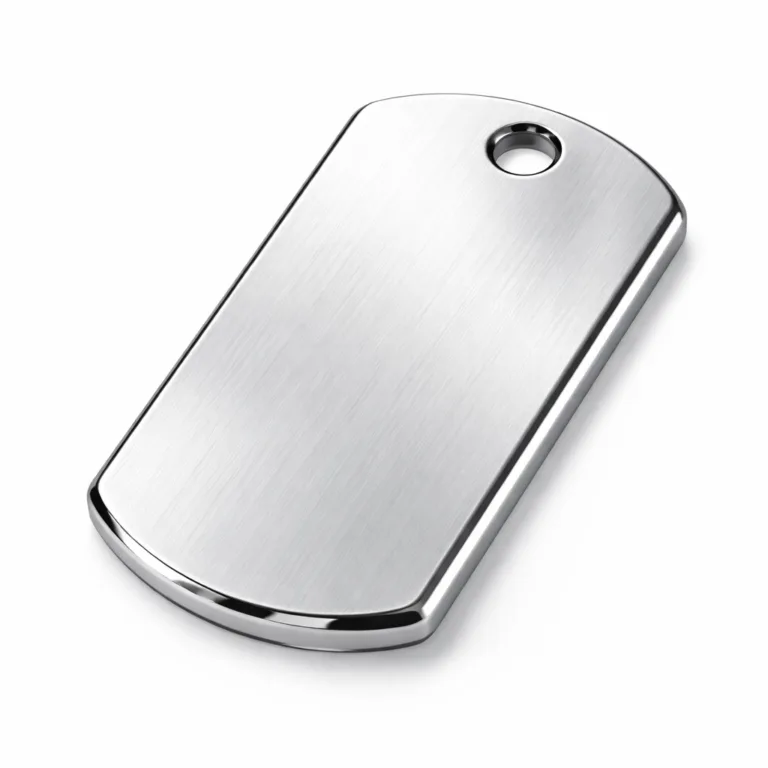
For campaign planners, the choice between ribbons and metal tags is not just a design question. It affects how long the message stays visible, how supporters wear it, whether the item becomes a keepsake, and how well it supports fundraising or awareness goals. When we evaluate metal tags for awareness campaigns, we look at the symbol, the marking method, the attachment style, and whether the item needs to work for a single event or for months of ongoing exposure.
For projects that need a custom symbol with a clear production path, our custom metal tag manufacturing solutions help buyers connect the campaign story to real manufacturing choices such as material, finish, hole placement, data handling, and sample approval before bulk production starts.
What Awareness Campaign Merchandise Needs to Achieve
Awareness merchandise has a simple job on paper, but a demanding one in practice. It needs to catch attention fast, communicate the cause without a long explanation, and make supporters feel like they are part of something meaningful. At the same time, it has to work within budget, survive handling, and fit the tone of the organization that is distributing it. A nonprofit fundraiser, a corporate social responsibility team, and a community health campaign may all be trying to spread awareness, but they do not always need the same format.
That is why the best merchandise is not always the most decorative piece or the lowest-cost item. The better question is whether the item still works after the first moment of handoff. If supporters wear it once and then store it away, the message stops early. If they keep it visible, show it at events, or share it in photos, the symbol keeps working long after the original outreach moment.
Why Ribbons Became a Strong Symbol for Social Causes
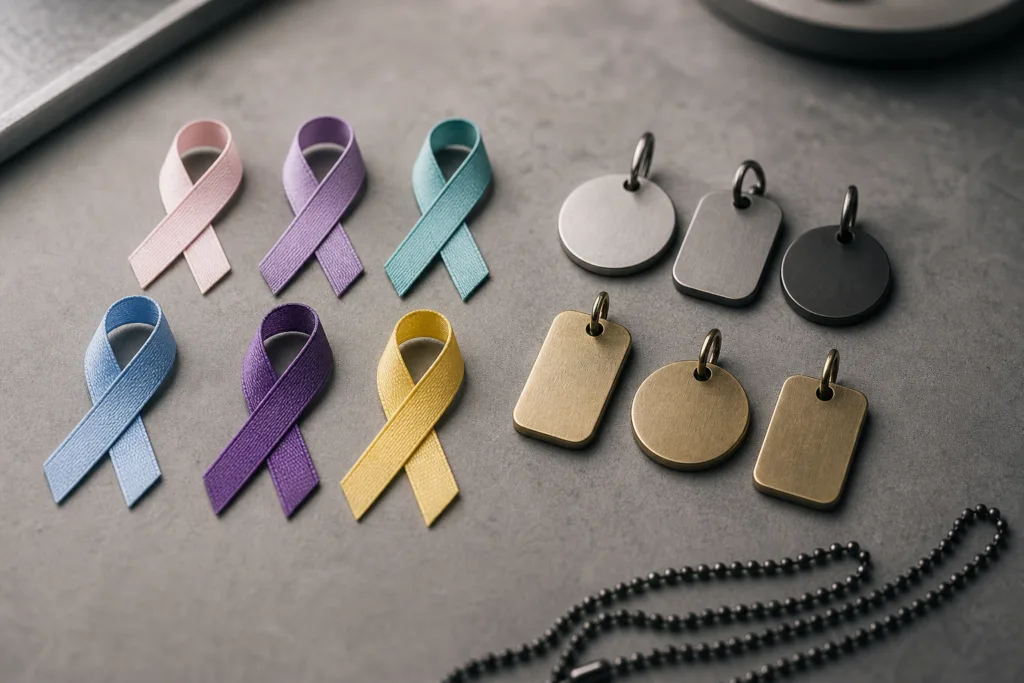
Ribbons became popular because they are simple to understand. A ribbon is immediate, familiar, and easy to associate with a cause even when a person only sees it for a second. That matters in public campaigns where the audience may be walking past a booth, scrolling through a photo, or seeing the item on someone else’s clothing. The ribbon shape also carries a sense of unity, remembrance, and shared support, which is why it remains a strong format for many awareness programs.
Ribbons also fit distribution models that depend on scale. They are usually easier to hand out quickly, and they are often comfortable for short-term wear. For events where the goal is to reach many people with one clear symbol, ribbons still make sense. The trade-off is that fabric-like materials can crease, fray, stain, fade, or lose shape after repeated use. That means the message may be powerful at the event but less durable afterward.
What Durable Metal Tags Bring to an Awareness Campaign
Durable metal tags change the role of the item. Instead of acting only as a symbol for one day, the tag can become a wearable reminder, a donor token, a sponsor recognition piece, or a keepsake that supporters keep on a bag, lanyard, jacket, or key ring. This gives the campaign more exposure over time, especially when the audience is expected to interact with the item more than once. In many cases, the tag also feels more structured and more intentional than a temporary giveaway.
When a campaign team wants to check the look and feel before placing a larger order, we often start with sample options for custom metal tags so the team can review size, legibility, attachment comfort, and finish under real lighting. That step is useful when the item needs to balance emotional symbolism with practical durability, because a small change in shape, contrast, or edge finish can affect how people actually use it.
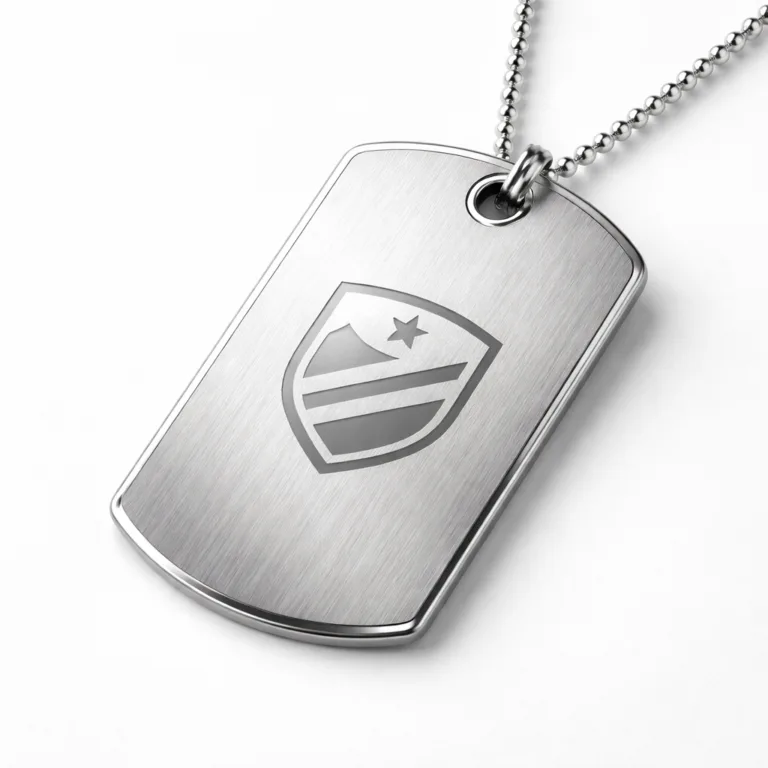
Metal tags also help when the campaign needs a stronger connection to a brand system. A metal surface can carry a logo, a campaign name, a date, a short line of text, or a simple icon in a controlled and repeatable way. That gives the planner more room to design for memory, not just recognition.
Ribbons vs. Metal Tags: Emotional Appeal, Memorability, and Public Recognition
Both formats can work well, but they work in different ways. Ribbons tend to win on instant symbol recognition. Metal tags tend to win on physical presence, long-term wear, and perceived value. The right choice depends on whether the campaign wants the symbol to be light and universal, or whether it wants the object itself to carry more of the story.
| Factor | Ribbons | Durable metal tags | What It Means For Campaign Planners |
|---|---|---|---|
| Emotional signal | Immediate and familiar | More tactile and keepsake-like | Choose the format that matches the tone of the cause |
| Public recognition | Very fast to understand | Depends on shape, finish, and artwork | Ribbons work well when the symbol itself is the message |
| Message space | Limited | More room for branding and short calls to action | Metal helps when the campaign needs more than a color cue |
| Reuse | Often short-term | Often repeated over time | Reuse can improve long-term exposure value |
| Perceived value | Simple and accessible | Usually feels more durable and premium | Useful for donor recognition or sponsor-facing programs |
In practice, this is not a battle between good and bad choices. It is a decision about what the campaign needs to communicate first. If the message must be recognized instantly, the ribbon has an advantage. If the object should remain with the supporter and keep signaling the cause later, the metal tag usually offers more staying power.
Brand Visibility and Message Space
Brand visibility is where many awareness projects start to separate. A ribbon can carry a color and a simple awareness message very well, but it is not the best format when the team wants to show a logo, a sponsor mark, a campaign hashtag, or a short call to action. Metal tags handle that problem more comfortably because the face area is defined and controlled during production. That makes layout planning more important, but it also creates a more reliable result.
For example, if the campaign needs to communicate a cause name, a donor tier, and a web address, the metal tag can be designed with the right balance of text and blank space. The point is not to overload the surface. The point is to give the message enough room to stay readable after wear, movement, and repeated handling. For many buyers, that is where the value becomes obvious: the tag can carry more meaning without depending on a large printed surface.
Durability, Reuse, and Long-Term Exposure Value
Durability is one of the strongest reasons buyers switch from ribbons to metal tags. A ribbon is often intended for short-term use, while a metal tag can stay visible through repeated events, travel, and everyday wear. That matters when the campaign wants exposure beyond the launch date. If a supporter uses the item at multiple gatherings or keeps it attached to a bag or jacket, the message continues to circulate without extra distribution cost.
For buyers who want to think beyond unit price, our durability and ROI comparison for metal items is a useful way to frame the decision: if the item is worn more than once, the cost per impression can become much more attractive than the initial price suggests. In other words, a higher upfront spend does not automatically mean a weaker campaign outcome. The real question is how long the item keeps working for the cause.
This is especially relevant for annual awareness programs, donor recognition, volunteer appreciation, and sponsor-facing kits. When the same visual token can be reused, it becomes easier to justify the production decision as part of a broader engagement plan rather than as a one-time giveaway.
Recycling and Sustainability Considerations
Sustainability is not just about using a material that sounds responsible. It is about what happens after the event. If your campaign uses textile ribbons, it helps to think about disposal, reuse, and the end-of-life path before ordering in volume. The EPA’s recycling and reuse of ribbon materials is a good reminder that textile items should not be treated as automatically circular just because they are soft or lightweight. Some ribbon-based items can be reused, but many will still end up as short-life promotional pieces.
Metal tags are not perfect, but they often support a different sustainability logic. They can be designed for repeated wear, given a longer life, and in some cases repurposed after the initial campaign. That does not remove the need to think about material selection and production waste, but it does mean a reusable tag can sometimes align better with a campaign that wants to reduce replacement frequency and stretch the value of each unit.
Cost-Effectiveness: Initial Spend, Lifespan, and Campaign ROI
Cost comparisons can be misleading if they focus only on the first invoice. Ribbons usually look cheaper at the start, which is useful for large-scale distribution or short campaigns with limited budgets. Metal tags usually cost more to produce, especially when the design includes custom shaping, variable data, or a more involved finish. But cost-effectiveness is not only about the first purchase. It is about whether the item still carries the message after the event ends.
That is why campaign ROI should be measured in exposure, reuse, and supporter retention as well as in quantity. A ribbon may reach more people on day one, while a metal tag may keep delivering impressions over time. The right answer depends on the campaign’s goal. If the objective is to make a large symbolic gesture fast, a ribbon may win. If the objective is to keep the cause visible in daily life, metal tags often create better long-term value.
How Supporters Interact With Each Format
Supporter interaction is often overlooked, but it changes how successful a campaign feels. A ribbon is easy to distribute, easy to understand, and easy to wear for an event. That makes it useful for large gatherings and public moments where the main goal is to create a visible wave of support. Metal tags behave differently. They invite more touch, more retention, and more repeated use. That can make them feel more like a gift or token than a simple handout.
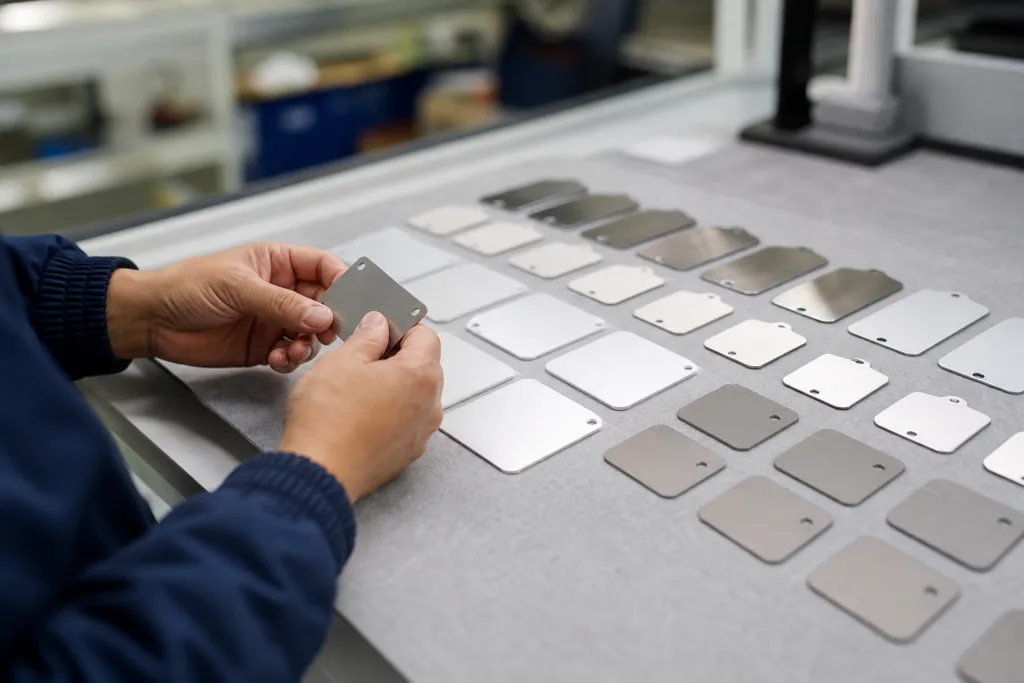
For awareness programs that depend on sharing, keeping, and showing support over time, this difference matters. A supporter who wears a metal tag on a bag or jacket may become an ongoing ambassador for the campaign. A supporter who receives a ribbon may still feel connected, but the item is less likely to keep appearing in daily life. The format should match the level of engagement the team wants after the event.
Metal Tags for Awareness Campaigns: Design Options That Matter
From our production point of view, the design process starts with the use case, not with the artwork alone. At UC Tag, we usually ask whether the item will be worn on clothing, attached to a bag, used in a donor kit, or handed out at a public event. That answer affects the material, edge treatment, marking method, and attachment plan. A tag that looks good on screen may still fail if it scratches easily, feels awkward to wear, or hides the message when it moves.
| Design Choice | Common Options | Why It Matters |
|---|---|---|
| Material | Aluminum, stainless steel, brass, anodized aluminum | Sets the weight, look, and durability profile |
| Finish | Brushed, polished, matte, colored, anodized | Affects contrast, perceived quality, and glare |
| Shape | Rectangle, circle, custom outline, icon shape | Changes brand recognition and wear comfort |
| Attachment | Hole punching, wire, chain, screw, adhesive backing, pin-style options | Determines how the tag is worn and where it can be used |
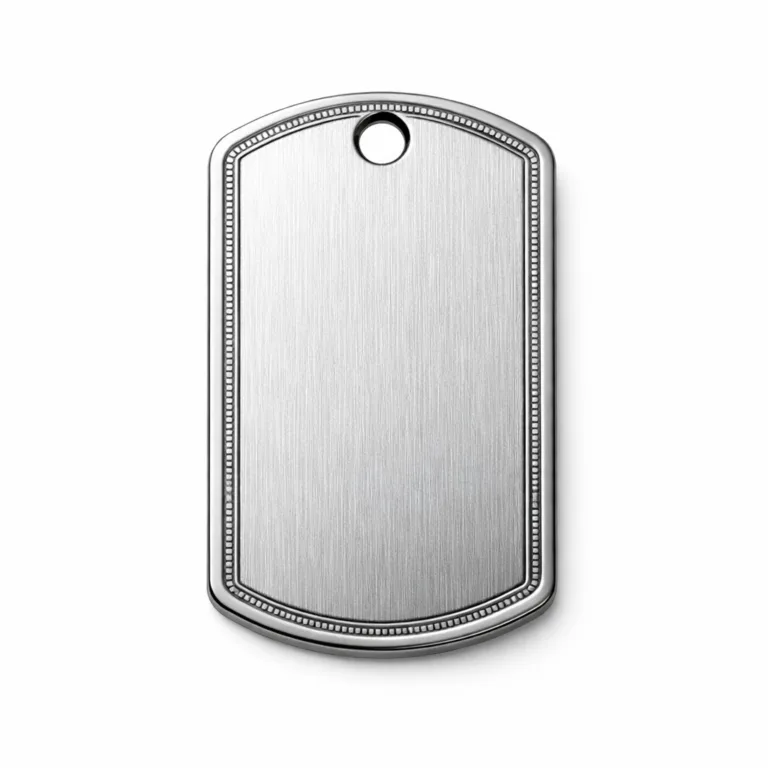
Material choice should follow the setting. Aluminum is often a practical choice when the campaign wants a light tag with a clean look and broad finishing options. Stainless steel is more fitting when the tag needs a tougher, more substantial feel. Brass brings a warmer, more classic tone that can work well for donor honors or premium supporter pieces. Anodized aluminum is useful when color is part of the campaign identity and the team wants a controlled surface for branding.
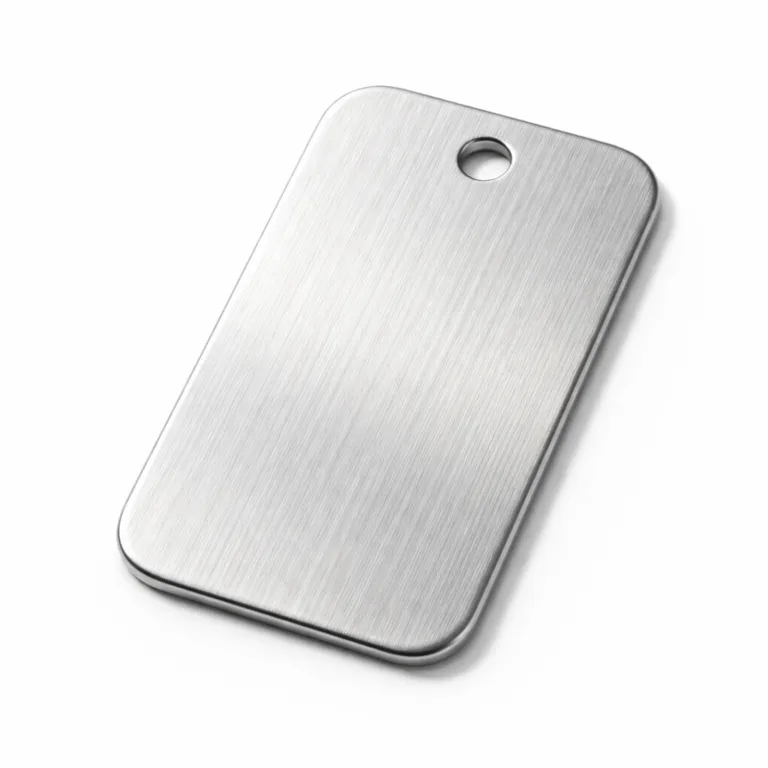
Attachment planning should be just as deliberate as visual design. A tag that is meant to be pinned to clothing needs a different edge and backing approach than a tag that will hang from a bag or sit on packaging. Rounded corners, clean hole placement, and a comfortable touch point matter because supporters will notice them even if they never mention them. That is a small detail, but it can affect whether the item gets worn again.
Material, Finish, and Shape Choices
If the campaign is broad and public-facing, a simple shape with strong contrast often works better than a complex outline. If the campaign is donor-facing or sponsor-facing, a more premium finish may make sense because the tag is functioning as a recognition piece. The right decision is not always the most decorative one. It is the one that gives the message enough clarity without making the production process fragile or expensive.
Attachment Methods and Comfort
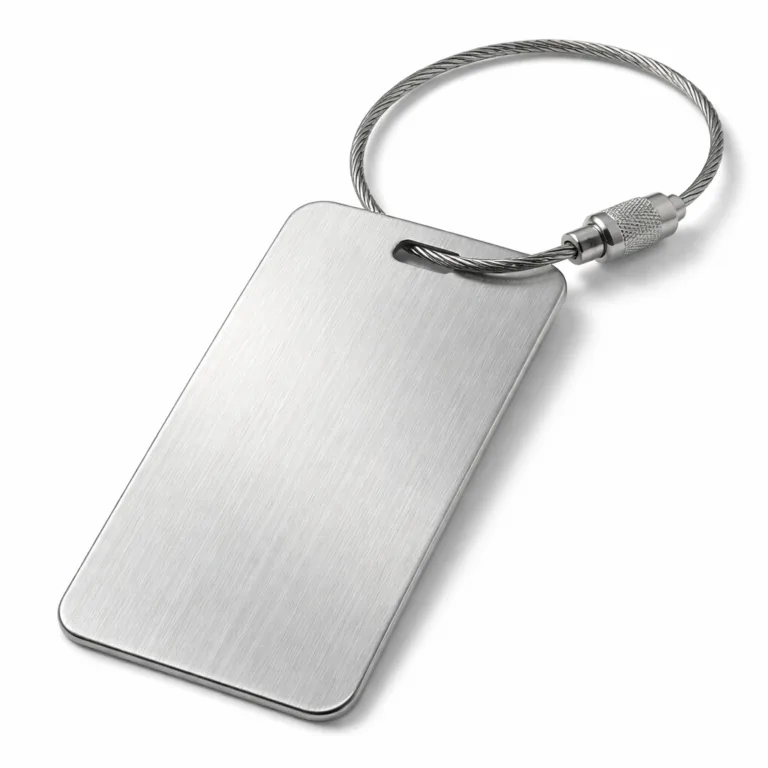
Attachment is a real buyer concern because it affects wearability. A tag that is uncomfortable will stay in a drawer, while a tag that feels natural will stay in circulation. Hole punching with wire, chain, rivet, or screw attachment is useful when the tag needs to hang from something. Adhesive backing can help on flat surfaces or packaging. For apparel, a pin-style attachment is often more familiar. The key is to match the attachment to the actual support item, not just the concept artwork.
Using Metal Tags for QR Codes, Serial IDs, or Donation and Awareness Links
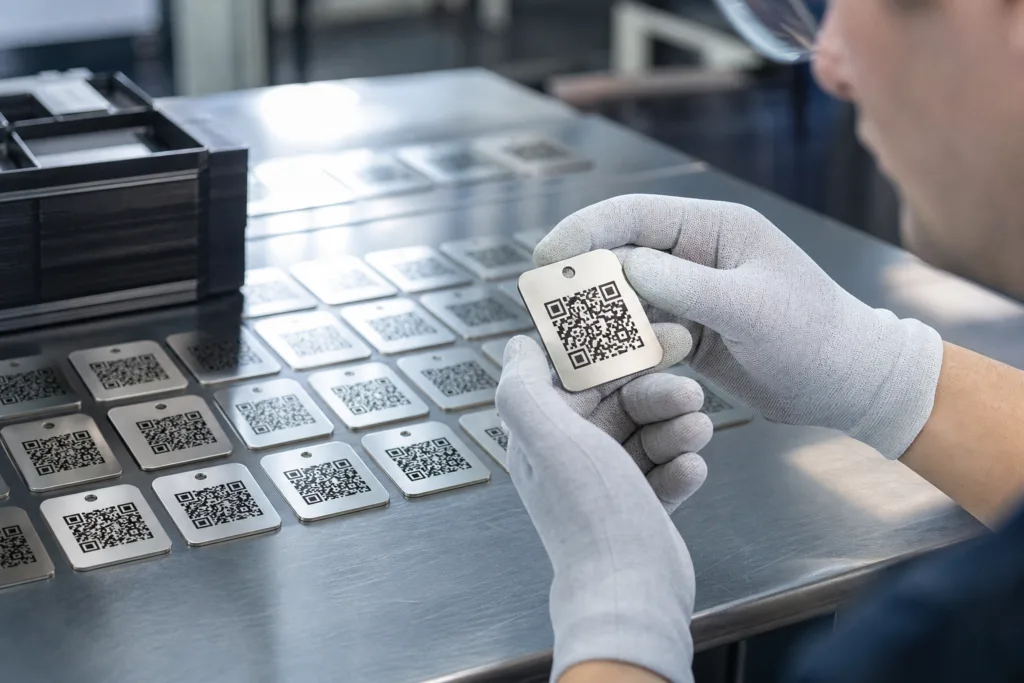
Metal tags can do more than display a logo or cause name. They can also connect a physical campaign item to a digital action through a QR code, a short serial ID, or a simple donation path. That is useful when the item should lead supporters to a signup page, volunteer form, information hub, or campaign landing page. The challenge is not whether a QR code can be added. The challenge is whether it can be scanned reliably after production and after real-world handling.
When a campaign depends on scannability, the layout has to respect the basics. Keep the code clear, keep the surrounding space open, and test the destination before bulk production. The U.S. Department of Energy’s QR code best practices for awareness tags are helpful here because they reinforce the practical side of the design: a QR code is only useful if people can scan it quickly and reach a stable destination. That means the artwork, the tag size, and the print or engraving method all need to work together.
If the campaign also needs variable data, event tracking, or supporter-specific numbering, OEM and ODM customization choices help define whether the tag should be built as a standard format with data variation or as a fully custom shape. This is where good file handling matters. A clean spreadsheet, a checked proof, and a clear approval flow reduce the risk of mismatched numbering, duplicate records, or unreadable codes during bulk production.
When Ribbons Are the Better Choice
Ribbons are usually the better choice when the campaign needs fast symbol recognition, a low entry cost, and broad distribution. They work well for awareness walks, quick handouts, mass events, and moments when the symbol itself matters more than the object’s long-term life. If the campaign is centered on a single cause color and the team needs a simple, emotionally familiar item, the ribbon still does the job well.
Ribbons also make sense when the program is temporary and there is no strong need for reuse, scannability, or sponsor-level branding. In those cases, a more durable item may add cost without enough extra value. The goal is to match the format to the event structure, not to make every campaign item feel permanent.
When Durable Metal Tags Are the Better Choice
Durable metal tags are the better choice when the campaign should last beyond the launch day, when supporter engagement matters after the event, or when the item needs to carry more than a symbol. They work well for recurring donor programs, volunteer recognition, sponsor gifts, branded awareness kits, and outreach programs that want repeated exposure through everyday wear. They are also useful when the campaign needs to link to a digital action through a QR code or unique ID.
Metal tags are often the stronger option when the organization wants the giveaway to feel more like a badge, token, or keepsake than a short-lived event accessory. If the campaign story benefits from permanence and physical presence, the tag format usually supports it better than a ribbon.
Common Ordering Mistakes and How to Avoid Them
- Using too much text: keep the main message short so the tag stays readable at real size.
- Skipping sample approval: always check the sample for finish, contrast, edge feel, and attachment comfort before bulk production.
- Choosing the wrong attachment method: match the hardware to the actual use case, whether it is clothing, a bag, packaging, or a donor kit.
- Ignoring artwork cleanup: vector files, spacing, and data setup matter when the design includes small text, QR codes, or serial numbering.
- Picking a finish without checking contrast: a surface that looks good in a mockup may hide the message after production.
- Overlooking packaging: if the item will be distributed in volume, packaging and sorting can affect speed, quality, and supporter experience.
Decision Checklist: Choosing the Right Format for Your Audience and Campaign Message
- Is the campaign one-day only, or should the item stay visible for a long time?
- Does the message depend on a strong symbolic color cue, or does it need more branding space?
- Will supporters wear the item often enough for durability to matter?
- Does the campaign need a QR code, serial ID, or other digital connection?
- Do you need a premium donor piece, a broad handout, or both?
- Have you confirmed the sample, attachment method, artwork, and packaging before bulk ordering?
Conclusion: Matching the Symbol to the Goal
Ribbons and metal tags are not competing in the same way, because they are often solving different problems. Ribbons are strong when the goal is fast recognition, broad awareness, and simple symbolism. Metal tags are stronger when the goal is repeat exposure, more brand space, better durability, or a keepsake that supporters keep using after the event. For metal tags for awareness campaigns, the best answer is the one that fits the real life of the item, the audience’s behavior, and the message the organization wants to keep visible.
When the campaign is planned well, the format does more than decorate an event. It helps the supporter carry the message forward. That is the real measure of success.
FAQs
What is the main advantage of metal tags for awareness campaigns?
The main advantage is longer visibility. A ribbon signals the cause quickly, but a metal tag can stay in use after the event, carry more branding, and keep working as a reminder on a bag, jacket, or lanyard.
Are ribbons or metal tags better for one-day events?
For a one-day event, ribbons are often the easier choice when the goal is fast distribution and immediate cause recognition. Metal tags make more sense when the item should stay in circulation after the event or become a keepsake.
Can metal tags include QR codes or serial numbers?
Yes. Metal tags can carry QR codes, serial IDs, and simple tracking marks, but the artwork needs proper contrast, spacing, and proofing. We always recommend scan testing at real size before bulk production.
Which materials work best for outdoor awareness tags?
Aluminum is often the practical starting point because it is light and works well for many campaign formats. Stainless steel and brass are better when the campaign needs a heavier, more premium feel or a different visual tone.
How should supporters wear or attach the tag?
Choose the attachment around the actual use case. Pins work for apparel, holes with rings or chains work well for bags or event kits, and adhesive backing is useful when the tag needs to stay on packaging or a flat surface.
What should we confirm before ordering samples and bulk production?
Confirm the artwork, size, finish, attachment method, data file, and packaging plan before samples are approved. That is the easiest way to avoid delays, unreadable text, and rework during bulk production.
Related Reading