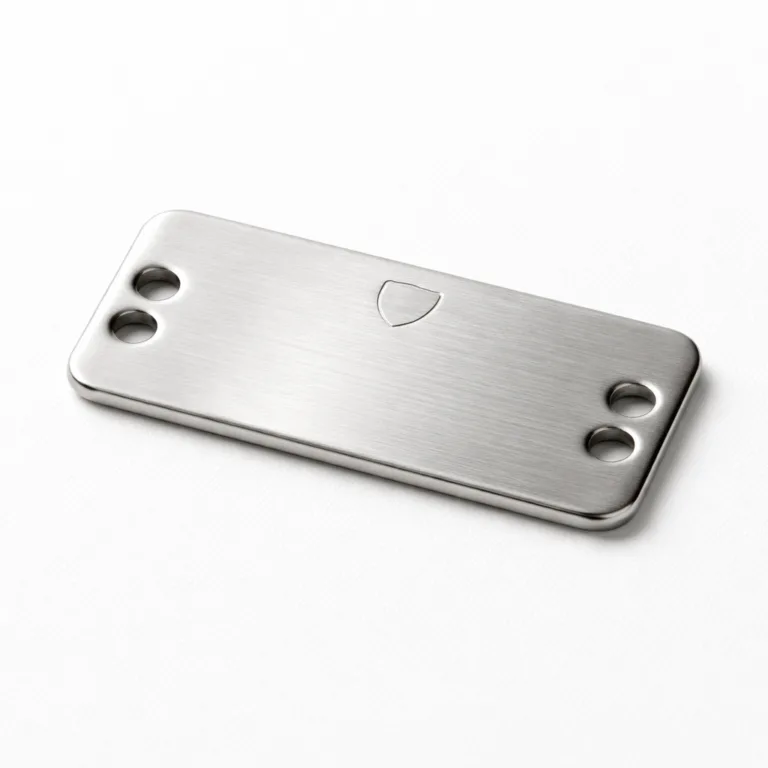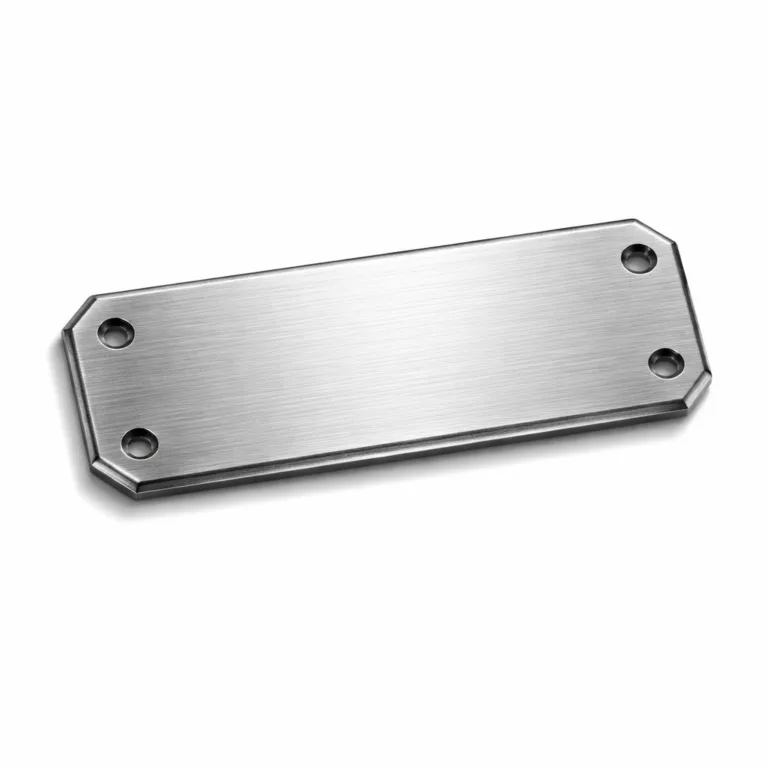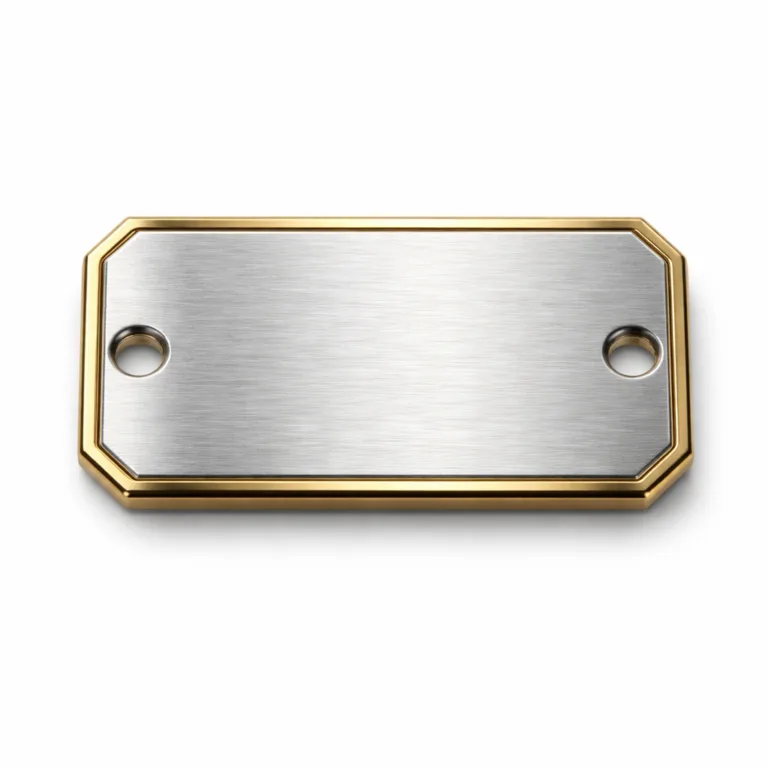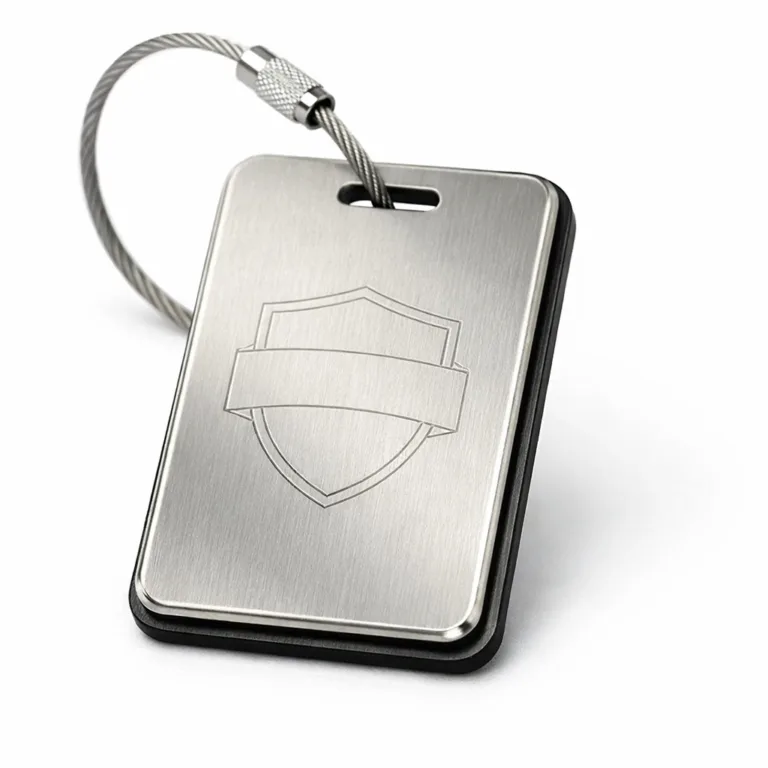
When buyers ask whether metal tags can survive 1000°F, the short answer is yes, but only when the full specification is built for heat instead of just looking durable at room temperature. In high-temperature environments, a tag is not only a piece of identification. It is a working component tied to traceability, maintenance, safety, and asset control. If the material softens, the finish burns off, the marking loses contrast, or the attachment method fails first, the tag has effectively failed even if the base metal is still physically present.
If your project is still in the decision stage, our industrial metal tag selection guidance is a useful starting point because high-heat applications usually require more than a standard part number and material choice. We often help buyers confirm metal type, thickness, engraving or stamping method, hole position, serial data format, attachment constraints, and sample validation before bulk production, especially when the tags will be exposed to furnaces, engine compartments, process lines, or other extreme service conditions.
Why 1000°F heat resistance matters for industrial identification
A 1000°F requirement changes the tag selection process completely. Many standard identification products perform well in outdoor conditions, wet areas, or abrasive handling, but sustained or repeated heat exposure introduces different failure modes. The issue is not just melting. It can also involve oxidation, scaling, color loss, distortion, work hardening, embrittlement in surrounding hardware, or a drop in readability after thermal cycling.
For industrial buyers, the practical question is this: what must still be readable and still be attached after exposure? A maintenance plate inside a heat-treated production cell may need simple text and a serial number. A component ID tag in a power system may need a more permanent machine-readable code. A safety notice on a hot enclosure may need contrast more than fine detail. These are different jobs, and the correct tag design is different in each case.
In our production work, the best high-heat results usually come from early clarification of four things: actual temperature range, exposure duration, atmosphere around the tag, and how the tag will be mounted. Buyers sometimes specify only the peak temperature, but a short spike and continuous service at that temperature are not the same problem.
Where high-heat metal tags are used
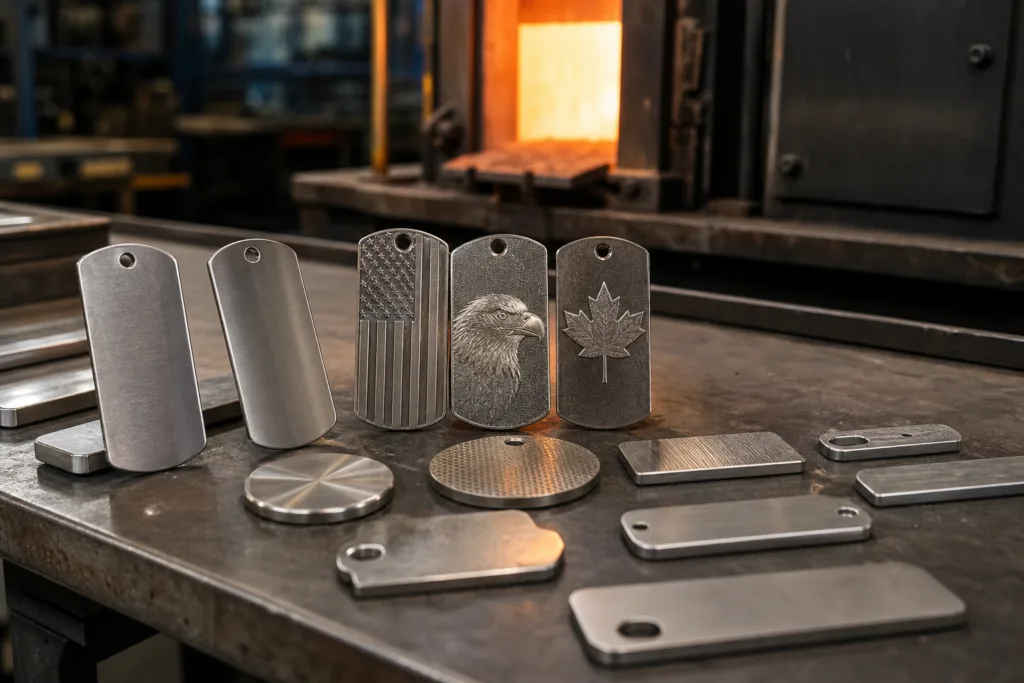
High-heat tags show up in more industries than many buyers expect. Some are obvious, such as furnaces and boilers, while others are more localized, such as hot zones near exhaust systems, burners, molds, or process vessels.
- Heat treatment equipment and furnace baskets
- Power generation equipment and turbines
- Aerospace ground systems and engine-adjacent components
- Refining, petrochemical, and process piping
- Foundry tooling, molds, and casting operations
- Kilns, burners, ovens, and drying lines
- Heavy machinery with hot engine compartments
- Manufacturing lines where washdown, abrasion, and heat happen together
Some of these applications also combine corrosive exposure with heat. That detail matters. A tag that survives dry heat may still fail in a hot chemical environment if the material or marking method is not chosen correctly. In those mixed conditions, buyers should also consider how industrial tags for harsh chemical exposure are specified, because temperature and chemical attack often work together rather than separately.
What makes metal tags perform in extreme heat
For buyers, the key is not only the metal name. Performance above 1000°F depends on the combination of base metal, marking depth, surface condition, tag thickness, edge quality, and attachment design. Let’s look at what actually affects the result.
Base metal stability
The metal has to maintain shape and surface integrity under heat. Some metals oxidize faster, some lose appearance, and some remain structurally acceptable but become poor choices for long-term readability.
Marking permanence
Printed layers, paint fills, and decorative finishes may degrade before the tag body does. For high-heat tags, the readable information often needs to be created by material displacement or material removal rather than an added surface layer.
Attachment survivability
This detail may look small, but it can create problems later if it is not confirmed early. Buyers sometimes focus on the plate and overlook the rivet, wire, or screw. In many failures, the tag does not disappear because the metal is wrong. It disappears because the mounting method loosens, warps, or degrades under expansion and vibration.
Readability after oxidation and scale
At elevated temperatures, even a durable metal can darken or scale. That means shallow marks, light contrast, or dense code patterns may become difficult to scan or inspect after exposure.
Best material options for high-heat tags
There is no single universal metal for every 1000°F application. The right choice depends on temperature profile, environment, expected life, and data density.
| Material | Heat Suitability Around 1000°F | Main Advantages | Main Limits | Common Use Logic |
|---|---|---|---|---|
| Stainless steel | Strong candidate | Good structural stability, corrosion resistance, durable marking base | May lose cosmetic finish or surface contrast with heat | General industrial and process equipment tags |
| Aluminum | Usually poor choice at this level | Lightweight, economical, easy to mark | Too temperature-limited for 1000°F service | Better for moderate heat, not extreme heat zones |
| Brass | Limited for sustained 1000°F | Good appearance, workable material | Not ideal for severe high-temperature duty | More suitable for decorative or moderate-heat identification |
| Specialty high-temperature alloys | Possible where required | Better elevated-temperature performance in specialized cases | Higher cost, longer sourcing cycle, application-specific review needed | Critical aerospace, energy, or engineered systems |
For most industrial identification projects near or above 1000°F, stainless steel is the default material buyers should examine first. It gives a practical balance of durability, manufacturability, and cost control. Aluminum is widely used for many durable identification jobs, but for this temperature range it is usually not the right answer. Brass can still appear in some specialty projects, but it is generally chosen for reasons other than extreme heat performance.
At custom metal tag manufacturing solutions projects, we usually guide buyers toward stainless options first when the service temperature moves into severe ranges, then work backward from the required marking style and mounting constraints. That approach helps prevent a common mistake: choosing a familiar material before confirming whether it matches the actual thermal exposure.
How marking methods hold up at high temperatures
Once the material is selected, the next question is how the information will remain readable. This is where many standard nameplate assumptions stop working.
Laser engraving
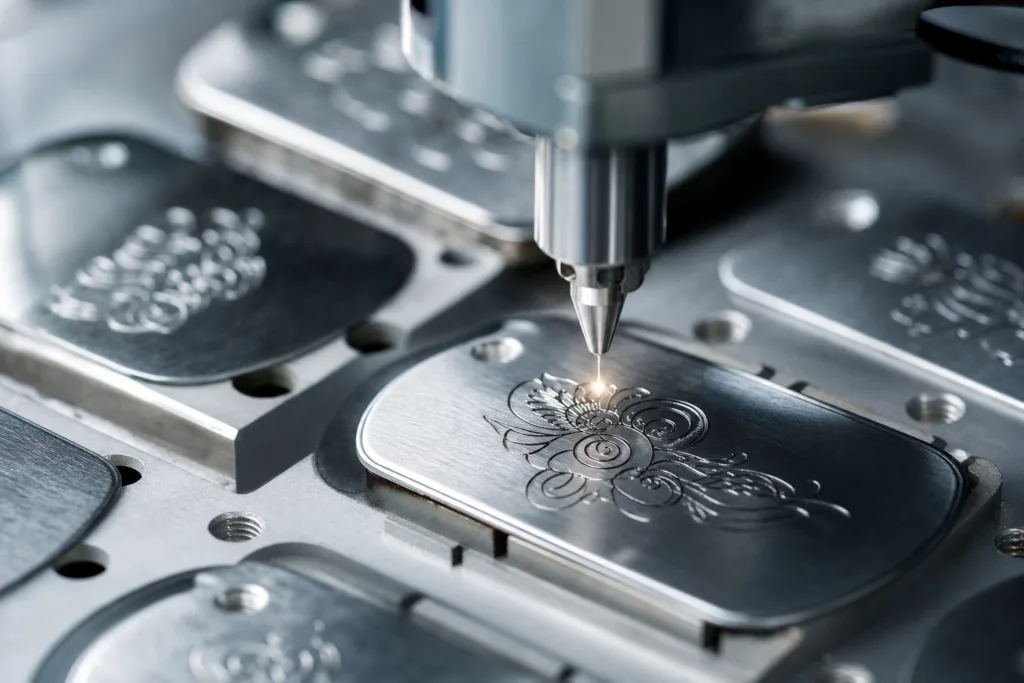
Laser engraving can be a good option when it creates a true permanent mark in the metal rather than relying only on a superficial color change. Buyers should ask what the mark really is. In some projects, a laser produces contrast by altering the surface appearance. That may not be enough for extreme heat. In others, it creates a deeper engraved feature that remains legible after surface darkening or scale.
For high-heat applications, we advise buyers to focus on engraving depth and long-term legibility rather than appearance on a fresh sample alone. A beautiful dark mark at room temperature can become much less useful after thermal exposure if the permanence comes mostly from surface effect.
Stamping
Stamped characters are often one of the most reliable choices for hot environments because the information is physically displaced into the metal. Even if color contrast changes, the character shape still exists. The trade-off is that stamping has design limits. Very small fonts, dense variable data, and compact QR patterns are usually not ideal for this method.
Chemical etching
Etching can create precise detail and controlled depth, especially where buyers need cleaner fine-line information than stamping can provide. It can work well for heat-resistant tags when the design allows enough depth and spacing. Very fine etched codes may become harder to scan after oxidation, so the code size and quiet zone need careful planning.
Printing methods
Screen printing and UV printing are useful in many industrial tag projects, but for 1000°F service they are generally not the primary marking solution. Added ink layers and printed contrast are usually the first features to degrade. If printing is used at all, it should be treated as secondary information unless the buyer has specific evidence for the temperature profile and dwell time.
Coatings and surface treatments above 1000°F
Many buyers understandably ask whether a coating can make a standard tag survive more heat. In most cases, the answer is that coatings help less than expected at this temperature. Above 1000°F, the safer mindset is to avoid dependence on any surface treatment that must stay visually perfect for the tag to remain readable.
Anodized aluminum, painted surfaces, color fills, and decorative top layers may perform very well in other environments, but they should not be assumed suitable for severe heat. For high-heat tags, the most dependable path is usually a bare or minimally treated metal surface with permanent physical marking.
This is also where qualification matters. In critical environments, buyers should not rely on generic “heat resistant” language. Standards-driven sectors often require formal high-temperature qualification testing for materials, coatings, and compatibility under defined conditions. Even when a commercial industrial project does not need a formal aerospace standard, the lesson is still useful: test the real construction, not just the base material name.
Readability after heat exposure
Readability is often the deciding factor. A tag that remains attached but cannot be read is not a successful identification part.
Text depth and size
Small text may look efficient on a drawing, but it leaves little margin once heat discoloration or scale builds up. We usually recommend keeping critical information larger than the minimum visually acceptable size, especially for maintenance IDs, model numbers, and warning text.
Serial numbers
Sequential numbering works well in high-heat projects because the characters can be made large and simple. If the application is mainly traceability, a clear serial number plus human-readable equipment data may be more reliable than forcing a tiny scannable code into a harsh environment.
Barcodes and QR codes
Machine-readable codes on metal tags can work, but buyers need realistic expectations. Dense barcodes and QR codes become harder to scan when the surface darkens, reflects light unevenly, or accumulates oxidation. In many projects, the problem is not that the buyer chose the wrong category. The problem is that the code was made too small for the environment.
For high-heat tags, it is often better to enlarge the code, simplify the encoded content, and confirm the scanning distance and device before sample approval. If the tag will be inspected by people wearing gloves or viewed in poor lighting near hot equipment, human-readable backup text is essential.
Attachment methods for hot surfaces
Attachment method is part of the heat specification, not an afterthought. Adhesive-backed constructions that work well in moderate environments are generally not suitable for 1000°F surfaces. At that level, mechanical retention becomes the normal approach.
| Attachment Method | High-Heat Suitability | Buyer Notes |
|---|---|---|
| Rivets | Strong option | Check matching metal, hole size, and expansion behavior |
| Screws or bolts | Strong option | Useful where removal or replacement is expected |
| Wire attachment | Situational | Good for hanging tags, baskets, or temporary identification if wire grade fits heat |
| Welding | Possible in some engineered uses | Needs review of heat effect on tag readability and substrate |
| Adhesive backing | Usually unsuitable | Do not assume pressure-sensitive adhesive will survive extreme heat |
Hole placement matters too. A tag that is too close to the edge can deform or tear more easily under stress and thermal movement. Thicker tags may resist distortion better, but they also change forming and mounting behavior. These details should be confirmed on the drawing, not only discussed in email.
Specification checklist for buying high-heat tags
When buyers send a request for quote, the more useful version is not “need stainless tag for 1000°F.” The more useful version includes the conditions that affect the construction. We suggest confirming the following:
- Maximum temperature and normal operating temperature
- Continuous exposure or short-cycle exposure
- Indoor dry heat, oxidation, steam, or chemical contact
- Required life expectancy and replacement cycle
- Tag size, thickness, corner style, and hole positions
- Preferred marking method and minimum text height
- Need for serial numbers, lot numbers, barcodes, or QR codes
- Mounting method and matching hardware material
- Whether sample heat testing is required before approval
- Packaging and data control requirements for bulk production
When buyers come to UC Tag with this level of detail, sampling moves faster and bulk production risk usually drops. It also helps us advise when a requested layout is likely to become unreadable after heat exposure, which is much better to solve before tooling or variable-data setup starts.
Common mistakes that cause failure
One of the most common problems is choosing a tag based on the metal alone and ignoring the marking method. Another is testing only a room-temperature sample and assuming the same appearance will remain after exposure.
Other repeat issues include:
- Specifying aluminum because it worked in a previous non-heat project
- Using decorative black fill or printed contrast as the primary readability feature
- Making text or codes too small for a scaled or oxidized surface
- Selecting adhesive backing for a location that actually sees severe heat
- Ignoring the temperature limits of rivets, screws, or wire
- Not confirming whether exposure is constant, intermittent, or shock-based
- Skipping sample validation under real conditions
For sourcing teams, this is where process discipline matters. A reliable supplier should be willing to review not just dimensions and price, but the actual use case, data structure, and failure risks. That is also why buyers often look at quality management practices for metal production when comparing manufacturers, because repeatability in marking, hole placement, and data handling becomes more important when the application has little room for error.
How to evaluate samples before bulk production
Sample approval for high-heat tags should be functional, not cosmetic. We recommend that buyers test the exact construction they plan to purchase: same metal, same thickness, same mark type, same data density, and same attachment approach.
A practical sample review can include:
- Visual check before exposure for mark clarity and edge quality
- Dimensional check for thickness, hole position, and flatness
- Heat exposure at expected service temperature and duration
- Cooling and reinspection for warping, scaling, and readability
- Attachment retention check after thermal cycling
- Barcode or QR verification if machine-readable data is required
In stricter environments, buyers may want their own engineering team to define acceptance criteria in advance. For example: text must remain readable from a set distance, serial number must be identifiable without magnification, or a code must still scan with the plant’s device after exposure. That makes approval more objective.
Maintenance and replacement planning
Even a well-specified high-heat tag should be part of an inspection plan. Long-term reliability depends on what happens around the tag over time: scale, impact, vibration, maintenance tools, and nearby repair work can all affect readability.
For critical assets, it is sensible to plan periodic checks of tag attachment and legibility during scheduled maintenance. If the location is especially severe, some buyers keep the tag design simple and plan for eventual replacement rather than trying to make one plate carry too much fine information for too long. In many cases, a larger tag with fewer but more durable data points performs better than a compact tag trying to hold everything.
Conclusion
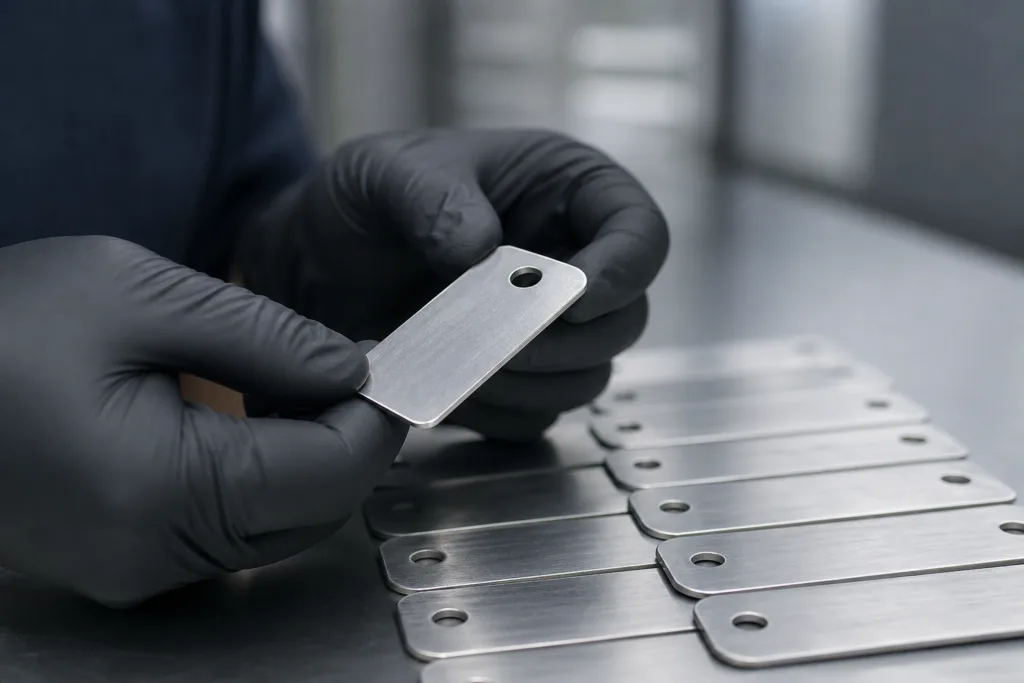
Choosing metal tags for 1000°F service is really a materials-and-construction decision, not just a catalog choice. Stainless steel is often the first material to evaluate, while printing, decorative coatings, and adhesive-based mounting usually become less dependable as heat rises. The marking has to survive, the tag has to stay attached, and the information has to remain readable after real exposure, not only on a new sample. For buyers, the safest path is to confirm temperature profile, environment, data needs, and mounting method early, then validate the actual construction before bulk production.
FAQs
Can metal tags really withstand 1000°F?
Yes, some metal tags can withstand 1000°F, but the result depends on the full construction rather than the metal name alone. Buyers should confirm the base material, marking method, thickness, and attachment hardware together, because a tag may fail through readability loss or mounting failure even when the metal itself remains intact.
Which material is usually the safest starting point for high-heat tags?
For many industrial applications around 1000°F, stainless steel is usually the safest starting point because it offers a practical balance of heat tolerance, durability, and manufacturability. Aluminum is commonly used for many durable tags in normal service, but it is generally not the right choice for extreme heat at this level.
Is laser engraving enough for high-temperature identification?
Laser engraving can work well if it creates a true permanent mark in the metal, but buyers should not assume every laser mark behaves the same way. The important question is whether the readable feature comes from real depth or mostly from surface contrast, since contrast-only marks may become less useful after heavy heat exposure.
Do QR codes and barcodes still work after extreme heat exposure?
They can, but only when the code size, spacing, and marking method match the environment. Very small or dense codes are risky in high-heat service because oxidation, discoloration, and surface scale can reduce scan reliability, so it is often better to enlarge the code and include clear human-readable backup text.
Can adhesive-backed tags be used near 1000°F surfaces?
In most cases, no. Adhesive-backed tags are generally not suitable for direct exposure to 1000°F surfaces, so buyers should plan for mechanical attachment such as rivets, screws, or heat-appropriate wire unless the application has a cooler mounting zone that has been clearly verified.
What should buyers ask a manufacturer before ordering high-heat tags?
Buyers should ask about recommended metal, marking depth or method, expected readability after heat exposure, attachment options, sample testing, serial or code handling, and any layout limits for small text or dense data. It is also smart to share the actual temperature range, exposure duration, and surrounding environment so the tag can be matched to the real application instead of a general description.