Introduction to Bottle Opener Tags
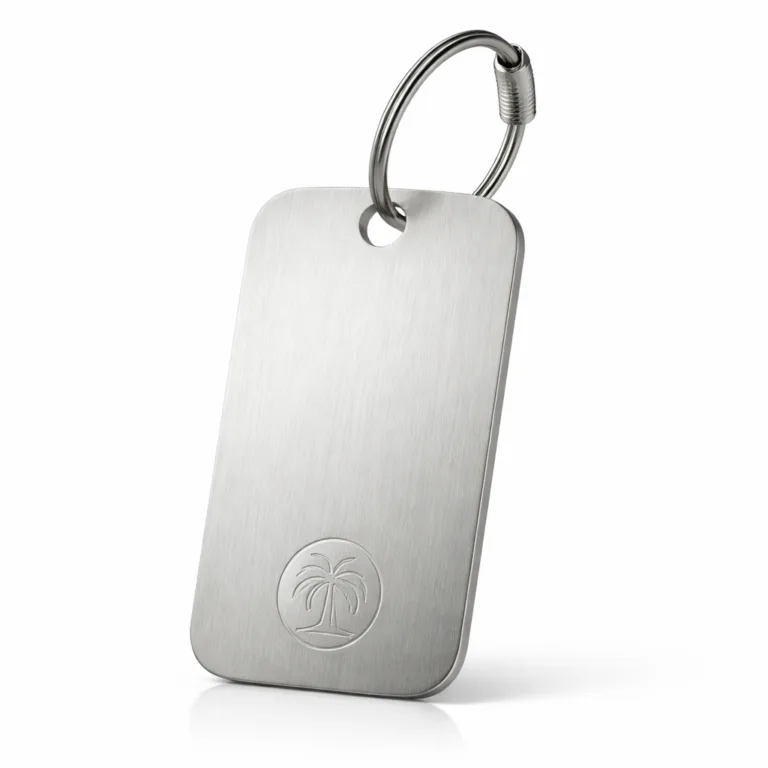
Bottle opener tags are more than just functional tools; they are a statement piece in the world of craft beer. These handy items, often made from robust metal materials, combine the essential function of a bottle opener with the brand-building potential of a keychain or tag. For breweries, bottle opener tags offer unique merchandise that blends practicality, lasting value, and marketing punch.
Within the vibrant craft beer community, such tags represent more than just utility—they serve as conversation starters, tokens of loyalty, and carriers of a brewery’s unique personality. When designed thoughtfully, they become cherished keepsakes for enthusiasts and well-traveled reminders of a great brewery experience.
Metal tags have a unique selling point: their durability, tactile quality, and premium aesthetic that paper or plastic alternatives can’t match. As breweries seek innovative ways to stand out, bottle opener tags have emerged as essential merch for building lasting connections with craft beer fans. Let’s explore what goes into designing tags that truly capture a brewery’s story and style while ensuring functional excellence.
The Role of Design in Brewery Identity
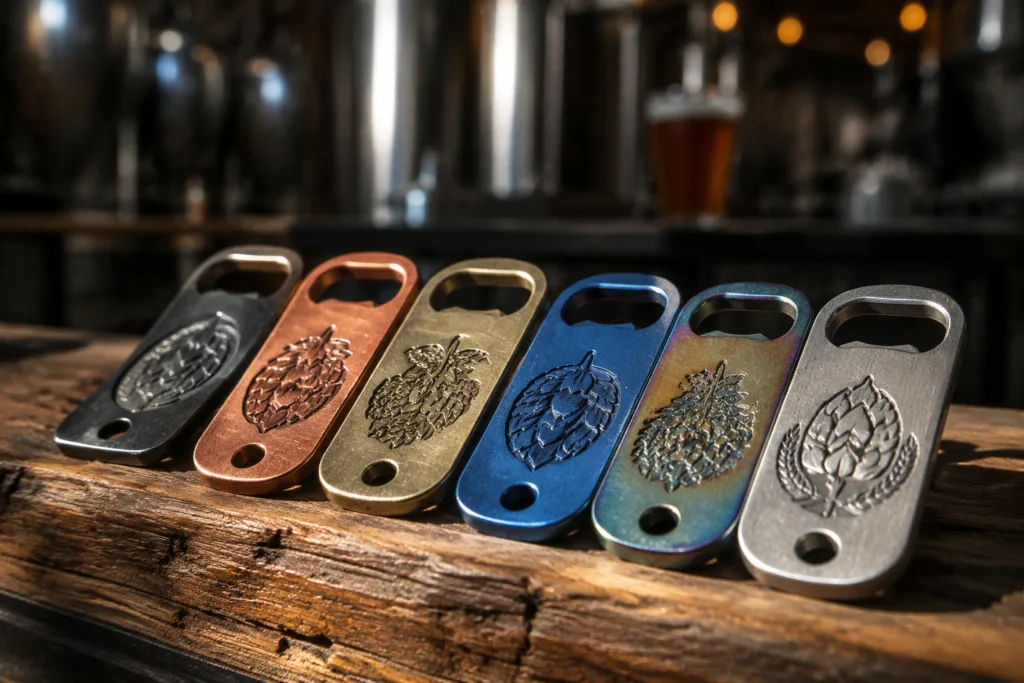
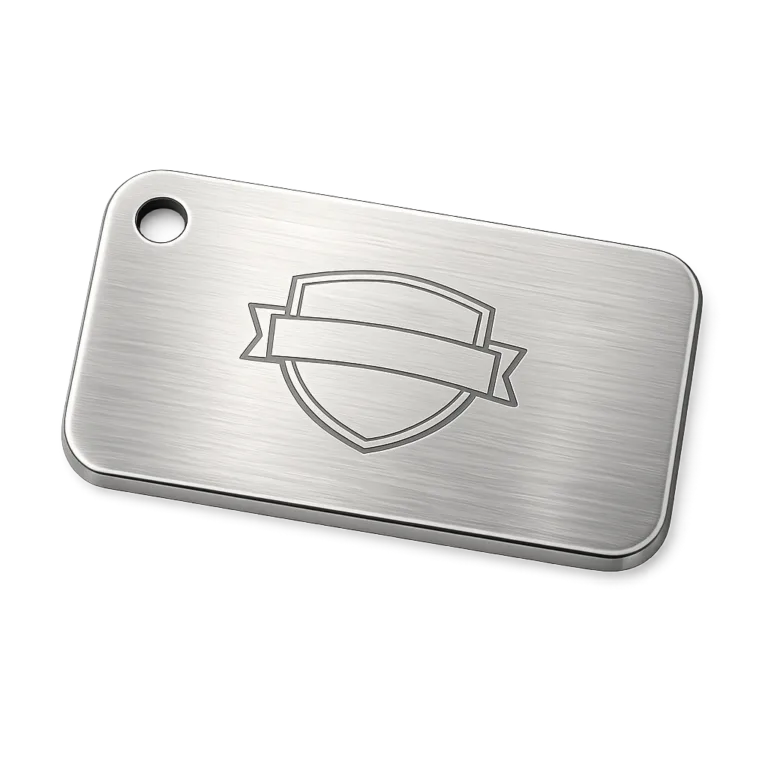
Design is at the heart of every bottle opener tag’s impact on craft beer branding. Incorporating your brewery’s logo and brand colors isn’t just about recognition—it’s about forging an emotional connection. The more distinct and well-executed the design, the more likely customers will carry the tag (and your brand) everywhere they go.
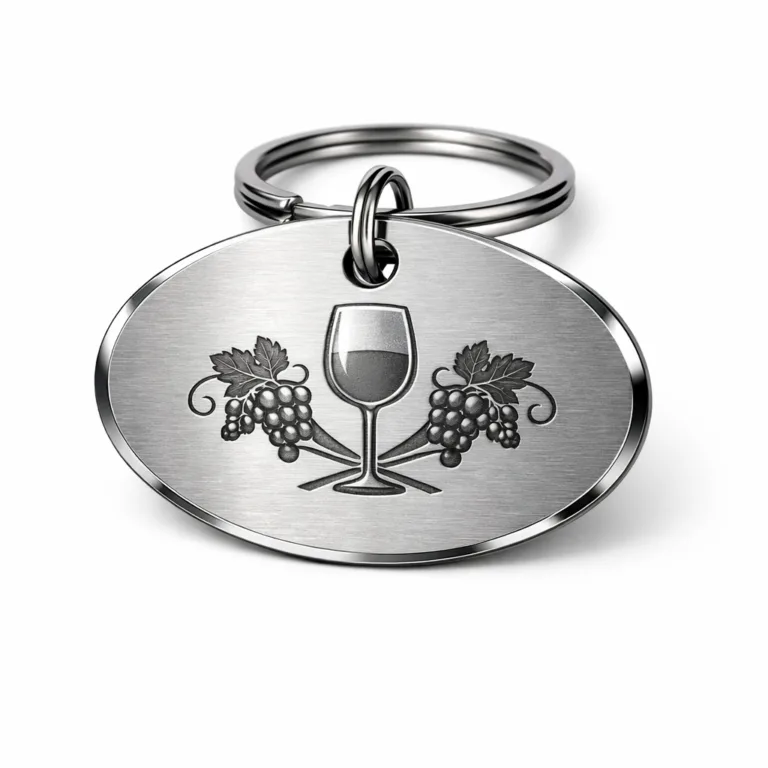
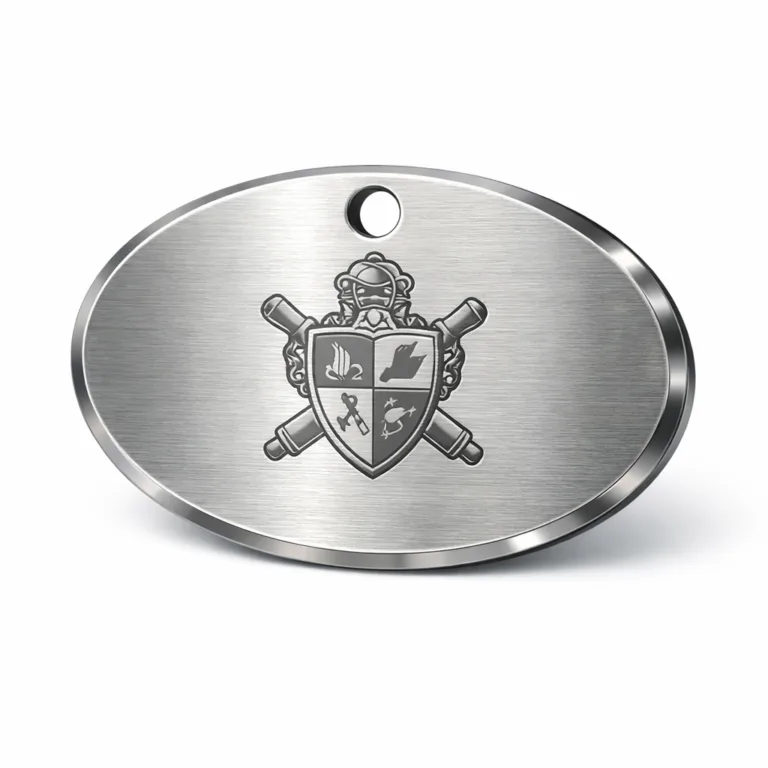
For instance, weaving in the brewery story or mission statement directly onto the tag via engraving, etching, or stamping can reinforce your company’s origins and values. Some breweries choose to tell their founding anecdote or express a motto, instantly connecting the object to a bigger vision. Creative artwork, such as hop cone motifs, retro can art, or regional landmarks, also resonates with craft beer fans looking for authenticity and local pride.
Successful design collaboration often involves working closely with skilled graphic artists who understand metal manufacturing constraints. Sharing early sketches, PMS color specs, and logo vectors can streamline the process. Rain Chen at UC Tag highlights the value of joint review sessions where brewery teams and factory designers align on details like artwork placement and colorfastness—essential in ensuring that each tag truly reflects the brewery’s personality.
Examples abound: Limited-edition opener tags for beer festivals featuring rotating seasonal graphics, or co-branded tags for brewery collaborations that become instant collectibles. When done right, the design becomes a powerful merch asset that lives far beyond launch day.
Materials Comparison: Choosing the Right Metal
Material selection can make or break the long-term performance and appeal of metal tags. There are three main types to consider for bottle opener tags: aluminum, stainless steel, and brass. Each has distinct advantages and trade-offs depending on how and where the tag will be used.
| Material | Durability | Corrosion Resistance | Weight | Aesthetic |
|---|---|---|---|---|
| Aluminum | Medium | Excellent (anodized) | Light | Matte or colorful anodized finishes |
| Stainless Steel | High | Exceptional | Medium-Heavy | Classic, mirror-polished or satin |
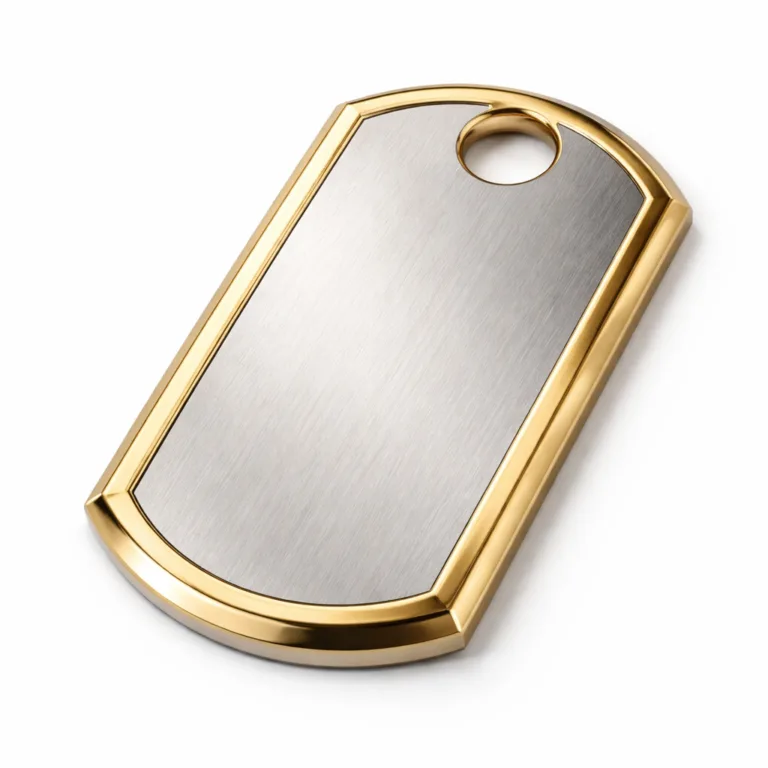
| Brass | High | Good (may patina) | Medium | Classic gold tone; antique effect develops over time |
Aluminum tags are ideal where weight is a concern or if bright, anodized colors are part of the design. Stainless steel offers the strongest resistance to scratches and environmental wear, making it suitable for outdoor use or heavy-duty opener functions. Brass brings a warm, premium look that elevates heritage or vintage-inspired branding, but it may darken as a natural patina develops—an effect some breweries love for its authenticity.
When assessing the best fit, consider your average user: Is the tag a rugged daily tool, or mainly a keepsake? Is it exposed to moisture and unpredictable environments? Use environment should dictate not just the base metal, but also any added finishes for further protection. For an in-depth look at the impact of metal selection on product longevity and collector appeal, refer to the article Why Hexagons and Diamonds Are Changing Modern Metal Tag Design.
Manufacturing Methods: What’s Best for Your Tags?
The choice of manufacturing method shapes the functionality, appearance, and lifespan of your bottle opener tags. Four popular techniques dominate: engraving, stamping, chemical etching, and direct/UV printing.
- Engraving: Delivers crisp, permanent text or artwork. Best for stainless steel and high-readability projects. Slightly higher cost per unit, but exceptional longevity.
- Stamping: Utilizes dies to create raised (embossed) or recessed (debossed) details. Fast for high volumes, durable, and delivers a classic tactile effect.
- Chemical Etching: Enables fine detail and depth without tool wear. Great for complex logos or small batch runs. Needs post-process finishing for touch-resistance.
- Printing (Direct/UV): Allows unlimited color, even gradients. Best for colorful graphics but less durable if unprotected (may require clearcoat or anodizing).
For high-throughput production, stamping is hard to beat. Engraving remains the go-to for critical information and hard-wearing opener functions. UV printing offers design freedom but requires caution if used on high-wear zones. Matching the process to your artwork complexity and expected usage is crucial—a point reinforced by embossed logo tag case studies from UC Tag, which show how tactile finishes and high-contrast text elevate both function and brand recognition.
Essential Design & Spec Checklist
Creating great bottle opener tags is about balancing function with memorable branding. Focusing on key specifications from the start leads to better results and smoother production cycles.
- Typical opener tag sizes: 60–80mm (length), 20–30mm (width)
- Suggested thickness: 1.5–3.0mm (for opening leverage and durability)
- Finish options: anodized (for aluminum), brushed/matte, mirror polish, antique, powder-coated, PVD plating
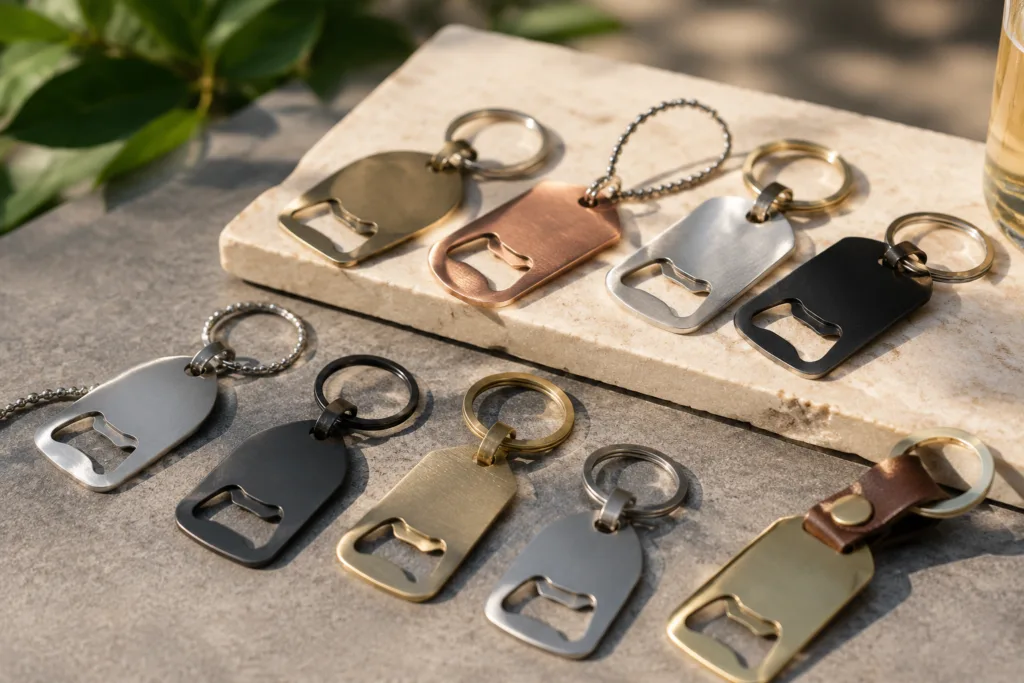
- Attachment methods: drilled holes, ball chains, split rings, carabiners, adhesive backing (3M VHB for peel-and-stick applications)
- Design readability: High-contrast colors, large font sizes, deep emboss/deboss, or laser engraving for clarity
- Tight tolerances: ±0.15mm for flatness and hole alignment
| Spec Area | Recommendation |
|---|---|
| Size | 60-80mm x 20-30mm |
| Thickness | 1.5-3.0mm |
| Finishes | Anodized, brushed, polished, antique, powder coat |
| Attachment | Hole + split ring; ball chain; 3M adhesive |
| Readability | High-contrast, deep marking, min. 11pt font |
| Tolerance | ±0.15mm |
Small details, such as the placement and diameter of keyring holes or specifying the exact shade for enamel fills, make a difference in how tags perform and look. Refer to QR code keychain tag examples for innovative design and attachment combination ideas.
Ensuring Durability & Testing Your Tags
Durability is non-negotiable for any item expected to open bottles and endure pockets, keys, and weather. Metal tags, especially those used by craft beer fans, should be tested for corrosion, abrasion, and UV resistance to ensure longevity across all environments.
Basic lab tests simulate exposure to sweat, moisture, and cleaning agents, while field trials mimic daily use. For outdoor or industrial use such as beer garden events or mobile bars, stainless steel and anodized aluminum tags lead the way in resisting tarnish and fading.
Applying recognized standards—such as salt spray testing for corrosion or Taber abrasion for wear resistance—helps breweries specify what their openers must withstand. Quality control measures during production (sample pulls, surface inspection, finish thickness verification) prevent mass production surprises. Factors like sharp edge finishing and securely installed bottle opener cutouts can affect the opener’s real-world lifespan.
Real challenges include powder coating that chips on sharp edges or brass tags that patina faster than expected in humid regions. At UC Tag, we’ve mitigated such issues by adjusting finish processes for brewery clients operating in coastal or festival-heavy markets. For highly detailed case studies on performance, explore Sticker Labels vs. Metal Tags: The Essential Guide to Durable Product Branding.
Industry Applications for Bottle Opener Tags
Bottle opener tags hold their own as versatile marketing tools across craft beer merchandising. At festivals, they make great giveaways, sparking social engagement and providing a functional keepsake that’s sure to see regular use. Creative tags distributed during brewery tours or tasting events foster direct customer connection and amplify word-of-mouth marketing.

On retail shelves, branded opener tags can become a mainstay item, driving incremental revenue and extending brand reach as practical merchandise for beer lovers. They are also a strategic add-on in brewery gift bundles, seasonal packs, or limited releases, incentivizing purchases and deepening customer loyalty.
For corporate gifting or B2B partnerships, custom bottle opener tags are an unexpected yet highly valued gesture, often engraved with both brewery and partner logos. When linked to QR codes or digital campaigns, they also become a bridge to brand storytelling and event participation.
Want more ideas? See how breweries leverage metal tags as reusable tickets in this guide to elevating tasting events.
Common Mistakes & Troubleshooting
Designing metal tags for breweries offers plenty of creative freedom—but overlooked details can compromise function and impact. Among the most frequent issues is unreadable text, which occurs with fonts that are too small, overly ornate, or lack sufficient contrast to the background finish. The solution is clear: choose high-contrast color schemes, bold fonts, and deep engraving or stamping for lasting clarity.
Another pitfall is adhesive failure. Low-quality adhesives or improper surface prep cause tags to detach from packaging or key rings. Stick to proven industrial backings such as 3M VHB and test surfaces rigorously before mass rollout. Peeling finishes—especially powder coat or PVD layers—often result from insufficient surface preparation or using finishes not suited for high-wear applications.
Early-stage testing remains the best way to prevent large-scale costly mistakes. This means producing pre-production samples and stress-testing all attachment points, openers, and decorative elements. Rain Chen of UC Tag notes that contrast is especially critical: “Your logo might pop on a screen, but only deep cuts and defined raised elements guarantee it will pop after years in the field.” Adopting these insights can prevent the most common pain points in bottle opener tag projects.
Ordering Guide for Bottle Opener Tags
Ordering custom bottle opener tags starts with understanding the basics: most manufacturers have minimum order quantities (MOQs), commonly ranging from 250–500 units per design for cost efficiency. Volume orders open access to more finish options and lower unit pricing.
Lead times typically span 3–5 weeks from approved proof to shipment, but can vary based on seasonal demand and design complexity. Clear and complete artwork—vector files, Pantone color codes, and finish preferences—facilitates fast proofing, preventing back-and-forth delays.
Always request a digital proof or physical pre-production sample before committing to mass production; this ensures alignment on color, material, and detail. For rugged metal tags, specify packaging that protects against scratching during shipping, such as polybags, bubble wrap, or compartmentalized boxes. For industry benchmarks and efficient tag planning, check the custom metal tag solutions resource.
Frequently Asked Questions
What customization options are available for bottle opener tags?
You can customize metal tags with shapes, logo engravings, color fills, finishes like matte or polished, attachment methods, and more to suit your brewery’s branding and functionality needs.
How durable are metal tags in outdoor or humid environments?
High-quality aluminum, stainless steel, or brass tags—especially those with anodized or PVD finishes—offer excellent resistance to corrosion, abrasion, and UV damage, making them suitable for challenging environments.
What is the typical production timeline and can it be expedited?
Standard lead time is 3–5 weeks from design approval, though some manufacturers can expedite small runs or simpler designs for urgent needs, especially with complete artwork and prompt communication.
What’s the minimum order quantity I should expect?
MOQs usually start at 250–500 units per design, balancing setup cost and practical production yields, though specialty runs or premium materials may require higher minimums.
How can I care for and maintain my brewery’s metal tags?
Clean tags periodically with mild soap and water; avoid harsh chemicals, and store them dry to prevent unnecessary surface wear or tarnish, especially for brass tags that patina.
How do bottle opener tags boost brand loyalty for craft breweries?
These tags blend functionality and design, offering fans a durable, memorable item they use regularly, thereby strengthening brand visibility and reinforcing positive associations with your brewery.
Summary and Next Steps
Bottle opener tags are a unique intersection of utility, craft beer culture, and lasting brand value. We’ve reviewed how thoughtful design, careful material selection, and precise manufacturing methods contribute equally to performance and customer engagement.
The right metal tags do more than open bottles—they showcase what your brewery stands for, enhance merchandising opportunities, and become cherished tokens for your fans. By prioritizing durability and clear branding, you can ensure each tag has a long and appreciated life.
Explore custom options, discuss your brewery’s story, and use these bottle opener tags to build deeper relationships with craft beer enthusiasts. For a guided solution tailored to your environment, Rain Chen from UC Tag recommends consulting with production partners early to align on specs and optimize outcomes.
Need help choosing the right metal + finish? UC Tag can recommend options for your application. Ready to elevate your brewery’s brand with custom bottle opener tags? Reach out for an RFQ or sample today!
Related Reading
- Unlock Unforgettable Unboxing with Durable Metal Tags for Customer Loyalty
- The Only Guide You Need to Making Your Product Branding Last—Sticker vs. Metal Tags
- Transform Beer Events with Custom Metal Tags as Reusable Tickets
- Explore Proven Custom Metal Tag Solutions for Brewery Merchandising
- Innovate Brewery Promotion with Custom QR Code Keychain Tags