What to Write on Luggage Tag: Essential Information
No matter where you’re traveling, knowing what to write on a luggage tag can make the difference between a hassle-free trip and a stressful search for lost bags. A luggage tag’s core purpose is to identify you as the owner of the bag and give airlines or rail staff a way to reconnect you with your belongings in case your luggage goes missing. However, listing too much personal information could make you vulnerable to privacy risks, especially when traveling internationally or in regions with high rates of theft. Let’s break down the key details that every traveler should include, and how to do so wisely.
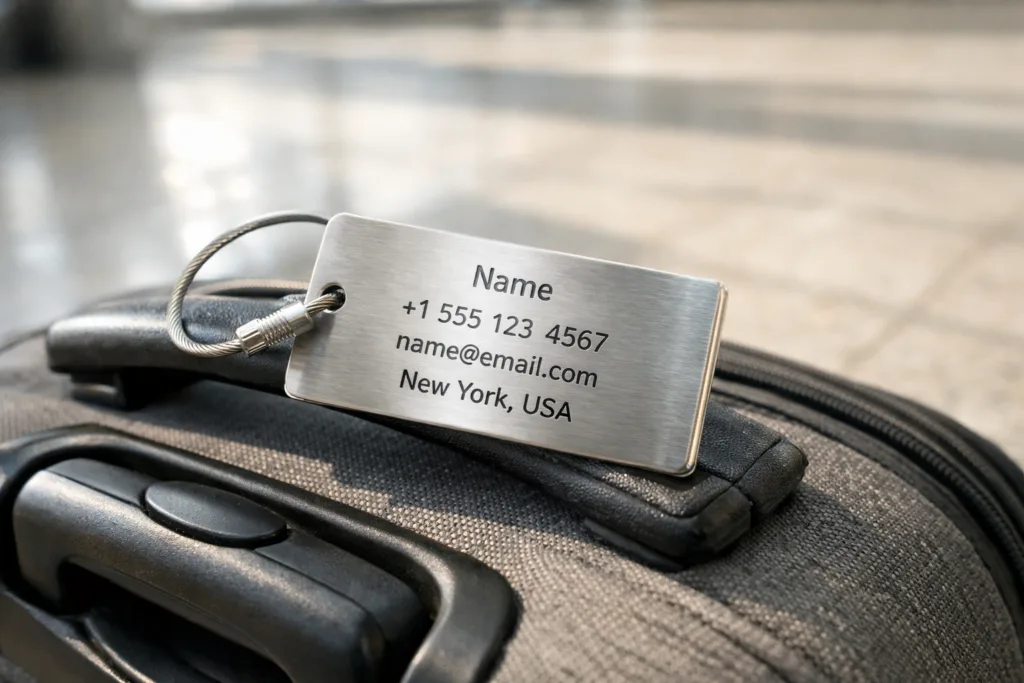
- Full Name: Use your first and last name. Avoid using just initials, and don’t include middle names unless required. This helps airport and train staff confirm your identity quickly.
- Primary Phone Number: Use a cell phone number that you’ll be able to answer during your trip, if possible with country code. Refrain from listing your home landline.
- Email Address: Provide an address that you check regularly. This is especially useful if you’re traveling internationally and may not have constant cell coverage.
- City and Country: Instead of a full home street address, just list your city and country. This provides enough information for most lost-and-found scenarios while still protecting your privacy.
Remember, when thinking about what to write on luggage tag, the goal is always quick identification without exposing your complete private information to prying eyes.
Understanding Privacy When Writing on Luggage Tags
Privacy is a real concern for today’s global traveler. Whatever you decide to write on your luggage tag is visible to anyone handling your bag, from airline staff to hotel porters, and sometimes, to strangers in a crowd. Can you balance effective bag identification with keeping your information secure? Absolutely, but you’ll need to think carefully about which details you want to share.
One of the most common mistakes is sharing too much—like your full home address. While this can help a lost bag get shipped home, it potentially exposes your address to anyone. The better choice is to only share information that is necessary for reunification, not for personal contact. For example, using a business address, or even just your city or airport code, can still help the airline track you down while keeping your home location private. Some frequent travelers even use fake return addresses—like their company’s central office—instead of their own.
Travel savvy means knowing how to stay visible to helpers but invisible to opportunists. Reflect on every piece of information: Would I be comfortable with hundreds of strangers seeing this?
Luggage Tag Must-Haves: A Minimalist and Secure Checklist
- First and Last Name (No Nicknames)
- Working Mobile Phone Number (with country code for international trips)
- Email Address – consider using one just for travel
- City, State/Province & Country (avoid street address)
- Optional: Reward Note – “Reward if found” can motivate finders
Skip unnecessary extras, like passport numbers or ticket details. Your tag should be clear, simple, and up-to-date. If you travel for work, adding your company name sometimes makes sense—just be sure it makes you easier to find, not to target. Less is often more when it comes to what to write on a luggage tag.
Luggage Tag Writing for International Travel
Traveling to another country? Your tagging strategy needs a tweak. First, make sure your phone number includes your country code. For example, U.S. numbers start with +1, British with +44. Never assume everyone can contact you on your domestic mobile number—international carriers might not support your plan. Consider using WhatsApp or another messaging app you can access via airport Wi-Fi, and mention that app name after your number if needed.
Language is another key issue. While most airlines use English, writing your tag info in another widely spoken language, like Spanish, French, or Mandarin for certain destinations, can speed up reunification. If you’re traveling with layovers, use the main language of your destination city. Should you ever need a local address, use your hotel’s—never your private residence. And when it comes to what to write on a luggage tag during international travel, the best advice is: be reachable, not vulnerable!
The Most Common Mistakes When Filling Out a Luggage Tag
| Mistake | Why It’s Risky | Better Approach |
|---|---|---|
| Full Street Address | Privacy threat, especially for unattended bags | Use city/country only |
| Old Phone Number | Bags can’t reach you if info is outdated | Always use a current cell number |
| Luggage Tag Not Updated After Moving | Bag won’t be returned to you | Double-check your tags pre-trip |
| No Contact Information | Bag can’t be linked to owner | Name + phone/email required |
| Unprotected Tag (paper/cardboard) | Info smudges/rips/washes off in rain | Use covered or metal tags for durability |
Protect yourself by avoiding these slip-ups, and you’ll maximize the chance your bag finds its way back to you, even on complicated journeys.
Creative Ways to Write on Luggage Tags
Want a touch of personality while protecting your data? There are plenty of creative solutions. Some travelers use monograms or comic travel nicknames instead of full names, especially for kids’ luggage. Others opt for QR codes encrypted with their personal details—when scanned by airport staff, the info reveals itself securely (many luggage tracking tech providers offer such services now). Decorative tags don’t have to sacrifice safety for style; just stay clear of information overload.
- Write your info in permanent marker to withstand rain or abrasion
- Choose a bright or unique tag background (metal, leather, bold prints) for instant spotting on the carousel
- Consider luggage tags shaped like passport covers, with a privacy flap to shield information from casual glances
A great luggage tag is like a secret handshake: clear to those who need to know, but a mystery to prying eyes.
Invisible Ink and Hidden Information Techniques
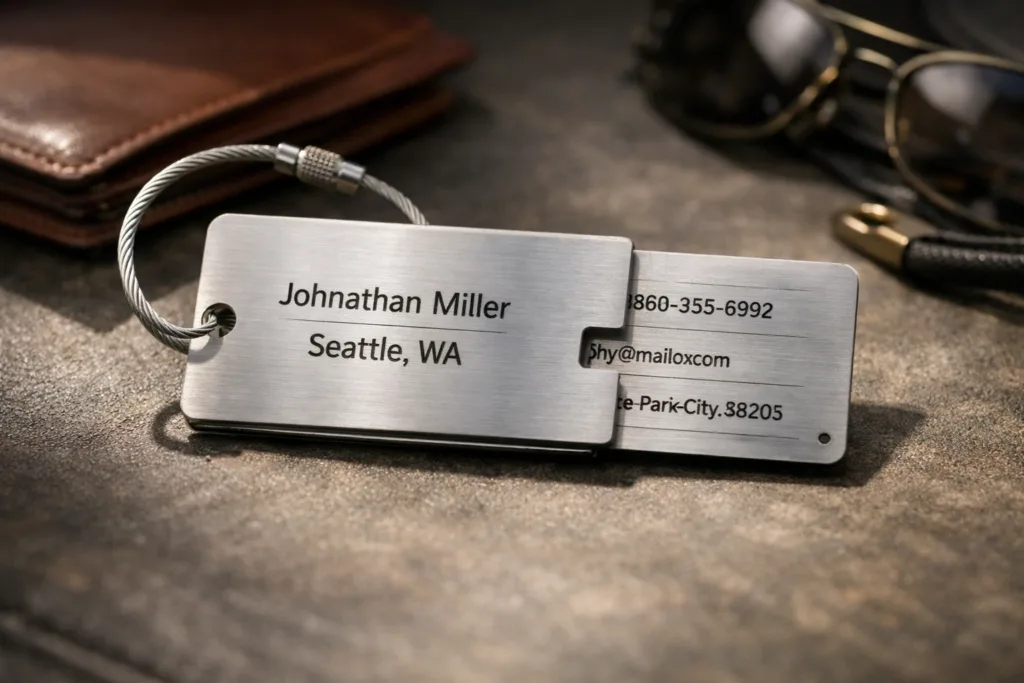
Security-conscious travelers sometimes use a dual-layer approach. The outside of the tag lists basic info: name, phone, city. Inside, perhaps behind a sliding flap or in a pull-out card, rests more complete details: backup contacts, hotel for this trip, or airline booking code. Some even use UV-reactive ink for invisible notes only readable under a special flashlight—fun for tech lovers, and it can help you comply with airline or customs requirements without sharing everything at first glance. Another trick: write a short personal code (like initials and birth year) as a discreet identifier.
The classic advice still stands: the simpler and more direct the info, the faster lost & found will return your bag. Extra secrecy is only a plus if it doesn’t slow down help.
Comparing Popular Luggage Tag Styles for Secure Information Use
| Type | Privacy | Durability | Ideal Use |
|---|---|---|---|
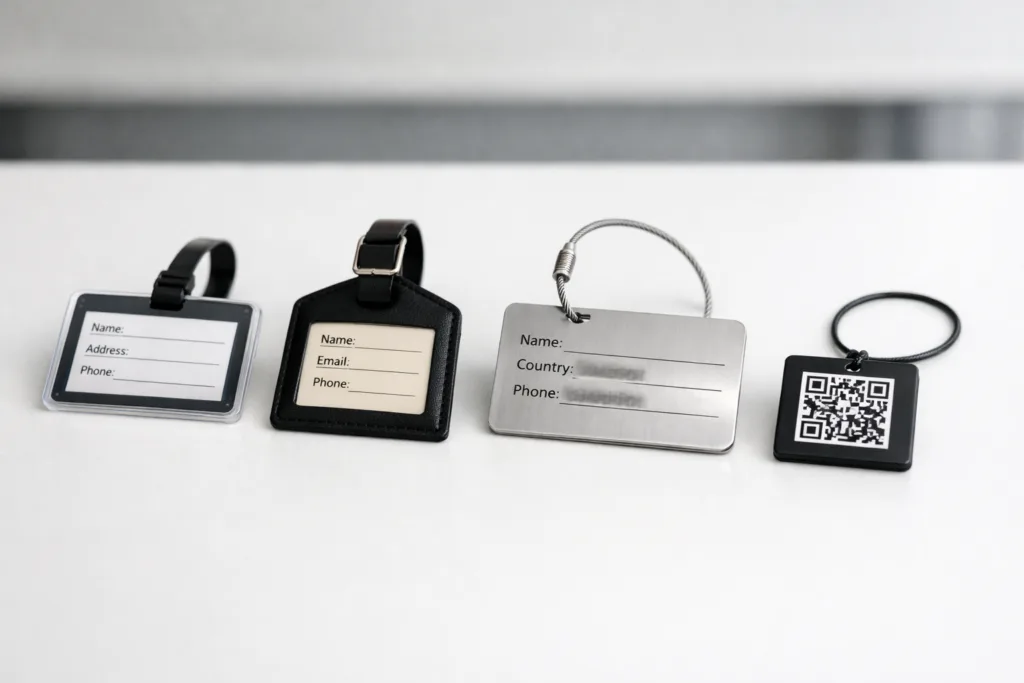
| Plastic Sleeve with Paper Insert | Low—info visible | Decent, not weatherproof | Short trips, domestic |
| Metal Engraved Tags | Medium—can add privacy cover | High (water, tear, scratch proof) | Frequent, business, international |
| Leather Tag with Privacy Flap | High—covers info | High | Luxury travel, privacy conscious |
| QR Code Smart Tag | Very High—info hidden until scanned | Varies by tag | Tech savvy, business, group tours |
Choose a tag style that suits your travel frequency and privacy preferences. Remember, what to write on a luggage tag doesn’t matter if it wears off by the first layover.
Special Considerations for Different Travelers
Business Travelers
Business people should use their work phone or email, not personal details; consider adding a company name if ID verification is needed on international work trips. Ensure tags are sleek and professional but still legible.
Families Traveling with Children
Parents, never put a child’s full name on an outward-facing tag. Use an initial or the parents’ contact info only, with a backup family member’s number on an interior insert. Add a fun, recognizable design so kids spot their own bag easily.
Senior Travelers
For seniors who might need extra assistance, big print tags can help. Provide both cell and the number for a trusted relative. Hide medical info or emergency needs inside a privacy sleeve, not on the public-facing side.
Group Travelers
Tours traveling in groups may want to add the group name or coordinator’s phone number for excess luggage. Just ensure every group member also has an individual tag in case bags separate from the organizer.
What To Write On Luggage Tag: A Complete Example
- Outside Tag: Jane Smith | +1 212-555-1234 | [email protected] | New York, USA
- Inside/Backup Tag: Hotel: The Plaza, 768 5th Ave, New York, NY 10019 | Emergency: +1 212-555-5678 (sister)
This approach keeps what you write on a luggage tag concise on the outside, but informative on the inside. It highlights the best balance of reachability and privacy.
UC Tag Manufacturer’s Perspective on Durable, Secure Luggage Tag Design
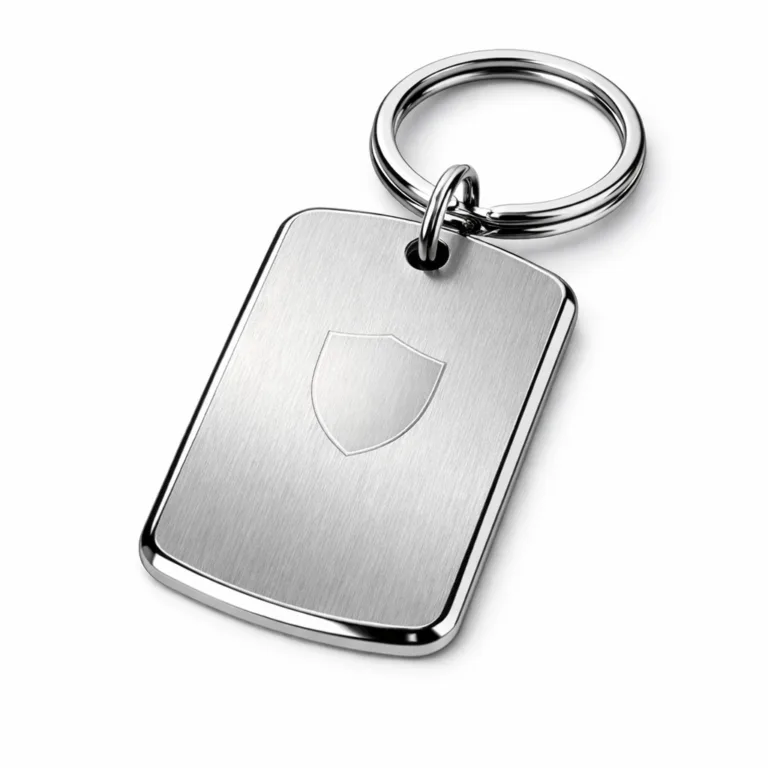
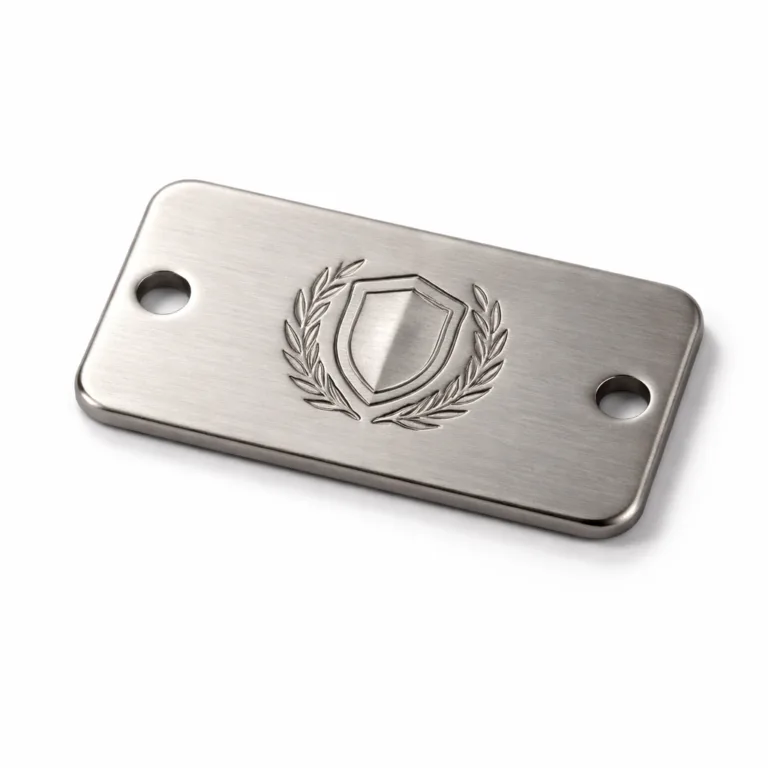
As a custom metal tag manufacturer, UC Tag understands that the needs of modern travelers go beyond just aesthetics. That’s why UC Tag specializes in producing robust, corrosion-resistant metal luggage tags with optional privacy flaps and tamper-proof connections. Our experience shows most lost bags are reunited faster when tags are clearly marked, using deep laser engraving for longevity and clarity.
Many organizations rely on us to deliver tags that can withstand months of rough baggage handling, intense weather, and regular disinfection—all without losing visibility. UC Tag often recommends a tag design featuring two plates: a front slide-out panel for public essentials (name, phone), and a rear panel for information you want kept hidden from casual observers. Our English/dual-language engraving services are ideal for international travelers and global tour companies requiring their branding plus multi-language support.
We also see an increasing trend in “smart” luggage tags—metal tags with QR codes or embedded NFC that link to secure contact forms or digital lost-and-found portals. While we do provide traditional engraved nameplates, many of our clients now request hybrid metal-plus-tech solutions, resulting in both visually distinctive and highly functional tags. Are you searching for a custom metal tag manufacturer with the flexibility to match your privacy and identification needs?
Luggage Tag Dos and Don’ts for Smarter Travel
Travel can be unpredictable, but with the right info on your luggage tag, you’re ahead of the game. Here are must-know dos and don’ts:
- Do keep your info up to date before every trip.
- Do use durable materials for writing/tag construction.
- Do add a privacy flap for discretion.
- Don’t put your full home address on the tag.
- Don’t use an email or phone number you can’t check during travel.
- Don’t display passport or ID numbers publicly.
Simple steps, but major peace of mind!
Table: Quick Reference for What to Write on Luggage Tag by Trip Type
| Trip Type | What To Write | What To Hide |
|---|---|---|
| Domestic | Name, cell, email, city | Home address, passport |
| International | Name, international phone, email, destination hotel | Home/country address, ticket number |
| Business | Name, company, business number/email | Personal details |
| Family | Parent’s name/number, backup contact | Child’s name, sensitive info |
How to Write Your Info Effectively: Font, Ink, and Legibility Tips
The best luggage tag in the world is useless if nobody can read it. Whether using paper, plastic, or metal tags, write in block letters with a permanent marker, or have your tags laser engraved for top clarity. Avoid fluffy scripts or ink that can bleed when wet. Make sure your phone number and email are the largest items on the tag. Test legibility before flying—if a family member can’t read your tag at a glance, it’s time to redo it.
Alternatives: Luggage Microchips, NFC, and Smart Labels
Technology offers new privacy and tracking capabilities. Smart luggage tags come in many forms:
- NFC (Near Field Communication) Tags: Embeds a scannable chip into the tag, linking to your contact info, updated digitally at any time.
- GPS/Bluetooth Trackers: Tiny devices, like AirTags or Tiles, that link your luggage with your phone app.
- QR Code Stickers: Print scannable codes that direct finders to an online profile with your preferred contact method.
None of these replace classic tags—airports still want a readable name and number—but they offer backups or extra privacy layers.
Why Regularly Reviewing What You Write on Your Luggage Tag Matters
Your travel situation can change from trip to trip: you get a new phone, book a new hotel, change your emergency contact, or travel as part of a group. It’s best practice to check your luggage tags before each journey, update outdated information, and assess whether you need more privacy, especially if you’re flying to a region with different privacy norms or risks.
It only takes a moment, but this habit can prevent mishaps and costly delays. Even seasoned travelers sometimes forget—and that’s when bags go wandering without a way home.
What to Write on Luggage Tag: Frequently Asked Questions
- Should I put my home address on a luggage tag?
No, it’s safest to avoid your full street address. Use only your city and country to protect your privacy but ensure you’re identifiable. - What if I’m staying at multiple places during my trip?
List your phone and email as main contacts. You can include your hotel name (not room number) on an inside tag if you’d like. Update tags at each hotel if possible. - Is a phone number enough on a luggage tag?
Ideally, combine your phone number with an email address. This gives airlines and finders more ways to reach you if lines are down or you’re traveling internationally. - Are there privacy risks with luggage tags?
Yes. Keeping your home address, passport number, and other private details off the tag helps reduce risk. Use privacy flaps or hidden panels for extra security. - Does airline lost & found check for emails or only call numbers?
Airlines usually try the phone first but will email if provided, especially late at night or for international numbers. Always check both while traveling. - Should I include emergency contact info?
Having a backup contact (friend or family) inside your luggage can be helpful for emergencies but isn’t required on the visible part of your tag.
Conclusion: Crafting the Perfect Luggage Tag for Safer, Smarter Travel
Travel is meant to be exciting, not stressful. How you fill out your luggage tag determines whether a lost bag leads to a quick reunion or an endless wait. Whether you’re a business professional, family, solo backpacker, or senior adventurer, what to write on luggage tag always comes down to striking a practical balance: provide just enough detail to be contacted quickly, never so much that your privacy is at risk. Use durable tags with privacy features, update your details before each trip, and consider tech solutions like QR codes or NFC tags for an extra layer of security. The next time you ask yourself, “what to write on a luggage tag,” remember: clear, current, and minimal is the winning formula.