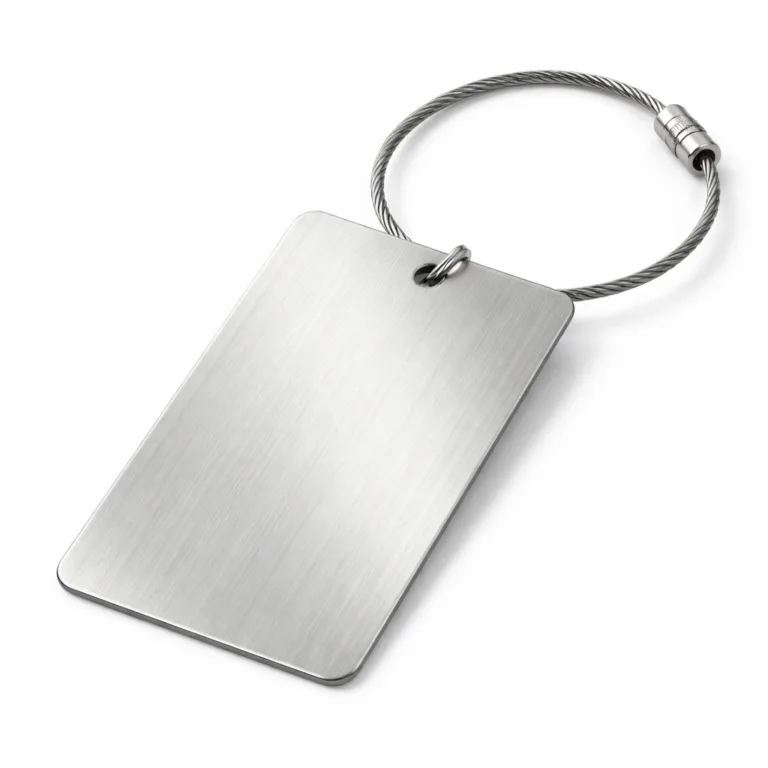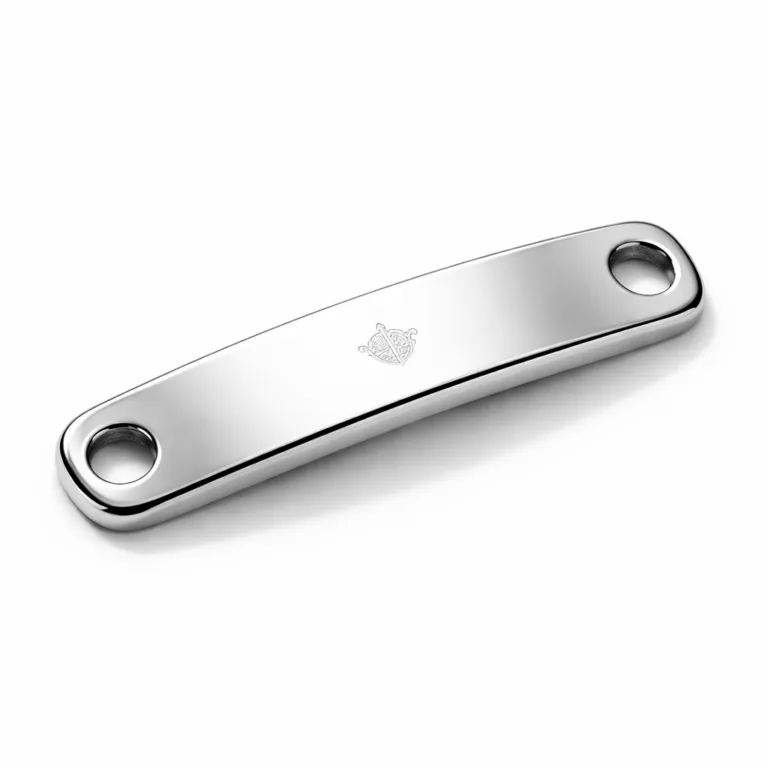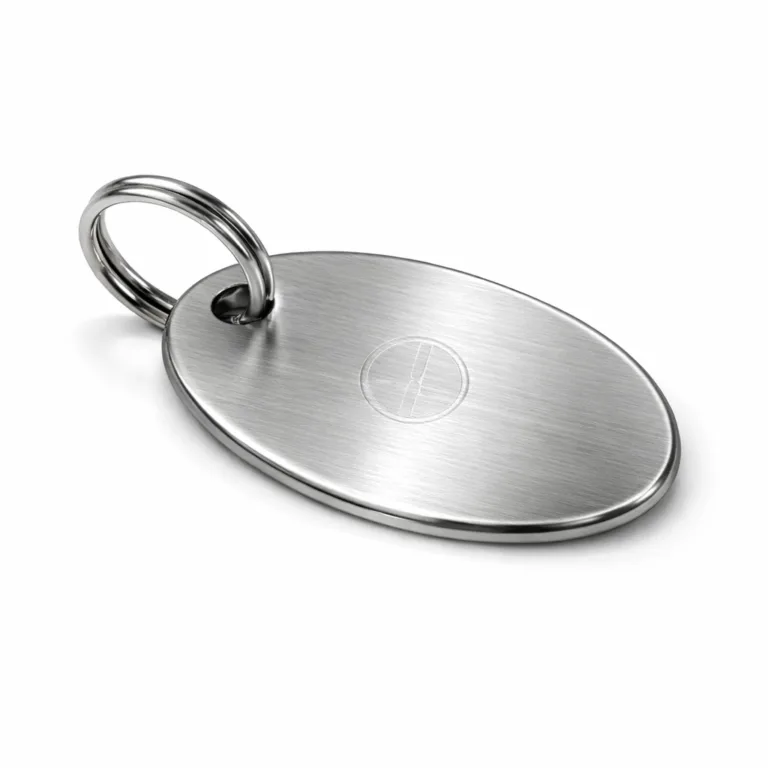
Shoe Laces Dubrae Tags have become a surprisingly influential detail in sneaker culture. A small metal piece near the bottom of the laces can change how a pair feels, how a colorway reads, and how a brand signature is remembered. For sneaker labels, collectors, and customization-focused buyers, dubraes are more than decoration. They can work as identity markers, collectible hardware, styling tools, and limited-edition branding assets that add depth without redesigning the entire shoe.
When a footwear project needs premium hardware, consistent logo detailing, or small-batch-to-bulk production planning, our custom metal tag solutions help connect creative intent with manufacturing reality. At UC Tag, we support material selection, finish development, logo execution, hole and shape planning, sampling, and QC for custom metal accessories that need to look right on shelf, in hand, and in repeat production. That is especially useful for dubrae programs tied to launches, collaborations, collector packs, or private label sneaker accessories.
What shoe lace dubrae tags are and why they matter in sneaker culture
Dubrae tags are small decorative or branded pieces fitted onto shoelaces, typically near the toe box area. In sneaker culture, they are often associated with expression, exclusivity, and detail-conscious design. Even when they are small, dubraes can act like jewelry for sneakers. They catch light, break up lace color, introduce contrast, and make a pair look more intentional.
From our manufacturing perspective, this category matters because it sits at the intersection of hardware branding and wearable styling. A dubrae can carry a logo, a wordmark, a short phrase, a year, a collaboration mark, or a symbol that means something to a community. It can also support drop storytelling. A sneaker release themed around a city, team, artist, or anniversary can use a dubrae to add a compact but memorable layer without overcrowding the upper.
There is also a broader cultural logic behind this. Footwear has long used decorative details as status and style markers, and there is a clear historical precedent for shoe embellishments that helps explain why small accents still carry meaning today. Modern dubraes simply translate that instinct into a sneaker-native format.
How dubraes change the look and feel of a sneaker silhouette
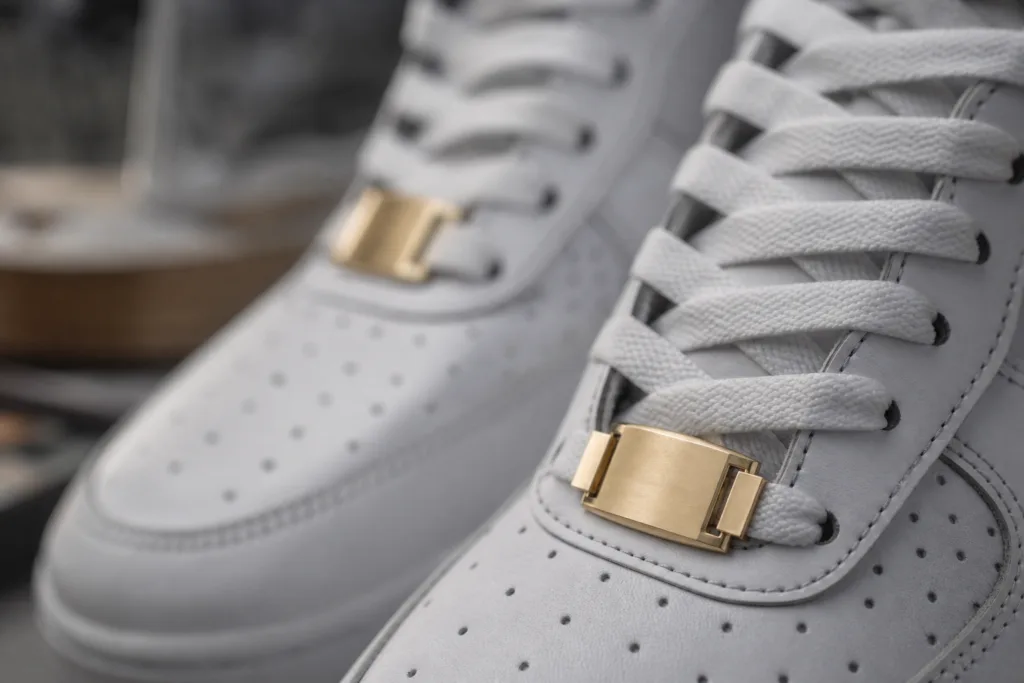
A sneaker silhouette is not only defined by panels, sole shape, and materials. It is also shaped by focal points. Dubraes create a focal point at the bottom of the lacing system, which can visually anchor the front half of the shoe. On a minimal pair, that extra hardware can add luxury or toughness. On a louder pair, it can either support the theme or create visual clutter if handled poorly.
We usually advise buyers and designers to think about dubraes in three visual roles:
- Accent role: adding a metallic highlight to a tonal or simple lace setup.
- Identity role: carrying a logo, slogan, symbol, or collaboration cue.
- Balance role: tying together eyelets, lace tips, zipper hardware, or upper trims.
The physical dimensions matter more than many first-time buyers expect. A dubrae that is too tall can overpower a low-profile sneaker. One that is too thin may look weak next to chunky laces. Curvature also matters. Flat hardware on a rounded lace path may rotate or sit awkwardly, while a slightly shaped piece can feel more integrated.
For brands that want stronger consistency across multiple styles, we often see the best results when dubrae dimensions are tested on 2 or 3 representative lace widths before bulk approval. That sample-stage discipline prevents a good-looking concept from becoming an unstable or undersized finished accessory.
Dubrae tags as a branding tool
A dubrae is small, but its branding value can be strong because it sits in a visible and repeated position. Consumers lace, re-lace, photograph, and discuss sneakers. That makes hardware branding more interactive than a static printed box detail. A dubrae can reinforce a label name every time the wearer styles the pair.
Branding through dubraes works best when the design choice fits the broader identity system. If the sneaker brand uses clean geometric forms, the dubrae should not suddenly become ornate unless that contrast is the point of the campaign. If the brand language is heritage-focused, stamped or antique-finish hardware may feel more believable than glossy mirror polish.
For this reason, many footwear labels benefit from early logo tag manufacturing support rather than treating the dubrae as an afterthought. Small hardware has limited space, so stroke thickness, relief depth, corner radius, and finish all affect legibility. A mark that works perfectly on a swing tag or shoebox may need simplification to remain crisp on a compact metal part.
Small design details often become part of how people remember a shoe line. That is consistent with the broader idea of how small footwear details shape brand identity. In practice, dubraes can serve as one of those memorable cues when they are handled with discipline and repeated coherently.
Customization and self-expression for collectors and sneakerheads
One reason dubraes remain relevant is that they support personalization without permanently altering the shoe. A collector can switch silver to black, plain to engraved, or branded to symbolic hardware in a few minutes. That makes dubraes useful for people who enjoy changing the mood of a pair depending on outfit, event, or display purpose.
We see several common customization directions:
- Initials or short names for personal identity
- Year markers tied to a memorable release or life event
- Symbols linked to music, team culture, gaming, or local scenes
- Minimal blank metal pieces used only for finish contrast
- Dual-sided concepts with one public face and one collector detail
For private label accessory projects, this is where OEM metal tag customization service becomes useful. It allows a brand or distributor to move from a generic tag idea into a specification-driven accessory program with controlled sizing, finish, logo treatment, packaging format, and repeatability.
From a collector perspective, the best custom dubraes usually do not try to say too much. Limited area rewards concise design. A single word, icon, date, or monogram often has more impact than a dense message that becomes unreadable once the shoe is worn.
Material, finish, and shape options for dubrae tags
Material selection drives both style and durability. In metal tag production, the right substrate depends on the look you want, the target cost, and the expected use cycle. A dubrae on a collectible display pair has different priorities from one intended for regular street wear.
| Option | Typical Strength | Visual Character | Common Use Logic |
|---|---|---|---|
| Aluminum | Lightweight | Clean, modern, can be anodized | Useful when weight matters and color variation is important |
| Stainless steel | Strong, corrosion-resistant | Technical, premium, crisp | Good for durability-focused or polished identity pieces |
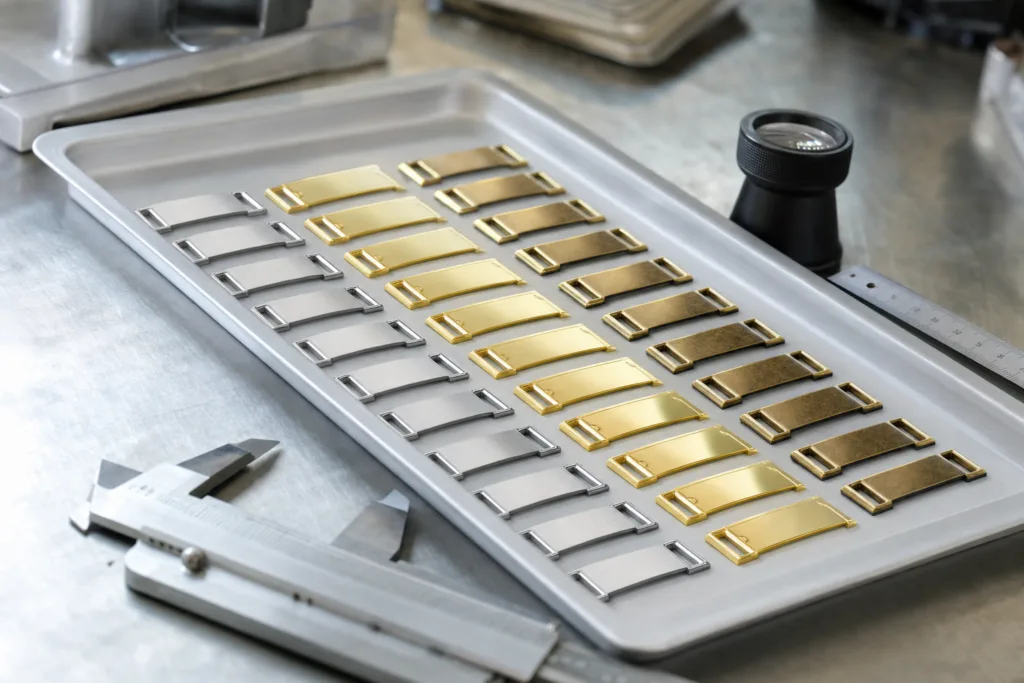
| Brass | Solid feel | Warm, heritage, luxury-leaning | Suitable for vintage, fashion, or premium capsule aesthetics |
| Zinc alloy or formed hardware styles | Flexible for shapes | Dimension-rich | Useful for custom contours and more sculptural looks |
Finish choice is where the emotional tone becomes more obvious. Matte black can feel tactical or modern. Brushed silver can feel understated. Gold-tone can signal celebration, exclusivity, or fashion emphasis. Antique brass can suggest heritage. Gloss polish increases visibility, while textured or brushed finishes tend to hide micro-scratches better in wear.
Color matching should also be handled carefully. If the shoe includes eyelets, aglets, zipper pulls, or logo plates, the dubrae should either coordinate intentionally or contrast on purpose. Random near-matches often look cheaper than clear consistency. That is why brands often benefit from matching metal finishes to brand colors before finalizing a release accessory.
Shape options range from classic rectangular bars to curved plaques, shields, circles, mini plates, or symbolic custom forms. The more unusual the silhouette, the more important it becomes to test lace threading and rotation behavior. A beautiful custom outline that flips sideways during wear will not deliver the effect the designer expected.
Attachment methods and fit considerations
Most dubraes are designed to slide onto laces, but fit is not universal. Lace width, thickness, weave texture, and stiffness all influence the opening size needed. Flat cotton laces behave differently from round rope laces. Elastic laces also change the fit equation.
In production planning, we look at several practical dimensions:
- Inner slot width and height
- Wall thickness around the opening
- Total part weight
- Edge smoothness where the lace passes through
- Whether the dubrae should stay fixed or slide more freely
Sharp internal edges are a common mistake. Even if the outside looks polished, a rough inner passage can fray laces over time. For footwear accessories, edge finishing is not cosmetic only. It affects wear experience.
Another fit consideration is model compatibility. A dubrae designed for thick skate laces may look lost on slim runners. Conversely, a small elegant piece may disappear on bulky lifestyle shoes with oversized lace setups. If a brand plans to use one dubrae across multiple models, size standardization should be reviewed against each lace spec before committing to one universal design.
How brands use dubraes in limited editions, collaborations, and merchandising
Dubraes work particularly well in projects that need a compact collectible detail. Limited editions, artist capsules, store exclusives, anniversary drops, and collabs all benefit from a hardware element that can carry special wording or symbolism without changing the base shoe mold.
We often see effective use in these scenarios:
- Collaboration signatures: one face for the footwear label, one face for the partner.
- City or event editions: neighborhood codes, dates, or coordinates.
- Tiered releases: standard pair with plain dubrae, premium pack with engraved special version.
- Merch bundles: extra dubraes sold with alternate laces, lace locks, or display extras.
For merchandising, dubraes can also bridge footwear and lifestyle goods. The same hardware language can be extended to caps, bags, apparel trims, or collector packaging, creating a unified release identity rather than a one-off shoe detail.
Mini case-study logic: what successful dubrae programs tend to get right
Rather than copying famous examples directly, it is more useful to look at the pattern behind successful dubrae use. Strong programs usually share four traits: they fit the silhouette, they say something concise, they match the broader material story, and they feel intentional in packaging.
A performance-inspired pair may use a brushed or technical finish with a clean engraved code. A luxury streetwear release may use a heavier warm-tone alloy with deeper relief branding. A collaborative drop may use interchangeable dubraes that encourage social posting and lace swaps. The point is not the metal piece alone. It is the complete visual system around it.
When brands ignore that system, the accessory starts to feel generic. A random gold-tone dubrae on a shoe with cool gray hardware and sporty language can look disconnected. But when the dubrae, lace, box insert, and hang presentation all support the same story, consumers read the product as more considered.
How to choose dubrae tags for a personal sneaker collection
Collectors should choose dubraes the same way brands should: by matching the hardware to the silhouette, colorway, and intended use. A pair meant for daily wear may benefit from low-profile, smooth-finish pieces that do not snag. A display or rotation pair can carry more experimental shapes or reflective finishes.
Useful selection questions include:
- Do I want the dubrae to blend in or stand out?
- Will the finish complement existing eyelets or lace tips?
- Are the laces wide enough for this slot opening?
- Do I want logo identity, personal initials, or a neutral accent?
- Will I swap these often, or keep them installed long term?
Collectors who buy multiple sets should also think about storage. Small metal pieces scratch each other easily if loose-packed. Individual sleeves, foam slots, or compartment trays preserve finish quality and keep pairs organized by model or color family.
Design tips for matching dubraes with colorways, materials, and laces
The fastest way to improve dubrae selection is to stop viewing the piece in isolation. Good matching comes from reading the whole shoe. Smooth leather uppers often pair well with cleaner polished or brushed hardware. Suede and vintage treatments often look better with muted, matte, or antique finishes. Technical mesh or trail-inspired builds may benefit from darkened or industrial-feeling metal tones.
Lace style matters just as much. Wide flat laces can carry a broader dubrae face and stronger visual messaging. Round laces usually suit more compact forms. Waxed laces often push the look toward fashion or premium styling, while fuzzy cotton laces may call for a softer, less reflective finish.
At UC Tag, we recommend checking three things together during sample review: finish under natural light, scale on the actual lace, and readability from normal standing distance. Those three checkpoints catch many problems early.
Common mistakes to avoid in marketing or styling
The first mistake is oversizing. A dubrae should add emphasis, not dominate the shoe unless the concept specifically calls for statement hardware. The second is overbranding. Repeating a logo too aggressively on a small part can make the accessory feel forced. The third is poor finish matching, especially when nearby hardware has a different tone or reflectivity.
There are also production-side mistakes:
- Approving artwork that is too detailed for the part size
- Skipping wear and fit testing on actual laces
- Ignoring edge quality inside the threading path
- Choosing a shiny finish without considering scratch visibility
- Using inconsistent plating or coating targets across batches
If the product is intended for children’s footwear or youth-focused lines, brands should also review secure fit and age-appropriate safety requirements. Small detachable accessories may require extra evaluation, and the U.S. Consumer Product Safety Commission provides relevant choking hazard guidance for children’s shoe accessories that is worth checking during development.
Packaging, presentation, and collectibility
With dubraes, packaging influences perceived value more than many teams expect. Because the part is small, the way it is revealed matters. A nicely protected accessory set inside a box insert, foam card, mini envelope, or labeled pouch can turn a minor trim into a collectible detail. Loose hardware thrown into generic polybags usually weakens the premium message.
For brand activations and resale-friendly presentation, custom packaging can also support authenticity cues. Serialized sets, paired left-right versions, alternate finish packs, or collaboration-specific backing cards all make the accessory feel more deliberate. This is one reason many brands explore metal tags for memorable product presentation as part of the broader product experience rather than as an isolated component.
In our production work, packaging decisions should be made early if the dubraes will be sold as separate accessories, collector extras, or gift-with-purchase items. Unit packing, counting accuracy, finish protection, and pack labeling all affect fulfillment quality in bulk orders.
How dubraes support community building, drops, and hype marketing
Dubraes are useful in community marketing because they are visible, swappable, and easy to photograph. That makes them naturally social. A brand can issue alternate dubraes at pop-ups, reward loyal customers with event-specific hardware, or create member-exclusive versions tied to a launch calendar. The accessory becomes a low-footprint but high-recognition touchpoint.
They also support post-purchase engagement. Extra lace colors plus alternate dubraes create styling choices, which gives buyers a reason to share their own setup online. That user-generated content can extend campaign life after the initial drop. For distributors and labels, this is a practical way to encourage participation without redesigning the entire product line.
The most effective dubrae campaigns balance exclusivity with clarity. If every release gets a different dubrae with no visible system, the tactic loses meaning. If special hardware is reserved for true moments such as collabs, anniversaries, community events, or premium bundles, it tends to retain stronger signaling power.
Conclusion
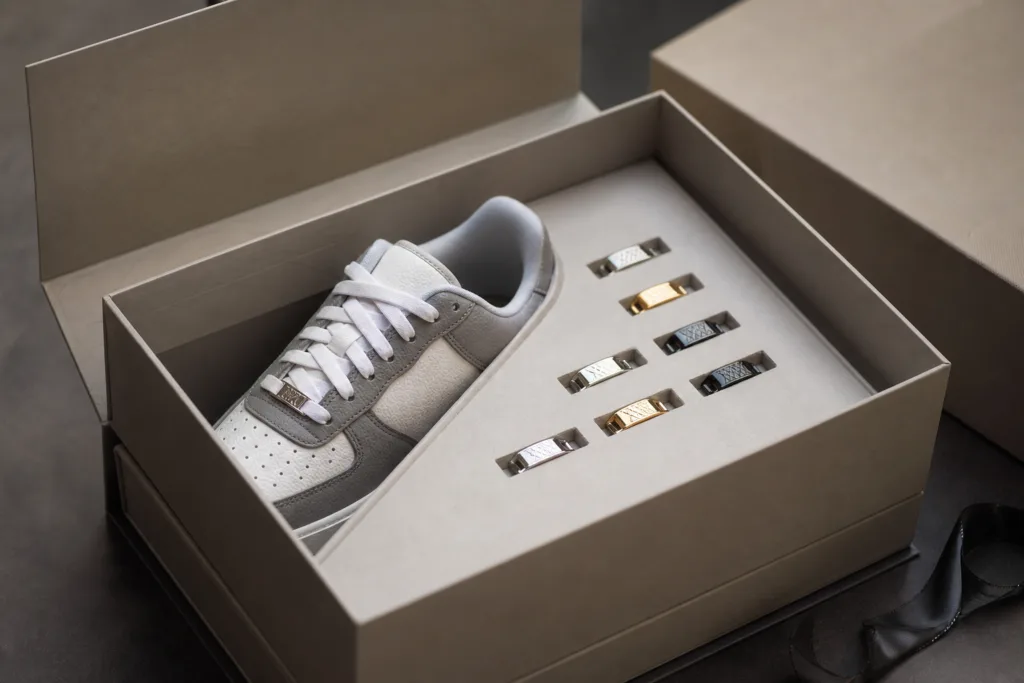
Shoe Laces Dubrae Tags are small, but in sneaker culture they can carry aesthetic, collectible, and marketing weight far beyond their size. They help shape silhouette perception, signal brand identity, support personal expression, and add value to launches, collaborations, and collector packaging. The key is treating the dubrae as a real product component, not a last-minute ornament. When material, finish, shape, fit, logo treatment, and presentation are aligned, the result feels intentional and memorable for both brands and collectors.
FAQs
What are shoe lace dubrae tags used for?
Shoe lace dubrae tags are used to add visual detail, branding, or personal expression to sneakers by fitting a small accessory onto the laces. They can highlight a logo, mark a collaboration, celebrate a limited release, or simply change the look of a pair without altering the shoe permanently.
Which metal is best for custom dubrae tags?
The best metal depends on the design goal. Aluminum is lightweight and useful for color-focused projects, stainless steel supports a crisp and durable premium look, and brass offers a warmer heritage feel. The right choice should balance weight, finish style, expected wear, and budget.
How do I choose the right dubrae size for my laces?
Start with the actual lace width and thickness, then compare those measurements with the dubrae opening. Flat wide laces usually need a larger slot than round laces, and the inside edges should be smooth so they do not damage the lace. Sampling on the real shoe is the safest way to confirm fit.
Can dubrae tags be engraved with logos or custom text?
Yes, dubrae tags can be engraved, etched, stamped, or otherwise marked with logos, initials, dates, symbols, or short phrases depending on the material and production method. For small parts, simple artwork usually performs better because fine details can become difficult to read.
Are dubrae tags good for sneaker brand marketing?
Yes, they can be very effective when used with intention. A dubrae creates a compact brand signal on a highly visible part of the shoe, and it works especially well for collaborations, limited editions, event releases, premium packaging, and collector-focused accessories.
What should brands check before ordering dubrae tags in bulk?
Brands should confirm artwork legibility, finish consistency, lace fit, edge quality, packaging method, quantity planning, and sample approval before bulk production. It is also important to review how the dubrae matches the shoe hardware and whether the accessory is intended for adult fashion use or youth products with extra safety considerations.