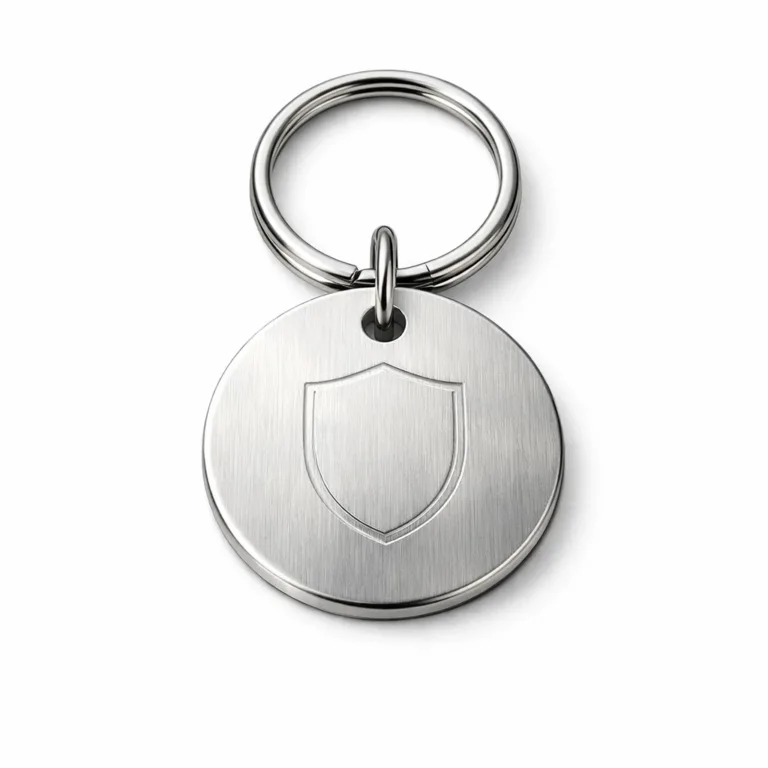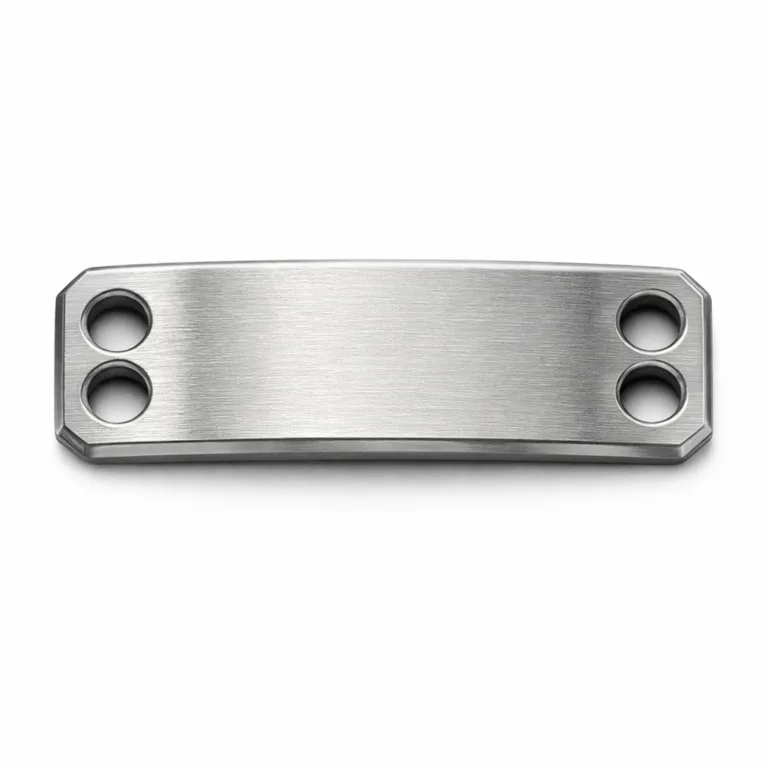
Introduction to Badge Attachments
Badge attachments are more than just hardware—they’re the critical link between your brand identity and how it’s displayed in the real world. Whether for corporate events, industrial facilities, or daily staff uniforms, the method chosen for securing a badge influences not only its functionality but also its durability and user experience.
Two attachment solutions dominate the market: safety pins and clutch pins. Both offer strengths and trade-offs, impacting factors like functionality, ease of use, and outdoor resilience. For anyone faced with selecting badge attachments—especially procurement managers and engineers—making the right choice can mean the difference between a flawless event or ongoing replacement costs.
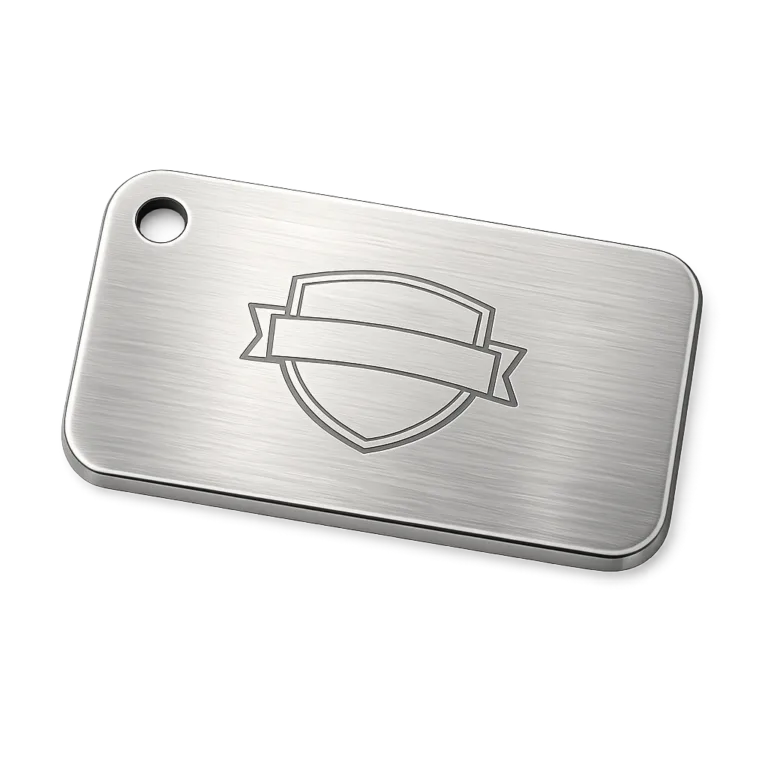
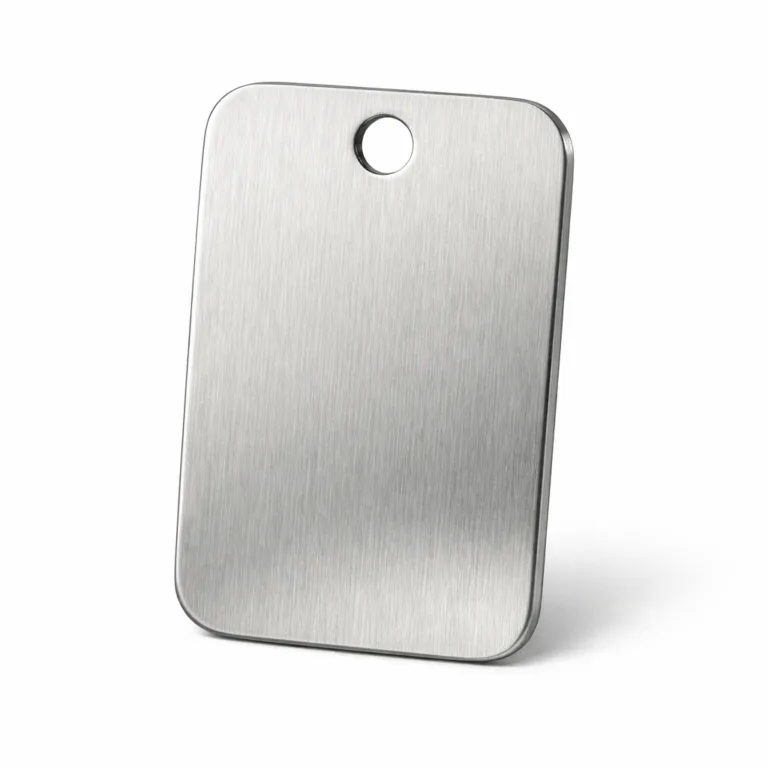
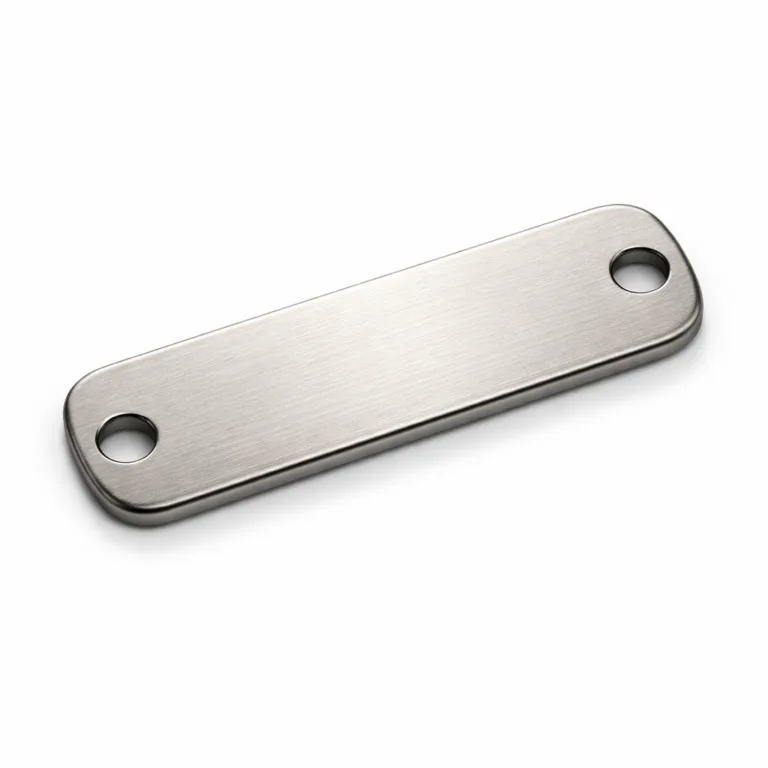
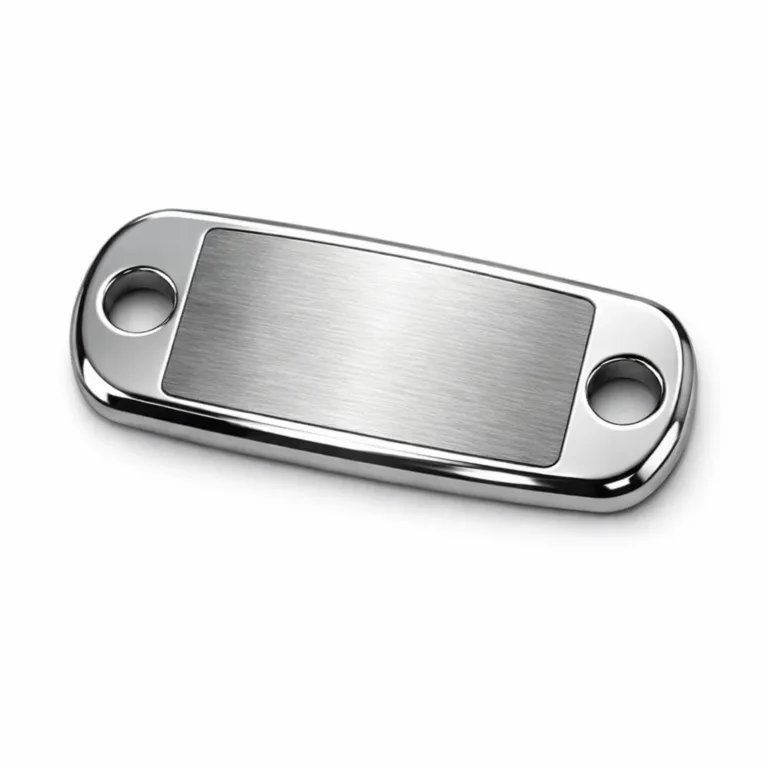
This comprehensive guide to safety pins, clutch pins, badge attachment systems and metal tags will clarify their differences and help you choose the most reliable fit for your application.
Definitions and Basics of Safety Pins and Clutch Pins
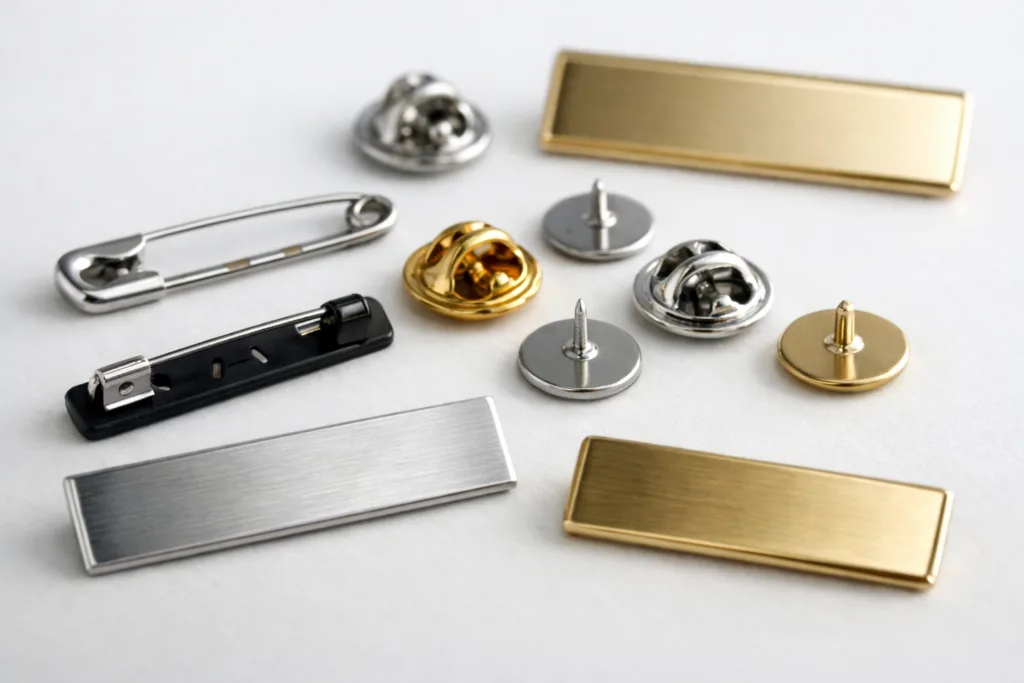
Safety pins feature a classic design: a single, coiled metal wire with a secure locking catch. They pass through fabric, locking into their shield and holding badges or tags in place. They’re the tried-and-true choice for temporary and secure badge attachment where speed and simplicity matter.
Clutch pins, by contrast, use a two-part construction—a sharp, straight pin affixed to the badge, and a separate clutch (also known as a butterfly or military clutch) that locks the pin behind the fabric. The design offers a streamlined, low-profile look and is favored anywhere badges are intended to look polished and remain stable.
Safety pins are typical for quick-change environments—visitor badges at plants, temporary event credentials, or ID tags for equipment. Clutch pins shine on corporate logo plates, enamel pins, and any application demanding discrete, semi-permanent, or decorative attachment.
Deciding between safety pins and clutch pins isn’t simply about preference—it’s about choosing the right tool for the specific job and context of your metal tag or badge attachment.
Functionality Comparison: Safety Pins vs. Clutch Pins
When comparing safety pins and clutch pins in day-to-day scenarios, a few key distinctions arise. Attaching a safety pin is fast and straightforward; it’s universally familiar, requiring only to pierce fabric and snap the catch shut. Removal is equally fast, ideal for situations where switching badges is routine or speed is essential.
Clutch pins require careful placement. The pin passes through the item—often with pre-drilled holes in the metal tag—then the clutch secures it from the back. This two-step mechanism provides extra stability but needs more time and attention, especially in thick materials. The payoff is a clean, professional look with minimal badge movement.
Over time and with frequent handling, safety pins can bend or lose tension. Clutch pins are more robust for repeat use, and their clutch backs are replaceable if lost or worn. However, attaching clutch pins to delicate fabrics can risk snags or small holes; safety pins, while gentler, also leave pin marks but are less likely to cause fabric tears if handled correctly.
For events or temporary use, safety pins get the nod—speed and cost win out. For brand-forward, high-visibility identification, clutch pins excel. Permanent displays, commemorative badges, and retail branding often lean toward clutch pins for their secure, aesthetic finish.
| Comparison Factor | Safety Pins | Clutch Pins |
|---|---|---|
| Application Speed | Very Fast | Moderate |
| Profile/Aesthetics | Visible Hook | Low Profile |
| Fabric Compatibility | All types; can stretch fabric | Best on stable or thick fabrics |
| Repeat Use | Can deform over time | Clutch easily replaceable |
| Cost | Lowest | Low-Medium |
- Safety pins: Ideal for quick, cost-sensitive, and temporary badge attachment needs.
- Clutch pins: Best for branding-driven, presentation-focused, and repeated long-term use.
Materials Comparison for Durable Attachments
The longevity and reliability of any badge attachment depend significantly on the materials used. Safety pins and clutch pins most commonly consist of aluminum, stainless steel, or brass—each offering distinct advantages for various settings.
Aluminum pins are lightweight, corrosion-resistant, and cost-effective, perfect for mass production or disposable needs. Stainless steel, on the other hand, delivers unbeatable strength and top-tier corrosion resistance, excelling in demanding industrial settings or outdoor events. Brass sits in the middle, valued for its classic gold hue, moderate strength, and decent resistance to tarnish.
The choice of metal tag and attachment material should also reflect your environment. For example, aluminum may oxidize more quickly in coastal or chemical-heavy areas if not anodized, whereas brass can develop patina in humid climates. Stainless steel resists nearly all environmental hazards, minimizing maintenance costs.
It’s also important to match the badge design to the attachment. Heavier, thicker metal tags are best paired with robust stainless steel clutch pins or military-grade safety pins to prevent sagging or accidental detachment. Lighter tags and decorative nameplates mesh well with aluminum or brass pins for balance and aesthetics.
Manufacturing Methods for Badge Attachments
The way your safety pins or metal tag attachments are made has a direct impact on quality, performance, and cost. Stamping is frequently used for mass-producing uniform safety and clutch pins—delivering consistency, low unit costs, and good durability when using hardened metals like stainless steel.
Laser engraving and chemical etching are increasingly popular for custom orders or to permanently mark identification codes on attachments. UV printing offers another layer—allowing for branding, logo details, or color coding on the attachment surface, boosting traceability and brand visibility.
For buyers managing high volumes, mass stamping ensures cost-effectiveness and short lead times. Projects requiring unique shapes, extra legibility, or brand features often use laser or CNC processes. For rugged use, Rain Chen at UC Tag notes that deep-etched or thick-gauge stamped safety pins, matched to the metal tag thickness, deliver superior outdoor performance even under vibration or mechanical strain.
Customization adds production steps. Deciding on artwork placement, serialized identification, or special finishes may require longer manufacturing time or a slightly higher price point, but ensures individualized functionality for your specific scenario.
Whether ordering for bulk distribution or small-batch bespoke branding, aligning the manufacturing method with how the badge attachment and metal tag will be used always pays off in both usability and appearance. For adhesive-based assemblies, read UC Tag’s guide on stick-on metal logo tags with 3M backings.
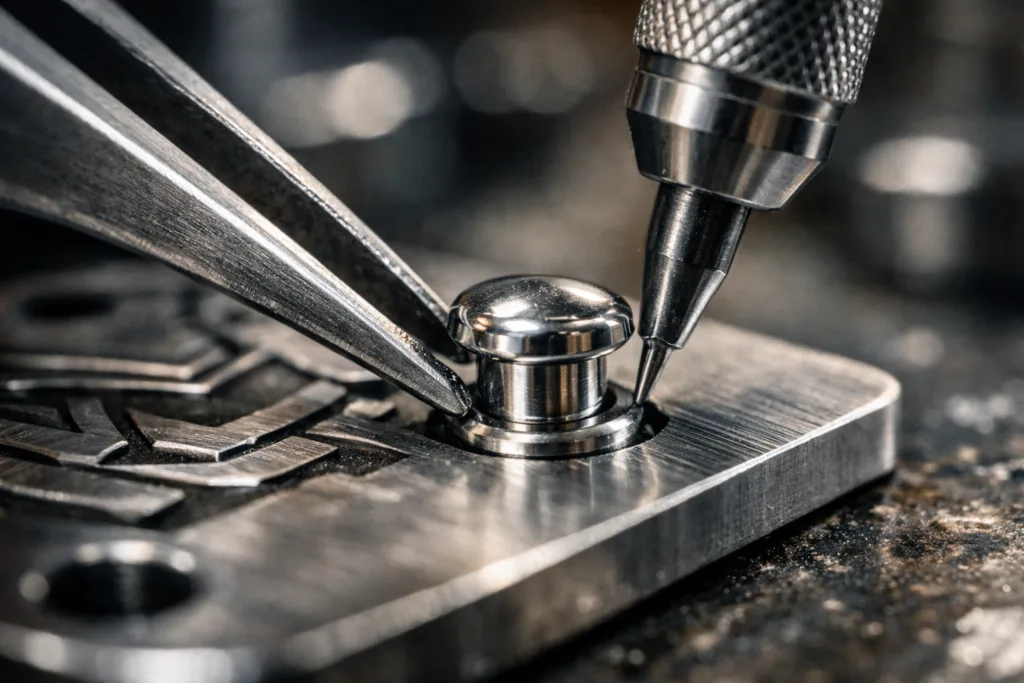
Design & Spec Checklist for Badge Attachments
Getting the design specifications right for your badge attachment helps prevent common pitfalls and ensures a seamless user experience. Here’s a practical checklist to guide your selection process for both safety pins and clutch pins:
| Specification | Safety Pins | Clutch Pins |
|---|---|---|
| Pin Length | 20–38 mm typical | 8–12 mm standard |
| Pin Thickness | 0.6–0.9 mm | 0.7–1.2 mm |
| Finish | Nickel, brass, colored enamel | Nickel, gold, matte, textured |
| Attachment Points | 1 | 1–2 per badge |
| Readability Impact | Minimal if positioned correctly | None—full face visible |
| Mounting Options | Pinback, adhesive optional | Pinback with clutch, holes in tag |
- Choose pin size to match tag weight and thickness
- Opt for smooth, corrosion-resistant finishes for outdoor or frequent-handling applications
- Confirm readability and logo orientation are not blocked by the attachment hardware
- Consider mounting holes, adhesive, or custom positions for convenience
- Account for tolerances—tight clutch fit prevents badge rotation, safety pins must have adequate coil tension
For heavy-duty or high-moisture settings, thicker pins and double clutch points enhance long-term performance. Always test prototypes in real-world conditions before bulk ordering.
Durability & Testing: Holding Up in Various Conditions
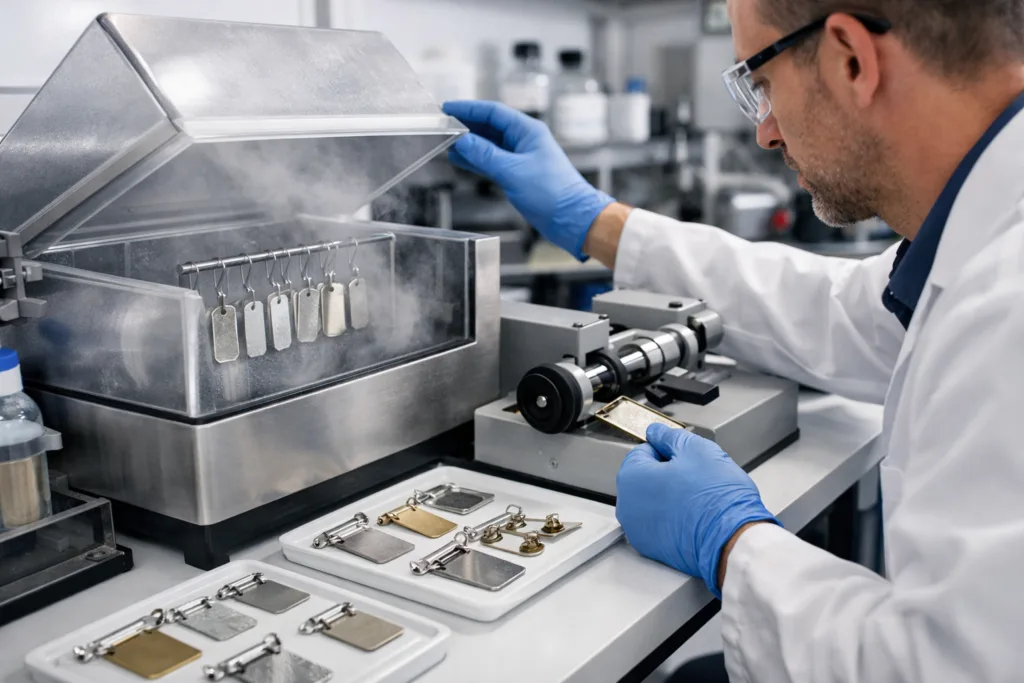
Durability testing is a non-negotiable phase for any badge attachment that must perform in unpredictable or harsh environments. Safety pins and clutch pins should undergo tests for corrosion resistance (like salt spray testing), abrasion from clothing or movement, and exposure to UV and moisture.
Salt spray simulations help reveal which materials will withstand marine or high-humidity deployments. UC Tag’s quality teams typically favor stainless steel or anodized aluminum for safety pins that must survive aggressive conditions, while brass clutch pins may be chosen for indoor, display-oriented applications where design matters as much as durability.
Clutch pins show exemplary performance for permanent or repeated-wear use, resisting fatigue over countless attach-detach cycles. In some failure cases, safety pins may deform if caught or if over-tensioned, and clutch pins can be lost if the clutch back isn’t fully engaged. A procurement manager at a food processing plant shared how switching from standard steel safety pins to stainless clutch pins cut badge loss rates by 40% and extended badge lifespan by two years.
Fit for purpose means matching badge and attachment to real-world stresses—abrasion, outdoor exposure, laundry cycles (for uniforms), and rough handling. When failure is not an option, invest in robust materials and full lab testing to guarantee safety pins, clutch pins, and overall attachment integrity.
Industry and Application Fit: Use Cases for Badge Attachments
The best badge attachment method is always defined by its application. At trade shows and conferences, safety pins make setup and changeover quick for hundreds of guests, especially when used with lightweight event badges. Clutch pins, on the other hand, fit perfectly for staff ID tags and recognition pins where repeated wearing and a clean presentation matter.
Healthcare and pharmaceutical industries often choose safety pins for fabric compatibility, minimizing risk of needle-stick or badge loss during daily shifts. Corporate and retail clients tend to favor clutch pins for branded metal nameplates, where aesthetic and stability are top priorities. For outdoor construction, ruggedized clutch pins are chosen for their resistance to vibration and accidental snagging.
UC Tag has supplied thousands of metal tags where the selection of badge attachment was a deciding factor. For example, a logistics company switched to safety pins for event guest tags due to their all-purpose fit, while a luxury brand opted for matte gold clutch pins on logo plates to enhance perceived value at point-of-sale.
User testimonials echo these choices: “Switching to clutch pins on our new keychain tag batch eliminated lost badges entirely,” notes a facility manager. Another, from a uniform supplier, states: “We use safety pins for their versatility—every garment type, every season.”
Common Mistakes and Troubleshooting in Badge Attachment
Even experienced buyers can overlook critical factors in badge attachment selection. Common mistakes include choosing the wrong pin length or adhesive, mismatching pin and badge materials, or neglecting environmental stress testing. These errors often lead to unreadable badges, early corrosion, or tags that detach too easily.
- Poor readability: Avoid badge attachment placements that cover essential text or QR codes.
- Wrong adhesive: Select 3M high-bond backings for metal-to-plastic or high-humidity environments. For more on adhesives, check UC Tag’s article on stick-on metal logo tags.
- Corrosion issues: Always match stainless or anodized attachments in marine or chemical settings.
- Bending/deformation: Heavier tags need thicker or double clutch points; thin pins bend faster under stress.
When troubleshooting, first check fit and tolerances—loose clutch pins can be swapped for tighter backs. For safety pins, test for smooth coil return and locking catch function. Never underestimate how the smallest attachment detail can prevent ongoing maintenance headaches or early badge failure.
Ordering Guide: What to Consider Before Purchasing
Smart ordering ensures your badge attachments arrive on time, work flawlessly, and integrate into your workflow. Key considerations for safety pins, clutch pins, and other badge attachments are:
- Minimum order quantities (MOQ): Bulk safety pins typically have low MOQs; custom clutch pins may require higher starting quantities.
- Lead times: Standard hardware ships quickly; custom finishes or engraved metal tags may extend timelines by several weeks.
- Artwork and proofing: Always supply vector graphics for logos and double-check proofs for attachment hole size, position, and orientation.
- Packaging: Resealable bags or trays prevent scratches; ask for specific controls if badges must be pre-assembled on cards or backing sheets.
- Shipping: Factor in regional sourcing, import times, and documentation, especially for high-value or serial-numbered metal tags.
UC Tag’s project team helps ensure art files are optimized for both function and finish. If you’re unsure about specifications, request pre-production samples or standard sample packs for hands-on review before full production starts. For personalized consulting and prototyping, see custom metal tag solutions.
Frequently Asked Questions
What is the main difference between safety pins and clutch pins?
Safety pins are single-piece attachments that lock and unlock quickly, while clutch pins use two parts—a pin and a locking clutch—for a more secure and discreet connection on badge attachments.
Which attachment is best for thick fabric or heavy metal tags?
Clutch pins, especially with double posts, are ideal for heavy tags and thick materials because they distribute weight evenly and minimize tag rotation or sagging during use.
Can badge attachments withstand outdoor or industrial environments?
Yes, both safety pins and clutch pins can withstand harsh environments if made from corrosion-resistant metals like stainless steel, but safety pins may deform more easily under repeated industrial stress.
How should I avoid badge failure due to adhesive or pin selection?
Always choose adhesives rated for the target material, test pinbacks to ensure compatibility with badge thickness, and avoid under-specifying pin length or gauge for demanding environments.
How can I reduce badge loss at events?
Use safety pins for mass events with frequent badge changes, secure clutch pins for long-lasting use, and always test the attachment with your specific event materials before distribution.
What information is needed when ordering custom badge attachments?
Provide artwork in vector format, specify badge material, attachment placement, order quantity, preferred finish, packaging, and any required compliance or logistical details for a flawless badge attachment order.
Related Reading
- How 3M Adhesive Backings Transform Stick-On Metal Logo Tags
- A Practical Guide to Chemical-Resistant Industrial Tags
- Expert Advice on Magnetic Name Tag Backings for Sensitive Fabrics
- Rust-Proofing Strategies for Long-Lasting Metal Tags in Humid Environments
- How Deep Engraving on Metal Tags Ensures Legibility and Longevity
- How Brass and Steel Tags Compare Over Five Years of Wear