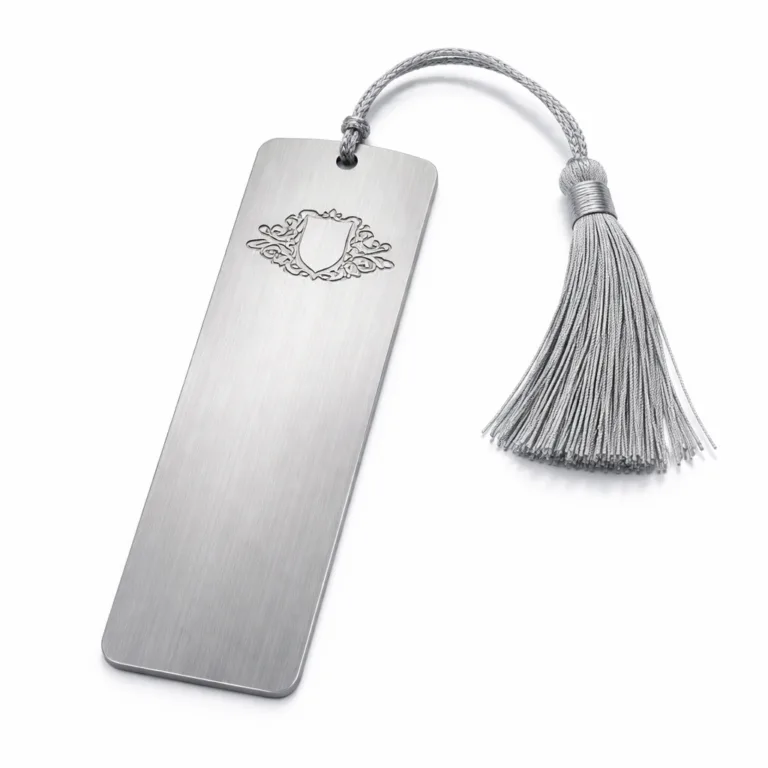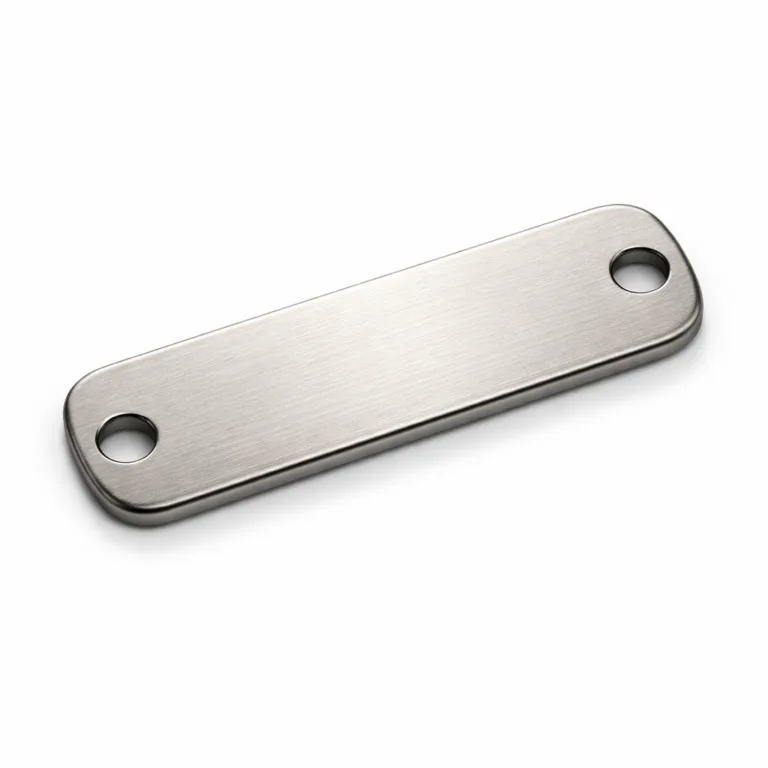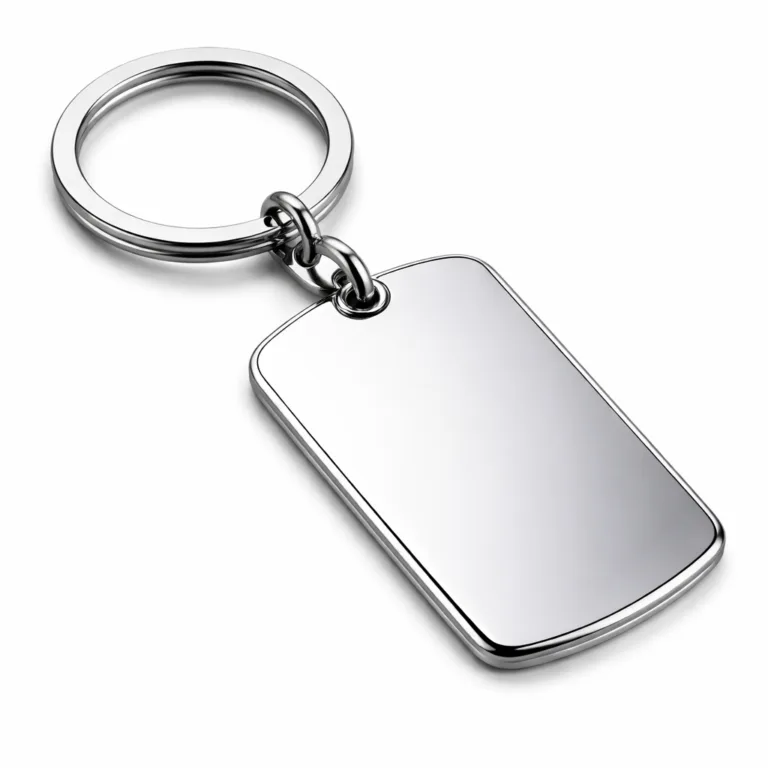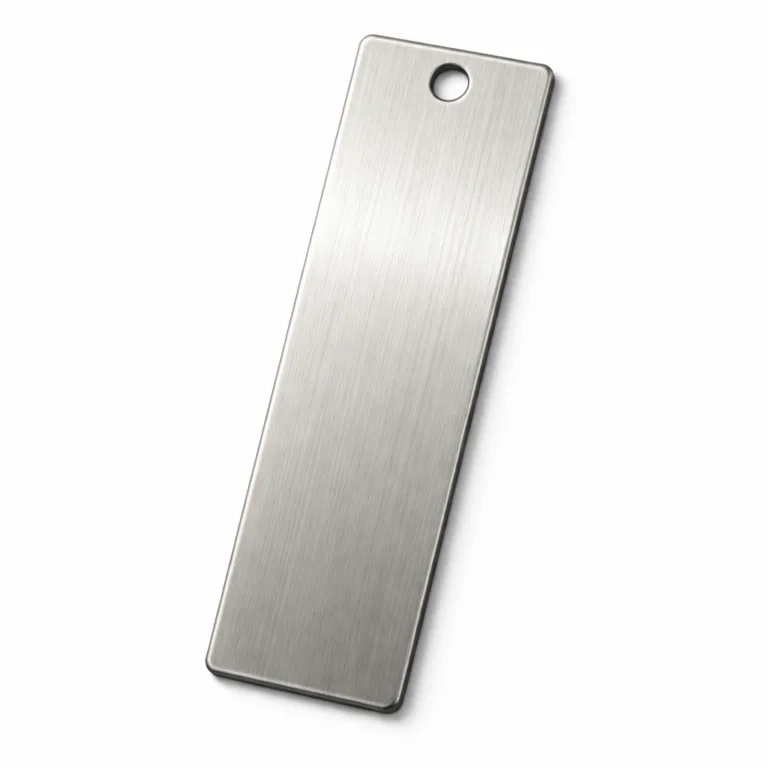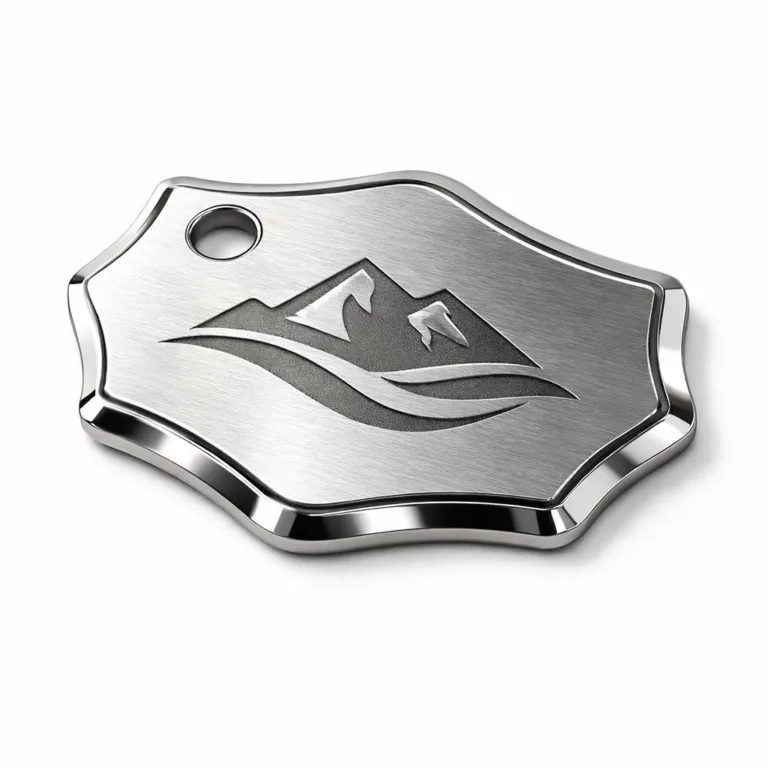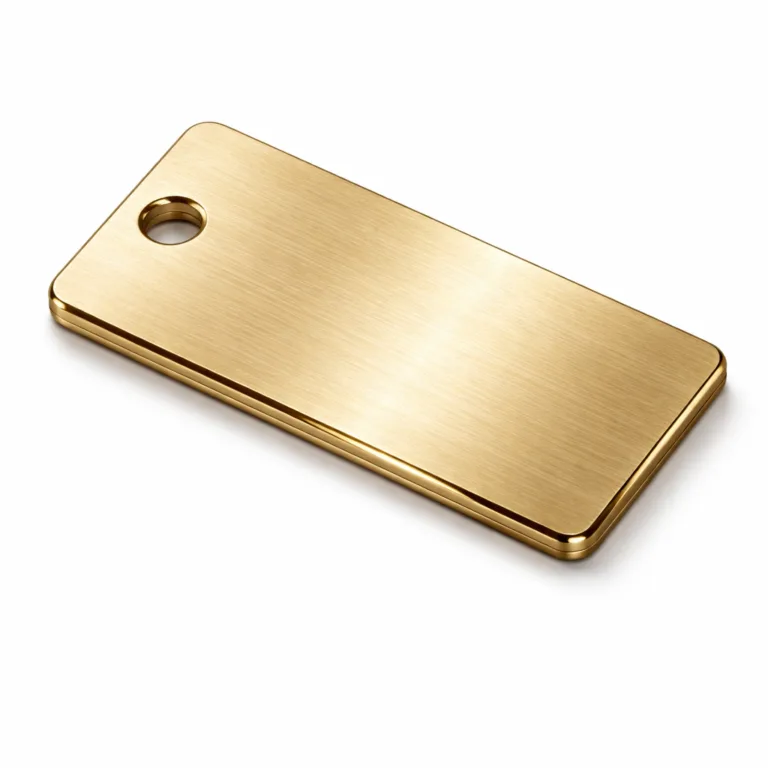
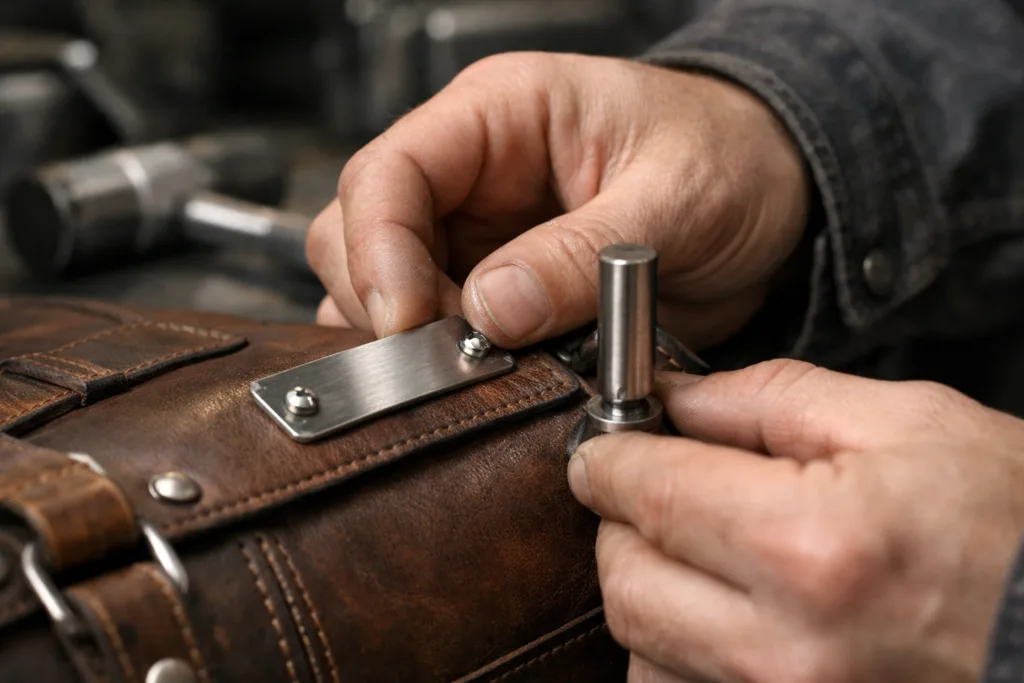
Attaching metal nameplates to leather bags requires strength, durability, and an eye for detail. The right attachment methods, especially choosing suitable rivets for leather, ensure that nameplates stay secure and the final product has a polished, professional finish. In this guide, you’ll discover how to select, apply, and personalize rivets and metal nameplates for leather bags, including practical steps, troubleshooting, and industrial insights.
Understanding Rivets and Their Role in Leather Work
Rivets are mechanical fasteners that join materials by passing a stem through pre-drilled holes and then forming or pressing the tail to create a permanent bond. Typically, a rivet consists of a head, a cylindrical shaft, and a tail that is deformed during installation.
The main reason for using rivets to attach metal nameplates to leather bags is the blend of lasting strength and clean aesthetics they deliver. Unlike adhesives, which may break down over time, or sewing, which might be insufficient for rigorous use, rivets offer a robust mechanical hold that stands up to repeated flexing and rough conditions.
Rivets also enhance the appearance of leather goods. Beyond securing the nameplate, they add a crisp, finished look—especially when chosen to complement the bag’s color or logo plate finish. A carefully selected rivet type and finish can turn a practical tag into a true brand asset.
The mechanical advantage of rivets lies in their resistance against pull-out and shear forces. This is particularly important for leather bags that may be handled, dropped, or exposed to changing environments. Choosing the right type, size, and material of rivet for leather applications is key to ensuring durability and preventing premature failure—something both artisans and mass manufacturers must consider.
- Rivets are ideal for heavy-duty or high-value leather bags that demand superior attachment strength over time.
- The choice of rivet directly affects both the bag’s appearance and the longevity of the metal nameplate.
- Mechanical fastening with rivets is less sensitive to weather and aging than glue or stitching.
Types of Rivets Suitable for Leather Applications
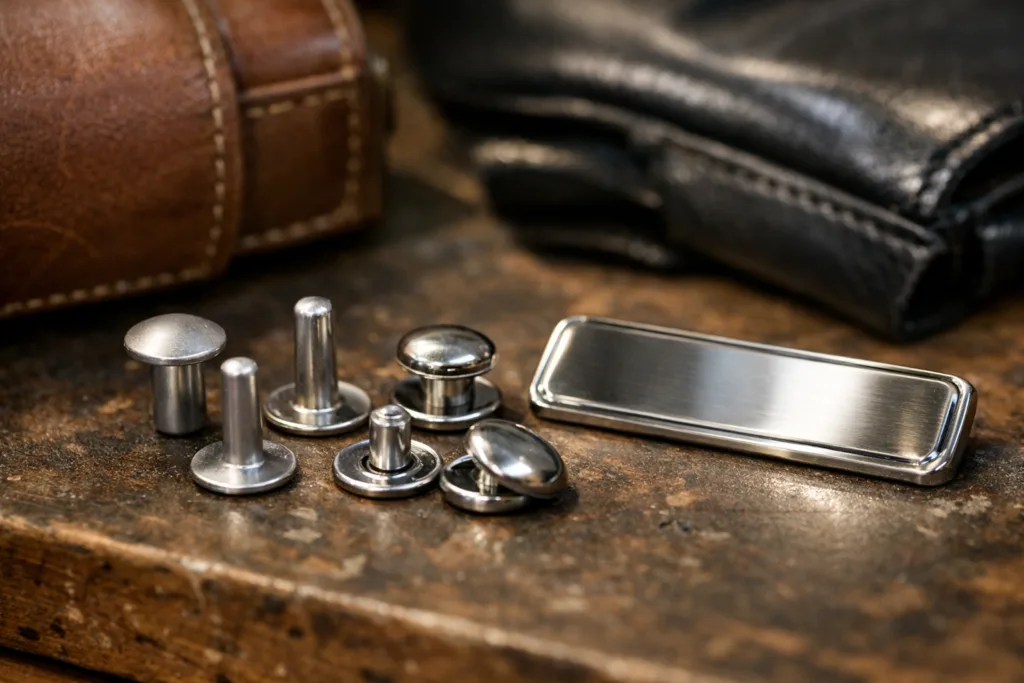
Leather bag makers can choose from a variety of rivet types, each designed to suit different aesthetics and functional needs. Solid rivets, made entirely of a single metal piece, offer unmatched strength. These are often used in thick or heavily-loaded leather pieces where a permanent bond is vital.
Tubular rivets, featuring a hollow center, require less force to set and are suitable for most bag applications. They are easier to install, which can be beneficial on softer leathers or projects with higher production volume.
Snap rivets, sometimes referred to as double cap or two-piece rivets, consist of a post and a cap. They are popular in flexible leather designs or where a rounded, visually clean head is desired on both sides of the bag. Snap rivets make for fast, neat assembly and often require only a mallet and setting tool for professional results.
Decorative rivets go a step further by incorporating embossed patterns, logo branding, or colored enamel for a unique look. For fashion and brand-driven projects, decorative options open up avenues for customization and enhance both tactile and visual appeal.
Rivet size is important—too short and it won’t grip the material; too long and it may deform or look unsightly. Thicker leathers (3mm or more) generally require longer rivets for a solid hold. For thin or supple leathers, a low-profile or shorter rivet is preferred to avoid puckering.
When selecting rivets for your project, match the rivet’s post length to the combined thickness of your leather and metal nameplate (plus around 1mm for clinching). Test fit with scrap material, when possible, to avoid installation errors.
| Rivet Type | Best For | Strength | Aesthetic | Recommended Leather Thickness |
|---|---|---|---|---|
| Solid Rivet | Heavy-duty, outdoor, industrial | Maximum | Minimalist, utilitarian | 2.5mm and above |
| Tubular Rivet | General bags, light to medium use | Strong | Versatile, classic | 1.5–3mm |
| Snap Rivet | Fashion/leisure bags | Good | Clean, rounded | 1–4mm |
| Decorative Rivet | Branding, unique looks | Varies | Highly customizable | Flexible |
Materials Comparison for Rivets
The material chosen for rivets directly affects both the durability of your leather bags and how your metal nameplates will age alongside the hardware. Common materials include aluminum, stainless steel, and brass.
Aluminum rivets are very lightweight, making them ideal for fashion bags where weight is a concern. They offer reasonable corrosion resistance but may not hold up as well as other metals in extremely harsh conditions.
Stainless steel rivets excel in corrosion resistance and overall strength, making them a staple for outdoor, industrial, or high-value leather products. However, they can be heavier and require more force to set, which is worth considering in large-scale production or when working with delicate leathers.
Brass rivets are popular for their distinctive gold-like appearance and their resistance to tarnishing. Brass ages with a classic patina, which can be desirable in luxury or vintage-inspired designs. They provide solid durability, especially for indoor or moderate outdoor use.
The finish of your rivets will influence how your metal nameplates look over time, ensuring color matches, contrast, or blends with the underlying plate. Some projects benefit from coatings such as nickel or PVD for added scratch and chemical resistance.
For strictly outdoor use, choose stainless steel or anodized aluminum for optimal weathering. When aesthetics—such as branding or luxury—are dominant, brass or plated finishes can make all the difference.
Manufacturing Methods for Metal Nameplates
How you make your metal nameplates affects not only their appearance and branding possibilities, but also how well they integrate with rivet-based attachment methods.
Engraving, laser or mechanical, offers permanent markings with deep contrast and excellent legibility. It’s compatible with most rivet types, since engraved plates tend to remain flat and have smooth, uncoated edges—important for snug rivet applications.
Stamping is ideal for mass production. It creates crisp characters and logos by pressing designs into the metal. Stamped nameplates are slightly contoured, which often pairs well with solid or tubular rivets that can handle minor plate bending.
Chemical etching delivers high detail at shallow depth, producing refined, smooth plates with excellent surface finish. Etched nameplates mate perfectly with snap or decorative rivets when a flawless, modern look is needed.
Regardless of manufacturing method, precise hole placement is critical. All holes for rivets must be aligned and sized to avoid excessive movement while allowing the rivet to flare without deforming the plate. Using CNC or laser for hole creation is a proven best practice.
For added branding, custom logo engraving, colored enamel fills, or embossed elements can help your product stand out. Some production lines, like those at UC Tag, use jigs to guarantee repeatable hole alignment, ensuring secure and professional assembly at scale.
Design and Specification Checklist for Metal Nameplates
Proper planning leads to secure, durable and attractive results. Every buyer should confirm their design aligns with both the leather bag’s construction and the rigors of mass production.
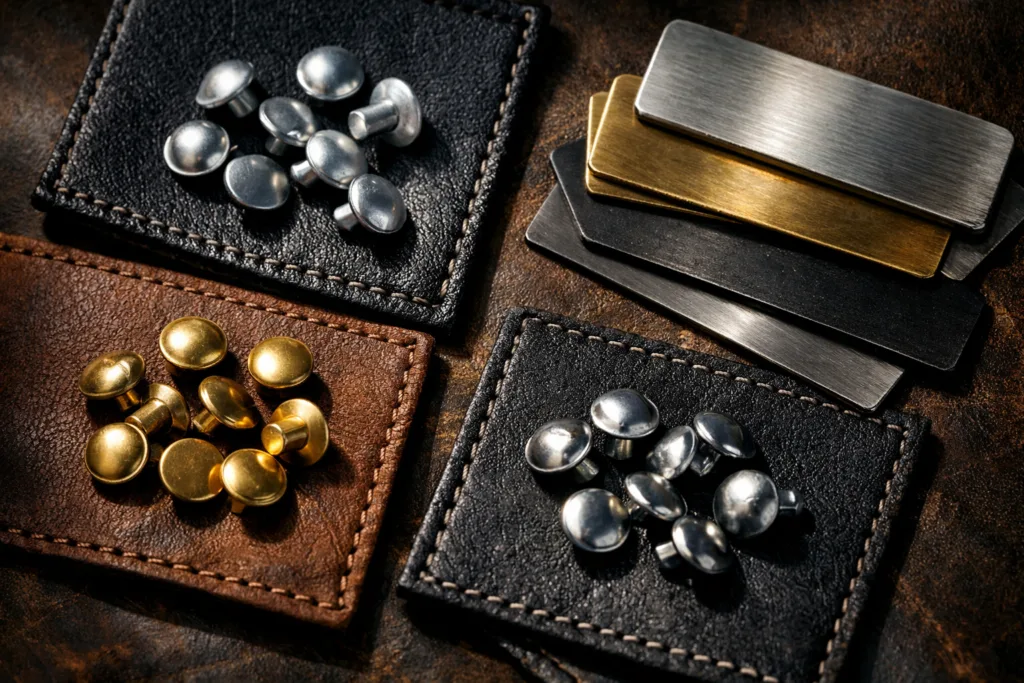
- Minimum recommended plate thickness: 0.6–1.2mm for durability in most leather applications
- Finishes should support intended use (for example, matte/brushed for scratch hiding, gloss for visual pop)
- Hole diameter: 0.3–0.5mm larger than rivet shaft diameter to allow clean flaring
- Edge radius: Avoid sharp corners to reduce tear risk in leather
- Text height: At least 2mm with high contrast (use dark fill on light plates or vice versa)
- Hole-to-edge spacing: At least 2mm to minimize chance of plate cracking during riveting
- Check tolerances on samples before mass run—especially with thick or irregular leathers
| Design Parameter | Recommendation | Reason |
|---|---|---|
| Plate Thickness | 0.6–1.2mm | Resists warping and denting |
| Finish | Matte, brushed, or gloss | Aligns with brand, hides scratches |
| Rivet Hole Diameter | +0.3–0.5mm over shaft | Ensures clean installation |
| Hole Spacing | 2mm from edge | Prevents cracking |
| Text Height | >2mm | Legibility |
Durability and Testing Standards for Rivets and Metal Nameplates
Durability isn’t just a goal—it’s a requirement for most industrial and premium consumer applications. Common testing standards for rivets and metal nameplates include corrosion resistance (often via salt spray tests), abrasion testing, and, for outdoor products, UV exposure to assess long-term fading or breakdown of finishes.
For outdoor and harsh environments, select materials with proven corrosion resistance (such as stainless steel or anodized aluminum). Ensure metal nameplates are tested for abrasion and UV resistance, especially if bags are deployed in marine, military, or outdoor recreation contexts.
It’s smart to specify your expected conditions when requesting quotes or samples. A simple checklist may include: minimum hours of salt spray testing, verified adhesion of color/enamel, and dimensional checks after environmental cycling.
Identifying suppliers that publish results from recognized standards (such as ASTM, ISO, or MIL specs) helps guarantee product performance. Certifications, like RoHS or REACH for materials, can increase acceptance in regulated industrial sectors.
Industry Applications and Use Cases for Metal Nameplates with Rivets
Metal nameplates secured by rivets are essential in fields where identification, longevity, and durability count. In outdoor recreational gear and equipment, such as hiking or tactical leather bags, rugged nameplates aid traceability and withstand the elements.
Fashion bags use riveted metal tags for discrete branding, blending visual appeal with function. Personalization—whether for luxury, logo, or custom text—turns every bag into a brand story.
Pet products frequently feature riveted nameplates for reliable identification. This customization is invaluable for owners who want details to remain readable regardless of how active their pets may be.
Industrial and field use demands absolute clarity and traceability, often including serial numbers, QR codes, or batch data. Asset tags on tool bags or equipment covers rely on robust rivet attachment methods to discourage tampering and support long-term data retention.
Custom shapes, colors, and finishes provide further branding flexibility. Projects can specify custom logo applications or special-shaped nameplates for a one-of-a-kind touch—making each bag stand out in a crowded market.
Common Mistakes and Troubleshooting Tips
One common mistake is mismatching rivet type or material with leather thickness—leading to detachment or disrupted bag surfaces. Take the time to check both the length and diameter of the rivet relative to tag and leather stack height.
Poor readability on metal nameplates often comes from shallow engraving or low-contrast finishes. Specify deeper marking techniques and high-contrast fills for crucial data.
Adhesive use is sometimes attempted with metal nameplates but frequently fails over time, especially under high humidity or abrasion. Rely on mechanical attachment for critical applications, and if adhesive backing is used, pair with rivets for redundancy in demanding environments.
Corrosion is another concern, especially with mixed-metal assemblies. Use compatible materials and proven protective finishes; if corrosion appears, inspect for finish breakdown or environmental exposure—replace affected hardware promptly.
Proper installation starts with rivet hole placement—misaligned holes make assembly frustrating and weaken attachment. Use a punch guide or jig, and always check spacing before final setting to prevent costly errors on finished bags.
Ordering Guide for Custom Metal Nameplates and Rivets
Sourcing custom metal nameplates and rivets requires planning to ensure the highest quality with no surprises. Expect minimum order quantities (MOQs) for custom shapes and branded finishes, typically starting at several hundred pieces for most manufacturers.
Lead times vary based on complexity of design, finishes, and production batch size. Standard runs may require 3–5 weeks from proof approval, with added time for custom coatings or packaging requests.
Begin the process by gathering artwork files in vector format and submitting specific dimension, finish, and hole placement requirements. Reputable suppliers provide digital or physical proofs for review and sign-off before mass production, minimizing costly errors.
Sampling is a worthwhile investment: request a small production batch for evaluation before committing. Accounts for real-world tolerances and allows you to test assembly on your actual leather substrates.
Finally, discuss packaging and shipping. Small metal nameplates and rivets are prone to surface scratching in transit—ask about individual bagging, foam separation, or protective films when ordering fragile or high-polish items.
Frequently Asked Questions
Which rivet types are most secure for thick leather bags?
Solid or tubular rivets are most secure for thick leather bags due to their robust mechanical hold and resistance to pull-out, especially when properly sized for material thickness.
What materials last longest for outdoor leather bag applications?
Stainless steel and anodized aluminum rivets offer top durability and corrosion resistance, making them ideal for outdoor leather bags exposed to moisture and frequent handling.
How can I customize metal nameplates for my brand?
Nameplates can be customized by stamping, engraving, adding color enamel, or creating unique shapes and logo patterns; submit vector artwork and finish preferences when ordering.
What are early signs of attachment failure in metal nameplates?
Look for loosening, shifting or rattling of the nameplate, visible gaps around the rivet heads, or any surface corrosion at hardware joints—these all signal possible attachment failure.
Are riveted metal tags suitable for pet and equipment bags?
Yes, riveted metal tags are widely used for pet, luggage, and equipment bags, providing lasting identification even under heavy activity or stressful environmental conditions.
Can I use adhesives instead of rivets for attaching metal nameplates?
While adhesives may provide a temporary hold, they are not as durable or reliable as rivets for long-term and heavy-duty leather bag applications, especially outdoors.
Related Reading
- Long-Term Brass vs Steel Tag Durability: What Real-World Data Shows
- How Deep Engraving Maximizes Tag Legibility and Lasting Impact
- Explore Custom Metal Tag Solutions Designed for Unique Attachments
- Upgrade Your Leather Bags with Custom Metal Nameplate Tags
- Proven Rust-Proofing Tips to Maximize Tag Life in Humid Conditions