Understanding International Metal Shipping
Global businesses often rely on metal shipping to keep supply chains moving. Whether you’re sending custom metal tags, industrial plates, or critical ID components, successfully handling metal shipping means staying on top of weight, documentation, and complex international customs rules.
Shipping costs for metal parts can climb quickly because metal is inherently heavy. Carriers calculate rates based on both actual and dimensional weight—so optimizing your shipment’s size and mass is crucial.
International customs further complicate the process. Each country enforces strict documentation and product classification standards to prevent mis-declarations, security issues, or regulatory violations. Missing one step can delay clearance for days or weeks.
Compliance isn’t just about paperwork. International standards may set requirements for labeling, material certifications, or even packaging. And simple mistakes—like ambiguous part descriptions or incorrect weight declarations—can cause costly holdups.
- Weight drives shipping costs and eligibility for specific carriers
- Clear, accurate paperwork is essential for international customs
- Failure to follow standards leads to delays or seizure
- Pitfalls include overlooked documentation, underestimating weight, and missing material certifications
To ship metal internationally without surprises, smart planning and rigorous attention to standards is non-negotiable. The following sections dive into practical methods to optimize your next international metal shipping project.
Types of Metals Commonly Shipped and Their Weights

The right choice of metal greatly impacts the logistics, cost, and success of any metal shipping operation. Industrial and commercial buyers frequently select from aluminum, stainless steel, and brass, each offering unique advantages for specific applications.
Aluminum is favored for its lightness—its density (approx. 2.7 g/cm³) makes it one of the lowest-weight metals for durable products. Stainless steel (approx. 7.9 g/cm³) is much heavier, but offers exceptional corrosion resistance and strength. Brass sits between the two in weight (approx. 8.5 g/cm³), and combines a premium look with good machinability.
The table below compares these popular metals, their approximate densities, and ideal use cases:
| Metal | Density (g/cm³) | Relative Weight (per tag) | Suited For |
|---|---|---|---|
| Aluminum | 2.7 | Light | High volume, weight-sensitive, outdoor (anodized) |
| Stainless Steel | 7.9 | Medium-Heavy | Asset tracking, harsh environments |
| Brass | 8.5 | Heavy | Luxury branding, decorative tags |
Heavier metals increase unit and overall shipment weights, escalating both shipping fees and sometimes eligibility for air freight. For instance, aerospace or automotive clients often opt for aluminum for ID plates to meet strict weight budgets, while construction or heavy industry may choose durable stainless steel for lifetime asset tags.
Some industries require application-specific choices: brass for premium retail tags, stainless for medical or marine gear. UC Tag has worked with buyers who underestimated the contribution of fasteners or backs to total weight; careful specification up front prevents budget shocks in metal shipping quotations.
Best Practices for Packing Metal for International Transit
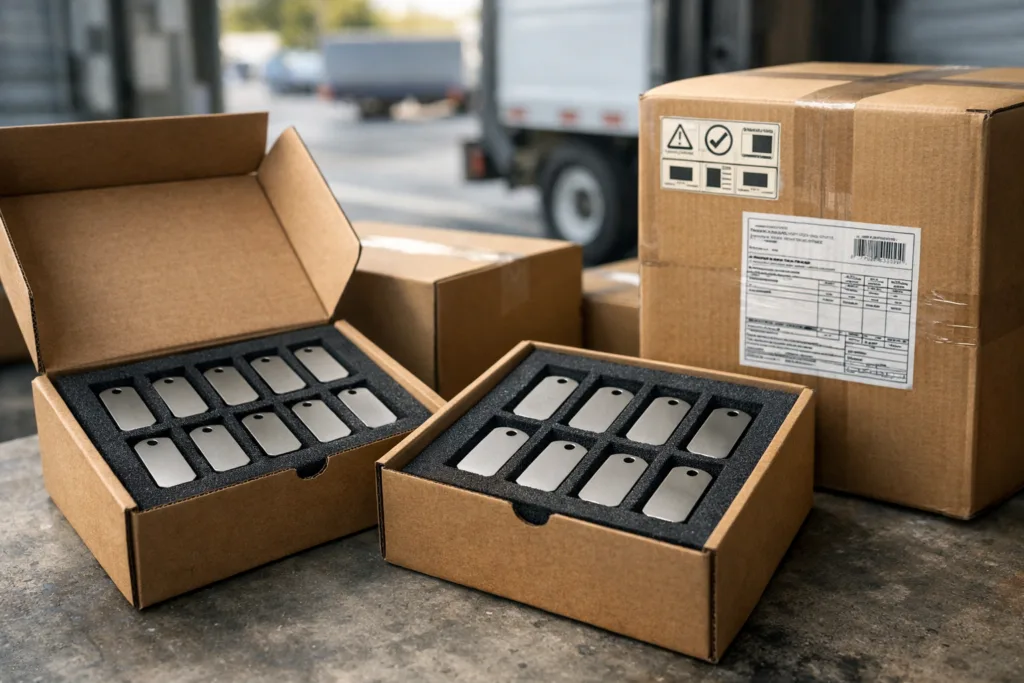
Effective packaging can make or break a metal shipping project—both from a cost and a safety standpoint. Lightweight-yet-strong materials like corrugated cardboard, honeycomb panels, or molded foam offer protection without excessive bulk.
To minimize package size, nest or stack metal tags where finish allows, and choose compact, purpose-fit boxes. However, never sacrifice the protection needed to prevent nicks, bending, or scuffs in transit. Foam inserts, interleaf sheets, or shrink wrap can keep tags separated and surfaces flawless.
Be sure packaging meets international shipping standards for labeling and materials. For sensitive goods, double-check whether specific export markets (like the EU or USA) require IPPC-stamped wood, recyclable fillers, or shock indicators.
- Use only tested packaging—poor box strength can trigger customs inspections
- Label each package in accordance with customs, including material type and net/gross weight
- Include visible handling instructions if metal is sharp or unusually heavy
Clear labeling supports smooth international customs processing, reducing manual inspections and the risk of delays or fees.
Navigating Customs Regulations and Documentation
International customs is one of the highest-stakes elements of metal shipping. From regulatory compliance to taxes, every shipment must be accompanied by precise, complete paperwork to avoid unnecessary holds or penalties.
The essentials for most international metal shipments include:
- Commercial Invoice: Lists shipper, recipient, value, description, and harmonized code.
- Packing List: Details contents, weights, and packaging method.
- Bill of Lading / Airway Bill: Transport contract and proof of shipment handoff.
Product descriptions must be detailed and accurate—simply writing “metal parts” or “metal tags” won’t cut it. Specify the metal type (e.g., “stainless steel data plates, 0.5mm thick, laser-engraved”), manufacturing process, and intended use if possible.
Classification codes (HS codes) define duty rates and allow for efficient international customs clearance. Assigning the wrong code can result in misapplied duties, outright rejection, or post-clearance audits. Hiring import/export professionals, or working closely with experienced suppliers—like UC Tag—can help navigate overlapping regional requirements and minimize costly errors.
Pro tips for avoiding delays:
- Double-check all documents for typos or omissions
- Provide Certificates of Origin or compliance where needed
- Ensure weights and declared values align with manifests
- Allow extra time for first-time shipments to new countries
Comparing Manufacturing Methods for Metal Tags
How a metal tag is made shapes not only its function and lifespan but also its physical profile—directly influencing metal shipping cost and customs handling.
Popular metal tag production methods include:
- Stamping: Fast, precise for thin metals; yields the lightest tag per volume.
- Engraving (CNC/laser): Enables clear details at variable depths, usually with minimal added material.
- Chemical etching: Achieves sharp contrast with limited mass removal—usually negligible for shipping weight.
- UV printing/anodizing/enameling: Adds surface finish or color layers—generally doesn’t increase weight significantly unless heavy doming/epoxy is involved.
Finished quality varies but so does durability: stamping holds up to abrasion and outdoor exposure; engraving offers deep, lasting legibility; chemical etching is great for fine graphics. Stamped tags are typically lightest, making them ideal when lowest possible shipping weight is a goal.
Trade-offs arise in thick, multi-layer designs (such as domed emblems or dual-plate nameplates) which boost weight—sometimes more than double compared to single-layer stamped tags. For high-volume projects, it pays to consult seasoned tag makers for the right balance of strength, appearance, and shipping efficiency.

Design and Specification Checklist for Metal Tags
A clear, complete specification streamlines production and optimizes metal shipping. Buyers should confirm these essentials when designing metal tags for international orders:
| Specification | Why It Matters | Shipping Impact |
|---|---|---|
| Size (mm/inch) | Determines tag visibility and packaging methods | Influences weight and cost per unit/case |
| Thickness (mm/gauge) | Balances durability with mass | Affects total shipment weight |
| Finish | Enhances readability, corrosion resistance | May require extra protection in shipping |
| Readability | Ensures identification accuracy | Prevents delays due to unclear labeling at customs |
| Attachment Method | Rivet, adhesive, or ring; defines application | Impacts packaging and extra components |
| Tolerances | Assures manufacturing consistency | Reduces inspection delays |
Common design oversights include forgetting to account for hardware weight or specifying a finish that’s prone to scratching in bulk transit. Rain Chen notes that reviewing the physical samples or drawings has helped many UC Tag clients spot spec errors before their first metal shipping run.
Testing Durability of Metal for Shipping Applications
Durability goes beyond the initial look—especially for metal parts traveling internationally. Corrosion testing (such as salt spray), abrasion resistance, UV stability, and environmental cycling all help predict if a tag or plate will survive rough transport and foreign climates.
Outdoor shipments face moisture, salt, temperature swings, and rough handling during customs inspections. Without proper testing and material selection, metal tags risk arriving tarnished or unreadable—a compliance risk and brand liability.
Several high-profile case studies show that skipping durability testing can cost more in lost inventory or rejected shipments than the original run. On the other hand, selecting marine-grade stainless for offshore assets or anodized aluminum for tropical retail projects has proven—by laboratory and field testing—to meet international customs durability expectations.
Best practice: always request or conduct durability testing during development. Work with your metal tag supplier to validate material choices before scaling up.
Industry Applications and Use Cases for Shipping Metal Tags
Metal tags play pivotal roles across various sectors—each with its own shipping nuances. In construction, durable stainless steel asset tags withstand both rough job sites and lengthy international transit. For automotive, serialized aluminum nameplates support lifecycle tracking throughout global supply chains.
Consumer goods brands often specify custom logo tags in brass or plated aluminum to reinforce identity and assist in post-sales traceability. These tags enhance security and reduce warranty disputes—but require special packaging to prevent surface scratches during bulk shipping.
Regulated industries like aerospace or defense typically face extra scrutiny in international customs, demanding robust documentation, traceable manufacturing methods, and certified materials.
Case feedback shows that consistent labeling and correct choice of packaging are key to repeat shipping success. For instance, a UC Tag customer in the marine sector noted reduced customs delays after upgrading to laser-engraved tags with high-contrast finishes, supported by clear compliance statements on all invoices.
- Construction: Rugged tags survive rough transport and harsh use
- Automotive: Serial numbers enable efficient global tracking
- Consumer goods: Branding and security meet aesthetic needs
- Marine: Salt-resistant metals outperform in coastal shipping routes
Common Mistakes in Shipping Metal Products and How to Avoid Them
Learning from others’ errors can prevent expensive setbacks in international metal shipping. Common mistakes include specifying text sizes below legibility minimums, picking the wrong adhesive for the application, or using finishes that tarnish en route.
Corrosion-prone metals, lack of contrast in engraving, and failing to consider packaging impact all contribute to rejected or lost shipments. For customs, unclear part descriptions, mismatched documentation, or omitted certificates can stall goods indefinitely.
Simple fixes include: always confirming minimum readable font size, running sample shipment tests, choosing proper protective coatings, and triple-checking every customs form for accuracy. Refer to 5 Costly Design Mistakes That Stall Your Custom Tag Order (and How to Avoid Them) for a deeper dive on preventing these pitfalls.
Consistent attention to quality and documentation yields reliable outcomes—saving time, reputation, and money.
Ordering Guide for International Metal Shipments
Planning smooth metal shipping for global projects starts with a clear understanding of typical order parameters. Minimum order quantities (MOQ) hinge on both the manufacturing technique and the economic scale—custom processes like stamping often require higher MOQs, while digital printing may allow smaller runs.
Lead times fluctuate: stamping or CNC projects might require 2–4 weeks, whereas complex, multi-process tags or special plating can add extra days. Always request a detailed timeline with each quote.
Supplying correct artwork files and requesting proofs enables the supplier to confirm legibility and production viability. UC Tag, for instance, recommends always reviewing a physical or digital sample before authorizing mass manufacturing—see Should You Pay for a Pre-Production Sample? Key Strategies for Metal Tag Buyers & Engineers for strategic advice.
Packaging and metal shipping options can be tailored: light/urgent items may go by air, but cost-conscious customers may prefer sea or consolidated freight even if it means longer in transit. For details on order quantities, see Why Custom Metal Tags Require Minimum Order Quantities: Practical Guide for Buyers and Engineers.
- Confirm MOQ and adjust design for volume when possible
- Set and communicate deadlines early
- Provide artwork and data formatted for your manufacturer’s needs
- Ask for a proof or sample before committing
- Discuss shipping mode and packaging preferences in advance
Frequently Asked Questions
What are the weight limits for air vs. sea shipping?
Air shipping generally supports loads up to 200–500 kg per shipment for small parcels and up to several tons for cargo, but higher weights increase costs exponentially. Sea shipping accommodates much heavier loads with lower per-kilo rates, making it preferred for bulk metal orders.
How do I calculate customs duties for my shipment?
Duties are determined by the shipment’s country of origin, destination, HS code, declared value, and local tax rates. You can consult online duty calculators, but it’s advised to confirm details with a customs broker or official government resources for accuracy.
What packaging materials are recommended for metal?
Strong corrugated cardboard, molded foam inserts, anti-scratch interleaves, and moisture-resistant outer wraps are ideal. For heavier loads, consider wooden crates stamped to international standards and always secure sharp edges to prevent injury during handling.
How can I prevent damage to metal during transit?
Use appropriate cushioning, secure items to prevent shifting, separate tags to avoid surface abrasions, monitor humidity, and choose finishes proven to resist corrosion. Testing your packaging with a sample shipment is always wise.
What documents do I need to include for customs clearance?
Essential documents include a commercial invoice, packing list, bill of lading or airway bill, and any necessary certificates of origin or conformity. Ensure weights and descriptions are precise and match the physical shipment.
How do I handle customs inspections?
To expedite inspections, provide transparent, complete paperwork, accurate declarations, and label packages clearly. Be available for questions from your shipper or broker and consider using import/export management services for high-value shipments.
Related Reading
- Prevent Costly Tag Design Mistakes That Stall Orders
- What to Expect with Rush Order Metal Tags: Timelines & Quality
- How to Plan for MOQs in Custom Metal Tag Projects
- Smart Strategies for Sample Approval Before Mass Production
- See How Size, Color & Material Affect Your Metal Tag Quote
- How to Specify Engraving Depth for Lasting Durability