Introduction to Barcoding on Metal
Metal barcoding is a critical technology for inventory management across manufacturing, logistics, and industrial sectors. Barcodes enable automated tracking and help reduce errors in asset identification, boosting productivity and accountability.
The main approaches to barcoding on metal are laser etching and traditional printing. Each method has unique strengths and drawbacks, and the right selection can dramatically impact inventory control, operational efficiency, and total lifecycle cost. Industries such as aerospace, automotive, electronics, warehousing, and industrial equipment depend on reliable metal barcodes every day.
This article dives into a practical comparison of laser etching and printing methods for barcoding metals, drawing from industry experience and recent technological advances. Our goal is to guide buyers and engineers toward robust solutions for real-world inventory needs.
Materials for Metal Barcoding
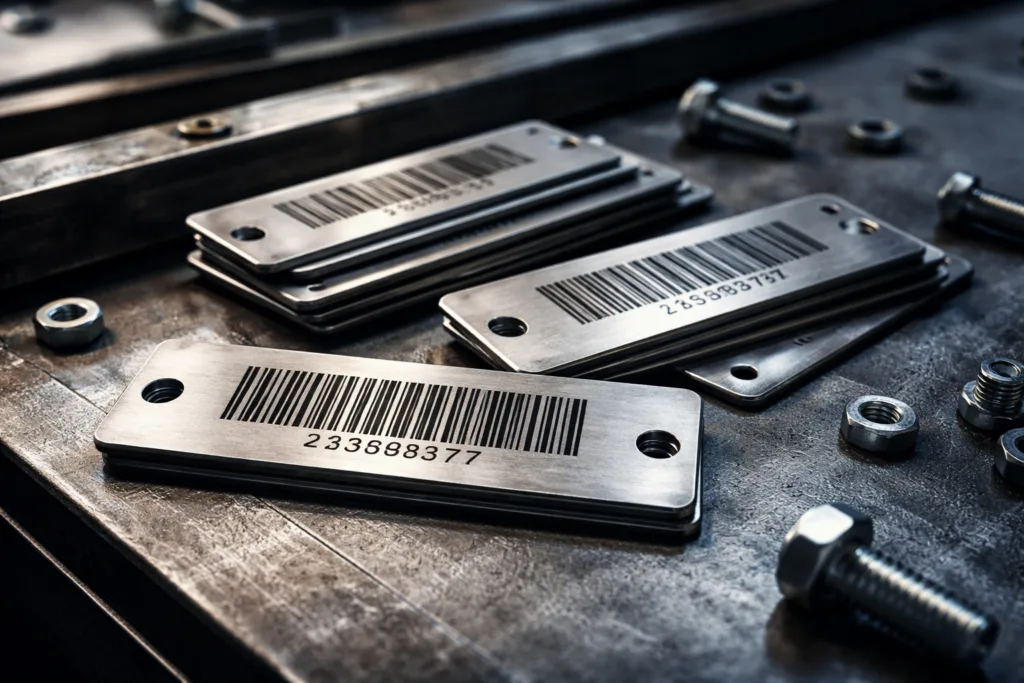
Choosing the best material forms the foundation for successful metal barcoding. The most common options are aluminum, stainless steel, and brass, each suited to specific applications and environments.
Aluminum is lightweight and cost-effective. Its clean finish supports clear, readable codes and works well with both laser etching and printing. It’s highly adaptable, making it a staple for indoor asset tags and consumer products. However, aluminum is less robust in extreme conditions.
Stainless steel offers maximum corrosion resistance, strength, and longevity. It stands up to chemical exposure, abrasive handling, and harsh outdoor environments. Stainless steel is ideal for industrial equipment, marine use, and high-value assets, ensuring barcodes endure over time—especially when laser-etched.
Brass delivers unique visual appeal and performs well in decorative or high-visibility applications. Its warm tones suit branded tags, luxury goods, and situations where aesthetics matter as much as durability. Brass also offers moderate corrosion resistance; for more insights, see Brass vs. Steel Tags: Which Lasts Longer Over 5 Years?.
- Aluminum: Lightweight, budget-friendly, moderate durability
- Stainless Steel: Heavy-duty, corrosion-proof, ideal for industrial/harsh environments
- Brass: Attractive, best for branding, moderate outdoor resistance
Material thickness and surface finish also impact barcode legibility. Thicker metals generally enhance durability, while smooth finishes (brushed or polished) improve scan accuracy. For outdoor or marine settings, stainless steel or coated aluminum excel in resisting environmental challenges—rain, salt, UV, and chemicals.
When evaluating metal barcoding solutions, always match the material to your environmental demands. Assess lifecycle, exposure, abrasion, and whether barcode readability is mission-critical.
Manufacturing Methods: Engraving, Stamping, and Printing
Manufacturing method directly affects barcode longevity, scan performance, and overall cost. Let’s compare laser etching, printing, and stamping:
Laser etching uses high-precision lasers to permanently mark metal surfaces. The result is crisp, readable barcodes resistant to abrasion and corrosion. This process is highly consistent, ideal for mass production and serial numbered tags. Fast setup, but slightly slower per tag compared to bulk printing.
Traditional printing (UV, pad, or screen) applies inks or coatings to the metal. Printing enables colorful graphics and fast batch runs, but printed barcodes risk fading, peeling, or smudging under harsh conditions. Inks may degrade when exposed to chemicals, UV, or abrasion—especially on high-touch equipment.
Stamping creates barcodes by pressing designs into the metal. Deep stamping offers permanent, tactile marks that can withstand tough environments. However, it limits barcode complexity and is less precise than laser etching for smaller codes or QR patterns.
Production speed favors printing for large, simple batches. Laser etching is optimal for durability and readable codes, while stamping leads in extreme longevity but restricts flexibility. For asset tracking, see Asset Tracking Made Simple: How Metal Tags with Sequential Numbering Transform Inventory Control.
| Method | Durability | Visual Quality | Production Speed | Cost |
|---|---|---|---|---|
| Laser Etching | High | Crisp, precise | Medium | Medium |
| Printing | Low–Medium | Colorful, but risks fading | Fast | Low |
| Stamping | Highest | Tactile, less complex | Medium–Slow | Medium–High |
Balancing these trade-offs, laser etching stands out for inventory needs requiring permanent and consistent barcode legibility over time.
Durability and Testing of Barcodes on Metal
Durability is paramount in metal barcoding, especially for assets exposed to demanding environments. Materials and marking methods must withstand corrosion, abrasion, and UV radiation.
Corrosion resistance varies—aluminum fares well indoors or with anodizing, stainless steel excels in saltwater and industrial zones. Field testing helps confirm barcodes endure contact with oils, solvents, and temperature swings.
Abrasion resistance is vital for tags affixed to machinery or tools. Laser etching provides a surface mark that resists scratches much better than ink-based printing. Industry standards simulate wear using rub tests or sandblasting. For additional details, refer to How to Maximize Tag Durability: Rust Proofing Strategies for Humid Environments.
UV exposure can fade printed barcodes, making outdoor readability a concern. Laser etched marks maintain contrast, and anodized aluminum resists color shift. Best practices call for real-world field trials to confirm barcode integrity—especially when tags must last years in unpredictable settings.
Industries such as oil & gas, marine, or heavy equipment require barcodes that survive the toughest abuse. Always verify the intended material and method against actual operating conditions to avoid premature failure.
Design and Specification Checklist
Effective metal barcoding depends on thoughtful design and specification. Start with size, thickness, and surface finish to ensure legibility and durability—especially if laser etching is the chosen manufacturing method.
Fonts play a central role; simple, sans-serif styles maximize readability. Barcode width and height must fit both scanner requirements and tag size. Attachment options include rivet holes for mechanical fastening and adhesive backing (like Stick-On Metal Logo Tags: How 3M Adhesive Backings Supercharge Durability & Branding Performance), which are faster but less secure in high-stress environments.

- Size: Match to asset and scanner field
- Thickness: 0.5–1.6mm common; thicker for durability
- Finish: Brushed, matte, polished—choose for barcode contrast
- Font: Sans-serif, high-contrast
- Attachment: Rivet holes, adhesive, weld, sew-on (see The Practical Guide to Durable Metal Garment Labels: Sew-On Holes, Materials & Manufacturing Secrets)
| Specification | Laser Etching Suitability | Notes |
|---|---|---|
| Size | Flexible | Can accommodate small, detailed codes |
| Thickness | Best 0.5–1.6mm | Allows deeper etching for durability |
| Finish | Matte/Brushed | Improves contrast, reduces glare |
| Font | Sans-serif | Maximizes barcode scanner accuracy |
| Attachment | All types | Rivet for heavy use, adhesive for quick application |
Specify tolerances (dimensions, font sharpness) to ensure each tag matches quality standards. Request proofs and samples (see Should You Pay for a Pre-Production Sample? Key Strategies for Metal Tag Buyers & Engineers) to check readability before mass production.
Industry Applications for Metal Barcoding
Metal barcoding is fundamental to efficient inventory control systems in diverse industries. In manufacturing, barcoded tags help track thousands of components, reducing losses and streamlining audits.
In logistics, durable metal barcodes on shipping containers, pallets, and vehicles enable rapid scanning, supporting faster throughput and error reduction. Warehouses rely on long-lasting tags to maintain stock visibility—even when assets are handled repeatedly or stored in harsh conditions. For tips, see Asset Tracking Made Simple.
Asset management teams equip machines and tools with barcoded metal ID tags, ensuring accurate lifecycle tracking. In consumer goods, attractive branded tags enhance product presentation while providing robust identification.
Key industry uses for metal barcoding include:
- Manufacturing: Component identification, batch tracking
- Logistics: Inventory scanning, shipment verification
- Warehousing: Shelf and bin labeling, asset visibility
- Asset Management: Equipment tracking, maintenance history
- Consumer Goods: Branding, traceability
Metal barcoding solutions are often customized to match industry-specific demands, adapting shape, material, and marking method for optimal performance.
Common Mistakes and Troubleshooting
Installing metal barcodes isn’t risk-free—errors in design, manufacturing, and application can cause barcode failures. Solutions depend on recognizing and fixing issues early.
Unreadable text often results from poor laser etching or subpar printing. Ensure contrast is sufficient; avoid fine fonts or overcrowding. Adhesive failures arise when backing isn’t matched to surface type or environment—high-strength adhesives like 3M often solve this, but sealing edges may be required for continuous exposure.
Corrosion and degradation, especially in outdoor settings, occur when materials lack the necessary resistance. Brass or uncoated aluminum quickly corrode if misapplied; choose stainless steel or anodized metals for harsh zones.
Poor barcode contrast, either from shiny finishes or mismatched inks, makes scanning difficult. Matte finishes and deep etching reliably improve readability. For more, review Expert Guide: Designing QR Codes That Scan Every Time on Metal Tags.
| Problem | Typical Cause | Suggested Fix |
|---|---|---|
| Unreadable Barcode | Poor etching/printing | Use high-contrast fonts, request sample proof |
| Adhesive Peeling | Inadequate backing | Switch to 3M, validate surface prep |
| Corrosion | Wrong material | Use stainless steel/anodized aluminum |
| Low Contrast | Glossy finish/bad ink | Go matte/brushed, deepen etching |
Rain Chen from UC Tag emphasizes: “The difference between readable and unreadable isn’t just the machine, but the proof you see with your own eyes. Requesting a production sample is never wasted time.”
Ordering Guide: What to Know Before You Buy
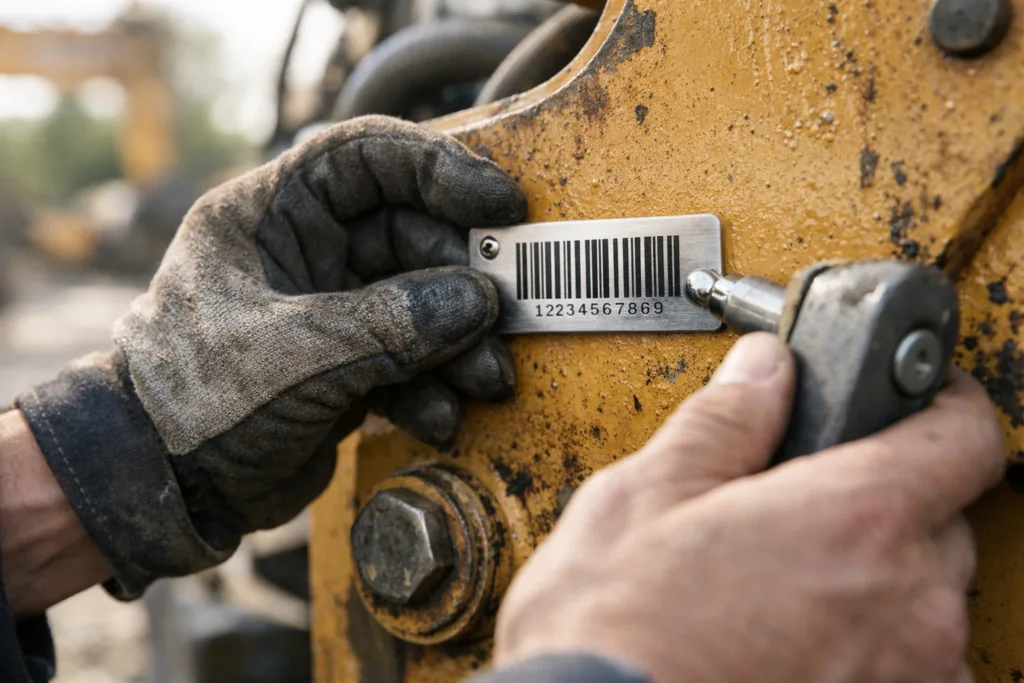
Ordering metal barcoding tags requires attention to details that impact lead time, budgeting, and end-use success. Confirm minimum order quantities (MOQ) with your manufacturer; custom runs generally start at 100–500 units. Check out Why Custom Metal Tags Require Minimum Order Quantities.
Lead times vary by method—printing is quick, laser etching takes longer per unit, especially for complex designs. Plan ahead to align tag delivery with project schedules.
Providing accurate artwork is essential. Use vector files for best results (Unlock Precise Metal Molds: Why Vector Art Files Are Non-Negotiable). Proofing and pre-production samples confirm barcode layout, readability, and attachment configuration. Sample approval prevents costly errors during mass production.
Shipping depends on order size and urgency. Large batches may ship via bulk freight, while rush orders (see Rush Order Metal Tags: What to Expect on Timelines, Pricing, and Quality) demand expedited logistics at higher cost. Work with reputable suppliers for transparency and reliability.
If you need comparison samples, UC Tag offers both standard and custom metal tag samples—this practical approach lets buyers verify readability and material performance before full order commitment.
Frequently Asked Questions
What is the best method for producing barcodes on metal?
Laser etching is the preferred method for producing barcodes on metal thanks to its durability, precision, and resistance to fading or abrasion, especially for assets that require permanent marking.
How do environmental factors impact the longevity of barcodes?
Exposure to moisture, chemicals, UV, and abrasive handling can degrade barcodes over time; using corrosion-resistant metals and laser etching maximizes longevity for harsh conditions.
Can I customize the size and shape of my tags?
Yes, metal barcoding tags can be custom-designed in nearly any size or shape, from small asset labels to unique branded tags, using CNC cutting, laser etching, and stamping technologies.
What are the lead times for custom barcoding orders?
Lead times depend on manufacturing method, complexity, and order volume; printing is typically quickest, while laser etching and stamping take slightly longer—expect 2–4 weeks for most orders.
Which material is best for outdoor use?
Stainless steel is usually the best for outdoor metal barcoding due to its superior resistance to rust, corrosion, and fading; anodized aluminum also performs well for lighter-duty applications.
How can I ensure my barcode will remain readable over time?
Choose laser etching on a compatible material, specify high-contrast designs, and request production samples for testing to ensure barcodes will stay readable throughout their lifecycle.
Related Reading
- Discover How Sequential Metal Tags Simplify Your Inventory Control
- Never Miss a Scan: Pro Design Tips for QR Codes on Metal Tags
- 3M Adhesive Backings: Boost Durability & Branding for Metal Logo Tags
- Protect Your Tags from Rust: Advanced Strategies for Humid Environments
- Sample First: Proven Ways Pre-Production Testing Helps Avoid Barcode Failures