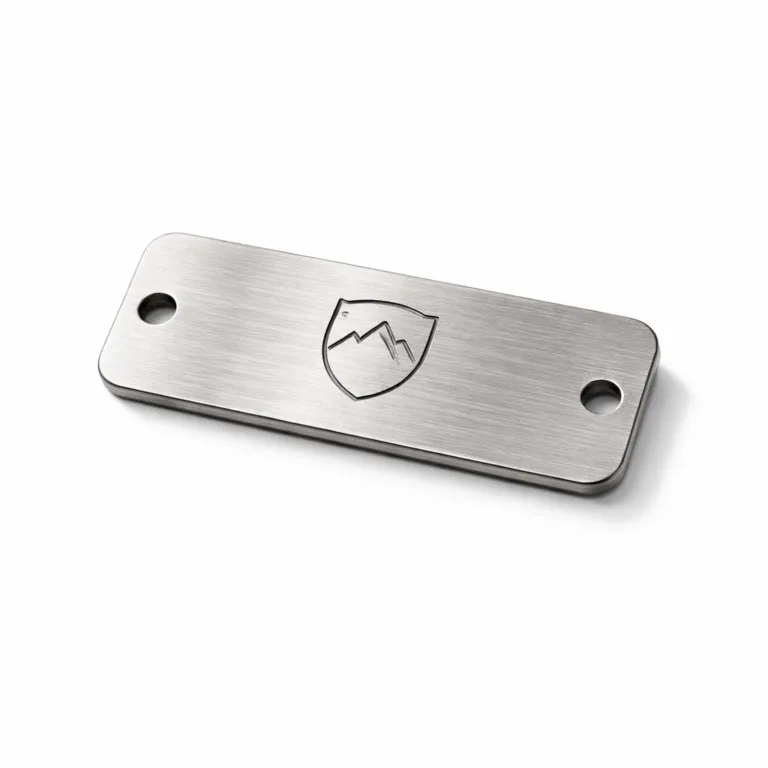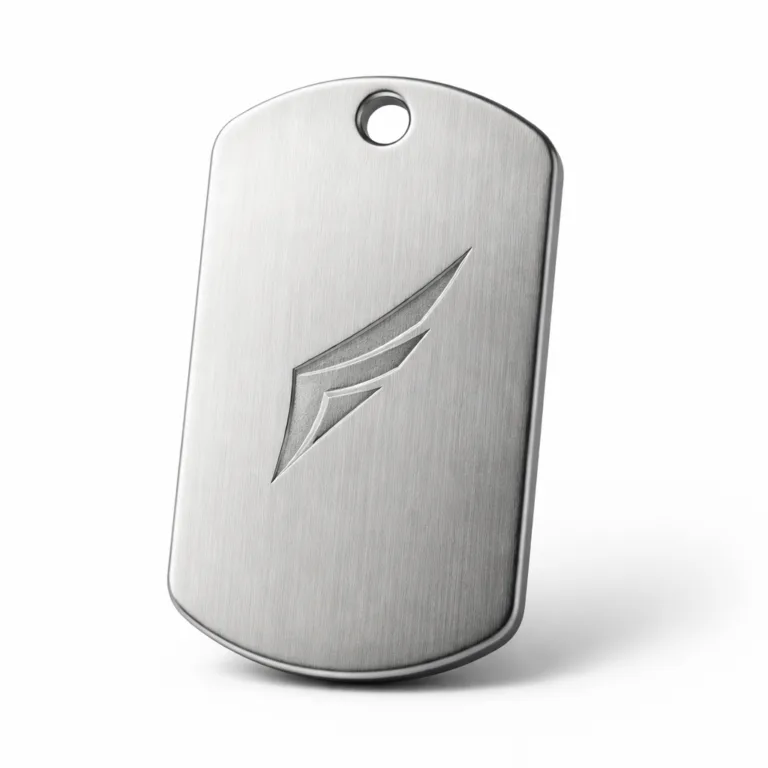
House-shaped key tags can do more than hold a set of keys. In real estate marketing, they work as a practical closing gift, a daily brand reminder, and a small item that keeps your name present without feeling like an ad. For agents, teams, and brokerages, the value is not in giving away another generic promotional product. The value is in creating something a new homeowner will actually keep, use, and associate with a positive milestone.
If your gifting plan needs custom key tag manufacturing support, it helps to start with the real use case instead of the decoration. We usually see better project results when buyers define the shape, metal, finish, attachment style, homeowner personalization, and packaging at the same time. That makes it easier to match the tag to a closing gift set, a move-in welcome package, or a referral campaign, while keeping sample approval, bulk production, and branded presentation aligned from the beginning.
Why house-shaped key tags work so well in real estate
A house-shaped tag is easy to understand at first glance. That matters because the product immediately connects to the moment of receiving new keys. In many marketing categories, branded gifts are forgotten because there is no clear relationship between the item and the customer experience. Here, the connection is obvious. The client has just bought a home, and the key tag becomes part of that memory.
From our manufacturing perspective, products work better when the form matches the story. A house outline, roofline detail, door icon, or clean geometric house silhouette gives the tag a specific purpose. It does not feel random. It feels selected for the occasion.
New homeowners also respond well to practical items. A mug may end up in a cabinet. A tote bag may be one of many. But a key tag stays close to the product it supports: the keys to the home. That daily utility is why the item can support brand recall over time.
Why practical and personalized closing gifts get better response
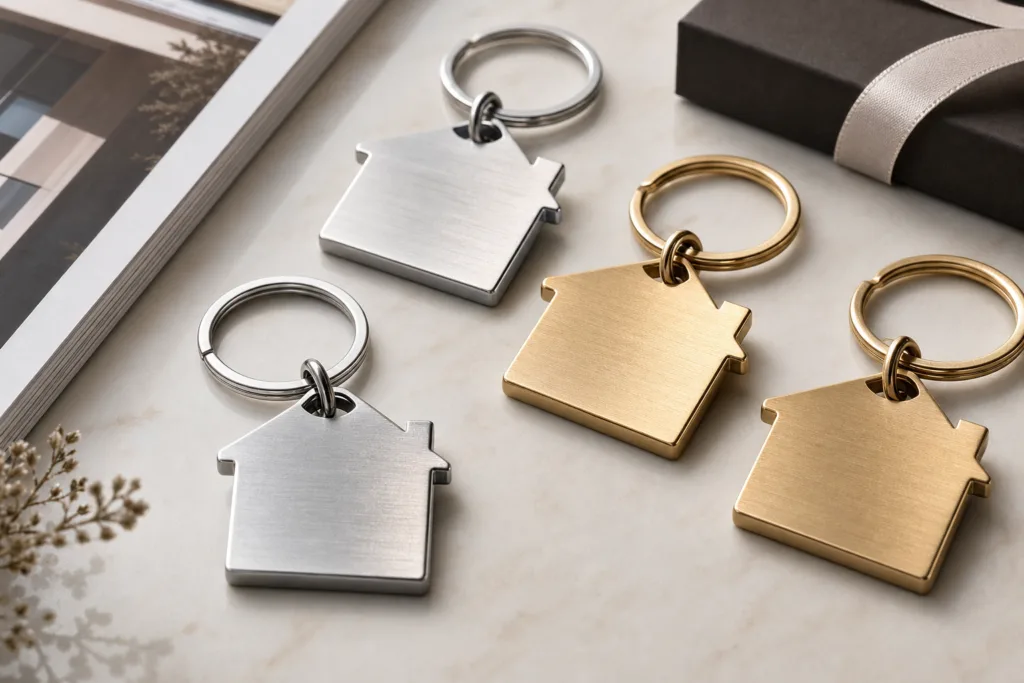
For buyers, the closing gift that gets remembered is usually not the most expensive one. It is the one that feels personal and useful. House-shaped key tags fit that logic well because they can be customized without making the gift complicated or difficult to scale.
Good personalization ideas include the homeowner’s last name, the closing date, a short welcome phrase, a street name, a neighborhood name, or a simple “Home Sweet Home” message. These details help the item feel like part of the move-in experience rather than a promotional extra.
The key is balance. If the agent logo is oversized and the homeowner information is small, the tag starts to feel self-serving. If the design centers on the homeowner and places branding in a secondary position, the result usually feels more thoughtful. In many projects, this detail decides whether the item is kept for years or replaced within weeks.
How key tags support branding without feeling promotional
Branding works best when it is integrated, not dominant. A house-shaped key tag gives you several layers of branding without requiring every element to appear at full size. One side can carry the homeowner-focused message, while the back can include the brokerage logo, website, or contact details in a cleaner format.
We often recommend starting with three questions. What should the homeowner see first? What information should still be useful six months later? What should remain readable on a small metal surface after regular handling? Answering those questions usually leads to a better layout than simply placing every brand element on one side.
For agents comparing suppliers, it also helps to review custom metal tag solutions that match both gift presentation and long-term daily use. A tag that looks good in a mockup but scratches easily, has weak contrast, or uses crowded artwork may not support the brand experience you want after handoff.
Designing house-shaped key tags that feel premium
Shape and silhouette
The basic house shape should be simple enough to recognize, but not so detailed that small production features become messy. Sharp roof peaks, narrow chimney cutouts, or tiny window openings may look attractive in artwork, yet create manufacturing and edge-finish issues on a small tag. In most cases, a clean house outline with softened corners works better.
Size and thickness
Size affects both usability and perceived value. A tag that is too small may look cheap and may not leave enough room for personalization. A tag that is too large can feel bulky on keys. Many real estate projects work best in a compact range that allows one main visual side and one information side. Thickness also changes the feel. A slightly heavier tag usually feels more substantial, but weight should still make sense for everyday carrying.
Material choice
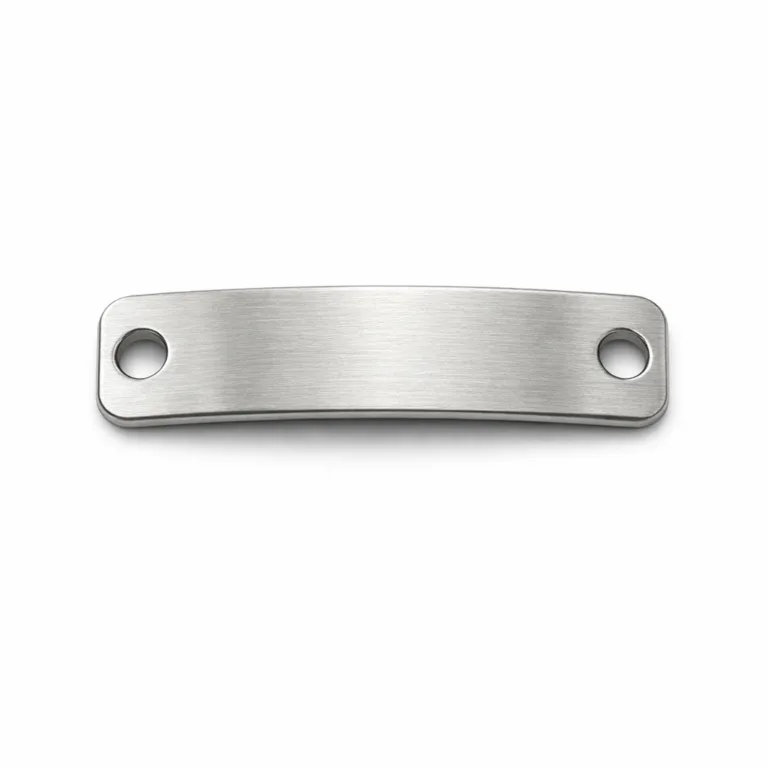
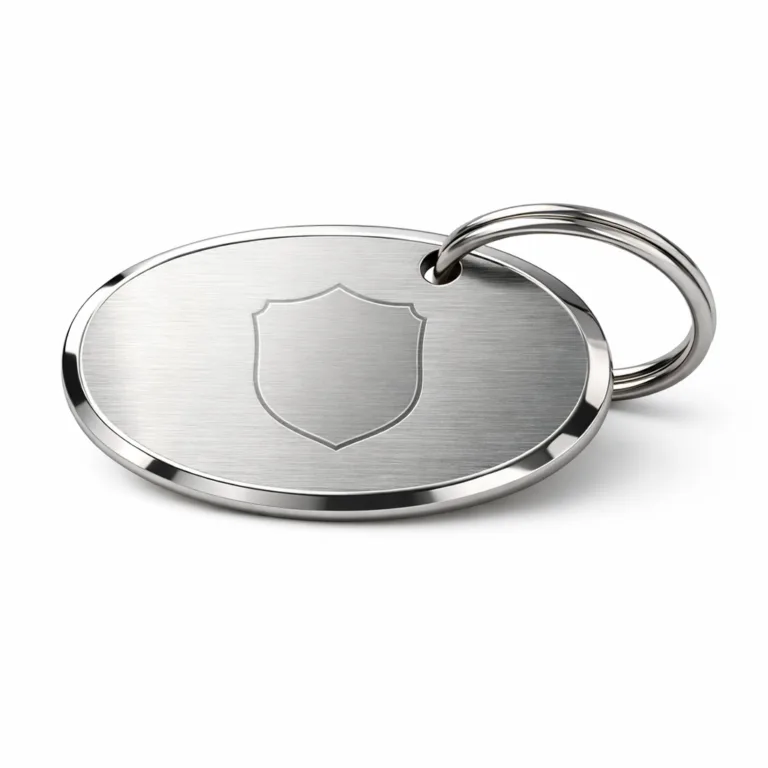
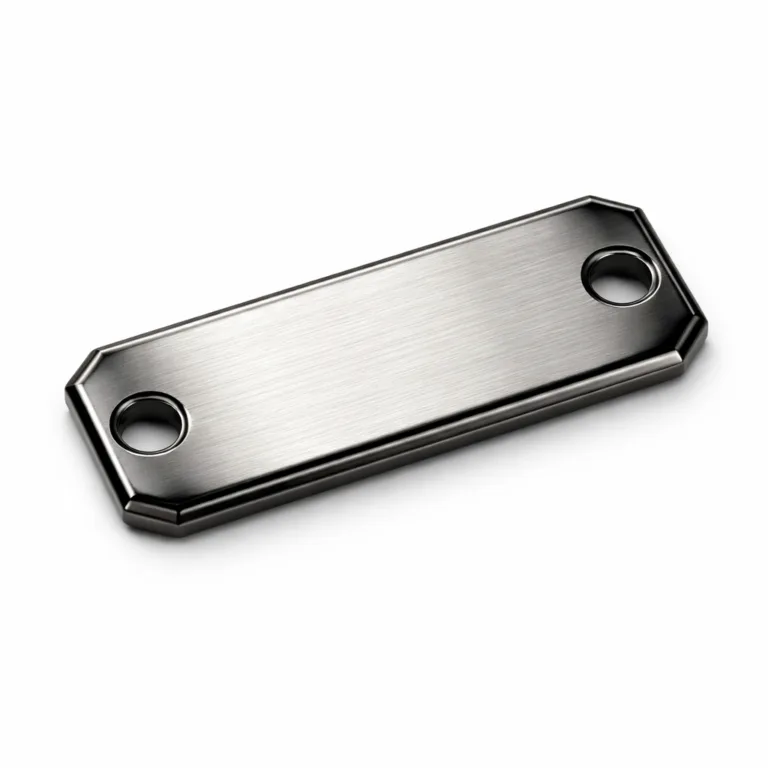
Aluminum can work well when you want lighter weight, color flexibility, and a lower cost structure for larger campaigns. Stainless steel suits agents who want a modern, clean look and strong wear resistance. Brass gives a warmer, more gift-like appearance and can pair well with luxury or heritage-style branding. If your design direction is more upscale or classic, reviewing brass key tag material choices can help clarify whether the tone fits your audience.
Finish and visual style
Finish affects both branding and perceived quality. Brushed surfaces tend to hide fingerprints better than highly polished surfaces. Matte finishes often feel more understated and modern. Antique-style finishes can support a warm, residential look. For some brokerages, anodized or color-filled details can also help match brand colors, but contrast still matters more than decoration when readability is important.
Choosing the right marking method
Not every marking method suits every real estate key tag project. The right choice depends on appearance, quantity, personalization needs, and how long the information must remain legible.
| Method | Best Use | What Buyers Should Watch |
|---|---|---|
| Laser engraving | Names, dates, simple logos, serial data | Check line thickness and contrast on dark or reflective finishes |
| Chemical etching | Finer detail, cleaner logo reproduction, premium look | Usually better for more refined artwork but may affect cost |
| Stamping | Bold shapes, tactile feel, classic metal look | Very small text can become harder to read |
| Printed color fill or UV print | Brand colors, decorative graphics, visual impact | Confirm wear expectations for keys carried daily |
For many real estate gifting programs, the safest starting point is a layout that combines durable information with restrained decoration. That is why buyers often compare engraved key tag options first. Engraving helps when you need homeowner names, closing dates, or office contact details to stay readable after repeated handling.
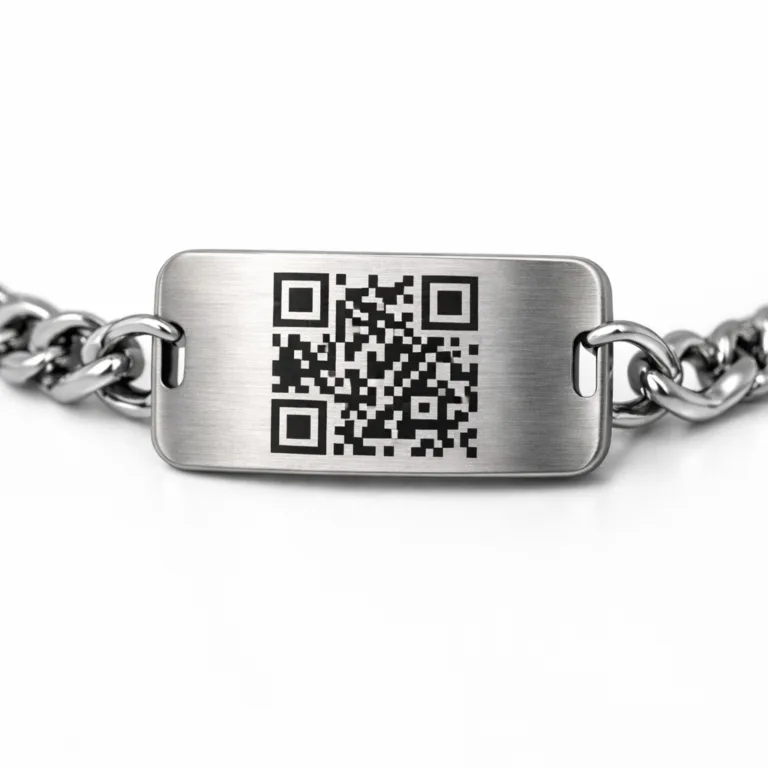
If you want to add a QR code for reviews, referral pages, neighborhood guides, or move-in resources, the design needs enough quiet space around the code and enough contrast for reliable scanning. Small codes can still work when the layout is planned properly. DENSO WAVE explains why QR codes fit small real estate giveaway items, including how compact data storage and error correction help support readable codes in limited space. In practice, that means the code should never be treated as a decorative extra squeezed into the last open corner of the tag.
Useful branding elements to include
A house-shaped key tag usually works best when each side has a clear job. One side can focus on the homeowner and the emotional moment. The other can handle brand and contact details in a more practical way.
- Homeowner side: family name, move-in date, welcome message, street name, or neighborhood name
- Brand side: logo, agent name, phone number, website, team slogan, or QR code
- Attachment side: ring style, clasp choice, or paired card insert that explains the QR destination
What matters most is hierarchy. The client information should feel intentional and clean. The brand information should be present, but not overpowering. A subtle logo and well-placed contact line can be more effective than large promotional wording.
When to use key tags in the client journey
Timing changes the purpose of the product. At an open house, a simpler version may act as a memorable giveaway and lead capture aid. At the closing table, the item becomes a milestone gift. In a move-in package, it can be bundled with useful items such as a thank-you card, local service list, spare key sleeve, or neighborhood guide. As a follow-up gift, it can reconnect with past clients around their first home anniversary.
The closing table is usually the strongest moment because the gift is directly tied to the handoff of keys. But not every campaign needs to happen only once. Some brokerages use the same visual system across touchpoints: a simpler event version for prospects and a personalized premium version for buyers who close.

That is where durable metal keychain tags can support a longer retention strategy. If the item is intended to stay in use beyond the move-in week, durability, attachment hardware, and edge quality matter as much as the initial appearance.
Referral and retention ideas after closing
A good key tag can support referral behavior, but only if it is part of a broader follow-up system. The tag itself does not create referrals automatically. It works as a memory anchor that supports later communication.
Some practical campaign ideas include:
- A closing gift tag with a QR code linking to a review page or homeowner resource page
- An anniversary follow-up package that references the original house-shaped tag and asks how the first year has gone
- A neighborhood welcome campaign where the tag includes a local theme and a light-touch referral reminder on the packaging card
- A team-based brokerage system where each agent has a shared brand format but personalized contact details
These campaigns work better when the messaging is helpful rather than sales-heavy. A homeowner is more likely to scan a QR code that offers moving tips, utility setup help, or local recommendations than one that says only “Refer a Friend.”
Production planning, budget, and ordering details
In custom projects, buyers often focus on unit price first. That matters, but several other details affect the real result: minimum order quantity, customization level, data handling, packaging, proofing time, and hardware selection. A low quote can stop looking attractive if the layout has to be redesigned multiple times or if the packaging does not suit the closing presentation.
At UC Tag, we usually suggest confirming these points early:
- Whether every tag uses the same artwork or variable data such as names and dates
- Whether both sides need marking, and whether one side requires fine detail
- Which attachment hardware fits the presentation and daily use
- Whether tags need individual packaging, card mounting, or grouped sets for agents
- Whether the order is for one office, one region, or a multi-agent rollout
For buyers, the key is not only the product name or price, but whether the material, structure, marking method, and application requirements match the real use case. This detail may look small, but it can create problems later if it is not confirmed early.
Packaging and presentation that improve perceived value
Presentation changes how the gift is received. Even a well-made tag can feel ordinary if it is handed over loose with paperwork. The same tag feels more considered when it is presented on a branded backing card, inside a small envelope, or as part of a move-in gift box.
For real estate use, packaging should usually do one of two jobs. It should either support the emotional moment of the closing, or it should add practical value through a message card, service checklist, or QR-guided resource insert. If you include a QR code on the tag itself, the package insert can explain what the code is for, which reduces hesitation and improves scan rates.
We also recommend checking the entire unboxing flow during sampling. Open the package as if you were the client. Is the front side visible first? Is the personalization readable? Does the ring scratch the surface during transit? These are small details, but they affect perceived quality immediately.
Common mistakes to avoid
In many projects, the problem is not that the buyer chose the wrong category. The problem is that some production details were not clarified before sampling or bulk production.
- Using a house shape that is too detailed for the final tag size
- Adding too many brand elements and reducing readability
- Choosing decorative finishes without checking contrast for names or dates
- Placing a QR code too small or too close to other artwork
- Ignoring hardware quality, ring strength, or edge smoothness
- Skipping approval of variable data format for homeowner names and dates
Another common mistake is forgetting audience fit. A luxury brokerage may want a more understated brass or stainless design, while a family-focused suburban office may benefit from warmer color accents and friendlier messaging. The right answer depends on the client experience you want to create.
How to measure whether the campaign worked
Not every result is immediate, so measurement should combine direct and indirect signals. Real estate buyers can track brand recall through follow-up conversations, look for increases in online reviews after closing, compare referral mentions before and after introducing the gift, and ask clients whether they still use the item after move-in.
A practical checklist for evaluation includes:
- Did clients mention the gift positively at closing or afterward?
- Did review requests tied to the gift produce more responses?
- Did the QR code receive scans?
- Did agents feel the item improved the professionalism of the handoff?
- Were there any complaints about readability, wear, or broken hardware?
These indicators help you improve the next production run. Sometimes the lesson is about design. Sometimes it is about packaging. Sometimes it is simply that the referral prompt needs to move from the metal tag to the insert card.
A final checklist for effective house-shaped key tags
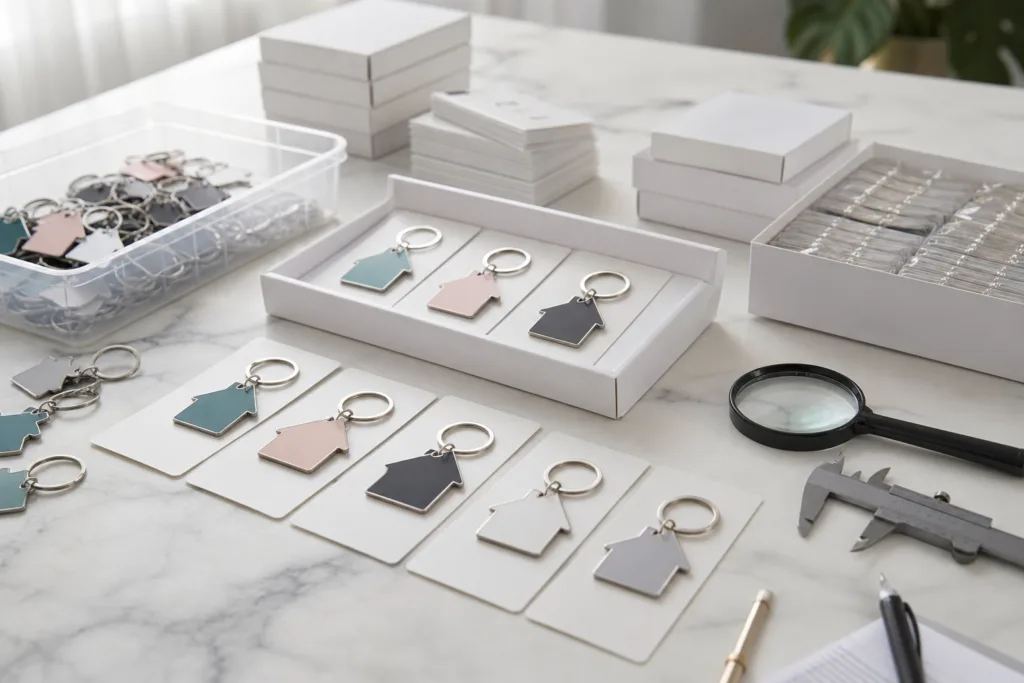
Before ordering, confirm the actual purpose of the tag. Is it mainly a closing gift, a referral support item, an event giveaway, or a long-term branded keepsake? Then confirm the design hierarchy, material, finish, attachment method, packaging, and personalization format. If those parts align, the product usually feels more premium and performs better over time.
House-shaped key tags work because they connect function, memory, and brand in one small object. When the design is useful, readable, and homeowner-centered, the item can support a better closing experience and keep the agent relationship visible long after move-in day.
FAQs
What material is best for house-shaped key tags used as closing gifts?
The best material depends on the image you want to present and how long the tag should stay in daily use. Aluminum is lighter and often works well for larger campaigns with color options, stainless steel gives a clean durable look, and brass feels warmer and more gift-oriented. For most real estate gifts, the right choice is the one that balances appearance, readability, and the budget for the full packaging set.
Should the agent logo be on the front of the key tag?
Usually, no. The front side is often more effective when it focuses on the homeowner, such as a family name, welcome message, or closing date. Branding can still be included, but it generally works better on the back or in a smaller position so the gift feels thoughtful rather than promotional. This balance is what helps the tag stay in use longer.
Can a QR code work on a small metal key tag?
Yes, but only if the layout is planned properly. The code needs enough size, contrast, and open space around it to scan reliably, and it should link to something useful such as a review page, neighborhood guide, or move-in resource page. If the QR code is too small or crowded by other graphics, it may look fine in artwork but fail in real use.
Is personalization worth the extra cost for real estate key tags?
In many cases, yes, because personalization is what turns the item from a generic giveaway into a homeowner gift. Adding a last name, date, or short welcome message often creates a much stronger emotional connection than adding more brand graphics. The key is to confirm data format, spelling review, and approval steps early so variable information does not create production delays.
When should agents give house-shaped key tags to clients?
The closing table is usually the strongest moment because the gift directly matches the handoff of keys, but that is not the only option. Some agents use simpler versions at open houses, include premium versions in move-in kits, or send them later as an anniversary or follow-up gift. The best timing depends on whether the goal is lead generation, client experience, retention, or referrals.
What are the biggest mistakes to avoid when ordering custom key tags?
The most common mistakes are overcrowded artwork, poor contrast, shapes that are too detailed for the final size, and unclear planning for names or dates. Buyers should also check hardware quality, edge smoothness, packaging, and sample approval before bulk production. A key tag is a small item, but the small details are exactly what determine whether it feels premium or forgettable.