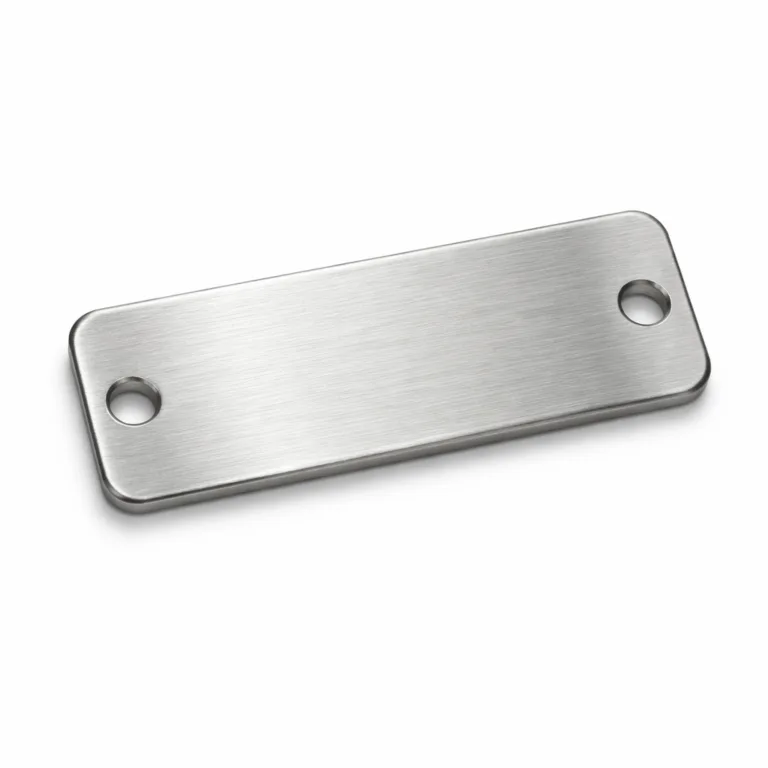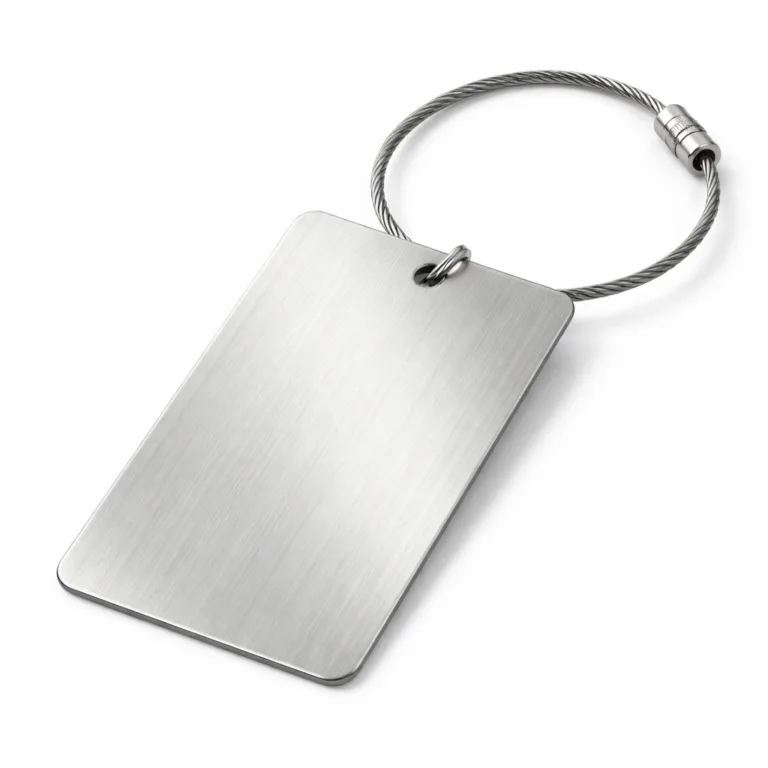
Introduction to Font Size in Metal Tag Manufacturing
Choosing the right font size for engraving and stamping is crucial when it comes to manufacturing metal tags. The combination of font size, engraving depth, and letter style collectively affects how easily information can be seen and read in industrial and commercial settings. Whether your tags carry serial numbers, safety instructions, or your company’s brand name, clear legibility isn’t negotiable—it’s a core requirement for performance, compliance, and user experience.
Font size not only determines the appearance of the tag but also directly relates to practical outcomes such as durability and readability. If the letters are too small, they may wear away quickly or become obscured by dirt and abrasion. When chosen thoughtfully for engraving or stamping, the right font size on metal tags boosts traceability, prevents costly errors in asset management, and helps your brand look credible and professional.
In this guide, we’ll explore everything B2B buyers and engineers need to know about optimizing font size, engraving, stamping, legibility, and metal tags. We’ll break down minimum requirements, best practices, and concrete examples you can apply to your next project.
Definitions and Basics of Engraving and Stamping
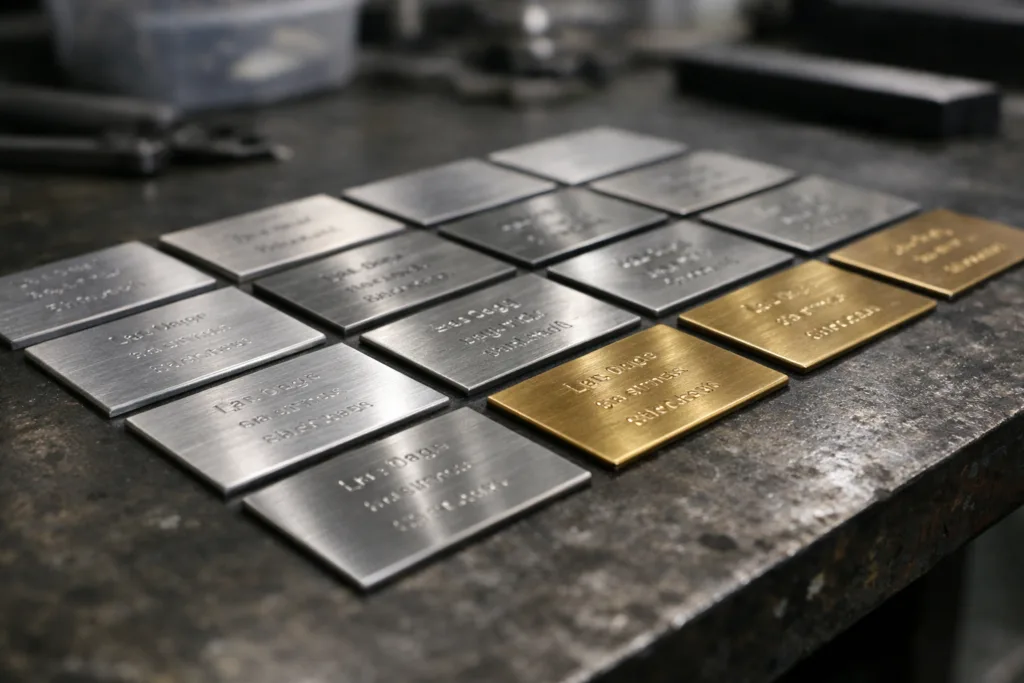
Understanding the basics of engraving, stamping, and etching is essential to making informed choices about tag design. Engraving involves removing material to form letters or shapes, typically with laser or rotary tools. It offers precise, permanent results ideal for intricate or small text. Stamping uses dies to press or punch the text into the metal, creating a raised or indented profile. It’s fast, repeatable, and cost-effective for high volumes. Chemical etching involves using acids or chemicals to dissolve portions of the metal and is well-suited for fine details but may not achieve as much depth as engraving or stamping.
The concept of minimum legible size refers to the smallest font size that remains clearly readable under normal viewing conditions, accounting for the tag’s environment and surface finish. Each manufacturing process handles font details differently: engraving can accommodate finer fonts and smaller letters than stamping, but overly small sizes risk losing visibility due to dirt or wear. In mass production scenarios, like those handled by UC Tag, these trade-offs are carefully managed to ensure consistent outcomes over thousands of pieces.
Legibility is everything for metal tags: misread letters can mean misidentified parts, asset losses, or even safety hazards. Font size and technique go hand-in-hand with compliance and longevity, making it critical to choose carefully, especially for industrial and branding applications.
Minimum Legible Sizes for Various Fonts
The best font size depends on several factors, such as viewing distance, tag size, and intended application. For most industrial uses on metal tags, font size, legibility, and surface finish should be balanced for optimal results. Here’s a quick chart outlining minimum recommended font sizes in millimeters (mm) and points (pt) for common font styles under standard conditions:
| Font Style | Minimum Size (mm) | Minimum Size (pt) | Recommended Applications |
|---|---|---|---|
| Arial (Sans Serif) | 1.5 mm | 4.25 pt | General labeling, QR serials |
| Helvetica (Sans Serif) | 1.6 mm | 4.5 pt | Branding, ID plates |
| Times New Roman (Serif) | 2.0 mm | 5.6 pt | Nameplates, signage |
| Futura (Condensed) | 1.4 mm | 4 pt | Serials, limited space tags |
| Impact (Bold Sans) | 2.2 mm | 6 pt | High-contrast warnings |
Font styles vary significantly in legibility. Sans serif fonts (like Arial or Helvetica) are easier to engrave or stamp at smaller sizes than serif fonts, which can lose detail in the feet and decorative lines. Bold fonts retain clarity better under surface wear or oxidation. Uppercase letters perform well for headings but can look crowded if too small or if the tracking is tight. Lowercase letters with open counters (such as ‘a’ or ‘e’) enhance legibility for text blocks but may require a slightly larger minimum size.
If your tag will be read at a distance, increase font size accordingly: add 1 mm for every additional meter of viewing distance. Remember, a glossy or mirror-polished background can strain the eyes and may call for additional contrast or larger fonts, while matte and brushed finishes (more on this in how brushed textures keep tags readable) help letters stand out.
Before full production, test your selected font size with a small run or a prototype, ideally with the exact finish and thickness. This approach saves significant time and avoids delays from costly redesigns.
Material Comparisons: Aluminum vs. Stainless Steel vs. Brass
Different materials influence both the durability and legibility of engraved or stamped text. Aluminum is lightweight and allows deep, crisp engraving, making it optimal for asset and QR code tags where fine details matter. Stainless steel offers exceptional abrasion resistance and corrosion resilience, ensuring the font remains legible in harsh or outdoor environments. Brass provides a classic look favored for decorative or heritage settings, but softens more easily, which can blur thin fonts over several years of handling.
Font size recommendations may shift slightly for each material. Stamping on stainless steel, for example, generally benefits from a bolder, larger size (1.8–2.2 mm minimum) due to the metal’s hardness and spring-back. For anodized aluminum tags, laser engraving can deliver exceptionally fine lines, often supporting smaller minimum font sizes without sacrificing legibility.
When deciding, consider long-term exposure: in salty, humid, or industrial settings, opt for stainless steel, and choose a font size that’s easier to re-read after potential surface scratches. Pair brass with enamel filling for better legibility or increase your font size well above the minimum. Refer to comparative studies, like those in brass vs. steel tags, for real-world durability insights.
- Aluminum: precise, light, anodizable, supports smallest sizes
- Stainless steel: rugged, high-resistance, needs bolder text
- Brass: stylish, best with thicker fonts or infill
Manufacturing Methods Comparison
Font legibility and style are shaped by the method used—engraving, stamping, or etching. Engraving (laser or CNC) provides high detail and can manage very small font sizes (as low as 1.0 mm) on aluminum or brass. However, on harder metals or mass production runs, tooling time and costs may rise. Stamping is ideal for large batches and rugged applications, as it creates strong indents or raised text but is less suited to intricate or ultra-fine detail.
Chemical etching supports full-background relief on thinner tags and enables sharp corners, but minimum font sizes are usually slightly larger than laser engraving for best results (think 1.4–2 mm minimum, depending on the alloy). For asset and safety-critical environments, deeper engraving or stamping adds resilience as the marks wear slower under abrasion. Outdoor tags, such as those used in marine applications, also benefit from stamping or deep engraving—see more on salt spray test results for marine tags.
When budgeting, remember that smaller, more intricate fonts may increase setup costs (in tooling or prepping vector artwork, as covered in why vector art matters). Always verify legibility by assessing pre-samples produced with the same process, finish, and font size intended for your final run.
Design & Specification Checklist
Every clear, effective metal tag design starts with holistic consideration of size, thickness, and material. Here’s a quick checklist to guide your specification process for font size and overall tag visibility:
| Parameter | Key Consideration | Impact on Legibility |
|---|---|---|
| Tag Size (WxH) | Is text crowded or spaced? | Small tags need adjusted font size |
| Material Thickness | 1–3 mm standard for durability | Too thin: can warp, too thick: increases weight/cost |
| Font Size | Check process/material combo | Go 10–20% above minimum for safety |
| Surface Finish | Brushed, matte, gloss, enamel | High reflectivity reduces readability |
| Mounting | Holes, adhesive, rivets, etc. | Avoid text crowding near holes/slots |
| Shape & Path | Custom, cut-out, rectangular | Nonlinear shapes may obscure letters |
Consider tolerances for engraving/stamping (typ. ±0.1 mm for most processes), and confirm the minimum line width allowed by your method. Don’t forget the effects of adhesive backing: if using a 3M pad, avoid fonts that reach edges, which can lift if the tag flexes. If you want to see how different mounting options influence text visibility, see guides like how stick-on tags change branding or explore secure tag attachments for keychains.
Durability and Testing for Clarity Over Time
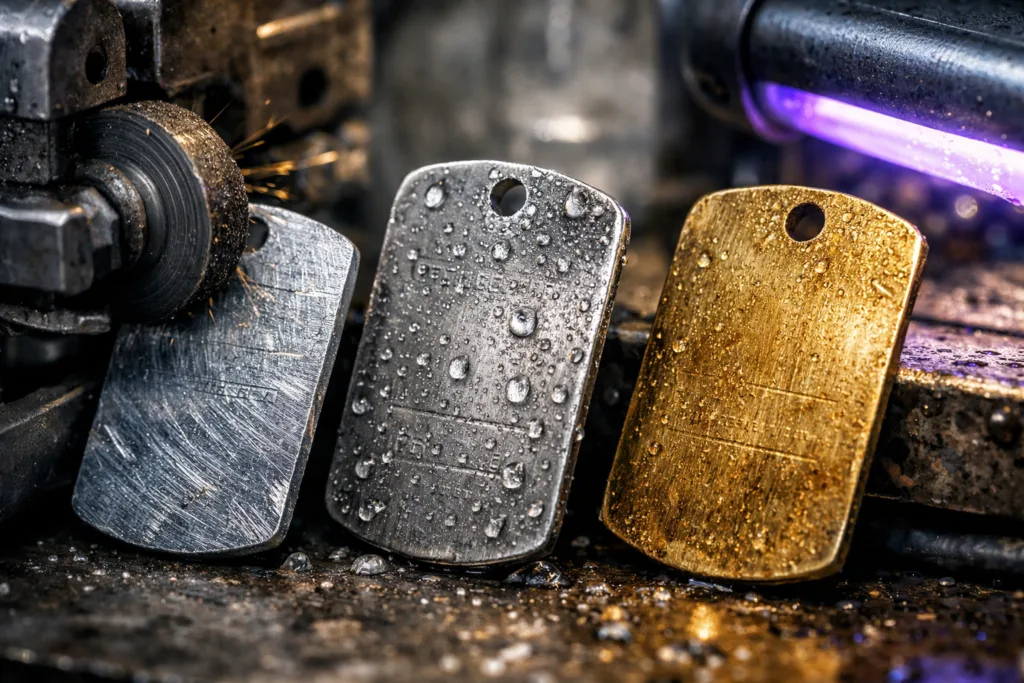
Legibility isn’t static—it’s a measure that changes over the metal tag’s entire service life. Environmental tests, such as accelerated abrasion with brushes, salt spray chambers, and UV exposure, simulate years of wear in weeks. These tests reveal if your chosen font size, engraving, or stamping depth is robust enough for your use case.
Tags subjected to heavy handling, outdoor storage, or exposure to chemicals risk losing legibility from faded fills, corroded surfaces, or scratched outlines. For customers whose tags must endure severe operating conditions, UC Tag typically recommends running pre-order visibility and durability tests on real samples. Tactile and visual assessments identify issues before committing to a full production batch.
If a tag fails after testing—say, the lettering peels due to thin engraving on powder-coated steel—solutions might include increasing font size, using deeper engraving, or switching to a less reflective material. Applications like marine asset tags and outdoor utility equipment may require UV-resistant coatings or more aggressive test standards, detailed in guides like UV resistance for outdoor tags. Durability testing should always be part of your specification-to-approval workflow for any critical use.
Industry and Application Fit: Use Cases
Requirements for engraving, stamping, and legibility shift according to industry standards and regulations. In aerospace, serialized ID and inspection tags require flawless font size and clarity to meet traceability mandates. Automotive parts use metal tags with mid-sized, bold fonts so plants and mechanics can quickly confirm part numbers—always readable against oil or grime. Real estate and architecture projects may demand stylish custom fonts on brass or steel, blending decor and information.
Consumer goods, such as custom pet tags, focus on both aesthetics and ruggedness, often using deeper laser engraving and readable, fun fonts. In industrial asset management, durability and quick identification take priority—meaning practical sans-serif fonts, larger sizes, and high-contrast finishes. Review the outcomes of laser vs. diamond drag engraving on metal tags to compare edge case performances.
Common mistakes in use include choosing decorative, thin fonts for outdoor or abrasive environments—these often fade or become unreadable. Each sector has its pain points, but practical font size, clear engraving or stamping, and application-specific testing help ensure legibility and long service life every time.
Common Mistakes and Troubleshooting
Many tag projects run into legibility pitfalls. The most frequent error is specifying a font size below the process or material’s minimum—text ends up faint, incomplete, or blended into the background. Choosing glossy finishes without sufficient font weight or contrast hinders readability, especially under harsh lighting (see more in matte vs. glossy finish readability).
Improper adhesives can cause tags to shift, peeling the text along with the surface. Corrosion is another culprit: uncoated steel or thinly anodized aluminum may lose edge clarity, especially if engraving isn’t deep enough. If you discover these problems in initial batches, adjust with a higher font size, bolder type, more resilient material, or by infilling text with protective enamel—tested in small runs before scaling up.
- Don’t crowd text near rivet or mounting holes.
- Avoid ultra-light fonts except for decorative, low-wear placements.
- Increase size or depth if testing exposes fading or abrasion issues.
- Use high-contrast finishes for outdoor/read-critical applications.
Ordering Guide: Key Considerations for Custom Tags
When ordering custom-engraved or stamped metal tags, consider minimum order quantities (MOQ), which typically start at 50–100 pieces. Most manufacturers, including UC Tag, support a wide range of customization—selecting font size, material, finish, and special features such as cut-outs, adhesive backing, or double-sided engraving. Lead time is affected by proofing, artwork setup, and process (stamping is fastest for volume, laser engraving is flexible for prototypes).
You’ll need to provide vector files (for accurate molds and crisp text, see why vector art is non-negotiable) or clear artwork, and can often request sample tags for review before main production. Special packaging (for retail, asset tracking, or presentation) and labeling requests should be specified up front. Shipping delicate tags? Choose protective inner sleeves or boxes instead of bulk bins.
Be clear about your application requirements early, especially regarding font size. If durability and legibility under stress matter, request validation testing and a pre-shipment sample, and communicate any mounting, marking, or finish specifications in detail.
Frequently Asked Questions
What is the minimum legible font size for engraving on metal tags?
The minimum legible font size for engraving on metal tags is usually around 1.4–1.6 mm (approximately 4–4.5 pt) for sans-serif fonts, depending on the metal surface, with larger sizes recommended for serif or decorative fonts.
How do viewing distance and lighting affect legibility on stamped tags?
Increased viewing distance or poor lighting requires larger font sizes for reliable legibility; adding 1 mm per meter of distance and selecting matte or brushed finishes can help maintain clarity under varied lighting conditions.
Does the type of metal change how small I can make my text?
Yes, aluminum supports the finest engravings, stainless steel needs thicker fonts for stamping due to its hardness, and brass should use larger or bolder fonts to prevent wear-induced blurring over time.
Can I test legibility before full production?
Requesting a sample or small batch from your supplier is best practice; reviewing real tags with your intended font size, engraving, and finish prevents production errors and ensures visibility meets your application needs.
What factors influence the price of custom engraved metal tags?
Pricing reflects font size complexity, setup and tooling, order quantity, chosen process (engraving, stamping, or etching), finishing options, and any special requirements like protective coatings, packaging, or sampling.
How does font choice influence my company’s image and compliance?
Clean, well-sized, and consistently legible fonts project professionalism and support regulatory compliance in identification and safety scenarios, while poor choices can undermine your brand’s credibility or cause traceability failures.
Summary and Call to Action
Getting font size, engraving, stamping, legibility, and metal tags right isn’t just about aesthetics—it’s fundamental to durable, readable, and effective identification. Balancing font style, size, and method with your application ensures your tags remain clear and useful, even after years in challenging environments. Make sure to test, adapt based on results, and specify details carefully to reduce risks and wasted resources.
Need help choosing the right metal + finish? UC Tag can recommend options for your application. Contact us for a quick RFQ or to request a sample tailored to your needs.
Related Reading
- Why Your Tag’s Vector Artwork Dictates Mold and Font Sharpness
- Long-Term Durability: Brass vs. Steel Tags Under Real-World Stress
- Mastering UV Resistance to Stop Outdoor Tag Fading
- Unlocking Durable Stick-On Tags with Advanced Adhesive Backing
- Improve QR Code Scanning: How Matte vs. Glossy Surfaces Impact Legibility
- Salt Spray Testing: Ensuring Metal Tags Withstand Marine Environments