For logistics teams, fleet management is not only about vehicles on the road. It also depends on how well keys are stored, issued, returned, labeled, and audited. When key handling is messy, dispatch slows down, vehicles sit idle, and accountability becomes hard to prove. A good fleet key organization system gives operators faster access without giving up control, which is the balance most depots need.
For teams that want a more durable identification layer around key storage and issue control, our fleet key tag manufacturing support can help with serialized labeling, engraved identification, and project-specific attachment choices. At UC Tag, we work with buyers who need clear key identity, long-term readability, and bulk consistency, especially when keys are used across shifts, depots, or vehicle classes.
What Fleet Key Organization Means in a Logistics Operation
Fleet key organization is the system used to control access to vehicle keys and related equipment keys across a logistics network. In practice, it includes where keys are kept, who can take them, how they are labeled, how returns are logged, and what happens when a key is missing. In a small operation, that may be a lockbox and a paper sign-out sheet. In a larger operation, it may be a locked cabinet with barcode scans, user access control, and software logs.
The point is not to make key handling complicated. The point is to keep the process simple enough that drivers and dispatchers can follow it every day, while still leaving a clear record of who had which key and when. That record matters when a truck is late, a unit is not where it should be, or a maintenance issue needs to be traced back to a specific vehicle.
Why Vehicle Key Management Matters for Fleet Management and Asset Control
In fleet management, keys are part of the asset control chain. A vehicle may be available in the yard, but if no one can find the key, it is effectively unavailable. That delay can affect route departures, warehouse loading windows, customer delivery times, and maintenance scheduling. The cost is often not the key itself, but the time lost around it.
Good key control also reduces casual misuse. When keys are easy to borrow without logging, vehicles may be used by the wrong department, moved without permission, or returned to the wrong location. That creates gaps in accountability and can lead to fuel waste, scheduling errors, and avoidable security exposure. For logistics companies, the key system should match the way vehicles are actually dispatched, not the way a policy manual imagines they are used.
Industry guidance on secured storage, restricted issuance, and auditability is not unique to fleet work. A controlled access mindset is also reflected in key control policy, secured storage, audit trail, and restricted issuance, which is a useful benchmark when a team needs stronger internal discipline around physical keys and access records.
Common Problems Caused by Poor Key Handling
Most fleet key problems look small at first. A driver forgets to return a key. A backup key is made without a process. A paper log is incomplete. A label falls off. But when these issues repeat, they become operational risk.
- Delays: dispatch waits while staff search for the right key.
- Loss: a missing key creates a temporary vehicle outage and possible rekeying cost.
- Misuse: unauthorized vehicle movement can disrupt route planning.
- Security gaps: poor control makes it harder to know who had access.
- Maintenance confusion: keys are returned without notes, so a vehicle problem is not linked to the right unit.
These problems are especially visible in shift-based operations. If the night team and day team do not share the same process, the handoff becomes a weak point. The result is not only lost time but also more arguments about responsibility. A better system removes guesswork.
Key Storage Options for Logistics Companies
The right storage method depends on the size of the fleet, the number of users, and how fast keys need to move. Some sites only need a basic physical system. Others need a more controlled workflow with electronic access and logs.
| Storage option | Best fit | Main benefit | Main limitation |
|---|---|---|---|
| Wall rack | Small, low-risk depots | Simple and fast | Limited control and weak audit trail |
| Lock box | Basic shared access | Low cost and compact | Hard to track individual handoffs |
| Key cabinet | Mid-sized fleets | Better organization and separation | Needs a clear issuance process |
| Controlled-access room | Large or sensitive operations | Stronger security and oversight | More setup and management effort |
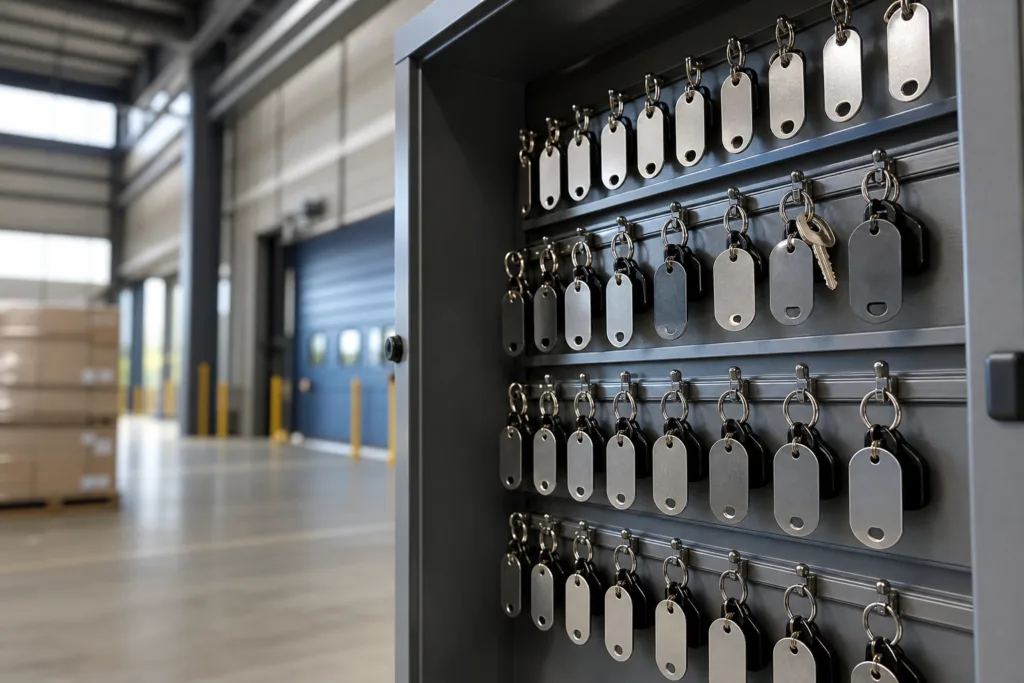
For many logistics companies, a key cabinet is the practical middle ground. It provides visibility, can be segmented by route or vehicle class, and is easier to train around than a fully custom room. But the cabinet alone is not the answer. The process around it matters just as much.
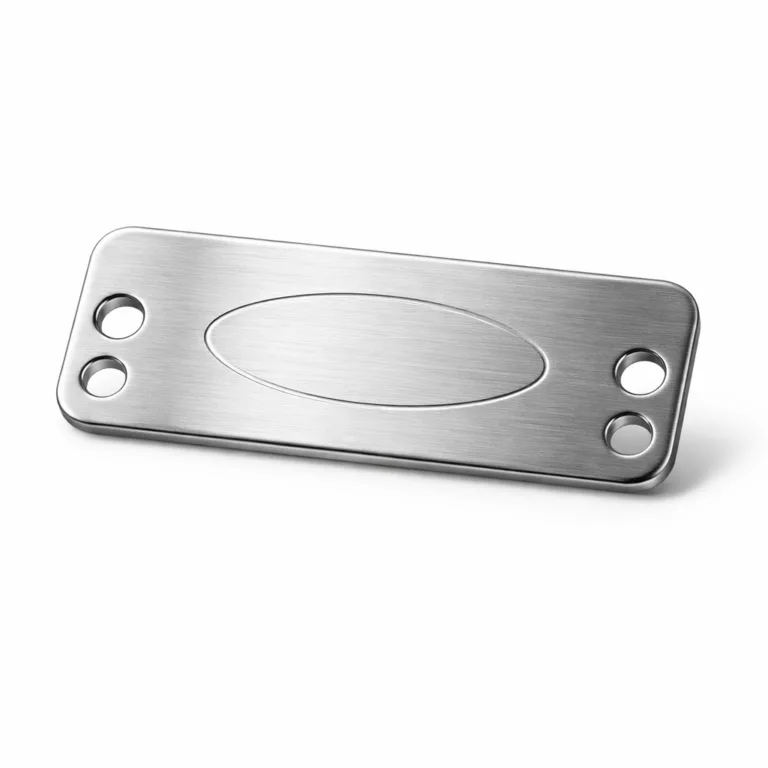
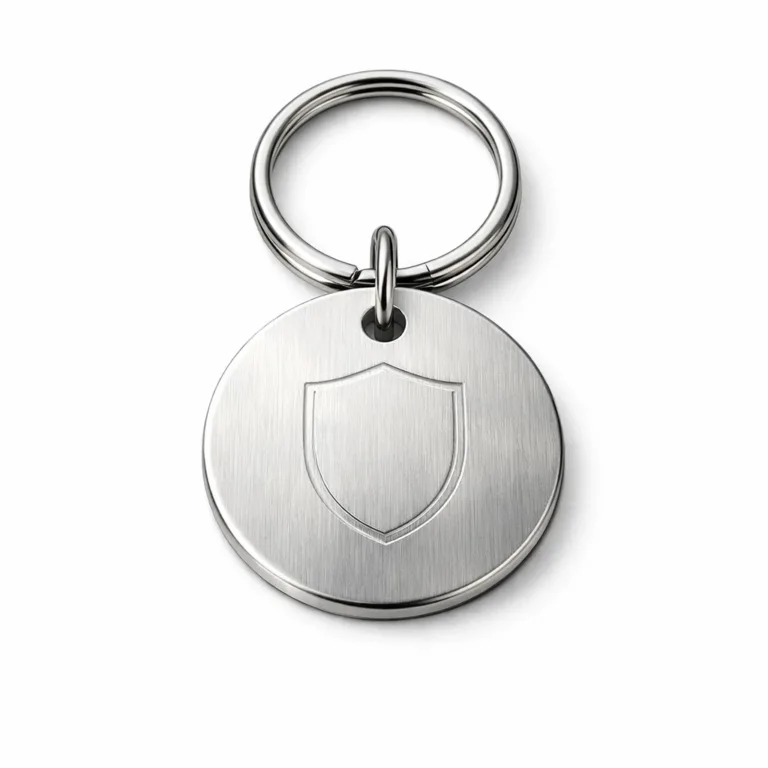
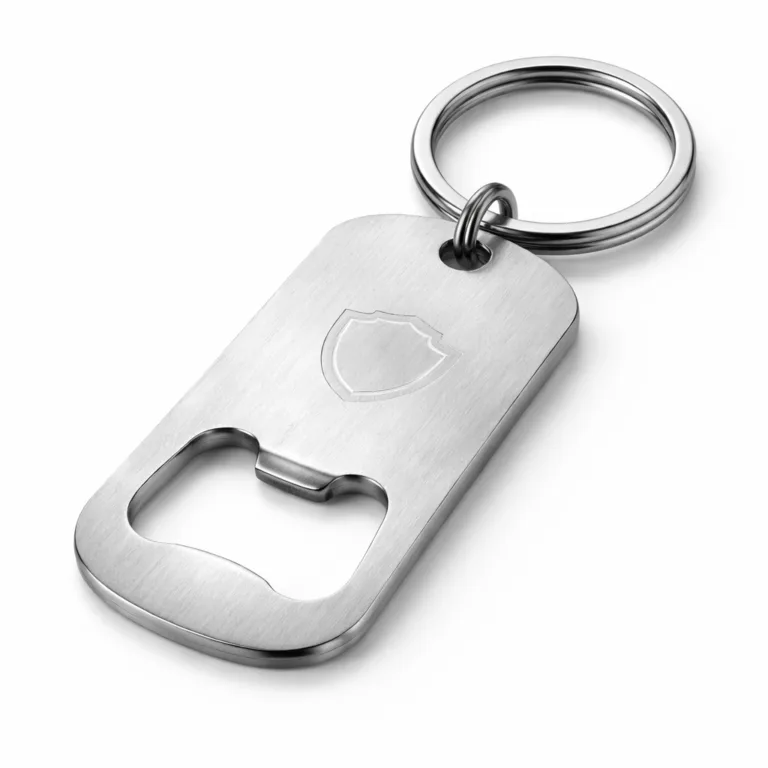
When teams need more structured physical identification in addition to the cabinet, the labels attached to each key must stay readable under daily handling. That is where heavy-duty key tags for daily handling become useful, especially when keys are carried, dropped, or moved through multiple hands every day.
Electronic Key Tracking Systems and Audit Control
Electronic systems are useful when a fleet has many users, many vehicles, or many shift changes. These systems may use RFID, barcode check-out, PIN-based access, or software logs tied to individual users. The main advantage is visibility. Instead of relying only on memory or paper, the team can see who took the key, when it was issued, and when it came back.
NIST’s guidance on physical access logs and secured access devices is helpful here, because it reinforces a simple principle: if access matters, the records should be reviewable. In a fleet setting, that means a key system should do more than open a cabinet. It should create a record that can be checked later when there is a question about timing, responsibility, or loss.
Electronic systems do not replace the need for good labels. They work best when each key is clearly tied to one vehicle or one asset group. If the tag is unclear or the numbering is inconsistent, the software log may be accurate but still hard to use in daily operations.
For teams that want a stronger traceable labeling layer, serialized key tags for accountability are often paired with check-out logs so every issued key can be matched to a record without confusion.
How to Assign, Label, and Segment Fleet Keys
A practical key organization system needs a logic that staff can recognize quickly. The goal is to reduce searching and reduce mistakes. We usually see better results when labels are segmented in a way that matches the operation.
Common segmentation methods
- By route: useful for dedicated route teams or repeat service lines.
- By depot: helps multi-location fleets avoid cross-site confusion.
- By department: works when sales, service, maintenance, and logistics share vehicles.
- By vehicle class: truck, van, forklift, trailer, or specialty unit.
- By priority: emergency units, reserve units, or time-sensitive assets.
Labels should be simple enough that a night shift temp can understand them immediately. We usually recommend short identifiers, clear numbering, and durable marking. If a tag is too crowded, the important information becomes harder to read under pressure.
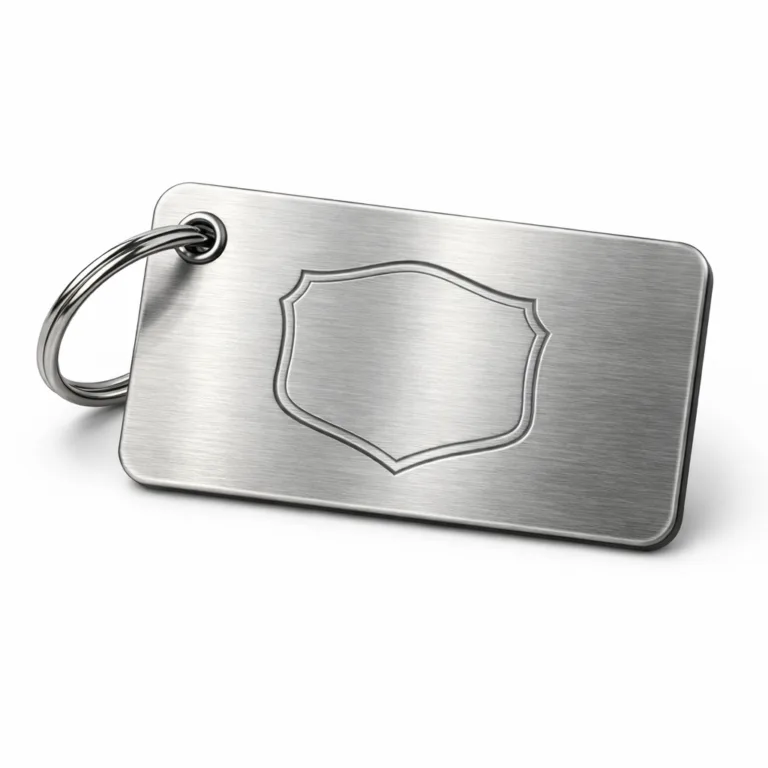
That is why engraved key tags for clear labeling are a good fit for many logistics teams. Engraving stays readable longer than temporary writing or low-durability print in environments where keys are touched, dropped, and wiped often.
Check-Out and Return Workflows That Actually Work
A key system fails when the process is too heavy for people to use. The workflow should fit the pace of the depot. A good process is short, consistent, and easy to audit.
- Identify the vehicle and key group.
- Record the person taking the key.
- Note time out and expected return time.
- Confirm return and close the record.
- Flag exceptions immediately.
If the process uses paper, the form should be visible and easy to fill in under time pressure. If it uses software, the login steps should not be so slow that staff start working around the system. The best workflow is the one people will actually use during a busy dispatch window.
One useful rule is to keep the key tag and the workflow aligned. If a key is issued by barcode or QR code, the tag and the software record should use the same identifier format. If the depot uses handwritten logs, the same number format should appear on the tag, cabinet slot, and vehicle record.
When a logistics operation wants to connect physical tags to digital records, QR code key tags for tracking systems can help bridge that gap, especially when teams want quick scan-based check-in and check-out without adding extra manual steps.
Security Considerations: Access, Audit Trails, and Theft Prevention
Key security is not only about preventing theft. It is also about preventing unauthorized use, hiding errors, and reducing the chance of an untracked handoff. The more people can access keys freely, the harder it becomes to prove who did what.

For that reason, we recommend that logistics companies define three things early: who may access keys, when access is allowed, and what proof is required for every handoff. These rules are more important than the cabinet model itself. Even a high-end system will fail if the team does not follow it.
Audit trails are especially valuable in larger depots. If a key is missing, the team needs to know who last checked it out, whether it was returned to the right slot, and whether the vehicle was actually used. In a practical sense, this is the difference between a fast recovery and a long internal dispute.
GSA’s fleet management material on reservations and vehicle status also reflects this operational logic: when access and dispatch are centralized, it becomes easier to see whether a vehicle is available, reserved, or in use. That visibility supports faster decisions and fewer handoff mistakes.
Matching the System to Fleet Size and Operating Complexity
There is no single key system that fits every logistics company. A 20-vehicle depot with one day shift does not need the same structure as a multi-site operation with rotating shifts and reserve vehicles.
| Fleet profile | Practical system | Why it fits |
|---|---|---|
| Small fleet | Lock box + labeled tags | Simple, low cost, easy to train |
| Mid-size fleet | Key cabinet + sign-out process | Balanced control and speed |
| Large fleet | Electronic access + audit logs | Better accountability across many users |
| Multi-depot fleet | Segmented labels + digital records | Reduces cross-site confusion |
The more complex the operation, the more important standardization becomes. If every depot names vehicles differently, the system will create more work than it saves. Simple naming rules, label formats, and access rules keep the process scalable.
How Key Organization Supports Fleet Management and Asset Management
Key control is part of broader asset management. It affects vehicle status, maintenance coordination, driver assignment, and dispatch speed. When the key process is weak, the fleet management process becomes less reliable because the vehicle may be ready but not reachable.
That is why many operations teams connect key control to the same discipline they use for reservations, mileage checks, and maintenance records. The objective is not to create more paperwork. It is to reduce the number of unknowns. If the key is missing, the vehicle is not fully available. If the tag is unclear, the record is not reliable. If the handoff is not logged, accountability is incomplete.
At UC Tag, we often see buyers focus on the cabinet or software first and then discover the label layer is the weak point. In practice, the physical tag has to survive daily use just like the workflow does. That is why the material, marking method, and attachment style should be chosen with the depot environment in mind.
Selecting the Right System: Cost, Scalability, and Training
When buyers compare systems, price is only one part of the decision. A cheaper system can become expensive if staff ignore it, if labels fail, or if audits take too long. The better question is whether the system fits the actual operating rhythm.
- Cost: basic systems cost less, but they may create hidden labor.
- Scalability: the method should still work if the fleet grows.
- Ease of use: if the process is too slow, staff will bypass it.
- Training: the team should be able to learn it quickly.
For physical labels and tags, material choice matters. Metal tags can be a good fit when the operation wants durable marking and a more professional, long-life identification system. If the tags are exposed to frequent handling, moisture, or cleaning, the surface finish and marking method should be chosen carefully.
For projects that need a wider manufacturing view, custom metal tag solutions for operations can support planning around tag format, marking method, and attachment options so the identification system matches the site workflow instead of fighting it.
Implementation Checklist for Logistics Teams
Before rolling out a fleet key organization system, teams should confirm the basics. This avoids rework after staff have already started using the system.
- List every vehicle, trailer, and critical asset key.
- Decide who may access each key group.
- Choose a storage method based on fleet size.
- Set a label format and numbering logic.
- Define check-out and return steps.
- Assign an exception process for missing keys.
- Train all shifts before launch.
- Review the system after the first operating cycle.
One detail that is often overlooked is spare keys. If spare keys are not stored and labeled with the same discipline as active keys, they become a hidden risk. The backup key should not be the least controlled item in the entire system.
Common Mistakes to Avoid
In fleet projects, the mistakes are usually practical, not technical. Teams usually know they need control. The problem is that the process is designed around an ideal day, not a busy one.
- Using labels that fade or fall off too quickly.
- Building a workflow that is too slow for shift changes.
- Allowing too many people to access the same keys.
- Mixing multiple naming formats across depots.
- Skipping sample approval for tags before bulk ordering.
- Choosing software without a matching physical label system.
For tag projects, sample approval is worth the time. A small test run can catch issues with font size, hole position, numbering layout, or attachment choice before the full order is produced. That is often where problems are prevented instead of corrected later.
If your operation needs to compare options before a larger roll-out, sample ordering for custom tag projects is a useful stage for checking readability, finish quality, and durability against real depot handling.
Conclusion

Fleet key organization is a small system with a big effect. In logistics, it influences dispatch speed, vehicle availability, security, and accountability every day. The best setup is not the most complicated one. It is the one that staff can follow, auditors can review, and managers can trust.
For many teams, the right answer is a mix of clear rules, practical storage, and durable identification. When the labels, access process, and tracking method work together, fleet management becomes more predictable and less reactive. That is the real goal: fewer missing keys, fewer delays, and better control over every vehicle in the system.
Frequently Asked Questions
What is the simplest fleet key organization system for a small logistics company?
A small company can usually start with a locked box or cabinet, a clear sign-out sheet, and durable labeled key tags. The key is to keep the process simple enough that staff will use it consistently. Even a basic system can improve accountability if it is followed every day.
Are key cabinets better than electronic systems?
It depends on the fleet size and access needs. A key cabinet is often enough for a smaller or mid-sized depot, while electronic systems are better when many users need access or when audit logs are important. The best choice is the one that fits the team’s workflow without creating friction.
How should fleet keys be labeled?
Labels should be short, clear, and consistent across the whole operation. Many teams use vehicle numbers, route codes, or depot codes. The important part is that the label is easy to read under pressure and matches the same naming rule used in logs and dispatch records.
Why use serialized or numbered key tags?
Serialized tags help connect each key to a specific record or vehicle. That makes check-out, return, and exception handling easier to track. When a key is missing or returned to the wrong place, the numbering system helps staff identify the issue faster.
Can QR codes help with fleet key control?
Yes. QR codes can connect the physical key tag to a digital record, which is useful when teams want faster check-in and check-out. They work best when the code is clear, durable, and linked to a consistent system in the software or log sheet.
What should be tested before ordering key tags in bulk?
Test readability, size, attachment method, and how the tag holds up during daily handling. It is also smart to confirm the numbering format and sample layout before full production. A small sample step can prevent confusion later and reduce the chance of rework.