Introduction to Variable Data Engraving
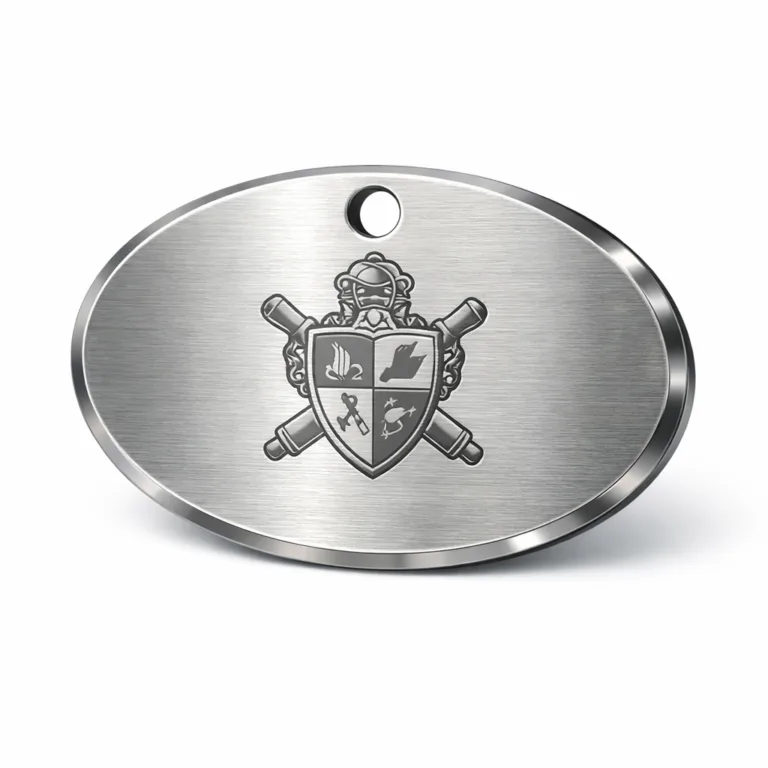
Engraving unique names on metal tags, especially at high volumes, is reshaping how industries manage identification and personalization needs. This process, known as variable data engraving, enables manufacturers to efficiently mark each tag with distinct information—be it serial numbers, names, or custom codes—bringing both flexibility and precision to large-scale jobs.
Variable data engraving combines advanced machinery and software controls to deliver personalization on a mass-production scale. Unlike standard engraving, where each tag is identical, this workflow allows every piece to carry a different name or piece of data. Applications range from asset tracking in factories to personalized luggage tags and medical identification products.
Modern consumers and businesses increasingly expect products tailored to their needs. Personalized metal tags help brands stand out, enhance identification, boost security, and foster deeper connections with end users. The ability to engrave unique names on metal tags is a key factor in today’s competitive market.
Technologies such as laser engraving and automated variable data printing systems have improved speed, cost-efficiency, and design accuracy. Demand is growing for customizable items—fueling innovations in tagging, tracking, and branding. Product differentiation, logistical efficiency, and even regulatory compliance all benefit when variable data becomes part of the core workflow.
- Personalization increases perceived value and customer loyalty.
- Efficient variable data marking streamlines asset management.
- Engraved metal tags remain durable under demanding conditions.
Understanding Engraving Technologies
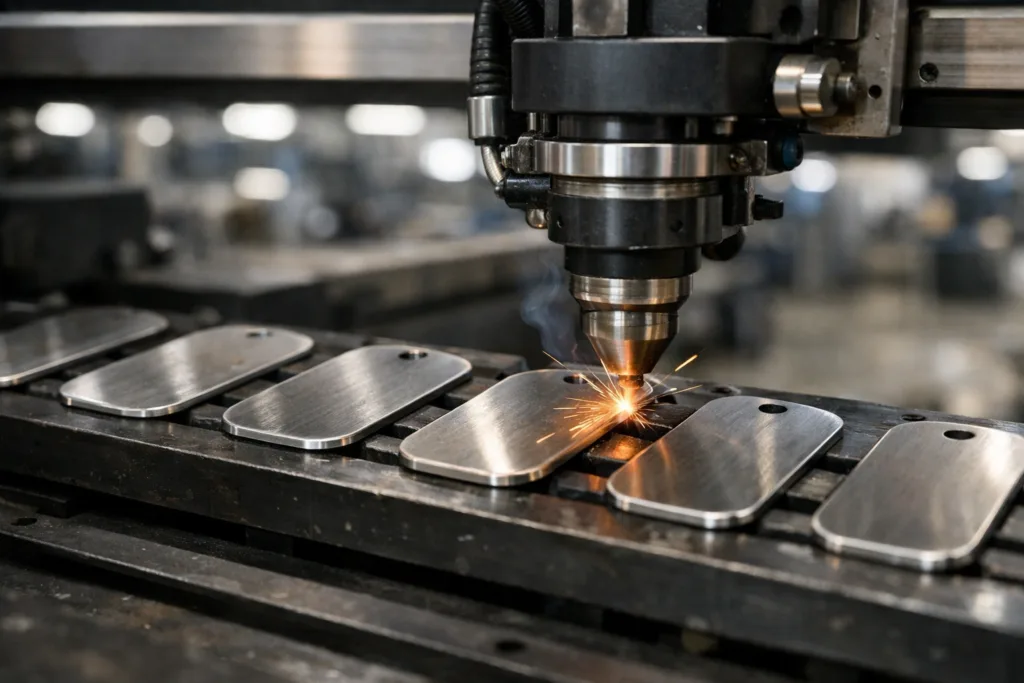
Choosing the right method for engraving unique names on 1000 different metal tags requires understanding the available techniques and how they fit specific production needs. Each method brings unique strengths in clarity, durability, and efficiency.
Comparing Engraving, Stamping, Etching, and Printing
Engraving physically removes material from the surface to create permanent markings. Stamping presses information into the metal with force, creating indented or raised characters. Chemical etching uses controlled chemical reactions to transfer designs onto the surface. Printing (such as UV or digital methods) applies ink or color to the metal, ideal for logos or full-color designs but less durable for harsh environments.
Laser Engraving vs. Rotary (CNC) Engraving
Laser engraving is highly popular for variable data. It uses focused light to vaporize the top layer precisely, offering rapid changeover between unique names. Rotary or CNC engraving, on the other hand, uses a cutting tool to mechanically carve names into the tag.
| Technique | Advantages | Drawbacks | Best for |
|---|---|---|---|
| Laser Engraving | Fast, automated, flexible, non-contact | Capital cost, less depth | High-mix, lightweight tags |
| Rotary Engraving | Deep marks, tactile results, works on hard metals | Slower for variable data, tool wear | Industrial, high-durability uses |
| Stamping | Very durable, quick mass production | Limited variable data, setup time | Serial or lot numbers |
| Chemical Etching | High detail, suitable for thin tags | Chemical use, slower cycle | Fine text/graphic |
| UV/Digital Printing | Full color, high detail, fast image changeover | Less abrasion resistant | Logos, decorative tags |
Considerations for Technology Selection
When engraving unique names, factors such as batch size, material type, production speed, and required depth all impact the choice. Laser engraving, with variable data control, is optimal for rapid personalized runs. For deep, permanent marks—like those that must survive harsh industrial use—rotary engraving or stamping is often preferred.
UC Tag’s shop floor team, led by Rain Chen, often balances production speed with visual durability. Laser engraving is chosen for complex naming lists, while mechanical engraving or stamping is preferred when customers need rugged, nearly indestructible tags. Software integration is essential: most variable data engraving lines use CSV import or custom scripts to automate unique name sequencing.
Some high-volume systems include automated conveyors and robotic handling, minimizing human labor while ensuring each metal tag receives its correct unique name. Ultimately, the system must guarantee precision, minimize misprints, and maintain consistent quality at scale.
Material Selection for Metal Tags
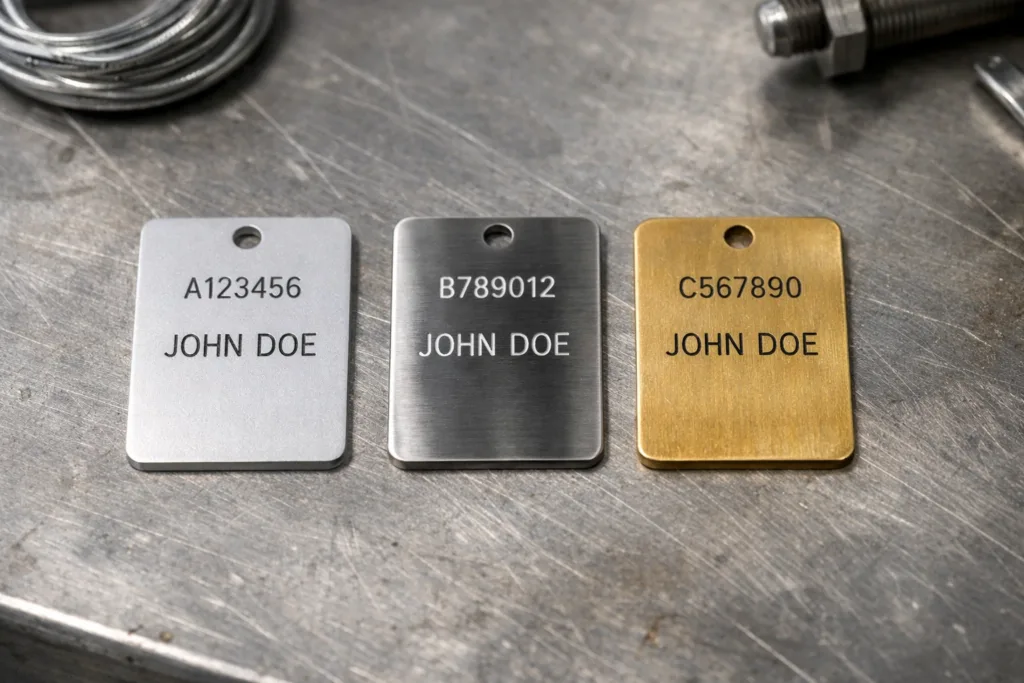
Material choice is a foundation for both performance and cost when producing metal tags. The core trio—aluminum, stainless steel, and brass—offer very different benefits for applications that require engraving unique names.
Aluminum
Aluminum is light, corrosion-resistant, and cost-effective. Anodized aluminum tags can be colorized and offer good contrast with laser or rotary engraving, making them popular for indoor and light outdoor use.
Stainless Steel
Stainless steel tags are the standard for maximum durability and corrosion resistance. Their superior hardness is favored in harsh, abrasive, or chemical environments—like chemical plants, marine settings, or outdoor asset labeling. Engraving produces crisp, permanent results with long-term readability.
Brass
Brass balances aesthetics with corrosion resistance, offering a traditional “gold” look preferred in premium, decorative, or branding contexts. It engraves cleanly, but may oxidize unless finished or lacquered.
| Material | Weight | Corrosion Resistance | Relative Cost | Engraving Suitability | Typical Lifespan* |
|---|---|---|---|---|---|
| Aluminum | Light | High (anodized) | Low | Laser, rotary, print | 5–10 years |
| Stainless Steel | Heavy | Very High | Mid–High | Laser, rotary, stamping | 10–20 years |
| Brass | Medium | Good (may tarnish) | Mid | Rotary, laser, etch | 5–10 years |
*Lifespan depends on use environment.
For indoor applications, aluminum is a go-to choice. Outdoor tags exposed to moisture or chemicals do better with stainless steel. Brass is typical for aesthetics in wine, décor, or luxury branding. UC Tag has seen industrial buyers shift to stainless steel where high pressure washing or salt spray is an issue, while cost-focused buyers often balance durability and price with anodized aluminum.
- For marine or chemical plants: stainless steel tags (QR/barcode tags optional for traceability)
- Retail keychains or luggage tags: anodized aluminum (keychain tag manufacturer)
- High-end branding: lacquered brass (gold-plated bag tag)
Designing for Success: Specifications Checklist
A successful run of engraved metal tags with unique names starts at the design stage. Overlooking small details can lead to confusion, production errors, or unreadable tags.
Recommended Sizes and Thicknesses
Optimal tag size allows enough room for the name, required data, and any logos or icons. Smaller tags (e.g., dog tag manufacturer standard: 50 x 28mm) can squeeze in 2–3 lines; larger asset tags may benefit from a 75 x 38mm size. Thickness between 0.7–1.5mm is standard for durability while remaining easy to attach.
Finish: Matte vs. Glossy
Matte finishes greatly enhance readability, reducing glare under direct light—vital for scanning QR codes or reading fine details. Glossy surfaces offer premium aesthetics but may reduce legibility. UC Tag recommends matte for industrial ID and glossy for display tags.
Mounting Options
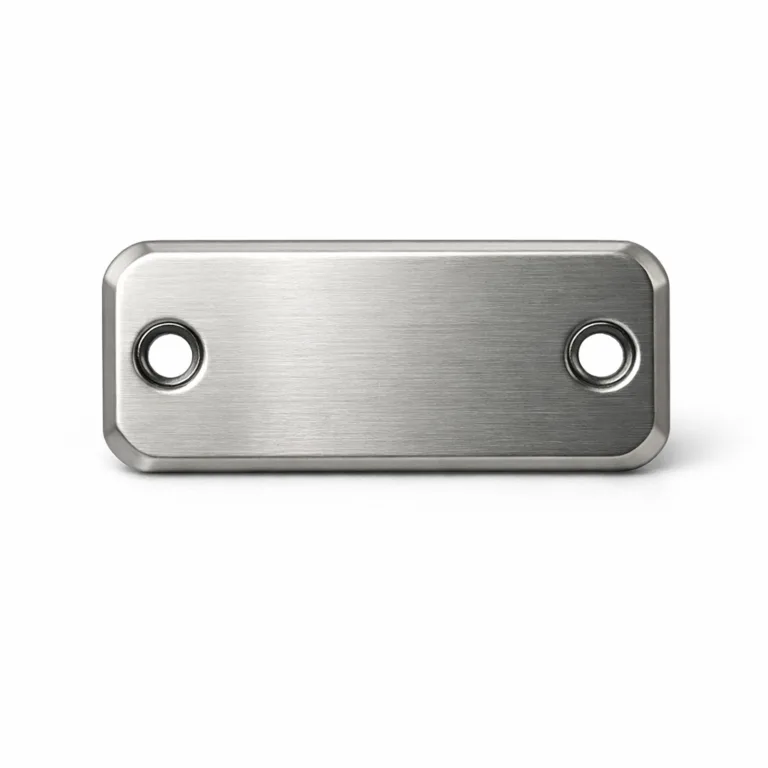
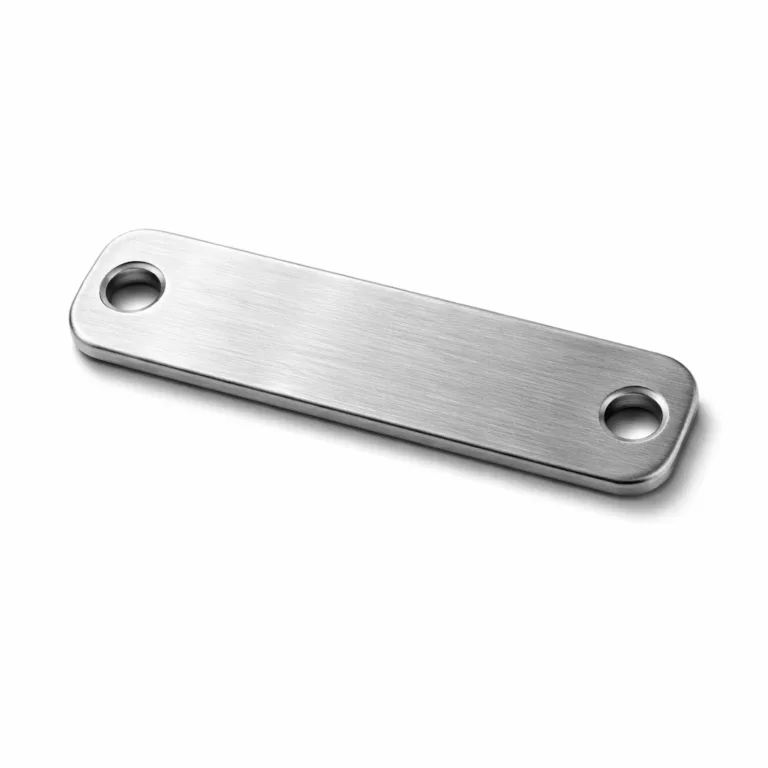
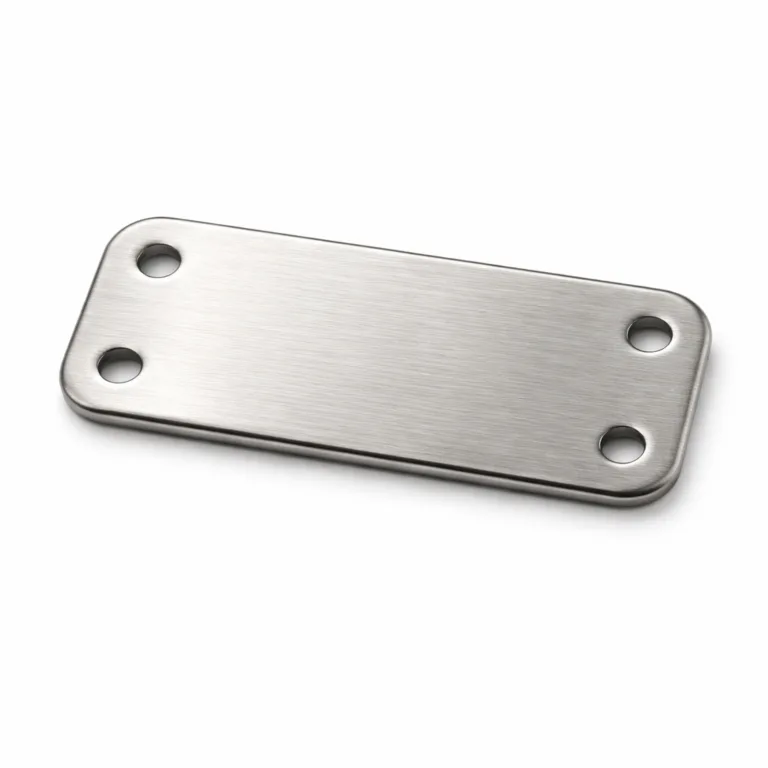
Choices include pre-punched holes (for screws or rivets) or adhesive backing (such as 3M tapes) for stick-on tags. The right option depends on surface, environment, and the likelihood of future removal or repositioning.
Fonts and Sizes
Sans-serif fonts offer crisp edges and easy legibility. Font height should be 2.5mm minimum for clarity. Fine details risk blurring or fading on rugged tags (see our font size guide).
Manufacturing Tolerances
Tight tolerances—within ±0.2mm for size and cutouts—are necessary for consistency when hundreds or thousands of tags are in play. Confirm all dimensions on artwork, including hole placement and border clearance.
| Parameter | Recommended Value/Range |
|---|---|
| Tag size | 50 x 28mm to 75 x 38mm |
| Thickness | 0.7mm – 1.5mm |
| Surface finish | Matte (for industrial); Glossy (for decorative) |
| Font | Sans-serif, min 2.5mm height |
| Mounting | Holes, adhesive, magnet |
| Tolerance | ±0.2mm |
- Double-check unique names before submission
- Provide artwork in vector format
- Specify finish, tolerances, and attachment style
Ensuring Durability: Testing and Quality Assurance
The best engraving is only as good as its resilience to the conditions it faces. Quality assurance and material testing are vital steps when producing metal tags for industrial and consumer use. Here’s what buyers and engineers need to know.
Corrosion Testing
Corrosion is a chief concern for outdoor or marine tags. Salt spray testing, following ASTM B117 standards, evaluates how materials and finishes resist rust and pitting. Stainless steel often excels, while anodized aluminum performs well if the oxide layer is intact. Brass with lacquer may tarnish over time but can pass moderate salt spray cycles.
Abrasion Resistance
If the engraved surface will endure repeated contact—think tools, gloves, or luggage—abrasion testing evaluates how markings withstand friction. Deep engraving and stamping outperform surface-level printing for high-wear environments. Laser marks on anodized aluminum also resist scratching well when properly sealed.
UV Resistance
Sunlight degrades many materials through UV exposure. Testing ensures readability isn’t compromised after prolonged outdoor use. Certain coatings, colored anodized aluminum, and stainless steel are evaluated for colorfastness and surface stability.
Readability Over Time
Long-term readability matters for compliance, asset tracking, and branding. Standard tests include exposure to sunlight, chemicals, and environmental cycling. Simple field checks: has the text faded, peeled, or become illegible after 1–2 years?
Best Practices in Batch QA
It’s critical to regularly sample tags from large production runs. Inspect for surface defects, incomplete engraving, uneven finishes, and accurate unique name sequencing. At UC Tag, spot-checking during production and verifying against customer-named databases are routine practice, catching errors before shipment.
Applications and Industry Fit
Variable data engraving for unique names on metal tags isn’t limited to one sector. This customizable approach enhances security, organization, and branding across diverse industries. Let’s explore where and how it makes a tangible impact.
Automotive
Automakers rely on engraved nameplates for VIN plates, parts identification, and key tags. Precision and readability under tough conditions matter—especially when resistance to heat, oil, or abrasion is required.
Aerospace and Industrial
Variable data is essential for traceability and maintenance logs in aircraft parts, equipment, and assets. Unique names streamline regular audits and lifecycle tracking. Aerospace-grade stainless steel tags (deep stamped dog tag) are a staple for extreme conditions.
Medical and Healthcare
Hospitals use engraved unique names on equipment ID plates, patient bracelets, and custom medical tools. These tags must be sterile, readable, and tamper-resistant.
Asset Management & Logistics
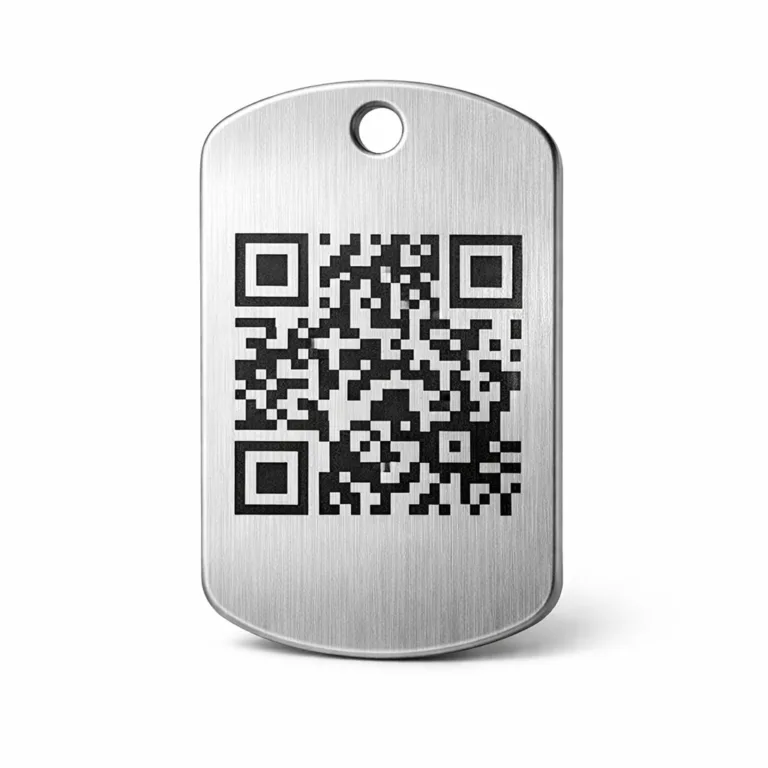
From warehouse assets to shipping crates, unique naming enables real-time tracking, loss reduction, and quick lookup. QR/barcode engraved tags (QR code keychain tag) make asset management seamless and efficient.
Consumer Branding
Retail brands deploy personalized luggage, pet, or product tags for aesthetic and marketing impact. The trend extends to keychains (engraved keychain tag), gift packaging, and even limited-edition collector items—each with its own engraved unique name or number.
Case studies show that production lines designed for variable data engraving boast high scalability. For instance, a global hotel chain can engrave thousands of unique guest names on VIP luggage tags, while an industrial supplier may mark asset IDs across facility equipment within days. The right system supports both one-off bespoke jobs and ongoing high-volume runs—proving personalization and scale aren’t mutually exclusive.
Common Mistakes in Engraving Unique Names
Even with the best machinery and materials, several pitfalls can hinder the quality and longevity of engraved metal tags. Avoiding these common mistakes saves money and prevents logistical headaches down the line.
Font Choice & Readability
Overly ornate fonts or undersized lettering often become unreadable after engraving, especially on small tags. Stick to bold, sans-serif options and maintain a minimum size. A practical reference is the minimum legible text guide for metal tag engraving.
Poor Material Selection
Choosing material without considering the actual environment often results in corrosion or premature wear. For instance, standard aluminum tags may corrode near saltwater, while untreated brass can tarnish on outdoor signage.
Adhesive Backing Failures
Low-quality adhesive or improper prep is a leading cause of tag detachment. Ensure surfaces are clean before application, and specify premium backings such as 3M for critical tags. Rain Chen, from UC Tag’s QC team, notes that buyers who don’t specify adhesives often face premature failures, especially in outdoor or high-humidity environments.
Inadequate Proofing
Skipping artwork proofing or not cross-checking the unique names list can introduce spelling errors or sequencing mistakes during mass production. Always insist on digital proofs and review the entire data set before production begins.
Corrosion & Peeling
Neglecting protective finishes or proper cleaning before production can lead to peeling lettering or early rusting—particularly with printed or etched tags in harsh environments. Engraved marks offer superior long-term durability compared to most surface-level printing.
Ordering Guide for Custom Engraved Tags
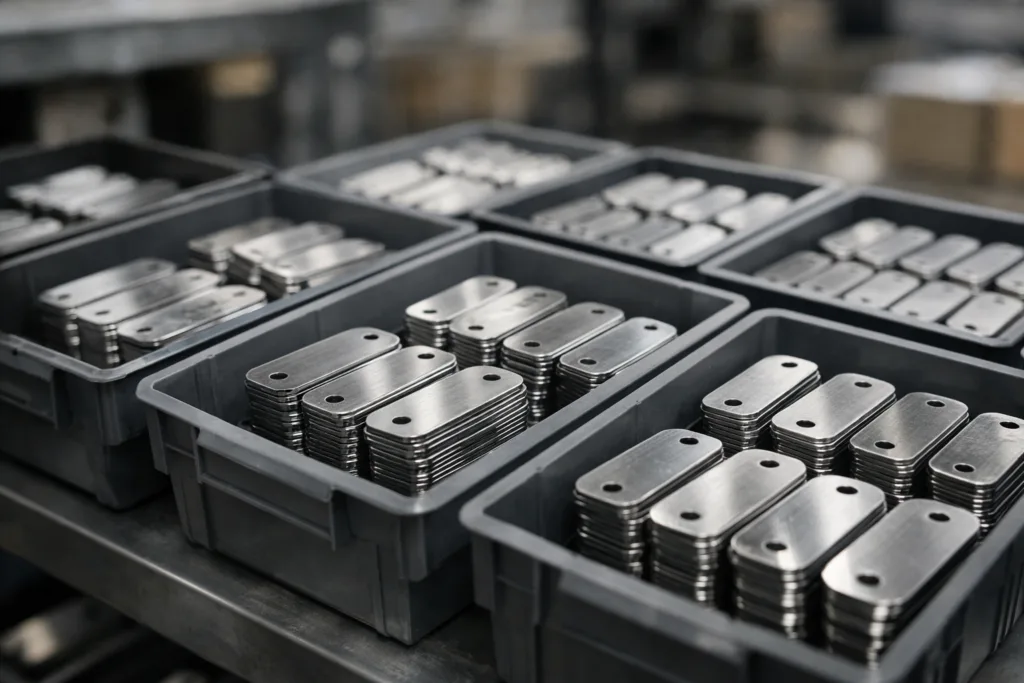
Ordering metal tags with unique names, especially for variable data jobs, involves careful planning but can be streamlined with the right information.
Minimum Order Quantities (MOQ)
Most manufacturers—including UC Tag—have MOQs to maximize production efficiency. Typical MOQs for engraved metal tags start around 100–300 pieces but can be higher or lower depending on process setup.
Production and Lead Times
Lead times fluctuate with order size and line complexity. A 1000-piece run with unique names usually takes 7–18 days after artwork approval—longer for custom shapes or specialty finishes. Rush options may incur setup fees (rush orders guide).
Artwork & Proofing
Provide vector artwork and a spreadsheet list of unique names. Always review and sign off on digital proofs before full scale production—this helps ensure each engraved tag matches expectations and prevents costly reruns.
Sampling & Pre-Production
Some buyers opt for a pre-production sample (pre-production sample strategies) to verify finishing and variable data accuracy. This is especially important when launch timelines are tight or stakeholders want to preview results.
Packing and Shipping
Tags are typically packed in protective bags or foam for safe transit. High-volume orders may ship in bulk cartons. Specify packaging needs if presentation or sequential sorting matters (metal tag solutions).
Frequently Asked Questions
What materials are best for outdoor engraving?
Stainless steel and anodized aluminum are top choices for outdoor tags due to their superior corrosion resistance and long-term durability, especially when harsh weather or chemicals are present.
How does variable data engraving differ from standard engraving?
Variable data engraving uses automated control to mark each tag with unique names or information, while standard engraving marks every tag with identical data—variable data enables true personalization at scale.
What is the turnaround time for a custom order?
Turnaround time depends on order complexity and size but for a 1000-piece run with unique names, it is usually 7–18 days after proof approval—rush or complex jobs may need more time.
Can logos be included alongside names?
Yes, most engraving and marking systems can handle logos as well as unique names, as long as vector artwork is provided and space allows on the tag.
What finishes are recommended for durability?
Matte anodized finishes and full stainless steel offer excellent durability for engraved metal tags used in rugged, abrasive, or outdoor environments—avoid unprotected printed surfaces for harsh uses.
How can I ensure my design is viable for engraving?
Submit vector files, follow minimum font size recommendations, confirm contrast between metal and marking, and always review a physical or digital production proof before the job begins.
Related Reading
- How to Source Safe, High-Quality Metal Tag Manufacturers in China
- Expert Tactics for Unlocking Big Savings via Bulk Metal Tag Orders
- Avoid Readability Issues: Font Size Secrets for Sharp Engraved Tags
- Reduce Production Risks: Why Sampling Custom Metal Tags Pays Off
- How Deep Should Engraving Go for Lasting, Legible Metal Tags?
- Explore Diverse Metal Tag Solutions for Every Industry Need