Introduction to Enamel Durability
Metal dog tags are essential across industries—from pet ID to equipment labeling—because they provide lasting identification and branding. These tags are often used outdoors or in demanding environments, making durability crucial to avoid fading, chipping, or illegibility.
One of the most popular finishing methods is enamel, which adds vibrant color, brand appeal, and extra surface protection. But a common concern is enamel durability: Will the color chip off my dog tag over time, or will it stand up to daily wear and harsh conditions?
Enamel durability refers to how well the colored coating retains its appearance and adhesion on the tag surface. It’s a key factor for buyers responsible for assets that must look professional and readable year after year. In this article, we’ll break down what affects enamel durability on metal dog tags, so you can choose solutions that last and meet strict operational standards.
Understanding Enamel Types
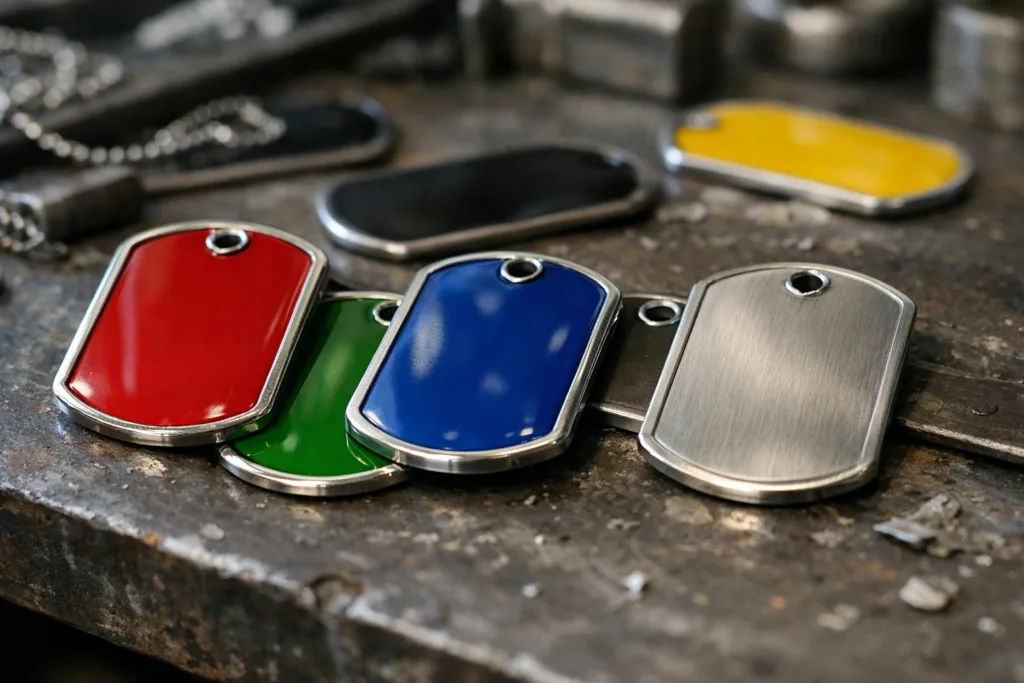
The type of enamel applied to a metal dog tag plays a major role in both appearance and longevity. Three primary types are commonly used:
- Opaque Enamel: Classic look, strong color saturation, used on many pet and brand tags.
- Transparent Enamel: Allows the underlying metal texture to show through, ideal for premium brand displays or intricate designs.
- Epoxy Enamel (Epoxy Domed): A clear, tough resin dome that protects printed or painted colors beneath. Frequently used to seal graphics and add a glossy finish.
Opaque and transparent enamels are usually baked or air-dried. They provide crisp, colorful surfaces but their scratch and chip resistance depend on thickness and base metal preparation. Epoxy domes, by contrast, shield underlying details against scratches and moisture, though heavy impacts on sharp edges can still cause cracking.
UV stability is critical for outdoor tags. Some enamels are UV-resistant, so they won’t fade quickly in sun exposure—this is especially important for pet tags or outdoor equipment labels. For example, Rain Chen at UC Tag notes that tags with UV-stable enamel maintain color vibrancy after years outdoors, while low-grade finishes often yellow or pale after just a few months.
Testimonials show varied outcomes: A hospital’s equipment tags using high-grade epoxy domes looked nearly new after three years, while a batch of promotional pet tags with economy soft enamel showed chipping and fading within months of daily use. Choosing the right enamel type is the foundation for ensuring real-world durability and minimizing replacement costs.
Material Comparison for Metal Dog Tags
The choice of metal substrate is just as important as the enamel itself when it comes to a metal dog tag’s performance. Each metal has unique properties impacting weight, price, corrosion resistance, and—crucially—how well it holds enamel finishes.
| Material | Weight | Corrosion Resistance | Enamel Adhesion | Maintenance | Common Uses |
|---|---|---|---|---|---|
| Aluminum | Lightweight | Good (esp. anodized) | Very Good | Low | Pet tags, luggage, outdoor |
| Stainless Steel | Moderate | Excellent | Excellent | Very Low | Equipment, industrial, medical |
| Brass | Heavier | Good, but may tarnish | Good | Occasional polish | Luxury, branding, pet tags |
Aluminum is lightweight and easy to color, especially when anodized. Anodized layers help enamel grip the surface for better long-term results. Learn more about anodized aluminum’s benefits.
Stainless steel boasts unmatched corrosion resistance and is a great match for epoxy and hard enamels. The surface is less likely to pit or allow the enamel layer to lift, even in marine or heavily handled settings.
Brass offers classic, weighty appeal, and is favored for its look, but it needs occasional cleaning to prevent tarnish under the enamel. However, contemporary clear enameling processes minimize maintenance needs for most branding uses.
In UC Tag’s manufacturing, stainless steel tags with baked-on enamel consistently pass salt spray tests (see industry standards below), while lower-cost aluminum excels for colorful, high-turnover promotional tags. It’s crucial to match material and enamel to your dog tag’s life cycle and exposure conditions—for example, a premium brass tag suits a pet boutique, while rugged stainless works best for field tools or medical IDs.
Manufacturing Methods Comparison
The process used to manufacture and finish a metal dog tag significantly affects enamel durability. Below are the main approaches:
- Engraving: Cutting text or graphics into the metal, then filling with enamel. This creates recessed color protected from surface abrasion. Ideal for long-lasting asset tags.
- Stamping: A die strikes the metal to form raised or recessed areas, which are then filled with enamel. This is fast and cost-efficient for mass production, but edge wear can reveal base metal on thinner tags.
- Etching: Chemical or laser etching creates precise designs before enamel fill. Great for fine detail, though etched surfaces are slightly more prone to flaking if the finish is too shallow.
- Printing: Direct color application, often protected by an epoxy dome. UV printing allows brilliant color and gradients but can scratch if not domed or finished.
Method choice comes down to requirements—deep engraving or stamping with baked enamel offers the highest resistance to wear, while printing is best for intricate color branding where tags see moderate handling. See further insights into engraving vs. diamond drag options.
For high-volume orders, stamping keeps costs in check, but for custom or small runs, engraving or etching may offer superior enamel protection. Tips from production: Always specify the desired finish in your project quote and discuss real-world handling to set durability expectations.
Design & Specification Checklist
Well-engineered tags start with smart design decisions. Here’s a checklist for optimizing enamel durability during the design process:
| Design Element | Best Practice | Durability Impact |
|---|---|---|
| Tag Thickness | ≥ 1.5mm for heavy use | Prevents warping & edge chipping |
| Finish Selection | Baked enamel or epoxy dome for busy tags | Reduces fading, improves wear |
| Attachment Method | Rivets/holes with reinforced edge | Prevents stress cracks around holes |
| Readability | High-contrast text, ≥ 3mm height | Keeps info clear after wear |
| Manufacturing Tolerances | Strict QA for enamel fill & alignment | Avoids thin areas prone to chipping |
If your spec includes adhesives, select only industry-grade backings such as 3M VHB—regular glues can degrade, putting stress on the enamel when tags detach. For complex designs or unique shapes, seek professional advice during the artwork phase to foresee wear points—Rain Chen recommends early samples and proofing to avoid costly surprises.
Durability Testing Standards
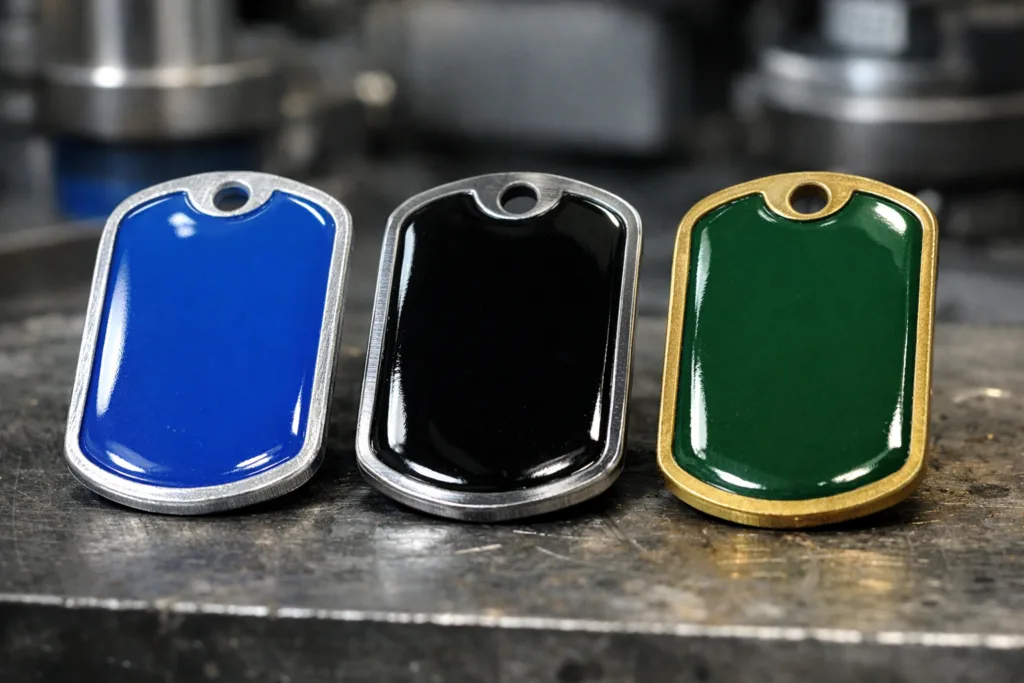
Predicting how a dog tag will age isn’t guesswork—manufacturers rely on standardized durability testing to simulate real-world wear. If enamel durability matters for your application, ask about these test methods:
- Corrosion Testing (Salt Spray): Exposes tags to a saline mist, accelerating rust and adhesion failures. A gold standard for outdoor and marine applications.
- Abrasion Testing: Tags are rubbed with a weighted pad or abrasive material to simulate years of contact, checking for color retention and enamel loss.
- UV Aging: Subjects tags to intense UV light, measuring fading or yellowing over time—a requirement for tags used in sunny or outdoor contexts.
Industry benchmarks: Tags that last 200+ hours in salt spray or 72+ hours under UV without noticeable damage are considered suitable for tough environments. For example, UC Tag’s stainless steel tags with premium enamel consistently exceed these benchmarks, while lower-grade economy tags routinely see failures like edge lift or fading in less than a season. See more about salt spray testing for marine durability.
Before placing a large order, request samples to test in your specific environment. Many procurement teams find even a week of real-use trial in the field can reveal weaknesses that lab testing may miss.
Industry Applications for Metal Dog Tags
Metal dog tags with durable enamel finishes are trusted by a wide range of sectors:
- Pet Identification: Constant movement, biting, mud, and sun; here, fade- and chip-resistant enamel means safety and legibility over years.
- Equipment & Asset Labeling: Industrial and medical equipment needs tags that survive cleaning, friction, and chemicals—faded or illegible labels risk safety and compliance.
- Branding & Logos: Luggage, promotional, and fashion applications demand tags that look sharp and maintain color, even with travel scuffs or weather exposure.
Case study: A logistics firm used high-grade epoxy domed tags from UC Tag on toolboxes exposed to daily rain and sun. After two years, 97% of tags were still fully readable and vibrant, preventing costly replacements. By contrast, a pet shelter’s economy tags began chipping within six months—prompting a switch to stamped aluminum with baked enamel for better outdoor performance.
Durability expectations and priorities do differ by industry, so plan specifications to risk factors in your application. If curious about luggage tag specifics, see how luggage tags are engineered for harsh conditions.
Common Mistakes & Troubleshooting
Even the best materials and enamels can fail if certain pitfalls are overlooked. Common mistakes that reduce enamel durability on metal dog tags include:
- Choosing adhesives not made for metal or outdoor use, leading to detachment and enamel fracture.
- Insufficient tag thickness, increasing flex stress and risk of chipping near edges or holes.
- Picking colors with low contrast for critical text or brand logos, harming readability after light wear.
- Poor maintenance—harsh chemicals or abrasive scrubbing can prematurely wear even premium enamel.
If chipping or peeling appears, first check for improper tag mounting or underlying material corrosion. Switch to better-suited adhesives, review finish specifications, and keep cleaning to gentle soap and water. If your design isn’t lasting, reconsider your metal and enamel type—sometimes switching from soft to hard enamel or adding an epoxy dome (see when to use epoxy domes) makes a big difference.
Ordering Guide for Custom Metal Dog Tags
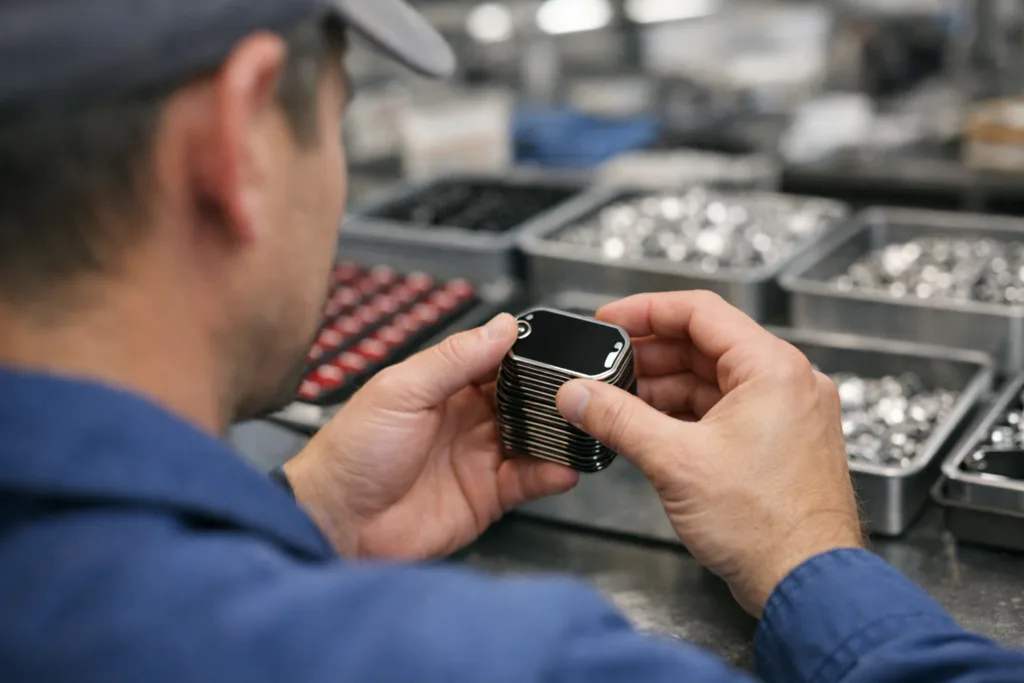
Navigating the process for custom dog tags is easier with a clear plan. Minimum order quantities (MOQs) can affect price per unit—higher MOQs typically favor stamping or die-struck methods, while smaller runs may use engraving or etching.
Lead times change based on method: Stamping and printing are fast for large runs; deep engraving takes a bit longer but ensures crisp enamel fills. Reviewing the tag solutions available helps align your needs and schedule.
Artwork submission should include vector files or high-resolution images, followed by a proofing step to verify details and finishes. Always ask for a pre-production sample—this step can surface design or finish issues before scaling up production. UC Tag provides standard samples and supports proofing to minimize miscommunications.
For bulk orders, specify packaging (individual bagging, bulk tray), shipping speed, and any labeling needs—these details protect tags in transit and simplify your receiving process.
Frequently Asked Questions
What environments are best for enamel dog tags?
Enamel dog tags perform best in moderate to harsh environments when paired with quality metals and UV-stable or epoxy-enamel finish; they’re ideal for outdoor, industrial, or pet use when durability is critical.
How long can I expect my enamel dog tag to last?
With proper metal and finish selection, enamel dog tags can retain their color and readability for 2–5 years or longer, especially if maintained and not exposed to extreme abrasion or chemicals.
Can I customize colors and designs?
Yes, you can specify custom Pantone colors, gradients, logos, QR codes, and shapes—just ensure you discuss finish type and application method to maximize enamel durability for your use.
What maintenance is required for enamel dog tags?
Maintenance is simple: rinse with mild soap and water, avoid abrasive scrubs or harsh chemicals, and periodically check for wear to address issues before they worsen.
How do temperature fluctuations affect enamel durability?
Extreme temperature swings can stress enamel layers, potentially causing micro-cracks; selecting metals and finishes designed for thermal expansion minimizes this risk for metal dog tags.
Are there guarantees or warranties for durable tags?
Many manufacturers, including UC Tag, offer limited warranties on finish adhesion and color performance; always request warranty details when ordering custom metal dog tags.
Related Reading
- Discover How Salt Spray Testing Ensures Your Metal Tags Survive Outdoor and Marine Use
- Hard vs. Soft Enamel: Choose the Right Finish for Extreme Durability
- Why Anodized Aluminum Tags Offer Long-Lasting Color and Lightweight Strength
- Epoxy Domes: When to Add a Crystal-Clear Shield for Color and Life Extension
- Compare Metal Materials by Scratch Resistance to Find Your Toughest Tag Option
- Stop Color Fading: Expert Solutions to Maximize UV Resistance in Outdoor Tags