Understanding Dog Tag Silencers: Essentials and Evolution
Clinking metal tags are part of the iconic soundscape of military, pet, and industrial ID uses—but in situations where silence is critical, that familiar jingle can be a liability. Dog tag silencers were created as a practical noise-reduction solution, and today their compatibility with various metal tags is more nuanced than ever. From modern silicone options to classic rubber styles, selecting the right silencer depends on the application, environment, and tag design. This guide examines how silencers work, the science behind their choices, and how to optimize metal tag quietness without sacrificing utility or legibility.
Which Metal Tags Need Silencers?
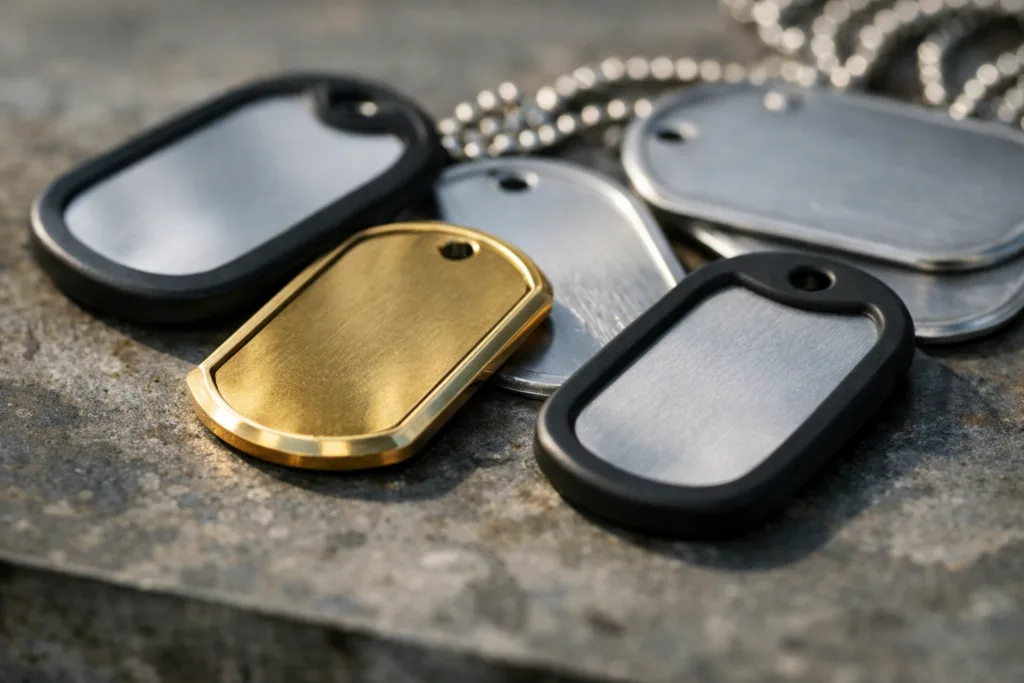
Certain environments and tag uses demand silence or at least strong noise reduction. The need for dog tag silencers usually arises when metal tags risk distraction, operational noise, or damage—think military deployment, night operations, or industrial settings where alertness relies on minimal sound interference. Tags for pets, bags, and equipment can also benefit for comfort and durability.
- Military ID Tags: Silence prevents detection and reduces field noise.
- High-Activity Pet Collars: Reduces jingle in home or outdoors.
- Industrial or Construction Badges: Minimizes machine interference, prevents tag scratching or edge wear.
- Luggage & Equipment: Prevents clatter for discreet travel or protection.
Silicone vs. Rubber vs. Edge-Bevel Noise Tests
- Silicone Silencers: Hypoallergenic, ultra-flexible, and resistant to UV, chemicals, and temperature change. Recent lab tests show up to 95% reduction in peak dB compared to unmitigated tags. Retains fit and performance over years.
- Rubber Silencers: Classic style; good at initial absorption but often break down in sunlight or with repeated flex/stress. Tests yield up to 80% dB reduction, but longevity varies.
- Edge-Beveled Metal Tags: Select manufacturers (UC Tag included) can bevel and polish tag edges to minimize clatter without any silencer ring. This reduces metal-on-metal noise by roughly 40%, but is not as effective for rapid movement or chain-on-tag dynamics.
| Material | Noise Reduction (%) | Wear Resistance | Main Use | Temperature Resistance |
|---|---|---|---|---|
| Silicone | 90–95 | Excellent | Military, Pets | -40°C to 220°C |
| Rubber | 75–85 | Moderate | Budget Pet Tags | -20°C to 80°C |
| Beveled Edge | 30–45 | Permanent | Luggage, Wearables | Tag Metal Dependent |
Chain Motion & Sound Control
The chain’s movement plays a defining role in noise generation. Loose chains allow for greater tag swing, which amplifies impact and volume. Shortening chains, switching to paracord, or using two-point anchor systems can all limit kinetic rattle in addition to silencers. For field use, many operatives wrap the tag and chain together or use shock-absorbing fabric sleeves over metal tag clusters.
Dog Tag Silencers — Metal Tag Noise-Reduction Compatibility & Specs
For buyers, fabricators, and specifiers, the heart of the issue is selecting silencers that match tag material, profile, and use scenario. Not every silencer fits every tag. Here’s how material, edge style, and manufacturing tolerances interplay with silencer performance and fit.
Common Metal Tag Materials & Silencer Compatibility
Most metal tags are made from stainless steel, aluminum, brass, or zinc alloys. Each material has unique edge tolerances, thickness ranges, and compatibility needs for optimal silencer fit:
- Stainless Steel (0.7–1.2mm tags): Standard dog tag thickness; best suited to pre-molded silicone silencers. Slight beveling improves fit, and most vendors design their silencers for this profile.
- Aluminum (0.5–1.5mm tags): Lighter, softer; needs snug-fit silicone or rubber to prevent edge slippage. Protective anodized coating may increase edge width—measure before purchase.
- Zinc Alloy/Brass (0.8–1.0mm custom tags): Thick, decorative edges often require premium-grade silicone or custom rubber. Consult manufacturers like UC Tag for tailored fits, especially for logoed, sculpted, or antique-finish tags.
Silencer Sizing & Edge Profile Matching
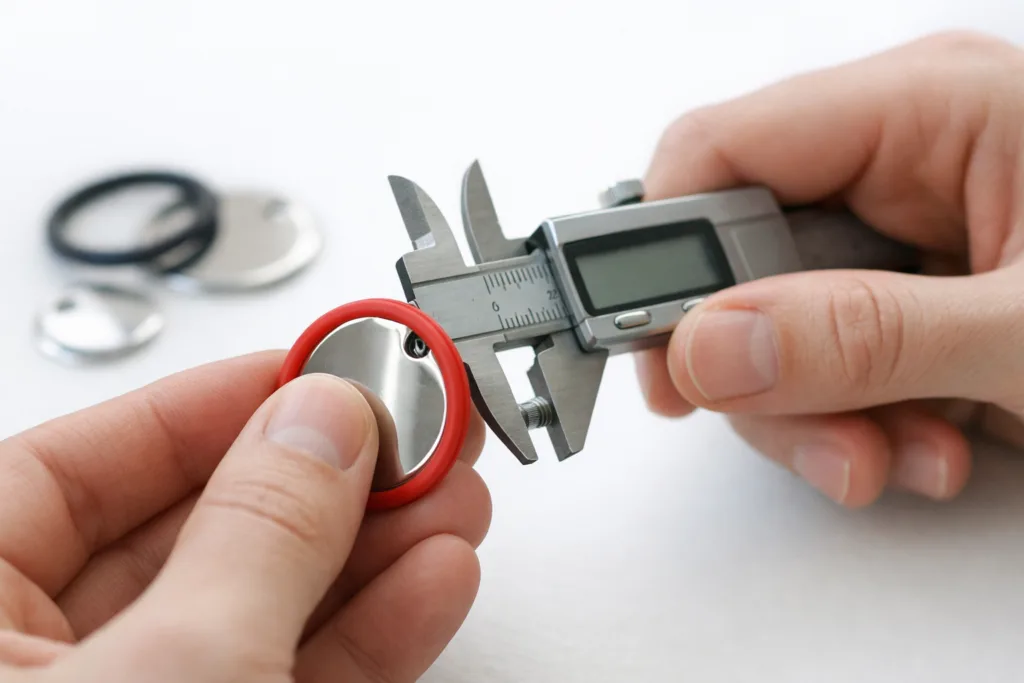
- Measure tag thickness and edge contour precisely. Use digital calipers for best accuracy (tolerance ±0.1mm recommended).
- Select pre-shaped (oval, rectangle, round) silencers designed for your specific tag model. Overly tight silencers can deform soft metals.
- For logo or shape-cut tags, engage your tag manufacturer for a custom silencer mold. UC Tag offers support for sample-to-production fitting, including fixtures and quality control sampling with 0.2mm edge overhang standards.
Environmental and Endurance Considerations
UV exposure, high heat, saltwater, and cleaning solvents demand premium silicone for best service life. For industrial, outdoor, or pet use, always request VOC-free, REACH and RoHS compliant silicone—this resists embrittlement, yellowing, and cracking in the field. Verify salt-spray performance and flexural endurance from suppliers when long-term deployment is critical (ISO 9227 standard for salt spray).
Best Specs to Pair with Metal
- Choose silicones rated for -40°C to 200°C for military/industrial tags.
- Match silencer inner groove size to tag edge and thickness (±0.1mm).
- For logoed tags, request sample production and fit testing.
The highest-performance dog tag silencers are precision-molded to fit their companion tags, using medical- or food-grade silicone as the industry benchmark. Custom logoed metal tags often require bespoke silencer dimensions—especially for tags with embossed, debossed, or cutout details that affect the perimeter shape. Technical specifiers and purchasing agents often submit CAD files (STL, STEP, or DXF) to ensure seamless fit. During manufacturing, the following details matter most:
- Edge Fit Tolerance: Spec 0.2–0.3mm groove overhang for optimal grip, avoiding excessive ring tension that wears tag finish.
- Shore A Hardness: 60–75 recommended for flexibility and grip, balancing easy attachment and shock absorption.
- Tested Endurance: 1000+ cycles of flex and ambient resilience. Confirm test reports or request salt-spray, solvent, and pull tests if sourcing for harsh environments.
- Visual Clarity & Branding: Modern silencers can include embedded pigment, glow-in-dark options, and even micro-texture for grip – all without impacting noise damping.
For field-tested reliability, pair premium-grade silicone silencers with tags manufactured to full edge radius, polished smooth, and verified by QC fit-test sampling.
| Tag Material | Silencer Groove Size | Preferred Hardness (Shore A) | Best for |
|---|---|---|---|
| Stainless Steel | 1.0mm ±0.1mm | 70 | Military, Emergency Response |
| Aluminum | 0.8mm ±0.1mm | 65 | Lightweight, Sports/Pets |
| Zinc Alloy/Brass | 1.2mm ±0.1mm | 75 | Decorative, Luxury Tags |
Installing & Maintaining Your Silencer
Step-by-Step: Silencer Fitting
- Clean and dry the metal tag thoroughly. Remove all oil, dust, and manufacturing residue.
- Begin at one edge, aligning the silencer groove with the tag’s perimeter.
- Gently stretch the silencer around the tag, ensuring full edge encapsulation. Avoid sharp tags or excessive force on the ring.
- Confirm the silencer sits flush with all profile curves—no air gaps or loose sections.
Routine Care
- Inspect silencers monthly for cracks or hardening—replace as needed.
- Handwash with soap and water; avoid harsh solvents.
- Store tags/silencers away from direct sun or high-heat sources for best life span.
Noise-Reduction in Specialty Scenarios
Military & Tactical
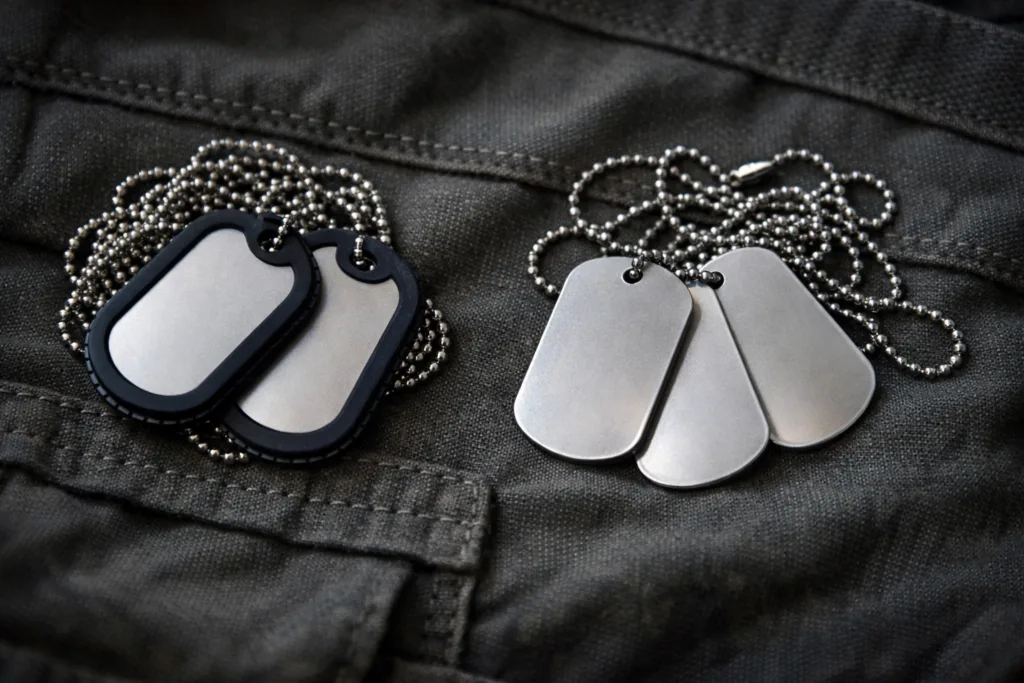
In tactical use, stacking multiple tags with a single silencer can save weight and reduce rattle. Paracord wraps and wax-dipped silencers (rare) offer extreme stealth, though modern silicone generally outperforms past field improvisations. Consult with tag/system manufacturers for officially approved solutions if following MIL-STD or NATO guidelines.
Medical & Emergency Staff
For hospital or EMT settings, opt for medical-grade silicone only—easy to sterilize, highly durable. Snap-on ring styles are preferred to support regular tag replacement or cleaning.
Industrial & Harsh Environment Use
Tags exposed to industrial solvents, seawater, or abrasives require advanced silicones tested for chemical resistance and anti-yellowing. Some scenarios favor permanently bonded rubber over removable options—always test in application before mass deployment.
Custom Solutions and Logoed Tag Integration
When Off-the-Shelf Silencers Don’t Fit
Nearly any custom shape or logo tag (from oblongs to geometric logos) can be matched to a bespoke silencer profile. By submitting production drawings and request samples, manufacturers like UC Tag create tailored solutions. This is essential for branded merchandise, commemorative giveaways, and specialty applications where form is as critical as function.
QC Protocols & Industry Standards
Well-managed supply chains employ quality checks at multiple stages: receiving (material verification), after mold/cure (dimension checks ±0.2mm), and after mass production (random fit and pull testing). For more on best practices in silencer and metal tag QC, reference segment 7.7 in ASTM D3185 (elastomeric product tolerances).
Frequently Asked Questions
What is the purpose of a dog tag silencer?
A dog tag silencer eliminates or drastically reduces metal-on-metal noise from swinging tags, improving stealth, comfort, and tag longevity.
Are silicone or rubber silencers better for metal tags?
Silicone silencers outperform rubber in durability, resistance to UV and chemicals, and overall noise reduction, making them preferable for most metal tags.
How can I find the right size silencer for my tag?
Measure tag thickness and perimeter, then match to the silencer’s groove size. For shaped or decorative tags, consider custom silencer manufacturing for best fit.
Should I use a silencer on every type of metal tag?
Silencers are most beneficial on tags used in noisy, active, or stealth-requiring environments; they’re optional for tags where noise isn’t a concern.
Do silencers fit both military and pet tags?
Yes, most silencers come in standard shapes to fit both military-issue and commercial pet tags, though custom designs require custom-fit silencers.
How often should I replace a dog tag silencer?
Inspect every few months; replace when cracks, hardening, or edge loosening occurs, especially after heavy use or exposure to harsh conditions.