Introduction to Cost Analysis in Metal Tags
When purchasing metal tags for industrial, commercial, or consumer applications, understanding the full cost analysis, including unit pricing, material cost, size impact, and color variations, is crucial. These factors directly affect your bottom line, especially when durability, readability, and outdoor performance are priority requirements.
Unit cost refers to the average expense for each individual tag produced in a batch. For buyers, unit pricing serves as a benchmark for comparing suppliers and selecting the best combination of quality, resilience, and value. Knowing what goes into the cost structure empowers procurement specialists and engineers to make informed, data-backed choices.
Three primary variables shape the final price of durable metal tags: the size selected for your application, the color or finish desired (standard or custom), and the material itself—each introducing unique trade-offs for cost, flexibility, and long-term performance. We’ll break down these factors to provide a comprehensive cost analysis, helping you confidently navigate purchasing decisions and optimize your product specification to your industry’s real-world demands.
Understanding Size Impact on Unit Cost
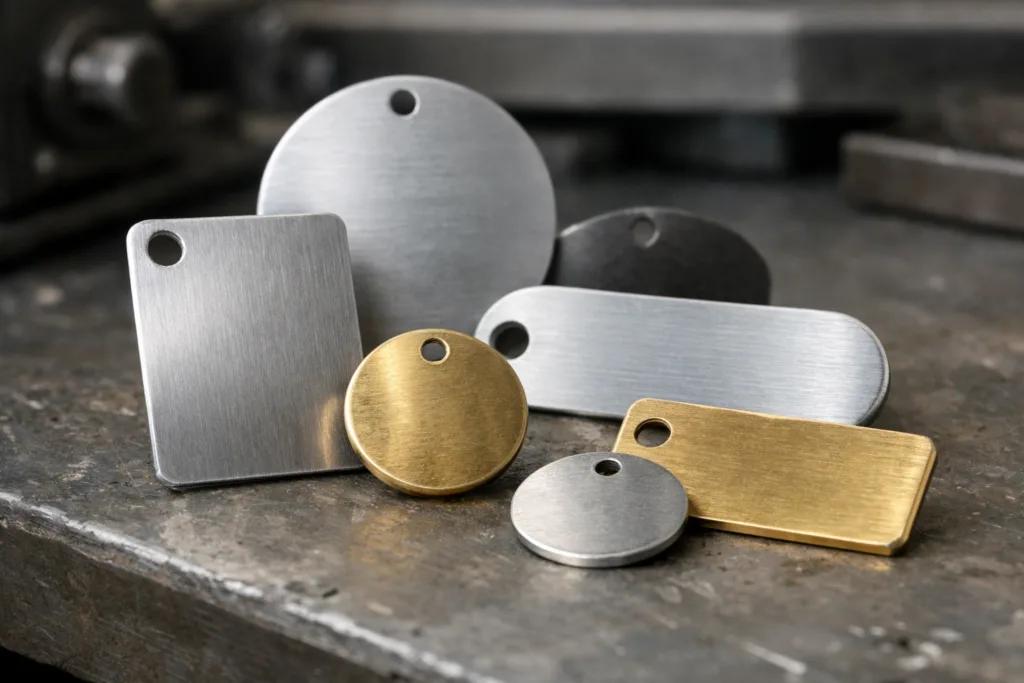
Size plays a foundational role in determining the unit cost of any metal tag. The larger the tag, the greater the quantity of raw metal required. This translates not only to a direct increase in material cost but also influences the scale of production expenses such as cutting, deburring, and finishing.
Manufacturing efficiency also changes with size. Larger tags may require additional handling, specialized tooling, or longer processing times, especially if tight tolerances or intricate details must be preserved across a bigger surface. For example, a manufacturer scaling a standard QR code dog tag design up to a large commemorative plate must carefully plan for increased setup and material wastage.
- Bigger tags = more raw material used per SKU
- Production time per unit often rises with size
- Packing and shipping costs climb for bulkier tags
- Readability standards demand minimum viable sizes, especially when serial numbers or fine text are present
Industry requirements also dictate size: compact nameplates for electronics differ drastically from large, outdoor-rated equipment labels. Many sectors set minimum and maximum dimensions based on readability, attachment method, and compliance standards. For instance, branded logo plates for luxury handbags balance impact with discretion, while heavy-duty luggage tags must withstand harsh travel conditions.
Before finalizing your tag dimensions, assess application needs—ensuring function and legibility trump aesthetic preferences if budgets are tight. UC Tag’s team often advises that exceeding a certain tag area threshold may double the per-piece price, even within a single order.
Balancing size impact within your overall cost analysis leads to more predictable procurement outcomes and fewer surprises at scale.
Exploring Color Variations and Their Pricing Effects
The choice of color and finish is more complex than it might first appear and can have a major effect on material cost and final unit pricing. While standard metallic finishes (like brushed aluminum, stainless, or natural brass) are generally the most budget-friendly, introducing custom colorations or elaborate surface treatments can rapidly drive up costs.
Standard color options—such as chrome, black nickel, or antique finishes—are typically available as mass-production processes. Custom colors, including PMS-matched enamels or special-effect coatings (e.g., glitter, glow-in-the-dark), require separate setup and mixing, which increases both labor and waste risk. Embellishments like dual plating or UV-printed patterns also influence production time and raw material usage.
How dyeing or anodizing is implemented further affects pricing. For example, anodized aluminum tags colored in batches are more economical than individually color-filled or hand-painted brass plates. Custom hues may involve minimum order quantities or one-off pigment procurement.
Color popularity trends also play a role. Black and silver are often more cost-effective due to high-volume production, whereas limited-edition rose gold or rainbow PVD coatings may command a premium given their niche status. If brand consistency demands unique colors, buyers should anticipate higher setup charges in their cost analysis.
Finishes have functional value as well—some add corrosion or UV resistance to the tag’s performance profile. Glossy, matte, or textured options further refine both visual perception and durability. For readers interested in design contrasts, check out this resource on matte versus glossy texture and their impact on QR code readability.
Strategic choices in color variations and finish can help maximize visual appeal and product life while maintaining budget discipline. A veteran at UC Tag notes that aligning popular finishes with production schedules enables small runs to benefit from larger-batch economics—providing savings when flexibility is possible.
Materials Comparison: Aluminum, Stainless Steel, and Brass
Material selection is a key driver of both cost and performance in metal tags. Buyers and engineers often choose between aluminum, stainless steel, or brass—each with unique attributes, applications, and price tiers.
| Material | Cost Efficiency | Weight | Durability | Corrosion Resistance | Applications |
|---|---|---|---|---|---|
| Aluminum | Excellent | Lightweight | Good | High (with anodizing) | Bulk asset tags, outdoor signage |
| Stainless Steel | Moderate | Medium-heavy | Superior | Excellent | Harsh environments, critical ID (chemical plants, marine) |
| Brass | Premium | Heavy | Very good | High (patinas over time) | Luxury branding, decorative, wine tags |
Aluminum is valued for its excellent cost-to-performance ratio and versatility. It’s easy to machine, accepts various finishes, and offers light weight for applications such as luggage tags or mass-produced asset labels. Anodizing further boosts corrosion resistance, making it fit for outdoor use.
Stainless steel is the gold standard for environments where strength and longevity are non-negotiable. Its higher material and machining cost are offset by its sheer durability, making it ideal for chemical resistance and exposure to weather or abrasion. Maintenance is minimal, and it’s often required by strict compliance frameworks.
Brass commands a premium due to its rich appearance and workability for fine designs. It’s frequently specified for high-end branding, luxury products, or where traditional aesthetics are valued, such as brass bag tag plates or exclusive club wine tags. Over time, brass naturally forms an attractive patina, enhancing its visual appeal for heritage applications.
Beyond initial acquisition, long-term costs also matter. Aluminum and stainless steel reduce maintenance and replacement cycles. Brass may require periodic cleaning but can develop unique character with aging. Each material’s profile should be measured against your industry’s risk tolerance and functional expectations in your cost analysis toolkit.
Manufacturing Methods Comparison
The chosen manufacturing method not only defines tag aesthetics and function, but also significantly influences cost analysis, especially as demand for complex finishes or small details increases. Let’s compare four common approaches:
- Engraving: Laser or CNC allows precise, deep marks for data tags and high-durability labels. Best for small to mid-size runs—cost per piece rises with fine detail and extra depth. Ideal for keychain tags and industrial ID.
- Stamping: Efficient for high volumes and consistent shapes. Once tooling is made, stamping runs are quick but require up-front investment (see MOQ insights). Great for serial numbers, asset tags, and uniform branding.
- Chemical Etching: Suited for complex or micro details. Lower tooling costs than stamping, but longer lead times and slower output. Used for intricate logo plates, detailed bookmarks, and technical labels.
- UV Printing: Enables full-color images and gradients. Low setup for variable runs, but surface prep and coating can add cost. Useful for marketing, branding, and QR code applications—reference UV printing advantages.
Decisions about manufacturing methods must account for not just price, but also speed, consistency, and scalability. For instance, switching from engraving to stamping at high volumes can cut unit pricing by up to half, but only if you accept minor limitations in detail. Variable methods (like UV printing) are well-suited to low-MOQ or multi-design orders with ever-changing art.
Setup and tooling become more complex as size, color, or finish specifications deviate from standard templates. At UC Tag, Rain Chen frequently recommends early prototyping and proof review to validate method fit—especially for unique material cost or detail requirements.
Design & Spec Checklist for Metal Tags
During procurement, a disciplined design and spec checklist is essential to avoid costly mistakes and ensure reliable production. The right details set the foundation for accurate cost analysis and optimized unit pricing.

| Parameter | Key Consideration | Impact on Cost |
|---|---|---|
| Size/Dimensions | Ensure sufficient area for all information (text + logo) | Larger tags or non-standard shapes may incur higher material and tooling charges |
| Thickness | Balance rigidity and weight for purpose | Thicker tags increase material cost; too thin risks durability |
| Finish | Match desired appearance and exposure type | Specialty finishes (anodized, PVD, dual-plating) may boost cost but enhance performance |
| Attachment | Specify holes, slots, adhesive, or hardware (see adhesive solutions) | Custom attachments may add machining or assembly time |
| Readability | Use appropriate font size and contrast (see font size guide) | Extra detail may necessitate more expensive processing (engraving, etching) |
| Tolerances | Clarify allowable dimensional deviation | Tight tolerances may increase machining effort and inspection cost |
Consider the following when finalizing your tag specifications:
- Appropriate size and thickness for your environment
- Finish protective enough for the intended use (indoor or outdoor)
- Attachment features to speed installation
- Clear, legible engraving or printing for vital data
- Commercial-grade tolerances for industrial reliability
Establishing clear specs at the outset leads to more accurate cost analysis and avoids later rework—which can add both time and expense to unit pricing.
Durability & Testing: Assurance of Quality
Not all metal tags are created equal when it comes to long-term durability—testing is indispensable for ensuring performance aligns with cost analysis expectations. This is especially vital for buyers in harsh settings or compliance-driven sectors.
Common quality assurance tests include salt spray (for corrosion resistance), abrasion tests (to simulate everyday wear), and UV exposure chambers (to project color fastness for outdoor tags). Resistance to chemicals, water, and thermal shock are also key metrics in demanding fields. For details on corrosion testing specifically in marine or humid contexts, reference this guide on rust-proofing strategies.
Environmental factors such as sunlight, humidity, and mechanical impact all shape a tag’s working life and overall value. Buyers in food processing, healthcare, or oil and gas frequently specify stainless steel for this reason, preferring a slight material cost premium to minimize future replacements and downtime.
Product certifications and test reports can streamline the approval process for outdoor branding or mission-critical uses. UC Tag’s experience in performing both in-house and third-party tests shows that small upfront investments in proper quality validation often save multiples of unit pricing over a tag’s service lifetime.
Industry/Application Fit for Metal Tags
The right balance of size, material, color, and process should always reflect your real-world application. For manufacturers, metal tags serve as asset IDs, serial number plates, and equipment labeling—where durability, readability, and traceability take priority. Compliance with industrial standards drives design and material selection, shaping both unit pricing and cost analysis at scale.
Commercial applications frequently require custom logo tags and branding plates, accentuating visual identity on products, packaging, or displays. The flexibility to select from premium finishes or personalized colors makes a difference in market perception, even at a modest material cost increase.
On the consumer side, tags are used for pet identification, luggage, jewelry, or garment branding. Here, the focus is often on aesthetics, safety, and comfort—meaning brass and colorful enamels may sometimes outweigh strict cost efficiency for emotional or fashion-driven use cases. For pet and bag applications, see practical advice on secure attachment using S-Hooks and wire cables.
In technical or engineering contexts, metal tags support compliance, maintenance, and asset tracking. Features like QR codes, barcodes, or microtext (see QR code dog tags) can simplify audits and repair cycles. Here, methodical cost analysis and attention to unit pricing are essential to avoiding over- or under-specification.
Common Mistakes & Troubleshooting
Buyers often encounter recurring challenges when specifying and ordering metal tags. Frequent pitfalls include ordering tags with barely readable text, mismatched finishes, or incorrect sizing for the intended hardware. Delays and unnecessary expense are common when these issues slip past proofing and initial cost analysis.
Adhesive failures remain a concern—choosing improper adhesives or ignoring surface prep instructions can result in tags detaching from assets or packaging. For advice, see expert guidance on adhesive backings. Similarly, corrosion issues may result from mismatching material or finish to the application environment; always prioritize proven weather-resistant finishes for outdoor tags.
Contrast and visibility should be checked—dark engravings on dark finishes make numbers hard to read, defeating traceability goals. Consider both light/dark contrasts and minimum font sizes. Quality checks—either by ordering samples or reviewing digital proofs—help avoid mass rejections. Familiarize yourself with common design mistakes and how to fix them in this in-depth troubleshooting guide.
Ordering Guide: Best Practices for Procurement

Streamlining your ordering process delivers smoother production and eliminates unnecessary cost and lead time shocks. Understanding minimum order quantities (MOQs) is vital—many manufacturers set MOQs to justify the setup cost for custom tooling or unique finishes. Learn more about MOQs in this practical guide.
Start with complete, vector-based artwork and confirm detailed specs—ambiguities in file type, color reference, or attachment method can stall approval and inflate cost analysis unpredictably. A digital proof review helps you catch any changes early, especially when translating JPEG logos into metal cut-outs (see this step-by-step walkthrough).
Sampling is recommended before moving to full production, especially for first-time orders or complex designs. This protects your investment by surfacing practical issues like sizing, durability, or readability in actual-use scenarios.
Lastly, don’t overlook packaging and shipping—secure packaging protects your tags in transit and may be tailored to batch sizes or handling needs. Cultural details, like regional shipping preferences or export documentation, may also affect unit pricing and lead times, especially on international orders. For sample requests and info on packaging variations, view custom metal tag samples.
Frequently Asked Questions
How does the size of a metal tag affect unit pricing?
Larger tags increase unit cost due to higher material use, longer production times, and more intensive finishing or handling requirements compared to compact tags.
What is the most cost-effective material for outdoor metal tags?
Anodized aluminum is generally the best value for outdoor tags, offering high corrosion resistance and durability at a lower cost compared to stainless steel or brass.
Do custom colors significantly increase pricing?
Yes, custom colors usually add setup fees and may require minimum order quantities, leading to higher unit pricing compared to standard finishes available in bulk.
How can I avoid common ordering errors when purchasing tags?
Always review a digital proof, confirm material and finish match your environment, and specify legible text contrast and accurate attachment features for your tags.
What type of testing ensures tag durability?
Look for tags tested for corrosion (salt spray), UV resistance, and abrasion; certifications or in-house reports from the supplier provide added assurance of long-term performance.
What’s the lead time for custom metal tags after sample approval?
Lead times vary but most custom orders ship within 2–4 weeks after sample approval, factoring in production complexity, order volume, and any custom color or finish requirements.
Related Reading
- Avoid Tag Order Delays: 5 Design Errors and Quick Fixes
- Mastering MOQ in Custom Metal Tag Projects
- Level Up Branding with Vivid UV Printing on Metal Tags
- Engineer’s Guide: Choosing Tags That Survive Chemical Exposure
- How Deep Should Engraving Go? Balance Durability and Cost
- Selecting the Right Font Size for Metal Tag Legibility