Introduction: The Allure of Aging Metals
The story of copper and bronze is a journey through time, chemistry, and art. From ancient statues with green-blue hues to modern sculptural masterpieces, these metals undergo a remarkable transformation as they age—a process known as patination. Copper & Bronze: Understanding the Aging Process and Patina Effect is essential to anyone interested in the science, artistry, and preservation of these beautiful metals. We’ll unravel why patina happens, how it affects both structure and surface, and what it means for artists, makers, and conservators today.
The Chemistry Behind Copper and Bronze Aging

Copper and bronze are distinct yet related metals. Pure copper is known for its reddish color, while bronze is primarily copper alloyed with tin and sometimes other elements. When exposed to air, water, or pollutants, these metals react in a series of chemical steps—a process commonly called oxidation. At the surface, oxygen and atmospheric chemicals, like carbon dioxide or sulfur compounds, interact with the metal to form new compounds, changing both color and texture.
Oxidation and the Birth of Patina
The process begins with oxidation: copper atoms react with oxygen to form copper oxide, which eventually gives rise to copper carbonate, sulfate, or chloride—these are the main ingredients of patina. Bronze, owing to its alloyed nature, can also develop complex patinas, often with varied shades due to additional metals within the alloy. The gradual build-up of these layers is what gives aged copper and bronze their characteristic green, blue, or brownish tones.
What Is Patina? A Closer Look
Patina is the name for the thin layer of various compounds that settles on the surface of metals like copper and bronze as they age. Unlike rust on iron, patina often acts as a protective barrier. The colors of patina—ranging from deep browns to pale greens—result from specific chemical reactions with airborne elements.
Types of Patina and Their Significance
There are many shades and compositions of patina, influenced by the environment. Urban pollution may cause different patinas compared to rural or coastal settings. Artists and conservators sometimes even apply chemicals intentionally to produce unique or accelerated patina effects, a process called patination.
Historical Significance of Patinated Metals
Patina has been valued throughout history, from the green surfaces of ancient Greek and Roman bronzes to the torch of the Statue of Liberty (itself a monument to copper’s aging beauty). Civilizations often celebrated these color changes as a sign of age, authenticity, or prestige. Collectors seek patinated artifacts for both their looks and the story written into their surface.
Copper & Bronze: Understanding the Aging Process and Patina Effect.
Why do these metals age differently than steel or aluminum? It’s all about their chemistry and environment. The natural process of oxidation and patina formation not only changes how copper and bronze look—it influences how they are used in art, architecture, tools, and even in currency. In certain cases, like architectural bronze, the patina is left untouched because it protects the underlying metal from corrosion. Other times, as in fine metal crafts, patina is removed or controlled to maintain a specific appearance.
Cultural and Artistic Appreciation
Across cultures, aged copper and bronze have symbolized endurance, wisdom, and transformation. The aesthetic appeal of patina is not universal: some view it as a sign of decay, while others celebrate it as a marker of history and character. For artists, these surface changes are creative opportunities to tell stories and evoke emotion.
Stages of the Aging Process
The aging of copper and bronze proceeds through well-documented stages, each with its visual signature:
- Fresh Metal: Shiny, bright reddish brown (copper); warm, golden-brown (bronze).
- Tarnishing: Develops dull brown or dark spots as oxides form in days to weeks.
- Early Patina: Blues, greens, or browns appear within months as more complex compounds build up.
- Mature Patina: Uniform teal-green (verdigris) or dark brown covers the metal, sometimes taking decades.
Environmental Influences on Patina Formation
Factors such as humidity, temperature fluctuations, pollution, and even proximity to the ocean can accelerate or alter patination. Salty air, for example, fosters the formation of blue-green copper chlorides, while urban sulfur gives rise to blackish patinas.
Scientific vs. Aesthetic Value of Patina
While patina protects the metal underneath from further corrosion, it’s also prized for its appearance. Architects use copper roofs for the iconic green that develops over time. Sculptors may prefer controlled brownish patinas, appreciating the way light interacts with complex surfaces and textures.
Patina: Protective or Problematic?
Patina is usually stable and beneficial but, if left unchecked, some environmental contaminants can lead to damaging corrosion, especially in outdoor settings. Conservators use methods to distinguish healthy, stable layers from destructive corrosion that could threaten structural integrity.
Practical Applications: Copper and Bronze in Art and Architecture
Copper and bronze have remained popular throughout art history. Their workability, color, and the potential for beautiful patina make them a favorite among sculptors, metalworkers, and architects. The custom metal logo tags industry similarly values these materials for their timeless look and durability, especially in exterior applications.
Modern Architectural Bronze
Today, building facades and details often feature bronze accents intended to develop a specific patina. These decisions are part artistic vision, part science—balancing controlled oxidation with long-term material performance.
How Artists Harness the Patina Effect
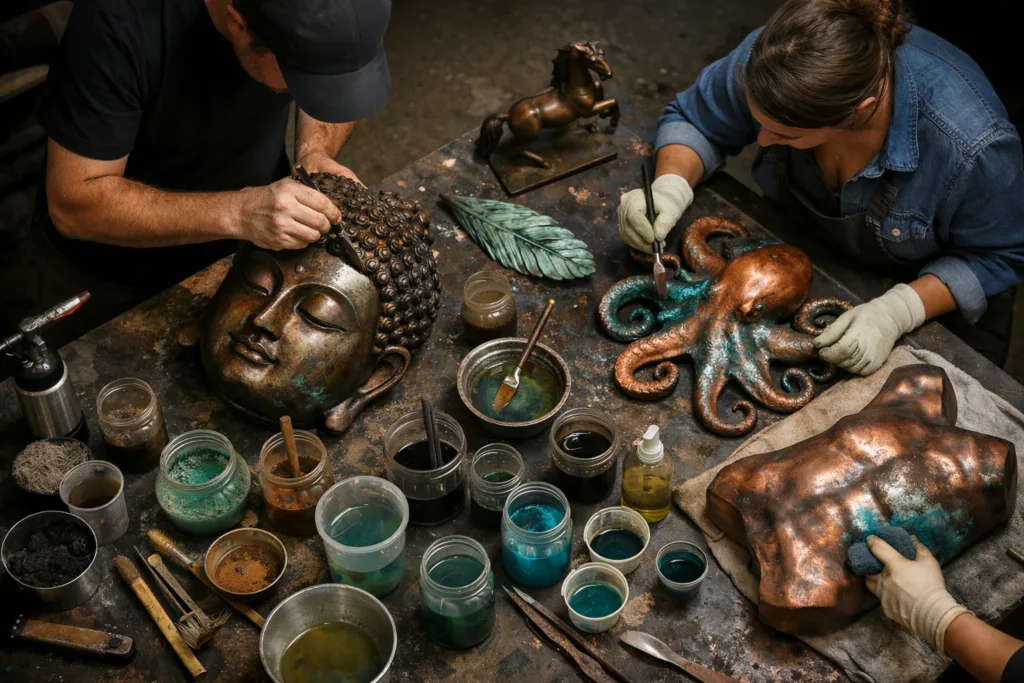
Artists frequently embrace patina for its aesthetic unpredictability and depth. By applying salts, acids, or heat in a controlled studio environment, they orchestrate colors ranging from pale blue to deep black. This intentional process brings out the unique personality of each piece, ensuring that no two artworks age exactly alike.
UC Tag Perspective: Achieving Reliable Patinas
Rain Chen from UC Tag notes that for industrial and branding applications, consistency is paramount. Achieving uniform patina across batches can be challenging, especially when scaling up production. Surface preparation, alloy control, and chemical baths must be tightly managed. Otherwise, results can vary: a single fingerprint or minor surface impurity may cause streaks or blotches in the finish. That said, minor natural variations are sometimes celebrated as part of the ‘living’ surface of premium tags or emblems.
Conservation Strategies: Preserving Patinated Metals
Conservators face a delicate task: preserving the original patina while stopping destructive corrosion. The process often involves careful cleaning, stabilization with chemical treatments, and sometimes applying a wax or lacquer layer for added protection.
Common Challenges in Conservation
Removing accidental stains or pollutants without stripping attractive, protective patina is a real concern. Conservators must balance historic integrity with long-term durability—often using techniques refined through generations of metalwork preservation.
Patina in Modern Sculpture and Functional Art
Contemporary artists continue to use copper and bronze for their color-changing surfaces in both traditional and radical new forms. Functional objects—like hardware, architectural details, and custom metal tag solutions—also benefit from these aging processes, which can signal craftsmanship and authenticity over time.
Case Study: Outdoor Artworks
Public sculptures provide dramatic examples of patina. Outdoor installations—such as fountains or commemorative statues—must account for weather-driven changes. Artists may consult with materials experts to estimate how a surface will evolve in a given climate over the years.
Comparing Copper, Bronze, and Brass: Patina in Practice
While copper and bronze develop blue and green patinas, brass (a copper-zinc alloy) tends to darken toward browns rather than greens. Each alloy has its specific oxidation sequence, affecting not just color but also how easily a protective surface forms. Industry professionals sometimes compare materials when durability and aesthetics must align, as seen in this discussion of brass vs. stainless steel for tags and decorative components.
Natural Versus Artificial Patinas: Techniques and Trade-Offs
Patina can be left to form naturally or applied deliberately. Natural processes take years but often result in more resilient, nuanced layers. Artificial patinas use chemical baths or vapor treatments to expedite and control coloration within days. Each approach has benefits: authenticity and weather-driven evolution vs. speed and color precision.
Expert Insights: Patina Control in Manufacturing
In quality-controlled settings—such as tagging and nameplate production—manufacturers like UC Tag may use custom protocols to minimize defects and ensure uniform results. This often involves environmental controls and rigorous inspection for surface cleanliness before any chemical treatment. Safe edge radii, consistent deburring, and proper hole placement matter not just for function, but also to avoid run-off and stains that mar the finished look.
Metallurgy Basics: Why Copper and Bronze Behave Uniquely
The exceptional ability of copper and bronze to form patina is rooted in their crystal structures and affinity for common environmental gasses. These metals are less prone to pitting than iron, which rusts quickly and threatens structural integrity. Alloying copper with tin, as in bronze, further improves hardness and wear resistance, though subtle shifts in alloy composition will alter both the aging process and the hues of the emerging patina.
Material Selection for Artists and Conservators
Selecting the right metal and finish requires an understanding of local climate, expected handling, and desired appearance. The ability to specify alloy content, surface roughness, and protective topcoats enables both beauty and longevity in finished objects.
Future Directions: Sustainable Patina and Preservation
Modern environmental concerns are creating new approaches to patina and preservation. Eco-friendly sealants, less toxic accelerants, and recycled copper alloys align with sustainability goals. Industries producing eco-friendly dog tags and other goods seek both aesthetic appeal and reduced environmental impact.
Conclusion: Embracing the Beauty and Science of Patina

The journey of copper and bronze through time is a testament to their scientific complexity and cultural resonance. Whether left to age naturally or shaped deliberately by human hands, their patina tells a story of transformation, endurance, and artistry. Understanding these processes aids artists in creation, inspires conservators in preservation, and invites everyone to appreciate the multi-layered beauty of aging metals. Armed with resources and knowledge, future generations will continue to shape and safeguard the legacy of these remarkable materials.
Frequently Asked Questions
What causes the green patina on copper and bronze?
The green patina is caused by long-term exposure to air, moisture, and pollutants, leading to the formation of copper carbonate and other compounds on the surface.
Is patina different from rust?
Yes, patina forms mainly on copper-based metals and acts as a protective layer; rust is iron oxide and can destroy iron-based metals.
Can patina be removed from copper or bronze?
Patina can be removed using chemical cleaners or abrasives, but this may expose the fresh metal and affect both value and protection.
How can I encourage or control patina on artwork?
Artists can use chemical patinas, heat, or environmental exposure to influence color and texture; careful surface preparation is vital for even results.
Does patina harm the integrity of metal objects?
Generally, stable patina protects the underlying metal, but some forms of corrosion can penetrate and weaken structures if not managed.
Why do artists and architects value patinated finishes?
Patina adds visual depth, character, and authenticity, enhancing the beauty and uniqueness of each piece while telling a story of time and transformation.