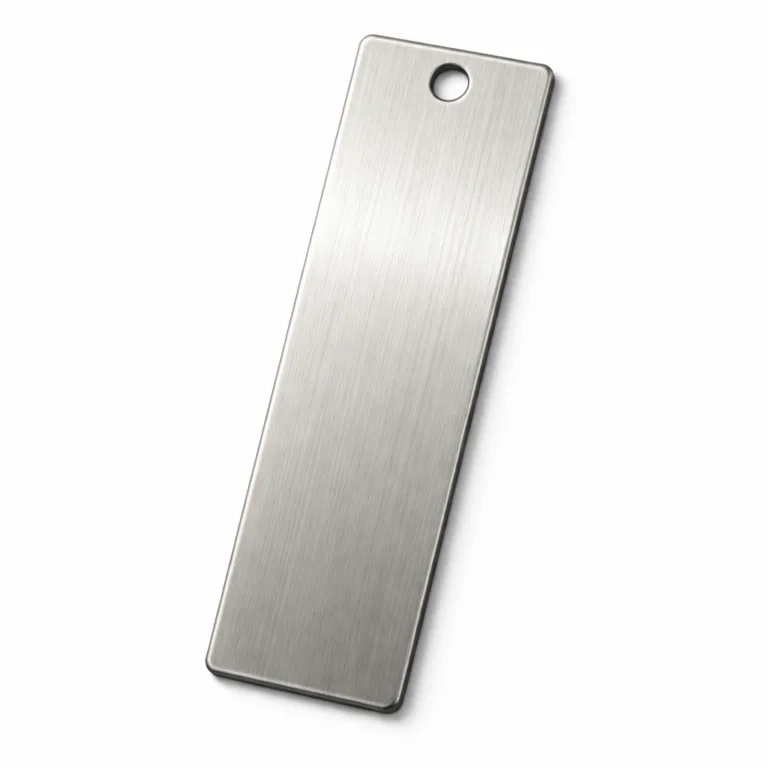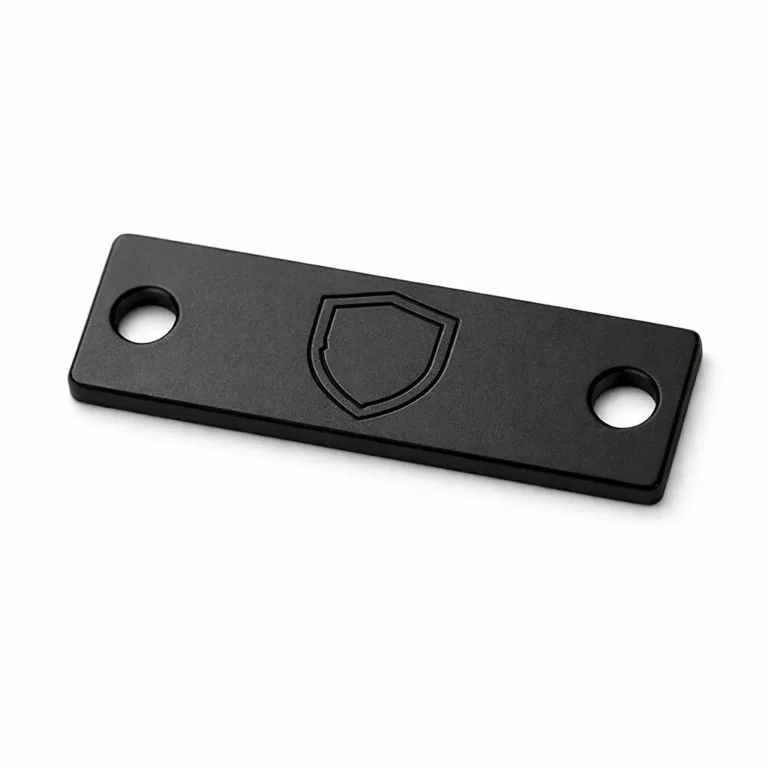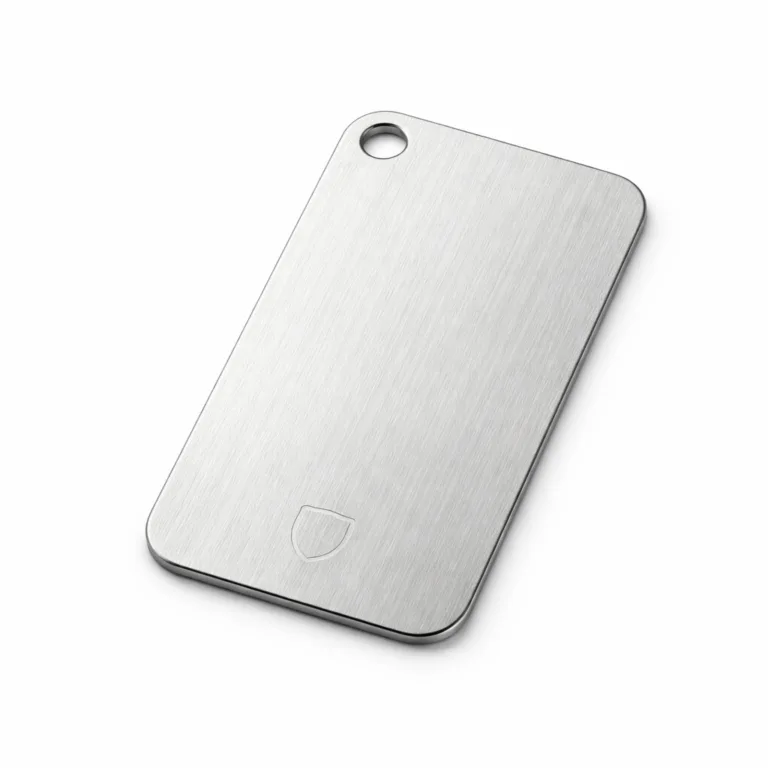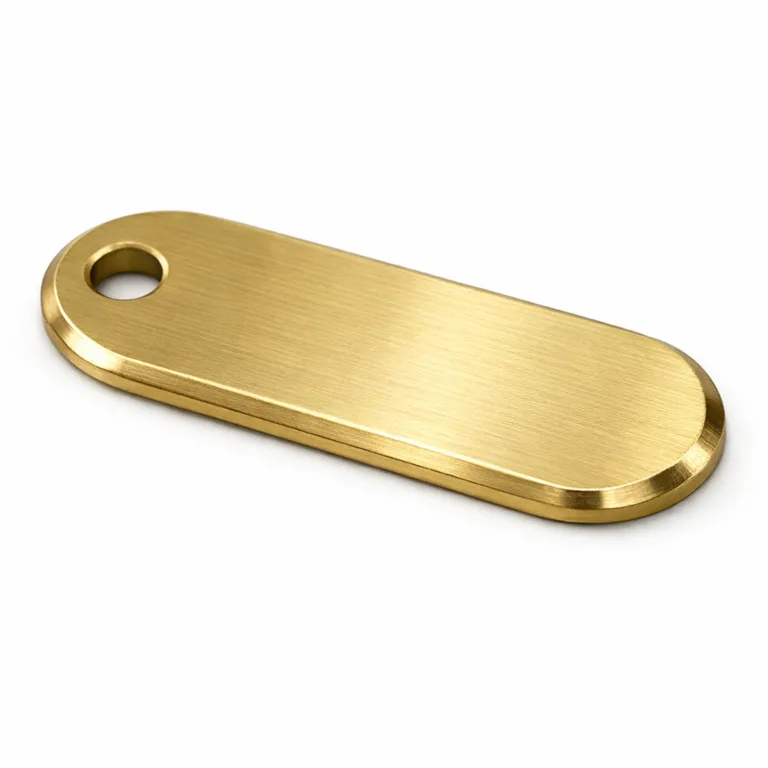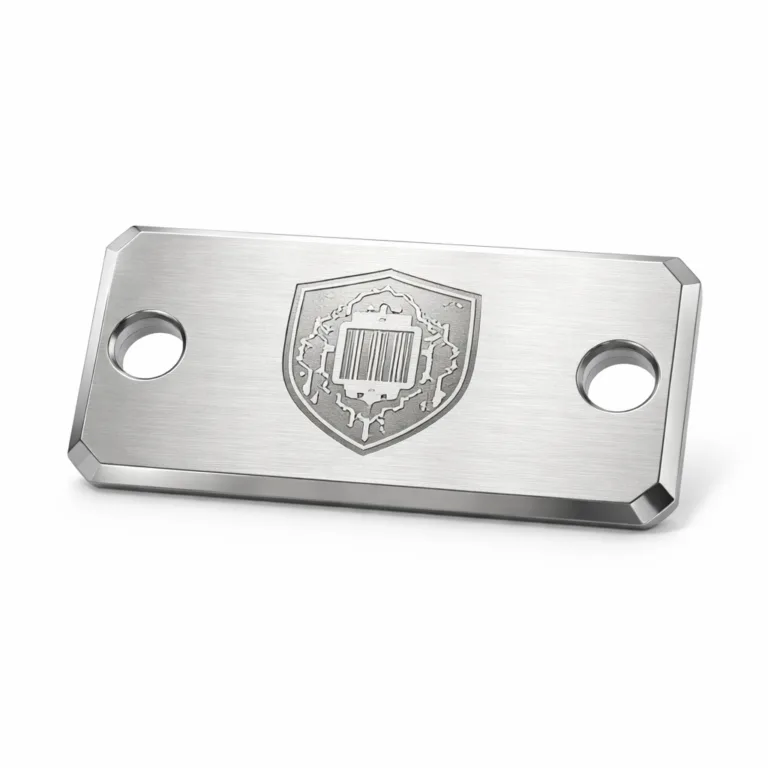
Braille, tactile accessibility, metal tags—these three elements come together to ensure that environments are inclusive for individuals with visual impairments. As public consciousness and regulations around accessibility continue to evolve, it’s vital for B2B buyers, distributors, and engineers to understand how Braille tags enhance signage, support compliance, and create better user experiences across industries.
Understanding Braille and Tactile Accessibility
Braille is a tactile writing system consisting of raised dots arranged in cells, enabling those with visual impairments to read using touch. It was developed by Louis Braille in the 19th century and has since become a globally recognized method for enabling access to information where visual cues are not an option.
Tactile accessibility isn’t only about Braille—it refers to providing physical features (like raised characters, symbols, or texture) on signage or products so they can be effectively interpreted by touch. For individuals who are blind or have significant vision loss, tactile features can be the difference between independence and exclusion.
Many countries require Braille on signage through regulations such as the Americans with Disabilities Act (ADA) in the United States, which sets strict standards for public and commercial buildings. These regulations aim to eliminate barriers, ensuring everyone has access regardless of their abilities.
Signage in public spaces contributes enormously to an inclusive environment. According to the World Health Organization, over 2.2 billion people worldwide have a vision impairment or blindness, with millions depending on tactile accessibility and Braille for navigation, safety, and access to key information.
Standards for Braille Signage
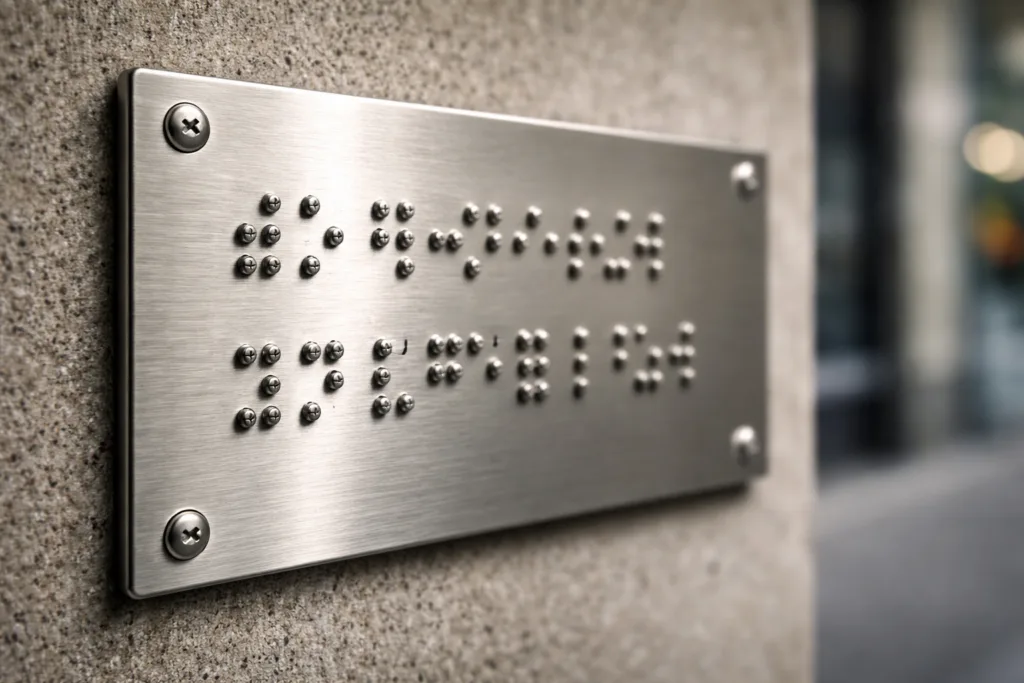
Complying with established standards is central to effective tactile accessibility. The ADA in the U.S. is a cornerstone, outlining detailed requirements for Braille signage in various facilities—from schools and transport hubs to office buildings. Beyond the ADA, international harmonization is aided by the International Symbol of Access, a globally recognized icon denoting accessible spaces and features.
ADA guidelines are explicit on the specifications for Braille dots: the shape, size (0.9–1.3 mm in diameter), and inter-dot and inter-cell spacing (2.3–2.5 mm cell spacing) are all defined. Braille must be Grade 2 (contracted) and placed directly below the corresponding text on signs, where a reader’s fingers can easily find it.
Contrast and legibility are pillars of tactile signage. Raised characters and Braille dots should have a strong contrast with their background—this assists users with remaining low vision. For example, a brushed stainless steel plate with black enamel-filled characters offers both tactile and visual clarity.
Regionally, local amendments may require different sizes, non-English Braille, or supplemental raised pictograms. Consulting both ADA and local codes is essential for full compliance.
Best Practices for Implementing Braille Tags
Proper placement is critical to usability—Braille signage should be installed at a consistent height (typically 48–60 inches from the floor), near doorways or along accessible routes. Consistency makes wayfinding intuitive for those who read Braille daily.
Interior signs (often shielded from weather) permit a wider range of materials and finishes, while exterior tags must endure more severe environmental conditions. For outdoor applications, robust installation is also needed to prevent tampering.
Multilingual environments benefit from providing information in multiple languages alongside Braille, ensuring a broader range of users get equal access. Pairing tactile information with high-contrast visual cues—like clear pictograms or color-coding—helps mixed-ability groups.
- Routine inspection for dirt, vandalism, or fading is vital to keeping Braille tags readable.
- Encourage cleaning with soft cloths and mild detergents to preserve tactile readability.
- Use a consistent maintenance schedule to ensure longevity and compliance.
Materials for Braille Tags: A Comparison
Choosing the right material for metal tags can mean longer-lasting, more readable Braille signage. Common materials include aluminum, stainless steel, and brass—each offering unique profiles depending on the application.
Aluminum is lightweight, cost-effective, and resists corrosion, especially when anodized. Stainless steel, though heavier and typically more expensive, boasts the highest durability and resistance to chemicals or vandalism. Brass offers aesthetic appeal and great tactile contrast, but it can tarnish over time if not properly protected.
Factors such as tactile clarity of the dots, readability under different lighting, and exposure to weather all impact the material decision. Metal tags are preferred for their ability to withstand abrasion, cleaning agents, and UV exposure, ensuring legibility even in harsh settings.
Cost considerations extend beyond initial price—metal tags may demand higher upfront investment but lower long-term replacement and maintenance costs. For environments prone to moisture or chemicals, corrosion resistance is non-negotiable.
| Material | Durability | Tactile Clarity | Corrosion Resistance | Cost |
|---|---|---|---|---|
| Aluminum | Medium-High | Excellent when anodized | High (anodized) | Low-Medium |
| Stainless Steel | Very High | Excellent, sharp definition | Very High | High |
| Brass | High | Good, warm touch | Medium (may tarnish) | Medium-High |
Thickness is a key manufacturing spec—too thin and Braille dots may deform or break off; too thick and installation costs rise. A common recommendation is 0.8mm–1.5mm for robust, readable Braille on metal tags.
For more detail on material selection, visit our guide on choosing the right engraving materials.
Manufacturing Methods for Braille Tags
How a Braille tag is made directly affects its usability and durability. The dominant manufacturing techniques are engraving, stamping, chemical etching, and advanced UV printing—each with unique pros and cons for creating tactile Braille dots on metal tags.
Engraving produces precise, tactile dots by removing material. It offers excellent dot consistency, crucial for Braille readers, and pairs well with both aluminum and stainless steel. Stamping forms raised dots by deforming metal—suited for higher volumes but requires greater control over pressure and die precision. Chemical etching is better for complex graphics but less tactile for Braille; UV printing, while cost-effective and visually versatile, usually doesn’t provide the required tactile elevation for compliant Braille.
When producing consistent dots at mass scale, machines must maintain tight tolerance—otherwise, ADA compliance and legibility suffer. Mass production environments (like UC Tag’s shop floor) rely on automated inspections to catch any variance before tags ship.
Rain Chen of UC Tag notes: “For high-traffic environments, deep stamping or CNC engraving helps tags survive cleaning and weather, whereas lighter etching is suitable only for protected, indoor use.”
To optimize both cost and durability, buyers should align manufacturing method with expected tag placement and exposure—if vandalism or heavy cleaning is expected, prioritize mechanical methods over surface printing.

Design and Specification Checklist for Braille Tags
Specifying Braille tags for an industrial or commercial project means setting clear, measurable requirements. Use this checklist to streamline the process:
| Criteria | Specification |
|---|---|
| Size | Minimum 50mm x 100mm for optimal readability |
| Thickness | 0.8mm–1.5mm for durability and tactile feel |
| Finish | Matte or brushed for anti-glare and grip |
| Braille Dots | Compliant with ADA diameter/height spacing |
| Mounting | Drilled holes, 3M adhesive, or custom snaps |
| Visual Font | Simple sans-serif, minimum 15pt |
| Tolerance | ±0.2mm for dot location/height |
| Labeling | Clear, legible artwork in vector formats |
Before production, always test samples for both tactile feedback and visibility under varied conditions. Discuss artwork file formats and production expectations with your supplier to avoid costly design errors. For more practical tips, see this article on avoiding costly design mistakes.
Durability and Testing of Braille Tags
High-quality Braille tags are expected to endure years of daily use. To guarantee longevity, critical tests must be performed: corrosion resistance (using salt spray chambers), abrasion testing (against cleaning and touch), and UV exposure tests (for outdoor tags).
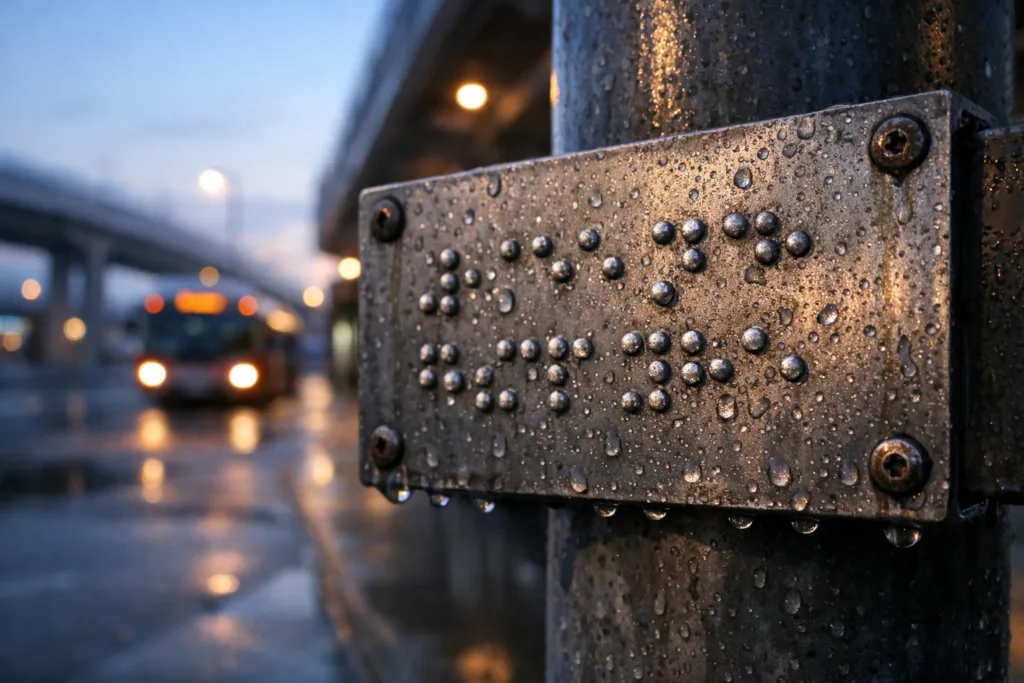
Salt spray testing is especially important for Braille on metal tags exposed to moisture or outdoor climates. For instance, Rain Chen at UC Tag has observed that outdoor public transport installations can face rapid breakdown in humid, salty air if metal or finishes are not rigorously tested and specified.
Real-world assessment can mean installing sample tags in pilot locations, then monitoring over weeks or months for loss of tactile clarity or readability. Longevity also depends on chosen finishes—anodized aluminum and passivated stainless steel regularly outperform lacquered brass in wet or abrasive conditions.
Routine checks and gentle cleaning are the simplest steps for preserving tactile information and regulatory compliance year after year. For more on rust-proofing strategies, see our guide to maximizing tag durability.
Industry Applications for Braille Tags
Braille tags and enhanced tactile accessibility are critical in diverse industries:
- Public buildings: Libraries, schools, and government facilities rely on Braille signage for room numbering, wayfinding, and safety notices.
- Transportation systems: Airports, bus terminals, and train stations depend on compliant metal tags for labeling platforms, entrances, and elevators. These tags must be both vandal-resistant and visible in low-light.
- Private businesses: Hotels, restaurants, and retail spaces use Braille to improve customer experiences and meet regulatory obligations—often customizing signage with branding for a cohesive environment.
- Education: Schools and universities increasingly integrate Braille signage on lockers, restrooms, and science labs. New trends even include tactile campus maps using metal tags for durable reference points.
Case Study: A major city’s bus terminal overhaul included replacing plastic tactile signs with stainless steel Braille tags, reducing vandalism-related maintenance by 70% year-over-year. Another example: a hospitality chain spec’d anodized aluminum Braille room plates, finding that service calls for damaged or faded signage dropped sharply within the first year.
These adaptations reflect industry-wide momentum toward total accessibility, and they reinforce that investing in quality, tactile signage makes environments welcoming and compliant for all users. For more insights, explore our tag solutions portfolio.
Common Mistakes and Troubleshooting for Braille Tags
Even well-intentioned projects can miss the mark. Common errors include incorrect Braille translation, poorly placed signs that are difficult to locate or touch, and text or dots that lack necessary contrast.
Adhesive failures or peeling can be resolved by selecting proper mounting hardware (like rivet holes for metal tags) or industrial-grade adhesives built for the local environment. If surface contrast is lacking, consider a matte finish or color in-fill to increase legibility for those with low vision.
Quality control before installation is key—check for dot height, correct cell distances, clarity of raised text, and overall tag finish. Failing to comply with regional regulations can expose organizations to liability, so confirm production specs meet all legal requirements before ordering.
Looking for proven troubleshooting techniques? Our guide to text paint infill and deep engraving explains how to maximize tag readability and durability.
Ordering Guide for Braille Tags
The ordering process for high-quality metal tags with Braille features involves several steps. Determine your project’s minimum order quantity (MOQ) and lead time needs, as custom jobs may require weeks for proofing, production, and quality control—especially for large-scale signage rollouts.
Always request detailed artwork proofs for review and, where possible, order physical samples to confirm tactile clarity and finish. Fragile tags or high-value orders require careful packaging and reliable shipping—coordinate options with your chosen supplier to mitigate risk of damage in transit.
Communicate clearly: specify desired thickness, Braille language grade, finish, and mounting requirements (such as pre-drilled holes, 3M tape, or special brackets). At UC Tag, we see a broad range of customization—from logo integration to security features like unique QR or serial numbers on the same tag body.
Need help choosing between aluminum, steel, or brass options? Visit our custom metal tag solutions page for detailed guidance and inspiration.
Frequently Asked Questions
What materials are best suited for Braille tags?
The top choices are anodized aluminum, stainless steel, and treated brass because these metal tags provide excellent tactile clarity, corrosion resistance, and withstand heavy use in various environments.
How are Braille tags made?
Braille tags are manufactured using methods like mechanical engraving or stamping for tactile dots, with specifications aligned with accessibility standards to guarantee readability and durability.
What is the cost range for custom Braille tags?
Pricing depends on material, manufacturing process, order size, and customization, but high-quality metal Braille tags typically range from a few dollars per unit to several dollars each for low-volume, custom work.
How do I ensure that my Braille tags are ADA compliant?
Use suppliers who adhere to ADA specifications for dot sizing, placement, and Grade 2 Braille translation, and always request samples for verification before full production.
How do I know if my Braille tags will withstand various environmental conditions?
Request information about materials, finish types, and test reports—including salt spray, abrasion, and UV testing—to ensure your selected metal tags match the intended application.
Can Braille tags be customized with logos?
Yes, Braille tags can be custom-manufactured to include raised or engraved logos, serial numbers, or QR codes, provided the tactile and readability requirements are maintained.
Related Reading
- How to Pick the Right Engraving Material for Long-Lasting Tags
- Top Five Design Mistakes That Stall Custom Tag Orders—And How to Fix Them
- How Deep Should You Engrave Metal? Essential Guide for Maximum Durability
- Keep Your Metal Tags Rust-Free: Proven Strategies for Harsh Environments
- Master Text Infill: Achieve High-Contrast, ADA-Compliant Engraving Every Time
- Laser Etching or Printing? The Smart Choice for Metal Barcoding in Asset Management