Introduction to QR Codes on Metal Surfaces
QR codes have become an essential tool for quick data access in industrial environments. From inventory management to asset tracking, their widespread adoption has driven the need for reliable scannability, especially when applied to metal surfaces. The PROMPT—QR Code, Metal Surfaces—serves as both the technical and practical challenge in this domain.
Implementing QR codes on metal tags introduces unique hurdles. Reflective surfaces, variable finishes, and physical durability play key roles in how easily a QR code can be scanned under different lighting conditions. Ensuring robust traceability, QR codes are used for asset marking, workflow automation, and equipment identification.
For manufacturers like UC Tag, the capability to create custom QR-coded metal tags is tied to experience in industrial-grade processes. Meeting these challenges means not only selecting the right material but designing for practical, everyday use in harsh environments.
Understanding QR Code Basics
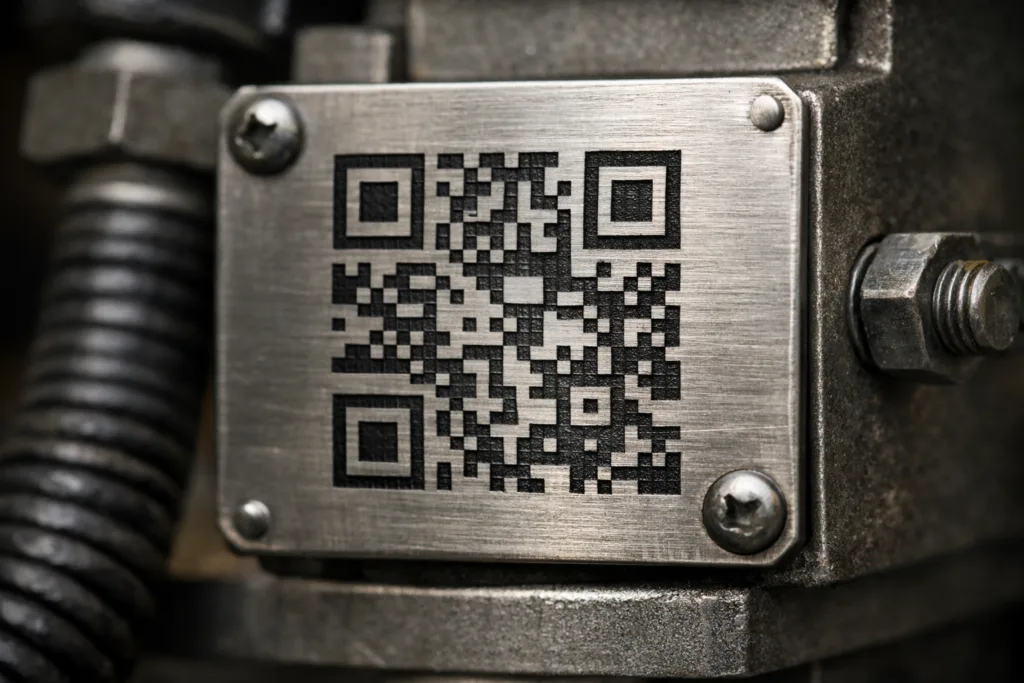
QR codes—Quick Response codes—are matrix barcodes capable of storing sizable data, ranging from URLs to serial numbers. Their design centers around black-and-white modules in a square grid, which scanners interpret by measuring relative position and contrast.
Data capacity is determined by the version and error correction level. Higher error correction enables reliability even if the tag is scratched or partially obscured. For metal tags, selecting the proper error correction is critical to maintaining scannability despite wear.
Design elements like module size, margin width, and color scheme drastically impact readability. Standard QR code dimensions begin as small as 10mm x 10mm but should be scaled according to distance and environment—the module’s size should never drop below 0.4mm for industrial settings.
Color inversion (using light modules on a dark background) is risky; contrast is king. The scanner expects a sharp difference between QR code modules and their background. Poor contrast can render even a perfectly manufactured code unreadable.
- QR codes are best kept at a minimum of 15mm x 15mm for most scanning at arm’s length
- Error correction level M or higher is recommended for durability
- High contrast between code and background ensures fast scanning
- Avoid color inversion except with expert guidance
Material Comparisons for QR Code Applications
The choice of metal surfaces directly affects QR code performance. Aluminum, stainless steel, and brass each offer distinct properties—crucial for balancing scannability and durability.
Aluminum is lightweight, corrosion-resistant, and frequently anodized for additional protection. Its matte variants provide excellent contrast for QR code visibility. Stainless steel, prized for its resilience, can be challenging for QR code scanning due to glare or high polish finishes. Matte or sandblasted stainless steel improves readability considerably.
Brass lends vintage appeal and rugged toughness. Its surface oxidizes over time, which may reduce barcode visibility unless coated. Environmental factors like exposure to chemicals or humidity need to be considered when selecting a material.
Weight is an important factor for portable tags—for instance, luggage tags versus fixed asset markers. Aluminum offers the lowest weight, while stainless steel provides utmost durability for applications with heavy handling.
| Material | Durability | Corrosion Resistance | Contrast (Matte Finish) | Weight | Recommended Use |
|---|---|---|---|---|---|
| Aluminum | High | Excellent | Very Good | Low | Portable, outdoor |
| Stainless Steel | Very High | Excellent | Good (matte) | Medium | Industrial, heavy-duty |
| Brass | Good | Moderate | Fair (may oxidize) | Medium | Decorative, vintage |
For outdoor conditions, aluminum with anodized finish or stainless steel in matte texture are ideal. Indoor applications may tolerate brass, but protective coatings ensure QR code longevity.
For more in-depth guidance, UC Tag’s production team frequently recommends aluminum for lightweight asset tracking, while stainless steel is favored for environments requiring chemical or heat resistance.
Explore material thickness and durability considerations for custom tags in their practical guide here.
Manufacturing Methods for High-Quality QR Codes
Several processes are used to apply QR codes onto metal surfaces: engraving, stamping, chemical etching, and UV printing. Each method influences clarity, durability, and cost.
Engraving—performed by laser or CNC—offers precise marking and excellent longevity. Depth can be adjusted to deliver optimal contrast against metal surfaces, especially on matte substrates, which minimize reflection.
Stamping is cost-effective for high-volume runs but may struggle with fine QR code detail. Stamped tags are less readable when used on shiny metals unless the stamped area is finished or ink-filled.
Chemical etching creates a recessed pattern, protecting code readability from abrasion. It’s suitable for intricate QR designs, and can combine with ink-filled modules for high contrast. UV printing delivers sharp, colored QR codes, but is best reserved for indoor applications, as outdoor UV exposure may fade prints over time unless special coatings are used.
- Engraving: Precision, high durability, ideal for outdoor, but higher cost.
- Stamping: Economical, fast, not ideal for fine code detail.
- Chemical Etching: Best for recessed barcodes, combines well with ink.
- UV Printing: Vibrant colors, suited for indoor, requires protective overcoats.
During manufacturing, maintaining module depth and clean edges is key to accurate QR code scanning. Rain Chen from UC Tag notes that controlling laser intensity and verifying finish quality through real-world scanning tests prevents unreadable codes. For more expert detail, see this guide on engraving depth and lasting legibility.
Case studies from industrial applications show that etched and laser-engraved tags remain readable through years of outdoor exposure, whereas printed QR codes often require periodic replacement or overcoating for protection.
Design and Spec Checklist for QR Codes
Designing a scannable QR code for metal surfaces starts with following proven specs and practical guidelines. Sizing, contrast, placement, and coatings collectively determine barcode performance and lifespan.
- Minimum QR code size: 15mm x 15mm (for handheld scanning); increase for greater scanning distance.
- Contrast ratio: Aim for at least 4:1 contrast between QR code and metal background. Matte finishes boost readability.
- Thickness: 0.5mm or greater for durable tags—consult with application environment.
- Weight: Consider lightweight metals for portable tags.
- Placement: Avoid edges, seams, or frequent contact points.
- Finish: Use anodizing, enamel, or epoxy dome for protection and contrast.
| Design Spec | Recommended Value | Notes |
|---|---|---|
| Minimum Size | 15mm x 15mm | For fast, handheld scanning |
| Contrast | 4:1 ratio | Matte/deep etched ideal |
| Module Size | 0.4mm | Smaller may cause scan failures |
| Placement | Away from edges/holes | Reduces obstruction risk |
| Coating | Epoxy/anodized/enamel | Protects from scratching/fading |
Protective coatings, such as epoxy domes, defend QR codes from abrasion and weather. For high-traffic tags, extra enamel or UV-resistant finishes are advisable. Choose finishes based on real-world handling and exposure.
Discover more on how surface texture impacts QR code readability in this industry readability masterclass.
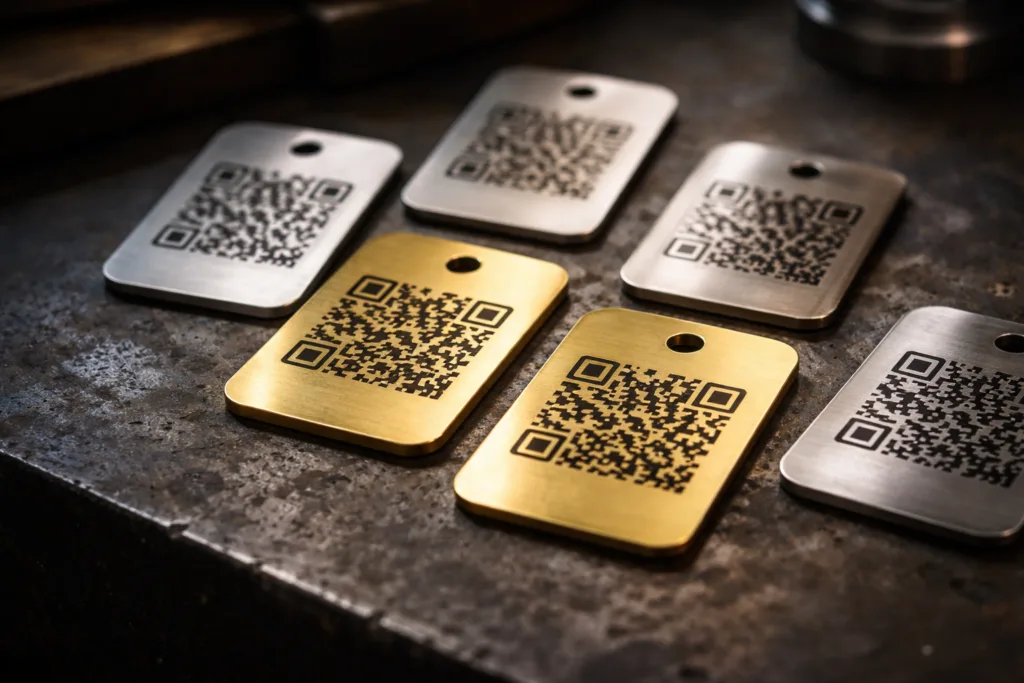
Ensuring Durability: Testing QR Codes on Metal
Ensuring QR code durability involves rigorous testing methods. Corrosion tests, including salt spray chambers, simulate extended exposure to humidity and chemicals, revealing weaknesses in material or coating.
UV exposure testing evaluates how sunlight affects QR code clarity, especially with UV-printed or coated codes. These tests help verify if the tag will stand up to years of outdoor placement.
Abrasion tests measure resistance to physical wear—critical for tags subjected to frequent handling or harsh environments. Barcode readability before and after abrasion is checked with real-world scanners.
Industry standards (like ASTM B117 for salt spray) provide benchmarks. Field testing, where tags are exposed to their actual deployment environments, offers practical proof of QR code reliability. UC Tag’s engineering team always recommends field trials after lab tests to detect issues missed in controlled settings.
For marine and outdoor tags, see corrosion resistance insights in this salt spray testing guide.
Application Industry Fit for QR Codes
QR codes on metal surfaces serve a diverse range of industries. In manufacturing, they tag machinery for process tracking and maintenance. Logistics relies on QR-coded asset tags for inventory and shipment management, reducing errors and improving automation speed.
Pet identification tags, luggage tags, and specialized asset markers frequently use metal QR codes due to their durability and easy integration. Compliance and regulatory tracking is mandated in pharmaceuticals, aerospace, and food industries—QR codes simplify audits and traceability.
Success stories abound. For example, luxury luggage brands combine minimal design with robust QR code bag tags for warranty tracking bag tag manufacturer. Agile strategies adapt QR code design, finish, and placement for each sector—UV-printed tags for retail, deep-engraved for outdoor assets.
- Manufacturing: Machinery ID, workflow automation
- Logistics: Asset tracking, shipment verification
- Pet tags: Owner info access, lost-and-found
- Luggage tags: Warranty, travel tracking
- Compliance: Audit trails, regulatory mandates
Learn more on innovative keychain, luggage, and logo tag solutions at Tag Solutions.
Common Mistakes in QR Code Design and Manufacturing
Frequent mistakes can make QR codes on metal surfaces unscannable. Most issues stem from poor contrast or color combinations. Metal tags with gloss or reflective finishes amplify light, making dark QR codes difficult to read—matte finishes resolve this.
Choosing the wrong adhesive for stick-on QR code plates leads to detachment or slippage, especially on curved surfaces. Reliable options like 3M adhesive backings offer strong, lasting bonds.
Misaligned QR codes or placement near edges and holes limit scanner access. Always position QR codes on flat, central areas for best scanning. Lack of pre-production testing means codes that work digitally fail when manufactured—always validate with physical samples.
Substandard materials or finishes accelerate corrosion, leading to faded or unreadable QR codes. Rain Chen reminds that shortcutting the production process to save cost often results in replacements and field failures.
Explore adhesive backing tips in this production-focused guide: Stick-On Metal Logo Tags.
Ordering Guide for QR Codes on Metal Tags
When ordering QR code metal tags, clarify minimum order quantities (MOQs) with your supplier. Custom production often begins at 50–100 units, but varies by complexity and manufacturing method.
Production lead times depend on order size and process—engraved or etched tags take longer than stamped. Expect 2–4 weeks for standard runs, plus shipping. Always submit artwork using vector files for sharp QR code reproduction. Proofing steps include digital previews and optionally physical samples for accuracy checks.
Sample requests can be made through custom metal tag samples. Packaging strategies for fragile items include foam, protective sleeves, or reinforced boxes—especially for high-polish or UV-printed tags.
See vector art requirements for custom tags in this artwork guide.
Frequently Asked Questions
What is the recommended minimum QR code size on a metal tag?
The minimum advised size is 15mm x 15mm for reliable arm-length scanning; larger codes may be needed for distant scanning.
Which metal surface finish offers the best QR code contrast?
Matte or deep etched finishes provide the highest contrast and minimize glare, improving scannability on metal surfaces.
How should QR codes be placed on metal tags?
Place QR codes centrally, away from edges or holes, and on flat surfaces to prevent scanning obstructions or misalignment.
What coatings protect QR codes from abrasion and fading?
Epoxy domes, anodizing, and durable enamel finishes offer robust protection against wear, corrosion, and fading outdoors.
Do I need vector artwork for QR code manufacturing?
Yes, vector files ensure crisp QR code reproduction across various manufacturing methods, especially laser engraving and etching.
How can I verify QR code readability after manufacturing?
Always conduct physical scanning tests with varied devices and under real-world lighting; digital mockups alone are insufficient.
Related Reading
- See How Matte and Glossy Finishes Directly Impact QR Code Scanning Success
- Discover the Rule of Deep Engraving for Lasting QR Code Clarity and Durability
- Avoid Adhesive Failures: Choosing Backings That Ensure QR Codes Stay Secure
- Get Perfect QR Code Markings: Why Vector Art Files Matter Most for Custom Tags
- Protect Your QR Code Tags: Learn How Salt Spray Testing Secures Corrosion Resistance