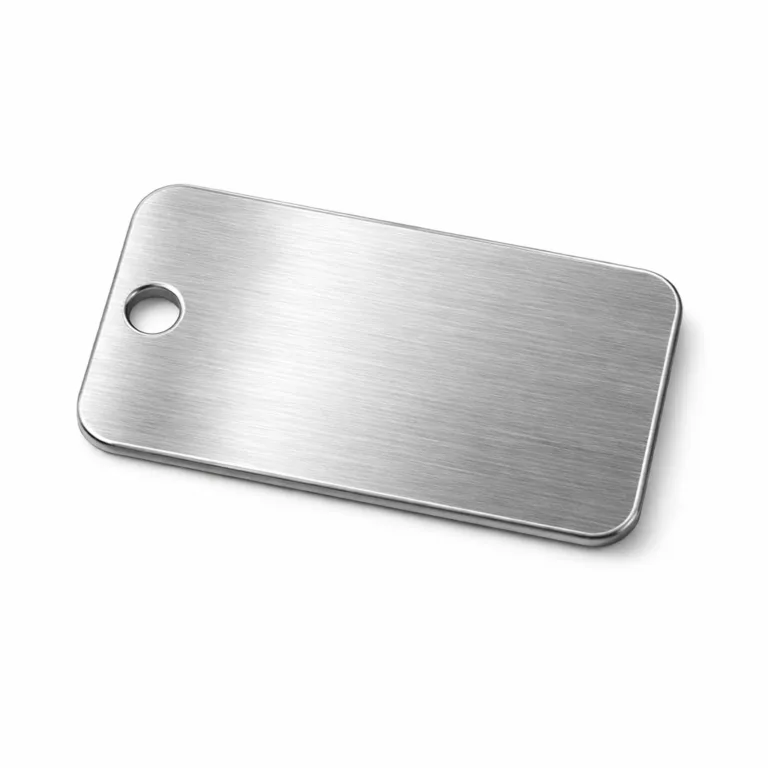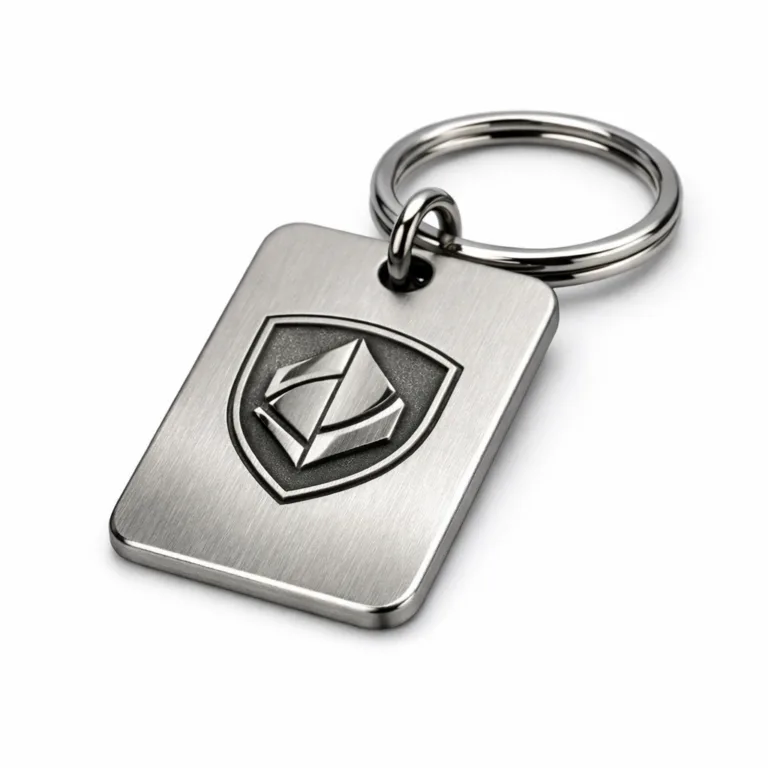
How deep should an engraving go if you want your message, serial number, or logo to remain clear and readable for the product’s entire lifetime? The exact right engraving depth, metal durability, visibility—these are the questions engineers and B2B buyers ask when specifying custom metal tags for demanding applications. This guide delivers answers rooted in real-world results, focusing on practical selection strategies for outstanding legibility and robust performance in every environment.
Understanding Engraving Depth
Engraving depth refers to how deeply a marking is cut, etched, or ablated into a tag’s metal surface. Typically measured in millimeters or microns (μm), engraving depth can range from just a few microns for surface marks to more than 1 mm for deep, tactile engravings.
The significance of proper engraving depth can’t be overstated. Too shallow, and you risk losing legibility to wear, corrosion, or repeated cleaning. Too deep, and production costs rise without added readability—plus, thin or soft metals may distort.
A sufficient engraving depth ensures that critical text or codes hold up to years of abrasion, chemical exposure, or weathering. Deep enough marks remain readable when paint, debris, or patina develop, boosting long-term metal durability and minimizing replacement or human error risks.
Material plays a strong role: hard metals like stainless steel or titanium allow for precise, deeper engravings; softer alloys like aluminum or brass need a balance to avoid deforming or impacting finish integrity. The same depth may yield different visibility and durability results, depending on the metal and chosen coating.
Environmental exposure should always drive the specification. Outdoor tags for pipelines, construction, or marine use should feature deeper engravings to withstand UV, sand, salt spray, or chemicals, whereas indoor display pieces may achieve lasting legibility at shallower depths.
Materials Comparison: Choosing the Right Metal for Engraving
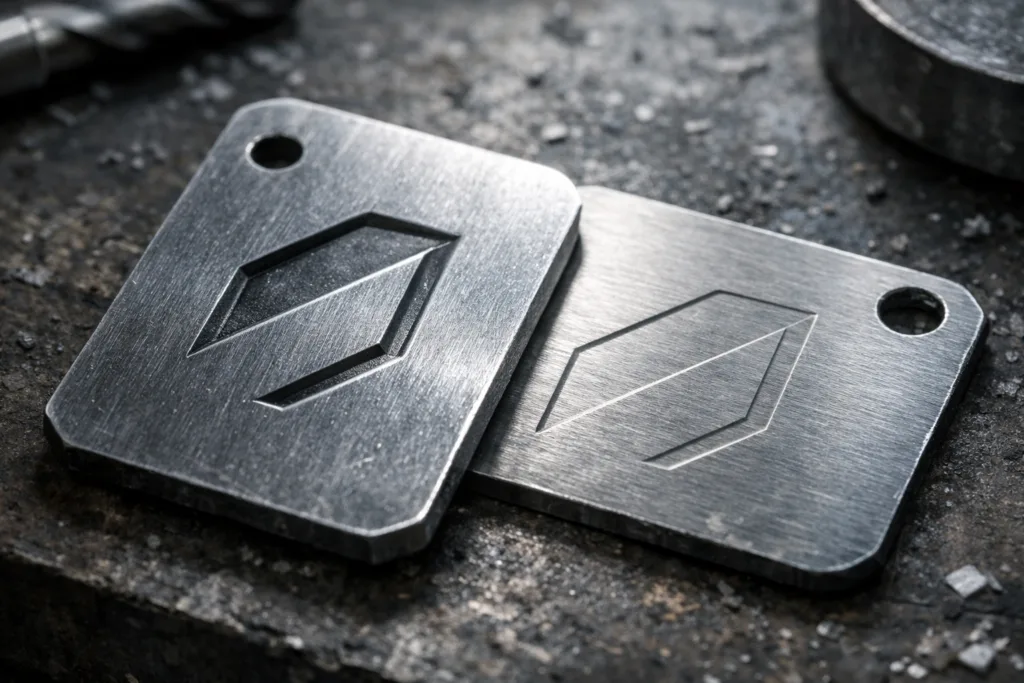
Different metals respond to engraving processes in unique ways. Choosing the right material is as essential as the mark’s actual depth for striking the ideal balance between metal durability and visibility.
| Metal | Engraving Depth Range | Durability | Visibility | Best Use Case |
|---|---|---|---|---|
| Aluminum | 0.05–0.3 mm | Good (anodized: better) | Excellent (with contrast fill) | Lightweight asset tags, consumer product labeling |
| Stainless Steel | 0.1–1.0 mm | Outstanding | High (matte/contrasted) | Industrial, outdoor, food processing, marine |
| Brass | 0.07–0.5 mm | Excellent (patinas gracefully) | Warm, classic; moderate contrast | Valve tags, nameplates, luxury goods |
Aluminum engraves quickly, making it economical for mass production. It’s corrosion-resistant, especially when anodized, but can deform with overly deep marks on thin gauge. Color or enamel fill enhances visibility.
Stainless steel delivers exceptional strength and corrosion resistance. It supports the deepest engravings, maintaining stability and metal durability even in highly abrasive environments. Recommended for critical ID in marine/industrial settings.
Brass offers a traditional, decorative look but is softer. Deep engravings look sharp, and the surface naturally resists corrosion through patina. It’s ideal for branding or labels that value aesthetics with moderate exposure.
- For heavy outdoor or chemical exposure, choose stainless steel with a deep, etched or stamped mark.
- For color-coded or lightweight assets, anodized aluminum tags are preferred with deeper engraving for abrasion-prone applications.
- Premium artwork, valves, or decorative labeling benefit from brass, paired with moderate engraving depth for clarity and character.
Consider your environment—UV, salt, and repeated impact all call for tougher metals and deeper marks.
You may want to review How Salt Spray Testing Secures Durable Marine & Outdoor Tags for more insights into corrosion performance across materials.
Manufacturing Methods: Understanding Engraving Techniques
Several marking methods impact engraving depth and the resulting tag’s visibility and resilience in real-world handling. Here’s how the most common options stack up:
| Technique | Typical Depth | Visibility | Durability | Best For |
|---|---|---|---|---|
| Laser Engraving | 0.01–0.4 mm | High (especially with fill) | Excellent (on correct materials) | Serials, QR/barcodes, small text |
| Stamping/Embossing | 0.1–1.0 mm (raised/recessed) | Exceptional tactile and visual | Maximum (shape holds even if surface wears) | Mil-spec dog tags, heavy-duty IDs |
| Chemical Etching | 0.02–0.15 mm | Sharp with color fills | Good (for indoor/moderate use) | Logos, fine art, thin tags |
| UV Printing | Surface only | Vivid color, limited abrasion resistance | Low outdoors/High indoors | Brand/Decor, indoor-only tags |
Laser engraving creates crisp marks, but maximum depth depends on machine power, speed, and the metal’s hardness. Stamped/deep-embossed tags resist both chemical and physical wear, making them ideal for the harshest use cases—but setup costs are higher for tooling.
Chemical and photo etching produces ultra-fine details (great for logos or thin metal sheets), but shallower marks wear more quickly outside or in abrasive conditions without resin/enamel fill. UV printing offers vibrant graphics but doesn’t penetrate the surface, so it’s best for protected, indoor, or accessory tags.
Expert insight: “When spec’ing industrial tags at UC Tag, we recommend a minimum engraving depth of 0.18 mm for stainless steel destined for outdoor or chemical exposure—and consider going deeper if routine cleaning or abrasion is expected,” notes production craftsman Rain Chen. “Always balance legibility needs and planned environment with the realities of cost and production throughput.”
Need help choosing the right engraving technique and depth? UC Tag can recommend options tailored to your application.
Design & Specification Checklist for Metal Tags
Ensuring lifelong legibility and durability starts at the design table. Here is a practical checklist for specifying engraved metal tags that perform:
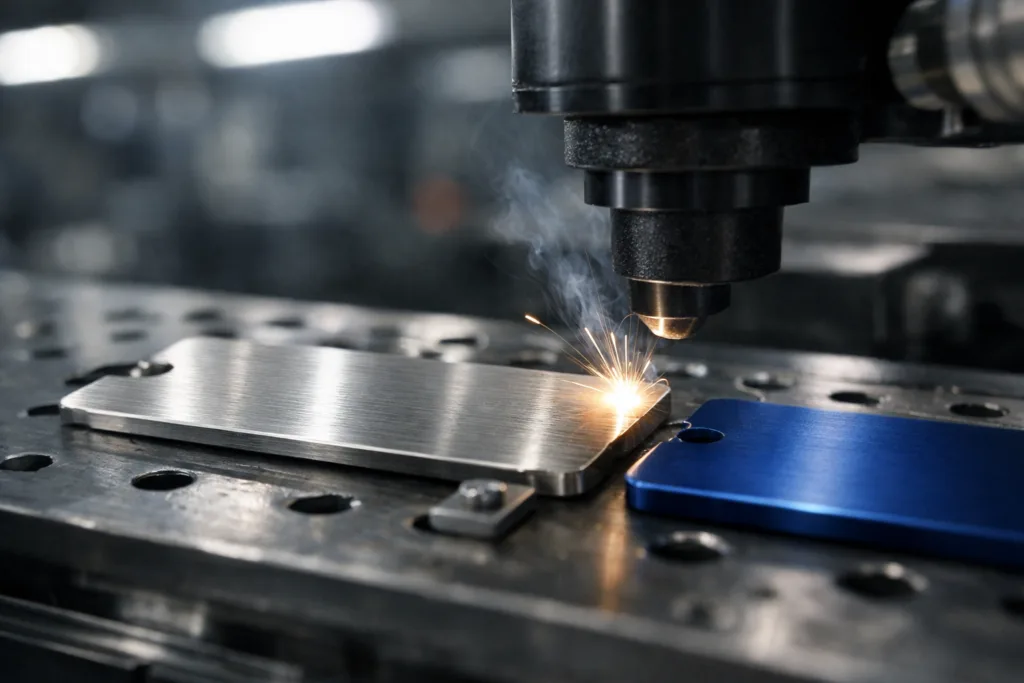
- Dimensions: For industrial asset tags, a minimum 0.5 mm thickness is advised; upscale branding tags often use 1.0 mm or thicker for premium feel and deep engraving capability.
- Finish selection: Consider brushed, matte, or anodized finishes for scratch and glare resistance. Use coatings to minimize corrosion in marine or chemical exposure settings.
- Attachment options: Confirm hole diameter/placement for rivets or cable ties. For adhesives, ensure compatibility with both metal and mounting surface—3M VHB is a common industrial pick.
- Readability: Specify sans-serif fonts, at least 1.5 mm character height for serials. Deeper engraving depth is critical for microtext or high-traffic identification zones.
- Engraving tolerances: Stay within ±0.02 mm for depth and positioning, especially when automated scanning or close-fitting assemblies are involved.
Reviewing the standard samples from your supplier can help clarify expectations and spot potential production issues before mass order.
Durability and Testing: Ensuring Long-Term Performance
True metal durability is verified in the field or via laboratory testing, ensuring that your tag’s information stays visible and intact for years to come—even under the harshest conditions.
Common durability tests include:
- Corrosion resistance: Salt spray (fog) tests simulate ocean-side or industrial chemical exposure. Top-performing stainless steel tags withstand 500+ hours with no visible deterioration.
- Abrasion testing: Taber abraser or grit wheel equipment rubs the engraved surface repeatedly. Deep marks and hard metals show less depth loss after cycles.
- Impact resilience: Measured via drop, hammer, or projectile impact, verifying that engraved marks resist deformation or chipping.
- UV & weathering: Accelerated UV exposure (“sun lamps”) highlights fading or loss of readability, especially in printed or color-filled engravings.
Industry standards often referenced include ASTM B117 (corrosion testing), MIL-STD-130 (item marking for government/defense applications), and ISO 9227 (salt spray). Adhering to these ensures tags are fit for outdoor, marine, or heavy-duty use.
Strategies for top outdoor legibility include specifying deeper engraving depth, choosing corrosion-resistant alloys, and using high-contrast finishes. For UV resistance, consider integrating lessons from UV Resistance Masterclass: Stop Color Fading on Outdoor Metal Equipment Tags.
Industry/Application Fit: Use Cases for Engraved Tags
High-visibility, fully custom engraved tags serve demanding purposes in nearly every sector. Here’s how different industries make the most of optimized engraving depth and material pairing:
- Manufacturing: Rugged serial number and asset ID tags—often stainless steel—guarantee equipment traceability and maintenance tracking, even in oil, gas, or chemical facilities.
- Logistics: Durable barcode and QR code tags on pallets, racks, or transport containers simplify inventory handling and last through shipping and handling.
- Pet care: Engraved brass or stainless pet tags endure play, weather, and water. Deep, tactile marks aid readability if surface patina or wear develops.
- Consumer goods: Branding logos and custom nameplates lend an upscale feel to luggage, keychains, fashion apparel, or tech accessories; focus here is a mix of appearance and longevity.
For robust ID in high-risk environments (outdoor utility poles, pipeline markers), select metals with high corrosion resistance and pair with a deep, stamped or laser-engraved mark. For marketing tags where aesthetic matters, a moderate depth with enamel or color fill boosts attention and style.
Explore more about choosing the right tag material for specific needs in How to Choose the Right Tag Material: Expert Insights on Scratch Resistance and Hardness.
Common Mistakes & Troubleshooting in Engraved Tags
Reliable tags require more than good intentions—several preventable missteps can compromise engraving depth and metal durability during design or production:
- Shallow engraving: Fails to stay legible after routine cleaning or abrasion. Always verify minimum depth for the intended environment.
- Poor material selection: Using light-gauge aluminum or non-anodized surfaces can lead to fast fading or corrosion. Always match metal properties to expected exposures.
- Low contrast: Unfilled engravings against mirror-polished backgrounds hinder legibility. Specify color fill or a contrasting finish for readability.
- Misalignments: Production errors may cut into design space, resulting in cropped text or uneven spacing.
- Production tolerances: Skipping precision controls can mean marks are too shallow or irregular in appearance.
Solution checklist:
- Demand production proofs or samples for approval.
- Test pilot batches under worst-case expected conditions.
- Regularly audit incoming batches for depth, legibility, and finish quality.
If chronic issues arise, consult with manufacturers like UC Tag to review engraving protocols and assess material or method changes needed for higher performance.
Ordering Guide: How to Ensure Quality and Timeliness
Securing high-visibility, reliable engraved tags—on time and within budget—demands careful ordering and specification. Here’s the typical buyer’s roadmap:
- MOQ (Minimum Order Quantity): Industrial processes favor batch runs—expect MOQs of 50–500 units for custom shapes or processes. Sample orders for design proofing are usually available.
- Lead times: Vary by method and quantity. Engraved stainless labels in high quantity (laser, stamp) may take 2–4 weeks post-spec approval; premium finishing adds time.
- Artwork submission: Supply vector or high-res artwork for logos/codes. Include all font, size, depth, and attachment details.
- Proofing: Always request digital proofs and, if needed, physical samples before mass production.
- Packing & shipping: Opt for labeled batches, polybag or box packaging, and discuss custom labeling if rapid deployment matters.
Review the tag solutions page to see sample layouts and supported manufacturing options.
Frequently Asked Questions
What is the optimal engraving depth for stainless steel, aluminum, and brass?
Optimal engraving depth varies by metal and application: stainless steel usually requires 0.18–0.3 mm for outdoor/industrial durability, aluminum performs well at 0.1–0.3 mm with anodized finish, while brass benefits from 0.1–0.2 mm for decorative and readable results.
How do different engraving techniques affect durability and legibility?
Stamping and deep laser engraving produce marks that stay readable longer under harsh conditions, while chemical etching and UV printing are suited for detailed visuals or indoor use but can fade faster with abrasion.
What’s the best way to read engraved tags in dirty, wet, or outdoor settings?
Specify deeper engraving depth, use bold sans-serif fonts, and ensure high-contrast color fill or matte backgrounds so text stays prominent despite mud, water, or corrosion buildup.
Do coatings and finishes impact engraving visibility or longevity?
Yes—anodized, enamel-filled, or matte finishes can dramatically improve both visibility and resistance to corrosion, UV, and wear, especially for aluminum and brass tags used outdoors or in high-traffic locations.
How do I assess the quality of delivered engraved metal tags?
Check for uniform engraving depth, sharp character edges, consistent contrast, and clean finishes; request samples or proofs and audit batches for alignment to spec before full-scale deployment.
Can I customize shape, size, or serial numbering for specific projects?
Absolutely—reputable suppliers let you specify custom dimensions, cutouts, batch serial numbers, and font/artwork, helping you meet regulatory or branding goals; just confirm capability and timelines up front.
Related Reading
- Laser Engraving vs. Diamond Drag: How to Pick the Right Tag Depth and Durability
- Proven Strategies to Rust-Proof Your Metal Tags in Humid Environments
- Keep Outdoor Tags Vivid: Master UV Resistance and Color Longevity
- How Salt Spray Testing Ensures Marine-Grade Corrosion Resistance
- Choose the Ultimate Scratch-Resistant Metal Tag for Tough Conditions
- Unlock Colorful, Lightweight Durability with Anodized Aluminum Tags