Introduction: Navigating Valve Tags in Plumbing Identification
When plumbing professionals and facility managers consider valve tags for plumbing identification, two materials stand out: brass and plastic. Each has distinct benefits and limitations, impacting safety, cost, longevity, and efficiency in water, gas, and HVAC systems. Properly chosen valve tags are more than just labels—they drive smooth maintenance, prevent costly errors, and support regulatory compliance. In this comprehensive guide, we’ll unpack how brass and plastic valve tags measure up, drawing from expert shop-floor insights and real-world industry practices.
Why Valve Tags Matter in Plumbing Identification
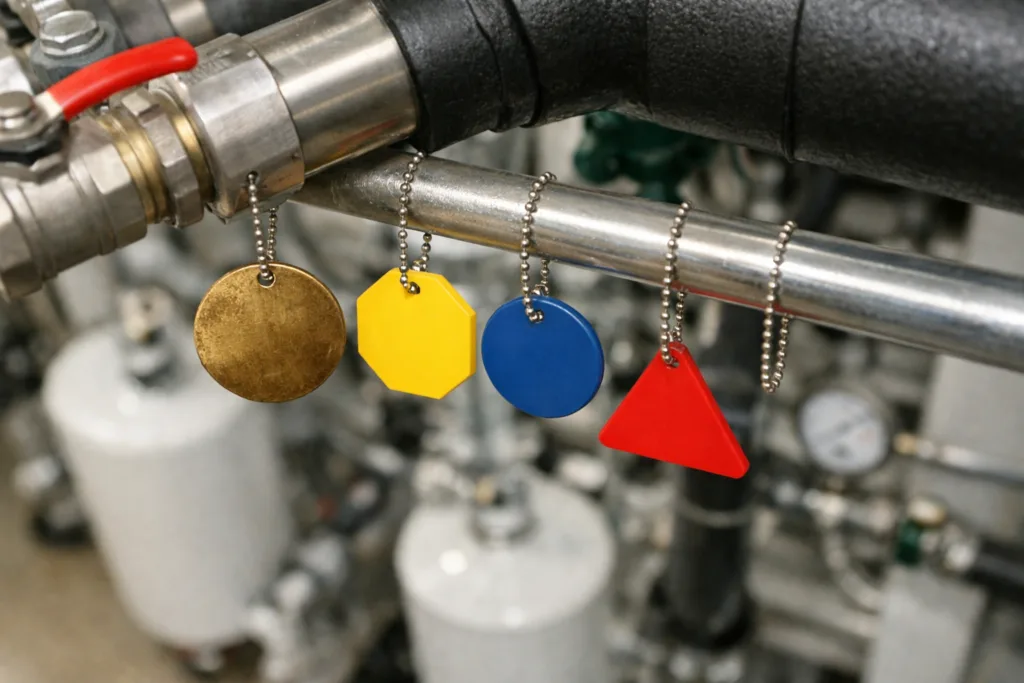
Valve tags are essential for identifying components in plumbing systems, helping technicians trace lines, prevent cross-connection, and support emergency response. Reliable plumbing identification ensures maintenance is performed safely and quickly, minimizing downtime and unlocking peace of mind for building owners.
Key Functions of Valve Tags
- Component labeling: Water, gas, steam, chemical valves
- Directionality: Flow arrows and purpose notes
- Maintenance records: Service dates, inspections
- Emergency access: Swift valve shut-offs
- Regulatory compliance: Meets code requirements
The Basics: Brass vs. Plastic Valve Tags
Brass and plastic dominate the market for valve tag materials. Both can be customized, engraved, and color-coded, but their industrial performance depends on application contexts such as temperature, exposure, or chemical environments.
| Material | Durability | Cost | Use Cases |
|---|---|---|---|
| Brass | High | Higher upfront | Harsh industrial, outdoor |
| Plastic | Moderate | Lower upfront | Indoor, low-stress, high-volume |
Material Science: Brass Valve Tags
Brass is revered for its strength, corrosion resistance, and crisp engraving results. It withstands heat, moisture, and UV better than most alternatives. Brass valve tags maintain legibility and structural integrity for decades in industrial and municipal settings.
Manufacturing Insights: Brass Tag Production
From the production side, manufacturers like UC Tag favor brass for its machinability and the stability it brings to stamping and engraving processes. Controlled batch consistency means fewer burrs, cleaner font lines, and less risk of surface defects, especially on thick (1.0–2.0 mm) tags. Brass can be finished with protective lacquer—though it’s wise to watch for thickness variation in platings if corrosion is a concern.
Strength and Weakness: Plastic Valve Tags
Plastic valve tags (typically PVC or acrylic) are valued for their affordability, color range, and lightweight form. They suit settings where exposure is minimal, and frequent tag replacement isn’t a logistical hassle. Yet, plastic can degrade from prolonged UV exposure, high temperatures, or aggressive cleaning solvents.
Application Realities for Plastic Tags
Bulk installations, like commercial complexes or schools, often turn to plastic tags for quick labeling. With laser or rotary engraving, legibility can be good—though small text may suffer from melting or chipping on lower-quality stock. Attachment is often via cable ties, split rings, or adhesive backings.
Durability Comparison: Industrial Stress Tests
Stress tests performed on mixed-metal and plastic systems reveal brass tags resisting warping and discoloration even after years of pipe condensation, whereas plastic tags may crack or fade more quickly (sometimes within 2–3 years under harsh sunlight or steam).
Environmental Factors Affecting Performance
- Temperature extremes: Brass preferred for heat, plastic for cold/dry
- Humidity and wet environments: Brass less likely to rot or mold, plastic should use quick-drain mounting
- Chemical exposure: Check compatibility charts—solvents may erode plastics, while acids can pit brass unless protected
Cost-Effectiveness: Total Ownership Beyond Purchase Price
While plastic valve tags are cheaper per tag, brass tags offer lower lifetime costs when factoring in reduced replacement, less downtime, and fewer regulatory hurdles. High-traffic or mission-critical systems (hospital mechanical rooms, food factories) find the up-front investment in brass recouped through reliability.
| Material | Initial Cost | Replacement Frequency | Long-Term ROI |
|---|---|---|---|
| Brass | $$$ | Low | High |
| Plastic | $ | Medium-high | Medium |
Sustainability & Environmental Impact of Valve Tags
Brass is recyclable and often made from post-industrial scrap, lowering its carbon footprint over decades of service. Plastic tags may be reprocessed in theory, but most end up incinerated or dumped after use. Consider eco-friendly tag programs for large properties (see Eco-Friendly Dog Tags: Recycled Metals & Low-VOC Finishes for recycling strategies).
Real-World Applications: Where Brass and Plastic Succeed
Brass tags shine in water treatment plants, industrial steam rooms, and outdoor pump stations, handling vibration, splash, impact, and heat. Plastic tags are effective in office complexes, libraries, and budget-sensitive facilities where decorative colors aid quick ID, and risk exposure is low.
Case Study Example: Hospital Mechanical Room Retagging
After repeated failures with brittle plastic tags near steam pipes, a regional hospital swapped to brass tags, reducing emergency shut-off confusion and lowering maintenance costs by 80% over three years.
Installation Tips and Best Practices for Valve Tags
Precision installation boosts both tag function and safety. Use corrosion-resistant split rings for brass in wet, mobile, or vibratory environments. For plastic, opt for UV-stabilized cable ties indoors and out. Never staple or glue tags directly to heated surfaces; warping and unplanned detachment is common.
Maintenance and Upkeep Strategies
Regular cleaning with non-abrasive cloth and mild detergent keeps both brass and plastic tags legible. Inspect monthly for fading (plastic) and tarnish (brass). For sites with hundreds of tags, maintain a digital record using QR-coded or serial-numbered tags for easy database lookup (see QR Code Solutions for tracking).
Labeling Techniques: Engraving, Stamping, and Printing
Brass is compatible with deep rotary engraving, dot peen, and stamping for elevated legibility and anti-tamper assurance. Plastic tags often rely on laser engraving and can accommodate full-color printing, but colorfastness depends heavily on pigment stability (learn about coatings that last).
Attachment Options: Securing Valve Tags
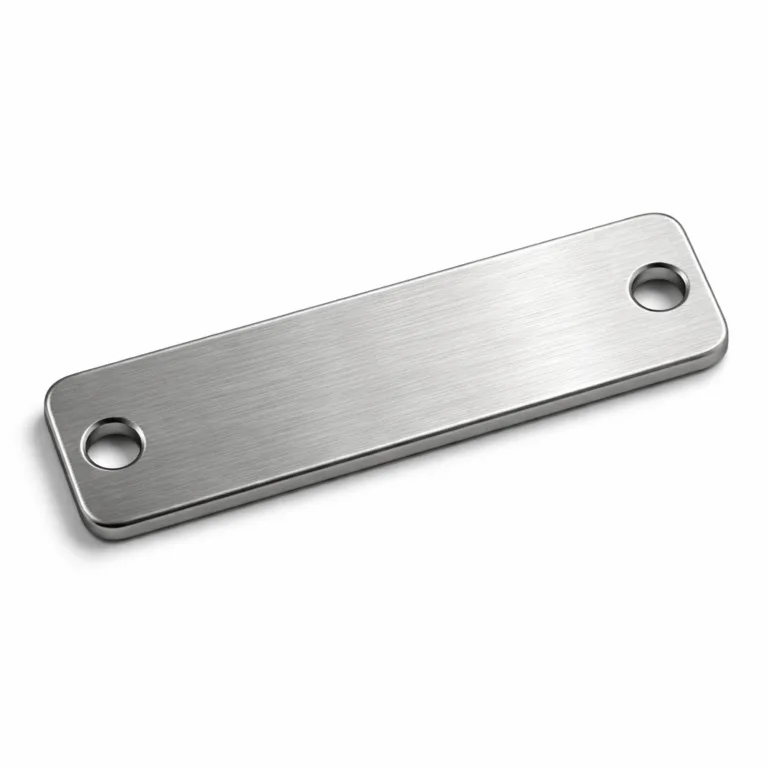
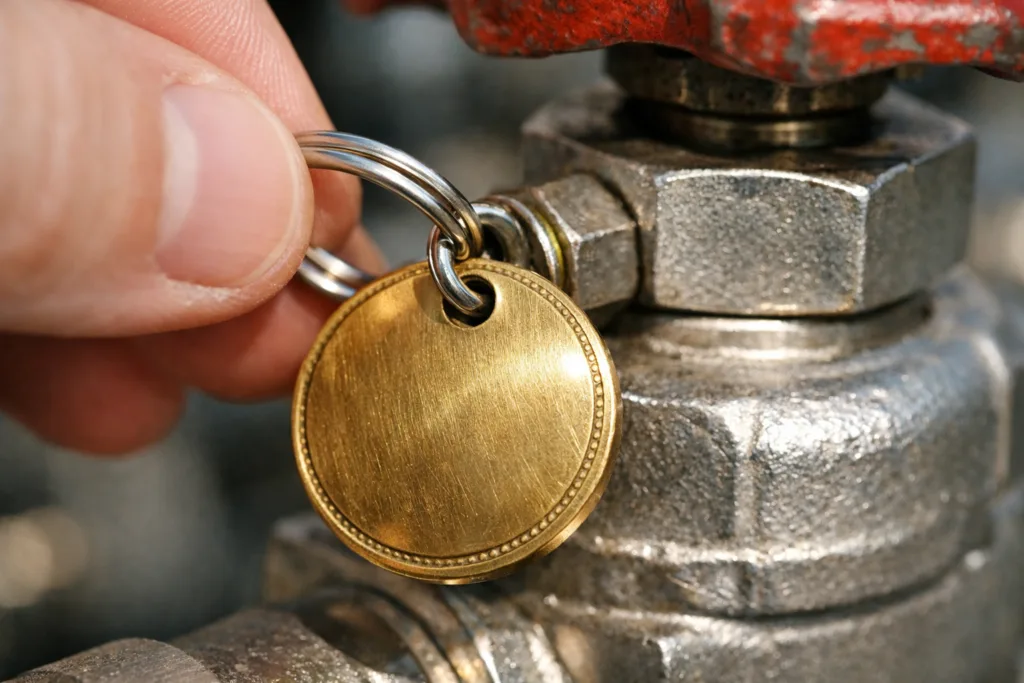
For brass tags, split rings, S-hooks, and rivets offer robust attachment. UC Tag recommends a minimum 3mm hole diameter, rounded corners, and deburred edges to prevent snags and injury. Plastic tags are usually paired with cable ties or adhesive pads when insulation is required.
Color Coding for Quick Plumbing Identification
Large facilities use standardized color coding to instantly identify valve functions—red for fire suppression, green for potable water, blue for chilled water. Both brass and plastic tags can be color-filled or painted, but polycarbonate plastics yield better color vibrancy.
Implementing a Color-Coded System
- Assign colors based on fluid type
- Use clear, high-contrast fonts
- Include symbols for universal comprehension
Safety Enhancement through Proper Tagging
Proper valve identification reduces the risk of accidental release, cross-connection, and maintenance injuries. Clear, durable tags speed troubleshooting and support procedure adherence during emergencies.
Compliance and Regulatory Requirements
Local and national codes (such as ANSI/ASME A13.1) require permanent and legible valve tagging in commercial, municipal, and industrial installations. Brass tags generally meet these standards for permanence; plastic may require periodic replacement to remain compliant.
Expert Opinion: Shop-Floor Perspectives on Valve Tag Materials
Experienced craftsman Rain Chen notes that, “brass tags offer unmatched edge definition, so text stays readable—even after surface tarnishing. We sometimes see batch variation in plastic tags, where brittle finishes make them snap during cable tie installation, especially in cold weather.” Realistic trade-offs in selection include the cost of repeated labor with plastic versus one-off brass installation.
Advanced Options: Smart Valve Tags & Asset Tracking
Emerging technologies bring NFC chips and QR codes into the valve tag space for rapid scanning, asset tracking, and digital maintenance logs. These upgrades typically pair with sturdy brass carriers for long-term scanning reliability.
Common Mistakes When Selecting Valve Tags
- Choosing price over durability for outdoor systems
- Poor engraving leading to illegibility
- Wrong attachment type (e.g., adhesives melting on hot pipes)
- Failure to match tag color to fluid type
Questions to Ask Before Ordering Valve Tags
- Expected environmental exposure?
- Required legibility duration?
- Regulatory constraints?
- Batch variation and quality control?
- Attachment type compatibility?
Pitfalls in Production: Quality Control in Valve Tag Manufacturing
Metal tag manufacturers face challenges such as burr control, legibility at small sizes, and plating uniformity. UC Tag recommends specifying edge radius, engraving depth, and batch test verification. For plastic production, watch for color consistency, warping, and brittleness—especially if storage is not climate-controlled.
Maintenance Scheduling: Keeping Tags Functional Over Time
Seasonal inspections ensure tags remain readable and securely attached. Digital scheduling systems can prompt replacement or cleaning events, reducing operational risks from missing or damaged tags.
Valve Tags: Brass vs. Plastic for Plumbing Identification
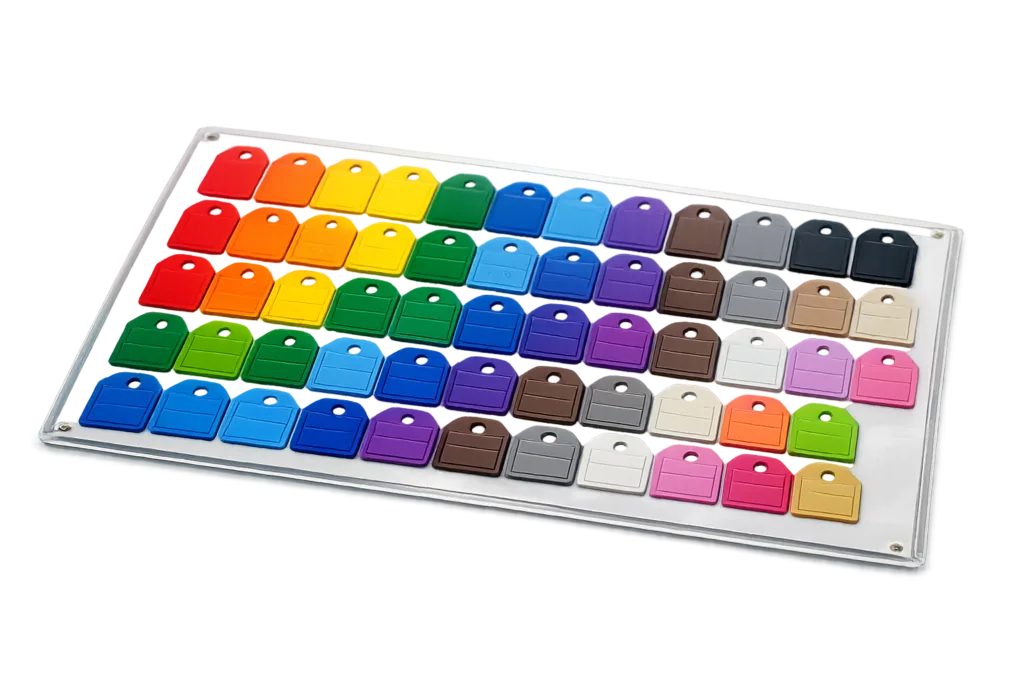
Whether you’re retrofitting a century-old building or specifying labels for a new construction project, evaluating the differences between brass and plastic valve tags is crucial. Brass wins on durability, legibility, and long-term cost efficiency, especially where conditions are severe. Plastic provides a fast, affordable solution for low-risk indoor applications. Both contribute to plumbing identification when selected with fit-for-purpose logic, sound installation methods, and a plan for ongoing maintenance.
Frequently Asked Questions
How long do brass valve tags typically last in outdoor plumbing systems?
Brass valve tags can last decades outdoors, resisting corrosion, discoloration, and physical damage, even in harsh weather conditions.
Do plastic valve tags meet plumbing code requirements?
Plastic tags may meet code for indoor or temporary installations but often require replacement to uphold legibility and permanence as codes demand.
How can I ensure my valve tags remain readable over time?
Choose high-contrast engraving, clean tags regularly, and avoid abrasive cleaning tools. Schedule periodic inspections to check for wear or fad.
Which tag attachment method is most reliable?
Split rings and rivets are best for brass tags in wet or high-vibration areas; UV-stabilized cable ties work well for plastic tags indoors.
Are brass valve tags recyclable?
Yes, brass is highly recyclable and remains valuable even as scrap, supporting eco-friendly facility programs.
Can valve tag colors be customized for specific plumbing fluids?
Absolutely—both brass and plastic tags support color coding. Use industry standards and clarify with clear, contrasting lettering.
Related Reading
- Eco-Conscious Metal Tag Choices: Reduce Waste in Plumbing and Asset Labeling
- How Cutting-Edge Coatings Prevent Fading on Identification Tags
- Streamlining Inventory: QR Codes and NFC Tech in Asset Tagging
- Custom Metal Tag Solutions for Every Plumbing System
- Find the Perfect Tag Solution for Industrial Asset Management