Key Takeaways for Color Matching Enamel-Filled Dog Tags
- Pantone matching ensures consistent brand color on every dog tag.
- Soft enamel vs. hard enamel structures impact visual appeal and durability.
- Line borders improve enamel separation and color accuracy.
- Quality control measures safeguard color tolerance and finish consistency.
- Proper aging and care preserve vibrancy for years.
Pantone Match: Precision in Color Consistency
Brand consistency relies on accurate color reproduction, especially for enamel-filled dog tags. Pantone matching is the industry standard for color fidelity in custom metal tags—from fashion logos to identification badges. Using precise Pantone codes, manufacturers reproduce your brand’s signature shades, minimizing color drift from tag to tag and batch to batch. UC Tag, a trusted manufacturer, integrates Pantone color charts into every production cycle, ensuring your logo or brand color stays true across thousands of units.
How Pantone Matching Works
Pantone provides an internationally recognized system for color selection, with each shade assigned a numeric code. During tag manufacturing, the specified Pantone code guides the enamel mixing process. Trained technicians blend high-quality pigments to align with the chosen code, checking samples under controlled lighting to verify consistency. This meticulous process keeps colors vibrant and reliable, whether you’re ordering a limited run or mass production.
Common Challenges and Solutions
- Substrate Differences: Metal alloys can impact final enamel color. Solution: Always test enamel samples on finished tag materials.
- Lighting Variations: Factory lighting differs from retail environments. Solution: Use standardized D65 lighting conditions for QC checks.
Color Tolerance Standards
Professional factories use spectrophotometers to measure color deviations—usually maintaining tolerance within ΔE 1.5 for critical branding projects. Pantone’s guidelines support this level of accuracy.
Soft vs Hard Enamel: Structure and Surface Finish
Enamel-filled dog tags are split into two primary categories: soft enamel and hard enamel. Each offers unique surface structure, color vibrancy, and brand presentation—all crucial to matching your brand style and durability needs. Let’s compare their technical differences, visual effects, and practical pros and cons.
Soft Enamel Structure
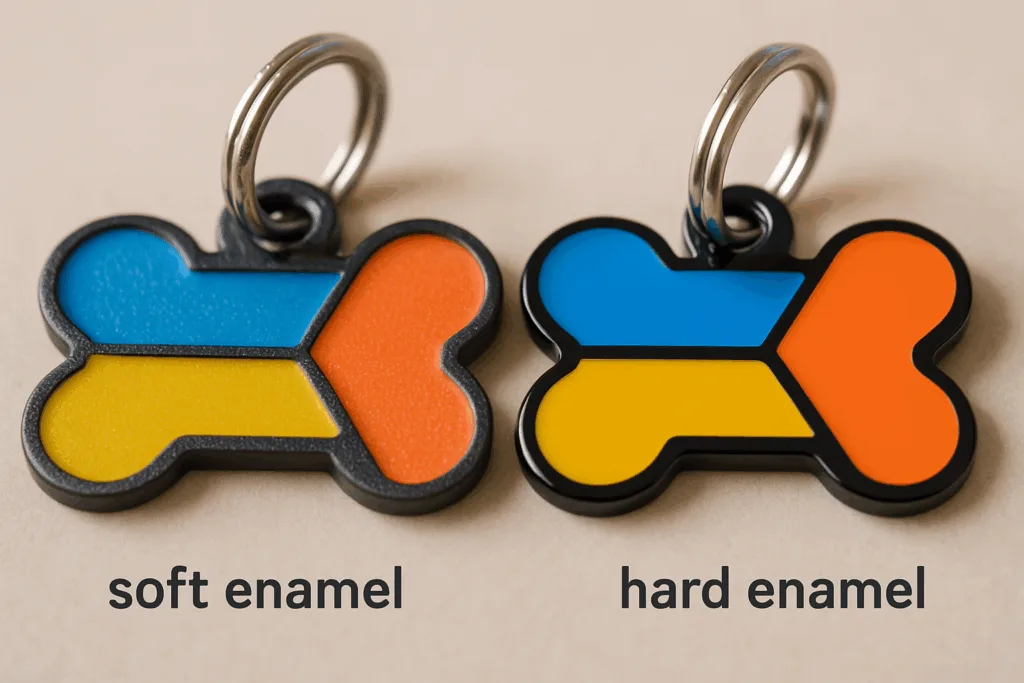
Soft enamel is poured into recessed areas on the metal tag, then baked to harden. The ridges (often metal lines) remain slightly raised above the enamel, creating tactile contrast and a vivid appearance. This technique excels at producing rich colors and defining borders with pronounced surface texture.
- Bold, pop-art effect with glossy finish
- Visible metal borders accentuate logo details
- More economical and popular for casual branding or bulk promo tags
Hard Enamel Structure
Hard enamel is layered and polished flush with the metal, resulting in a perfectly smooth finish—almost like glass. Each color is fired individually at high temperatures, then polished to merge seamlessly with the metal outlines.
- Sleek, jewelry-grade appearance
- Extreme durability and scratch resistance
- Ideal for upscale brands or items exposed to frequent wear
Comparative Table: Soft vs. Hard Enamel Dog Tags
| Feature | Soft Enamel | Hard Enamel |
|---|---|---|
| Finish | Textured, raised borders | Flush, smooth surface |
| Color Vibrancy | Rich contrast, deep shades | Brilliant, uniform colors |
| Border Definition | Visible, tactile lines | Sleek, integrated with enamel |
| Durability | Good (prone to surface wear) | Excellent (scratch-resistant) |
| Price Point | Budget-friendly | Premium |
| Best Uses | Mass promotion, casual branding | Luxe brands, frequent handling |
Line Borders: Impact on Design & Color Separation
Metal borders in dog tags define the colored shapes and prevent enamel bleeding, making them vital for crisp, brand-accurate logos. Softer borders favor bold designs, while tighter linework is essential for multi-color, complex insignias.
- Soft Enamel: Borders are more pronounced, highlighting each section.
- Hard Enamel: Borders recessed after polishing, giving a unified look.
- Minimum line width: 0.3–0.4mm ensures clean separation.
Expert Insight
“Line borders aren’t just aesthetic; they define color fields and ensure the tag survives actual use. If the border is too thin, colors bleed, and brand marks are compromised.” — Lead Engineer, UC Tag
Color Tolerance & Quality Control in Enamel Manufacturing
Delivering consistent color across hundreds or thousands of dog tags demands vigilant quality control. Sellers and brands expect that their Pantone-matched colors look identical under retail, office, and outdoor light. Manufacturing facilities employ several measures to guarantee this precision.
Design File Checks
- Vector artwork validation—AI/EPS/PDF files checked for color swatches and line integrity
- Pantone codes tagged in every color block
Mold Development & Die Casting
Molds are CNC-cut to exact shape, with test samples run to verify line width and detail. Die cast or zinc alloy tags require precise temperature and timing control to prevent warping.
Enamel Fill Process
- Soft enamel: Liquid pigment poured and leveled in each section
- Hard enamel: Sequential layer application and kiln firing for each color
QC Sampling & Spectrophotometer Testing
Random samples are tested each batch. Using spectrophotometer analysis, color deviations are marked and flagged for correction. Tags failing to meet tolerance are removed, ensuring uniform color delivery in bulk shipments.
Aging & Care of Enamel-Filled Dog Tags
A major concern for brands is how dog tags retain color and quality over time. Both soft and hard enamel offer longevity, but each responds differently to wear, exposure, and maintenance. Here’s how to keep enamel-filled tags looking their best for years.
Soft Enamel Aging
- Prone to surface scratches if handled roughly
- Some fading if exposed to prolonged sunlight or chemicals
Hard Enamel Aging
- Resistant to scratches, ideal for active applications
- Color remains vivid through daily use
Care and Cleaning Tips
- Wipe tags gently with a microfiber cloth to remove dust and oils.
- Avoid harsh cleaning agents (bleach, acetone) that can dull the finish.
- Store tags away from direct sunlight when not in use.
- If tags become tarnished, use a mild soap solution and a soft brush.
Longevity Standards
UC Tag adheres to industry abrasion and salt-spray guidelines (ASTM B117) during QC testing, ensuring tags withstand typical environmental exposure.

Finishes & Applications of Enamel-Filled Dog Tags
Finish selection plays a pivotal role in both branding and longevity. Electroplating options range from antique brass to gunmetal, rose gold, nickel, matte black, and chrome. Each finish influences final enamel appearance—antiques can enhance color contrast, while polished metals offer sleek, modern flair. Applications vary from branding accessories, pet identification, to organizational wear and luxury promotional pieces.
Comparative Table: Popular Finishes
| Finish | Visual Effect | Best Use |
|---|---|---|
| Antique Brass | Warm, vintage patina | Heritage fashion, pet tags |
| Nickel | Cool, classic shine | Corporate branding, campus wear |
| Gunmetal | Dark, industrial tone | Active gear, tactical brands |
| Chrome | Mirror-like polish | Premium gifts, jewelry applications |
| Rose Gold | Elegant, pinkish hue | Boutique luxury branding |
Applications Across Industries
- Apparel branding: logo nameplates, decorative accessories
- Pet ID: custom colored tags for kennel & personal use
- Promotional events: unique, memorable event tokens
- Industrial and security: serialized tags, coded identity plates
Enamel-Filled Dog Tags: Color Matching & Brand Consistency
For organizations committed to reliable branding, the journey from concept to finished dog tag demands collaboration with expert manufacturers. Ensuring accurate Pantone color match, selecting the appropriate enamel type, and enforcing quality safeguards are not optional—they are the backbone of brand trust and product excellence.
- Pantone-guided color mixing aligns every piece with your brand’s visual identity.
- Soft enamel suits textured, bold statement tags; hard enamel caters to premium, durable needs.
- Metal line borders and sharp QC ensure graphics remain crisp for years.
- Careful selection of metal finishes elevates perceived value.
UC Tag elevates this process with transparent QC, expert engineering, and tailored design support, empowering brands from fashion to industry to showcase their identity with genuine consistency and creativity.
Best Practices When Designing Enamel Dog Tags
Artwork Preparation
- Use vector graphics for sharp lines and predictable scaling.
- Specify Pantone colors in the design file for each region of enamel.
- Highlight minimum line thickness for metal borders (0.4mm recommended).
Pre-Production Sampling
- Request first-piece samples before bulk run, comparing finish and color tolerance.
- Review under multiple lights for color integrity.
Collaboration with Manufacturer
- Provide feedback early: adjust colors, finishes, or texture before final mold approval.
- Confirm plating method and enamel layering process.
Batch-to-Batch Consistency Checks
- For repeat orders, reference approved samples and maintain documentation of Pantone codes and finishes used for each project.
- Use photographic records and factory QC charts to flag any deviation.
Emerging Trends for Enamel Dog Tags
Multi-Process Tags
Mixing engraving, laser-cut patterns, and enamel fill offers multi-tone, dimensional branding effects.
Matte vs. Gloss Enamel
Matte enamel offers a subdued effect that pairs well with brushed metal, while gloss enamel amplifies vibrancy for event-focused promotions.
Textured Surfaces
Sandblast or stipple effects beneath enamel enable differentiated tactile experiences—especially popular in luxury accessories.
- 3D contours paired with hard enamel highlight logos
- Embedded QR codes for digital ID or brand activation
Frequently Asked Questions
What is the difference between soft and hard enamel on dog tags?
Soft enamel leaves a textured, slightly raised border around colored areas, providing vivid contrast but less surface durability. Hard enamel is polished flush with the metal lines for a sleek, glasslike finish that’s highly resistant to wear.
How do manufacturers ensure Pantone color accuracy on dog tags?
Manufacturers blend pigments according to Pantone codes and check final enamel under standardized lighting using spectrophotometers, correcting deviations before full production.
Can I use complex multi-color logos on enamel-filled dog tags?
Yes, as long as each color field has a defined metal border and adheres to minimum line width. Both soft and hard enamel allow intricate, multi-color designs with proper artwork preparation.
What is typical color tolerance for branded dog tags?
Professional manufacturers keep color tolerance within ΔE 1.5 or better, ensuring each batch matches brand specifications under various lighting conditions.
Will enamel-filled dog tags fade or scratch over time?
Hard enamel is highly scratch-resistant and preserves color long-term, while soft enamel may show wear or fading if mishandled but is suitable for moderate use and lower budgets.
How should I clean and care for enamel-filled dog tags?
Wipe with a microfiber cloth, avoid harsh chemicals, and store away from sunlight. For stubborn stains, use mild soap and a soft brush to maintain finish and vibrancy.