When disaster relief teams move fast, small identification details can prevent confusion. medical alert tags disaster relief organizations use should do more than carry a name; they should help volunteers communicate allergies, conditions, and emergency contact needs at a glance, even when the field is wet, loud, or poorly lit. For coordinators, the goal is to standardize that information without slowing deployment.
For organizations planning durable medical alert tag customization options, the real challenge is matching the tag format, marking method, and attachment style to field conditions. At UC Tag, we build custom metal tags for fast visual identification, sample approval, data handling, and bulk production, so the final tag supports both volunteer safety and team coordination.
How Medical Alert Tags Disaster Relief Teams Use in the Field
In disaster response, volunteers often split into teams, move through crowded staging areas, and work alongside unfamiliar partners. A tag helps answer a simple but important question: who is this person, what health detail matters right now, and how should another responder reach the right contact if needed? That is especially useful when a wristband, badge, or lanyard tag can be seen faster than opening a phone or searching a roster.
We treat these tags as part of the response system, not a decorative add-on. That is why disaster relief organizations should think about placement, size, and legibility before they think about artwork. A field tag only works if the information can be read in seconds and remains accurate through the full assignment cycle.
That also means the tag should fit the coordination plan. If a volunteer rotates between site cleanup, meal distribution, and transport support, the visible information may need to show a role identifier plus a limited medical note, while the full record stays in a secure roster. This keeps the tag useful without turning it into an overcrowded card.
For teams building a more structured workflow, OSHA’s emergency action plan, accountability procedures, and field coordination for volunteer teams is a useful reminder that identification tools work best when they support clear roles, check-in routines, and communication paths.
The Safety Problems Volunteers Face in the Field
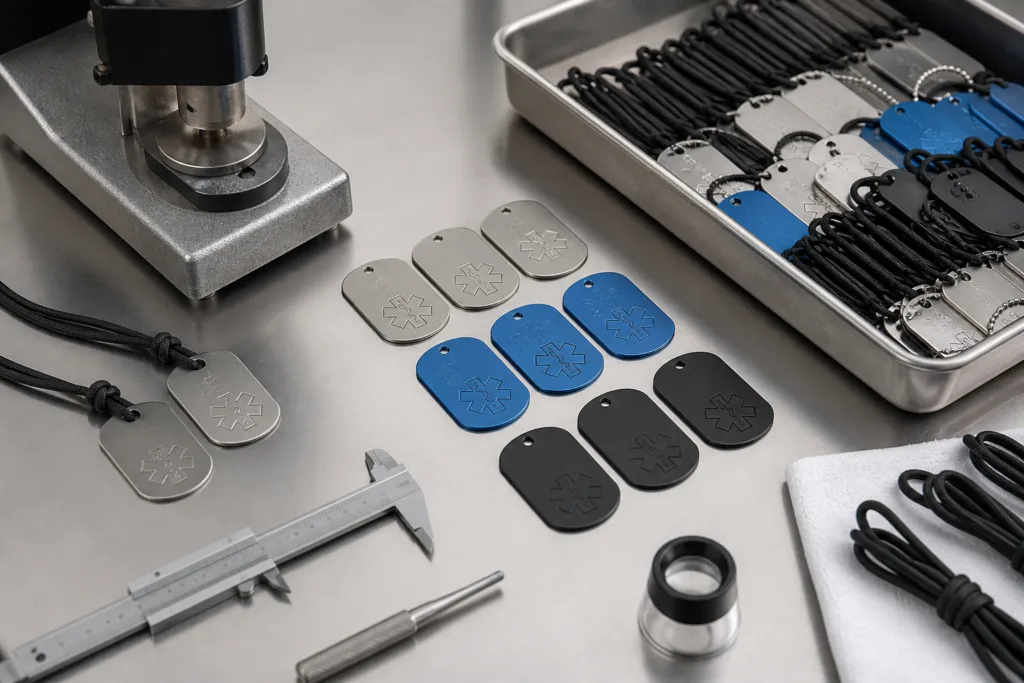
Disaster relief volunteers face a mix of physical and organizational risks. Heat, fatigue, rain, dust, mud, repeated lifting, and long shifts can make it harder to notice symptoms or communicate them quickly. At the same time, coordinators may be managing new arrivals, temporary teams, and limited visibility. A medical alert tag helps reduce delay when a volunteer has an allergy, medication issue, mobility limit, or another condition that matters during response.
Another problem is information drift. A volunteer may fill out a paper roster, wear a generic badge, and still need to communicate updated medical information that is not obvious from the badge alone. A good tag does not replace intake forms or health checks; it gives responders the fast cue they need before a longer conversation happens.
From a practical standpoint, the biggest failure is not usually the absence of a tag. It is the use of a tag that is too small, too glossy, too generic, or too dependent on print that fades. In stressful field settings, visibility and durability matter more than decorative detail.
What a Disaster Relief Medical Alert Tag Should Show
The rule we recommend is simple: keep the tag readable in one glance and keep the highest-risk information first. The tag should not try to store every possible detail. Instead, it should show the details that change immediate response decisions.
| Priority | Recommended Content | Why It Helps |
|---|---|---|
| 1 | Medical condition or allergy | Helps responders avoid the most likely risk first |
| 2 | Medication note or blood type if the organization requests it | Supports fast triage when the volunteer cannot explain it directly |
| 3 | Emergency contact or response number | Speeds escalation without searching through a phone |
| 4 | Role identifier or team name | Helps coordinators place the volunteer correctly in the field |
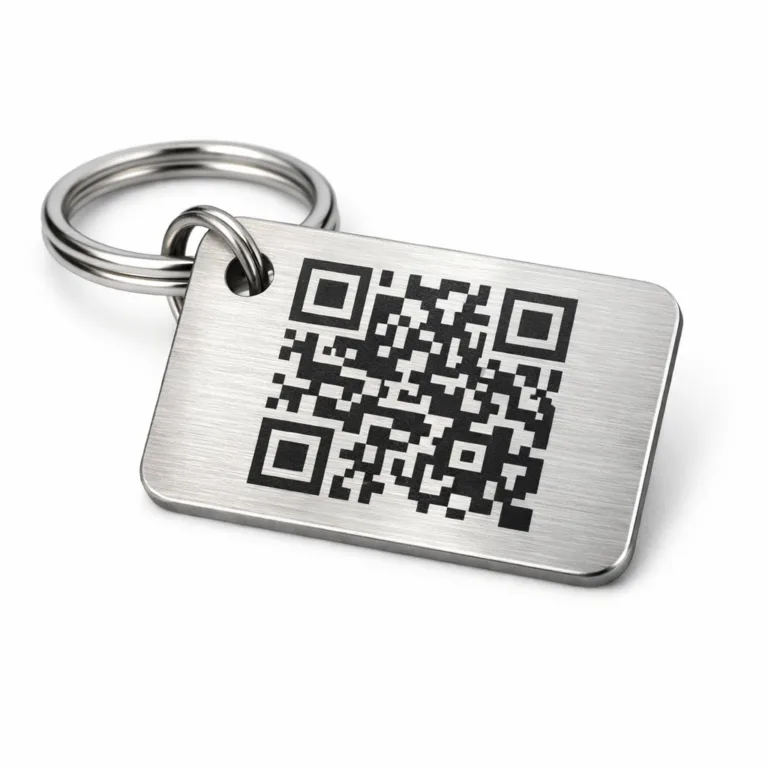
When a team wants a clearer contact path, emergency contact bracelet tag solutions are useful because they keep the front-of-tag message short while still linking the wearer back to a real contact workflow. If QR codes or serial numbers are added, the printed or engraved data should still make sense without scanning.
A useful habit is to separate what must be visible from what can live in a roster. For example, a tag might show ‘Penicillin Allergy’ and a coordinator code, while the full contact sheet stores address, phone, and internal notes. That approach protects clarity and reduces the chance of crowding the surface with too many lines.
Best Tag Formats for Volunteer Field Use
There is no single format that fits every deployment. The right choice depends on how volunteers dress, how often they change roles, and whether the tag must stay on the body or on equipment. The main goal is to keep the information visible where people will actually look for it.
| Format | Best Use | Pros | Watchouts |
|---|---|---|---|
| Wearable bracelet-style tag | Volunteers who need always-on identification | Visible, familiar, easy to check quickly | Must fit comfortably during long shifts |
| Lanyard or badge-style tag | Staging, registration, and indoor coordination | Easy to issue and replace, good for role labels | Can swing, twist, or get covered by outerwear |
| Equipment-attached tag | Tool kits, medical bags, radios, and transport gear | Works when personal wear is restricted | May not be seen if the gear is set aside |
| Badge-plus-tag combination | Large teams with both identity and medical needs | Can separate role ID from health note | Needs a clear design rule to avoid clutter |
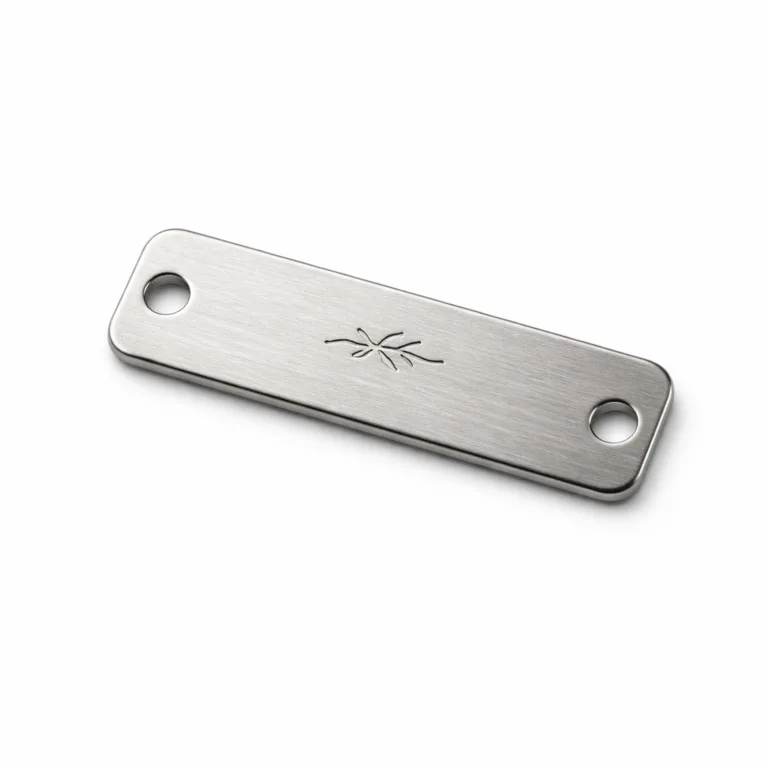
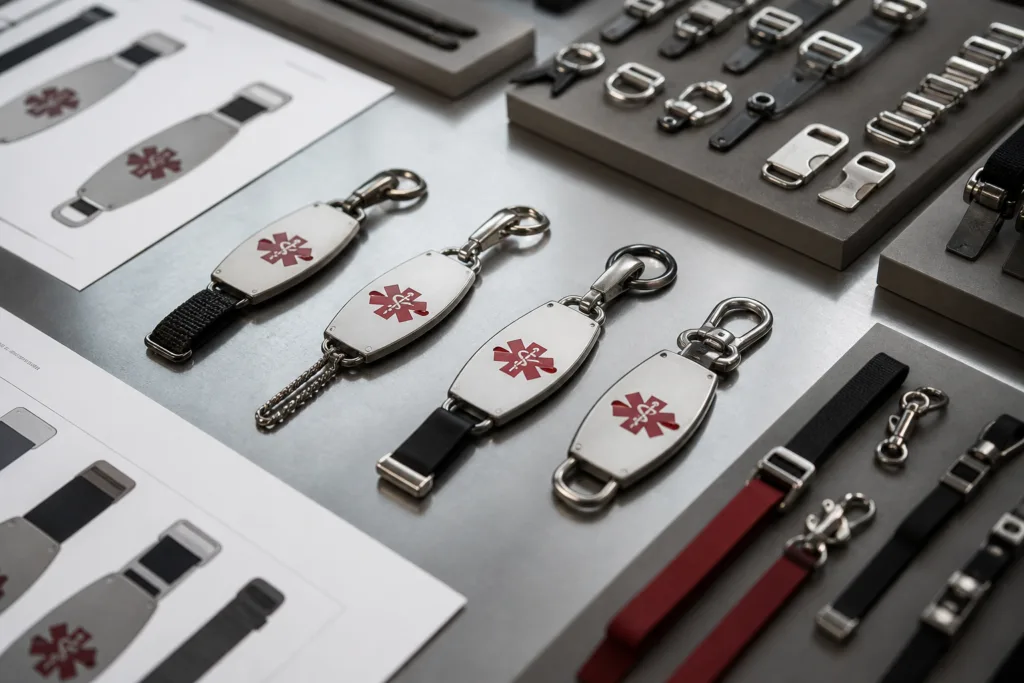
For organizations that want a rugged wear format, that style can be adapted for field use by adjusting thickness, hole position, and edge finish so the tag sits flat and does not snag on clothing or gear. The important point is not the name of the format but whether people can read it quickly under stress.
In many relief operations, a mixed system works best. Wrist or lanyard tags carry the urgent message, while equipment tags or roster cards hold the backup detail. That gives coordinators more flexibility without forcing every volunteer into the same format.
Best Materials for Harsh Field Conditions
Field use changes the material conversation. Rain, mud, abrasion, repeated disinfecting, salt exposure, and heat all affect readability and attachment. For that reason, we usually narrow the choices to stainless steel, aluminum, anodized aluminum, and brass, then match the final substrate to the environment and the marking method.
We also look at durability, legibility, adhesion, and environmental resistance requirements the same way we would for an industrial label. The point is not to copy a lab test into a field tag project. The point is to make sure the tag still performs after moisture, handling, and real-world abrasion.
| Material | Strengths | Best Fit |
|---|---|---|
| Stainless steel | Strong, corrosion-resistant, reliable in wet conditions | Outdoor response, marine-adjacent sites, heavy handling |
| Aluminum | Lightweight, economical, easy to customize | High-volume volunteer programs and lightweight wearables |
| Anodized aluminum | Color contrast, surface protection, good readability | Tags that need visual sorting and improved wear resistance |
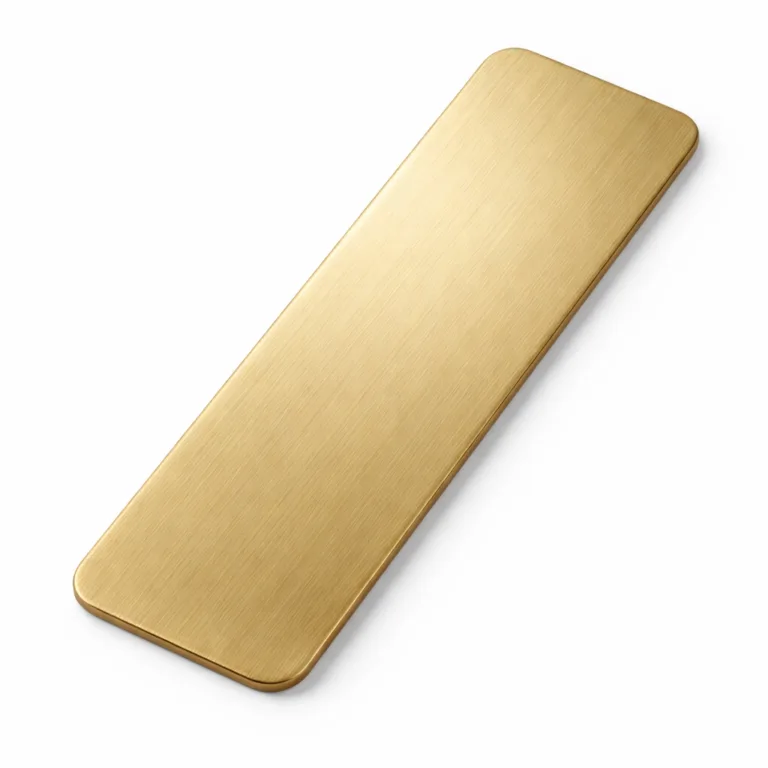
| Brass | Solid feel, strong engraving appearance, classic look | Programs that want a more permanent, premium-style identification tag |
Material choice should also reflect cleaning habits. If a tag will be wiped repeatedly or exposed to disinfectant, the finish and marking depth matter as much as the base metal. A thin printed layer may look fine at first, but a deeper mark or more stable surface finish is often the safer long-term choice.
Marking Methods That Stay Readable
For disaster relief use, we care less about decoration and more about contrast, permanence, and scannability. The best marking method is the one that keeps information clear when the tag is scratched, wet, or under harsh light.
If the project uses engraved tag marking options, the buyer gets a simple advantage: the information is physically cut into the surface or made to stand out with a durable finish, which usually holds up better than surface ink in repeated use. Etching can also work well when the design needs fine detail or a smaller footprint. Stamping is useful when the identity needs a strong mechanical mark. Printed surfaces can work, but they need closer attention to wear, chemical exposure, and topcoat protection.
| Method | Good For | Trade-Off |
|---|---|---|
| Laser engraving | Clear text, serial numbers, QR codes, and clean contrast | Needs a well-planned layout and suitable substrate |
| Chemical etching | Fine detail and permanent marking on selected metals | May need fill or finish control for higher contrast |
| Stamping | Strong, direct identity marks | Less flexible for very dense layouts |
| Screen or UV printing | Color coding or layered information | Must be checked carefully for wear and cleaning resistance |
For many disaster relief programs, a combination works best. For example, the main medical note can be laser engraved, while a secondary color or icon supports fast sorting. The key is to keep the primary information permanent and the optional information limited.
Readability Under Stress, Wet Conditions, and Poor Lighting
A tag that looks fine on a desk can fail in a muddy staging area if the font is too small, the contrast is too low, or the layout is too dense. Readability is not just a design issue; it is a field performance issue.
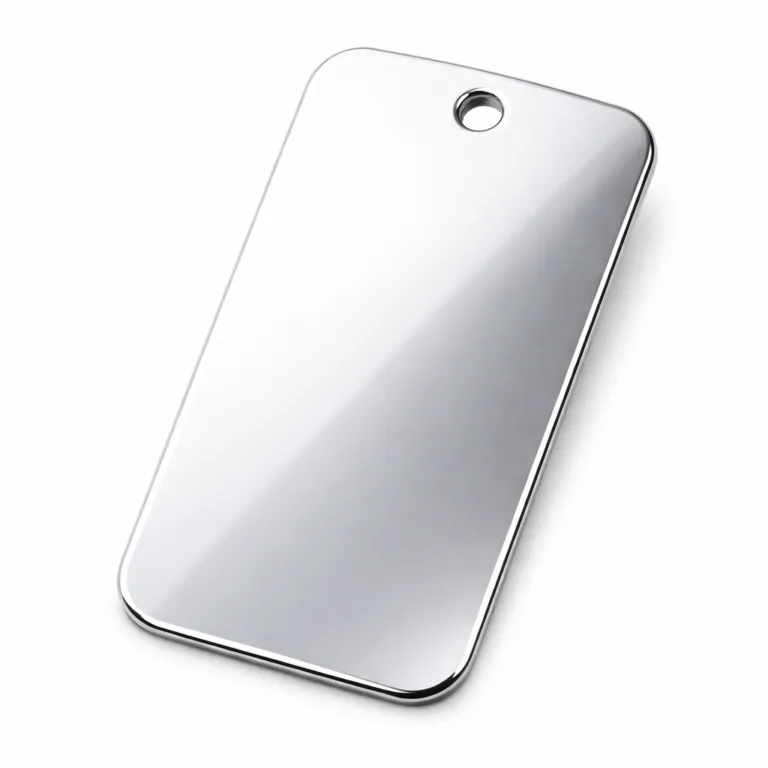
We usually recommend three design rules. First, keep the most important line largest. Second, use enough spacing so the eyes can separate one line from the next. Third, avoid shiny finishes that create glare under direct light or flashlight beams. If a volunteer has to turn the tag twice before reading it, the layout is already too complicated.
QR codes and barcodes can help with deeper data, but they should never replace the human-readable line. If the code is dirty, folded, or scanned in a hurry, the text must still be enough to act on. That is especially important when the tag is used during nighttime work or in rain.
Also think about color. High-contrast combinations tend to work better than subtle decorative colors in field conditions. For anodized aluminum, contrast should be checked after the color process, not assumed from the artwork screen. In a relief setting, a clean visual hierarchy usually beats a busy layout every time.
Attachment Choices for Active Field Work
The attachment method is often the part that causes the first problem in the field. A tag can have the right message and the wrong hardware. If it falls off, rotates constantly, or catches on equipment, the whole system becomes less useful.

Hole-punched tags are a common choice because they are simple, durable, and easy to pair with chains, clips, rivets, or cords. Lanyards are useful for staging and temporary identification, while chains and screw attachments are more secure for equipment or fixed locations. Adhesive-backed options can work for smooth surfaces, but they should be chosen carefully when the tag must survive heat, moisture, or repeated cleaning.
We suggest matching the attachment method to the task, not to the cheapest hardware available. A volunteer moving through debris may need something different from a logistics coordinator working at a registration table. If the tag is worn on clothing, test whether it twists, lifts, or gets covered by layers.
Data Accuracy, Privacy, and Update Workflows
A medical alert tag is only useful if the data is correct. That sounds obvious, but in real projects the data often changes after intake. Allergies are updated, emergency contacts change, and role assignments shift from one deployment to the next. The organization needs a simple review process before each issue cycle.
We recommend separating three data layers. The first layer is what must be on the tag. The second layer is what can be stored in the volunteer roster or secure internal system. The third layer is what gets reviewed before reissue. This keeps the tag from becoming a catchall for every piece of personal information. It also protects privacy by reducing unnecessary exposure.
In a field program, a tag should help the responder decide what to do next, not expose more private detail than needed. That is why the wording should be short, standardized, and easy to verify. If the team uses serial numbers, those numbers should be cross-checked against a current roster before shipment.
For response programs that need stronger monitoring discipline, OSHA’s emergency action plan, accountability procedures, and field coordination for volunteer teams are a good reminder that the tag sits inside a larger process of check-in, tracking, and communication. The hardware matters, but the workflow matters just as much.
How Volunteer Coordinators Can Standardize Tags Across Teams
Standardization is where many organizations gain the most value. When every team uses a different tag size, font, or color, field staff spend extra time decoding what they are seeing. When the format is standardized, the message becomes faster and calmer to read.
At UC Tag, we see better outcomes when coordinators define the structure before artwork is submitted: one agreed tag size, one data hierarchy, one attachment style for each role, and one approval rule for edits. That may sound rigid, but it actually makes deployment easier because the team knows exactly what to expect.
A good standard also reduces rework. If the same medical note needs to be used across volunteers, staff, and mutual-aid partners, the organization can keep one core layout and vary only the name, serial number, or color band. That helps with procurement planning, packaging, and replacement orders later.
What to Confirm Before Bulk Production
Bulk production goes more smoothly when the buyer confirms the details early. We usually ask for the final wording, the data file format, the material preference, the finish, the hole position, the attachment method, and the sample approval path. If any of those items change late, the project can still move forward, but lead time and cost control become harder.
That is where custom metal tag manufacturing support becomes practical rather than promotional. A manufacturer can help align artwork, marking depth, packaging, and QC checkpoints so the order is repeatable instead of improvised. For disaster relief teams, repeatability matters because the next deployment may need the same tag style with only updated data.
If the organization expects to order in cycles, it is smart to keep a master layout on file. That way, replacements can be issued quickly without rebuilding the tag from scratch. It also makes it easier to handle private label packaging, bilingual instructions, or multi-team distribution.
Common Mistakes to Avoid
- Using too much text and making the tag hard to read in motion or low light.
- Choosing a finish that looks good in photos but creates glare in the field.
- Ignoring attachment wear, especially on tags that will be moved, washed, or disinfected often.
- Mixing public-facing tag data with internal roster data instead of separating the two.
- Skipping sample approval when the project involves serial numbers, QR codes, or multiple volunteer groups.
- Assuming one material will work for every environment without checking moisture, abrasion, and cleaning needs.
A lot of these issues are small on paper and expensive later. The good news is that most of them can be avoided by asking the right questions before artwork approval. Once the layout is locked, the team can focus on deployment instead of corrections.
Buying Checklist for Bulk Orders
Before placing a bulk order for medical alert tags disaster relief teams will use, it helps to run through a short checklist:
- Confirm the tag format for wear, lanyard, or equipment use.
- Choose the substrate based on weather, abrasion, and cleaning exposure.
- Set the information hierarchy so the most important detail appears first.
- Decide whether the mark should be engraved, etched, stamped, or printed.
- Verify attachment hardware, hole placement, or adhesive backing.
- Approve a sample before mass production, especially for data-driven orders.
- Plan how replacements and updates will be handled after deployment.
For teams comparing suppliers, it also helps to request pre-production sample planning for bulk orders and confirm how the sample will relate to the final run. A sample is not just a formality. It is the easiest way to check legibility, fit, color, and marking consistency before a large shipment moves forward.
If the tags will be used outdoors or near wet cleanup areas, buyers should also think about corrosion resistance and surface wear. corrosion resistance testing for outdoor tags and tag material choices for scratch resistance are both useful references when the field environment is rough and the tag needs to stay readable.
For fast approval cycles, many organizations also keep standard sample options for custom tags on hand so coordinators can compare size, finish, and marking style before placing the full order. That can save time when multiple departments need to sign off.
Conclusion
Medical alert tags disaster relief teams rely on should be simple, durable, and easy to standardize. The best tag is not the one with the most detail; it is the one that gives responders the right information fast, survives the field, and fits the volunteer workflow without adding confusion.
When the material, marking method, attachment, and data workflow are aligned, the tag becomes a practical safety tool instead of a loose accessory. That is the real goal for disaster relief organizations: better coordination, less hesitation, and clearer communication when conditions are moving quickly.
From a manufacturer’s perspective, the strongest projects are the ones where the buyer defines the use case early and keeps the layout disciplined. If you do that, the tag can support safety across many deployments, not just one event.
FAQs
What should a disaster relief medical alert tag display first?
The first line should show the detail that changes immediate response, usually a condition or allergy. If space allows, add a second line for medication notes, blood type, or an emergency contact reference. Keep the tag short enough that someone can read it in a few seconds.
Which material works best for wet or abrasive field conditions?
Stainless steel is a strong choice for harsh conditions, while anodized aluminum can work well when you need lightweight tags with better surface protection. Aluminum and brass can also be useful, but the final choice should match the amount of moisture, rubbing, and cleaning the tag will face.
Is engraving better than printing for volunteer tags?
In many field projects, yes. Engraving usually offers better long-term readability because the mark is more permanent than surface ink. Printing can still work for some layouts, but it needs more attention to wear, moisture, and chemical exposure.
How should organizations handle medical data updates and privacy?
Keep only the most important information on the tag and store the rest in a secure roster or internal system. Review the data before each issue cycle so old allergies, contacts, or role changes do not carry over into a new deployment.
What attachment method is most reliable for active disaster response?
Hole-punched tags with a secure chain, clip, or lanyard are often the most practical because they are simple and durable. The best choice depends on whether the tag is worn on the body, clipped to clothing, or attached to equipment.
How can we order medical alert tags in bulk without slowing deployment?
Standardize the layout first, approve a sample, and keep the data format consistent across teams. That makes reorders faster, reduces production errors, and helps the organization replace or update tags without reworking the full design.