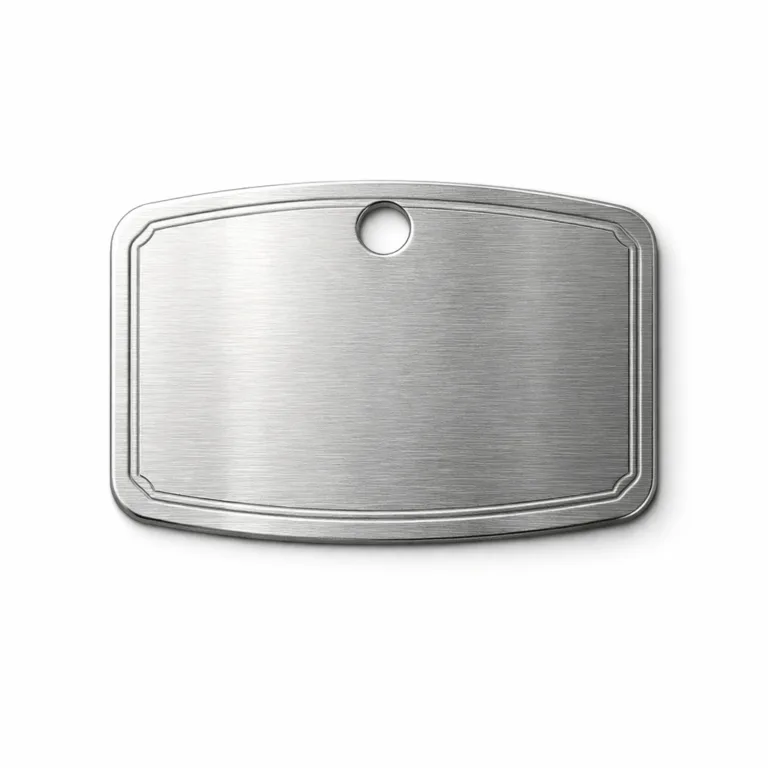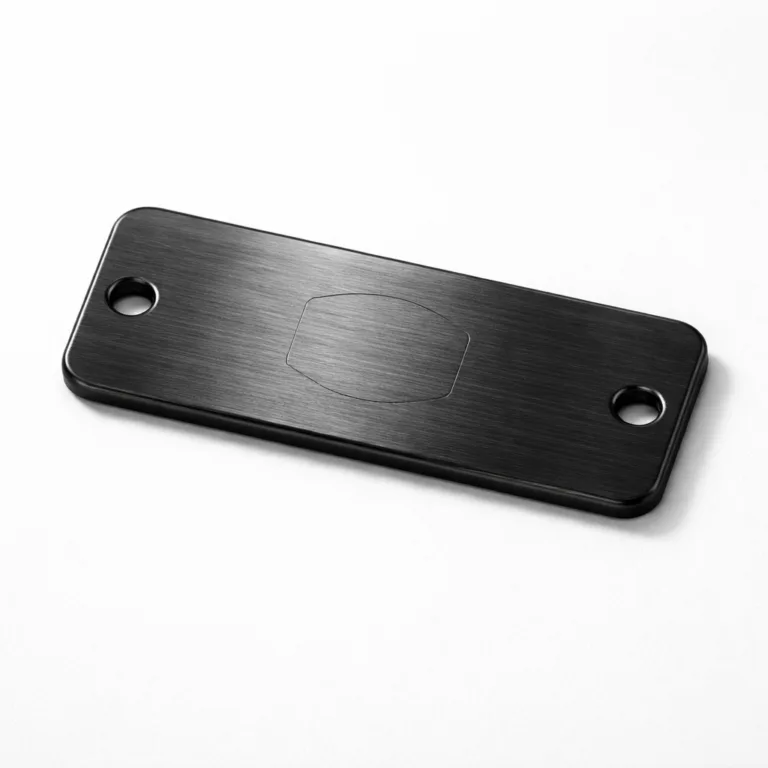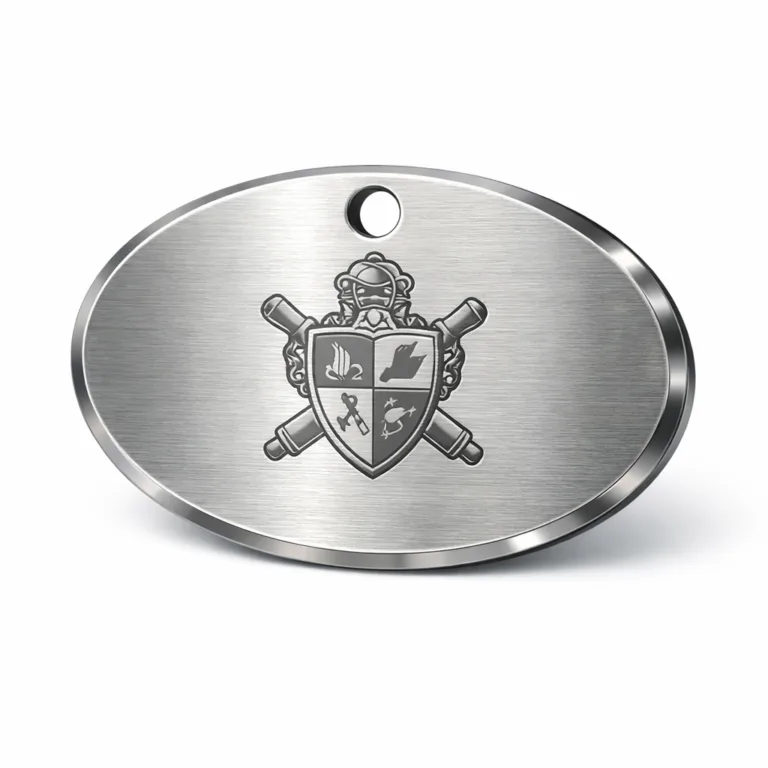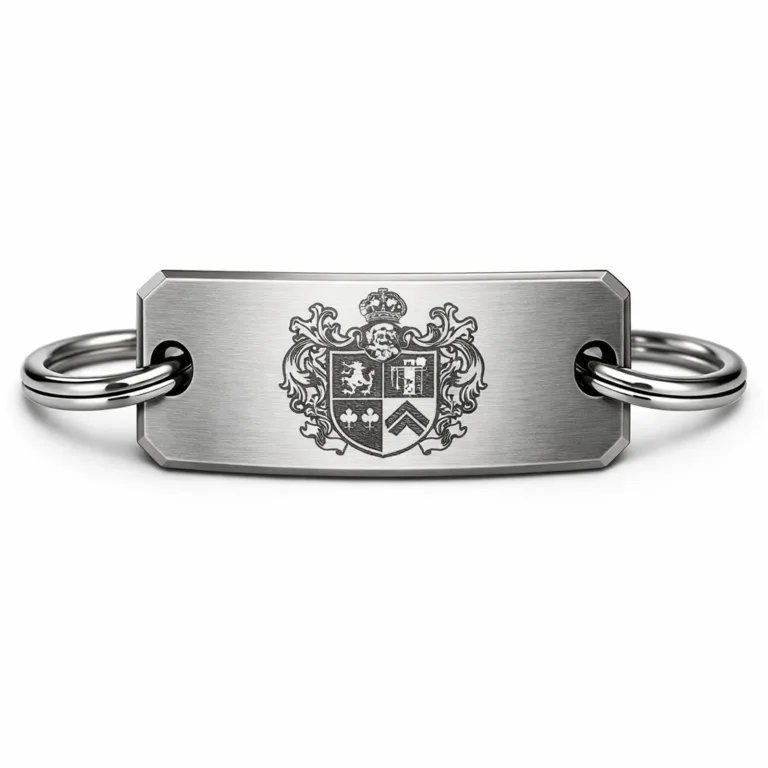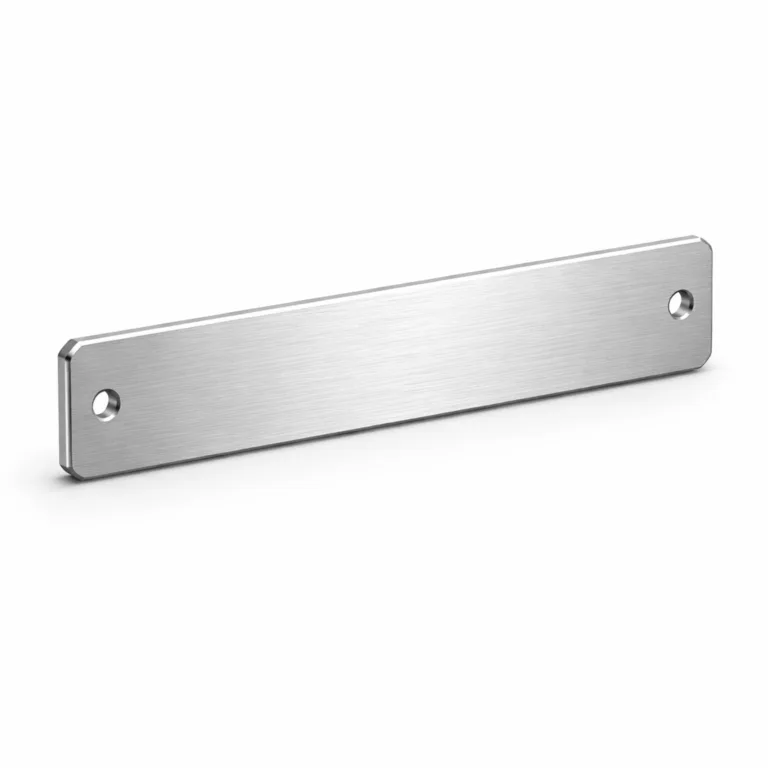
For alumni associations, university crest metal tags can do more than mark a graduation event. When they are designed well, they become graduation memorabilia that carries identity representation, school memory, and a sense of belonging that lasts after the ceremony ends. The value is not only in the mark itself, but in how the metal, finish, shape, and personalization work together to reflect the institution.
If a program needs a practical starting point, our custom metal tag manufacturing solutions page is a useful bridge between the idea and the production process. It shows the kind of planning that matters most for alumni orders: crest artwork cleanup, metal selection, engraved or embossed detail, attachment choice, sample approval, and bulk production consistency.
What University Crest Metal Tags Mean for Alumni Associations
A university crest is not just decoration. It carries institutional history, approved symbolism, and the kind of visual language that alumni immediately recognize. In university brand guidance, formal crest and seal usage is treated as a meaningful sign of institutional identity, which is why a crest-based metal tag can feel more ceremonial than a generic souvenir. When the mark is translated into metal, it gains weight, texture, and durability that match the idea it represents.
For alumni associations, that matters because a commemorative item is often expected to do more than look attractive for one event. It should signal that the graduate is part of a wider community with shared values, shared experiences, and a visible link to the campus. That is why university crest tags are often used as graduation memorabilia, reunion keepsakes, donor gifts, and membership tokens rather than ordinary promotional giveaways.
Brand consistency also matters. University brand guidance for alumni groups often emphasizes that alumni are long-term ambassadors of the institution, which makes approved mark usage important when creating keepsakes or recognition pieces. A crest tag should therefore feel aligned with the school’s formal identity, not improvised or overly decorative. That is where careful artwork review and a manufacturer who understands institutional work become important.
Why Graduation Memorabilia Still Matters After the Ceremony
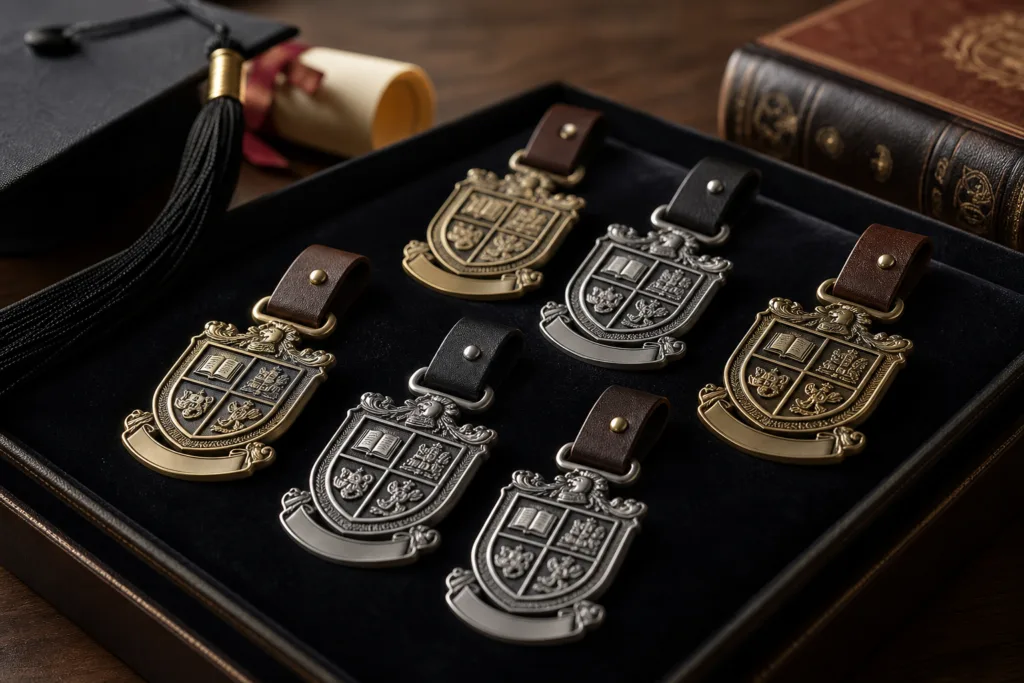
Graduation is a short event, but the emotional value attached to it can last for years. Good graduation memorabilia helps preserve that moment in a form that is easy to keep, display, or carry. For alumni associations, the aim is not simply to hand out a token. The aim is to create a physical reminder of membership in a community that continues after the degree is awarded.
Metal tags work well here because they sit between presentation object and practical identification piece. They can be small enough for a welcome kit, substantial enough for a framed display, and durable enough to survive daily handling. That flexibility gives alumni programs more options than paper gifts or fragile collectibles. A well-made tag can be presented at a ceremony, mailed with a welcome package, or included in a reunion set without feeling out of place.
There is also a symbolic reason these pieces remain useful. Alumni often want something that feels official but still personal. A crest tag can bridge that gap. It carries the language of the university, but it can also include class year, name, department, or a motto that makes it specific to one graduating group. That combination of shared identity and individual recognition is what makes the object meaningful rather than generic.
Common Design Styles for University Crest Tags
There is no single correct way to present a university crest. The right style depends on how formal the institution wants the piece to feel and how much room the artwork needs. For teams that want a starting point, custom crest tag design options help translate a school mark into a shape that can work for ceremonies, alumni packs, and recognition programs without losing clarity.
| Design style | What it communicates | Best use case |
|---|---|---|
| Emblem | Balanced, official, and easy to recognize | General alumni gifts and welcome kits |
| Shield | Traditional, formal, and heritage-focused | Graduation memorabilia and donor recognition |
| Seal | Institutional and ceremonial | Milestone awards and special events |
| Monogram | Minimal and compact | Smaller tags or simple packaging sets |
| Custom symbolic layout | Flexible and brand-specific | Programs that need a modern institutional look |
Shape matters as much as the artwork inside it. A crest can look crowded if it is forced into the wrong outline, and it can look too loose if the border is oversized. When the seal leans formal or the shield needs balanced proportions, a crest shape and heraldry design guide can help teams think through the relationship between border, icon, text, and empty space before the sample stage.
From a manufacturing perspective, the best-looking university crest tags are usually the ones that simplify the layout just enough to protect legibility. A small amount of cleanup around lines, strokes, and small text often improves the final result. That is especially true when the piece will be viewed from arm’s length, handled often, or photographed during a graduation event.
Material and Finish Choices for Premium Graduation Memorabilia
Material choice changes more than appearance. It affects weight, corrosion resistance, color options, and how formal the finished tag feels in the hand. For long-service keepsakes, stainless steel durability and corrosion resistance are important because the material and finish together influence how well the piece holds up in storage, display, or outdoor use. When the goal is a keepsake that should still look presentable years later, the material decision deserves as much attention as the artwork.
Stainless steel gives a clean, durable look and is often a strong fit for institutional pieces that need a serious, long-lasting feel. Aluminum is lighter and easier to use in larger campaigns, especially when the association wants to keep the piece comfortable for packaging, mailing, or event handouts. Brass has a warmer, more ceremonial tone and is often used when the university wants a premium presentation. Anodized aluminum can work well when school colors need to show through the finish in a controlled way.
| Material | Visual effect | Buyer note |
|---|---|---|
| Stainless steel | Clean, formal, modern | Good for long-term use and outdoor exposure |
| Aluminum | Light and versatile | Useful for larger orders and color-sensitive designs |
| Brass | Warm and ceremonial | Strong fit for premium presentation pieces |
| Anodized aluminum | Color-rich and controlled | Helpful when school colors are part of the design |
Finish choices matter just as much. Polished surfaces can look elegant but may show wear faster if the tag is handled often. Matte and brushed finishes reduce glare and can improve readability for small text. Plated effects can help create a more formal presentation, but they should be selected carefully so the finish supports the university brand rather than overpowering it. The practical question is not which finish looks attractive on a sample board, but which finish still looks right after the tag has been used, carried, or displayed for years.
How Alumni Tags Support Identity and Engagement
Alumni programs work best when the item in the box feels connected to a bigger relationship. A crest tag can support that relationship because it is both symbolic and usable. It can be placed in a welcome packet for new graduates, used as part of reunion registration, presented to donors, or included in a membership program for alumni chapters. In each case, the tag gives the recipient a physical reminder of membership in the institution’s story.
That is also why alumni associations often treat branded keepsakes as part of their engagement strategy rather than as one-time gifts. A tag can help make an event feel official, make a welcome package feel complete, and make a reunion feel more intentional. If a piece is designed with enough care, alumni are more likely to keep it, show it, or pass it along as part of their personal school history.
There is a practical side as well. A good alumni token is easy to package, easy to ship, and easy to explain to the recipient. It does not need to be large to feel valuable. It only needs to feel authentic, well-made, and relevant to the group that receives it. That is where the university crest does most of the work: it gives the piece a clear reason to exist.
Personalization Options for Alumni Programs
Personalization is often what turns a standard crest tag into a keepsake. Common options include names, graduation year, department, motto, chapter name, event date, or sequential numbering for controlled distribution. If an association wants to see how personalized lettering can be integrated into a compact metal format, engraved metal personalization options are a helpful reference for thinking about spacing, line weight, and readability.
- Name personalization can make each graduate feel individually recognized.
- Graduation year helps the piece become a clear memorabilia item.
- Department or faculty text can support internal grouping.
- Sequential serial numbers help with tracking and controlled distribution.
- Short mottos or slogans can add meaning without crowding the layout.
The main production issue is not whether personalization is possible. It is whether the data is clean, consistent, and confirmed early enough to avoid mistakes. Long names, multiple title formats, and mixed capitalization can create spacing issues if they are not reviewed before sampling. A good manufacturer will ask for a final data sheet, confirm line breaks, and check whether the personalization should be engraved, etched, or printed.
How Metal Tags Fit Into Alumni Association Programs
University crest tags can support several different program goals, and the right use case often depends on the audience. Welcome gifts for new graduates should feel celebratory and easy to carry home. Reunion keepsakes should feel nostalgic and durable enough to survive long-term storage. Donor recognition pieces may need a more formal presentation and a higher-end finish. Membership tokens for alumni chapters should be compact, recognizable, and easy to distribute in volume.
These uses are different, but they share one requirement: the crest must feel appropriate in the setting where it is presented. A reunion piece may tolerate a more decorative border. A donor recognition piece may need a stronger material or a more refined finish. A welcome gift may work best with lighter weight and clean packaging. The manufacturer should therefore think about the association’s program, not just the art file.
In our view, the best alumni projects are the ones where the tag is planned as part of a communication system. The object should support the message of the event, the identity of the institution, and the way the association wants the recipient to feel when they open the package. That is why format, size, and presentation matter as much as the crest itself.
Design Details That Protect Readability and Display Value
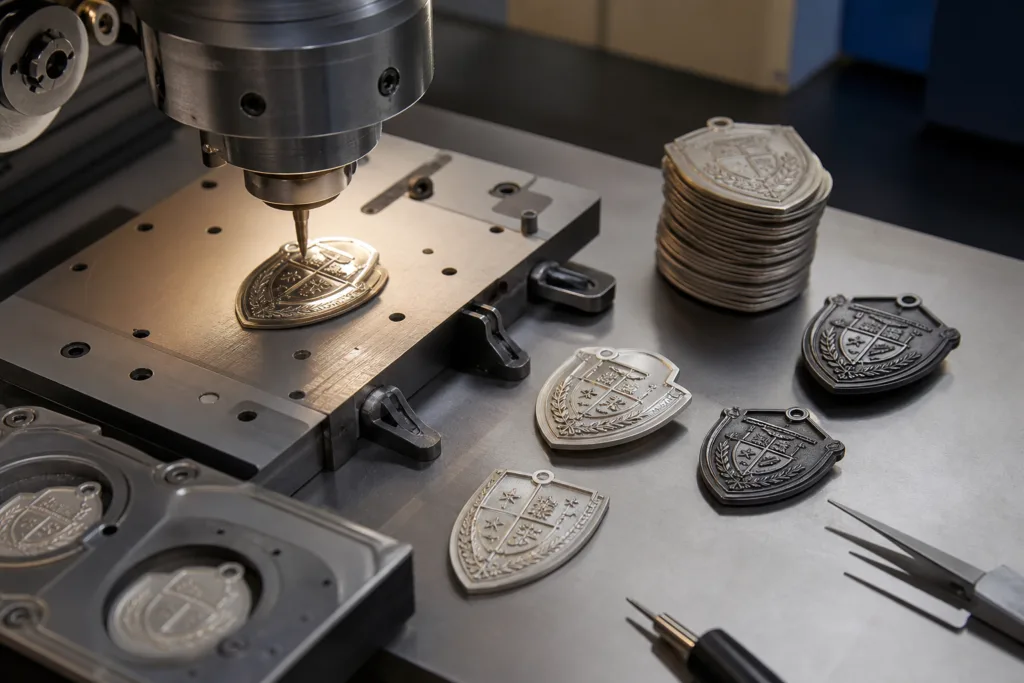
Small design choices can create big problems if they are not checked early. Readability is usually the first issue. A university crest may contain fine lines, small text, or layered symbols that look clear on screen but become difficult to reproduce at tag size. If the text is too small or the border too thin, the final piece can lose contrast and look less official.
Thickness also matters. A tag that is too thin may feel light or less durable, while one that is too thick may be uncomfortable for carrying or attachment. Hole placement should be planned together with the layout so the attachment does not cover important details or shift the tag off balance. Edges should be smooth and consistent, especially when the tag will be handled by many graduates at one event.
Attachment choice should match the actual use case. Wire, chain, rivet, screw, or adhesive backing all solve different problems. A display piece may need a different attachment than a tag designed to hang from a bag, a lanyard, or a presentation card. For alumni associations, the most practical question is simple: how will the recipient actually keep or display the item after the event?
Visibility is also tied to contrast. A matte background with raised or engraved detail can help the crest stand out. A polished finish may look elegant, but if it hides the artwork under glare, the design loses clarity. The goal is always the same: make the symbol readable, honorable, and durable enough to keep representing the school.
Planning a Successful Alumni Tag Campaign
Campaign planning should begin with the audience, not the artwork. An association may be serving all graduates, only a specific class year, a donor group, or a regional chapter. Each audience changes the quantity, packaging, and personalization strategy. A large graduate class may need a simpler version with lower per-piece handling. A donor set may justify more elaborate finishing and presentation.
The project timeline should be mapped backward from the event date. If the tags need data personalization, the association should allow time for file collection, proof review, sample approval, and any revision cycle. If packaging is part of the program, that also needs to be confirmed early because box size, insert cards, and labeling can affect lead time.
At UC Tag, we usually recommend treating alumni orders like institutional projects rather than standard souvenirs. That means confirming the crest artwork, material, finish, personalization rules, attachment method, quantity split, and packaging plan before the production file is locked. When those details are clear, the order is easier to schedule and easier to control.
- Confirm audience segments before finalizing quantity.
- Approve the crest artwork before discussing finish details.
- Set a personalization format before data collection begins.
- Choose packaging early if the tag is part of a gift set.
- Leave time for sampling if the tag is tied to a formal event.
Production and Quality Factors for Institutional Orders
Institutional orders need consistency. One of the most common problems in alumni projects is assuming that a design will scale automatically from one sample to hundreds or thousands of pieces. In practice, the artwork file, the cutting method, the finishing process, and the inspection steps all affect consistency. A manufacturer should review the crest file, check line thickness, confirm text size, and make sure the chosen process supports the intended detail level.
Sample approval is especially important when the project includes a university crest. The sample is not just a product check. It is the point where the association can confirm that the symbol feels official, the proportions are correct, and the finish supports the intended tone. If there is a mismatch, it is much easier to correct it before mass production begins.
Quality control should cover more than appearance. It should also confirm hole position, edge condition, attachment fit, and personalization accuracy. If serial numbers are part of the order, the sequence should be checked before production and again during packing. If gift boxes or private label packaging are included, those items should be verified as part of the same order, not treated as an afterthought.
Lead time is usually shaped by artwork readiness, sample approval, production method, and packaging complexity. A simple order can move quickly once the file is approved. A more ceremonial alumni program with multiple versions, custom packaging, and serialized names will naturally need more planning. The best results come from giving the manufacturer complete information early, so the schedule is realistic from the start.
What to confirm before mass production
- Final crest artwork and approved layout
- Tag size, thickness, and hole position
- Material, finish, and edge treatment
- Personalization data and numbering rules
- Attachment method and packaging format
- Sample approval and final QC checkpoints
Common Mistakes to Avoid
Many problems in alumni tag projects come from small oversights rather than major design failures. One common mistake is using a crest file that is too detailed for the chosen tag size. Another is choosing a finish that looks impressive in a mockup but becomes hard to read in real use. A third is skipping data cleanup when names or graduation years are being added.
Other mistakes include ignoring attachment needs, leaving packaging decisions too late, and assuming that one sample can represent every variation in the order. If there are several graduation years, chapters, or donor groups, the association should confirm whether each version needs its own proof. That extra step can prevent confusion during production and packing.
Another issue is treating the tag as a one-dimensional souvenir. In practice, the piece has to work in a ceremony, in a gift box, and in long-term storage. That means the design should look good under lighting, on camera, and in the hand. If it only works in one setting, it is probably not finished enough for institutional use.
Conclusion
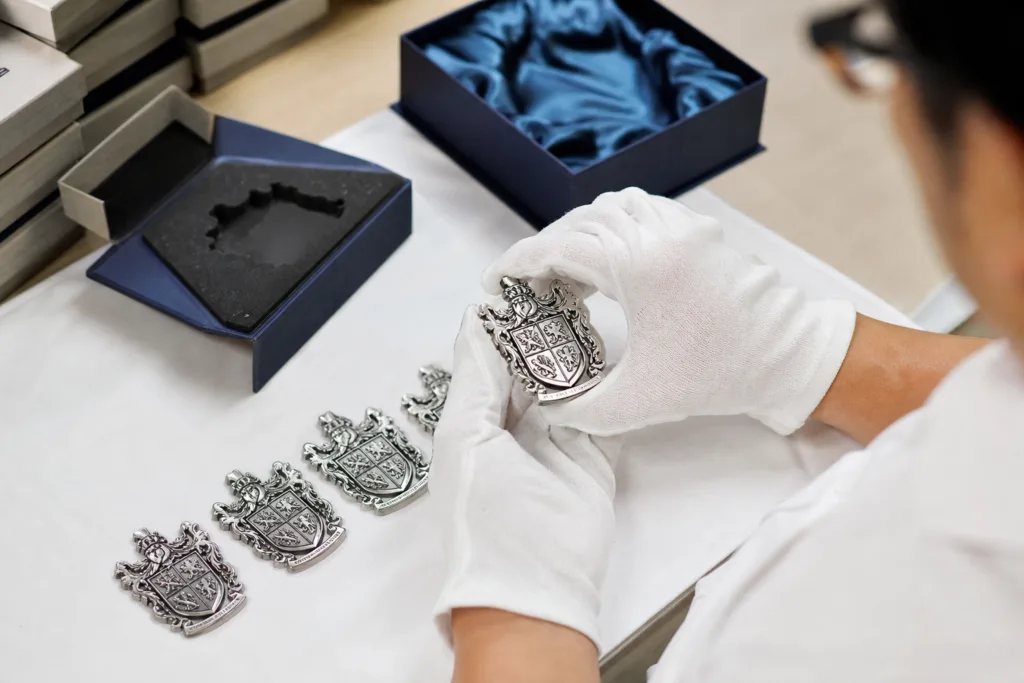
For alumni associations, university crest metal tags are most effective when they are planned as both keepsakes and identity symbols. They can support graduation memorabilia programs, alumni engagement, reunion gifting, donor recognition, and long-term school pride, but only if the material, shape, personalization, and finishing choices are handled carefully. When the design respects the crest and the manufacturing details are confirmed early, the finished piece feels more like a lasting expression of the institution than a simple giveaway.
The practical lesson is straightforward: start with the audience, protect the crest, choose the right metal, and confirm the production details before the order moves forward. That approach gives alumni associations a better chance of creating a piece that people will keep, display, and associate with the university for years.
FAQs
What makes university crest metal tags different from ordinary event souvenirs?
They carry approved institutional symbols, so the piece feels tied to campus heritage rather than a generic giveaway. For alumni associations, that usually means more care in shape, finish, and packaging because the tag is meant to represent identity as well as commemorate graduation.
Which metal material is best for graduation memorabilia?
There is no single best material for every program. Stainless steel suits long-service keepsakes, aluminum fits lighter or larger-volume runs, brass gives a warmer ceremonial look, and anodized aluminum works well when school colors matter. The right choice depends on display time, handling, and budget.
Should alumni tags be engraved, etched, embossed, or printed?
The right marking method depends on the artwork and the use case. Engraving and etching are usually preferred when readability and permanence matter, while embossed or printed effects can be useful when the design needs stronger visual impact or color. The key is matching the method to the crest details and expected wear.
Can we add names, graduation years, and serial numbers?
Yes. Personalization often includes names, class year, department, motto, or sequential numbers. The main point is to confirm the data format early so the association can avoid spacing, alignment, or number-order problems before sampling and bulk production.
How should an association plan MOQ, samples, and lead time?
Start with audience size, event date, and budget. Then confirm whether the program needs a sample, how many versions are required, and whether packaging or personalization will change the production schedule. Good planning reduces last-minute artwork changes and helps the manufacturer set a realistic lead time.
What should we confirm before approving the artwork?
Check the crest size, text hierarchy, spelling, hole position, finish, attachment method, and any numbering data. It is easier to correct these points before production than after the order moves into mass manufacturing.