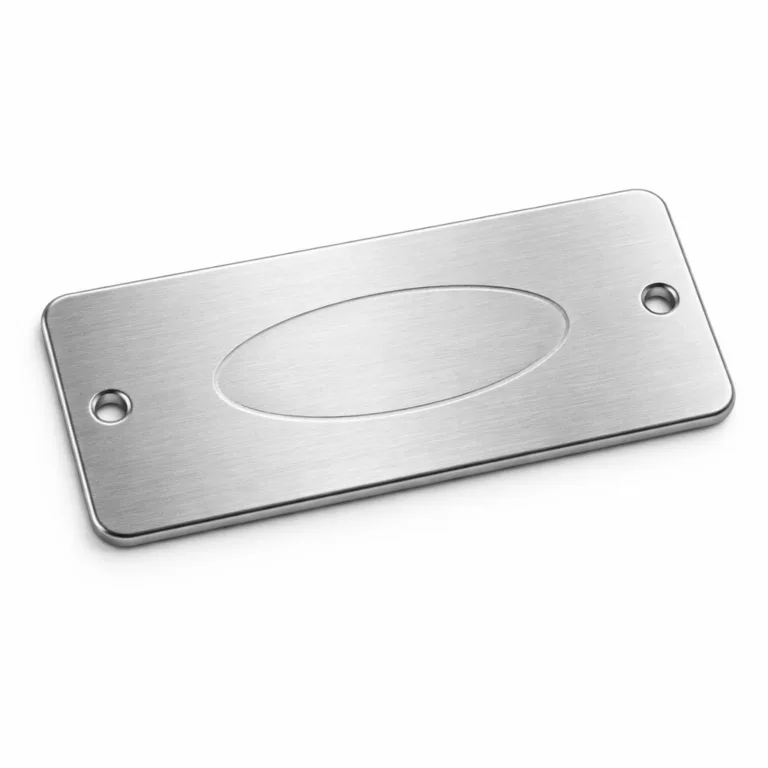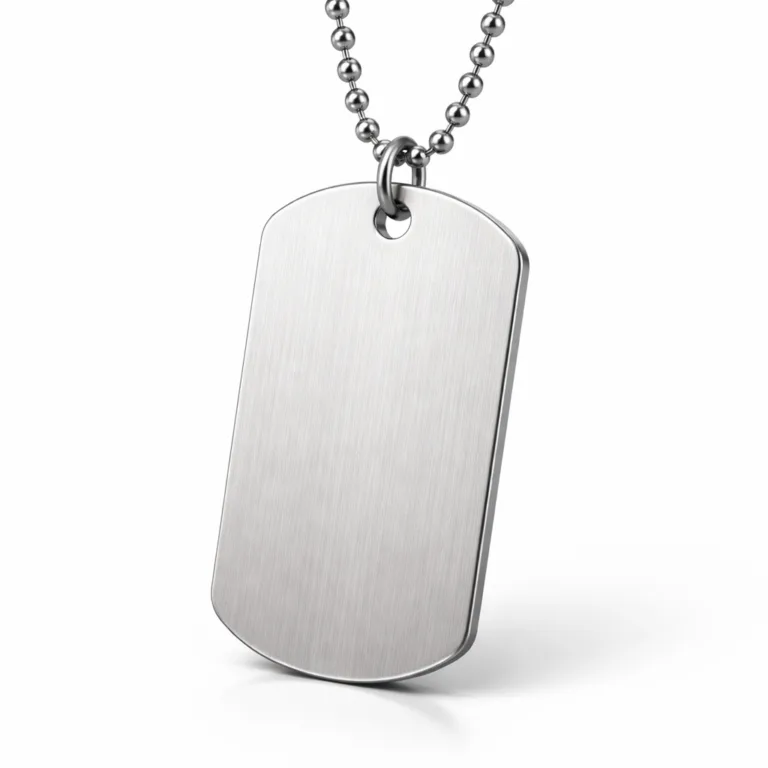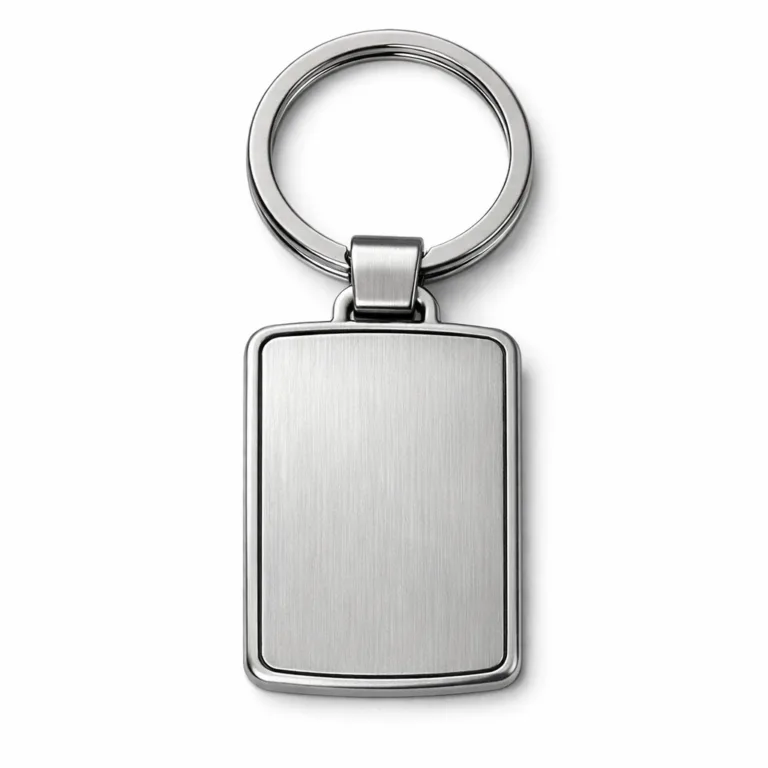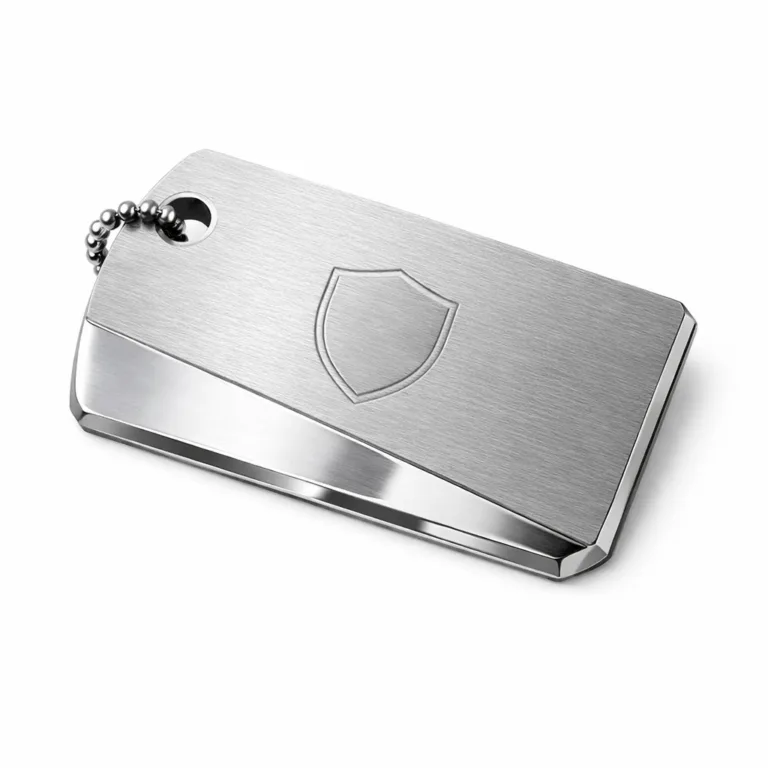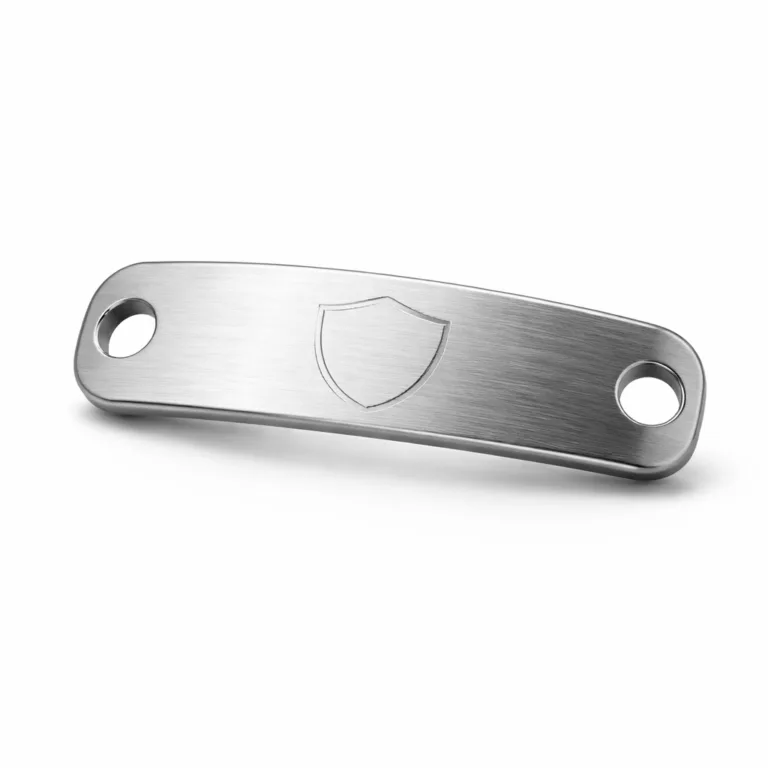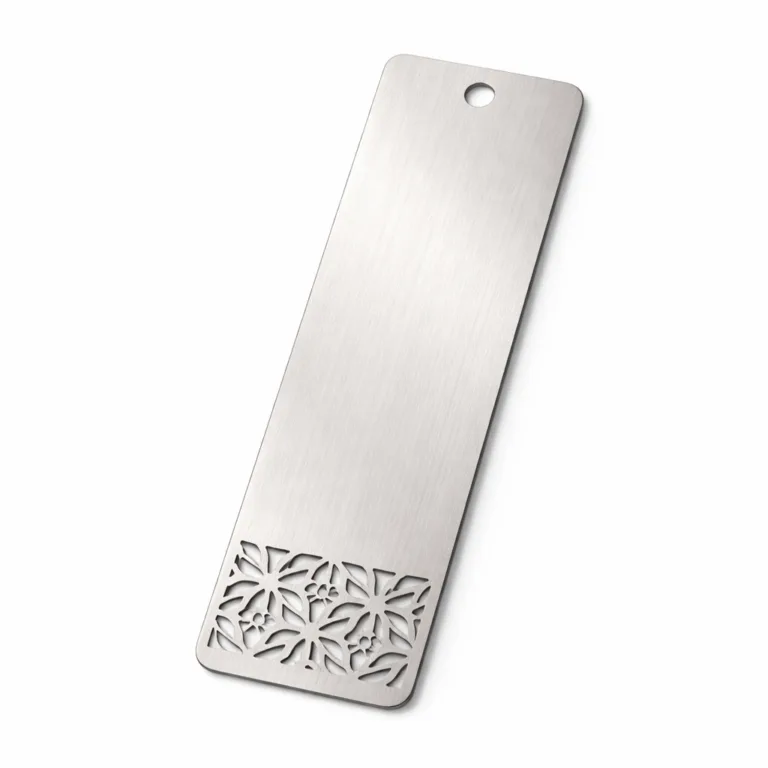
Reusable loyalty tokens are a practical way for bakeries and cafes to reward repeat customers without relying only on paper cards, app logins, or short-life giveaway items. For small food businesses, the appeal is simple: a metal token can be handled every day, returned again and again, and turned into part of the customer experience instead of becoming another disposable piece of marketing. From our manufacturing perspective, the value of loyalty tokens is not just that they look better. The real question is whether the token system is durable, easy to manage, consistent with the brand, and realistic for daily front-counter use.
If your program needs repeat-use pieces that hold up to handling, stay readable, and reflect your brand clearly, our custom metal tag manufacturing solutions can support the full process from material selection and marking method to sampling, numbering, packaging, and bulk consistency. This is useful for bakery and cafe teams that want reusable reward pieces with controlled size, finish, logo detail, and redemption flow rather than generic promo tokens that look fine at first but create avoidable problems later.
What reusable loyalty tokens are and why bakeries and cafes are using them
A reusable loyalty token is a physical reward piece that customers can receive, collect, return, or redeem as part of a repeat-visit program. In a bakery or cafe, that might mean one token per drink purchase, one token per pastry set, or one token awarded during local events, seasonal campaigns, or neighborhood partnerships. Unlike paper punch cards, the token itself can become part of the experience. Customers remember it, keep it, show it to friends, and often treat it as something with value rather than something that gets folded into a wallet and forgotten.
Many independent food businesses are drawn to this model because it works well in face-to-face environments. Staff can hand over a token quickly. Customers understand the system without needing to download anything. The business can also create a more community-friendly and premium feel without building a complicated digital platform. This makes loyalty tokens especially relevant for neighborhood cafes, artisanal bakeries, mobile coffee bars, farmers market stalls, and food brands that want a more tangible connection with regular customers.
How loyalty tokens differ from paper cards, digital apps, and disposable promo items
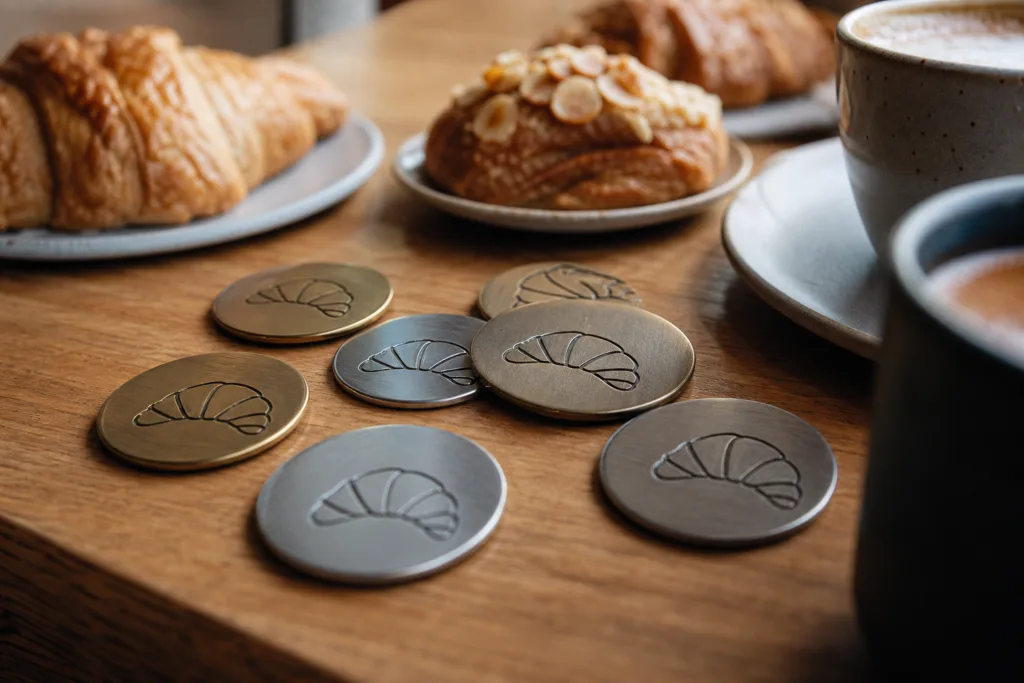
Each loyalty format solves a different problem. Paper punch cards are cheap to start, but they wear out, get lost, and often stop representing the brand after the first use. Digital apps can track data well, but they also ask customers to create accounts, scan codes, keep phones ready, and accept one more system in an already crowded digital routine. Disposable promo items may help with short campaigns, but they usually do not create a long-term reward loop.
Metal loyalty tokens sit in a different category. They are simple enough for walk-in retail use but strong enough to remain part of an ongoing program. That is why some buyers compare them less with coupons and more with durable brand tools. For businesses exploring eco-friendly metal tag material ideas, reusable tokens can also fit broader goals around reducing waste and moving away from single-use promotional materials.
| Format | Main Strength | Main Limitation | Best Fit |
|---|---|---|---|
| Paper punch card | Low startup cost | Easy to lose or damage | Very small or short-term campaigns |
| Digital app | Data and automation | Higher friction for customers | Chains or app-based ordering models |
| Disposable promo item | Fast campaign distribution | Weak long-term reuse value | One-off promotions |
| Metal loyalty token | Reusable, memorable, branded | Needs planning for rules and circulation | Community-focused repeat-visit programs |
Why metal tokens work well for loyalty tokens and sustainable rewards
For buyers, the key is not only the product name or price, but whether the material, structure, marking method, and use pattern match the real use case. A cafe token gets touched, dropped, pocketed, stacked, and sometimes cleaned. A bakery token may sit near flour, sugar, oils, takeaway counters, or event tables. These are not extreme industrial conditions, but they are still repetitive handling conditions that quickly expose weak materials or shallow decoration.
Metal works well because it gives you a long service life, clear edge definition, and flexible branding options. Depending on the look you want, tokens can be engraved, chemically etched, stamped, screen printed, or color filled. If the token is meant to circulate for a long time, buyers should pay close attention to metal marking methods for lasting branding. Some visual styles look attractive in a sample photo but lose clarity after repeated handling, especially if the branding depends mainly on surface-applied color without enough structural marking underneath.
Why the material matters in a daily-use program
Aluminum can work well when lighter weight, color options, and cost control matter. Stainless steel is a stronger option when the token needs a more substantial feel or better resistance to moisture and wear. Brass is often chosen when a warmer, classic look supports the brand identity. In many cafe and bakery projects, the decision is not about maximum technical performance. It is about balancing appearance, tactile feel, budget, and the expected number of reuse cycles.
Key benefits for bakeries and cafes
Durability in real handling
Metal tokens hold their shape better than paper, coated board, or thin plastic pieces. They are less likely to bend, tear, or look worn after a short period. This matters because a loyalty system only feels reliable when the reward marker still looks intentional after weeks or months of use.
Premium feel without a complicated system
A physical token can make a simple reward program feel more distinctive. Customers can see it, touch it, and associate it with the shop. That small detail can lift the perceived value of a reward without requiring a large technical investment.
Repeat engagement
Physical reward pieces encourage return behavior in a visible way. The token in a wallet or on a key ring becomes a reminder. In many local retail environments, that is more immediate than an app notification that may never be opened.
Reduced waste over time
When one token can circulate through many issue-and-redeem cycles, the program can reduce the stream of disposable cards or temporary promo pieces. This is where sustainable rewards become more practical rather than just more decorative.
Design options that actually affect the result
In many projects, the problem is not that the buyer chose the wrong category. The problem is that some production details were not clarified before sampling or bulk production. For loyalty tokens, the most common overlooked points are size, thickness, edge feel, and whether the branding remains readable after repeated use.
Shape and size
Round tokens are the most familiar choice because they are easy to stack, store, and recognize. But bakeries and cafes may also choose square, oval, bread-inspired, coffee bean, or custom silhouette designs if the shape supports the brand. The trade-off is practical: more complex shapes can look distinctive, but they may cost more to produce and may be less efficient to pack or count.
Finish and surface style
Matte, brushed, polished, antique, anodized, or color-filled finishes all create different impressions. A bright polished look may suit a modern coffee concept. A brushed or antique finish may work better for a handmade bakery brand. The finish also affects how fingerprints, scratches, and small dents show over time.
Marking method and readability
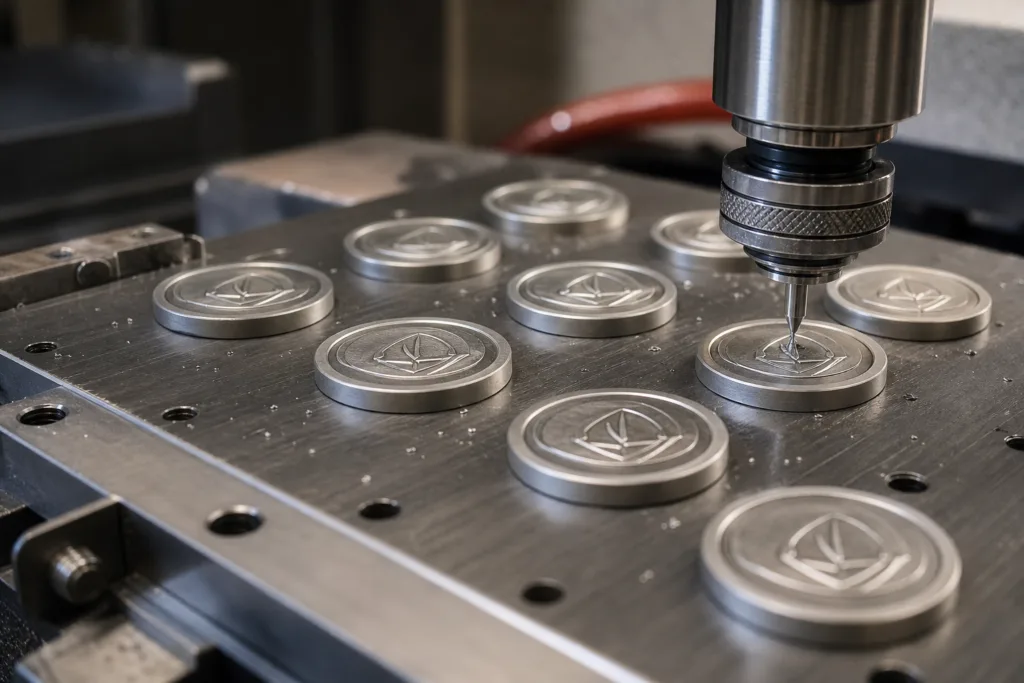
Laser engraving, chemical etching, stamping, and printing each serve different goals. If the token needs durable logo clarity with minimal risk of wear confusion, structural marking is usually safer than relying only on surface graphics. Buyers comparing options should review how engraving depth and long-term durability affect appearance after frequent handling. This detail may look small, but it can create problems later if it is not confirmed early.
| Design Element | Why It Matters | Typical Buyer Decision |
|---|---|---|
| Diameter or width | Affects handling, visibility, and storage | Choose based on front-counter use and branding area |
| Thickness | Changes feel, weight, and durability | Balance premium feel with budget and mailing weight |
| Edge style | Affects comfort and visual finish | Rounded or smooth edges for daily handling |
| Logo marking | Controls readability over time | Engraved, etched, or stamped for long-term use |
| Color accent | Improves recognition | Use selectively where brand color matters |
How a reusable token system can work in practice
A good loyalty token program should be easy enough for staff to explain in one sentence. For example: buy a drink, get one token; collect eight, redeem for a pastry; token returns to the counter and goes back into circulation. That simple loop often works better than complicated point structures that require staff to remember exceptions during busy service hours.
From our production planning side, it helps when the buyer defines the token journey early:
- How is the token issued?
- Does the customer keep it or return it at each visit?
- Is redemption based on quantity, token color, or special edition type?
- Will used tokens be cleaned and recirculated?
- Do seasonal or event campaigns require separate designs?
Once those questions are clear, the token specification becomes easier. A token meant for long circulation may need a different finish than one used for a short local event. A token system with multiple reward levels may need numbering, color accents, or controlled batches.
Examples of use cases in bakeries and cafes
Daily drink rewards
A cafe gives one token per specialty drink purchase. Ten tokens can be redeemed for one free drink or bakery item. This works well when customers return several times per week and the shop wants a visible, low-tech program.
Seasonal bakery campaigns
A bakery issues holiday or harvest-themed tokens tied to limited menu items. Customers who collect a set number can redeem them for a boxed treat or special release. Here the token becomes both a reward marker and a collectible seasonal brand piece.
Community event editions
Neighborhood coffee shops sometimes collaborate with local markets, schools, or charity events. A limited token edition can mark participation, support a donation campaign, or unlock a return visit incentive. This works especially well when the token carries the event identity and remains useful after the event.
Membership-style repeat visit tokens
Some businesses do not want a traditional free-item reward. Instead, they use tokens as part of a members-only tasting night, early access pastry drop, or bring-a-friend coffee event. In these cases, the token becomes an invitation marker, not just a coupon replacement.
Sustainability advantages of reusable rewards
Reusable systems are more credible when the business can explain how reuse actually works. A metal token does not become sustainable just because it is metal. The operational model matters. If tokens are returned, cleaned, stored, and recirculated, the business reduces the churn of paper cards and low-life promotional items. If tokens are given out carelessly with no return logic, the sustainability message becomes weaker.
That is why sustainable rewards should be discussed together with circulation design, not only with material choice. We usually advise buyers to think about program life, loss rate, replacement rate, and whether special editions are meant to stay with the customer or return to the counter. These details shape both cost and environmental logic.
Customer experience and brand perception
Physical objects change how customers remember a brand. A token can carry weight, texture, sound, and finish in a way that a digital point balance cannot. For independent bakeries and cafes, this can be useful because brand loyalty often grows from atmosphere and routine as much as from discount value. A well-designed token can support that identity by feeling intentional rather than generic.
It also helps the brand stand out in a simple way. Customers may not remember every promotion, but they often remember the shop that gave them a solid engraved token for their coffee rewards. That memory is part of why reusable metal programs can create stronger word-of-mouth than disposable reward pieces.
Operational tips before launch
Before placing a production order, make sure the business rules are stable. Changing the redemption logic after tokens are already in circulation can confuse both staff and customers. We recommend confirming the following points first:
- What action earns a token?
- How many tokens equal a reward?
- Will all tokens have equal value?
- How will staff identify valid tokens quickly?
- Where will redeemed tokens be stored?
- How often will tokens be cleaned before reuse?
Reusable items also need simple handling discipline. Even though loyalty tokens are not medical tools, it is still sensible to define storage and reuse procedures, and broad cleaning and handling best practices support the idea that reusable items should have clear preparation, care, and maintenance routines. For cafes and bakeries, that can mean a basic staff rule for collection bins, wipe-down or washing steps where appropriate, drying, and separated storage before tokens re-enter service.
Choosing the right material and finish for daily handling
Material choice should reflect how the token is used, cleaned, stored, and perceived. Aluminum is a strong choice when buyers want a lighter token with color flexibility and controlled cost. Stainless steel is suitable when moisture exposure, scratch resistance, or a more substantial feel matter. Brass can create a more classic or boutique impression, especially in premium bakery settings.
At UC Tag, we usually guide buyers to decide in this order: first use scenario, then desired feel, then branding method, and only after that finish details. This avoids a common mistake where a buyer picks a finish from a photo before checking whether the material and marking method fit the intended reuse cycle.
Personalization ideas that add control and interest
Not every loyalty token needs variable data, but some programs benefit from it. Numbering can help with batch control. Limited edition event tokens can use date marks or short text. QR codes may work when the token is part of a hybrid program, though on very small tokens code size and scan reliability must be checked carefully during sampling.
For projects that need controlled sequences or differentiated batches, sequential metal tags for reusable token systems can help businesses separate standard loyalty circulation from VIP sets, event releases, or staff-managed promotional runs. This is useful when the same business wants one core token program plus occasional special campaigns without losing internal control.
Costs and planning for small runs versus bulk production
Small trial runs are often the right starting point for independent shops. They allow the business to test customer response, token loss rate, and staff workflow before committing to a larger quantity. But buyers should understand that small runs usually carry a higher unit cost because tooling, setup, sampling, and finishing still require production effort.
Bulk production becomes more efficient when the design is stable and the business knows the likely circulation volume. It also makes sense if the brand has multiple locations, regular seasonal promotions, or distributor-style resale packs. This is where clear packaging plans and batch labeling help prevent internal confusion later.
Common mistakes to avoid
Overcomplicating the reward rules
If staff cannot explain the system quickly, the program will slow down service and reduce participation.
Choosing decoration before function
A very glossy sample may look attractive but still be the wrong choice if the marking wears too quickly or fingerprints make the token look messy.
Ignoring size and weight
Tokens that are too small may be hard to identify quickly. Tokens that are too heavy may feel awkward in quantity.
Skipping a real sample review
Artwork on screen is not enough. Buyers should check edge finish, logo legibility, thickness feel, and actual handling comfort before bulk approval.
Weak recirculation planning
If redeemed tokens pile up without clear cleaning and storage steps, the sustainability claim becomes harder to support operationally.
How to measure engagement over time
You do not need a complex dashboard to learn whether the program is working. Start with a few simple measures: tokens issued per week, tokens redeemed per week, repeat customer frequency, average redemption time, and loss or non-return rate. These numbers help a bakery or cafe decide whether the reward threshold is realistic or whether the design needs adjustment.
It is also worth watching how customers talk about the token. Are they collecting it? Showing it to friends? Asking about limited editions? In community-oriented food businesses, those small signals can matter as much as the raw redemption number because they show whether the token is supporting brand attachment rather than functioning only as a discount device.
Conclusion
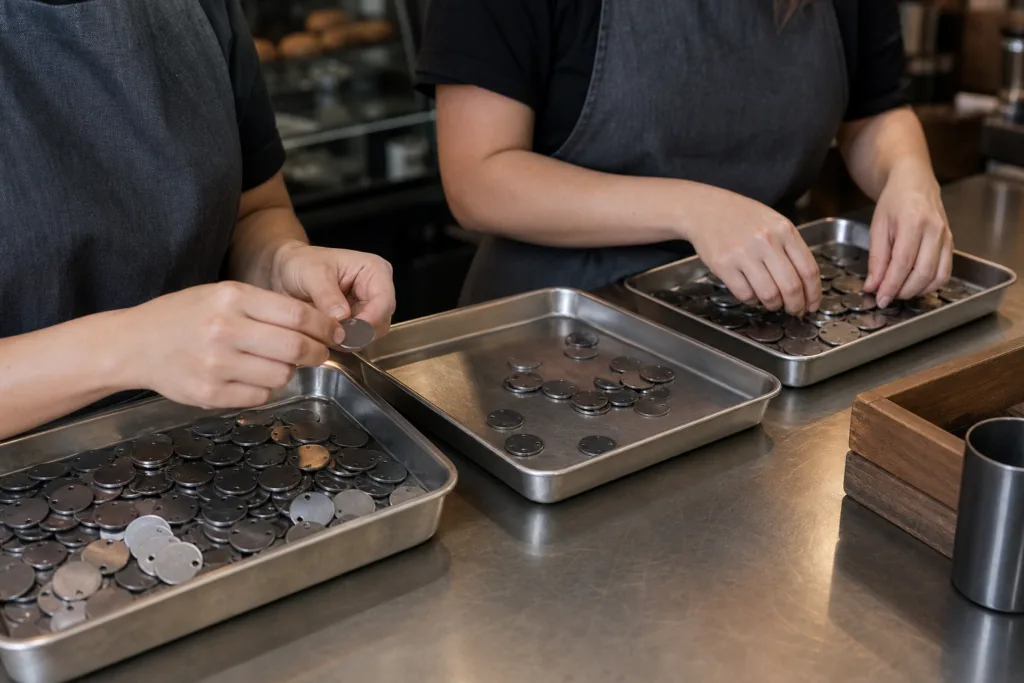
Reusable loyalty tokens make sense when a bakery or cafe wants a reward system that is simple to use, durable in daily handling, and aligned with a more sustainable rewards message. The biggest advantage is not just material strength. It is the combination of repeat engagement, physical brand presence, and operational reusability. When the token design, reward rules, circulation method, and cleaning routine are planned together, metal tokens can become a practical long-term tool rather than a novelty item.
For buyers, the goal is to match the token to the real service environment. Size, finish, marking method, and return flow all affect whether the program stays useful over time. When those details are confirmed early, loyalty tokens can support both customer retention and a more thoughtful reward experience.
FAQs
What material is usually best for reusable loyalty tokens?
The best material depends on the program style and budget. Aluminum is often chosen for lighter weight and color flexibility, stainless steel for a more solid feel and better moisture resistance, and brass for a warmer premium look. The right choice comes down to handling conditions, target appearance, and how long the tokens are expected to stay in circulation.
Are engraved loyalty tokens better than printed ones?
For long-term reuse, engraved or otherwise structural marking is usually the safer choice because the branding remains readable even after repeated handling. Printed color can still be useful for visual impact, but buyers should confirm whether the token depends only on surface decoration or also has durable permanent marking underneath.
Can loyalty tokens include serial numbers or QR codes?
Yes, but the size of the token and the scanning requirement need to be checked early. Serial numbers are straightforward for batch control or limited editions. QR codes can work when the token is large enough and the contrast is clear, but sampling is important because very small codes may not scan consistently in real shop conditions.
How many loyalty tokens should a bakery or cafe order first?
For a first run, many businesses start with a quantity that is large enough to test real customer circulation but small enough to adjust later if the rules change. The right number depends on foot traffic, reward frequency, token return expectations, and whether the first batch is a pilot or a full launch. A sample-first approach usually reduces risk.
Do reusable metal tokens need a cleaning process?
Yes. Any reusable item that moves through repeated handling should have a simple, consistent cleaning and storage routine. For cafes and bakeries, that usually means deciding how redeemed tokens are collected, how they are cleaned or wiped down, how they are dried if needed, and where they are stored before they go back into use.
What is the most common mistake in loyalty token projects?
The most common mistake is focusing on the token appearance before confirming the reward system itself. If the earning rules, redemption flow, staff handling, and reuse plan are not clear, even a well-made token can become hard to manage. The stronger projects are the ones where product design and operating rules are confirmed together.