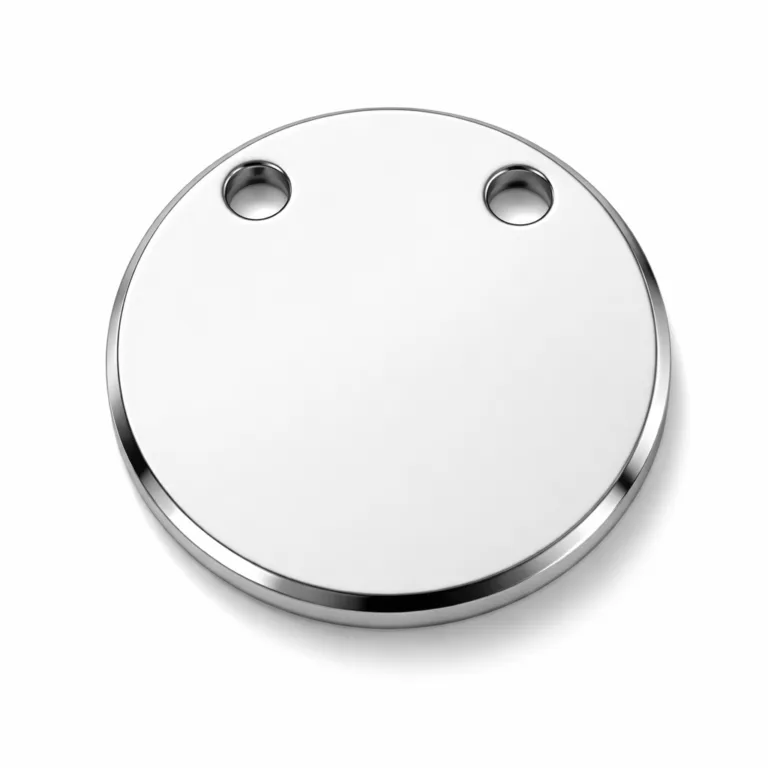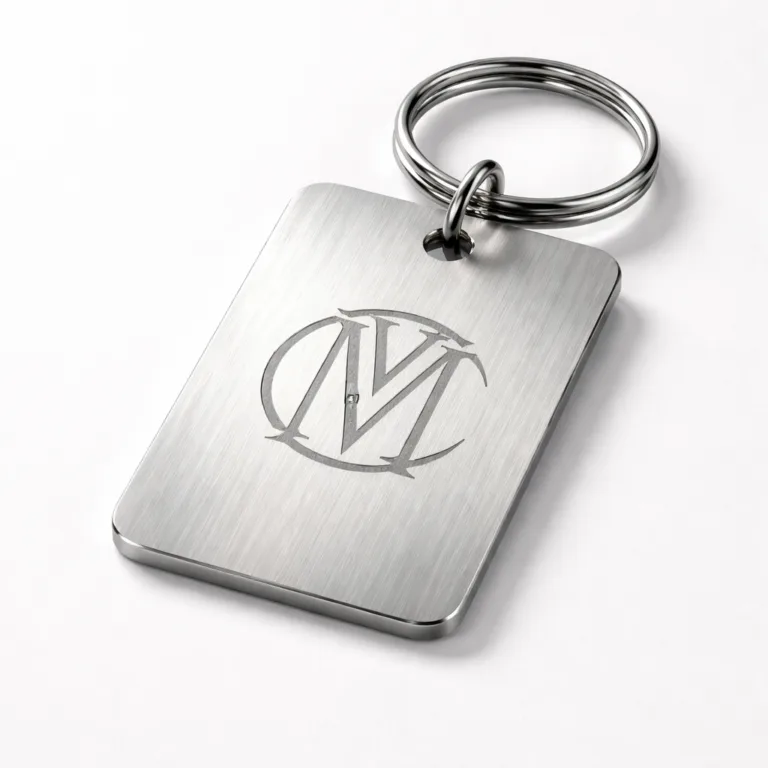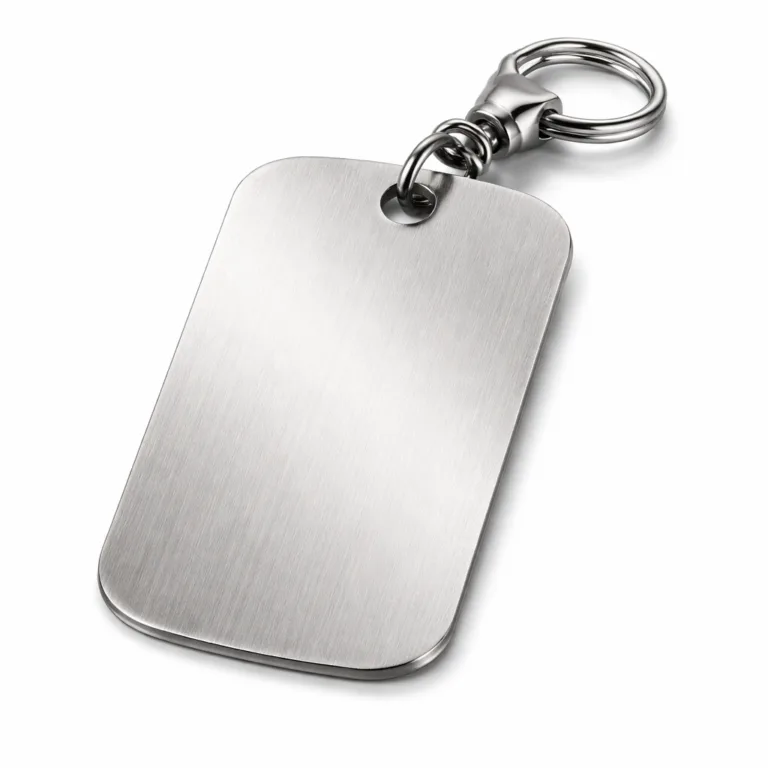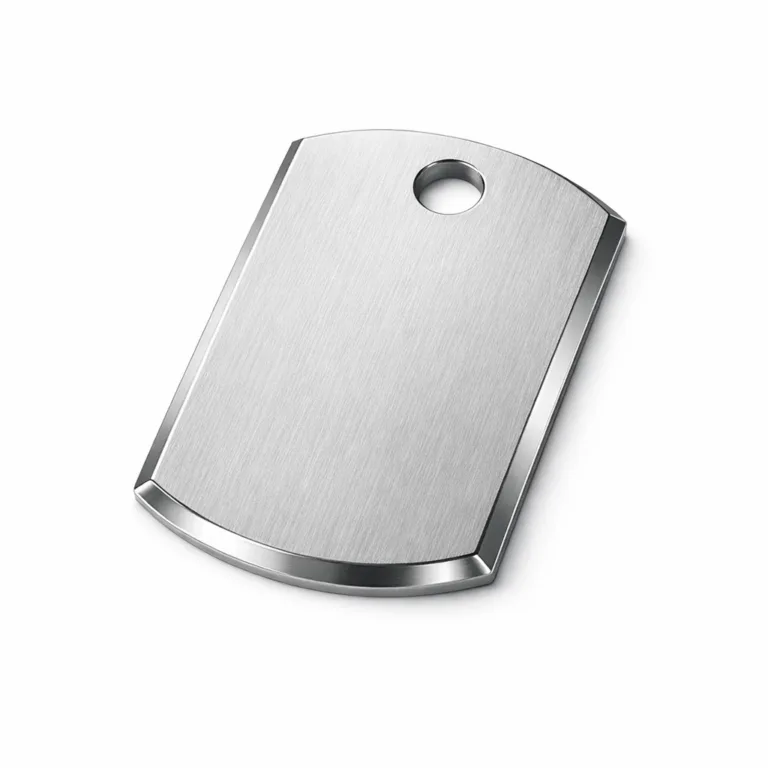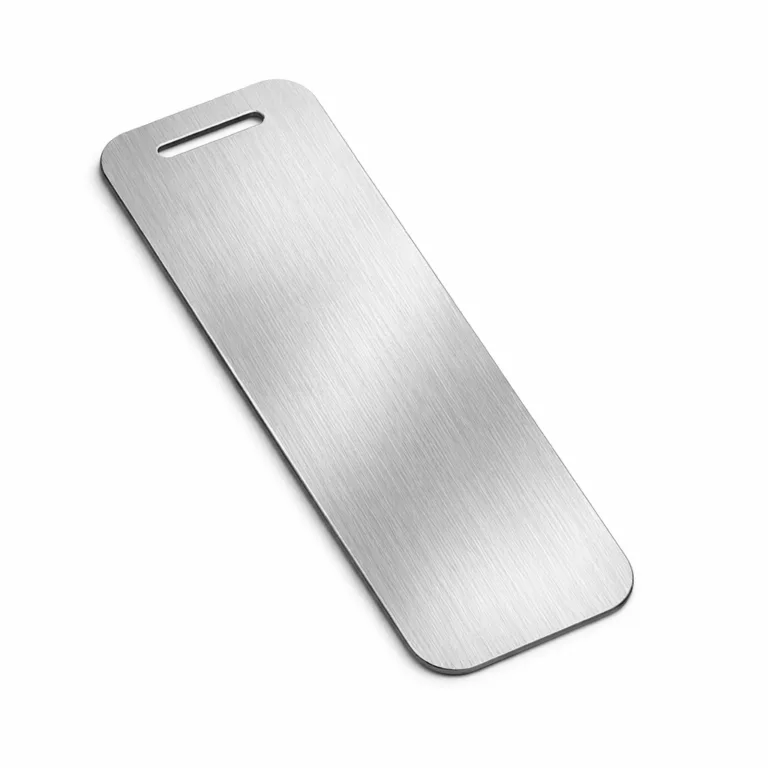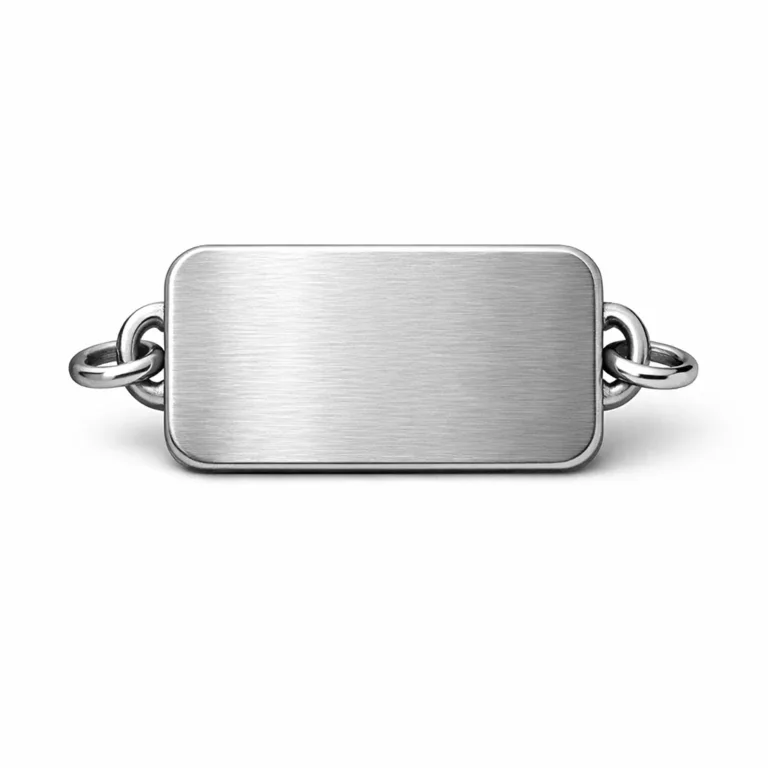
Service dog tags are a practical identification tool designed to make important information easy to recognize at a glance. For buyers comparing engraved dog ID tags, pet ID tags, and service dog tags, the core decision is not decoration but function: can the tag communicate the dog’s role quickly, stay readable through daily wear, and remain comfortable for long-term use? From our manufacturing perspective, the best results come from balancing information hierarchy, material durability, marking depth, attachment security, and size.
If your project requires reliable identification for daily handling, travel, public interaction, or organized distribution, our custom dog tag manufacturing support can help you define the right material, engraving layout, hole position, attachment style, and production method before bulk ordering. We regularly help buyers compare aluminum, stainless steel, brass, and anodized options, review variable data such as names or serial numbers, confirm sample readability, and plan packaging for retail, program, or private label use.
What service dog tags are used for and why feature selection matters
Service dog tags are mainly used to improve fast recognition and day-to-day handling. A well-designed tag can help a member of the public, staff member, caregiver, or first responder understand the dog’s role and identify who to call if needed. That said, identification should be framed correctly. Under service animals are not required to wear ID, so a tag is best treated as a practical visibility tool rather than legal proof or certification.
That distinction matters because it changes how the tag should be designed. If the goal is quick recognition, the layout should prioritize the dog’s role, the handler’s preferred contact detail, and any short instruction that is genuinely useful. If the goal is branding or appearance alone, buyers often overload the tag with too much text and reduce readability.
In our production work, the most effective service dog tags are usually simple, direct, and durable. They are designed for real motion, real abrasion, and real viewing distance rather than perfect reading at a desk.
The most important performance goals: clarity, durability, and fast recognition
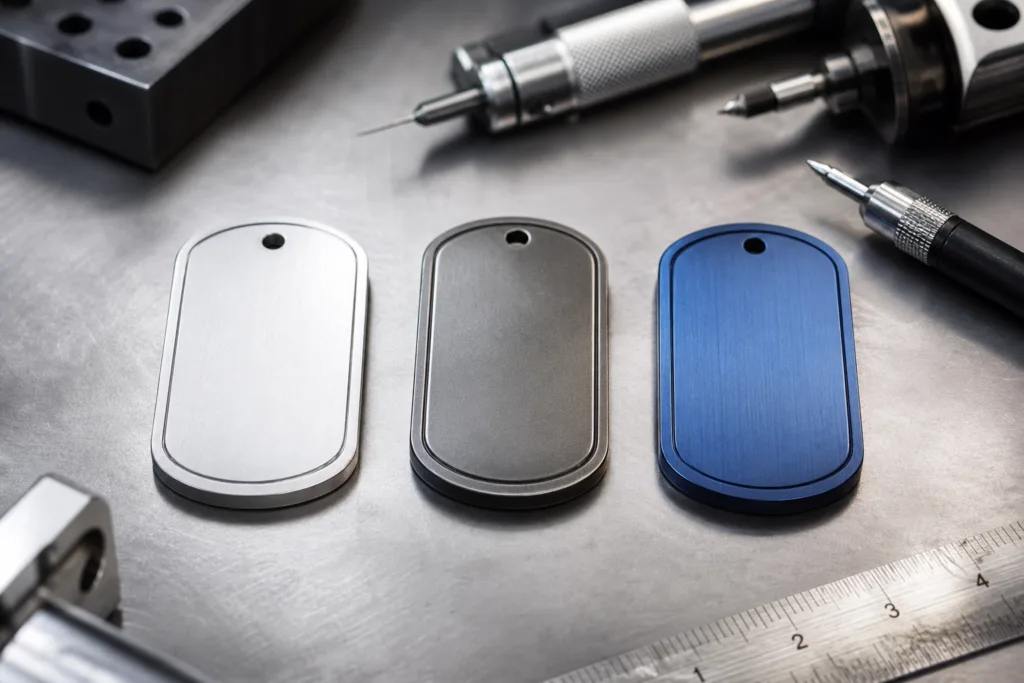
Most buyer questions can be reduced to three performance goals.
- Clarity: The most important information should be readable quickly without rotating the tag several times or studying very small text.
- Durability: Markings should remain legible after repeated contact with collars, leashes, hands, keys, water, and outdoor exposure.
- Fast recognition: The role of the dog should be visible early, with supporting details placed in a secondary position.
When one of these goals is ignored, the tag becomes less useful. A very durable tag with overcrowded text still fails in quick recognition. A clean design printed on a weak surface can become unreadable too soon. Good specification means treating readability and durability as one combined requirement.
What information should appear on the tag first
The first question is not what can fit on the tag, but what must be seen first. For most service dog tags, the front should carry the primary recognition message. In many cases that is the role, such as “Service Dog,” followed by a short identifier like the dog’s name if appropriate. The reverse side can carry secondary details.
A practical information order often looks like this:
| Priority | Information Type | Why It Matters |
|---|---|---|
| 1 | Role or identification phrase | Supports immediate recognition in public or during routine handling |
| 2 | Dog name or short ID | Helpful for identification and calmer interaction |
| 3 | Primary contact number | Most important recovery or assistance detail |
| 4 | Secondary contact or brief instruction | Useful when space allows and the instruction is genuinely actionable |
Buyers sometimes want to add long medical notes, addresses, websites, registration language, or multiple slogans. On a small metal tag, that usually creates clutter. Short, scannable content is usually more effective than trying to turn the tag into a full document.
How to design the information hierarchy for quick reading
Quick reading depends on visual hierarchy. The first line should carry the strongest message. Secondary lines should be shorter and visually lighter. If both sides of the tag are used, the front should handle recognition and the back should handle contact or backup information.
We usually recommend these layout principles:
- Use the largest text for the dog’s role or the most critical phrase.
- Keep line count low when possible.
- Separate recognition content from contact content.
- Avoid mixing all caps, symbols, and long sentences in the same small area.
- Leave breathing room around the edges so the design does not feel compressed.
For buyers refining layouts, our detailed readability and durability design guidance is especially useful when comparing one-side and two-side engraving options.
Legibility also depends on contrast, character clarity, and visual simplicity. General contrast and legibility best practices support the same principle we use in tag manufacturing: readable type, good contrast, and low visual clutter improve fast recognition more than decorative styling does.
Material options for service dog tags
Material choice affects weight, scratch visibility, corrosion resistance, price range, and how the marking looks over time. For service dog tags, the right material depends on wear conditions and buyer priorities.
Aluminum
Aluminum is lightweight and comfortable for everyday wear. It works well when low weight is a priority, especially for smaller dogs or tags worn continuously. Standard aluminum can be engraved or printed, but it is generally softer than stainless steel and may show wear sooner under heavy abrasion.
Stainless steel
Stainless steel is a strong choice when long-term durability matters most. It handles moisture, repeated handling, and abrasion better than softer metals in many applications. It is heavier than aluminum, so buyers need to balance durability against comfort and tag size.
Brass
Brass offers a classic appearance and good engraving character, but it is usually chosen more for visual style than for the lightest weight. It can work well for formal identification formats where appearance matters, though buyers should consider patina development and end-use conditions.
Anodized aluminum
Anodized aluminum combines low weight with improved surface finish options and stronger color contrast. It is often a practical choice when buyers want readable text with better visual separation between background and marking. For tags that benefit from role-based color coding or high-contrast layouts, anodized aluminum can be a very efficient option.
Which marking method is best for service dog tags
The best marking method depends on the tag material, production quantity, and how long the information needs to remain clear. In our manufacturing work, buyers usually compare engraving, laser marking, stamping, and printing.
| Method | Strengths | Best Use Case | Watchouts |
|---|---|---|---|
| Engraving | Permanent, tactile, durable | Daily-wear identification with variable names or numbers | Very small text can lose impact if layout is crowded |
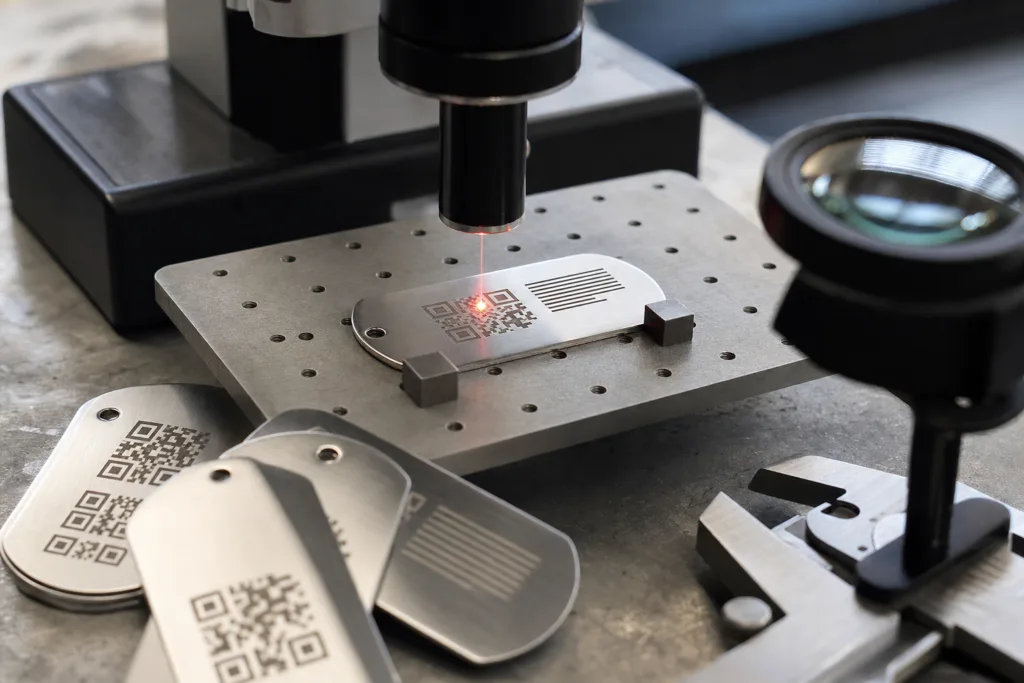
| Laser marking | Fine detail, clean appearance | Sharp text, logos, serialized layouts | Performance depends on material and finish combination |
| Stamping | Deep physical impression | Simple, rugged, classic tag formats | Less flexible for dense or highly detailed layouts |
| Printed information | Can support graphics and color | Shorter-term or appearance-focused designs | Usually less durable than engraved or deeply marked data |
For most service dog tags intended for continuous use, engraved or appropriately laser-marked metal tags are the most practical path. If the buyer needs long-lasting variable data, our rule of thumb is simple: choose a process that prioritizes permanent readability over decorative surface effect.
When buyers ask what to engrave and how deep or detailed the layout should be, we often point them to practical examples of engraving details that last before sample approval.
Readability factors that make a tag easier to recognize
Even the right material and marking method can underperform if the design is hard to read. The most common readability issues are font size, weak contrast, tight line spacing, and overfilled layouts.
Font size and line count
If the text is important, it should not be reduced just to fit extra content. Fewer lines with larger characters almost always outperform more lines with tiny text. This is especially important on tags read while the dog is moving.
Contrast
Dark-on-light or high-contrast engraved surfaces are easier to scan than low-contrast decorative finishes. If the buyer wants premium appearance and readability, contrast should be discussed early, not after artwork approval.
Line spacing
Lines that sit too close together become harder to distinguish, especially after minor scratching or dirt buildup. Good spacing preserves character separation.
Symbol use
Symbols should support recognition, not replace plain language. One simple icon may help, but too many symbols can compete with the actual message.
Edge-to-edge layout
Text pushed too close to the hole or outer edge risks visual crowding and may also reduce perceived quality. Buyers should leave enough margin for both readability and production tolerance.
Durability factors for everyday wear
Durability is about more than metal type. It includes the stability of the marking, the wear pattern caused by movement, and how the finish behaves when exposed to water, sunlight, friction, and contact with other hardware. A useful general labeling principle is that labels must remain legible during use. While that guidance comes from another regulated sector, the practical lesson applies directly to everyday identification tags.
For service dog tags, the key durability factors include:
- Wear resistance: Deep or stable markings hold up better when tags rub against buckles or other tags.
- Corrosion resistance: Stainless steel and suitable anodized or treated surfaces are often preferred in wet or outdoor conditions.
- Scratch resistance: Softer metals may show visual wear faster, even when the text remains readable.
- Finish stability: High-gloss decorative surfaces may look attractive initially but can show scratching more clearly in hard use.
Buyers should match the tag to actual use conditions. A dog exposed to rain, outdoor activity, bathing, or heavy movement needs a different specification than a lightly used indoor identification tag.
Attachment options and their impact on daily use
The attachment is often treated as a minor accessory, but it directly affects security, noise, movement, and comfort. A durable tag can still fail functionally if it twists badly, catches too easily, or detaches.
Common attachment considerations include:
- Split rings: Common and versatile, but quality matters. Weak rings can open or deform.
- Single-hole layout: Works well for many standard hanging tags and supports simple assembly.
- Loop or integrated attachment concept: Can reduce extra movement in some designs.
- Lightweight builds: Important for comfort, especially on smaller dogs or multi-tag setups.
The position and size of the hole also matter. A hole placed too close to the edge may weaken the tag, while a hole that is too small can complicate assembly. In custom orders, we review ring diameter, hole diameter, and edge clearance together rather than as separate details.
Size, shape, and thickness choices
Tag size affects both comfort and readability. Buyers sometimes focus on the smallest possible tag for appearance, but if the text becomes too small, the identification value drops. The right choice depends on how much information must fit and how visible the tag needs to be in motion.
For most projects, we recommend selecting size from the message backward: define the role text, contact format, and number of lines first, then choose the smallest size that still protects readability. Our reference on dog tag dimensions and specs can help buyers compare practical format ranges before locking artwork.
Thickness also changes performance. Thinner tags reduce weight but may feel less rigid. Thicker tags feel more substantial and can resist bending better, but they increase weight. Shape plays a role too. Rounded rectangle and classic military-style shapes often give a good balance between usable text area and comfortable wear.
When barcode, QR code, or serial numbering makes sense
Most service dog tags do not require machine-readable data, but there are cases where it adds real value. QR codes can be useful when the buyer wants to connect the tag to a digital profile, expanded contact information, program records, or updated care instructions without overcrowding the metal surface. Serial numbering is helpful for organizations managing multiple dogs, issue tracking, replacement control, or inventory.
The key is not to let the code replace the essential visible message. A QR code should support the tag, not become the only meaningful information on it. The front should still communicate recognition clearly at a glance.
For program-based projects, QR code dog tag options can work well when the buyer needs both visible identification and scannable backup data.
Common mistakes that reduce tag usefulness
Most avoidable problems come from trying to do too much on too little space.
- Overcrowded text: Too many words force tiny character size.
- Weak contrast: Attractive finishes can become hard to read quickly.
- Unclear hierarchy: If every line looks equally important, nothing stands out.
- Poor attachment planning: Good tags can still be lost if the ring or hole setup is weak.
- Ignoring wear pattern: Daily contact points should influence metal and marking choice.
- Skipping samples: Screen layouts do not always predict real readability on a small metal part.
Another common mistake is assuming that more formal language creates better recognition. In practice, shorter and clearer wording often works better than long official-sounding phrasing.
How to specify a custom dog identification tag order accurately
A strong order specification reduces production errors and sample revisions. At UC Tag, we usually encourage buyers to define the following points before approval:
- Material
- Size and shape
- Thickness
- Front and back content
- Marking method
- Finish or color
- Hole position and diameter
- Attachment hardware
- Variable data format such as names, numbers, or codes
- Packaging method for singles, sets, or retail packs
If the order includes multiple names, roles, or serials, the data file should be checked for spelling consistency, line limits, and formatting rules. This step becomes especially important when producing batches for organizations, programs, or private label distribution.
Quality checks for engraved dog ID tags
Good quality control for service dog tags should focus on function, not just appearance. We typically recommend reviewing these checkpoints during sample approval and pre-shipment inspection:
| QC Check | What to Confirm |
|---|---|
| Text accuracy | Names, phone numbers, role text, and any instructions match approved data |
| Readability | Character size, spacing, and contrast remain clear at practical viewing distance |
| Marking quality | Engraving or marking is consistent across the batch |
| Edge quality | No sharp or rough edges that reduce comfort or safety |
| Hole placement | Centered or specified correctly, with enough edge strength |
| Finish consistency | Color, grain, or surface look remain within agreed tolerance |
| Attachment fit | Ring or hardware fits the hole and intended collar setup |
For personalized projects, text verification is often the most critical step. One incorrect digit can make a tag much less useful, so data review should be handled with the same care as material and finish selection.
Functional pet ID tags versus more formal service dog identification formats
Some buyers are deciding between general pet ID tags and more role-specific service dog tags. The difference is usually not the metal itself but the communication goal. Standard pet ID tags often prioritize the pet’s name and owner contact. Service dog tags place more emphasis on fast recognition of the dog’s role, then support that with contact details.
That does not mean the service format needs to be oversized or overly official in tone. In fact, the most useful designs are often compact, direct, and easy to read. If a buyer is serving both consumer and program markets, it can make sense to develop two related layouts: one simple pet ID format and one role-first service format using the same base material and production method.
Final checklist for selecting service dog tags
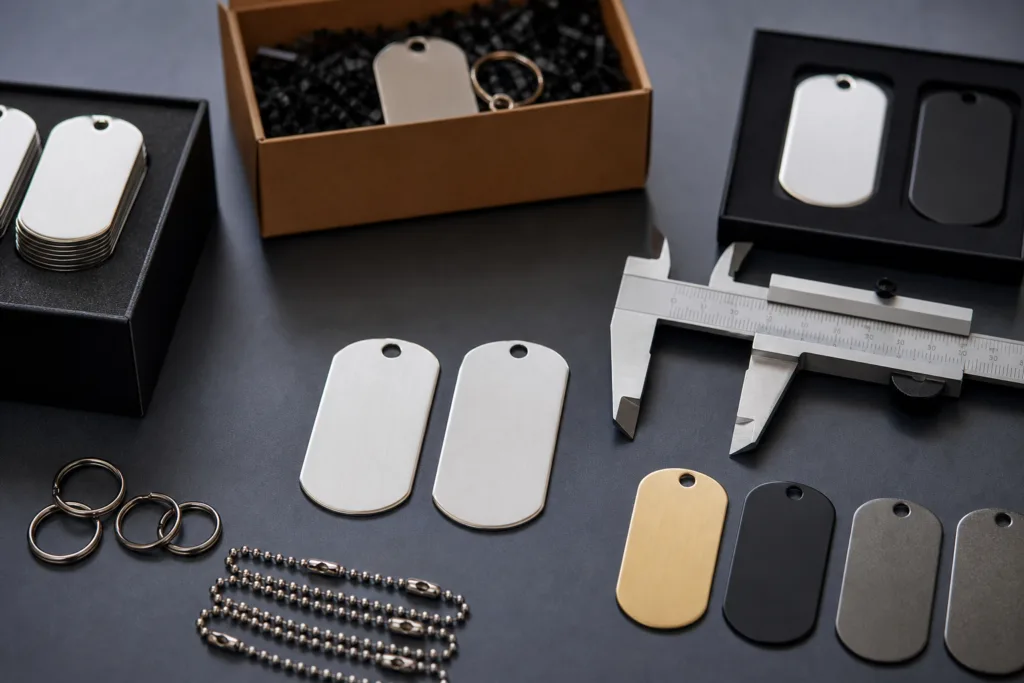
Before ordering, buyers should be able to answer these questions clearly:
- Is the most important message visible first?
- Can the text be read quickly in real use, not only on a screen?
- Does the material match the expected wear environment?
- Is the marking method durable enough for daily contact and moisture?
- Is the tag light enough for comfortable wear?
- Is the attachment secure and practical?
- Has the variable data been checked carefully?
- Has a sample been reviewed for true readability and finish quality?
From our manufacturing perspective, the best service dog tags are the ones that stay useful after months of real handling. Clear hierarchy, durable marking, sensible size, and secure attachment usually matter more than decorative extras. When buyers focus on those basics first, they are much more likely to end up with identification that is easy to recognize, comfortable to wear, and dependable over time.
FAQs
Do service dog tags need to be worn for legal recognition?
No. A tag can help with practical recognition and faster communication, but it should not be treated as legal proof by itself. For buyers, that means the tag should be designed around clarity and utility rather than trying to imitate a formal certificate on a very small metal surface.
What information is most useful on service dog tags?
The most useful tags usually place the dog’s role first, followed by the most important contact detail and, if space allows, a short secondary instruction. The goal is to help someone understand the purpose of the tag quickly, so short and readable content is usually more effective than dense text.
Which material is best for long-lasting engraved dog ID tags?
It depends on the use conditions. Stainless steel is often preferred for maximum durability and moisture resistance, while anodized aluminum can offer a lighter-weight option with strong contrast. Standard aluminum can work well where low weight matters most, but buyers should expect softer metals to show wear sooner in heavy use.
Is engraving better than printing for everyday pet ID tags and service dog tags?
For daily wear, engraved or otherwise permanent metal marking is usually the safer choice because it resists handling and abrasion better than surface-only decoration. Printing can support graphics and color, but if the main goal is long-term legibility, buyers usually prefer a more permanent marking method.
Should a service dog tag include a QR code?
A QR code makes sense when the buyer wants to connect the tag to expanded digital information, program records, or backup contact details. It should not replace the basic visible message on the tag, because fast recognition still depends on readable text that does not require scanning.
What should buyers approve before placing a bulk custom order?
Before bulk production, buyers should confirm the exact text, variable data format, material, size, thickness, marking method, finish, hole position, attachment hardware, and packaging plan. A physical or photographed sample is especially helpful because it shows whether the approved artwork is actually readable on the finished metal tag.