Ordering a custom dog tag in bulk looks simple until small specification gaps turn into expensive production issues. For B2B buyers, the real challenge is not only choosing a nice shape or finish, but making sure the tag stays readable, fits the intended use, matches the brand, and can be produced consistently at scale. In our manufacturing work, we see the same decision points come up again and again: material choice, engraving method, hole position, variable data accuracy, packaging format, and how to approve a sample that truly represents mass production.
If your project needs custom dog tag manufacturing solutions, it helps to work backward from the actual use case and then define the technical details that control durability, readability, and production efficiency. At UC Tag, we support buyers with material selection, engraving or stamping planning, custom shapes, data handling, sample approval, attachment options, packaging setup, and bulk production QC so the final order is aligned before the PO is placed.
This guide is written for retailers, pet brands, shelters, promotional buyers, distributors, and private-label programs that need more than a basic quote. A manufacturer should be able to help you translate an idea into production-ready specifications, identify risks early, and explain where cost, appearance, and long-term performance may conflict. That is especially important for dog tags because they are handled constantly, exposed to outdoor conditions, and expected to remain legible over time.
What a custom dog tag manufacturer actually provides
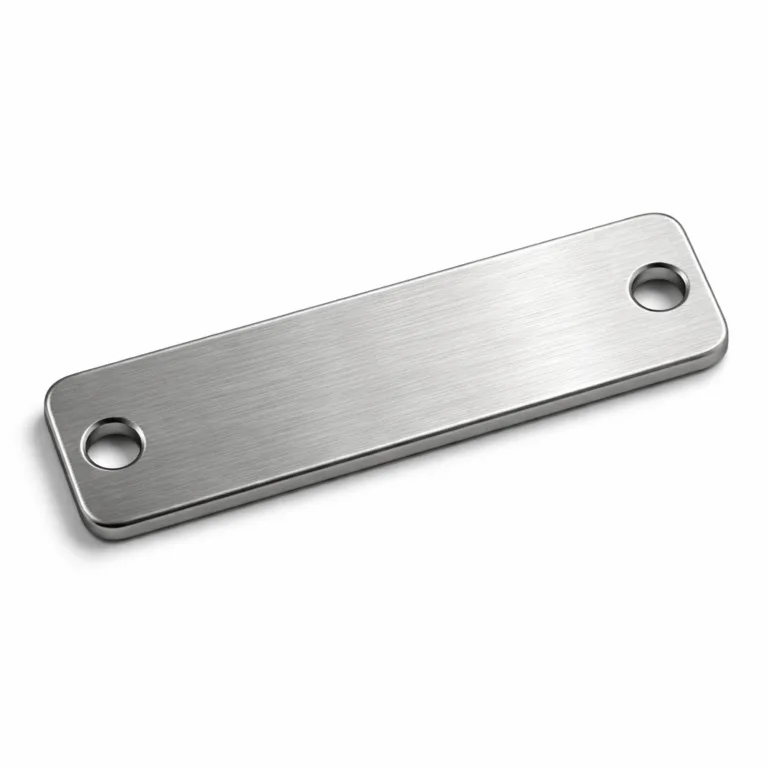
A custom dog tag manufacturer does far more than apply a name onto a blank metal piece. In a serious B2B order, the manufacturer should help define the full product structure: base metal, thickness, shape, corner radius, hole size and location, marking method, surface finish, attachment hardware, variable data format, packaging method, and inspection standards.
From our perspective, the biggest difference between a smooth project and a difficult one is whether those decisions are made early. A buyer may ask for a polished tag with deep text, sharp logo detail, retail packaging, and low unit cost, but some of those goals may compete with each other. For example, very small text can look clean in artwork but lose clarity after stamping or become hard to read on a highly reflective finish. A manufacturer should explain those trade-offs before tooling or mass production starts.
That is one reason many buyers review bulk ordering considerations for dog tags before finalizing specifications. Bulk production is not only about quantity; it is about repeatability, data control, packaging flow, and how much variation is acceptable from piece to piece.
Who this guide is for
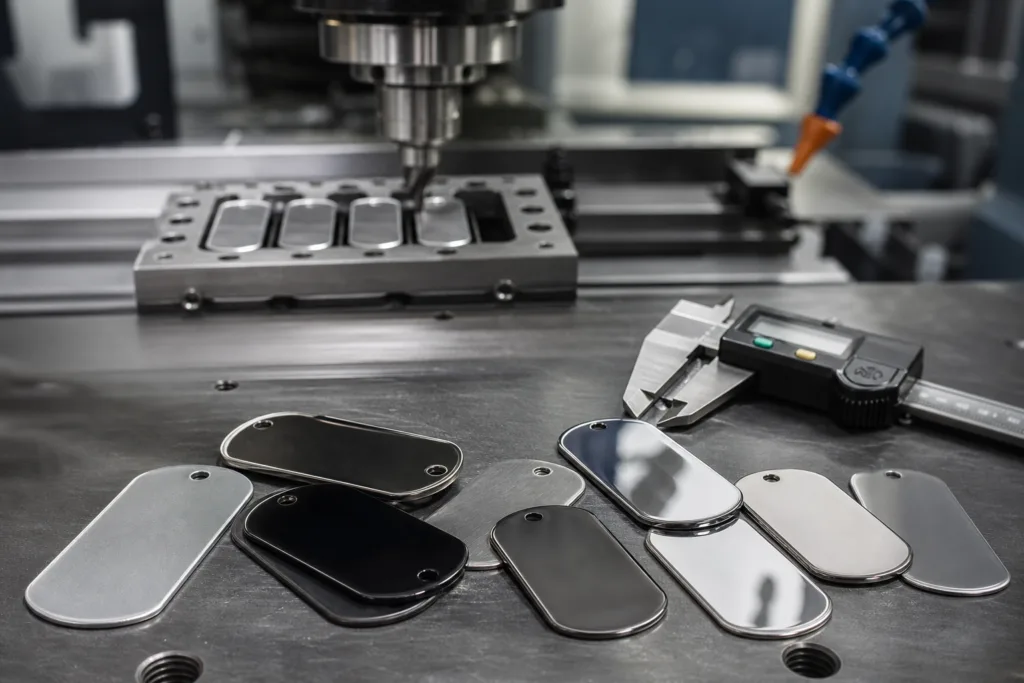
Different buyers need different answers. Retail brands usually care about shelf presentation, logo consistency, and packaging. Animal shelters often focus on readability, fast reorder cycles, and budget control. Promotional programs may prioritize color, shape novelty, and event deadlines. Distributors and resellers usually need stable specifications that can be reordered without confusion. Private-label buyers often add another layer: barcode labels, brand packaging, assortment control, and packed sets.
The common need across all of these groups is confidence. You want to know what you are ordering, how it will be made, what can go wrong, and how to reduce those risks before production begins.
Start with the use case before choosing the tag
A dog tag for pet identification is not the same as a branded giveaway tag, and neither is the same as a collectible retail item. The intended use should drive the specification.
- Pet identification: prioritize legibility, corrosion resistance, edge comfort, and secure attachment.
- Brand merchandise or resale: prioritize finish quality, logo presentation, packaging, and style consistency.
- Events or promotions: prioritize speed, color recognition, and budget efficiency.
- Shelter or program distribution: prioritize durable marking, simple ordering workflow, and variable data control.
Once the use case is clear, it becomes easier to choose the right material, thickness, and marking method. A lightweight aluminum tag may be ideal for a promotional giveaway or small pet application, while stainless steel may make more sense when the tag will see heavy outdoor wear, water exposure, and constant friction.
Choose the right base material for a custom dog tag
Material is one of the most important purchasing decisions because it affects weight, appearance, corrosion behavior, hardness, cost, and marking compatibility. Buyers often start with visual preference, but long-term performance usually matters more.
We often recommend that buyers compare environment, expected service life, and budget before locking in material. A practical material selection guide for durable dog tags can help frame that decision, especially when the tags may be used outdoors or in wet conditions.
| Material | Typical Strengths | Watch Points | Good Fit For |
|---|---|---|---|
| Aluminum | Lightweight, cost-effective, easy to color and engrave | Softer surface, can show wear faster | Promotions, light-use pet tags, colorful retail programs |
| Anodized aluminum | Lightweight, colored finish options, good contrast for engraved data | Finish choice matters for wear visibility | Branding, color-coded programs, lightweight custom tags |
| Stainless steel | Strong, durable, good corrosion resistance, premium feel | Heavier, usually higher cost than aluminum | Long-life pet ID, outdoor use, premium resale |
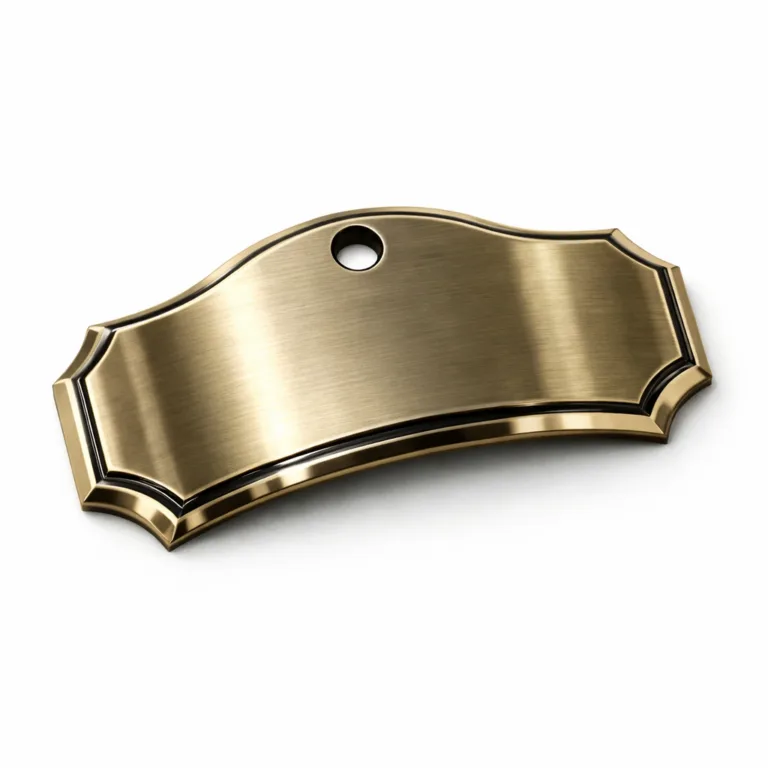
| Brass | Warm appearance, classic look, decorative appeal | Can tarnish depending on environment and finish | Vintage styling, decorative branded tags, premium design lines |
For buyers considering stainless steel, it is worth asking not just whether the tag is stainless, but what alloy and exposure conditions are expected. Different environments create different corrosion risks, and stainless steel corrosion resistance and alloy selection is a useful reference point when discussing moisture, salt, cleaners, and long-term wear with a manufacturer.
Anodized aluminum is also a common choice for custom dog tag programs because it balances low weight with visual variety. It can work especially well when buyers need color coding, engraved contrast, or a lightweight product for smaller animals. However, finish expectations should be discussed clearly, because abrasion patterns, edge wear, and stain visibility can vary by finish type and use conditions.
Select shape and size based on readability and wearability
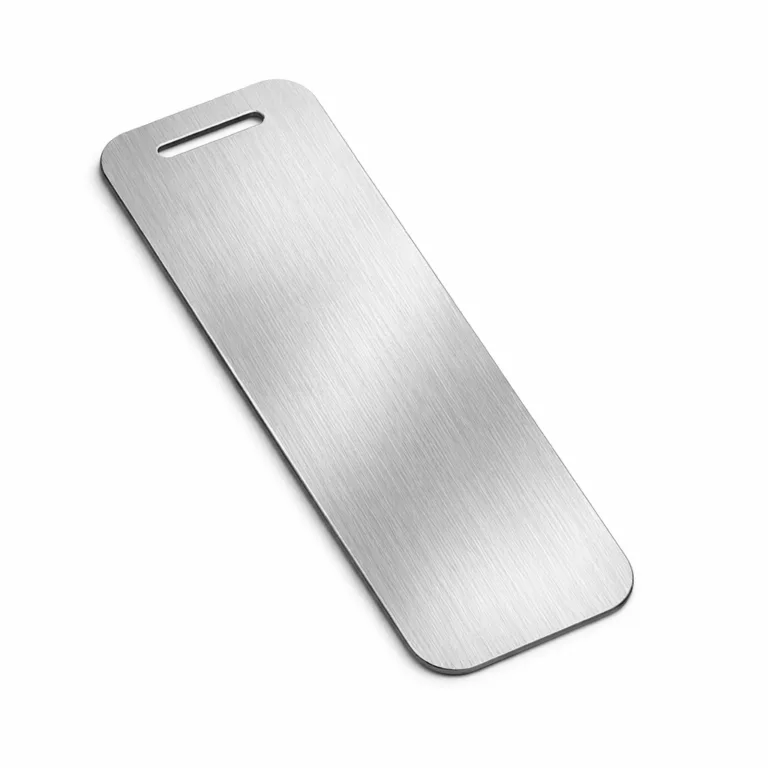
The classic military-style silhouette is popular for a reason: it is familiar, space-efficient, and easy to wear. But it is not the only option. Buyers can also choose round, bone-shaped, shield-shaped, rectangular, or fully custom profiles. Shape should support the content and the use case, not just the appearance.
A few practical rules help here. First, do not force too much text onto a small tag. Second, allow safe margins between the hole and the text area. Third, think about edge comfort and movement against other hardware. Fourth, if the logo shape is unusual, confirm that the design still leaves enough usable space for readable contact information.
Tag thickness also matters. Thin tags reduce weight and cost, but very thin material may feel less substantial and can be more susceptible to visible deformation in rough handling. Thicker tags improve perceived quality and rigidity, but they change weight and may influence attachment hardware selection.
Compare marking methods before you approve artwork
The marking method should match the material, visual goal, and durability requirement. Buyers often ask for engraving without defining whether they need shallow cosmetic marking, deeper permanent marking, color-filled text, or high-speed variable data. Those differences affect both manufacturing and final performance.
| Method | How It Works | Main Advantage | Best Use |
|---|---|---|---|
| Laser engraving | Laser marks or removes surface coating | Precise detail and flexible variable data | Names, numbers, QR codes, logos, serial data |
| Stamping | Mechanical impression into metal | Physical depth and classic look | Military-style tags, tactile lettering, rugged styles |
| Chemical etching | Chemically removes metal in selected areas | Fine detail and clean logo reproduction | Detailed artwork, premium branding, data plates |
| Screen printing | Ink applied through screen | Strong color efficiency in bulk | Simple logos, color graphics, promotional tags |
| UV printing | Direct digital surface printing | Full-color flexibility | Graphic-heavy branding, short runs, visual displays |
When buyers compare engraving styles, they should understand the difference between appearance and actual mark structure. Some programs need a high-contrast surface mark, while others need a more permanent physical groove. Our team often discusses laser engraving and diamond drag marking options with customers who need to balance detail, depth, and wear resistance across different metals.
At UC Tag, we usually advise buyers to submit final content and logo files only after the marking method is confirmed. A design that looks balanced for UV printing may need line weight adjustment for etching, and a text layout that works on an anodized aluminum surface may need different spacing when mechanically stamped.
How to balance durability, contrast, and long-term legibility
The best-looking sample is not always the most durable production choice. Highly polished tags can look attractive, but glare may reduce readability. Very small fonts can hold detail in a proof, but lose practical legibility once the tag is scratched or dirty. A colored finish can improve branding, but if the tag rubs against keys, collars, or metal hardware every day, the visible wear pattern may matter more than the initial appearance.
For true pet identification use, prioritize readability under real handling conditions. Contrast between text and background matters. So does font weight. Deeply decorative scripts may be less useful than straightforward sans-serif text. If the goal is emergency readability, the contact number should be the clearest element on the tag.
Double-sided layouts can help when more information is needed, but they should be planned carefully. One side can carry the pet name and phone number, while the reverse can hold address details, a logo, a QR code, or an ID number. This often improves legibility better than shrinking everything onto one face.
What information should go on the tag
The required data depends on the program. For retail pet ID, the standard combination is pet name plus phone number. For branded programs, a logo may share space with owner contact details. For shelters or membership systems, a unique ID number linked to an internal database may be more important than a full address line.
Common content options include:
- Pet name
- Primary phone number
- Secondary phone number
- ID number or serial number
- Brand or shelter logo
- Short address line
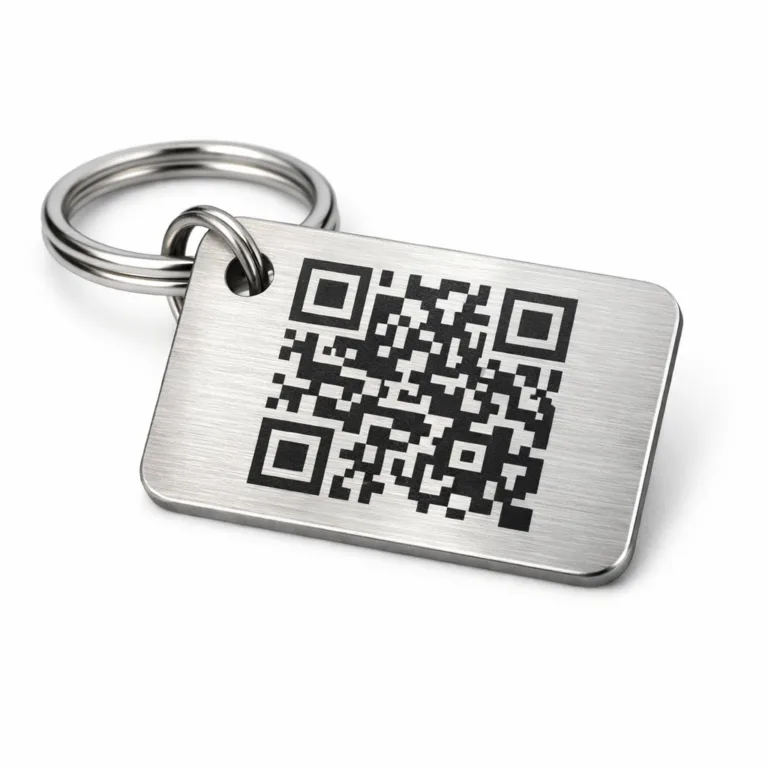
- QR code linked to online profile
- Medical alert note in brief form
QR codes can be useful, but they should not replace core contact data completely. Phones fail, scanning conditions vary, and some users may never scan the code. In most cases, the phone number still deserves priority placement.
Artwork preparation and file setup
Artwork problems are one of the most common reasons approvals get delayed. A manufacturer will usually prefer vector files for logos and shape outlines because they scale cleanly and support toolpath or layout preparation. If the buyer sends low-resolution artwork, screenshot logos, or text embedded in flattened image files, production preparation becomes slower and quality risk increases.
Before ordering, confirm these points:
- Preferred file formats, such as AI, EPS, PDF, or SVG for vector artwork
- Minimum line thickness for the selected marking process
- Minimum text height for practical readability
- Safe distance from hole edge and outer border
- Whether fonts should be converted to outlines
- Whether logo cleanup or redrawing is needed
- Whether variable data will be supplied in spreadsheet form
Good manufacturers review artwork not just for appearance but for process fit. A very fine logo may need simplification. A small QR code may need to be enlarged. Tight line spacing may need correction if the chosen method can cause fill-in or reduced clarity.
Numbering, serialization, and variable data in bulk dog tag orders
Bulk dog tag programs often involve more than one repeated design. Shelters, chains, promotional events, and private-label kits may require sequential numbers, unique IDs, names from a spreadsheet, or batches organized by customer, store, or region. That means the data workflow must be planned before production starts.
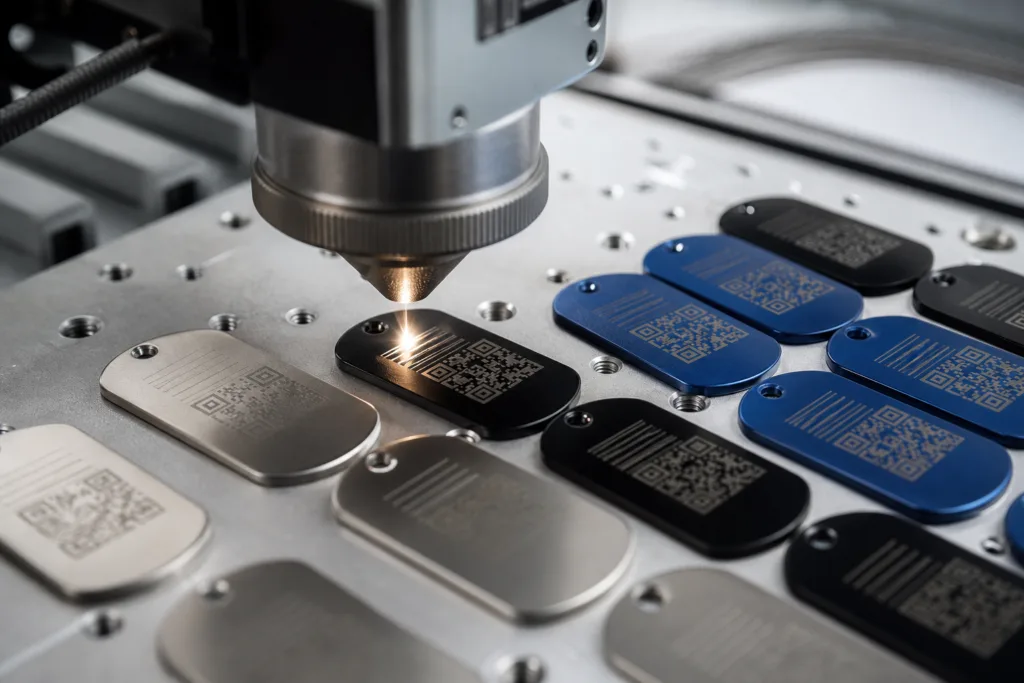
Buyers should specify whether numbering is sequential, randomized, customer-assigned, or matched to a database. They should also define file format, field order, proofing method, and what happens if a duplicate or missing entry appears. For animal-related identification programs using structured identifiers, it can also be helpful to understand the broader ISO standard for animal identification code structure when discussing serialized systems and database-linked workflows.
In production, variable data control usually needs checkpoints at import, proof generation, machine setup, first article review, in-process inspection, and final packing. A quote that looks good but ignores data verification can create expensive problems later.
Attachment and accessory options matter more than many buyers expect
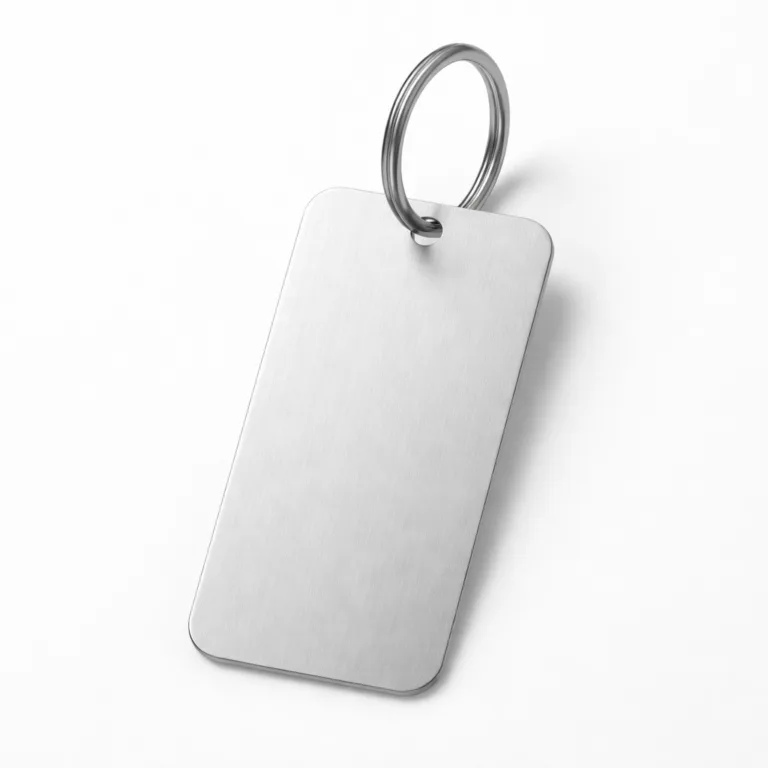
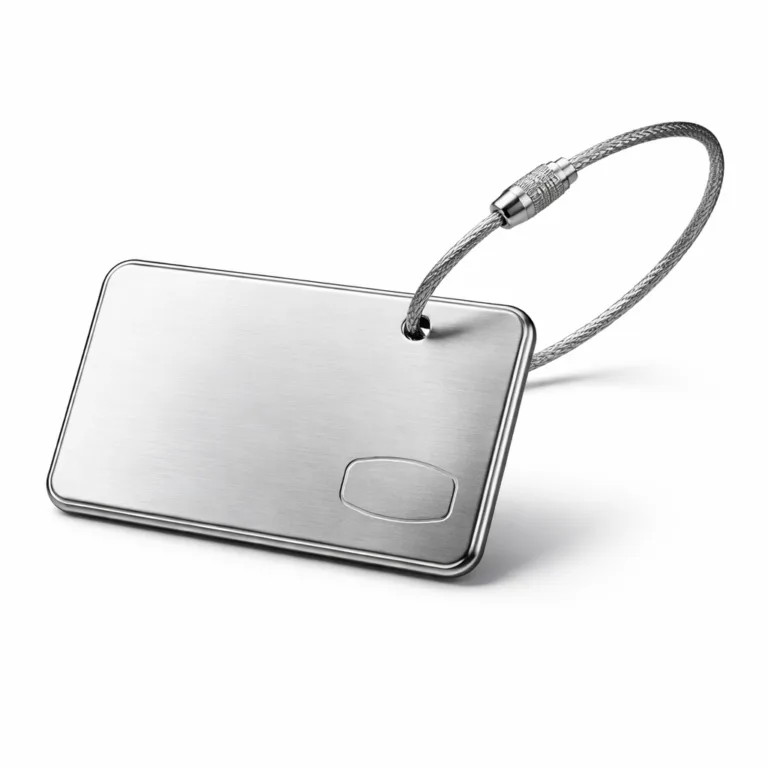
Dog tags are not complete products until they can be attached securely. Ring choice affects usability, presentation, and customer satisfaction. A split ring may be suitable for typical pet collar attachment. A jump ring may support lightweight presentation but may not be enough for rough daily movement unless designed appropriately. Ball chains or key rings may suit novelty, gift, or military-style products better than standard pet identification use.
Hole size and hole position must match the chosen hardware. If the hole is too close to the edge, long-term stress can become a concern. If the hole is too small, assembly slows down. If the hardware finish does not match the tag finish, the product may look inconsistent in retail packaging.
For custom shapes, it is especially important to review the hanging orientation. A tag that looks correct in flat artwork can hang awkwardly if the hole placement is not tested in a sample.
Finish choices and their real-world trade-offs
Finishes influence brand perception immediately, but they also influence how wear shows over time. Common choices include polished, matte, brushed, anodized, coated, antique-style, or color-filled effects.
| Finish | Visual Effect | Practical Note |
|---|---|---|
| Polished | Bright and reflective | Can show scratches and glare more easily |
| Matte | Soft, low-glare look | Often improves readability |
| Brushed | Directional texture, premium feel | Can help hide minor handling marks |
| Anodized color | Strong color identification | Good for lightweight programs and color coding |
| Color fill | Adds contrast to engraved or recessed areas | Needs process compatibility review for wear expectations |
Buyers should ask how the finish interacts with the marking method. For example, a dark anodized layer with laser engraving can create clear contrast, while a polished stainless tag may need different layout decisions to maintain easy reading.
Packaging options for retail, kits, and private-label orders
Packaging should be specified at the same time as the tag, not after the product is finished. Packaging affects counting, protection, fulfillment labor, barcode labeling, and presentation. Some customers need bulk packed loose tags by quantity. Others need individual polybags, printed backer cards, header cards, gift boxes, kit assembly, or retailer-specific packouts.
When discussing dog tag packaging options for retail and gifts, buyers should consider not only appearance but packing efficiency and error reduction. If the order includes variable names or IDs, packaging may need to stay synchronized with data files and lot numbers so the right pieces go into the right sets.
Private-label buyers should also define whether the manufacturer is responsible for barcode stickers, outer carton labeling, insert cards, accessory counting, or mixed-SKU assortment packing.
MOQ, sample approval, lead time, and pricing variables
MOQ is not just a sales policy issue; it often reflects setup logic. Custom shapes may require tooling or separate cutting preparation. Different finishes may require separate runs. Variable data may increase handling time. Special packaging can add labor even if the tag itself is simple.
Before placing the PO, buyers should ask what drives cost. In many projects, the main variables include material type, thickness, shape complexity, marking process, color requirements, attachment hardware, packaging style, quantity breaks, and proofing or sample needs.
Sample approval is one of the most important control steps. We usually recommend confirming whether the sample is a visual mockup, a pre-production sample, or a true process sample made with the intended material and marking method. Those are not the same thing. A printed rendering can confirm layout, but it cannot fully confirm engraving contrast, edge feel, or hardware fit.
Lead time should also be broken down. Ask about artwork approval time, sample time, production time, accessory sourcing time, and packaging assembly time. If there is a fixed launch date, make sure the schedule includes buffer for revisions.
Quality control checks before mass production
In a bulk custom dog tag order, QC should cover both appearance and function. The exact checklist depends on the product, but buyers should expect defined checkpoints rather than a general promise of inspection.
- Material and thickness verification
- Shape and overall dimensions
- Hole size and placement
- Edge finish and burr control
- Marking clarity and alignment
- Text accuracy and variable data accuracy
- Contrast and readability
- Finish consistency across the batch
- Attachment hardware match and fit
- Packaging count and labeling accuracy
For serialized orders, spot checking is not enough if the data is highly sensitive. Buyers should ask how the file is imported, how duplicates are prevented, and whether the final packed quantity is reconciled against the source file.
Common mistakes buyers should avoid
The most frequent mistakes are preventable. One is approving artwork without checking actual text size against the physical tag dimensions. Another is selecting a finish based only on appearance and ignoring wear. Another is using a QR code that is too small to scan reliably after production. We also see buyers forget to define hardware, assume both sides are included without stating it, or request retail packaging only after the main production plan has already been set.
Another common issue is under-specifying material. Saying “metal tag” is rarely enough. Aluminum, anodized aluminum, stainless steel, and brass behave differently in production and use. Likewise, saying “engraved” is too broad unless the buyer understands what kind of mark and contrast is expected.
How to evaluate a reliable custom metal ID tags manufacturer
A capable manufacturer should ask good questions, not just send pricing. If the supplier does not ask about material, thickness, data format, finish, hole placement, attachment, or packaging, there is a risk that assumptions are being made silently. That often leads to rework or disappointment later.
Useful evaluation questions include:
- Can the supplier explain when laser engraving, stamping, etching, or printing is the better choice?
- Can they review artwork for readability and process fit?
- Can they handle variable names, serial numbers, or QR codes accurately?
- Can they produce samples that reflect actual production methods?
- Can they define QC checkpoints for data, finish, and packaging?
- Can they support OEM or private-label requirements without changing agreed specs mid-project?
The right manufacturing partner should make the specification clearer as the project moves forward. If every answer remains vague, the buyer is carrying too much risk.
Ordering checklist: what to ask before you place the PO
Before you approve a bulk order, make sure these points are answered clearly:
- What is the exact material and thickness?
- What are the final dimensions, shape, and corner style?
- Where is the hole located, and what hardware is included?
- Is the tag single-sided or double-sided?
- What marking method will be used?
- What finish is being produced, and what wear should be expected?
- What is the source format for names, numbers, or QR data?
- How will proofs and sample approval be handled?
- What is included in QC for text accuracy and packaging?
- What is the lead time from approval to shipment?
- How are the tags packed, labeled, and counted?
- What factors could change price after quotation?
When those questions are answered before production starts, buyers usually avoid the most expensive surprises. That is the real value of working with a manufacturer that understands both custom metal tag production and bulk order control.
Conclusion
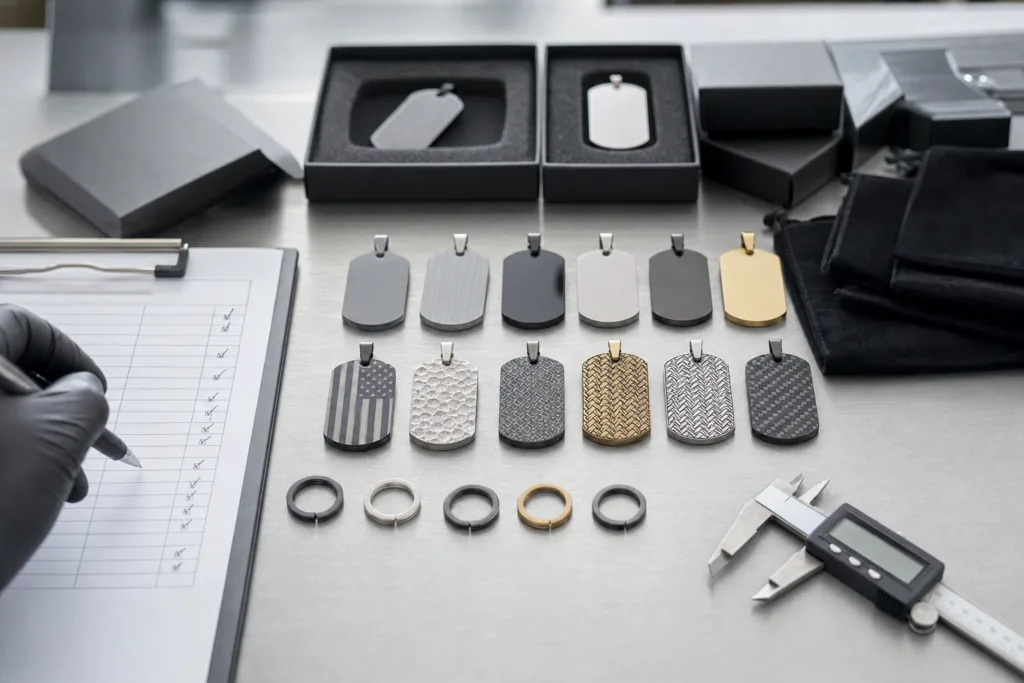
A successful custom dog tag order is built on specification clarity, not guesswork. The right material, marking method, size, finish, attachment option, data workflow, and packaging plan all need to be aligned with the actual use case. From a manufacturer perspective, the safest projects are the ones where buyers ask practical questions early, approve realistic samples, and define quality expectations before mass production begins. If you are sourcing a custom dog tag program for retail, shelter use, promotion, or private label, taking the time to structure the order properly will save cost, reduce errors, and produce a better end product.
Frequently Asked Questions
What is the best material for a custom dog tag?
The best material depends on the use case. Stainless steel is usually a strong choice for long-term outdoor wear and premium durability, while anodized aluminum works well when low weight, color options, and cost control matter. Brass is often chosen for decorative or classic styling, and standard aluminum can be suitable for lighter-duty or promotional programs.
Is laser engraving better than stamping for bulk dog tags?
Neither method is universally better; they serve different goals. Laser engraving is flexible for names, serial numbers, QR codes, and detailed logos, especially when variable data changes from piece to piece. Stamping is preferred when buyers want a physical impression, a traditional military-style look, or a more tactile result. The better choice depends on design detail, quantity, material, and wear expectations.
What file format should I send for a custom dog tag order?
Vector artwork is usually the safest option for logos, outlines, and production-ready layouts, so AI, EPS, SVG, or clean PDF files are commonly preferred. If the order includes names or numbers, those are often supplied in spreadsheet format. Buyers should also confirm minimum text size, line thickness, and whether fonts need to be converted to outlines before approval.
Can bulk dog tags include serial numbers or QR codes?
Yes, bulk dog tags can be produced with sequential numbering, unique IDs, names, barcodes, or QR codes, but the data workflow needs to be defined carefully. Buyers should confirm the file structure, proofing method, scan size, placement, and how the manufacturer checks for missing, duplicate, or mismatched records during production and packing.
How do I reduce mistakes before mass production starts?
The most effective way is to approve a realistic sample and confirm every key specification in writing: material, thickness, dimensions, hole placement, finish, marking method, hardware, packaging, and variable data format. It also helps to ask how QC will be handled for text accuracy, finish consistency, and count verification before the full batch is produced.
What should I ask a custom dog tag manufacturer before placing a PO?
Ask what material and thickness will be used, which marking method fits the design, whether the artwork is production-ready, how variable data will be controlled, what sample will be provided, what packaging is included, what the lead time covers, and what QC checks are performed before shipment. A clear answer to each of those points usually indicates a more reliable manufacturing process.